At what age do people get married?
Introduction to the topic
The evolution of marriage age in Poland
Over the last few decades, the age at which people enter their first marriage in Poland has undergone significant changes. Just a few decades ago, tradition and social expectations dictated that young people should marry at a young age, often right after finishing high school. Today, we are observing a clear shift in this trend. Statistics indicate that the average age for a first marriage is now around 28 for women and 30 for men. This change is the result of many factors, including higher levels of education, professional career paths, and social and cultural shifts.
These changes are also influenced by increasingly common aspirations for higher education and the pursuit of financial stability before making the decision to marry. The younger generation of Poles is increasingly choosing to pursue their professional ambitions and gain relevant work experience before starting a family. Growing awareness of the importance of financial and emotional stability also plays a key role in delaying the decision to marry.
The importance of age in marriage
The age at which a couple decides to marry is of great importance for many reasons. Firstly, it affects the stability and longevity of the relationship. Studies show that couples who marry at a more mature age have a better chance of a long-lasting and happy marriage. Emotional maturity, greater life experience, and financial stability are key factors that contribute to marital success.
Additionally, the age of marriage is also relevant in the context of family planning. Couples who decide to marry later in life have more time to make an informed decision about having children, which allows them to better prepare for this challenge both financially and emotionally. Awareness and preparation for the role of a parent are crucial to providing children with a stable and loving environment.
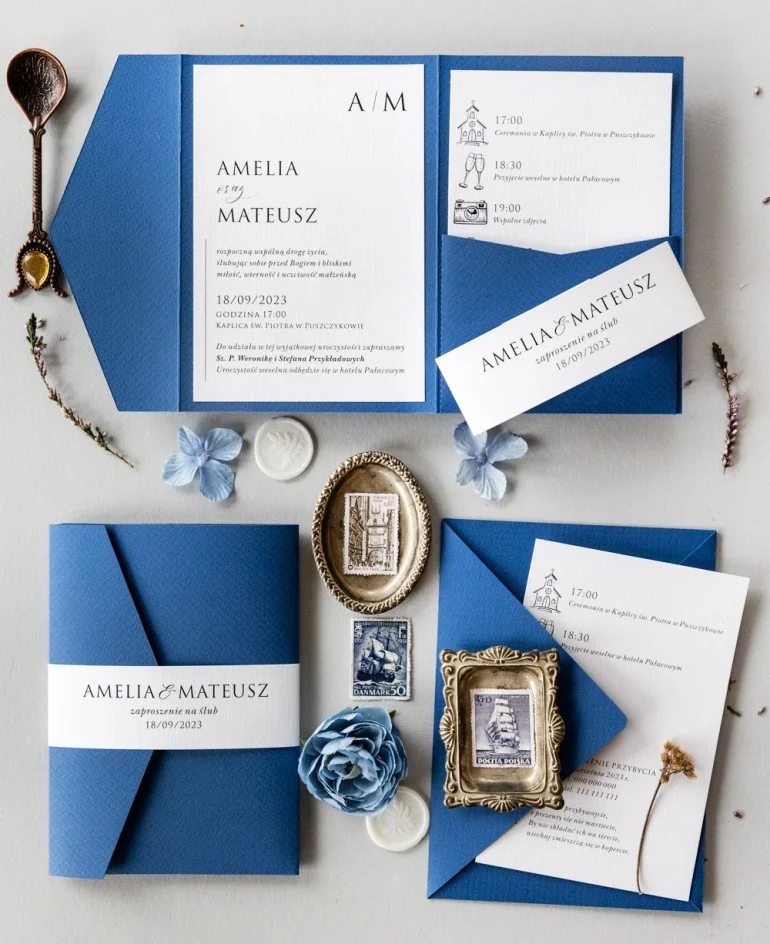
Blue, Elegant Wedding Invitation With A Pocket And Personalization | Kraft No. 7
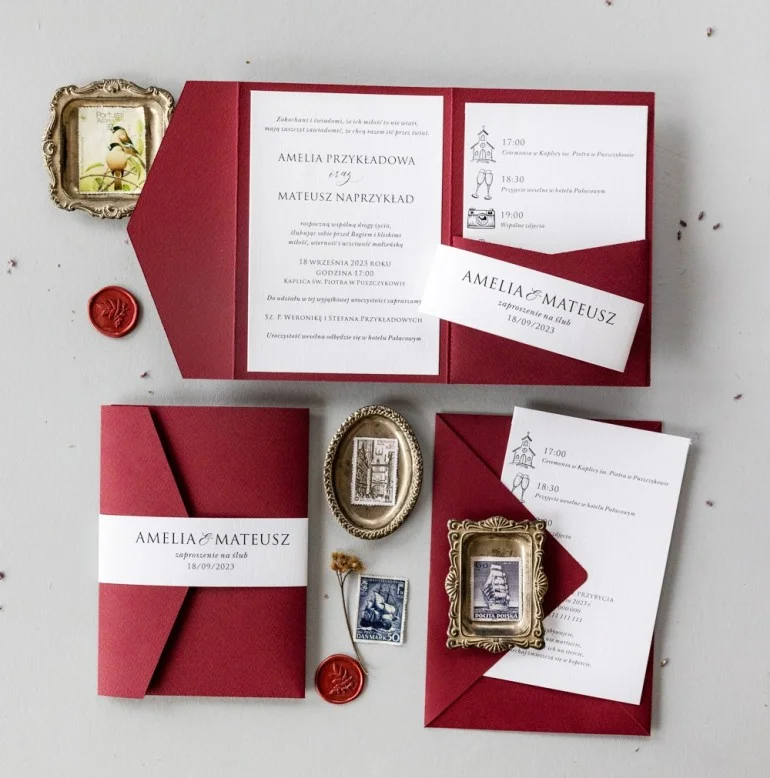 Burgundy Invitation With A Pocket And Personalization | Original Wedding Invitations | Kraft No. 6
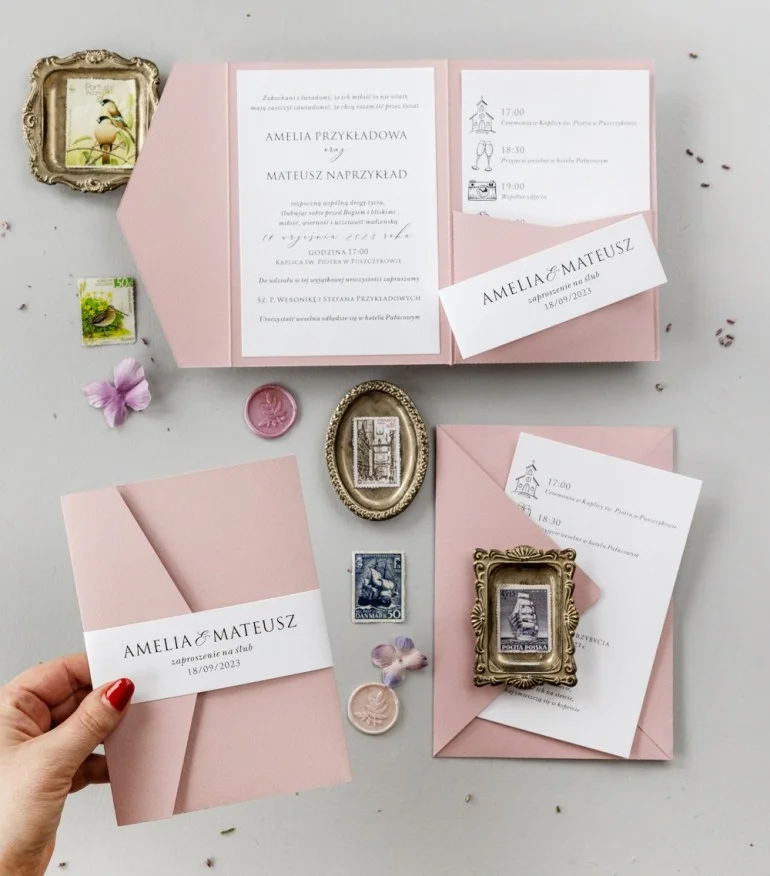
Pink, Elegant Wedding Invitations With A Practical Pocket And Personalization | Modern And Classic | Kraft No. 9
Why does marriage age matter?
The significance of the age at marriage can be considered in several aspects. Firstly, the emotional maturity reached by those who decide to marry later translates into better communication and the ability to resolve conflicts in the relationship. Studies indicate that older individuals are more aware of their needs and expectations, which helps them build healthier and more satisfying relationships.
Secondly, financial stability is another key factor. Young couples often want to reach a certain level of financial independence before deciding to marry. This allows them to plan their future more calmly and avoid financial problems, which can be a source of stress in a marriage.
Thirdly, the socio-cultural changes that have taken place in Poland have influenced the way marriage is perceived. Today, marriage is seen more as a conscious choice than a social obligation. Young people have more freedom in making decisions about their personal lives and more often wait for the right moment to enter into a marriage.
In summary, the evolution of marriage age in Poland is a multidimensional phenomenon resulting from numerous social, cultural, and economic changes. Understanding these factors is crucial to better prepare for the challenges that come with the decision to marry. On the amelia-wedding.pl website, you will find more tips and information to help you plan this special day.
Table of Contents
Factors influencing the age of marriage
Education and professional career
Nowadays, education and professional career play a key role in the lives of young Poles, which has a direct impact on the age at which they decide to marry. The increase in the number of people pursuing higher education and striving to gain specialized qualifications means that the decision to marry is often postponed. The pursuit of professional and financial stability before marriage has become a priority. Young people want to first gain work experience, achieve success in their field, and secure their future financially before making such an important life decision as marriage.
Moreover, the labor market and the demands placed on young professionals also influence their personal life decisions. The modern job market is dynamic and competitive, requiring young people to be flexible and committed to professional development. Many young Poles choose to develop their careers abroad, which further delays the decision to marry. All these factors cause the age of first marriage in Poland to systematically shift.
Social and cultural changes
The social and cultural changes that have occurred in Poland in recent decades have also significantly influenced the age of marriage. Modern society places greater emphasis on individualism and self-realization, which means that young people increasingly want to achieve their personal goals and dreams first before deciding to start a family. Greater acceptance of non-marital relationships and cohabitation means that marriage is no longer seen as a necessity or a social obligation, but as a conscious choice of two people ready for a life together.
Furthermore, changes in traditional gender roles also have a significant impact on marriage decisions. Women are increasingly striving for financial and professional independence, which translates into later marriages. Modern women want to pursue their professional ambitions, grow, and gain experience before deciding to start a family. The same applies to men, who also want to achieve stability and professional fulfillment first.
Religious beliefs and traditions
Religious beliefs and traditions play a key role in shaping marriage decisions in Poland. Poland is a country with deep Catholic roots, which means that for many couples, a church wedding is an important element of religious and social life. Traditional family values and religious beliefs encourage many people to marry at a younger age, in accordance with Church teachings.
However, with the ongoing secularization of society, the influence of religious beliefs on marriage decisions is changing. More and more people are choosing a civil wedding or living in an informal relationship, not feeling the religious pressure to marry at a young age. Regional traditions also play a significant role in shaping marriage decisions. In some parts of Poland, especially in rural areas, traditions and social expectations may influence earlier marriages, while in larger cities, couples may decide to marry at a later age.
In summary, the factors influencing the age of marriage in Poland are multidimensional and complex. Increased education, the pursuit of a career, social and cultural changes, as well as religious beliefs and traditions – all these elements shape the decisions of young Poles to marry. To learn more about organizing a wedding, visit amelia-wedding.pl and take advantage of numerous tips and inspirations that will help you plan this special day.

Fortune Cookies - Original Wedding Favors In Glamour Style | Chinese Fortune Cookies | Ruby No. 1
Fortune Cookies In Packaging With Burgundy Peonies | Unique Wedding Favors | Ruby No. 3

Purple Fortune Cookies With Golden Branches | Perfect Wedding Favors | Ruby No. 5
Regional differences in marriage age
Wedding in big cities vs. in the countryside
Differences in the age of marriage between residents of large cities and rural areas are significant and result from many social, cultural, and economic factors. In larger cities, such as Warsaw, Krakow, or Wroclaw, young people often decide to marry later than their peers in rural areas. This is due to higher levels of education, the pursuit of a career, and greater opportunities for personal and professional development offered by large metropolises. The average age of marriage in cities hovers around 30 for men and 28 for women.
In the countryside, the situation looks a bit different. Traditional family values and starting a professional life earlier mean that young people in rural areas decide to marry sooner. In rural communities, the pressure to start a family is greater, and educational and professional opportunities are more limited, which encourages young people to make marriage decisions earlier. For example, the average age of marriage in the Podkarpackie Voivodeship is 25.9 years for women and 28.9 years for men.
Differences between regions
The age of marriage in Poland also varies depending on the region. Regions with higher levels of urbanization and developed labor markets, such as the Masovian, Lower Silesian, or Pomeranian Voivodeships, are characterized by a higher age of marriage. Young people in these regions often decide to marry after completing their studies and finding a stable job. In the West Pomeranian Voivodeship, the average age is 30.2 years for women and 33.1 years for men, which is one of the highest rates in the country.
In less urbanized regions, such as the eastern voivodeships (Lublin, Podlaskie), the average age of marriage is lower. Less access to higher education and limited employment opportunities mean that young people make decisions about marriage and starting a family faster. A traditional approach to marriage and family in these regions also influences earlier marriages.
Examples of regional trends
Examples of regional trends perfectly illustrate the differences in the approach to marriage in Poland. In the Podkarpackie Voivodeship, which is one of the most traditional regions, the average age of marriage is 25.9 years for women and 28.9 years for men. Traditional family and religious values have a strong influence here, which contributes to earlier marriages.
In contrast, in the West Pomeranian Voivodeship, where young people have greater access to education and better professional prospects, the average age of marriage is 30.2 years for women and 33.1 years for men. A higher level of urbanization and diverse career opportunities mean that residents of this region postpone the decision to marry, focusing first on personal and professional development.
Such regional differences in the age of marriage show how diverse the attitudes and approaches of young Poles are to this important life decision.

Honey With Eucalyptus And Delicate Flowers | Unique Wedding Favors | Korani No. 3

Subtle Wedding Chocolates With Floral Pattern In Shades Of Green And White | Wedding Favors | Korani No. 3
 Wedding Table Plan With Eucalyptus Motif In Greenery Style | Korani No. 3
Impact of the COVID-19 pandemic on marriage age
Pandemic and wedding decisions
The COVID-19 pandemic brought chaos to the lives of many couples planning to marry, significantly affecting the age at which Poles decide to tie the knot. When strict pandemic-related restrictions were introduced, such as bans on gatherings and social distancing requirements, many wedding ceremonies were canceled or postponed. These restrictions forced couples to shift their plans, waiting for more stable and safe conditions to organize their big day. For many, especially those who had planned weddings for the spring and summer of 2020, this was a huge change that affected their personal and professional lives.
As a result, decisions to marry were postponed, which raised the average age of couples deciding to marry. Many engaged couples decided to wait with organizing the wedding until the pandemic situation stabilized, which could mean postponing the ceremony by a year or even longer. This uncertainty affected the decisions of couples who had previously planned to marry at a younger age.
Delays and changes of plans
The pandemic forced many couples to modify their wedding plans, which had a direct impact on the average age of marriage. Restrictions on the number of guests, the closure of wedding venues, and concerns about the health safety of guests meant that many people decided to postpone their ceremonies. Many couples who already had weddings planned had to make difficult decisions about canceling or rescheduling the ceremony to a time when organizing a wedding would be safer and possible without restrictions.
As a result, many of these weddings took place in later years, which statistically raised the average age of newlyweds. For some couples, this meant having to give up large, traditional weddings in favor of smaller, more intimate celebrations that could be organized in accordance with applicable regulations. This change affected the dynamics of marriage, pushing the marriage age to later years of life.
New trends after the pandemic
The COVID-19 pandemic not only affected the age of marriage but also contributed to the emergence of new wedding trends that may persist for longer. One such trend is the growing popularity of outdoor weddings and small ceremonies, which offer greater flexibility and the ability to adapt to rapidly changing sanitary regulations. Many couples are also opting for civil weddings, which can be organized in a shorter time and in more intimate conditions.
Furthermore, the pandemic changed the approach to wedding planning, increasing the importance of flexibility and readiness for change. Young couples are increasingly deciding to marry at a later age, but with greater certainty that their ceremony will take place according to their expectations. Wedding planning has become more thoughtful, and couples place greater emphasis on details that can make their day special, regardless of the circumstances.
In summary, the impact of the COVID-19 pandemic on the age of marriage in Poland is significant and multidimensional. From delays and changes of plans, through new wedding trends, to increased flexibility in organizing ceremonies – all these factors shape the current wedding landscape. To learn more about how to plan the perfect wedding in these changing times, visit amelia-wedding.pl and take advantage of numerous tips and inspirations that will help you organize your dream day.
Statistics and demographic data
GUS age statistics
Statistics on the age of marriage in Poland are extremely important for understanding demographic and social trends in our country. According to data from the Central Statistical Office (GUS), the average age of first marriage in Poland is about 28.7 years for men and 26.6 years for women. These figures indicate a tendency to marry at a later age compared to previous decades. The increase in the age of newlyweds may be the result of many factors, including the pursuit of education, achieving professional stability, and obtaining financial independence before making the decision to marry.
Demographic determinants of marriage age
Demographic determinants of the age of marriage play a key role in shaping current wedding trends in Poland. One of the main factors influencing the age of marriage is the level of education. People with higher education are more likely to decide to marry at a later age, which results from a longer period of education and the pursuit of a professional career. Higher education correlates with a later age of marriage, as these individuals often want to achieve financial and professional stability before deciding to start a family.
Another important factor is the place of residence. Young people living in large cities usually decide to marry later than their peers from smaller towns and villages. In cities, access to education and better professional opportunities is greater, which influences later decisions about marriage. In contrast, in smaller towns, traditional family values and limited career opportunities may encourage young people to marry earlier.
Analysis of regional data
Analysis of regional data shows clear differences in the age of marriage in individual Polish voivodeships. For example, in the Podkarpackie Voivodeship, which is one of the more traditional regions, the average age of marriage is 25.9 years for women and 28.9 years for men. This indicates strong influences of traditional family and religious values, which encourage young people to marry earlier.
In contrast, in the West Pomeranian Voivodeship, where young people have greater access to education and better professional prospects, the average age of marriage is 30.2 years for women and 33.1 years for men. A higher level of urbanization and greater career opportunities mean that residents of this region postpone the decision to marry, focusing first on personal and professional development.
Optimal age for marriage
Best age for a wedding according to research
Research indicates that the best age for marriage is between 26 and 45. During this period, people reach an optimal level of emotional and financial maturity, which promotes the stability and longevity of the marriage. This age allows for gaining appropriate life experience and establishing one's professional position, which translates into the ability to make conscious and responsible decisions regarding the relationship. Younger couples often struggle with challenges related to a lack of professional and financial stability, which can negatively affect their relationships.
Marrying too early, especially under the age of 25, is associated with a higher risk of divorce. Young people may not yet be emotionally mature enough to deal with the challenges that married life brings. Conversely, marrying at a very late age, after 45, can also have its difficulties, resulting from established life habits and less flexibility in adapting to a partner.
Factors favoring a successful marriage
A successful marriage depends on many factors that can be strongly related to the age at which a couple decides to marry. Emotional maturity and financial stability are key elements favoring the durability of the relationship. People who decide to marry after the age of 26 usually have a greater awareness of their needs, expectations, and ability to compromise, which is necessary for building a lasting relationship.
An important factor is also life experience. People aged 26-45 often have various professional and personal experiences that shape their approach to life and relationships. This experience allows them to better deal with difficulties and conflicts that may arise in a marriage. Furthermore, financial stability gained at this age allows for calmer planning of the future, including having children and joint investments.
When are marriages most durable?
The durability of a marriage is highest when it is entered into at an optimal age, which according to research is between 26 and 45. Marriages entered into during this period are less prone to divorce compared to those entered into at a younger or older age. Many studies indicate that people in this age group handle the challenges of everyday life better, are more emotionally mature, and have an established professional position.
Statistics show that couples who marry after the age of 26 have a better chance of a long-lasting and satisfying relationship. It is also important that both parties are ready for the commitments associated with marriage and have convergent life goals and values. This allows for building a solid foundation for a lasting relationship.
In summary, the optimal age for marriage is between 26 and 45, which is supported by research showing that marriages entered into during this period have a better chance of success.

Wedding Nutella Jars, Elegant Floral Graphic | Sweet Wedding Favors | Sapphire No. 1
Elegant Nutella Jars With Personalized Black And White Label | Sweet Wedding Favors | Sapphire No. 4

Wedding Nutella Jars With Label In Shades Of Green, White Roses | Sweet Wedding Favors | Sapphire No. 3
Conclusions and summary
Summary of wedding trends in Poland
Over the last few decades, the age of marriage in Poland has undergone significant changes. Currently, the average age of first marriage is about 28 for women and 30 for men, which is the result of increased education, the pursuit of professional stability, and social and cultural changes. Young people are increasingly deciding to marry at a later age to first achieve financial and professional stability. The increase in the number of people with higher education and greater acceptance of non-marital relationships also influence the shift in the age of marriage.
In recent years, we have also observed regional differences in the age of marriage. In larger cities, the average age of marriage is higher than in the countryside, which results from greater educational and professional opportunities and a different lifestyle. For example, in the Podkarpackie Voivodeship, the average age of marriage is 25.9 years for women and 28.9 years for men, while in the West Pomeranian Voivodeship, it is 30.2 and 33.1 years, respectively.
Individual marriage decisions
Despite statistics and trends, the decision to marry is always an individual choice and should take into account emotional readiness and life stability. Every couple has their own unique story and motives that influence the moment they decide to marry. Emotional readiness, maturity, and financial stability are key factors that should be taken into account when making the decision to marry.
It is also important that couples have convergent life goals and values, which makes it easier to build a lasting and satisfying relationship. Marriage is not just a formality, but above all a commitment to live together and build a future together. Therefore, the decision to marry should be thoughtful and made at the right moment for both parties.
The future of weddings in Poland
The future of weddings in Poland will likely be shaped by the continuation of current trends and new social phenomena. The increasing importance of education and professional career will likely continue to influence the age of marriage. We can also expect that more and more couples will choose civil weddings and smaller, more intimate celebrations, which gained popularity during the COVID-19 pandemic.
Social changes, such as the increase in acceptance for diverse forms of relationships and greater flexibility in the approach to traditional gender roles, may influence a further shift in the age of marriage and changes in the way weddings are organized. In the future, we may also observe a greater role of technology in planning and organizing wedding ceremonies.
In summary, the age of marriage in Poland is increasing due to numerous factors, such as education, professional career, and social changes. The decision to marry, however, remains an individual choice, which should be based on emotional readiness and life stability.

Szymon Jędrzejczak
Wedding industry expert and stationery designer at Amelia-Wedding.pl. For years, she has been helping couples create unforgettable moments by combining tradition with modern design.