Can you get married without wedding banns?

Introduction to the topic of weddings and marriage banns.
Marriage banns - the essence of Polish tradition and culture
Marriage banns are not just a formality, but above all a deeply rooted tradition in Polish culture that has accompanied couples on their path to marriage for centuries. The mention of this term evokes romantic moments when future spouses announce their intentions to their community, friends, and family. But what exactly are banns, and what are their roots in Polish history?
The first mentions of marriage banns date back to the Middle Ages. Back then, in small communities, announcing the intention to enter into marriage was not only a matter of tradition but also a practical solution. Through the banns, the community had the opportunity to learn about the planned wedding and potentially raise any objections. This was particularly important in the context of avoiding marriages between close relatives. Modern banns, although slightly different from historical ones, still carry the same spirit of tradition and social acceptance.

Wedding Invitations With White Flowers And Green Accents | Minimalist Invitations With Personalization | Impresja No. 9

Minimalist Fortune Cookie, Elegance Of White Flowers | Individual Thank You Gifts | Impresja No. 9

Merci Guest Thank You Gifts With White Roses And Green Leaves | Merci Thank You Gifts | Impresja No. 9
Wedding tradition in Poland - from banns to the altar
Wedding tradition in Poland is rich and diverse, and the banns are an inseparable part of it. In many regions of Poland, the banns were not just an announcement of the intention to marry, but also an occasion for celebration. The families of the engaged couple would organize festive dinners, during which wishes were made and gifts were presented. It was a social event that integrated the entire community.
Over the years, the significance of the banns has evolved. Today, in the era of the internet and globalization, traditional banns in churches or civil registry offices have gained a new dimension. They have become more formal, yet still full of emotion and meaning. For many couples, the moment of the banns is the first step toward a life together, a symbolic transition from engagement to marriage.
Banns and the wedding ceremony - an inseparable element of a Polish wedding
Marriage banns are not just a formality, but a key element of wedding preparations. In Poland, both for church and civil weddings, banns are mandatory. They are intended not only to inform the community about the intention to marry but also to ensure that the future spouses meet all legal requirements.

For many couples, the moment of the banns is just as important as the wedding itself. It is a moment when their relationship becomes official, when they can share their joy with their loved ones. The banns are also an opportunity for reflection, to think over their decision and prepare for a new stage of life.
Modern banns, although often perceived as a formality, still carry the spirit of tradition and culture. They are proof that Polish wedding tradition is alive and still evolving, adapting to modern realities without losing its unique character.
Table of Contents
- Introduction to the topic of weddings and marriage banns.
- Legal aspects of marriage banns.
- Banns and a church wedding.
- Banns and a civil wedding.
- Costs associated with the banns.
- Alternatives to traditional banns.
- Social opinions on the banns.
- Cases where banns are not required.
- Benefits of following the tradition of banns.
- Summary and conclusions.
Legal aspects of marriage banns.
Legal regulations regarding banns in Poland
Marriage banns, although for many they are primarily a tradition and ritual, also have strong foundations in Polish law. In Poland, legal regulations clearly state that couples planning to get married must report this intention to the appropriate institutions. In the case of a civil wedding, this is the civil registry office, while for a church wedding, it is the parish. This process is intended to ensure that the future spouses meet all legal requirements, such as being of legal age, not being in other marital relationships, or not being closely related to each other.
Banns are announced for three consecutive weeks before the planned wedding date. During this time, anyone who has any objections to the couple getting married can report them. This is a mechanism designed to protect individual rights and ensure that the marriage is entered into in accordance with applicable law.
Legal consequences of failing to announce banns
Failure to follow the banns procedure can lead to serious legal consequences. First and foremost, the lack of banns prevents the marriage from taking place. Both the civil registrar and the clergy have the right to refuse to perform the ceremony without prior banns. Furthermore, if a marriage is entered into despite the lack of banns, it may be declared invalid.
In practice, the lack of banns can lead to legal complications, such as problems with obtaining a common surname, property rights, or inheritance issues. That is why it is so important to follow the applicable procedures and ensure that all formalities have been met before the big day.
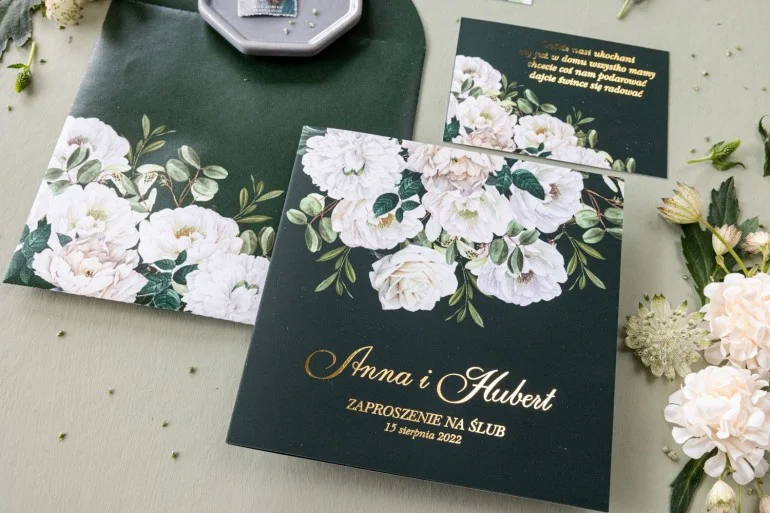
Elegant Wedding Invitations With White Flowers And Gold Foil, Dark Green | Glamour Wedding Invitations | Szafirowe No. 3
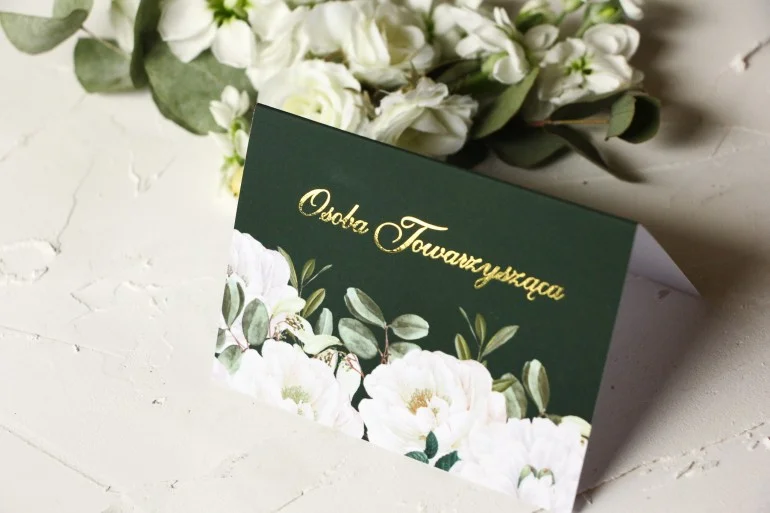
Gold Wedding Place Cards With White Roses And Peonies | Elegant Wedding Place Cards | Szafirowe No. 3
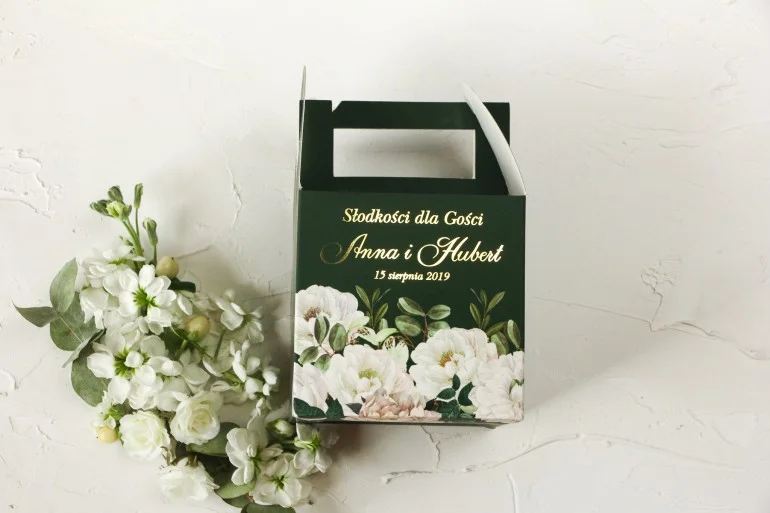
Wedding Cake Box With White Roses, Peonies And Eucalyptus | Szafirowe No. 3 - Square
Exceptions to the rule regarding banns
Although banns are mandatory in most cases, there are some exceptions to this rule. In special circumstances, such as a life-threatening situation for one of the partners, it is possible to accelerate the procedure and enter into marriage without prior banns. Such situations are rare, however, and require special justification and the consent of the appropriate institutions.
Another exception is getting married abroad. Many countries have different regulations regarding banns, and some do not require them at all. If a couple decides to get married outside of Poland, they should carefully familiarize themselves with the regulations in force there and ensure that their marriage will also be recognized in Poland.
Modern law is flexible and adapts to changing social realities. Therefore, it is important to stay up to date with current regulations and always consult with experts in case of any doubts.
Banns and a church wedding.
The role of banns in church tradition
In the world of church weddings, the banns play not only a legal but, above all, a spiritual and symbolic role. In the Catholic tradition, the banns are considered one of the most important stages of preparation for the sacrament of marriage. It is not just a formality, but above all an expression of the couple's readiness to undertake a sacramental commitment before God and the Church.
The banns in a church context are deeply rooted in biblical teachings. They indicate the couple's openness to living in God's grace and their readiness to receive the sacrament of marriage. It is also a time for reflection, prayer, and spiritual preparation for a new stage of life. In many parishes, couples are encouraged to participate in pre-marital retreats, which aim to deepen their faith and understanding of the sacrament of marriage.

Consequences of the lack of banns for a church wedding
The lack of banns in the context of a church wedding can have serious consequences. First of all, without the banns, the sacrament of marriage cannot be administered. This is a canonical requirement that guarantees that the couple is aware of their commitment and meets all church requirements.
If a couple decides to skip the banns and get married without them, their union will not be recognized by the Catholic Church. This can lead to numerous complications, especially if the couple wants to participate in other sacraments in the future, such as baptism or confirmation for their children. Furthermore, the lack of banns can be an obstacle to full participation in church life, such as receiving the Eucharist or serving in the parish.
The process of church banns
The process of church banns begins with the couple reporting to the parish where they plan to get married. In many cases, special documents are required, such as a baptismal certificate, confirmation certificate, or a certificate of participation in pre-marital retreats. After reporting the intention to marry, the banns are announced in the church for three consecutive Sundays before the planned wedding date. This is a time when anyone who has any objections to the couple getting married can report them.
Modern church banns, although based on ancient traditions, have been adapted to today's realities. Many parishes offer the possibility of consulting with a clergyman before the banns are announced, which allows the couple to better understand the significance of this step and prepare for the sacrament of marriage.
Banns and a civil wedding.
Differences between church and civil banns
In Poland, both church and civil weddings are surrounded by certain rituals and procedures that aim to make this important day memorable. However, although both weddings have many common features, there are some key differences between church and civil banns. While church banns have deep roots in tradition and spirituality, civil banns are more formal and focus on the legal aspects of the marriage.
Church banns, as the name suggests, take place in the church and are announced for three consecutive Sundays before the planned wedding date. Their purpose is to inform the parish community about the couple's intention to marry and to provide an opportunity to raise any objections. In turn, civil banns take place at the civil registry office and are more formal in nature. Their main goal is to ensure that the future spouses meet all legal requirements and are free to enter into marriage.



Procedure for banns at the civil registry office
Banns at the civil registry office are a necessary step for all couples who plan to have a civil wedding in Poland. The banns procedure begins with the couple reporting to the appropriate office and presenting all required documents, such as identity cards, certificates of marital status, or, in some cases, divorce certificates.
After reporting the intention to marry, the civil registrar announces the banns. Unlike church banns, which are announced for three weeks, civil banns are announced only once, at least two weeks before the planned wedding date. During this time, anyone who has any objections to the couple getting married can report them to the office.
Consequences of the lack of banns for a civil wedding
Just as in the case of a church wedding, the lack of banns for a civil wedding can have serious consequences. First of all, without the banns, a civil marriage cannot be entered into. The civil registrar has the right to refuse to perform the ceremony if the couple does not meet all required formalities.
Furthermore, if a marriage is entered into despite the lack of banns, it may be declared invalid in the eyes of the law. This can lead to numerous legal complications, such as problems with obtaining a common surname, property rights, or inheritance issues. That is why it is so important to follow the applicable procedures and ensure that all formalities have been met before the big day.
Costs associated with the banns.
Fees for banns at the office and church
Planning a wedding is not just about emotions and joy, but also about many practical issues to resolve. One of the aspects that can generate costs is the banns. In Poland, both the costs of banns at the civil registry office and in the church can vary depending on the location and the individual decisions of the couple.
In the case of banns at the civil registry office, the fee is relatively low and is a one-time cost that covers the administrative aspects of the procedure. In some offices, it may even be waived if the couple decides to get married on specific dates or times.
In turn, the costs of church banns can be more varied. Many parishes do not charge fees for banns, treating them as an integral part of the preparation for the sacrament of marriage. However, in some churches, there may be additional fees, especially if the couple chooses special dates or times for their wedding. It is also worth remembering about possible donations to the church or parish, which, although not mandatory, are often practiced by couples.
Possible additional costs associated with the lack of banns
The lack of banns, although it may seem like just a formality, can lead to serious financial consequences. If a couple decides to skip this step and get married without prior banns, it can lead to legal complications that will generate additional costs in the long run.
First of all, a marriage entered into without banns may be declared invalid, which means the necessity of repeating the entire wedding procedure, including re-covering all associated costs. Furthermore, the lack of banns can lead to problems with obtaining a common surname, which in turn can generate additional administrative fees.
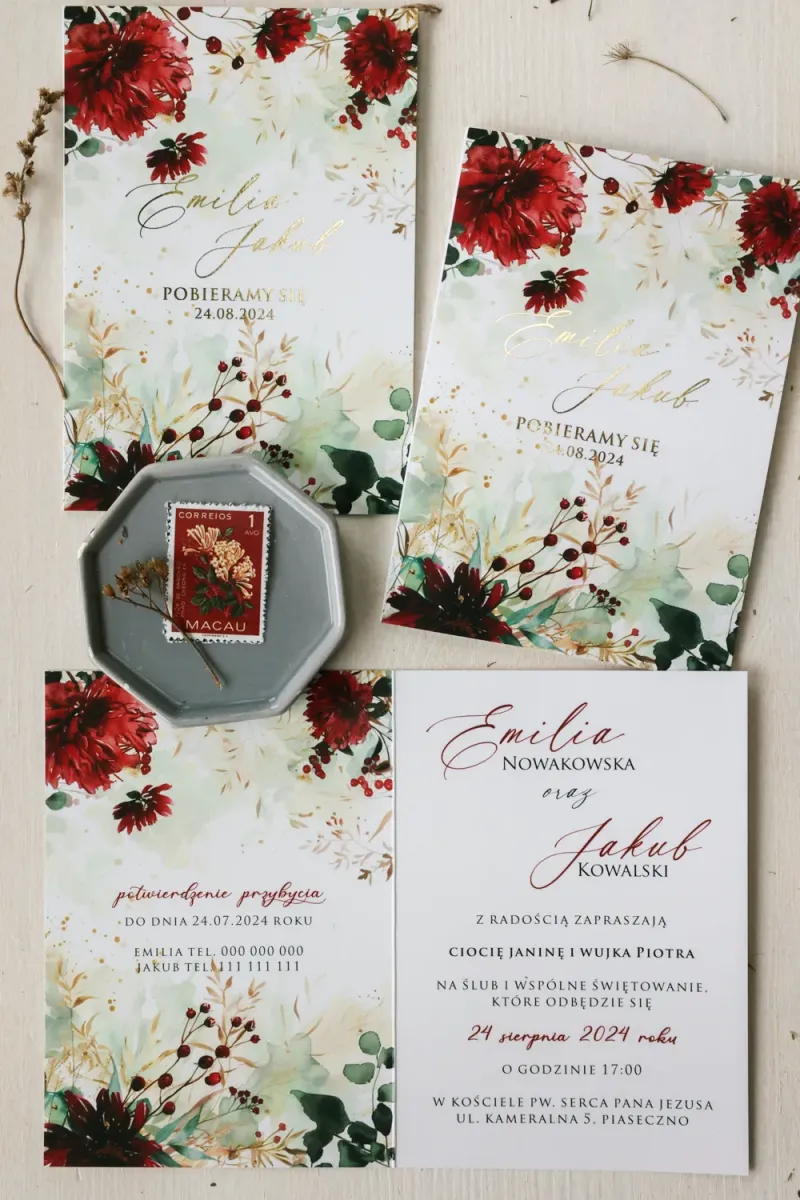
Wedding Invitation With Gold Accent And Red Flowers | Glamour And Boho Wedding Invitations | Ruskus No. 1

Navy And Gold Wedding Invitations With Watercolor Flowers | Elegant Wedding Invitations | Ruskus No. 3

Wedding Invitation With Gold Accents And Peonies | Green Elegance | Ruskus No. 12
Comparison of the costs of banns and potential financial consequences of their absence
Although the fees for banns, both at the office and in the church, may seem small compared to other costs associated with organizing a wedding, skipping them can lead to significantly higher expenses in the future. The lack of banns not only generates the risk of the marriage being invalid but can also lead to the necessity of re-covering the costs associated with the wedding ceremony, purchasing the dress, suit, renting the venue, or catering.
In financial terms, the decision to skip the banns is risky and may turn out to be much more expensive than initially assumed. That is why it is so important to think through all aspects related to organizing a wedding and ensure that all formalities have been met. In the long run, investing in the banns is not just about meeting legal requirements, but also about saving time, nerves, and money.

Alternatives to traditional banns.
Weddings abroad and their regulations regarding banns
More and more couples are deciding to get married abroad, attracted by beautiful landscapes, exotic locations, or simply the desire to experience an unforgettable adventure. However, organizing a wedding abroad involves the necessity of familiarizing oneself with local regulations and traditions. In many countries, the banns procedure differs from the one known in Poland, which can be both an advantage and a challenge for future spouses.
In some countries, such as Italy or Spain, banns are mandatory and have a similar character to Polish ones. They are announced in local offices or churches and are intended to inform the community about the intention to marry. In other countries, such as Mexico or Thailand, the banns procedure is much simplified or does not exist at all. In such places, the main requirement is to present appropriate documents and meet certain formalities.
Civil weddings in other countries
Not only church weddings but also civil weddings in other countries have their specific regulations regarding banns. In many places, a civil wedding is perceived as a purely formal procedure, without additional rituals or traditions. In such countries, banns can be completely skipped or replaced by a simple registration at the appropriate office.
For example, in the United States, in many states, there is no requirement to announce banns before a civil wedding. It is enough to report to the local civil registry office, present appropriate documents, and pay the license fee. This process is fast, simple, and devoid of unnecessary formalities.
Possibility of avoiding banns abroad
For many couples, one of the main reasons for the decision to get married abroad is precisely the possibility of avoiding banns. Although in Poland banns are an important element of wedding tradition, for some they may be perceived as an unnecessary formality or a source of additional stress. Therefore, choosing a place where banns are not required can be an attractive alternative.
However, it is worth remembering that even if a given country does not require banns, it may have other specific requirements regarding entering into marriage. That is why it is so important to carefully familiarize oneself with local regulations and ensure that all formalities will be met. Otherwise, the marriage may not be recognized in Poland, which can lead to legal complications and the necessity of repeating the wedding ceremony.

Wedding Invitation With Gold Foil And Vellum Envelope | Modern Wedding Invitations | Rubin No. 6

Table Plan Rubin No. 6

Soy Candles With Gold Label In White Winter Color Scheme | Natural Guest Thank You Gifts | Rubin No. 6
Social opinions on the banns.
Why do some decide to skip the banns?
Banns before a wedding are a tradition deeply rooted in Polish culture. However, in recent years, some changes can be observed in the approach to this ritual. More and more couples decide to skip the banns, driven by various motivations. For some, it is the desire to avoid additional formalities and shorten the waiting time for the wedding. Others consider banns an unnecessary relic of the past that has no place in the modern world. Still others decide to skip the banns for practical reasons, such as organizing a wedding abroad or the desire to maintain privacy.
Many young people perceive traditional banns as outdated and not meeting their individual needs. In the era of globalization and ease of travel, many couples decide on weddings in exotic locations where traditional banns make no sense. For others, the decision to skip the banns is an expression of rebellion against imposed norms and conventions.
Social consequences of the lack of banns
Although the decision to skip the banns is an individual choice of the couple, it can lead to certain social consequences. In traditional communities, where banns are deeply rooted in culture, their absence may be poorly perceived by older generations. For many people, banns are an important ritual that confirms the seriousness of the relationship and the couple's readiness to take on marital responsibility.
The lack of banns can lead to gossip, misunderstandings, and even conflicts in the family. In some cases, the family may feel offended by the couple's decision to skip the banns, perceiving it as a lack of respect for tradition and family values. In such situations, it is important to have open and honest conversations with loved ones to explain your motives and avoid misunderstandings.
Changing attitudes toward the tradition of banns
Despite some controversy surrounding the topic of banns, one can observe changing attitudes toward this tradition. More and more people perceive banns as an important element of preparation for a wedding, but not necessarily as a mandatory ritual. For many young couples, banns are an opportunity to celebrate with loved ones, but they do not have as deep a meaning as they did for older generations.
Modern society is becoming increasingly open and tolerant of diversity and individual choices. Therefore, although traditional banns still have their place in Polish culture, their form and meaning are evolving in response to the changing needs and expectations of the community. In the future, banns may take on a completely new form, adapted to the modern realities and values of young generations.

Cases where banns are not required.
Exceptional situations that exempt from the obligation of banns
Although banns before a wedding are a deeply rooted tradition in Polish culture and constitute an important element of preparations for entering into marriage, there are some exceptional situations that can exempt a couple from this obligation. These situations are usually related to unforeseen circumstances or specific conditions that make traditional banns impossible or impractical.
Examples of such situations include sudden illnesses that require a quick marriage, decisions to marry made at the last minute, or weddings entered into abroad, where local regulations may differ from Polish ones. In such cases, the necessity of banns may be skipped to allow the couple to enter into marriage quickly and efficiently.
Procedures in exceptional situations
In situations where banns are not required, it is important, however, to follow certain exceptional procedures that will ensure the legality and validity of the entered marriage. In the case of sudden illnesses or other unforeseen circumstances, the couple must present appropriate documents confirming these circumstances, such as medical certificates or other official letters.
When it comes to weddings abroad, procedures may vary depending on the country. In some countries, banns are completely skipped, while in others they may be replaced by other formalities. That is why it is so important to carefully familiarize oneself with local regulations and ensure that all required formalities will be met.
How to obtain an exemption from the obligation of banns?
If a couple is in a situation that they believe qualifies as exceptional and wants to obtain an exemption from the obligation of banns, they should report to the appropriate civil registry office or parish, depending on where they plan to enter into marriage. In many cases, the decision on the exemption from the obligation of banns will depend on the individual assessment of the official or clergyman.
It is important to present all necessary documents and evidence confirming the exceptional circumstances. In some cases, it may also be necessary to conduct additional conversations or consultations to ensure that the decision to skip the banns is justified. In any case, the key is open communication and cooperation with the appropriate institutions to ensure that all formalities will be met and the marriage will be valid and legal.
Benefits of following the tradition of banns.
Why is it worth following the tradition?
The tradition of banns before a wedding is deeply rooted in Polish culture and constitutes an important element of preparations for entering into marriage. But why is it worth following this tradition? First of all, the banns are an opportunity to officially announce the intention to enter into marriage before the local community and family. It is a moment when the couple declares their intentions and asks for a blessing from their loved ones. Following this tradition is an expression of respect for the roots, culture, and values that have shaped us for centuries. Furthermore, it is an opportunity to celebrate the love and joy associated with the upcoming wedding among loved ones.
Social and family benefits associated with the banns
Banns before a wedding bring many social and family benefits. First, it is an opportunity to strengthen family and social ties. Celebrating together, talking, and preparing for the wedding foster building relationships and strengthening bonds between siblings, parents, grandparents, and the young couple. For many families, the banns are an important ritual that confirms the unity of the family and its support for the young couple.
Furthermore, the banns are an opportunity to exchange experiences and advice between generations. The older generation can share their memories, advice, and experiences related to marriage, which can be a valuable source of knowledge and inspiration for the young couple.
Banns as an element of building relationships before the wedding
The banns are not just a formality or tradition - they are an important element of building relationships before the wedding. It is a time when the couple can think together about their future, plans, and dreams. It is an opportunity for deep conversations, reflection, and getting to know each other anew. Preparing for the wedding together, planning the ceremony, choosing the wedding dress or the wedding venue - these are all moments that foster building relationships and strengthening bonds between partners.
Furthermore, the banns are an opportunity to get to know each other's families in a new, more formal context. Joint meetings, conversations, and preparations for the wedding allow for a better understanding of the characters, customs, and traditions of both families, which can be the key to understanding and accepting cultural and family differences between partners. In this way, the banns become an important tool in building strong, lasting, and mutually understanding marital relationships.
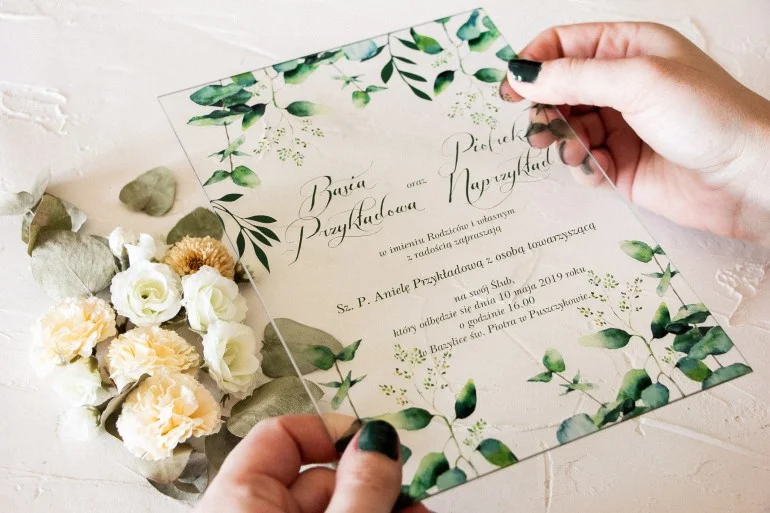
Glass Wedding Invitations With Eucalyptus Motif In Greenery Style | Korani No. 3

Floral Glass Wedding Invitations, Watercolor Flowers, Transparent | Unusual Wedding Invitations | Korani No. 1
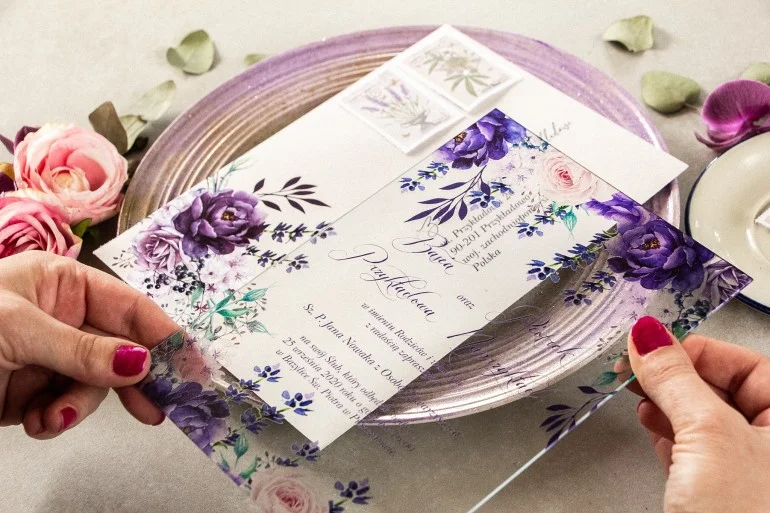
Romantic Glass Wedding Invitations With Lavender | Korani No. 5
Summary and conclusions.
Can you get married without banns?
Pre-wedding banns are a tradition that has accompanied couples deciding to enter into marriage for centuries. In Poland, it is a deeply rooted custom that aims to inform the community about the intentions of the young couple. But can you actually get married without banns? The answer to this question is not straightforward and depends on many factors, such as the chosen wedding venue, cultural traditions, or the individual beliefs of the couple. In some situations and countries, banns are not required, but in Poland, they constitute an important element of the wedding procedure.
The importance of banns in the context of a wedding
The importance of banns is not limited only to formalities. It is an opportunity to share joy with loved ones, to receive a blessing from the family and community, and to prepare for a new stage of life. The banns are also an opportunity to reflect on the future, values, and expectations toward marriage. For many couples, it is an important ritual that strengthens their decision to enter into a marital union.
Encouragement to further explore the topic
Pre-wedding banns are a rich and multidimensional topic that is worth exploring. If you are curious about the traditions, customs, and practices related to banns in Poland and around the world, we encourage you to continue reading and expanding your knowledge on this topic. It is also worth thinking about your own attitude toward this tradition and deciding whether you want to follow it.
If this article has sparked your interest, we also recommend other texts available on our blog. Here are a few that might interest you:
- How to decorate wine for a wedding?
- What is most important in a marriage?
- How to choose the right wedding venue?
- What are the benefits of hiring a wedding planner?
- How to organize a wedding and reception on a budget?
...and many other interesting articles available on our blog. We invite you to read!