Guest List and Seating Chart – How to Create the Perfect Wedding Plan
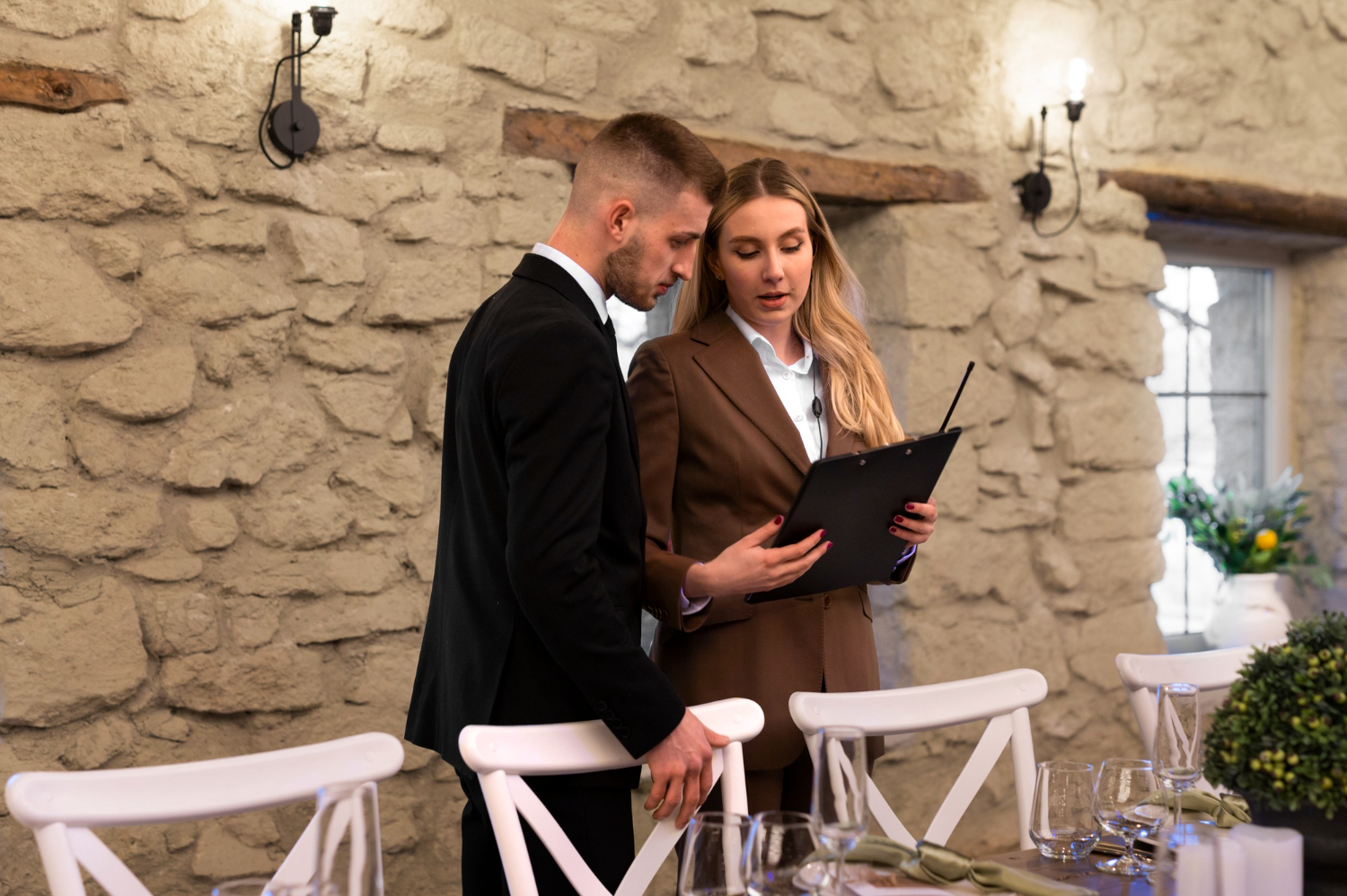
Planning the guest list and seating arrangements is one of the most significant organizational challenges when planning a wedding. The comfort of your loved ones, the overall atmosphere of the reception, and even how guests remember your big day depend on it. A well-thought-out seating chart encourages integration and maintains order, while a lack of planning or seating errors can result in chaos and awkwardness. So, how do you prepare a wedding guest list step-by-step, and what rules should you apply to ensure everyone feels at ease? Below, we present five key steps – from creating the list and seating etiquette to choosing table layouts, modern trends (seating charts, apps), and common mistakes to avoid. With these tips, you will create a table plan that satisfies your guests and simplifies your reception organization.
Table of Contents
1. Step-by-Step: Creating Your Wedding Guest List
Determine Guest Count and Budget: Before you start writing down names, establish the size of the wedding – primarily based on your budget and the venue's capacity. These factors dictate how many people you can invite. It is helpful to set a clear maximum number of guests (e.g., 80, 120, 200) at the beginning, considering the cost per person and the room size. This makes creating the list easier and prevents overspending or overcrowding later on.
Start with Your Inner Circle: It is best to begin the actual list by writing down immediate family and close friends. First on the list should be the people you cannot imagine the day without: parents, siblings, grandparents, the bridal party, and best friends. These are the people with whom you have strong family or emotional ties – their presence is your priority.
Extended Family and Other Friends: Once the inner circle is listed, gradually expand to extended relatives (aunts, uncles, cousins) and other acquaintances. A good approach is to divide guests into categories, for example:
- Bride's Family (immediate first, then extended),
- Groom's Family,
- Mutual Friends,
- Bride's Friends,
- Groom's Friends,
- Work Colleagues and associates of both.
These categories help ensure you don't miss anyone important and make it easier to seat guests in groups who already know each other or share common interests.
Draft List and Verification: Initially, create a "maximum" list – everyone you would like to invite, even if it exceeds your initial plan. Then, keeping the budget and venue capacity in mind, verify it. Unfortunately, it is often impossible to invite every distant relative and acquaintance, so difficult decisions must be made. Set priorities with your partner: perhaps you have little contact with distant cousins and can prioritize close friends instead. Remember, this is your day – invite people you truly want to share it with. If the list is still too long, consider two options: a smaller, intimate reception or a larger wedding at the expense of other costs. It is vital that the final guest count fits your financial and logistical capabilities.

Gaja No. 2 Wedding Invitation – Sage Green with Letterpress Embossing

Glamour Wedding Invitation with Gilded Branch and Velvet Paper – Ruskus No. 14

Kraft Wedding Invitation No. 12 – Forest Style with Pine Forest Graphic
Gathering Guest Data: Once you have a preliminary list, start completing the necessary information: mailing addresses for invitations, phone numbers (for RSVP confirmation), plus-one details, and children. At this stage, it's worth noting who receives an invitation with a plus-one and who is invited solo to avoid misunderstandings later. Also, decide if children will be at your wedding – if so, note their numbers and ages, as this will be useful for planning kids' tables.
Sending Invitations: With your list and addresses ready, you can order and send out wedding invitations to your guests. Do this well in advance (ideally 2-3 months before the wedding, or more if it's peak season) to give guests time to confirm. In the invitation, ask for an RSVP by a specific date – this allows you to know the final guest count sooner, which is essential for the seating chart. The faster you receive confirmations, the sooner you can prepare a detailed seating plan, though be aware that final changes can happen right up until the wedding (e.g., a cancellation due to illness). A good practice is to assume a 5-10% "buffer" – inviting slightly more people than seats, assuming some won't attend. If everyone confirms, you can usually squeeze in an extra place or two.
Organizing the List and Grouping Guests: Once you have confirmations (or at least preliminary declarations), create the final wedding guest list. Now, assign them to the previously mentioned categories. Note who already knows each other (family, friend groups) and who will be at the wedding knowing almost no one. This grouping will greatly facilitate your next task: arranging guests at tables. With groups (family here, college friends there, colleagues separately, etc.), it's easier to plan who should sit with whom to ensure they have a good time. At this stage, you can also consider special needs: which married couples or families should sit together, and who might be better off separated (e.g., if two people are known to be in conflict).
List Flexibility: Remember that the guest list can evolve. Someone might not respond on time or decline – then you can invite someone from your "B-list" (if you created one). However, avoid drastic last-minute changes. As the wedding date approaches, it's best to close the guest list and focus on seating rather than constantly adding or removing people. For your convenience, use guest list organization tools – this could be a spreadsheet, a wedding planner, or a mobile app. Some online wedding organizers allow you to track invitation status, RSVPs, and even guest preferences (diet, accommodation, children, etc.). Use these improvements to keep everything under control.

Glamour Wedding Place Cards with Pearls – Pearls No. 1 White

Lauren No. 3 Wedding Place Cards – Classic Calligraphy Name Cards

Kraft Place Cards No. 12 – Rustic with Forest Panorama
In summary, creating a guest list is a process: you start with a broad list of loved ones, organize it by importance and category, verify it against reality (budget, venue), and finally collect confirmations. With a final list and the room layout in hand, you can move on to planning the table seating.
2. Key Rules for Seating Wedding Guests
Once the guest list is ready, it's time for the wedding table plan – deciding who sits where. Sensible seating is quite a puzzle, but it's worth the time because it dictates the flow of conversation and fun. There are several basic rules for seating guests, derived from both wedding etiquette and practical experience. Below are the most important rules to help you create a harmonious table plan:
-
Honorary Seats for the Inner Circle: According to tradition, the most important guests should sit closest to the Newlyweds. Regardless of the table layout, try to place parents, siblings, and grandparents in a central point of the room, near the head table. The more distant the relationship or intimacy with the couple, the further the seat – this is a natural hierarchy that guests usually understand. At the Head Table itself, it is most common for the Maid of Honor and Best Man with their partners to sit, or the couple with both sets of parents. These are the most popular configurations that highlight the roles of these individuals.
-
Don't Seat Conflicting People Together: Avoid seating people next to each other if you know they are in conflict or dislike each other. Even if you think they'll "make up at the wedding," the risk of a tense atmosphere is too high. Instead, place such individuals at separate tables or opposite ends of a large table to minimize direct contact.
-
Group People by Age or Common Interests: Guests should feel comfortable in their company. Therefore, it's good to seat people of similar age together or those who have things to talk about. Young cousins or college friends will likely enjoy each other's company, just as middle-aged aunts and uncles will form a cohesive group. If you have guests who don't know anyone, try to seat them with a sociable group that will quickly draw them into conversation. Be careful not to isolate single guests – it's a good idea to seat several singles at one table so they feel more at ease, but avoid creating a designated "singles table" as the only criterion, as this can be embarrassing. It's better to mix singles with friends and family of a similar age.
-
Maintain Alternating Order (Male-Female): Classic etiquette suggests seating guests alternating by gender – the so-called alternation rule: woman next to man. This is meant to encourage new conversations (according to savoir-vivre, married couples shouldn't sit together so they talk to others). In practice, however, modern weddings rarely follow this strictly. Most couples prefer to seat spouses or partners together for comfort. A sensible compromise is not to separate couples, but also to avoid situations where one side of a large table is all women and the other all men. Simply aim for some variety. If the number of men and women differs significantly, don't worry about this rule – comfort is more important than rigid etiquette.
-
Comfort and Special Needs: Take care of the comfort of elderly guests, people with disabilities, and families with children. Seniors (grandparents, older aunts, and uncles) should have easily accessible seats – ideally near the exit or restrooms so they don't have to walk far. Avoid placing them right next to speakers or the band, as the noise will make conversation difficult. Older guests often prefer to sit slightly to the side but with a good view of the dance floor to watch the fun. Parents with small children should sit on the "outside" of the table so they can get up with a toddler at any time without disturbing others. If you plan to invite many children, consider a separate kids' table (e.g., for school-aged children). This table should be near the parents' tables so adults can keep an eye on them, while giving the little ones some freedom. For toddlers, the best place is right next to their parents (or a high chair added to the parents' table).
-
Seat with Tact, Don't Isolate Anyone: Ensure no guest feels sidelined or less important. Avoid creating tables where one person is a complete stranger to the rest – mix groups so everyone has someone to talk to. A good trick is combining two families at one table – e.g., seating some of the bride's relatives and some of the groom's together. This helps people get to know each other faster. Traditionally, the bride's family sits on one side of the room and the groom's on the other, but this doesn't mean total separation – guests will move around, toast together, etc. The important thing is that no one feels like they were sat "anywhere" or with people they won't exchange a word with.
By applying these rules, you have a high chance that your guest seating will be a success. Remember, you can't satisfy absolutely everyone – there might always be an aunt who wanted to sit closer to the couple or a friend who hoped for a spot by the bar... ? But if the majority of guests feel comfortable and in good company, your reception will have a great atmosphere. Once you have a draft layout, it's time to match it to the actual table arrangement in the venue.
3. Table Layouts and Guest Comfort – Round vs. Rectangular and More
The table layout at the wedding venue significantly impacts how guests communicate and celebrate. Conversation flows differently at one long table versus many small ones. Before deciding exactly who sits where, you must know the table setup possibilities of your venue. Consult with the venue manager to find out what configurations are available – whether the room allows for round, rectangular, or mixed tables, and how many people each layout can accommodate. Here is an overview of different layouts with their pros, cons, and impact on guest comfort:

Golden Fortune Cookies with Personalized Label | Affordable Wedding Favours | Cejla No. 3

Simple No. 3 Soy Candle – Gold Foiling & Elegant Wedding Favours

Merci Favour with White Flowers, Green Leaves | Elegant Guest Gifts | Impresja No. 10
Rectangular Tables (Long)
Traditional rectangular tables are still the most common solution, especially for larger weddings. They can be arranged in long rows or set separately. Their main features are:
- More people per table: A long rectangular table fits more guests than a round one of similar width. This means it's easier to seat a large family together. Rectangular tables allow for efficient use of space – you can usually fit more people into the same room using rectangular tables than round ones.
- Classic and Universal: Long tables are a wedding classic, fitting any style and venue type. This layout is familiar to most, so guests intuitively know what to expect.
- Easier Integration in Large Groups: When you seat 10-14 people at one long table, a large group forms where there's always someone talkative. Shyer people can "hide" in the crowd, while extroverts keep the energy up. In a way, rectangular tables promote general integration – a large portion of guests sit together, making shared toasts and wide-group conversations easier.
- More Space for Food and Decor: A long table usually has more room for platters, drinks, floral decorations, and place cards. Servers can also more easily place a cake stand or additional dishes in the center.
- Cons – Less Intimacy and Elegance: The downside is that at very long tables, guests across from each other are quite far apart, and it's hard to talk to someone at the other end. Conversations tend to happen in small sub-groups (4-6 people nearby). Rectangular tables are also sometimes perceived as less elegant – more of a rustic, feast-like vibe compared to sophisticated round tables. If you're aiming for luxury or modernism, long benches alone might not provide it.
Rectangular Table Configurations: You have several options here. You can do a banquet layout – several separate rectangular tables spread evenly (e.g., 5 tables of 10 people). You can also join tables into U-shape or T-shape – often used because the couple sits in the middle, with wings of tables for guests on both sides. The Horseshoe (U) layout provides an open space for the dance floor in the middle and good visibility of the couple for everyone, but makes conversation between guests at the ends difficult. Meanwhile, parallel rows resemble a banquet hall – the couple can sit at a separate table at the front, with rows of guest tables before them. In this case, ensure tables aren't too long so those at the ends don't feel far from the action.

Flores No. 1 Soy Candle in Gypsum – Gilded Wedding Favour

Kraft No. 5 Soy Candle in Plaster – Sunflowers Wedding Favour

Flores No. 2 Soy Candle in Gypsum – Burgundy Flowers Wedding Favour
Round Tables
Round tables are gaining popularity and are considered more elegant. They typically have a diameter for 6-10 people, creating intimate groups. Their characteristics:
- Everyone Sees Each Other and Is Equal: A round table automatically removes the issue of a "better" or "worse" seat – there is no head of the table, and no one sits on the edge. Everyone at a round table has equal status and easy eye contact with one another. This encourages group conversation – guests can talk to the left, right, and even across without shouting. This layout is often more psychologically comfortable as no one feels "stuck at the end.".
- Elegant Appearance: There's no denying that round tables look very elegant and classy. Many associate them with the exquisite receptions seen in movies. White tablecloths flowing evenly on all sides, symmetrically placed settings – it gives a sense of luxury. If you're planning a grand decor, round tables can highlight it.
- Intimate Groups: A round table usually seats 8 people (sometimes 10). This creates smaller groups, which has pros and cons. The pro is that these 8 people usually find common ground easily. The con is that groups are separated from each other, so guests might mix less between tables. Therefore, it's important to choose the composition of each table carefully.
- More Space Between Tables: Round tables require more room space than rectangular ones (they can't be joined or pushed against a wall), which often means a lower total guest count. However, they provide more space for movement – guests have easy access to every seat, and it's easier to get up without disturbing others. The dance floor can be surrounded by loosely placed tables, creating an open feel.
- Cons – Lower Overall Integration and Costs: As mentioned, guests at round tables celebrate in their small groups. This can result in less integration between tables – you need to ensure people mix, e.g., through games or shared toasts. Another issue is cost – round tables often need to be rented (if the venue only has rectangular ones) and require more decorations, as each table must be decorated separately (more floral arrangements, more linens, more place cards). With 10 separate tables instead of 3 long ones, decoration costs can rise significantly.
Round Table Layout: Most often, round tables are arranged symmetrically around the dance floor or central point. The Head Table can also be round (though often the couple sits at a rectangular table for distinction even if the rest are round). Choosing this layout, you have a decision: closed layout – tables around the couple in symmetry, or scattered – tables placed loosely without a clear center besides the dance floor. It's vital that every table is numbered and easily identifiable, with a seating chart or board to help guests find their way.

Glamour Wedding Place Cards No. 1 – Satin Name Cards with White Print

Cappuccino Wedding Place Cards No. 1 – Satin Ribbon Table Name Cards

Rose Bow Wedding Place Cards No. 1 – Pink Satin Glass Ribbon Cards
Mixed and Unusual Table Layouts
You don't have to limit yourself to "round or rectangular." Sometimes you can combine both – e.g., the head table for the couple and parents is rectangular, while guests have round tables. It all depends on the room layout and your aesthetic vision. It's becoming increasingly popular to give the hall an unusual character through creative table placement. Besides U or T shapes, consider:
- L-shape layout – e.g., two long tables perpendicularly if the room is long and narrow. This is often used for zone division (one wing for family, another for younger friends).
- Block tables – several tables joined to form one large square or rectangle. For instance, four tables forming a square with a decoration in the middle.
- Cocktail or high-top tables – if you're planning a more casual garden party or standing banquet, some guests can use high bar tables instead of traditional seating. In this case, the table plan is more about "zones" than specific seats.
Remember that the table layout should consider visibility and ergonomics. The couple should be visible to everyone – usually, your table stands at the front, often on a platform or central to the entrance. Ensure no guest sits with their back to the couple – guests should see the first dance and speeches from the side or front. Also, take care of aisles between tables – servers need to pass freely with trays, and guests need to pull out chairs without bumping others. If the room is tight, it's better to lose one table for more breathing room.
Impact of Layout on the Party: Your choice should depend on the style of your wedding and the character of your guests. If you have mostly young friends and like informal vibes, round tables or a cocktail layout can promote a relaxed atmosphere. If families are large and expect a traditional wedding, long tables work better so no one feels divided. An interesting solution is combining different layouts – e.g., several round tables for youth plus one long table for seniors. Most importantly, everyone should be comfortable: able to talk without shouting over music and enjoy the company of those they like.
Finally, regardless of the layout, a well-prepared wedding seating chart will help guests find their place. In the next section, we'll discuss modern ways to plan seating – from elegant display boards to apps that streamline the process.
Golden Fortune Cookies with Personalized Label | Affordable Wedding Favours | Cejla No. 3

Fortune Cookies with Bottle Green Label | Personalized Wedding Favours | Cejla No. 2

Personalized Fortune Cookies, Light Grey | Original Wedding Favours | Cejla No. 7
4. Modern Trends and Tools for Seating Planning
Planning guest seating today is much more than sketching chairs on a piece of paper. Modern couples have both imaginative forms of seating chart presentation (boards, posters, decor) and digital tools to facilitate the layout. In this section, we present the most interesting trends and useful tools and apps that can make this task simpler.
Seating Charts and Creative Displays
Years ago, many weddings didn't use any information boards – guests just took any seat or staff directed them. Today, a seating chart placed at the entrance is standard. This guest board serves a vital organizational function: it allows everyone to quickly check which table they are at, preventing chaotic wandering. Additionally, it can be a beautiful decoration. What are the trends in preparing a seating chart?
-
Classic Board or Poster on an Easel: A very popular solution is an elegant poster with the table plan, set on an easel at the entrance. Such a poster should be legible – ideally a light background and clear font. Usually, the couple's names and date are at the top, followed by table numbers and guest lists. It's important that table numbers or names are clearly visible – they can be highlighted with color or a larger font. The layout can be alphabetical (all guests in order with their table number) or grouped by table – choose one method and stick to it. The board should stand in a highly visible spot.
-
Seating Chart on a Mirror: An absolute hit of recent seasons is writing the seating plan on a large decorative mirror. A gold-framed mirror with hand-calligraphed names looks stunning – this is especially trendy for glamour, boho, or rustic weddings. You can order these from decorators or DIY using special markers. A mirror adds a luxurious touch while serving its purpose. Just ensure it's securely placed at the right height.
-
Rustic Boards and DIY: For rustic, boho, or industrial weddings, unconventional forms are popular. For example, the plan can be written on an old wooden board or door, decorated with greenery. Another idea is hanging cards with table lists on a string with clothespins. Others use a frame with macramé. The possibilities are endless: chalkboards, canvas prints, or even engraved plexiglass or wood. The style should match the rest of your decor.
-
Transparent Boards (Acrylic): A modern trend is clear acrylic boards with white or gold printing. This looks light, elegant, and fits minimalist, modern weddings. Often placed on an easel with delicate flowers behind it, the transparent board gives a cool effect where letters seem to float in the air. This is for those who love modern design.
-
Personalizing Table Names: More couples are moving away from numbering tables in favor of naming them. Instead of "Table 5," you could have "Paris," "Barcelona," "Rome" – if travel is your theme. Or names of flowers, places important to you, or favorite songs. These names then appear on the chart and the tables. It's a sweet touch that sparks conversation. Just ensure there's still some logic to the arrangement. Personalized names make the seating chart even more unique.
-
Wedding Place Cards on Tables: The board gets them to the table, but once there, they need to find their specific seat. Here, place cards are the standard – small cards with the guest's name at each setting. They prevent confusion and disputes over seats. They also act as decor and can be a keepsake. Various types of place cards are available – from hand-calligraphed cards to printed ones matching your theme. A popular trend is combining the place card with a wedding favor – a small gift with a name tag. For example, a small jar of honey or a bottle of liqueur. This is a lovely thank you to guests while indicating their seat. Guests feel appreciated when they see a personalized gift.
In summary, seating charts and place cards are now an indispensable part of any polished wedding. A well-designed board ensures guests find their table without trouble, while the style adds to the decor. Place cards prevent seating confusion and add elegance to every setting. It's worth spending a moment to design them beautifully.
Digital Tools for Seating Planning
Planning the layout can be complex, especially with many guests and varying table sizes. Fortunately, there are various apps and software for wedding table planning. Instead of drawing by hand, you can use dedicated tools that make the task much easier. What are the benefits?
-
Easy Changes: Almost everyone planning a wedding experiences a last-minute change. Digital seating planners allow you to edit the layout in seconds – move a guest, change numbering, or add a table without a mess. This is a huge time and stress saver. Even if you need to shuffle things the day before, you can do it instantly and print the updated plan.
-
Venue Visualization: Most apps let you set room dimensions and place tables on a mockup. You can see how tables will be arranged, the space between them, and if the dance floor is big enough. Advanced tools like AllSeated even offer a 3D view. This helps assess if the layout is functional. You can also share this plan with your decorator or florist.
-
Guest List Management in One Place: These programs are often linked to your guest list management. You import names, mark RSVPs, add notes like "vegetarian," and then drag and drop them to tables. Everything is in one place, minimizing the risk of forgetting someone or double-booking a seat. Some tools even allow for sending notifications or printing place cards directly.
-
Examples of Popular Tools: Among the most popular apps for seating planning are AllSeated, WeddingWire, and PerfectTablePlan.
- AllSeated – A very comprehensive free online app. It lets you replicate the room layout with a library of table shapes and sizes. It also handles guest lists and grouping (you can even flag potential conflicts so the app suggests keeping those people apart!).
- WeddingWire – A popular wedding service offering an online planner module. Useful if you want one comprehensive tool for the whole wedding.
- PerfectTablePlan – A dedicated paid software for seating. It has advanced options for preferences, relationships, and statistics. Great for large, complex weddings.
Additionally, simple free tools can be found on Pinterest or Canva. There are also mobile apps like Table Planner that help you plan on your smartphone.
-
Technology and Stress Reduction: In conclusion, using technology can greatly simplify your life. Instead of crossing out names, you make changes with a few clicks. You gain peace of mind that the layout is comfortable. In the heat of wedding prep, any streamlined element is worth its weight in gold.
Finally, remember: even the best app doesn't know your guests like you do. Use technology's suggestions wisely and trust your intuition. You know who gets along and who is better seated apart. Combining your knowledge of family and friends with modern tools is the recipe for a perfect wedding seating chart.

Lauren No. 1 Wedding Table Plan – Classic Monogram Seating Chart

Elegant Wedding Welcome Sign with Black & White Photos – Photo Design No. 7

Rubin No. 5 Wedding Seating Plan – Purple Heather and Gold Motif
5. Common Seating Chart Mistakes and How to Avoid Them
Even with great tools and rules, it's easy to stumble. Time pressure, family influence, or simple human error can lead to mistakes that cause stress at the wedding. How to avoid them? Here are the most common mistakes and advice on how to prevent them:
-
No Assigned Seating (Free-for-all): The decision not to assign specific seats might seem tempting – "let them sit where they want, it'll be relaxed." Unfortunately, this is a recipe for chaos. Guests wander around confused, take seats randomly, or couples get separated looking for open chairs. You might end up with the last few people having nowhere to sit together or someone important in a corner. Remember, who a guest sits next to affects their wedding memories. It's better to plan ahead. How to avoid: Always prepare a seating chart and place cards – even a simple one. A list at the entrance solves many problems.
-
Seating Conflicting or Mismatched People Together: This is a classic error. If you seat people who feel uncomfortable with each other (feuding relatives, exes, people with clashing views), you're asking for a tense atmosphere. Similarly, seating a young person with a much older group can make them feel isolated. How to avoid: Do some family "reconnaissance" – ask parents if there are any animosities you might not know about. Then, apply the rule: don't seat conflicted people together. If in doubt, separate them. Also, don't seat one single person in a group of only couples (the "fifth wheel" feeling).
-
The "Singles Table" – Singling Out Solo Guests: As mentioned, creating a table exclusively for solo guests is usually a bad idea. It stands out ("oh, that's the table for those without partners") and can be embarrassing. How to avoid: If you have many singles, spread them out (2-3 per table) with other guests. This way, they aren't isolated and can meet new people. If you do group them, add a few sociable couples to the mix to keep things integrated.
-
Inappropriate Seats for Seniors and Children: Couples often forget special needs in the rush. Errors include: seating grandparents right in front of speakers, placing an elderly relative far from the restroom, or seating young kids far from their parents. How to avoid: When reviewing the plan, check for seniors and families. Seat older guests near exits/restrooms and away from speakers. For children, if they are very young, seat them right next to their parents. Older kids can have a dedicated table, but it must be near their adult guardians. Ensure parents can see their kids.
-
Lack of Legibility and Consistency: This is a technical error – a plan that is so complicated or unreadable that guests still struggle. E.g., a board written in a heavily stylized font or missing clear table numbers in the room. How to avoid: Prioritize simplicity and clarity. Print the plan in a large font. Mark tables with numbers – ideally standing numbers in the center of the table visible from afar. If using names, ensure the signs are visible. Have the DJ/MC announce that the seating chart is at the entrance. Check place cards for typos or duplicates beforehand.
-
Planning Too Late and Not Informing Staff: Last-minute plans lead to errors. If you give the venue the plan on the day of the wedding, they may struggle to set up correctly. How to avoid: Start early, at least in draft form. As final RSVPs come in, just make adjustments. Have the plan ready about a week before. Consult with the venue manager to ensure your layout is possible. Provide the final plan to staff at least a few days before the wedding, along with place cards/numbers. On the day, have a family member or bridesmaid double-check the setup.
-
Ignoring Guest Requests or Suggestions: Guests might signal preferences that you shouldn't ignore if possible. E.g., an aunt wanting to sit with her sister. How to avoid: Listen when guests confirm. You can't fulfill every wish, but small requests are worth considering. A guest with hearing issues will be grateful to be away from speakers. Someone shy will feel better with familiar faces. Use this information for better seating.
In the end, remember – a perfect table plan is one where most guests feel relaxed. By avoiding these mistakes, you ensure everyone finds their place and starts celebrating with a smile. Once they're seated, good food and great company will do the rest. You can enjoy your day without worrying about seating disputes.
Summary: Organizing the guest list and seating is a big undertaking, but with a step-by-step plan, you'll succeed. The key is starting early, thoughtful seating considering relationships, choosing a layout that fits your vision, and using available aids (charts, apps). Don't be afraid to spend time on this – in the end, guests will feel cared for, and the wedding will have a joyful atmosphere. A table plan is the map of your wedding – well-drawn, it leads everyone to the right place for wonderful memories. Good luck creating your ideal seating chart!
We also encourage you to check out other articles on our blog to deepen your wedding organization knowledge:
-
Seating Charts at the Wedding Reception – Practical Tips and Inspiration – if you're looking for ideas on how to create an impressive seating chart, you'll find plenty of inspiration here.
-
How to Make a Guest List? A Guide for Engaged Couples – learn how to organize your list step-by-step, who to invite, and how to avoid typical selection pitfalls.
-
What to Write on Place Cards? A Guide for Future Spouses – discover practical tips for creating place cards that serve an organizational purpose and decorate the tables.
-
How to Introduce Guests at a Wedding? – find ideas for subtle yet effective ways to introduce guests to one another, breaking the ice for a friendly atmosphere.
We hope our articles help you plan every detail and make your wedding day exactly as you dreamed! Good luck with your preparations!