How to Address Wedding Invitations for a Married Couple?
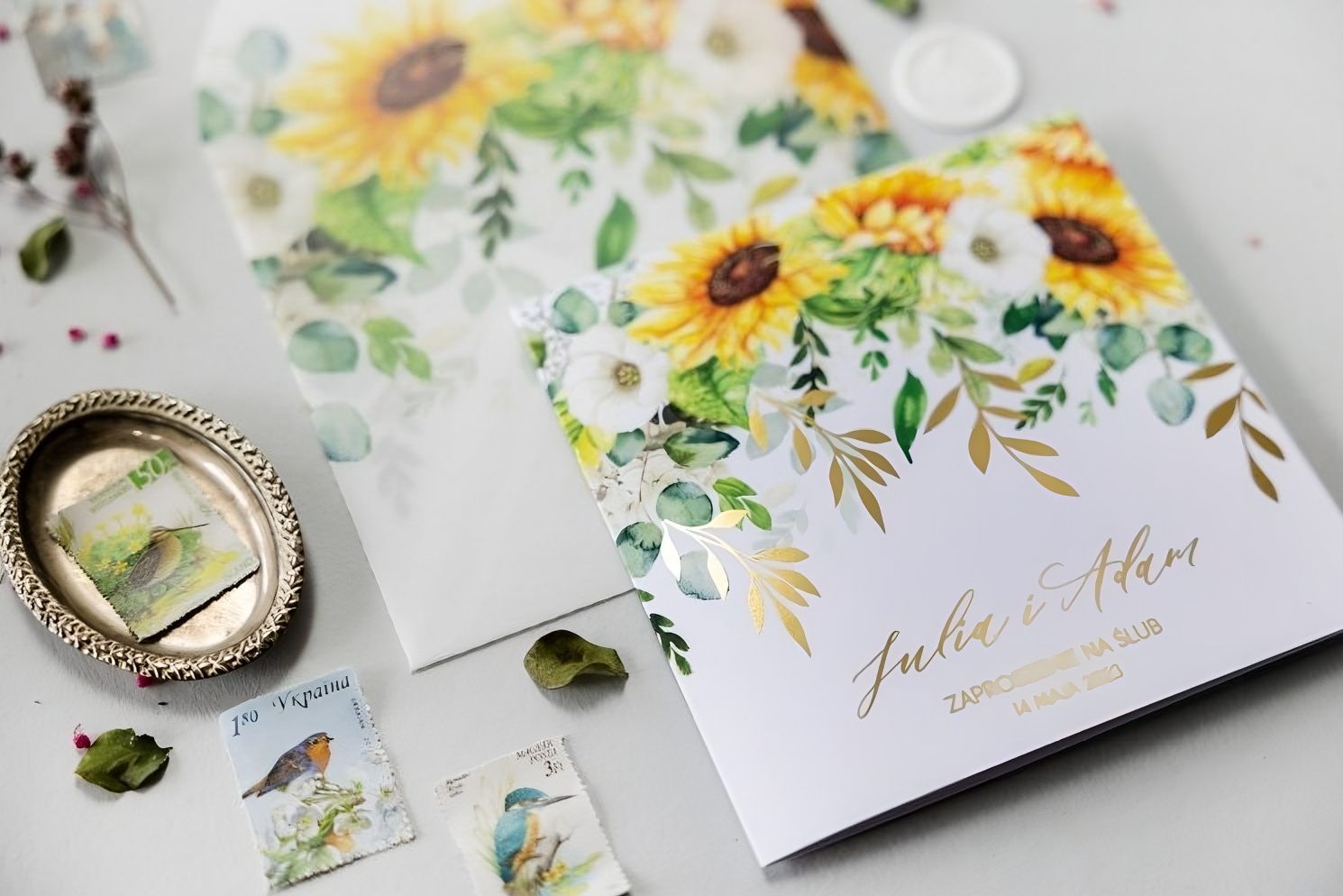
An Introduction to Wedding Invitation Traditions
The History and Tradition of Wedding Invitations Across Cultures
Have you ever wondered where the tradition of sending wedding invitations comes from? To understand this phenomenon, we must delve into history. Before wedding invitations became a common practice, news of an upcoming wedding was spread by word of mouth. The first forms of invitations were very simple, often just verbal, and their main purpose was to inform the community about the upcoming event. It wasn't until Renaissance Europe, thanks to the invention of the printing press, that the first written invitations began to appear. However, these early forms of invitations were reserved for the aristocracy and wealthy burghers.
Each culture has developed its own unique traditions regarding wedding invitations. For example, in Poland, traditional wedding invitations were often decorated with folk motifs, while in Asia, they were richly illustrated cards with delicate calligraphy and symbolic drawings. India is famous for its colorful and ornate wedding cards, which often reflect the richness of the country's culture and traditions. Modern invitations combine tradition with modernity, allowing couples to take an individual approach to the subject and reflect their own tastes.
The Importance of Personalization in Invitations
Remember that an invitation is not just a piece of paper with information about the date and place of the wedding. It is, above all, the first signal to guests about the character of the reception. That is why invitation personalization is so important. Nowadays, when we have almost unlimited choices of design, color, or form, it is worth ensuring that it is consistent with the character of the entire wedding. Polish couples are increasingly opting for custom-made invitations that reflect their history, shared interests, or passions.
Personalizing wedding invitations is not just a matter of aesthetics. It is also a way to show guests how much they mean to us. Small details, such as handwritten names, special dedications, or shared photos, make the invitation unique and one-of-a-kind. In Poland, there is a growing popularity in creating invitations with motifs related to the wedding venue or the couple's hobbies. Such an approach makes every invitation a small work of art that reflects the individuality of the bride and groom.
Why is the Content of the Invitation Worth Paying Attention To?
Although the design of the invitation is undoubtedly important, the content is the heart of every invitation. By choosing the right words, we can evoke emotions, convey deep meaning, or simply inform about important details regarding the ceremony. In Poland, where wedding tradition is deeply rooted in culture, the content of the invitation plays a key role. It is worth ensuring that it is clear, understandable, and contains all necessary information.
The content of a wedding invitation is not just dry information. It is, above all, an expression of love, respect, and joy in sharing this special day with loved ones. That is why it is so important to think about every word, choose those that best convey our feelings, and not be afraid to add a personal touch. Modern couples in Poland often choose to add short poems, quotes, or even anecdotes that reflect their history. Such an approach makes the invitation not only a practical communication tool but, above all, an expression of deep feelings and emotions.
Table of Contents
Basic Elements of an Invitation
Explanation of What Information Should Be on an Invitation
Every wedding invitation, regardless of its style and form, should contain certain key elements that inform guests about the upcoming event. In Poland, where wedding traditions are so deeply rooted in culture, wedding invitation elements are an important aspect of the entire wedding preparation. At first glance, it may seem that assembling an invitation is a simple matter, but it is actually worth thinking carefully about what we want to convey to our guests.
First of all, the invitation should include the names of the future spouses. This is obvious, but it is worth remembering to pay attention to readability and spelling. Next, information regarding the date and place of the wedding is essential, as well as the location of the wedding reception if it takes place in a different venue than the ceremony. It is also important to provide the address of the church or civil registry office where the ceremony will take place. For many couples, an important element is also adding a short quote, poem, or their own reflection, which adds an individual character to the invitation.
The Role and Importance of the Date, Time, and Place of the Wedding
In the digital world we live in, it is easy to forget how important specific invitation information is. In the case of wedding invitations, the date, time, and place are of key importance. Thanks to them, guests know when and where to appear to participate in the ceremony and enjoy it together with the bride and groom.
The wedding date is not just a specific day on the calendar. It is a symbolic moment that the couple has chosen to vow love and fidelity to each other for life. In Poland, where the wedding season lasts mainly from May to September, the wedding date is often chosen taking into account tradition, weather, or other personal preferences. The time of the wedding also has its meaning. Many couples choose a traditional church wedding on a Saturday afternoon, but increasingly, one can encounter ceremonies taking place at other times of the day, such as a morning wedding or an evening ceremony. The place of the wedding is equally important. Whether it is a traditional church in the hometown, an outdoor wedding by the lake, or perhaps an elegant palace – each place adds a unique character to the celebration.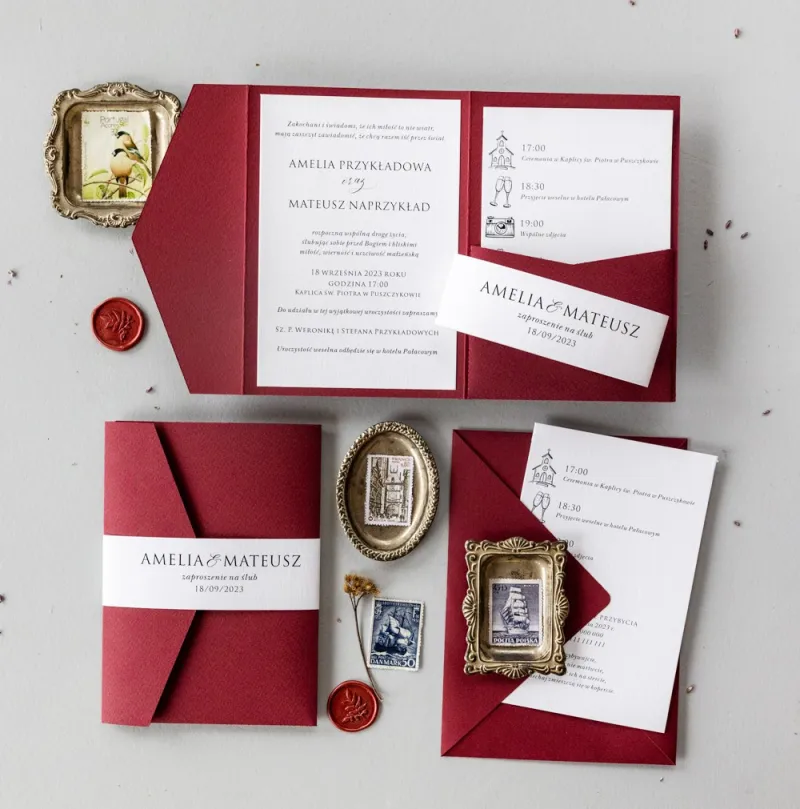
How to Formulate a Request for RSVP
Nowadays, when life is so busy, confirming attendance at a wedding has become a key element of preparations for the ceremony. Thanks to it, the couple can better plan the wedding reception, know the exact number of guests, and adjust the catering or seating accordingly. In Poland, where wedding tradition is deeply rooted in culture, RSVP is not only practical but also an expression of respect for the hosts.
The request for RSVP should be formulated in a clear but also cordial way. It can be a simple line of text, such as "Please confirm your attendance by [specific date]", but also a more elaborate request, containing additional information, e.g., regarding accommodation for guests from afar or dietary preferences. Modern wedding invitations often include special RSVP cards that guests can fill out and send back to the couple. Such a practice not only facilitates organization but also allows guests to feel more involved in the wedding preparations.
Ways to Address a Married Couple
Traditional and Modern Forms of Addressing Married Couples
Addressing wedding invitations for married couples can be an ambiguous issue. How to address close family, and how to address colleagues from work? Are there differences between traditional forms of addressing and modern forms of addressing?
In Poland, traditional forms of addressing a married couple reflect social relationships characterized by formality and respect. Classic forms such as "Mr. and Mrs." or "Dear Sir/Madam" were and still are often used in more formal circumstances. If we are talking about invitations to important ceremonies, such as weddings, confirmations, or baptisms, such phrasing still has its place.
However, modern couples are increasingly choosing less formal forms of addressing, especially when it comes to inviting friends or colleagues. Forms such as "Dear [Name] and [Name]" or using first names address guests directly and add a more personal character to the invitation.
Differences in Addressing Based on Acquaintance and Relationship with the Couple
The key to correctly addressing an invitation is understanding and appreciating the relationship with the couple. While for close family and friends the forms can be more loose and direct, for professional acquaintances or neighbors, it is worth opting for a bit more formality.
The acquaintance and closeness with the couple dictate how to address a married couple on the invitation. For family and close friends, using first names and informal forms of address is not only acceptable but desirable. For example: "Dear Ania and Jacek, we invite you...". In the case of less close relationships, such as neighbors, work colleagues, or distant family, it is better to opt for more formal forms, such as "Dear Mr. and Mrs. Kowalski" or "Ms. Anna and Mr. Jacek Kowalski".
Examples of Using Appropriate Formulas in Invitations
Knowing how important proper addressing of invitations is, it is worth thinking about specific examples of using appropriate formulas. Below are a few suggestions:
- For close family: "Dear Grandparents, we cordially invite you to our wedding, which will take place..."
- For childhood friends: "Dear Magda and Piotrek, we cannot imagine this day without you! We invite you..."
- For work colleagues: "Dear Ms. Ewa and Dear Mr. Jakub, we would like to invite you to our wedding with joy..."
- For distant family or neighbors: "Dear Mr. and Mrs. Nowak, it is with great pleasure that we would like to invite you to our wedding..."
By remembering these rules and examples, you can match the appropriate forms of address to every married couple invited to the ceremony, creating an atmosphere of respect, warmth, and closeness.
Adding Personal Touches
Inspirations for Adding Personal Notes or Poems
In the digital age, where many things are mass-produced and repetitive, wedding invitation personalization is becoming not only fashionable but also desired by couples. One way to make an invitation unique is to add personal notes or poems that reflect the character and history of the couple.
Invitation poems do not have to be long or complicated. They can be short, sweet, and simple, but it is important that they are sincere and have deep meaning for the couple. For example, if the couple has a shared hobby, such as mountain climbing, they can use a poem like: "Together we conquered mountain peaks, now we invite you to celebrate our life victory with us - our wedding". Another idea is to use a fragment of the couple's favorite song or quotes from books that play an important role in their lives.
How to Make an Invitation More Intimate and Special
The key to wedding invitation personalization is adding elements that have meaning for the couple. But how exactly to do that? Here are a few suggestions:
-
Photos: Adding a shared photo of the couple can make the invitation more personal. It could be a photo from the first date, from a favorite vacation spot, or just a spontaneous selfie.
-
Quotes: If the couple has a favorite quote from a movie, book, or song that captures their relationship, it is worth adding it to the invitation. It could be something romantic, funny, or deeply philosophical.
-
Graphics: If the couple has a shared hobby or passion, you can use graphics reflecting these interests. For example, if the couple loves travel, they can use a world map with marked places they have visited together.
The Role of Memories and Shared Moments in Invitation Personalization
Every couple has their own unique story, full of precious memories and special moments. Using these moments in the invitation can make it truly unique and full of emotion. Imagine an invitation with a small note about how the couple met or about their first trip together.
You can also think about adding a small anecdote or story that reflects their relationship. For example, if the couple first met at a rock concert, they can write a short story about that night and how it influenced their future life. Another idea is to add a list of "firsts" - first date, first kiss, first trip together.
Memories in the invitation add depth and emotion, allowing guests to better understand and appreciate the couple's history, as well as feel more involved in their big day.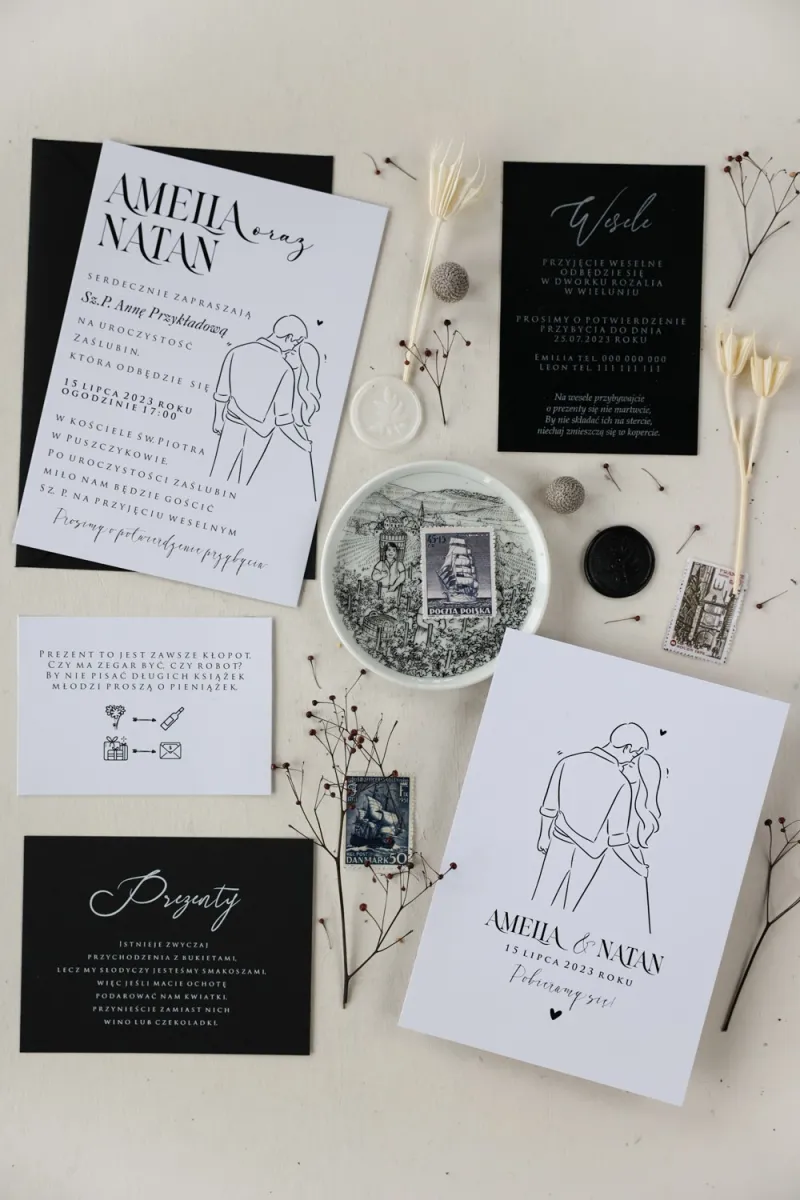
Including Practical Information
How to Inform About Dress Code, Parking, or Accommodation
In an era where weddings are becoming increasingly personal and unique, many couples decide to introduce certain guidelines regarding attire or other aspects of the ceremony. Properly informing guests about these details is extremely important to avoid misunderstandings and ensure everyone's comfort during the ceremony.
Wedding dress code should be clearly defined on the invitation. When it comes to attire, it is worth providing precise guidelines - whether it will be formal, semi-formal, or perhaps casual. You can also provide color suggestions if the couple would like guests to follow a certain color palette.
When it comes to parking, it is worth adding information about the availability of parking spaces near the ceremony and reception venue, whether they will be paid parking lots, and whether the organizers will provide transport for guests.
Regarding accommodation, if the wedding takes place in a remote location, it is good to provide suggestions for hotels or guest houses in the area, with which the couple may have previously negotiated special rates for wedding guests.
The Role of a Map and Directions
Nowadays, when most of us use navigation on our smartphones, it might seem that traditional maps have become unnecessary. However, a wedding map has not only practical but also aesthetic significance.
Directions and a map can be decorated in the style of the rest of the invitation, creating a cohesive whole. Additionally, for older people or those who may have difficulty using modern technology, such traditional directions will become invaluable.
The map should be clear, contain the most important landmarks, and clearly mark the place of the ceremony and reception. If the wedding takes place in a hard-to-reach location, it is worth adding additional tips and information about potential difficulties in getting there.
Other Useful Information for Guests
In addition to basic information about dress code, parking, and accommodation, it is worth including other small but useful tips for guests on the invitation. This could be information about whether there will be childcare on site, whether the wedding will last until late at night, or perhaps additional attractions are being organized, such as a photo booth.
If the couple is planning special attractions, such as fireworks displays or releasing lanterns together, it is worth informing about this so that guests are prepared and can enjoy these moments together with the bride and groom.
Also, do not forget about food allergies. More and more people suffer from various types of allergies or food intolerances. A good idea is to allow guests to report their dietary preferences before the reception, thanks to which the organizers will be able to adjust the menu.
When all practical information on the invitation is clearly and transparently presented, guests feel appreciated and comfortable, knowing that everything has been thought through for their convenience and pleasure of participating in this special day.
Choosing the Right Language and Tone
Balancing Formality and Informality
When it comes time to write a wedding invitation, many couples face the challenge of what vocabulary to choose. The language of a wedding invitation is key because it reflects the character of the ceremony and the relationship with the guests. Modern weddings can differ in tone – from very formal, traditional ceremonies to loose, informal gatherings. Therefore, the balance between formality and informality is so important.
By choosing a formal invitation, you can focus on traditional formulas and phrases. Using full names, avoiding abbreviations, and using more sophisticated language can be key here. On the other hand, an informal invitation gives more freedom in choosing words and allows for the introduction of more personal touches, such as nicknames or loose phrases.
The Importance of Appropriate Language Depending on Guests
Guests invited to a wedding are usually a mix of family, friends, work colleagues, and other acquaintances. Therefore, the language used in the invitation should reflect this diversity while being appropriate for everyone.
For family, especially older members, it is worth choosing more traditional language that will be understandable and appropriate for them. However, for friends, especially those from the younger generation, you can afford a bit more freedom in expressions. If the guest list includes people from other countries or cultures, it is worth considering a bilingual invitation.
The key is to understand your guests and adjust the language so that everyone feels appreciated and understood.
Examples of Different Invitation Tones
To illustrate how different an invitation can be depending on the chosen tone, here are a few examples:
-
Formal: "We have the honor to invite Mr./Ms. [full name] to the wedding ceremony of [groom's name] and [bride's name], which will take place on [date] at [time] at [location]. Please confirm your attendance by [date]."
-
Informal: "Hey [name]! We are overjoyed that we will soon say 'I do'. We would love for you to be with us on this special day! See you on [date] at [time] at [location]. Let us know if you will be there!"
-
Loose and funny: "Ready for a big party? We certainly are! Join us on [date] and celebrate our wedding with us! We start at [time] at [location]. Bring your dancing shoes and a good mood!"
The choice of tone and language depends on the individual preferences of the couple, but regardless of the decision, the most important thing is that they are consistent with the overall character of the ceremony and reflect its spirit.
Design and Graphics of the Invitation
The Importance of the Invitation's Appearance in the Context of Its Content
First impressions are the most important - this statement is especially true in the case of wedding invitations. Although the content is extremely important, the wedding invitation design is often what guests remember the most. The visual aspect of the invitation not only attracts attention but also conveys the emotions, mood, and character of the upcoming ceremony. An elegant, minimalist invitation can signal a formal and traditional ceremony, while a colorful, graphic-filled invitation can suggest a looser and more informal reception.
Moreover, a properly chosen wedding invitation design complements and emphasizes the content, making it more understandable and attractive to the recipient. For example, a romantic quote against a delicate, watercolor graphic background will create a completely different effect than the same quote against geometric patterns.
What Graphic Elements Are Worth Including
There is no single universal answer to this question, as everything depends on the individual preferences of the couple and the character of the ceremony. However, there are a few universal elements that usually add charm to an invitation:
-
Illustrations and drawings: Hand-drawn illustrations, such as flowers, birds, or elements characteristic of the ceremony location, can add uniqueness to the invitation.
-
Photos of the couple: Introducing photos from an engagement session can make the invitation more personal.
-
Elegant fonts: Choosing the right fonts is key to creating a harmonious look for the invitation. The font should be readable but also reflect the mood of the ceremony.
-
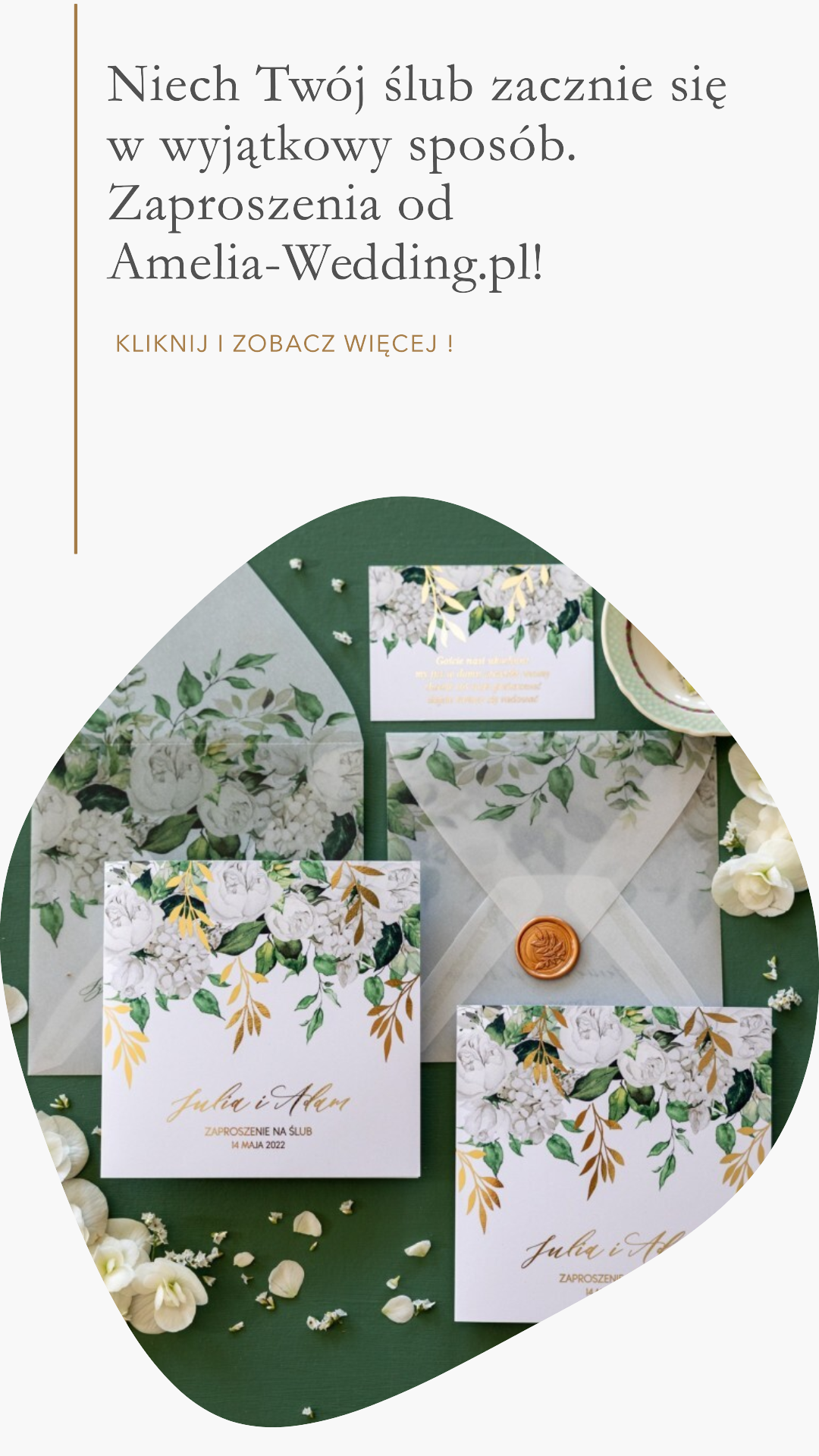
Background and colors: The color scheme of the invitation should be consistent with the wedding theme. Pastel tones, gold accents, or classic white - everything depends on the style and preferences.
-
Details: Elements such as ribbons, wax seals, or glitter can add a unique character to the invitation.
Trends in Wedding Invitation Design
A wedding is one of those events that always follows certain trends, and invitations are no exception. Here are a few invitation trends that have gained popularity in recent years:
-
Minimalism: Clean lines, simplicity, and no unnecessary additions. Such a design emphasizes elegance and class.
-
Watercolor: Delicate, watercolor backgrounds, often in pastel colors, are perfect for romantic weddings.
-
Metallic accents: Gold and copper details are particularly popular, adding shine and luxury to the invitation.
-
Eco-style: In response to growing ecological awareness, more and more couples are opting for invitations made of recycled paper, decorated with natural materials such as twine or dried flowers.
-
Varied textures: Combining different textures, such as thick paper, satin ribbons, or a smooth background, can add depth to the invitation.
Remember that the most important thing is for the wedding invitation design to reflect your personality and style. Regardless of whether you decide on something trendy or something timeless, the key is authenticity and consistency with the rest of the ceremony.
Mistakes to Avoid
Common Pitfalls and Mistakes in Writing Invitations
In the process of preparing the perfect wedding, we want every element to be perfect. However, in the rush and excitement, it is easy to make a mistake, especially in such a delicate matter as wedding invitations. Wedding invitation mistakes can cause many misunderstandings among guests and affect the overall image of your ceremony. Here are a few of the most common mistakes to watch out for:
-
Spelling and grammatical errors: It may seem trivial, but typos or language errors can be very embarrassing. It is always worth asking someone to check the text before printing.
-
Unclear information: Everything should be clear and understandable. Avoid complicated phrasing and ensure that dates, times, and locations are easily recognizable.
-
Missing key information: A common mistake is omitting important information, such as the address of the ceremony venue or the bank account number for guests wishing to give a gift in the form of a transfer.
How to Avoid Misunderstandings and Inaccuracies
A wedding invitation is not just a beautiful design and elegant language. It is, above all, a message for your guests. That is why it is so important to avoid any inaccuracies. Here are a few tips that will help you avoid misunderstandings:
-
Be specific: When it comes to the date, time, or place, there is no room for ambiguity. Use full street names, locations, and do not abbreviate names. If you have special requests regarding dress code, clearly state that as well.
-
Use simple phrasing: Although writing invitations allows for a certain amount of creativity, it is not worth overcomplicating the language. Remember that the invitation should be understandable to everyone, regardless of age or education level.
-
Add contact information: Encourage guests to contact you in case of any doubts. This could be a phone number, email address, or even a special website dedicated to the wedding.
Examples of Poorly Formulated Invitations and Their Corrections
Example 1:
Bad: "The wedding will take place on 05.06 at 18:00."
Correction: "We invite you to our wedding, which will take place on June 5th at 6:00 PM at St. Anne's Church in Warsaw."
Example 2:
Bad: "Come in elegant attire."
Correction: "We encourage evening-style attire - suits for men, elegant dresses for women."
Example 3:
Bad: "Wedding in the hall on Jagiellońska Street."
Correction: "We cordially invite you to the wedding reception, which will take place at the 'Perła' Wedding Hall, 56 Jagiellońska St., Kraków."
Remember that how to write an invitation correctly depends on your individual preferences and the character of the ceremony. However, taking care of clarity, precision, and understandability of information is the key to success.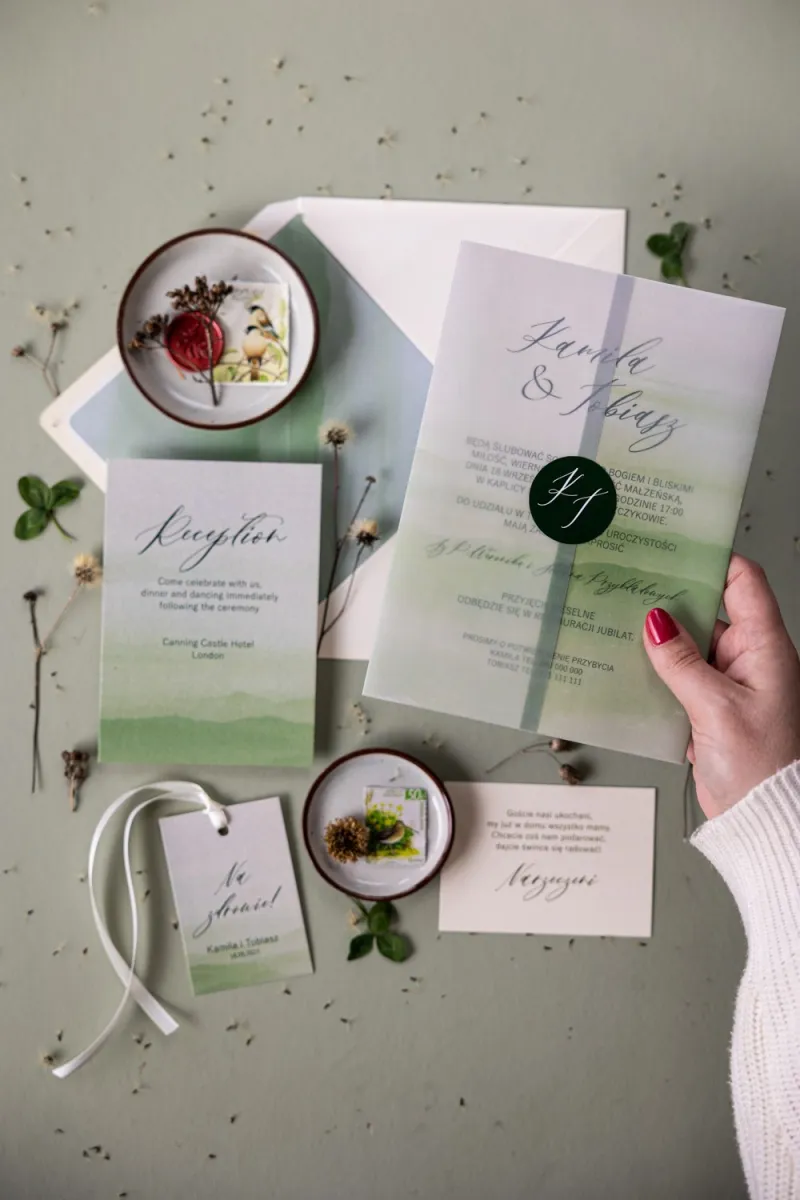
Feedback and Consultations
The Importance of Consulting Invitation Content with Loved Ones
When the moment comes to develop the content and design of wedding invitations, every couple wants them to be unique and perfect. However, in this process, it is easy to overlook certain details or make mistakes. That is why the opinion of loved ones, who can look at your invitation from a different perspective, is invaluable.
Wedding invitation consultations with siblings, parents, or friends are intended not only to catch slips but also to refine the tone and style of the invitation. Moreover, loved ones often know what might be important for other guests, which the bride and groom themselves might not pay attention to.
How to Collect Opinions and Comments
Collecting opinions can be a challenge, especially when everyone has different tastes and expectations. However, there are certain methods that facilitate this process:
-
Create a draft version of the invitation: Before asking for invitation feedback, prepare a complete, even if preliminary, invitation. Thanks to this, the people consulted will have a full picture of what you want to convey.
-
Be open to suggestions: When asking for an opinion, be ready for constructive criticism. This does not mean you have to implement all changes, but it is worth considering them.
-
Ask about specific aspects: If you have doubts about a specific part of the invitation, e.g., the greeting formula or design, pay special attention to it during the consultation.
-
Consult with different age groups: What is clear and obvious to your peer may be incomprehensible to an older person. Therefore, it is worth having the invitation text read by someone from a different age group.
Why It Is Worth Having Several People Read the Invitation Before Printing
Before you send the invitation to the printing house, take a moment to pass it on for evaluation to several different people. Why is this so important?
-
Catching errors: Even if you were sure everything was fine, there is always a risk that you missed some small error. Other people may notice what escaped your attention.
-
Checking readability and understandability: It may turn out that certain phrasings are unclear or ambiguous. Thanks to consultations, you can find out which parts of the wedding invitation require additional explanations.
-
Gaining diverse opinions: Each person has a different point of view and may pay attention to different aspects of the invitation. Thanks to this, you gain a fuller picture of how your invitation might be perceived by guests.
In summary, a wedding invitation is not just an aesthetic element but, above all, a message for your guests. To make this message as clear as possible, it is worth using the help of loved ones. Opinions on invitations from different people will help you create an invitation that will not only be beautiful but also clear and understandable for every guest.
Summary
The Importance of a Properly Formulated Invitation
In the age of digitization and widespread internet access, it is easy to forget about traditional forms of communication, such as paper invitations. But can they remain in our memory for a long time? Certainly! Wedding invitation summary is not just a formality – it is a unique way to convey to loved ones how much we care about their presence on this special day.
Creative Approach to Invitations
Wedding invitations have become not only information about the date and place of the ceremony but also a true work of art. That is why it is worth applying a creative approach to invitations. Instead of choosing ready-made patterns, why not add a personal character to them? It could be a shared photo, a favorite quote, or even hand-decoration. It is important that the invitation reflects the character of the bride and groom and is unique to them.
Motivation to Create a Unique Invitation
Imagine the face of a loved one when they receive a unique wedding invitation from you. Their smile, surprise, emotion – it is for these moments that it is worth spending more time preparing the invitation. Instead of treating it as another item on the list of wedding duties, view it as an opportunity to express yourself and share your joy with others.
Invitations Are More Than Just Information
If you are planning a wedding and are in the process of preparing invitations, you are certainly aware of their importance. It is not only a way to convey information about the ceremony but also a great opportunity to show your creativity and feelings.
Did you know that on the amelia-wedding.pl blog you will find plenty of inspiring articles about weddings? If you want to learn more about etiquette, traditions, or wedding budget planning, be sure to visit the links below:
- How to write wedding invitations with children?
- Why is it worth having a church wedding?
- Wedding budget planning - tips on how to effectively plan wedding-related expenses
- Can you have a church wedding if you have a child?
- How to decorate a house for a wedding?
...and many others!
We encourage you to continue reading and deepening your knowledge about wedding traditions and practices. May this special day be a true feast for your soul and body. Remember that a properly formulated invitation