Is 3 months too early to send wedding invitations?

When is the right time to send out wedding invitations?
Introduction
Starting wedding preparations is not just about choosing the perfect dress, the venue, or the wedding menu. One of the first and most crucial stages of planning this special day is deciding on sending out wedding invitations. Inviting guests to your wedding is more than just a formality; it is a way to show respect and share one of the most important moments of your life. In this context, the timing of sending invitations gains significance, becoming a subject of consideration for many couples.
Why the timing of sending matters
The timing of sending invitations is fundamental for several reasons. First and foremost, choosing the right moment allows guests to plan their schedule, which is especially important for out-of-town guests who need to arrange travel and accommodation. Furthermore, this timing affects the entire preparation schedule – from confirming the guest list and organizing catering to finalizing details related to the reception venue. By deciding to send invitations well in advance, couples give themselves and their guests space to prepare for the celebration calmly, thereby minimizing stress associated with last-minute preparations.
Changing trends
The world does not stand still, and wedding planning trends are evolving along with it. Once, the widely accepted standard was to send wedding invitations 6-8 weeks before the ceremony. Today, in the era of globalization and increased mobility, more and more couples are choosing to extend this period to 3-4 months. Such a change allows not only for better organization of the wedding and reception but also accommodates guests from abroad who need more time to plan their travel. Moreover, in the digital age, in addition to traditional paper invitations, electronic versions are becoming increasingly popular and can be sent even earlier. All this proves that when it comes to wedding planning, there is no single universal answer; it is important for every couple to find a solution that perfectly meets their needs and expectations.
Among these considerations, one constant truth remains – wedding invitations are more than just an announcement of an upcoming ceremony; they are a warm invitation to celebrate love, joy, and the beginning of a new chapter in life together. Choosing the right time to send them plays a key role in creating the atmosphere of anticipation and excitement that should surround this special day.
Table of Contents
- When is the right time to send out wedding invitations
- Traditional rules for sending invitations
- The meaning and functions of wedding invitations
- How to choose the perfect invitations?
- Invitation logistics - from planning to execution
- Reactions and managing guest responses
- Summary: Final recommendations and tips
Traditional rules for sending invitations
Traditions and customs
The tradition of sending wedding invitations is deeply rooted in wedding culture and has been passed down from generation to generation for centuries. In the pre-digital era, wedding invitations were sent by mail and served as the official announcement of the ceremony. Traditionally, traditional wedding invitations were considered a key element of wedding etiquette, symbolizing respect and the gravity of the moment. According to this tradition, invitations should be sent well in advance to allow guests to plan their time and any necessary travel. This practice was an expression of goodwill and organization on the part of the couple, as well as a form of showing respect to the invited guests.
How previous generations did it
Previous generations approached the process of sending invitations with great seriousness and attention to detail. Preparing and sending invitations were seen as an important ritual that heralded the upcoming celebration of love and union. In the past, when access to fast communication was limited, invitations were sent much earlier, often even 6 months before the planned wedding date. This practice ensured that all invited guests had enough time to make the necessary arrangements. Such an approach was also an expression of the elegance and ceremony that are inextricably linked to wedding tradition.

Expert recommendations
Wedding industry experts, based on years of experience and observation, unanimously emphasize the importance of the right timing for sending invitations. It is recommended that wedding invitations be sent to guests between 4 to 6 months before the wedding ceremony. Such advance notice allows not only for maintaining traditional etiquette but also for efficient management of wedding planning. Experts emphasize that following this rule facilitates coordination with wedding vendors, finalizing the guest list, and enables guests to prepare appropriately. Modern wedding advice often also points to the possibility of adjusting this period to individual needs and circumstances, encouraging couples to take a flexible approach to tradition.
In conclusion, traditional rules for sending wedding invitations are intended not only to honor centuries-old tradition but also to ensure that this special day is celebrated with the closest and dearest ones. Respecting these rules is a way to show respect both to the ceremony itself and to the invited guests, which undoubtedly contributes to creating an unforgettable atmosphere for this special day.
The meaning and functions of wedding invitations
Communication with guests and providing information
Wedding invitations play a key role in the communication process between the couple and their guests. They represent the first official step toward informing loved ones about the upcoming event. The functions of wedding invitations are not limited to just conveying the date and location of the ceremony. These invitations carry a range of essential information, such as the ceremony start time, the wedding reception location, and even details regarding the dress code or information about accommodation for out-of-town guests. Thanks to them, guests can properly prepare to attend the wedding, planning their time, travel, or accommodation. In today's times, when many celebrations require guests to travel, informing them of the details appropriately and early becomes essential to ensure the smooth running of every aspect of the wedding and reception.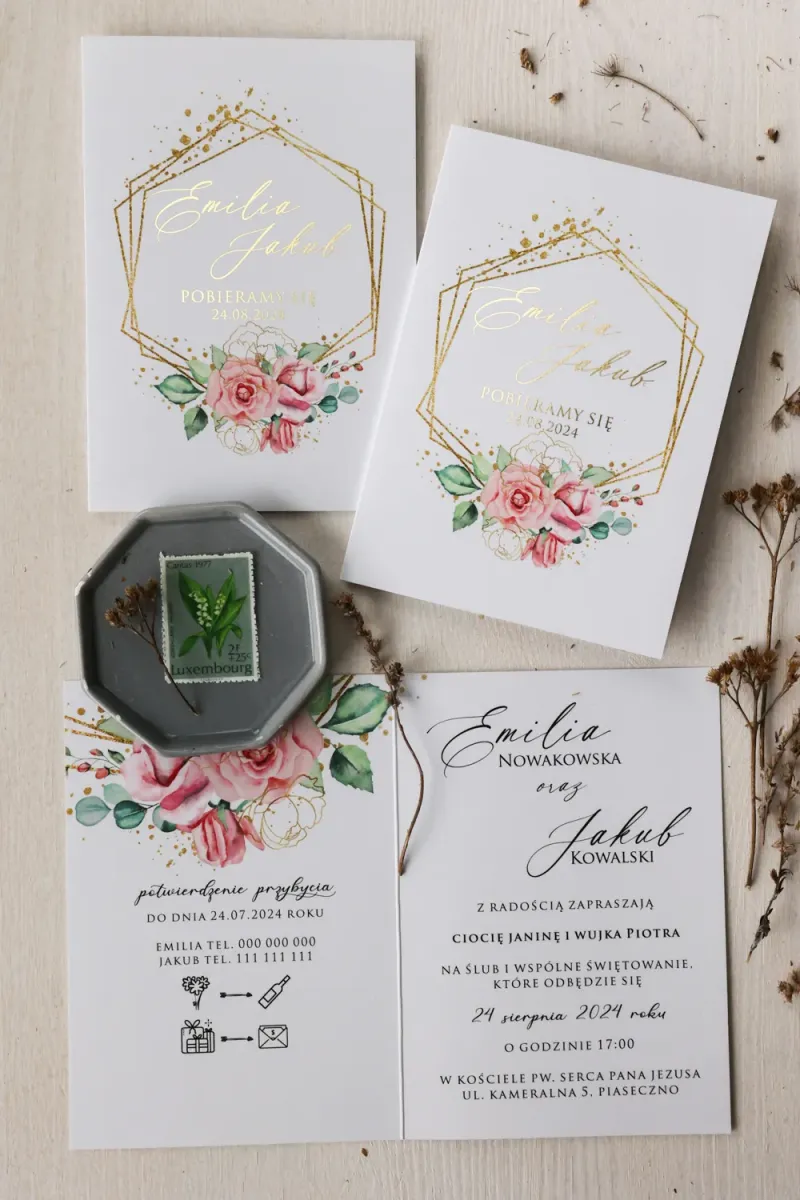
Aesthetics and first impressions
The aesthetics of invitations is an aspect that has significant importance for the image of the entire celebration. Invitations are often the first wedding element that guests encounter. As such, they shape the first impression and build expectations regarding the character and style of the upcoming event. Elegant, detailed invitations can signal a celebration full of class and sophistication, while more casual and creative invitation designs may signal a less formal and more personal approach to the ceremony. The choice of paper, font, color scheme, and additional elements like ribbons or wax seals are not just aesthetic choices. They are conscious decisions intended to reflect the couple's personality and the character of their love celebration.
Invitations and RSVP
Another extremely important function of wedding invitations is allowing guests to confirm their attendance. Modern invitations often include additional RSVP cards, which make it easier for guests to report their participation or absence. Such a solution not only facilitates the logistical organization of the wedding and reception but also allows for more precise planning – from the amount of food and drinks needed to seating arrangements and potential adjustments to the ceremony program. In the era of digital communication, some couples also opt for electronic forms of RSVP, which further emphasizes the role of invitations as a tool for effective communication between organizers and wedding participants.
Wedding invitations are therefore not just a tradition or a formality. They are a thoughtful and functional element of wedding planning that serves many important roles – from informational to aesthetic and practical.
How to choose the perfect invitations?
Matching the style to the character of the celebration
Choosing the perfect wedding invitations begins with understanding that they are an extension of your celebration's character and a unique way to showcase your style and personality. Matching the style to the character of the celebration is key. If you are planning a boho-style celebration, consider invitations with natural elements, such as floral motifs or natural paper textures. For a traditional wedding, elegant, classic invitations with delicate fonts and white or cream paper will be perfect. Remember that invitations are the first element of the wedding that your guests encounter – already at this stage, they begin to build their expectations of what the celebration will look like.
Advice on choosing a supplier and design
When choosing an invitation supplier, it is worth paying attention to their portfolio of designs and the reviews of other couples. Look for a supplier who listens to your needs, is open to personalization, and can adapt their designs to your vision. Don't be afraid to ask about the possibility of making changes to ready-made designs or creating something from scratch. Wedding advice often recommends not limiting yourself only to local suppliers – in the age of the Internet, you have access to creators from all over the country and even abroad. However, remember to start searching and ordering well in advance to avoid the stress of waiting for delivery just before the wedding.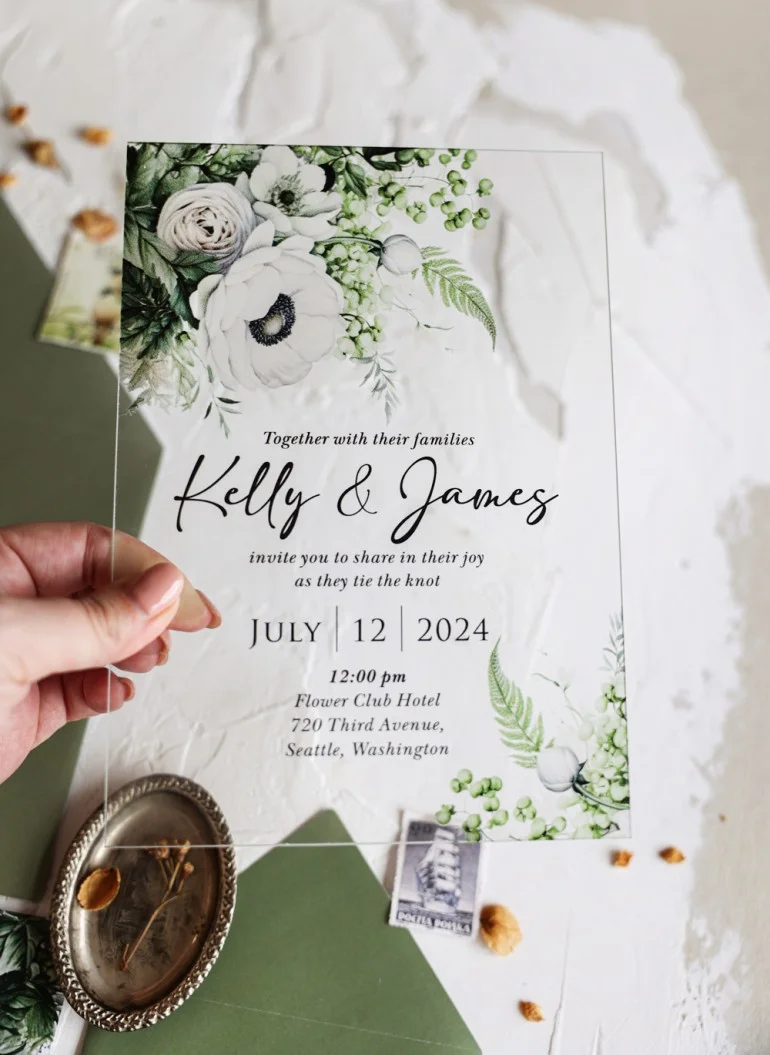
The importance of invitation proofs
An invaluable part of the process of choosing the perfect invitations is ordering proof prints. This allows you not only to assess the quality of the paper, print, and colors but also to see how the whole thing looks in reality, which can be very different from the impression on a computer screen. Proof prints are also a chance to make final corrections and changes before placing the final order. Although it may seem like an additional cost, in reality, it allows you to save on potential errors and mismatches that would be difficult to change at a later stage.
By remembering these key aspects – matching the style, choosing the supplier and design, and the importance of proof prints – you are on the right track to choosing the perfect wedding invitations that will not only inform about the upcoming celebration but also serve as a beautiful keepsake and introduction to your special day.
Invitation logistics - from planning to execution
Preparation timeline for sending
Organizing and planning the sending of wedding invitations requires a detailed schedule. Ideally, this process should begin at least 4-6 months before the wedding to ensure enough time for designing, printing, and then addressing and sending the invitations. The first step is to create an accurate guest list with addresses, which can take more time than you might think. Next, it is worth reserving at least a few weeks for the design and printing process itself. When planning the timeline, remember to allow extra time for potential corrections or ordering additional invitations in case of mistakes or adding new guests to the list.
Practical tips for addressing and sending
Addressing envelopes requires special attention. Using calligraphy or printer labels can add elegance, but it is important that all names and addresses are correct and easy to read. Also, don't forget about invitations for plus-ones if they are included. When sending invitations, make sure you have chosen the right form of shipping – it is worth opting for priority or registered mail to ensure that all invitations reach the recipients. Additionally, consider sending invitations in several batches if the guest list is long, to better manage the process and responses.
How to avoid common shipping mistakes
To avoid shipping mistakes, it is worth creating a tracking system that will allow you to monitor which invitations have been sent and which require additional attention. Using a spreadsheet or dedicated wedding planning software can help significantly here. Pay attention to often overlooked details, such as additional invitations for the civil or church ceremony, ensuring that all envelopes are properly sealed, and that postage stamps are appropriate for the weight of the package. Also, remember to reserve time to personally hand-deliver invitations to close family or friends – this is not just a saving of time and money, but above all a beautiful gesture that will be highly appreciated.
By taking these steps well in advance and with attention to detail, the process of sending wedding invitations can run smoothly and stress-free, ensuring that all guests are informed about your big day in an elegant and organized way.
Reactions and managing guest responses
How to collect RSVPs effectively
Collecting RSVPs from guests is a key element of wedding planning, allowing for a precise determination of the number of attendees. To collect RSVPs effectively, it is worth using an integrated approach that combines traditional methods with modern solutions. Including RSVP cards with wedding invitations is a proven way that allows guests to easily declare their presence or absence. Additionally, providing an email address or phone number for quick confirmations can significantly speed up this process. It is important to clearly state on the invitation the deadline by which guests should send their responses. This allows for maintaining order and ensures enough time for any adjustments in planning.
What to do when responses are late
In the event that responses are late, proactive communication becomes key. A small reminder in the form of a nice text message, email, or even a quick phone call can encourage guests to send their confirmations. It is also an opportunity to express how much you value their presence. It is also worth preparing for the fact that some guests may need extra time to make a decision, especially if they have to arrange long-distance travel or accommodation.
Using technology in guest management
Technology in wedding planning plays an increasingly important role, offering tools that can significantly facilitate the management of guest responses. Using dedicated wedding apps or websites where guests can confirm their attendance is an effective way to centralize and automate the process. Such solutions often offer additional functionalities, such as creating guest lists, managing seating arrangements, or even communicating with guests regarding important details of the ceremony. Thanks to this, the couple has constant access to up-to-date data, which significantly facilitates further stages of planning.
The key to success in managing wedding responses lies in well-thought-out organization, openness to using new technologies, and flexibility and patience in communication with guests. Remember that every RSVP is another step toward realizing your dream day.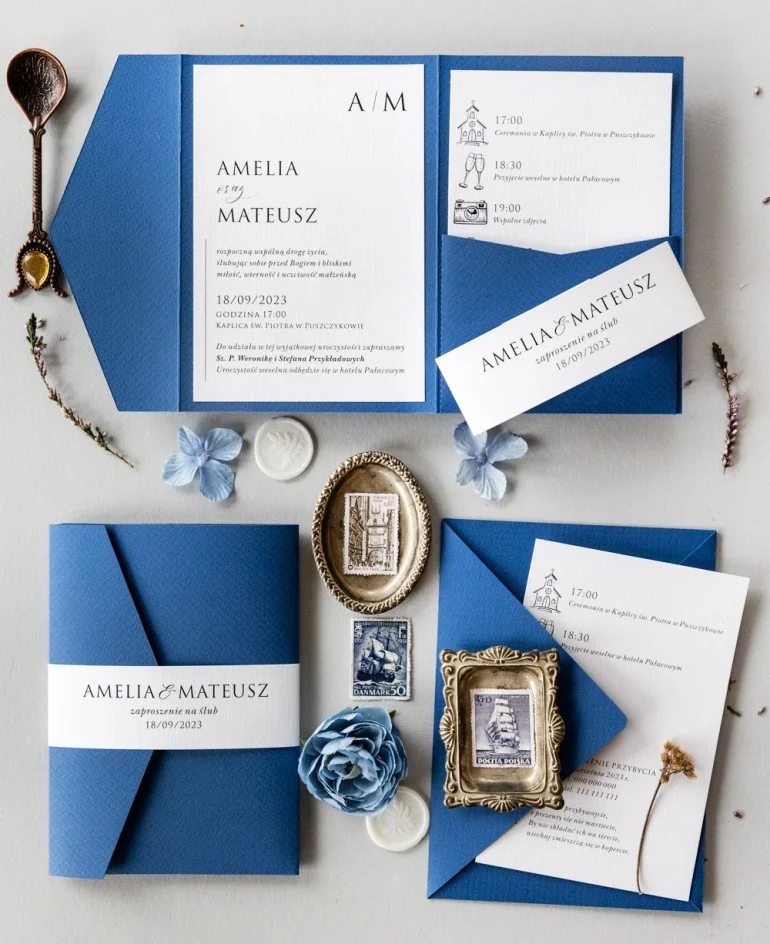
Summary: Final recommendations and tips
Key takeaways from the analysis
Remember that wedding invitations are more than just logistical information for your guests. They are a reflection of your style and the character of the celebration, as well as the first element of the wedding that guests will encounter. It is important that they are consistent with the theme and atmosphere of the entire event and that they contain all necessary information in a clear and understandable way.
Personal advice from wedding experts
Wedding experts constantly emphasize the importance of planning ahead and not underestimating the time needed for designing, printing, and sending out invitations. They also recommend using modern technologies, such as wedding apps or websites, to manage the guest list and collect RSVPs, which significantly streamlines the entire process.
Checklist before sending invitations
- Check and finalize the guest list
- Choose and order the invitation design
- Confirm all key information to be included in the invitation (date, place, time, dress code)
- Decide on the method of collecting RSVPs (traditional RSVP cards, email, phone, wedding website)
- Order an extra quantity of invitations in case of mistakes or additional guests
- Address and pack the invitations
- Choose the appropriate shipping method
We also encourage you to read some of the other articles on our blog, which can provide more inspiration and advice on organizing your special day:
- How to choose the perfect date for your wedding
- How to introduce guests at a wedding
- What needs to be arranged for a civil wedding
- Tips for choosing and buying wedding rings
- What documents are needed for a church wedding 2024
Remember that every detail matters and contributes to the overall vision of your day. Planning ahead and considering these tips will allow for stress-free preparations and ensure that your wedding is exactly as you dreamed.