Unsolicited Advice and Opinions – How to Assertively Realize Your Wedding Vision
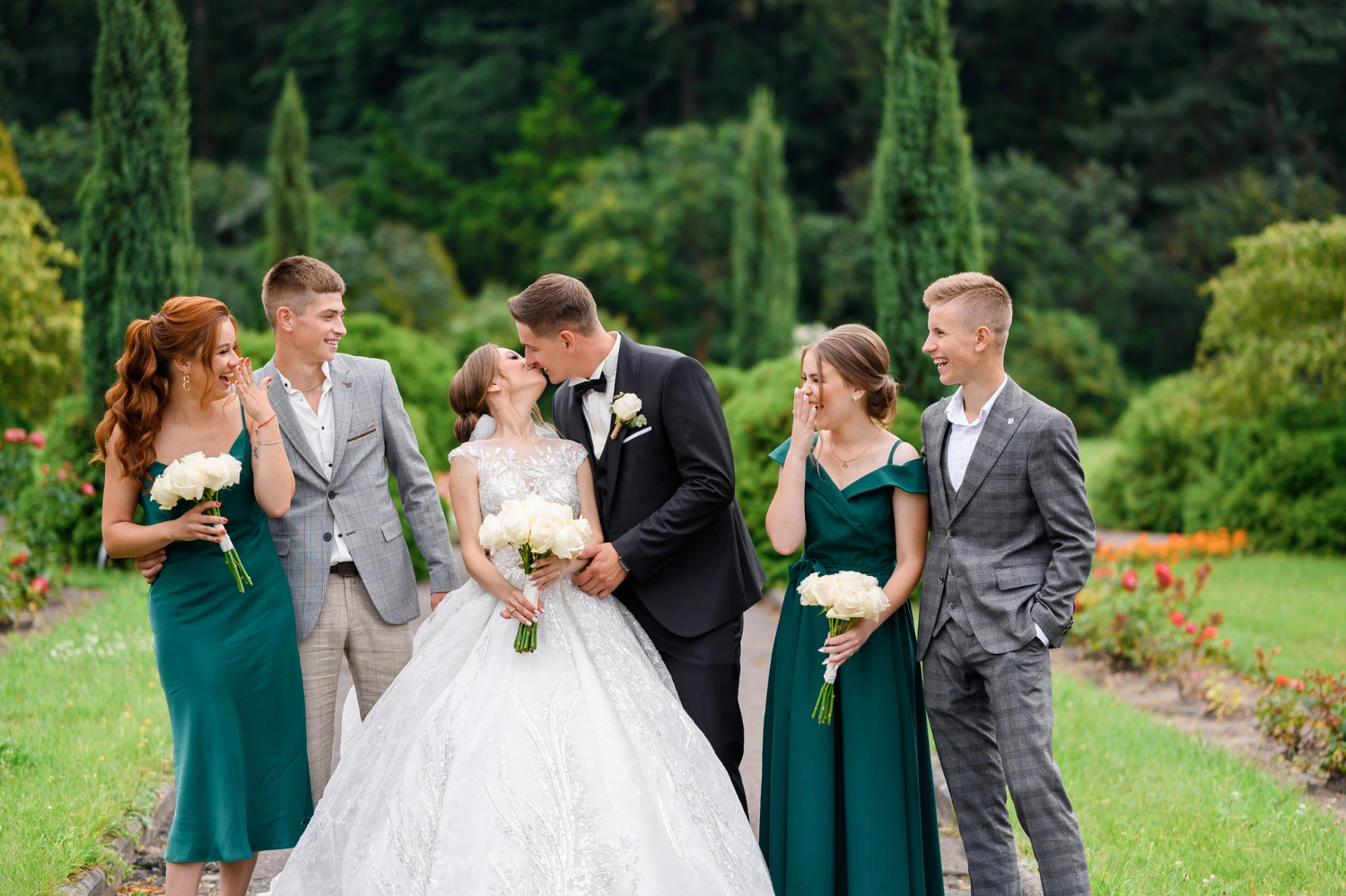
Unsolicited advice and opinions – how to assertively realize your wedding vision
Organizing a wedding is one of the most beautiful, yet most demanding moments in the life of any couple. Contrary to popular belief, the biggest challenge isn't choosing the venue, the cake, or the decorations, but the ability to set boundaries against the flood of advice, suggestions, and "well-meaning" comments coming from all sides. Family, friends, acquaintances – everyone suddenly becomes a wedding expert, sharing their knowledge, often without being asked. How can you stay calm in this situation, avoid offending your loved ones, and at the same time protect your dream vision of this special day? The answer is assertiveness – the ability to communicate your boundaries firmly but politely.
Why assertiveness is crucial during wedding planning
Assertiveness is the ability to express your opinions, needs, and boundaries in a clear and firm manner, without violating the dignity of others. In the context of wedding planning, it becomes extremely important because it is one of the few moments in life when every detail truly matters to the future spouses. A wedding is not just a ceremony for the family – it is primarily the day of the couple, who should be able to realize their vision without guilt or pressure.

Gaja No. 2 Wedding Invitation – Sage Green with Letterpress Embossing

Glamour Wedding Invitation with Gilded Branch and Velvet Paper – Ruskus No. 14

Kraft Wedding Invitation No. 12 – Forest Style with Pine Forest Graphic
Social and family pressure during wedding preparations
One of the biggest sources of stress during wedding planning is the pressure exerted by loved ones. Parents may expect the couple to follow family traditions that they believe are essential for a happy marriage. Grandparents recall what weddings were like in their day, suggesting that modern solutions are a mistake. Aunts, uncles, and cousins share their opinions on the guest list, the menu, or choosing a band instead of a DJ. Friends, on the other hand, may have their own expectations about the nature of the party, suggesting a more or less lavish setting. This avalanche of advice and suggestions can be overwhelming and cause the couple to lose sight of what is truly important to them.
The problem is exacerbated especially when parents are financing part or all of the wedding. In such situations, the belief that "he who pays, decides" often arises. While the financial contribution of parents is a gesture of love and support, it should not automatically mean giving them full control over the event. A wedding is the beginning of a new family for the couple, not an extension of family traditions at all costs. The ability to assertively communicate your boundaries in such a situation becomes crucial for maintaining a good atmosphere and realizing your own vision.
Table of contents:
- Consequences of lack of assertiveness in communication
- Assertive communication techniques – how to speak firmly but with respect
- How to react to specific situations – practical examples
- Preventive strategies – how to avoid conflicts before they arise
- Dealing with emotions – how to stay calm and confident
- When it is worth asking for professional help
- After the wedding – maintaining good relationships despite differences
- Practical tools supporting wedding organization
- Summary
Consequences of lack of assertiveness in communication
Lack of assertiveness during wedding planning can lead to serious consequences that go far beyond the wedding day itself. Firstly, the couple may feel frustrated and disappointed that their big day does not reflect their personality, values, and dreams. Instead of enjoying the ceremony, they may feel like guests at their own wedding, watching someone else's vision come to life. This feeling of disappointment can stay with them for years as they look at wedding photos and remember the day.
Secondly, giving in to constant suggestions and advice can lead to tension within the couple itself. If one of them feels they must meet their family's expectations at the expense of their shared vision, it can cause conflict and resentment. Wedding planning should be a process that brings the couple closer, not one that divides them through differences of opinion and external pressure. Thirdly, failing to set boundaries can create a dangerous precedent for the future – family and friends will begin to expect that their opinions will always be taken into account in the couple's important life decisions.
Finally, lack of assertiveness can lead to financial consequences. Unsolicited advice often involves adding more elements to the wedding – a larger venue, a more lavish menu, additional attractions, an expanded guest list. The couple, wanting to please everyone, can fall into the trap of a growing budget and financial stress, which will impact the beginning of their life together. That is why it is so important to clearly communicate your boundaries from the very beginning and be consistent in adhering to them.

Glamour Wedding Place Cards with Pearls – Pearls No. 1 White

Lauren No. 3 Wedding Place Cards – Classic Calligraphy Name Cards

Minimalist Wedding Place Cards – Glare No. 1 with Embossed Border
Assertive communication techniques – how to speak firmly but with respect
Assertiveness does not mean being aggressive or uncompromising. It is the art of expressing your needs and boundaries in a way that respects both ourselves and our interlocutors. In the context of wedding planning, there are many proven communication techniques that will help the couple defend their vision without offending loved ones. The key is to learn these techniques and consistently apply them in difficult situations.
"I" statements as the foundation of assertive conversation
One of the most effective assertive communication techniques is the so-called "I" statement, which involves expressing your emotions, needs, and expectations from the perspective of your own feelings, rather than accusing the other person. This method is particularly useful during conversations with parents or relatives who may have different expectations regarding the wedding. Instead of saying "You always impose your ideas" (a "You" statement, which sounds like an accusation), the couple can say "I feel overwhelmed when I receive many suggestions at once because I need time to think through our own wedding vision".
The structure of an "I" statement is simple but extremely effective. It consists of four key elements: describing your feelings, naming the specific behavior of the other person, describing the consequences of that behavior, and expressing your expectations or needs. For example, if the bride's mother constantly suggests inviting distant relatives whom the couple does not know, you can say: "Mom, I feel stressed (feelings) when conversations about the wedding revolve around a guest list of people we don't know personally (behavior). I am afraid that instead of an intimate ceremony, I will have a wedding full of strangers (consequences). I would like us to agree together on the number of guests and the rules by which we will choose them (expectations)".
"I" statements work for several reasons. Firstly, they do not trigger a defensive reaction in the interlocutor because they do not accuse them directly. Secondly, they show our vulnerability and feelings, which often evokes empathy from the other side. Thirdly, they clearly define our boundaries and expectations, leaving no room for guesswork or interpretation. During wedding planning, when emotions are high, this technique can significantly help in maintaining calm and a good atmosphere while defending your own vision of the event. It is also worth remembering that an "I" statement is not a one-time tool – it can be used repeatedly in various situations, from talking about the wedding dress, through menu choices, to issues related to family traditions.
The broken record technique – consistency in action
When an "I" statement does not bring the expected results and the interlocutor still tries to convince the couple of their vision, the broken record technique comes to the rescue. This method involves calmly but consistently repeating your position without engaging in further discussions or explanations. It is particularly effective in situations where someone is trying to exert pressure or manipulate emotionally. The name of this technique comes from an old, damaged vinyl record that repeats the same fragment of a song – similarly, an assertive person repeats their position without letting themselves be thrown off track.
In practice, it might look like this: an aunt insists that the couple invite her friends to the wedding, whom the couple has never met. The couple replies: "We understand, but our guest list is already closed". The aunt does not let go: "But they are such nice people, they will surely have a good time at the wedding". The couple repeats: "We understand, but our guest list is already closed". The aunt tries another argument: "But there will be plenty of room, and they really want to come". The couple again, calmly: "We understand your intentions, but our decision is final – the guest list is closed".
The key to the effectiveness of this technique is maintaining a calm tone of voice, controlling emotions, and unwavering consistency in repeating your position. You should not get angry, raise your voice, or engage in long explanations of why you made such a decision – any additional explanation can be perceived as an invitation to further discussion. The broken record technique is particularly useful in communication with people who have difficulty accepting boundaries or are used to others giving in to pressure. After a few attempts, most interlocutors will understand that the couple is firm in their decision and will stop pushing. If, however, the interlocutor still does not give in, you can add a consequence: "We understand your intentions, but if you continue to pressure us, we will have to end this conversation".

Simple No. 3 Soy Candle – Gold Foiling & Elegant Wedding Favours

Golden Fortune Cookies with Personalized Label | Affordable Wedding Favours | Cejla No. 3

Merci Favour with White Flowers, Green Leaves | Elegant Guest Gifts | Impresja No. 10
Empathetic assertion technique – building bridges
While the broken record technique is excellent in situations requiring firmness, sometimes it is worth using a more gentle approach that combines assertiveness with empathy. The empathetic assertion technique involves showing that you understand and respect the interlocutor's point of view before expressing your own position. This approach is particularly effective in conversations with parents or older family members who may feel hurt if their suggestions are rejected too categorically.
For example, if parents insist on a traditional wedding band, while the couple dreams of a DJ with disco polo music and 90s hits, you can say: "We understand, Mom and Dad, that for you, a band is a symbol of an elegant wedding and that is what your most beautiful family celebrations looked like. We appreciate that you want our wedding to be elegant and memorable (empathy). At the same time, we want our ceremony to reflect our lifestyle and our personality. A DJ with modern music is a way for us to create the energetic atmosphere that we love (own position). Could we perhaps find a compromise – part of the evening with live music, and part with a DJ?".
This technique works because it shows that the couple is not mindlessly rejecting everything the parents propose, but has truly listened to their arguments and is considering them. At the same time, it clearly communicates their needs and proposes a constructive solution. The empathetic assertion technique is particularly useful in situations where conflict could lead to long-term family tension, and the couple wants to maintain good relationships after the wedding. It is worth remembering, however, that empathy does not mean giving in – even when using this technique, the couple must remain true to their values and wedding vision. If a compromise is not possible, you should return to more firm techniques, such as "I" statements or the broken record technique.
How to react to specific situations – practical examples
Assertiveness theory is one thing, but the real challenge arises when the couple faces specific, difficult situations during wedding planning. Unsolicited advice can concern practically every aspect of the wedding – from choosing the wedding dress, through the guest list, to traditions and customs that, according to some, "must" be followed. Below are the most common conflict situations and specific ways to deal with them, based on the principles of assertive communication.
Criticism of the choice of wedding dress or groom's attire
Choosing a wedding dress is one of the most personal and emotional moments during wedding preparations. For many brides, this is a moment when they can feel like princesses and express their individual style. Unfortunately, this magical moment is often ruined by unsolicited comments from family or friends who think the dress should look different – be more traditional, more modest, more sophisticated, or simply "like X's". The same can be true for the groom's suit – although men usually have fewer options to choose from, they can still face criticism regarding the color, cut, or style.
When a mother or mother-in-law says: "This dress is too daring, too short, too long, too expensive...", it is crucial not to react emotionally, even if the comment hurts. Instead of a defensive response like "It's none of your business!" or giving in to the suggestion against your will, it is worth using an assertive reaction: "Mom, I understand that you are worried about how I will look on this day and want the best for me (empathy). This dress reflects my style and I feel beautiful and confident in it (position). Your opinion is important to me, but the final decision is mine". If the criticism continues, you can use the broken record technique: "Thank you for your opinion, but I have already chosen a dress that suits me" – and repeat this phrase as many times as needed.
It is also important to set boundaries even before visiting the bridal salon. The couple can clearly communicate that they want to choose the attire alone or with only one chosen companion. If, despite this, the mother or mother-in-law tries to impose their presence, you can say: "Thank you very much for wanting to help, but this is a very personal moment for me and I want to experience it in my own way. I will show you photos of the dress once I have chosen it". Assertiveness in this matter will help avoid unpleasant situations when five people appear in the salon, each with a different vision of the perfect dress. If the criticism concerns a dress that has already been bought, you can end the topic with the sentence: "The decision has been made and will not be changed. I am counting on your joy and support on this day". Remember – it is the bride who will be wearing the dress, so she must feel comfortable and beautiful in it, regardless of the opinions of others.

Flores No. 1 Soy Candle in Gypsum – Gilded Wedding Favour

Delize No. 1 Soy Candle – Forest Motif Wedding Favours

Flores No. 2 Soy Candle in Gypsum – Burgundy Flowers Wedding Favour
Disputes over the guest list – whom to invite and whom not
The guest list is one of the most controversial and conflict-prone topics during wedding planning. On one hand, budget constraints and venue size force the couple to make difficult choices, while on the other hand, parents, grandparents, and other family members often have very specific expectations about who "must" be invited. Especially in Polish culture, where weddings were traditionally an opportunity for the entire extended family to meet, departing from this pattern can be perceived as an affront or a lack of respect.
Typical conflict situations include insistence on inviting distant relatives whom the couple does not know or has not seen in years, pressure to invite parents' friends or coworkers, and the expectation that every family member can bring an additional companion. In such moments, the couple may feel torn between the desire to please the family and the realization of their own vision of an intimate ceremony among loved ones. The key to dealing with this situation is to establish clear rules with your partner regarding the guest list beforehand – how many people you can invite, what criteria will decide who is on the list, and whether you allow for the possibility of compromises.
When parents say: "You must invite Aunt Wanda and Uncle Zbyszek, after all, they were at every wedding in the family", you can respond assertively: "We understand that family traditions are important to you and that you have always invited a wide circle of family (empathy). At the same time, we want our wedding to be an intimate ceremony with people who are actively present in our lives (position). Aunt Wanda and Uncle Zbyszek are wonderful people, but we are not in close contact with them and we prefer to allocate these places to our close friends". If parents are financing part of the wedding and feel that this gives them the right to decide on the guest list, it is worth clearly setting boundaries: "Thank you very much for your financial support, which is a huge help to us. At the same time, we want the final decisions regarding the guest list to be ours. Could we agree on how many places we can reserve for your guests, and fill the rest with our choice?".
A difficult topic can also be the refusal to invite children to the wedding when the couple dreams of an elegant, adult ceremony. Some guests may feel offended or state that without the possibility of bringing children, they will not come. In such a situation, an assertive response might be: "We understand that for you, the presence of children at family celebrations is important. Our wedding will be an evening event for adults, which will allow everyone to feel at ease and have a good time. If you cannot find childcare, we will understand your decision, although we will miss you very much". It is also worth preparing an alternative solution, such as offering to pay for a hotel where children can stay with a babysitter. Remember that this is the couple's wedding, not a family picnic – they have the right to set the rules for their celebration.
Pressure regarding following traditions and customs
Wedding traditions deeply rooted in Polish culture can be beautiful and full of symbolism, but at the same time, they can limit a couple that has their own vision of a modern ceremony. From the "oczepiny" (midnight ritual), through being given away by parents, to specific wedding games or even the mandatory first dance – the list of "must-haves" can be overwhelmingly long. The older generation often deeply believes that not following certain traditions will bring bad luck or simply "that's not how it's done", while the younger generation increasingly chooses to personalize the wedding and move away from established patterns.
When Grandma says: "But you must have oczepiny! It's a family tradition!", the couple can respond: "Grandma, we understand how important family traditions are to you and we appreciate that you want us to continue them (empathy). At the same time, for us, this element does not fit our vision of the wedding and we prefer to skip it. Could we perhaps honor the tradition in another way – e.g., through a special toast or a dance with the family?". Proposing alternative solutions is a great strategy because it shows that the couple respects tradition but wants to express it in their own way.
Another example might be pressure for a church wedding when the couple prefers a civil or outdoor wedding. This is a particularly delicate topic that can touch upon the deep religious convictions of the family. In such a case, assertive communication requires even greater delicacy: "We understand that faith is very important to you and that a church wedding has deep meaning for you. We respect your beliefs, but our decision for a civil wedding stems from our personal values and convictions. This is our joint decision as a couple and we are counting on your understanding and support on this day". If the family still does not accept the decision, you can use the broken record technique: "Thank you for your concern, but our decision is final".
Sometimes the pressure also concerns smaller elements, such as mandatory wedding games that the couple considers poor or unfunny. In such a case, you can say: "We know that the shoe game or buying the bride is a classic of Polish weddings, but we feel it doesn't fit our style. We have prepared other attractions that represent us more and that will ensure everyone has a good time". Remember – a wedding is not a spectacle for the family, but a celebration of the couple's love in a way that suits them. Traditions are beautiful when they are chosen consciously and with conviction, not imposed under pressure. If, however, certain traditions are extremely important to the family, and neutral to the couple, sometimes it is worth compromising – it is an investment in good family relationships for the future.

Glamour Wedding Place Cards No. 1 – Satin Name Cards with White Print

Cappuccino Wedding Place Cards No. 1 – Satin Ribbon Table Name Cards

Rose Bow Wedding Place Cards No. 1 – Pink Satin Glass Ribbon Cards
Preventive strategies – how to avoid conflicts before they arise
The best assertiveness is that which prevents conflicts before they have a chance to develop. Although it is impossible to completely avoid misunderstandings or differences of opinion during wedding planning, there are proven strategies that can significantly reduce the number and intensity of difficult conversations. The key is a proactive approach – clearly establishing boundaries and rules at the very beginning of the planning process and consistently communicating them to all involved parties. Thanks to this, family and friends will know what to expect, and the couple will avoid the unpleasant surprise of unwanted suggestions at the last minute.
Early establishment of the wedding vision as a couple
The first and most important step in conflict prevention is for the couple to agree together on what their dream wedding and reception should look like. Before they start talking to parents or other family members, they must be in agreement on basic issues – whether it will be an intimate ceremony or a large reception, in what style (boho, classic, modern), which elements are absolutely non-negotiable for them, and in which areas they can compromise. This fundamental preparation allows the couple to speak with one voice and not be divided by family members who might try to convince each partner separately.
It is worth writing down your vision on paper or in a wedding planning app, such as the free wedding app available at blissaro.com, which will help organize thoughts and not get lost in the maze of ideas. The written vision should contain key elements: estimated number of guests, budget, preferred decoration style, type of music (DJ or band), whether you are planning traditional or modern wedding invitations, which traditions you want to keep, and which to skip. You don't need to write it down in the form of a rigid plan – it can be more of a list of priorities divided into "must-haves" (elements without which the wedding won't be our dream), "nice-to-haves" (things that would be nice but aren't necessary), and "we can let go" (elements we are flexible about).
When the couple already has a clear vision, it is easier to conduct conversations with the family because they can refer to jointly established priorities. When Mom suggests inviting an additional 20 people, you can respond: "Mom, Piotr and I have agreed that we want to have a maximum of 80 guests so that the wedding is intimate and we can spend time with everyone. This is our joint decision and we will not change it". Such a response is much stronger than an uncertain "I don't know, I have to think about it", which opens the door to further negotiations and pressure. Additionally, by having a written vision, the couple can periodically return to it and verify whether their decisions are still in line with their original dreams, or whether, under external pressure, they have begun to deviate from their chosen path. Wedding planning apps offered by blissaro.com or other platforms can be helpful in this, allowing you to track progress and remind you of priorities.
Setting clear boundaries with family at the beginning of planning
Once the couple has their vision, it's time to talk to parents and immediate family about roles and boundaries in the planning process. This is one of the most difficult moments, but extremely important – the earlier it is conducted, the fewer misunderstandings will appear later. It is worth organizing a special meeting (preferably over a joint lunch or dinner) during which the couple clearly communicates their expectations and asks about the parents' expectations. It is crucial that this conversation takes place in a calm, friendly atmosphere, not during an argument or in a moment of tension.
The couple can say: "We are incredibly grateful for your support and help in organizing our wedding. At the same time, we want you to know that we have our own vision for this day, which is very important to us. We will be incredibly happy if you help us realize it – whether through advice, logistical support, or financial support. At the same time, the final decisions regarding key elements of the wedding, such as the guest list, choice of venue, decoration style, or menu, will be ours". This initial conversation allows you to set expectations and prevents a situation where parents assume they will have full control over the organization.
It is also worth clearly defining areas where family help is welcome, and areas where the couple prefers to act independently. This could be, for example, delegating tasks to parents related to coordinating the arrival of out-of-town guests, helping with the choice of place cards, or preparing wedding favors, while the couple themselves will handle the choice of photographer, wedding dress, or music band. Such a division of tasks gives the family a sense of involvement, while protecting areas that are particularly important to the couple. If parents are financing part of the wedding, this is also a good moment to establish whether it is a gift without strings attached, or if the parents expect some influence on decisions in exchange for financial support. An open conversation on this topic can prevent later disappointments and conflicts.
The "information diet" technique – controlling the flow of information
One of the less obvious but very effective strategies is the so-called "information diet", which is controlled sharing of information about the progress of wedding planning. This may sound a bit manipulative, but in reality, it is simply smart communication management that prevents unnecessary conflicts. The rule is simple – the more details the couple shares with family and friends, the more space they get to express their opinions and suggestions. Therefore, it is worth being selective about what and when we communicate to our loved ones.
This does not mean that the couple should lie to the family or mysteriously remain silent about everything. It is more about sharing information at appropriate times – e.g., when a decision has already been made, instead of at the stage of considering options. For example, if the couple intends to order modern, minimalist wedding invitations, it is better to inform the family about it only after placing the order, rather than showing designs beforehand and asking for an opinion. If Mom sees the finished invitations and comments "But that's so simple, maybe you should choose something more ornate?", you can respond: "The invitations are already ordered and will be ready in a week. We chose a style that suits us".
This strategy is particularly useful in the case of people who have strong opinions on every topic and find it difficult to refrain from commenting. Instead of engaging in constant discussions about every small detail, the couple can share only the biggest milestones – "We found a venue!", "We chose a photographer!", "The dress is ready!" – without going into details that could provoke criticism. Of course, if the family asks directly "Which venue did you choose?", you don't need to be secretive, but you can limit the amount of additional information and quickly change the subject. It is also worth using technological tools – instead of showing every inspiration photo or every idea in real-time, the couple can collect everything in a private folder or wedding app and share selected things only when they are sure of their choices. Remember – this is not being dishonest, it is simply taking care of your peace and energy during the intense process of wedding organization.
Golden Fortune Cookies with Personalized Label | Affordable Wedding Favours | Cejla No. 3

Fortune Cookies with Gold Foliage – Ruskus No. 2

Personalized Fortune Cookies, Light Grey | Original Wedding Favours | Cejla No. 7
Dealing with emotions – how to stay calm and confident
Assertive communication is not just the ability to say "no" or express your boundaries – it is also the ability to manage your own emotions in difficult situations. Wedding planning is a period of high stress, in which emotions can reach peak values, and unsolicited advice and family pressure can lead to frustration, anger, or even tears. It is crucial to learn techniques that will help you stay calm and confident, even when a storm of misunderstandings is raging around you. Remember – how we react to difficult situations has a huge impact on how we will remember the period of preparation for the wedding and what relationships with family we will build for the future.
Breathing techniques and mindfulness in difficult conversations
When, during a family dinner, your mother-in-law comments for the umpteenth time that the chosen wedding venue is too small and the dress is too modern, the first natural reaction might be anger, defense, or even tears. However, before you respond, it is worth using a simple but extremely effective breathing technique that will help calm emotions and gather your thoughts. One of the most popular methods is the 4-7-8 technique: inhale through your nose for 4 seconds, hold your breath for 7 seconds, and then exhale through your mouth for 8 seconds. Repeating this cycle 2-3 times helps lower the level of adrenaline and cortisol in the blood, making us feel calmer and more in control of the situation.
Another helpful technique is the so-called "great elephant" – a mental visualization of yourself as a calm, majestic elephant that slowly strides forward, unmoved by small obstacles. This technique symbolically helps to adopt a composed and firm, but at the same time gentle, attitude. When we feel emotions rising, we can close our eyes for a moment, imagine this elephant, and remind ourselves that we are strong, have the right to our boundaries, and do not have to react impulsively. This short moment of breath (literally and figuratively) can be the difference between a calm, assertive response and an emotional outburst that can ruin relationships for a long time.
Mindfulness, or full awareness, is a practice that involves consciously experiencing a given moment without judgment. In the context of difficult conversations during wedding planning, this can mean paying attention to what is happening in our body when someone criticizes our decisions – whether our fists are clenching, our pulse is racing, or we feel pressure in our chest. Noticing these signals without an immediate reaction gives us a moment to choose – instead of automatically responding aggressively or remaining silent and hurt, we can consciously choose an assertive response. Regular mindfulness practice, even 5-10 minutes a day, can significantly improve our ability to deal with stress during the entire period of wedding preparations. There are many free meditation apps that can help you start this practice.
Building a sense of confidence by reminding yourself "why"
In the whirlwind of wedding planning, with family pressure and avalanches of unsolicited advice, it is easy to lose sight of what is truly important – the love the couple feels for each other, and the fact that this is their day, not a spectacle for the family. One of the most effective techniques for building confidence is regularly reminding yourself "why" – why are we getting married, what is most important to us on this day, what values do we want to celebrate. You can do this through shared evenings with your partner, during which you talk about your dreams and remind yourselves how much you love each other, without any talk about wedding logistics.
A good idea is to create a so-called "vision board" – a board of inspiration with photos, quotes, and symbols representing what the couple wants to achieve during the wedding. It can be a physical corkboard at home or a digital version in a planning app, such as blissaro.com. When doubts or frustration related to family opinion appear, the couple can look at this board and remind themselves of their original vision. This helps to return to the heart of the matter and not be led astray by other people's expectations. You can also write love letters to each other, in which each partner describes what they love about the other and why they want to spend the rest of their life with them – reading these letters in difficult moments can be a source of strength and a reminder that we are doing all this for ourselves, not for others.
It is also worth surrounding yourself with people who support your wedding vision, and limiting contact with those who constantly undermine it. If conversations with Mom always end in an argument about wedding details, you can temporarily limit these conversations and talk about other, neutral topics. This is not cruel – it is taking care of your mental health and your relationship with your partner. The couple can also find support in online groups for people planning a wedding, where others are going through similar challenges and can share their experiences and advice. Sometimes just the awareness that we are not alone in our struggles brings huge relief. Remember – building confidence is a process, not a one-time event. It requires regular work on yourself, but the results are worth it – calmer preparations, a better relationship with your partner, and ultimately a wedding that truly reflects your love and values.

Personalized Wedding Welcome Sign with Two Photos – Photo Design No. 6

Elegant Wedding Welcome Sign with Black & White Photos – Photo Design No. 7

Rubin No. 5 Wedding Seating Plan – Purple Heather and Gold Motif
When it is worth asking for professional help
Sometimes, despite all assertive communication techniques and taking care of your emotions, family pressure or the stress associated with wedding planning become overwhelming. In such moments, there is nothing wrong with asking for professional help – whether in the form of a wedding consultant (wedding planner), or a therapist or psychologist. A wedding planner is a person who can take on a large part of the logistical duties, thanks to which the couple can focus on celebrating their love instead of drowning in spreadsheets and emails to subcontractors. Moreover, a professional consultant can act as a "buffer" between the couple and their parents – when Mom has another suggestion, you can direct her to the wedding planner, who will politely but firmly convey that the plan is already set.
If, however, pre-wedding stress starts to affect the couple's relationship, causes sleep problems, excessive tension, or even thoughts of giving up the entire wedding, it is a sign that it is worth consulting a psychologist or psychotherapist. There is nothing shameful in this – on the contrary, it is a sign of maturity and taking care of your mental health. A therapist can help the couple develop strategies for dealing with stress, teach them assertive communication techniques adapted to their specific family situation, and help them understand and work through difficult emotions. Sometimes even a few sessions can significantly improve the situation and give the couple tools that will serve them not only during wedding planning, but throughout their entire marriage.
A good solution can also be couples therapy, during which the couple can openly talk about their fears and expectations regarding the wedding under the supervision of a neutral, supportive person. It often turns out that the source of tension is not external family opinions, but differences in communication between partners or unresolved conflicts from the past. A therapist helps work through these issues and strengthen the couple's bond before the wedding, which is an invaluable investment in the future. Remember – asking for help is not a sign of weakness, but of wisdom. It is better to ask for support early, before the situation deepens, than to wait until stress completely overwhelms the joy of wedding preparations.
After the wedding – maintaining good relationships despite differences
Assertive communication during wedding planning is not just a way to survive preparations, but also an investment in future family relationships. After the wedding, the couple will continue to function in the context of their families, and the way they handled conflicts during planning will set communication patterns for years to come. That is why it is so important that assertiveness is combined with respect and empathy – we want to defend our vision, but at the same time, we do not want to alienate our parents or other loved ones forever. The key is skillfully balancing firmness with flexibility and remembering that family relationships are a process that lasts a lifetime, not just one wedding day.
Appreciating family effort and showing gratitude
Even if the family was a source of stress during wedding planning, it is important to appreciate their intentions and the effort they put into helping – whether financial, emotional, or logistical. Most parents and loved ones truly want the best for the couple, even if their way of expressing it is not always fortunate. After the wedding, it is worth finding a moment to talk to the parents and tell them that despite differences of opinion, the couple is grateful for their support and is glad they were part of this special day. This does not mean admitting they were right or giving up your own opinion – it is simply showing humanity and warmth.
A good idea is to prepare special wedding favors, and in particular for parents, which will show that the couple values their presence and contribution. It could be a personal toast during the wedding, in which the couple thanks their parents for raising them, for their support, and for the fact that they can start a new chapter of life with their blessing. It could also be a gesture after the wedding – a joint lunch or dinner, during which the family can calmly talk about how the ceremony went and share their impressions. Such gestures help to soothe any tensions and show that despite differences of opinion, love and respect remain unchanged.
It is also worth ensuring that parents feel appreciated during the wedding itself – it could be a special dance of the couple with their parents, including them in the ceremony of passing on the role of "head of the family", or simply ensuring that they have comfortable seats at the tables and feel comfortable. Sometimes small gestures have huge meaning and can neutralize negative emotions associated with previous disputes. Remember – parents have taken care of their children their whole lives and now, seeing their adulthood and independence, they may feel unneeded or pushed aside. Showing them that they are still important and loved is a beautiful gesture that will strengthen relationships for the future.
Drawing conclusions and building communication patterns for the future
Experiences from wedding planning can be a valuable lesson for the couple on how to build healthy family relationships in the future. After the wedding, it is worth finding a moment for reflection – what went well in communication with the family, and what could have been done better? Which assertiveness techniques worked best, and which still need work? This analysis will help the couple better prepare for future situations in which they will have to set boundaries – whether it will be a matter of Christmas spent at the in-laws', decisions about children, or choosing a place to live.
It is crucial that the communication patterns established during wedding planning are consistently continued after the wedding. If the couple clearly communicated that certain decisions belong to them, they must maintain this in other areas of life as well. If parents see that after the wedding the couple again gives in to pressure and allows boundaries to be crossed, they may return to old patterns and again try to influence every decision. Therefore, assertiveness is not a one-time action during wedding planning, but a way of functioning in relationships that requires regular practice and consistency.
It is also worth openly talking with your partner about how each of you feels in relationships with both families and jointly developing strategies for dealing with difficult situations. It may turn out that one of you feels more pressure from their family and needs the partner's support in setting boundaries. Regular conversations about these issues, preferably in calm moments, and not during conflicts, help build a solid foundation for a marriage based on mutual support and understanding. Remember – marriage is a new, separate family unit, and relationships with parents, although still important, must be redefined in a way that respects the couple's autonomy.
Glamour Wedding Place Cards with Pearls – Pearls No. 1 White
Lauren No. 3 Wedding Place Cards – Classic Calligraphy Name Cards
Minimalist Wedding Place Cards – Glare No. 1 with Embossed Border
Practical tools supporting wedding organization
Nowadays, the couple has many technological tools at their disposal that can significantly facilitate the wedding planning process and help maintain control over preparations. One of the most important solutions are wedding apps, which allow for the centralization of all information, tasks, and decisions in one place. Thanks to this, the couple does not have to rely on chaotic notes in different places or on memory – everything is organized and available at your fingertips.
Blissaro.com offers a free wedding app that will help the couple plan every aspect of the wedding – from the guest list, through the budget, to the schedule of tasks and communication with service providers. These types of tools are particularly useful when the couple wants to maintain a certain level of privacy towards the family – they can conduct their planning in the app, and share information with the family only at selected moments, in accordance with the "information diet" rule. Furthermore, apps often offer sharing features, thanks to which both partners have access to current information and can make decisions together, even if they are currently in different places.
Another useful tool can be a shared calendar (e.g., Google Calendar), where the couple can mark meeting dates with service providers, dress fittings, visits to the wedding venue, or deadlines for ordering wedding invitations. Thanks to this, they will avoid situations where they forget about important deadlines or double-book the same time. Additionally, it is worth creating a shared document (e.g., in Google Docs) with the wedding vision, which both partners can return to and which can serve as a point of reference during difficult conversations with the family. When an aunt asks "But why don't you want a band?", the couple can answer "Right at the beginning we agreed that we want modern dance music, it is written in our plan".
It is also worth using platforms like Pinterest or Instagram to collect inspiration, but with caution – it is easy to fall into the trap of endless scrolling and comparing yourself with other weddings. It is better to set a specific time for browsing inspiration (e.g., 30 minutes a day) and focus on what truly resonates with the couple, instead of trying to copy every trend we see. Technology can be a wonderful support, but it should not replace authentic communication between partners and with the family. Let's use tools wisely, as an aid in realizing our vision, not as another source of stress.
Summary – the courage to be yourself on the most important day of your life
Organizing a wedding is a unique period that can be both a time of joy and a challenge for family relationships and the couple. Unsolicited advice, pressure regarding traditions, disputes over the guest list, or choosing the wedding style – all this can make the couple feel overwhelmed and begin to lose sight of their original vision of this special day. The key to surviving these challenges with dignity and maintaining good relationships is assertiveness – the ability to firmly but politely communicate your boundaries, needs, and expectations.
Assertiveness does not mean being selfish or insensitive to the feelings of others. It is rather the art of balancing respect for yourself with respect for your loved ones. Techniques such as "I" statements, the broken record technique, or empathetic assertion are concrete tools that will help the couple express their position without offending loved ones. Equally important is a proactive approach – early establishment of a shared wedding vision, clearly communicating boundaries to the family, and controlling the flow of information are preventive strategies that can prevent many conflicts before they have a chance to develop.
Let's also not forget about taking care of our own emotions and mental health during this stressful period. Breathing techniques, mindfulness, reminding yourself "why", and openness to professional help are all elements of a comprehensive approach to wedding organization that allows you to maintain joy and enthusiasm instead of drowning in stress. After the wedding, it is worth remembering to appreciate the family's effort, show gratitude, and draw conclusions for the future – family relationships are a continuous process, and the way we handle conflicts during wedding planning can become the foundation of healthy communication in marriage.
Finally, remember: a wedding and reception is primarily a celebration of the couple's love. It is their day, their dreams, and their vision, which they have the right to realize. Opinions and suggestions from family and friends can be valuable, but they should not overshadow what is truly important – authenticity, happiness, and the feeling that this day truly belongs to you. Be yourself, communicate your boundaries with dignity and respect, and your wedding will not only be a beautiful memory, but also a testament to your maturity, strength, and deep love. Useful tools, such as the free wedding app available at blissaro.com or beautiful wedding invitations and wedding favors from amelia-wedding.pl, can support you in this process, but the most important thing is what you carry in your hearts – love, respect, and the courage to be yourself. We wish you a wonderful, joy-filled period of preparation and an unforgettable wedding day that will be exactly as you have always desired!
Recommended articles:

Szymon Jędrzejczak
Wedding industry expert, stationery designer, and founder of Amelia-Wedding.pl. For years, he has been helping couples realize their dreams of an ideal wedding, combining tradition with modern design.