Wedding Speeches and Toasts: How to Prepare the Perfect Speech and Thank-Yous
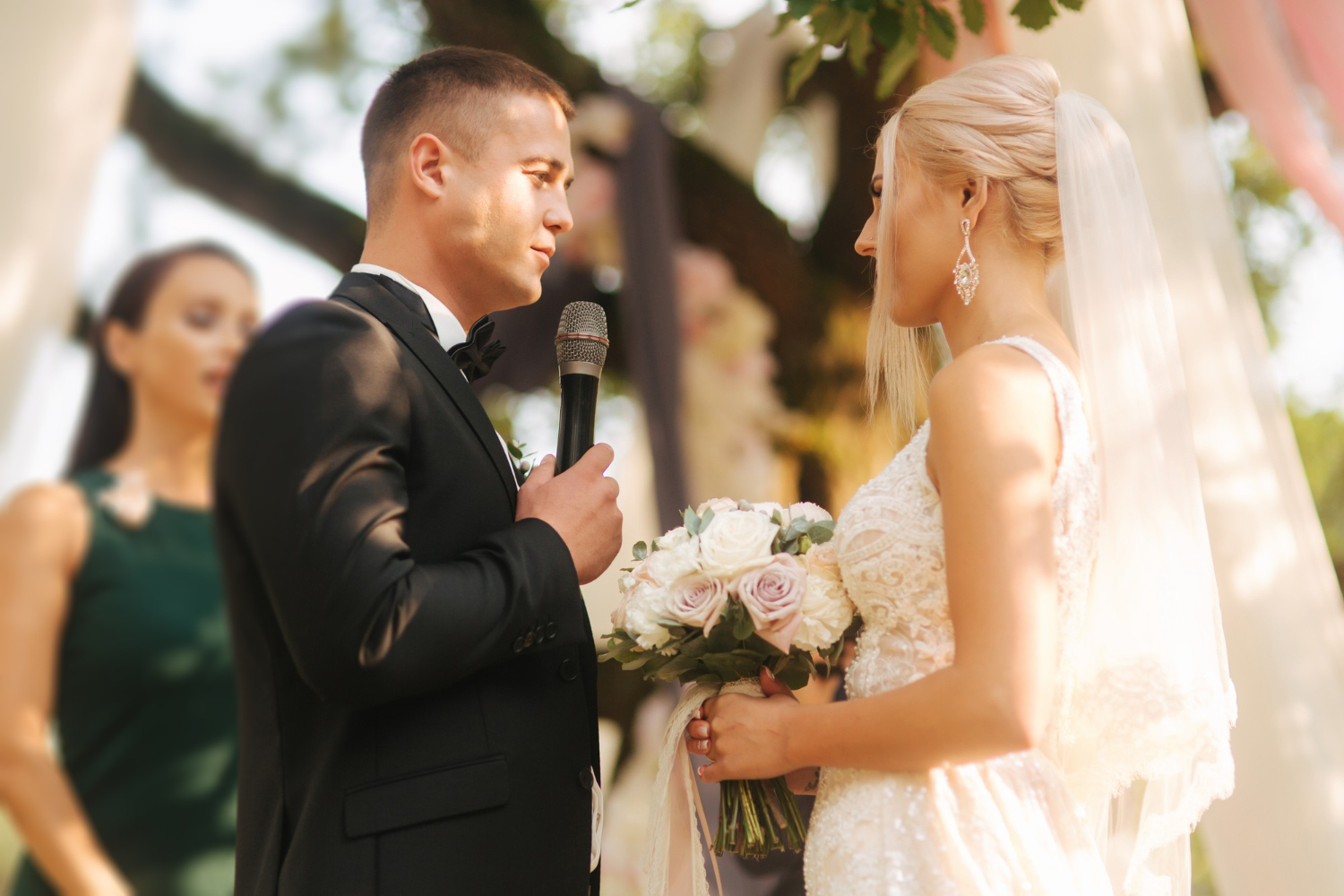
Planning a wedding is not just about choosing the dress and suit or sending out elegant wedding invitations. More and more emphasis is being placed on the spoken part of the celebration – wedding speeches and toasts. A decade or two ago, formal speeches didn't appear at every wedding; toasts were often limited to a collective chorus of "Cheers!". Today, however, we draw inspiration from Western celebrations where speeches are a staple of the program, and more couples are incorporating them into their big day. And rightly so, because a few words from the heart can add an extraordinary character to the ceremony. Well-prepared speeches can make guests laugh, move loved ones to tears, and remain in memory for a long time.
Speeches are more than just words – they are a gesture that connects two families and everyone present. When the father of the bride gets emotional reminiscing about her childhood, or the best man entertains with an anecdote about the groom, guests feel like part of a shared story. The wedding takes on a personal dimension, and emotional speeches bridge the gap between families, creating an atmosphere of warmth. The younger generation has the chance to thank the older one, and friends can share how they perceive the newlyweds' love. Such moments stay in the memory for years.
In this guide, we answer the most important questions: who should speak at the wedding, how long the ideal speech should last, how to write beautiful thank-you notes for parents and guests, how to overcome stage fright, and what toasts to make to make them truly special. Below you will find a comprehensive discussion of these topics, supported by examples and practical wedding etiquette tips. This will help you prepare for your appearance like a pro – even if you usually avoid public speaking.
Table of Contents
- Who should speak at the wedding?
- How long should the ideal speech last?
- How to write and deliver beautiful thank-yous for parents and guests?
- How to deal with stage fright during a speech?
- Ideas for original toasts and the moment of thanking parents
- Summary
- Frequently Asked Questions about wedding speeches
Who should speak at the wedding?
Traditionally, the closest people to the couple were responsible for delivering speeches, usually in a specific order. In modern tradition, the first to speak is often the father of the bride, acting as the host of the reception. He welcomes all the arriving guests and the newlyweds and raises the first toast to their prosperity. Next, the father of the groom speaks (if the groom's parents also wish to speak), followed by the groom, who thanks the guests for coming and directs a few words to his wife and parents. The next person is usually the best man, who shares anecdotes about the couple and also raises a toast. Sometimes the maid of honor or another close friend of the bride also takes the floor. This arrangement stems from wedding savoir-vivre – the hierarchy of speeches ensures order and highlights the roles of specific individuals.

Gaja No. 2 Wedding Invitation – Sage Green with Letterpress Embossing

Glamour Wedding Invitation with Gilded Branch and Velvet Paper – Ruskus No. 14

Kraft Wedding Invitation No. 12 – Forest Style with Pine Forest Graphic
Modern trends, however, are increasingly moving away from a rigid list of speakers. It is becoming more popular for the bride to speak, often together with her husband, thanking all those gathered. There is no obstacle for the mother of the bride or mother of the groom to give a speech if they wish to do so. While wedding speeches used to be a male domain, today what matters most is what the person wants to convey to the couple and the guests. More and more, couples encourage mothers, siblings, or even grandparents to speak if they feel like sharing wishes or memories. As a result, speeches become more family-oriented and personal.
What do individual speakers usually say? It's worth briefly mentioning what content is traditionally shared by those taking the floor:
- Father of the bride: welcomes all guests on behalf of himself and the couple, thanks them for coming, and officially opens the reception. He often reminisces about his daughter's childhood, shares a brief reflection on her growing up, and expresses joy that she found love. He frequently gives the newlyweds advice for the future and raises a toast to their happiness.
- Father of the groom: usually speaks more briefly – welcomes the new daughter-in-law into the family, wishes the couple all the best on their new path in life, and assures them of his support. He may also raise a toast, often at the end of his speech.
- The Groom: thanks all guests for coming and for the gifts, and above all, thanks the parents (his own and his wife's) for their upbringing and help. He often addresses his newlywed wife – saying how much she means to him and how happy he is today. The groom can afford a bit of humor but also some emotion. Finally, he usually asks for a toast to his wife.
- The Bride: if she chooses to speak, she often does so together with her husband or right after him. She expresses gratitude and emotion, thanking both sets of parents and the guests. She may mention how much the support of family and friends means to her. She emphasizes what a wonderful person her husband is and thanks her in-laws for raising him. The bride's speech is often short but full of emotion.
- Best Man / Maid of Honor: the best man's or maid of honor's speech is usually the most relaxed. As close friends, they can afford a funny anecdote about the couple – e.g., how they met the groom or a story involving the bride. Despite the humor, they also convey heartfelt wishes to the newlyweds and assure them of their friendship. They often propose a toast to the couple at the end.
However, it's worth remembering that not every guest should speak unannounced. To avoid chaos and the formal part dragging on, it's good to establish a list of speakers in advance. The couple can ask specific loved ones to prepare a few words. Other guests who spontaneously feel the need to raise a toast should consult with the Master of Ceremonies or directly with the newlyweds. This ensures all important speeches happen at the right moment, and the wedding party isn't dominated by endless addresses. Generally, the number of speakers should be limited to the most important people so that each speech can be heard and maintain the guests' attention.
Tradition vs. Modernity: In summary, tradition suggests a fixed order: father of the bride, father of the groom, groom, best man, etc. Modernity allows for more freedom – what matters is that those who have something meaningful to say to the couple speak. The couple can decide for themselves who will speak and in what order. Regardless, it's worth planning speeches for a moment when all guests are in their seats (helpful here are seating charts and clear place cards on the tables) – ideally during the break between the main course and dessert, when everyone is full and can focus. This way, everyone can listen to the words from the heart without distractions.

Glamour Wedding Place Cards with Pearls – Pearls No. 1 White

Lauren No. 3 Wedding Place Cards – Classic Calligraphy Name Cards

Kraft Place Cards No. 12 – Rustic with Forest Panorama
How long should the ideal speech last?
When it comes to wedding speeches, the rule definitely applies: it's better to leave them wanting more than wanting it to end. The optimal length of a speech is usually a few minutes – enough to convey everything important without boring the guests. Research shows that the average listener can maintain concentration for about 10 minutes. After this time, attention starts to wane, especially if the speaker isn't very charismatic. Therefore, it is recommended that a single wedding speech lasts a maximum of 5–7 minutes, with an absolute maximum of 10 minutes in special cases. A few concise, meaningful minutes are often enough to evoke laughter, emotion, and convey wishes without exhausting the listeners.
You must take into account the number of speeches planned during the wedding. If only one or two people speak (e.g., the father and the groom), you can afford slightly longer statements, close to the 10-minute limit each. However, when there are more speakers – for example, fathers, the groom, the best man, and perhaps someone else from the family – then absolutely every speech should be short. In practice, it is recommended that individual speeches do not exceed 5 minutes, especially when they follow one after another. This ensures the total time of the formal part doesn't stretch to half an hour or longer. Guests came mainly to have fun and celebrate with the couple, so keeping speeches moderate in length is in everyone's interest.
It's not just the minutes that matter, but also the pace of speaking. Even a short 5-minute speech can feel long if delivered monotonically or too slowly. Conversely, a pace that is too fast (a common effect of stress) will make it hard for guests to follow the train of thought. Therefore, while preparing the speech, practice it out loud, timing yourself and paying attention to diction. Try to speak clearly and at a moderate pace. During the presentation, take pauses after important points or jokes – give guests a moment to react (laughter, applause) and take a breath yourself. Such pauses make the speech seem more natural and dynamic without excessively lengthening it.
Remember that a few well-chosen sentences can have more power than a rambling story. The ideal wedding speech is concise but rich in content – it contains specific emotions, stories, and a message. If after preparing the text you feel it's too long, feel free to make cuts. Remove repetitions, less important threads, or overly detailed descriptions. On the wedding day, emotions are high anyway, so a shorter text will be easier for you to remember and deliver fluently. Guests, on the other hand, will appreciate that the speeches were to the point and didn't drag on. Leave them with the feeling of "pity it's over" instead of "when will it end" – then you know the speech length was just right. Also, remember to avoid embarrassing or inappropriate topics in the speech – jokes should never humiliate the couple or any of the guests. Don't tell stories that might put anyone in an awkward position. A wedding is a joyous occasion, so it's better to focus on positive, uplifting content.

Golden Fortune Cookies with Personalized Label | Affordable Wedding Favours | Cejla No. 3

Simple No. 3 Soy Candle – Gold Foiling & Elegant Wedding Favours

Merci Favour with White Flowers, Green Leaves | Elegant Guest Gifts | Impresja No. 10
How to write and deliver beautiful thank-yous for parents and guests?
The moment of giving thanks to parents and thanking guests is one of the most moving accents of any wedding. Although thanking parents is not a mandatory part of the program, it has become a beautiful tradition nurtured at most receptions. It is a moment when the newlyweds publicly express gratitude to their moms and dads for their upbringing, love, and support. Equally important is thanking all the wedding guests for their presence and wishes. But how to put these emotions into words? Below we suggest how to write moving thank-you speeches and how to deliver them so they are long remembered.
Thanking parents – when writing this speech, focus on sincerity and simplicity. It's best to start by addressing the parents directly, e.g., “Dear Mom and Dad,” or “Dearest Parents,”. Right at the beginning, express what you are grateful for. These could be childhood memories (e.g., sleepless nights, walking to school, family holidays), the values they passed on to you, or the sacrifices they made so you could be where you are today. It's worth mentioning specific qualities of your parents that you admire – e.g., mom's hard work and patience or dad's strength and kindness. Such a personal touch shows the speech flows from the heart and isn't just a formality. Avoid excessive pathos – the words should be solemn but authentic. If you find it hard to start, think about what you would say to your parents in a letter; you can even structure the speech as a letter addressed to them.
A good structure for a speech to parents is an introduction, a few main points, and a conclusion with a punchline. In the introduction, you thank them and say why this moment is important to you. In the body, you can cite 2–3 short stories or examples illustrating your relationship (e.g., “I remember how dad taught me to ride a bike…” or “I'll never forget how much mom did so I could study abroad…”). Each such story should lead to highlighting how much you owe your parents. Don't be afraid to express emotions: “Without you, we wouldn't be the people we are today”, “Thank you for love that cannot be described in words”. To conclude, you can offer parents wishes or a promise, e.g., that we will try to build our marriage based on the values they taught us, or that their new family, expanded by a son/daughter-in-law, will always be full of love. It's worth having the voices of both spouses heard – e.g., the bride addresses mainly her parents, and then the groom addresses his. This way, each set of parents hears a personal message directly from their child. Don't forget to mention your partner's parents too – thank them for raising such a wonderful person and for welcoming a new son-in-law/daughter-in-law into the family. It's important to end on a positive note and thank them once more – a short “We thank you from the bottom of our hearts” will be a beautiful culmination.
When delivering thanks to parents, the emotional delivery is key. It's normal for your throat to tighten with emotion – everyone will understand. If you're worried emotions might steal your voice, prepare a note with the text or at least the points you want to cover beforehand. At the moment of the speech, look your parents in the eye, speak clearly and slowly. You can move closer to them to reduce the distance (often the couple approaches the parents in the middle of the room). If your voice breaks, take a deep breath – it only adds authenticity to the moment. It's worth having a tissue handy for tears, as tears of emotion may appear both in you and your parents. Remember that publicly thanking parents is a huge experience for them and one of the most beautiful gifts they can receive on their child's wedding day. Often this moment is highlighted with appropriate music – many couples choose their parents' favorite song or a classic track playing in the background while giving gifts.
Thanks to parents are usually combined with giving them symbolic gifts. Most often these are bouquets of flowers, elegant gifts, or photo albums with a dedication. You can give the gifts right after delivering the speech or even during it (e.g., having parents read a dedication in the album, which will be an extra surprise). The moment of giving thanks is often a separate point of the wedding – it's worth establishing with the band or DJ when it will happen so they can prepare the right music and microphone. Usually, this takes place after the cake or late in the evening when the atmosphere settles and everyone can focus on this special ceremony. Make sure the photographer and videographer are ready to capture these emotions – they will be a priceless keepsake for both you and your parents.
Let's not forget about thanking the guests. Although it has a less formal character, it is just as important. After all, without wedding guests, the party wouldn't be the same! Thanking guests is most often conveyed in the groom's speech (or by the couple together). A few heartfelt sentences are enough: thank everyone for coming, for the gifts and wishes, and for choosing to celebrate this day with you. You can mention those who traveled from afar, appreciating the effort put into the journey. It's also worth emphasizing how much the presence of each person in the room means to you – “We are happy we can share our joy with such a wonderful group of friends and family”. Such words will make guests feel noticed and appreciated.

Flores No. 1 Soy Candle in Gypsum – Gilded Wedding Favour

Kraft No. 5 Soy Candle in Plaster – Sunflowers Wedding Favour

Flores No. 2 Soy Candle in Gypsum – Burgundy Flowers Wedding Favour
The formula for thanking guests is usually short and less emotional than for parents, but it can be delivered with humor and warmth. The groom often weaves thanks to guests at the end of his speech, right after the toasts, saying e.g.: “Thank you for being here with us. We hope you're having a great time – because we certainly are thanks to you!”. You can also do this towards the end of the wedding, just before saying goodbye – it depends on your preference. It's important, however, that the words of thanks are actually spoken, as guests appreciate such a gesture. It's good to raise a symbolic toast to the guests after such thanks or encourage everyone to give each other a round of applause.
In addition to words, many couples prepare small wedding favors for guests. These small gifts, known as guest favors, can take various forms – from sweets (cookies with the couple's initials, honey, candies) to personalized trinkets (magnets, mini-alcohols with labels, scented candles). They are placed on tables at settings or handed personally to everyone upon departure. Such a gesture is a beautiful complement to verbal thanks. This way, guests take a piece of wedding memories home as a keepsake. If you're looking for inspiration for original gifts, it's worth checking out sites offering wedding favors for guests – the choice is huge, and matching the gift to the wedding style will add charm to the whole event.
In summary, creating beautiful thank-yous for parents and guests is based on sincerity and personalization. Let every word be your own – flowing from the heart, seasoned with memories and emotions. Well-prepared thanks will surely move everyone present and become one of the most warmly remembered moments of the wedding.
How to deal with stage fright during a speech?
Even the most confident people can feel stage fright before a public appearance – let alone on their wedding day when emotions are at their peak! Stress before a wedding speech is completely normal. A knot in the stomach, trembling hands, or a racing heart appear in many people just before stepping to the center of the room. It's important, however, that stage fright doesn't spoil your joy of the moment or steal your voice. There are many proven methods to help master stress and confidently deliver your prepared speech. The key is good preparation and a positive attitude. Below are practical tips on how to handle stage fright during a wedding speech.
Here are a few ways to master stress before the speech:
-
Prepare carefully. The better you know your speech, the fewer nerves during it. Write the text early and practice it many times – alone out loud, in front of a mirror, and ideally in front of a trusted person. Hearing your own words will make you feel more confident. Practicing the speech also helps catch difficult parts – you can improve them or learn them by heart, reducing the risk of stuttering from nerves.
-
Make notes. Even if you plan to speak from memory, it's worth having a small card with the speech points written down. Such a "cheat sheet" is calming – you know that if necessary, you can glance at it and remember what's next. Just knowing you have notes can boost your confidence. A card also protects against the eventual blank mind that sometimes happens under stress.
-
Use breathing and relaxation techniques. Just before going on stage (or simply to the center of the room), find a moment for yourself. Take a few slow, deep breaths – inhale through the nose, calm exhale through the mouth. Focus only on your breath for half a minute. This effectively lowers cortisol levels (the stress hormone) and calms your heart rate. You can also relax your muscles: move your shoulders, stretch your hands, slowly roll your head to relax your neck. Such simple physical exercises help get rid of tension from the body.
-
Adopt a positive attitude. Instead of torturing yourself with questions like “Will I manage?”, think: “This is my moment, I can do this, everyone here is on my side.” Realize you are speaking to a group of family and friends who wish you the best. No one expects perfection like a TV broadcast – what matters is sincerity and emotion. Such an attitude helps turn fear into excitement. Imagine it's just a conversation with loved ones at a shared table, not an exam. If you feel it will help, you can ask someone close to accompany you at the start of the speech – e.g., the best man can stand next to you for support. His presence alone will make you feel less lonely in the spotlight.
-
Start with a smile and eye contact. The first sentences of a speech are the hardest – after that, stage fright usually starts to fade. Make the start easier: come out with a smile, greet everyone with a short “Good evening” or “Hello everyone.” This will relax the atmosphere for both you and the room. Look at familiar faces – find your partner, best man, or a friend. Seeing smiling, supportive people will give you heart. Once you start speaking and see the reactions – nodding heads, smiles – you'll see it's going well and the stress will pass.
-
Don't be afraid of small jokes. A bit of humor can work wonders in fighting stage fright. If the situation allows, you can joke about yourself at the beginning: e.g., “Before I start, I need to take a breath – speaking in front of so many people is a new experience for me!” (said with a smile, it disarms the tension). When guests laugh or smile, you'll feel more at ease. Remember, however, that humor should be kind and fit the occasion – the goal is to relax the atmosphere, not forced comedy.
-
Control your speaking pace. Stage fright often pushes you to speak too fast. Consciously slow down, especially at the beginning. Pronounce words clearly, take short pauses between sentences. If you notice your breath speeding up, stop for a moment – take a sip of water, smile, and continue. No one will hold it against you, and you'll gain a moment to calm down.
-
Moderation with alcohol before the speech. Speakers are often tempted by a “glass of liquid courage.” One symbolic toast before the appearance can help loosen up a bit, but be careful not to overdo it. Too much alcohol before a speech can weaken your concentration, worsen your diction, and cause you to forget what you wanted to say. It's best to drink plenty of water and raise an alcoholic toast to yourself (that you did it!) after the speech is finished.
By using the above methods, you will significantly increase your chances of mastering your nerves. Everyone must find their own way to handle stage fright, but certainly good preparation and a few deep breaths before the speech work wonders. Once you start speaking and feel the support of the guests, stress will gradually give way to satisfaction. Remember – this is your moment and everyone is rooting for you with all their heart. Even if you feel butterflies in your stomach, use that adrenaline to give your words energy and authenticity. Afterwards, you'll be proud that you overcame your stage fright and spoke beautifully on this special day.

Glamour Wedding Place Cards No. 1 – Satin Name Cards with White Print

Cappuccino Wedding Place Cards No. 1 – Satin Ribbon Table Name Cards

Rose Bow Wedding Place Cards No. 1 – Pink Satin Glass Ribbon Cards
Ideas for original toasts and the moment of thanking parents
Traditional wedding toasts, such as a loud “To the happy couple!” or singing “For they are jolly good fellows”, always work at a wedding. If you want this moment to stand out, it's worth preparing an original toast – tailored to the couple's character and the circumstances. Originality can manifest in the content of the toast (e.g., unique words, a quote, or an anecdote) or in the way it's delivered. Here are a few inspirations to spice up a wedding toast:
-
Using a quote or poem. You can start the toast with a beautiful sentiment about love or marriage, e.g., a quote from the newlyweds' favorite song or a classic poem. After quoting, add a sentence of your own connecting it, e.g., “These words perfectly capture what we wish for you – may your love always be as warm and full of faith as in this quote. Cheers!”. Such a literary touch adds depth and elegance to the toast.
-
A funny anecdote as a toast. If you know a story from the couple's life that is both funny and moving, you can tell it as a short story ending with a toast. For example: “I once asked the groom when he realized she was the one. He replied: ‘As soon as I saw her dancing in the rain on our first date, I knew I wanted to dance like that for the rest of my life.’ Today we all see them dancing as husband and wife. So let's drink to them always dancing so beautifully together – in both sunshine and rain!”. Such a toast based on a personal memory will surely grab attention and stay in guests' minds.
-
Themed or creative toast. You can link the toast to the couple's passion or profession. For example, if they are both sailors, you can raise a toast with the words: “We wish you fair winds and following seas on your new path in life – may your journey together last forever. To the new crew!”. If they are cinema lovers: “We wish you a love like in the movies – one that survives all plot twists and always ends with a happy ending. To our favorite couple!”. Guests will appreciate such a personalized touch, and the newlyweds will feel the toast is truly for them.
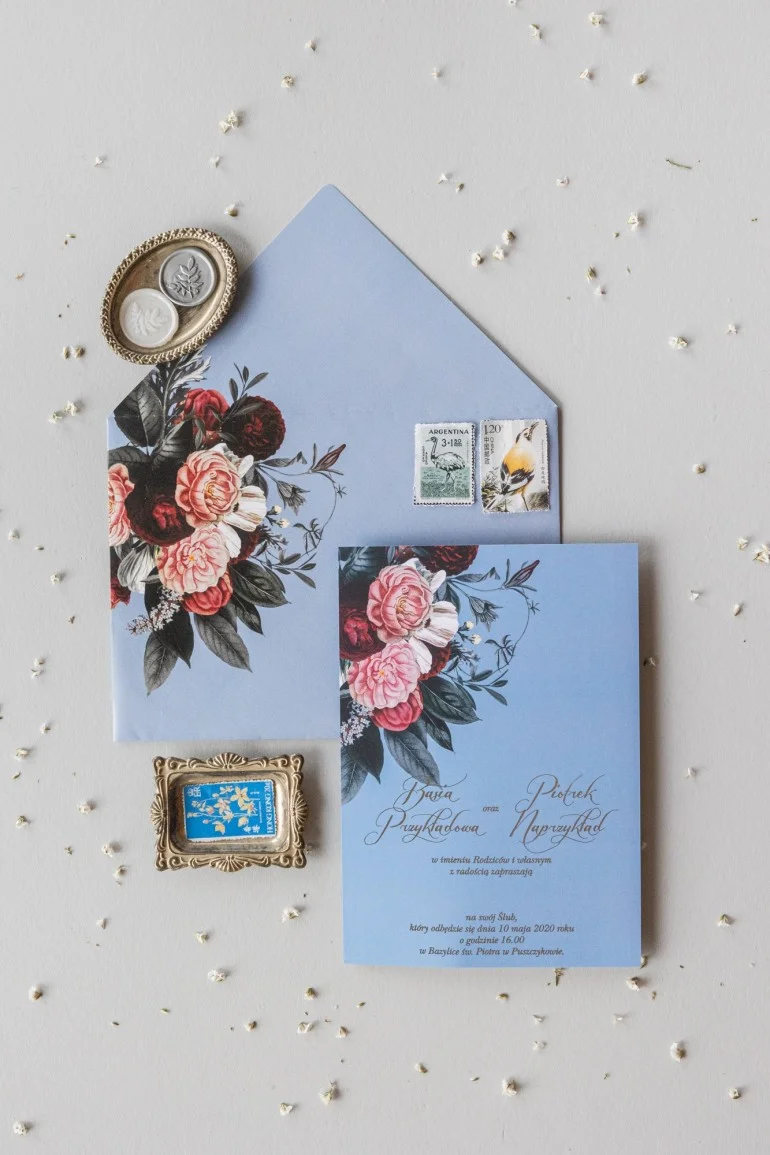
Glamour Invitations with Silver text and burgundy-pink bouquet | Elegant wedding invitations | Pastelowe no. 1
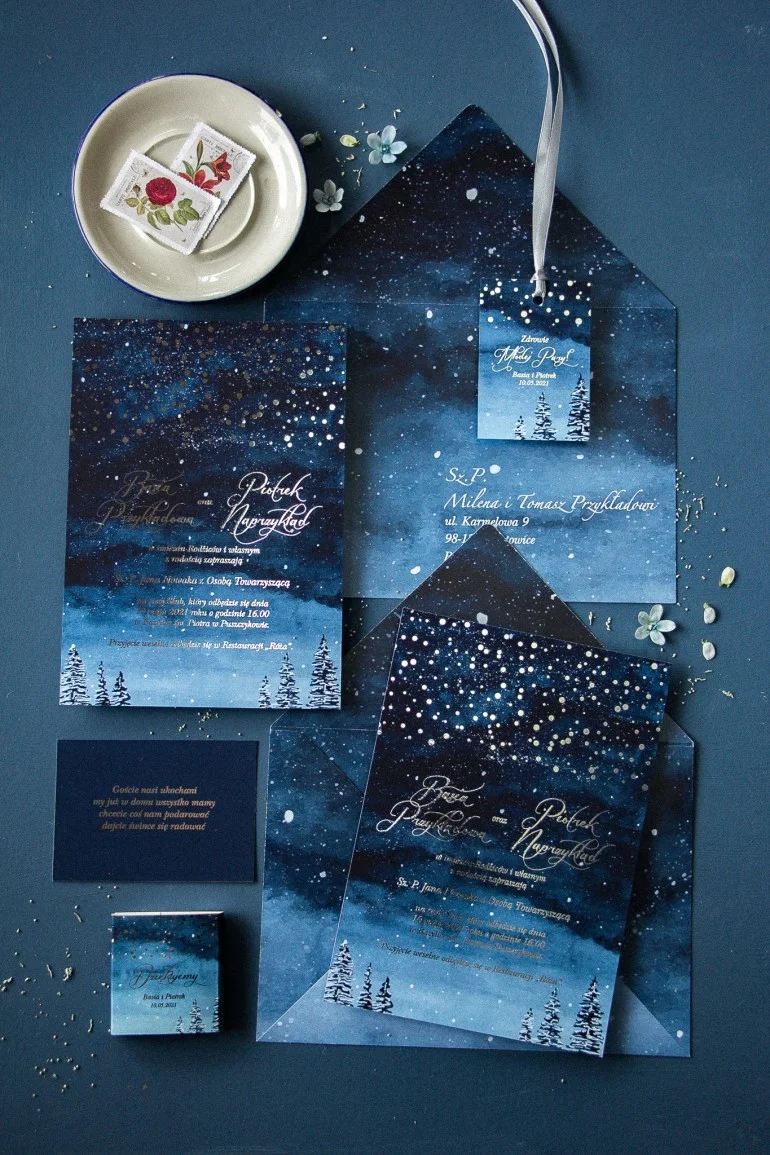
Winter Themed Wedding Invitations with Silver Foil | Pastelowe no. 6
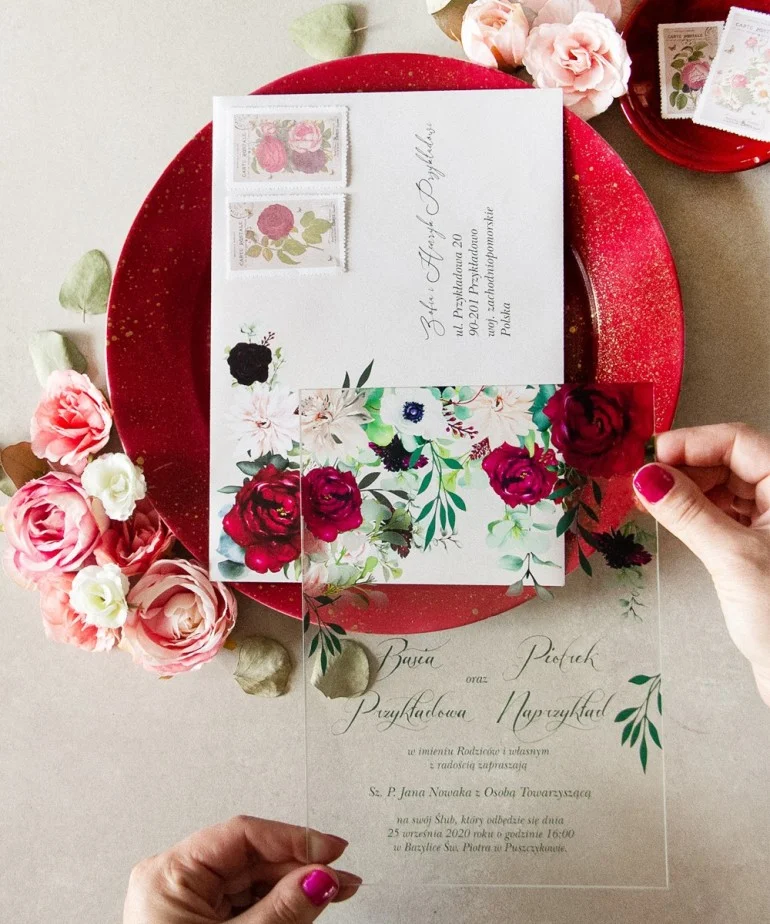
Elegant Glass Wedding Invitations with Floral Motif | Korani no. 4
-
Match the style of the toast to the moment. If you plan to speak in the early hours of the wedding (at the start of the reception), it's better to go with a more subdued and classic toast. However, the later it gets, the more humor you can afford – once guests are relaxed, a playful toast will be very well received.
When delivering an original toast, remember the rules of etiquette: stand up, face the guests and newlyweds, and grab attention (e.g., by gently tapping your glass). Speak loudly and clearly. Hold the glass raised, but ideally put it down for a moment while you speak (so you don't gesture with glass in hand). A toast should be shorter than a full speech – ideally 1–2 minutes of content. Try to let the words flow from the heart. Regardless of whether you choose a funny or solemn form, sincerity and enthusiasm will be the best decoration for your toast. Remember also, even with the most inventive toast, not to cross the boundaries of good taste – jokes should not offend anyone, and especially do not embarrass the newlyweds. A toast is meant to unite guests in shared joy, not cause consternation. After finishing, encourage everyone with the words “Let's raise a toast!” or simply “To the Bride and Groom!” and take the first sip yourself, signaling guests to join in celebrating the moment. Guests should also behave appropriately – during an official toast, everyone stands, listens in silence to the speech, and absolutely does not leave while it's ongoing. Such a gesture of respect towards the speaker and the couple is part of wedding etiquette.
The second significant element of this section is the moment of presenting thanks to parents. We've already mentioned the standard course of thanks – usually, the couple says a few words to their parents and then gives them gifts to the sound of a moving song. However, this moment can also be made more original and unforgettable by adding creative elements. Here are a few ideas for a non-standard approach to thanking parents:
-
Photo presentation or video. Prepare a short slideshow with photos from your childhood and shared moments with parents, or record a video in advance where you thank your parents for everything (you can weave in archival footage if you have it). You can display such material on a screen during the wedding before or during the thanks. Parents will surely be moved seeing these memories and hearing your voices in the video.
-
Original keepsake presented publicly. Instead of traditional bouquets, you can give parents something less typical: e.g., a personalized “Our Family History” album with described memories, a family tree with your new shared surname, or a treasure chest with trinkets symbolizing different stages of your life. While presenting such a gift, tell briefly what it means – e.g., “In this album, we've gathered your most beautiful moments as parents – from the day of our birth until today. Mom, Dad – this is your story, which allowed ours to begin.”. Such an unusual gift in front of all the guests will surely make an impression.
-
Shared dance or dedicated song. You can surprise your parents by inviting them to the center not just to give gifts, but to dance together to their favorite song. For example, if your parents met during a certain track – ask the DJ to play it and lead your parents to the dance floor. During this time, you can whisper personal thanks directly into their ear, which will be a very intimate and moving moment in the middle of the wedding fun. Alternatively, if one of you has musical talent, consider singing for your parents instead of speaking – guests will be charmed, and parents proud.
-
Letters read aloud. An interesting idea is to write separate thank-you letters to parents – by the bride to her parents and by the groom to his. During the wedding, instead of a traditional speech, you can ask parents to sit and read these letters to them (or ask the best man to read them if you can't manage through the emotion). Letters can be more personal, intimate, full of memories – reading them publicly will be an extremely symbolic gesture. After reading, you give the letters to your parents as a keepsake.
-
Thanks in the form of a joke or surprise. If your relationship with your parents is full of humor, you can prepare something completely unconventional – e.g., a short skit or joke. Sometimes couples give parents “Best Parents in the World” diplomas or medals, doing so with a wink and a hearty laugh. It all depends on your creativity and what fits you. The most important thing is that it flows from the heart and expresses gratitude.
When organizing these more elaborate thanks, take care of logistics – inform the venue staff of your plans (e.g., the need for a screen and projector for the film, appropriate music, a wireless microphone for presenting gifts in the center of the room, etc.). This will help you avoid interruptions and nervously looking for cables at the last minute. It's also good to involve someone from family or friends to help with the surprise (e.g., to turn on the presentation at the right moment).
In both toasts and thanks to parents, originality should go hand in hand with tact. Remember that emotions and intentions are most important – the toast should flow from sincere joy, and the thanks from deep gratitude. Creative additions and ideas are “added value” that will make your wedding unique and one-of-a-kind. Use them to give a personal touch to these moments, and your guests and loved ones will surely appreciate it.
Golden Fortune Cookies with Personalized Label | Affordable Wedding Favours | Cejla No. 3

Fortune Cookies with Bottle Green Label | Personalized Wedding Favours | Cejla No. 2

Personalized Fortune Cookies, Light Grey | Original Wedding Favours | Cejla No. 7
Summary
Wedding speeches and toasts are a beautiful tradition, but they should be tailored to you and your style. Remember the most important rules: let those who really have something from the heart to say speak, speak sincerely and concisely, and adjust the length of the speech to keep the guests' attention. Don't be afraid to experience emotions – a voice trembling with emotion doesn't bother anyone; it adds charm to the moment.
Well-planned speeches and thanks will make your wedding even more special. It's worth spending time on their preparation: practice the appearance, think through anecdotes and thanks, and consult the order with the people who will be speaking. This way you'll avoid surprises and stress on the wedding day. If you follow the above tips, you can be sure your words will evoke sincere smiles, tears of emotion, and loud applause.
We hope this guide has given you confidence in creating your own wedding speeches and toasts. And if you're looking for beautiful accessories to complete your day – from invitations to guest favors – be sure to visit Amelia-Wedding.pl. You'll find everything needed to ensure your wedding is refined in every detail. Good luck and cheers (to successful speeches)!
Frequently Asked Questions about wedding speeches
Are wedding speeches mandatory?
No, speeches are not mandatory. Many couples choose them because they add charm and personal character to the reception, but if you feel it's not for you – you can skip them. Instead of speeches, you can limit yourself to a short toast or thanks without a microphone. It's your day and you have the right to arrange it your way.
How to start a wedding speech?
Ideally with a greeting to the guests and a short introduction. You can start by addressing all those gathered (e.g., “Dear guests, beloved parents,”) or by addressing a specific person directly (if, for example, you are the best man – the newlyweds). A good idea is also to start with a quote about love, a funny anecdote, or a thank you – it's important that the first sentence grabs attention and is natural for you.
How to end a wedding speech?
Most often we end a speech with a thank you and a toast or wishes. You can summarize your words with a short wish for prosperity for the couple (if you're speaking as a guest) or another thank you to everyone (if you're speaking as the groom/bride). Finally, it's worth inviting everyone to raise a toast – this is a clear signal that the speech has ended and it's time to celebrate the moment.
Do I have to learn the speech by heart?
No, there's no such necessity. It's worth knowing the general outline and order of what you want to say, but you can have a card with the most important points. Many people write out the whole speech and partially read it – it's better than losing the thread from nerves. Just try not to read monotonically and maintain eye contact with the audience every now and then.
What to do if I'm very afraid of speaking?
Strong stage fright is a common problem, but there are ways to help yourself. First, prepare well – practice the speech several times, and on the wedding day do breathing exercises. You can also ask someone close to stand next to you at the beginning. If the stress is still too much, consider alternatives: e.g., recording a short thank-you video for parents to be played at the wedding, or asking the best man to read your words. It's better to find a solution than to completely give up expressing your feelings.
In what order should wedding speeches take place?
The traditional order is: first the father of the bride, then the father of the groom (optionally), then the groom, followed by the best man. Sometimes the bride also speaks (after the groom) as well as the maid of honor. The final order depends on you – it's important to warn the speakers in advance. You can also split speeches across several moments of the party if there are many – e.g., parents speak at the welcome, and best man/maid of honor only after a few hours.
Can you thank parents other than with a speech?
Of course. If you're worried your voice will get stuck in your throat, you can, for example, display a prepared photo presentation with captions as a form of thanks or play a recorded video with your thanks. Another option is giving parents letters during the wedding – you can read them aloud or ask the host to read them. It's important that the intention of thanking is met, even if it doesn't happen as a speech.
Do the best man and maid of honor have to prepare a speech?
There's no such obligation, but it's often expected of them. The best man and maid of honor are close to the couple, so their words mean a lot. However, if one of them is very stressed by public speaking, the couple can decide they won't speak. Alternatively, their role can be limited to reading telegrams from absent guests or raising a short toast, which is often easier than a full speech.
How many toasts are raised during a wedding?
It depends on the wedding's course. Usually, there is one official toast (combined with a speech) at the start of the reception – raised by the father of the bride or another designated person. Later, there can be many toasts: guests often raise toasts at their tables, and during the fun, songs are sung and health is drunk to the couple. It's important that the first toast is a clear signal to start the feast. Subsequent toasts can happen spontaneously throughout the wedding – just in moderation, so they don't pull away from the fun too often.
Can a wedding speech be improvised?
If someone feels great at improvising and can tell stories colorfully without preparation, they can try speaking spontaneously. However, for most people, it's risky – stress and emotions can make us forget what we wanted to say or say something unfortunate. It's definitely better to have at least a rough plan of the speech written down beforehand. Even experienced speakers prepare a starting point to maintain flow. A short sketch of the speech is basic, and improvisation can appear as small digressions or reactions to guest behavior.
Is it appropriate to joke about the couple during the speech?
Moderate, kind humor is definitely encouraged, but tact should be maintained. Avoid jokes that could truly embarrass or offend the couple. It's better to focus on funny but positive anecdotes (e.g., a funny childhood story of the groom or a slip-up of the bride that she laughs at herself). Remember, the goal of the speech is to celebrate the couple, so jokes should be heartfelt. If you're not sure if a joke is appropriate – it's better to skip it.
What to do if I forget what I wanted to say during the speech?
Above all – don't panic. A moment of silence is not a bad thing. Take a breath, glance at your notes (which is why it's worth having them) and continue. You can also turn the situation into a joke: “So much emotion that the words escaped me” – this will relax the atmosphere, and guests will surely understand. If you really don't remember what's next, simply end with a thank you or a toast. Often the audience won't even realize you skipped something.