What Is a Roman Wedding? Understanding Traditions and Meaning
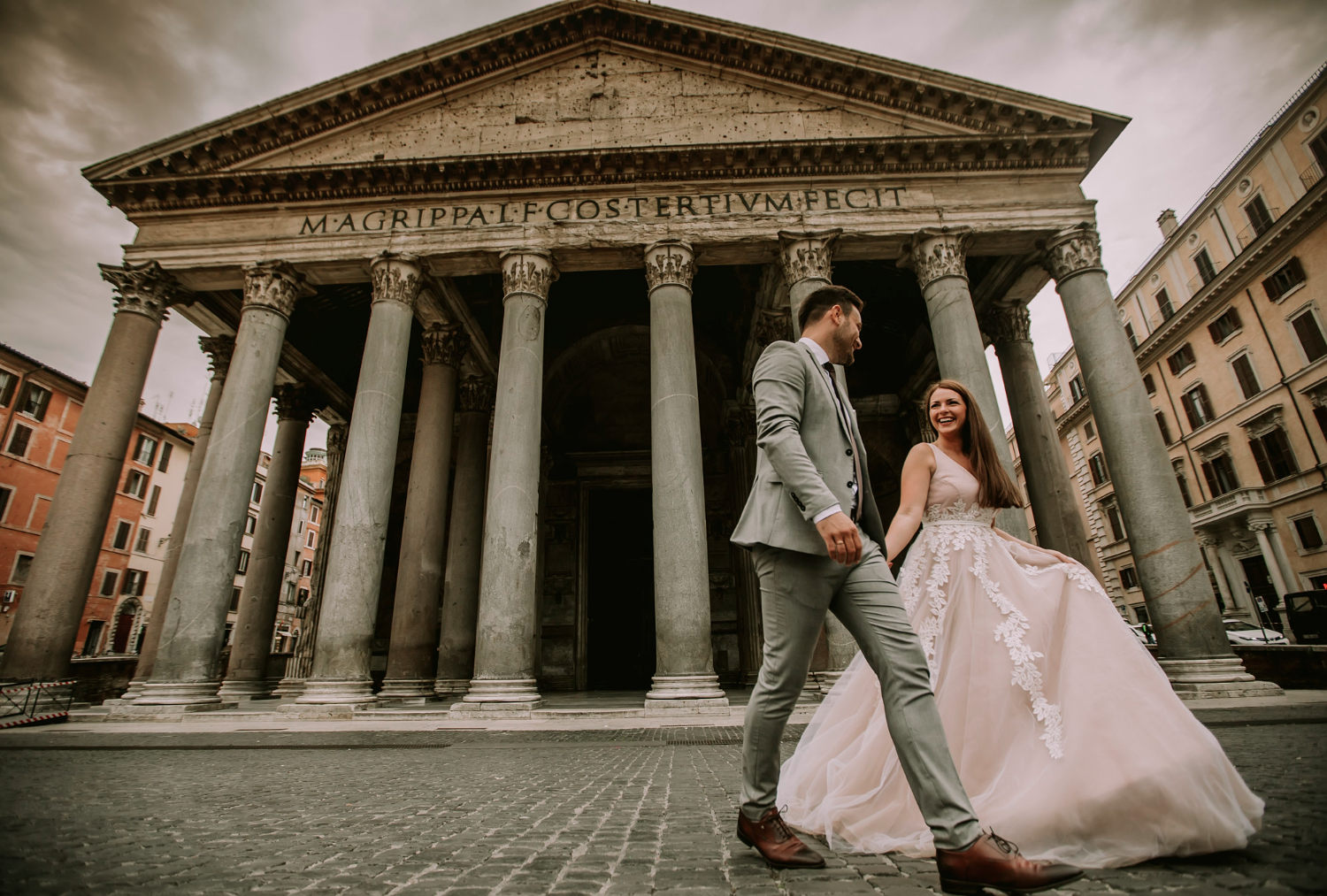
Weddings are unique occasions that bring together not only two people but also culture, traditions, and historical customs that create one-of-a-kind experiences. Wedding ceremonies vary across the globe, with many elements shaping how a wedding looks and is experienced. Poland, rich in tradition and culture, is no exception. It is a country that has always valued a diversity of wedding traditions, both those deeply rooted in our history and those originating from other cultures. One such example that is gaining popularity is the Roman wedding.
What is a wedding ceremony?
Let's start with the basics - what is a wedding ceremony? A wedding ceremony is a formal or semi-formal gathering that marks the beginning of a marriage. During it, the bride and groom exchange wedding vows, often accompanied by the exchange of rings and a blessing from an officiant. This event is frequently commemorated through wedding photos, videos, and the memories of family and friends.
A wedding ceremony is often symbolic, reflecting the beliefs, values, and traditions of the couple. It can be highly personalized, with individual elements introduced by the couple, but it can also reflect national, regional, or religious traditions.
Diversity of wedding traditions
The diversity of wedding traditions is one of the most important aspects that shape wedding experiences worldwide. From traditional Polish weddings with the focal element known as "oczepiny," through exotic Hindu ceremonies lasting several days, to intimate beach ceremonies in the Caribbean – the variety of these traditions is remarkable.
Poland, being a country with deeply rooted traditions, prides itself on its own rites and customs. From the "blessing," where parents bid farewell to their daughter before the altar, to "passing through the gate" or "pouches" – these traditions add a unique character to Polish weddings. But what if the couple wants something different, what if they want to reach back to the traditions of ancient civilizations and weave them into their ceremony?
The Roman wedding
This is where the Roman wedding comes into play. This type of ceremony has its roots in ancient Rome, where marriage was not just a union of two people, but also of two families. It is a wedding full of symbols, rituals, and elements aimed not only at celebrating love and the union but also at strengthening family and social bonds.
But what does a Roman wedding actually mean for newlyweds today? What are its key elements? How does it differ from other ceremonies? And how can it be integrated into modern realities and traditions? We will try to answer these and other questions in the following parts of our article.
We invite you to continue reading, where we will delve into the fascinating world of Roman wedding ceremonies, discovering their secrets and charms. Could this be what you are looking for on your special day?
History of the Roman wedding
Understanding wedding traditions requires immersing oneself in the history of a given custom. This journey through time allows us to understand where a rite comes from and how it has evolved over the centuries. The Roman wedding is no different. To fully understand its essence, it is worth going back to the roots and looking at how it looked in ancient Rome.
Rome - the cradle of the Roman wedding
Ancient Rome, known for its power and influence on all of Western civilization, is the place where the wedding tradition that we call the Roman wedding today was born. It was there, among marble columns and golden statues, that this unique rite originated.
According to historians, wedding ceremonies were one of the most important elements of social life for the ancient Romans. They not only symbolized the bond between a man and a woman but also constituted an essential element in building and maintaining social and political alliances.
Elements of a wedding in ancient Rome
A traditional Roman wedding consisted of several key elements.
First, the betrothal (sponsalia) - a formal commitment to marry. This was comparable to today's engagement. The Romans took betrothals very seriously. Choosing the right partner was crucial not only for the well-being of the young couple but also for the entire family.
Second, "dies nuptialis" - the wedding day. This day was full of rituals intended to ensure prosperity for the newlyweds. These included purification rituals, crossing the threshold of the house, the wedding feast, and welcoming the bride into her new home.
Finally, the "confarreatio" ceremony - the most formal and sacred form of marriage in ancient Rome, reserved for patricians. This ceremony involved offering grain to the gods, the couple sharing a cake, and the formal transfer of the bride into the husband's care.
Evolution of the Roman wedding
Over time, like any wedding tradition, the Roman wedding evolved. After the fall of the Roman Empire, many of its elements were forgotten or replaced by new practices. Nevertheless, certain aspects survived, such as the exchange of rings or crossing the threshold, which are common in many cultures today.
However, in recent years, with the growing interest in the history and culture of ancient civilization, the Roman wedding is gaining popularity again. Newlyweds are increasingly reaching for these ancient rituals, combining them with modern elements to create a unique ceremony that is not only beautiful but also full of meaning.

In the next parts of our article, we will take a closer look at the individual elements of a Roman wedding, compare it with other types of ceremonies, and consider how it can be integrated with modern traditions. Read on to learn more about this fascinating rite.
Elements of a Roman wedding
Ancient Rome is the place where numerous traditions were created that influence our culture to this day. This also applies to marriage and wedding ceremonies. Although modern Roman weddings are not an exact reflection of those from antiquity, many elements have survived in various forms. Let's dive into the fascinating world of rites, symbols, and their meanings that make up the unique character of a Roman wedding.
Sponsalia (Betrothal)
The Roman wedding ceremony began with sponsalia, a formal commitment to marry, similar to today's engagement. It was a very important step, not only for the couple but also for their families, who negotiated the terms of the future union.
In Nuptias Deductio
"In Nuptias Deductio" is the Roman equivalent of our concept of "bringing the bride home." On the wedding day, the bride was escorted to the groom's house in a procession that symbolized her transition to a new home. During this procession, the bride would throw nuts to the crowd, which was meant to ensure prosperity and fertility.
Usus
Usus was a form of marriage in ancient Rome involving the couple living together for a year. After this time, if the woman had not returned to her family home for three consecutive nights, she was considered a wife.
Confarreatio
Confarreatio was the most formal and solemn type of marriage in ancient Rome, available only to patricians. The ceremony included offering a sacrifice to the gods and the newlyweds eating wheat bread together.
The bride's attire
The bride at a Roman wedding wore garments that had symbolic meaning. Her dress (tunica recta) was fastened with a special pin, which was meant to protect her from evil spirits. On her head, she wore a veil called a flammeum, which was bright yellow or orange, symbolizing the flame of the hearth.
Exchange of rings
The exchange of rings, a practice well known from today's ceremonies, also has its roots in Roman traditions. Wedding rings were usually made of iron, which was meant to symbolize the durability and strength of the marriage.
Each of these elements of a Roman wedding has its own deep symbolism and meaning. Understanding them allows us to appreciate the richness and diversity of Roman traditions that still live on in our contemporary culture. In the next part of the article, we will consider how these ancient rituals can be adapted and integrated into modern wedding ceremonies. Are you ready to bring a touch of ancient Rome to your wedding?
Comparison with other types of weddings
The world is full of diverse wedding ceremonies, each rich in its unique rites and traditions. The ancient Roman wedding is one of them, bringing its own unique elements to this richness. Therefore, to fully understand what sets a Roman wedding apart, it is worth comparing it with other types of wedding ceremonies. In this chapter, we will look at a comparison and note the differences and unique features of a Roman wedding.
Roman wedding vs. Christian wedding
Although Christianity originates from Rome, wedding rituals differ significantly. Unlike the Roman wedding, where the emphasis was on negotiations and agreements between families, the Christian wedding focuses on the spiritual union between two people and their relationship with God. Rites such as the exchange of rings take place, but in the context of prayers and biblical readings.
Roman wedding vs. Hindu wedding
While a Roman wedding is usually a one-day event, a Hindu wedding can last several days, with many rituals before and after the main ceremony. Moreover, the Hindu wedding ceremony contains many symbolic elements, such as the sacred fire around which the newlyweds walk seven times. Despite these differences, a similarity can be seen in the importance both cultures place on families and marriage as a union not only between two people but also between two families.
Roman wedding vs. traditional wedding in Poland
Polish weddings are known for their huge feast, dancing, and games that can last until dawn. In contrast, the Roman wedding was usually more restrained, focused on rituals and symbolic gestures, although it also included a celebration. However, elements such as the exchange of rings or the wedding march are common to both.
Each of these ceremonies has its unique features that make them special and beautiful. The Roman wedding, with its deeply rooted traditions and symbols, definitely stands out. Its history, rites, and meanings give us not only an insight into ancient culture but also inspiration on how these elements can be incorporated into modern wedding ceremonies. Are you ready to combine the ancient and the modern in your wedding?
The Roman wedding in modern times
Times change, and with them, our customs and traditions change too. Therefore, the question may arise: how does the Roman wedding translate to the modern world? As it turns out, many traditions of the Roman wedding have survived and transformed, adapting to today's realities. In this chapter, we will look at how these ancient practices find their place in contemporary wedding celebrations.
Betrothal (Sponsalia)
Betrothal, known in the modern world as engagement, is a tradition practiced all over the world. Just like in ancient Rome, it is the moment when a couple officially commits to marriage. Although today it is no longer a formal contract between two families as it was in antiquity, engagement is still an important stage on the way to the wedding.
Bringing the bride home (In Nuptias Deductio)
The tradition of bringing the bride to the groom's house has survived, although with a slightly different meaning. Today, the bride is usually walked down the aisle by her father, which symbolizes her transition from her family home to a new life with her husband. In some cultures, the bride is still "brought" to the ceremony venue by the groom or his immediate family.
Exchange of rings
One of the most well-known elements of any wedding, the exchange of rings, has its roots in ancient Rome. Although the material they are made of may vary - from iron to gold or silver - the symbolism is the same: they are a sign of eternal love and devotion.
Adaptation of traditions
Modern couples often look for unique and personal ways to make their wedding special. Drawing from historical traditions, such as those related to the Roman wedding, can add depth and meaning to the ceremony. For example, some couples decide to simulate Roman rituals, such as "In Nuptias Deductio" or "Confarreatio," thereby creating an unforgettable atmosphere.
The ancient Roman wedding and its traditions have much to offer in the modern world. They not only connect us with our past but also add depth and meaning to wedding ceremonies. Regardless of whether you decide to apply these elements to your wedding or not, knowing about them can only enrich your experience.
Summary and conclusions
After a thorough analysis and a deeper understanding of the Roman wedding, we can see how deeply it is rooted in our modern wedding ceremonies. The uniqueness and richness of this ancient rite, its symbols and meanings, give it a unique character that has stood the test of time.
During our journey through the labyrinth of history and tradition, we discovered how essential elements of the ancient Roman wedding have transformed and adapted to modern realities. Engagement (Sponsalia), the symbolic bringing of the bride to the groom's house (In Nuptias Deductio), and even the exchange of rings, all have their roots in ancient Rome.
The Roman wedding not only constitutes a fascinating piece of history but also serves as inspiration for couples who want to add some historical depth to their wedding ceremonies. Whether by simulating traditional rituals or incorporating subtle references to Roman rites, there are many creative ways to use these ancient traditions.
In summary, it is worth noting that although times change, there are certain elements that remain steadfast. The traditions of the Roman wedding are a perfect example of this. Knowledge of these traditions, their origins, and their meaning helps us understand our own wedding culture and enables us to create wedding ceremonies that are both personal and full of depth.
No two wedding ceremonies are identical - each is unique, just like the couples who create them. Perhaps part of this uniqueness comes from the ancient Romans and their traditions? Regardless of whether you choose a traditional wedding or a ceremony inspired by ancient rituals, the most important thing is that it is a reflection of your love and your individual approach to life. And knowledge about various wedding traditions, such as the Roman wedding, will certainly help you in this process.
I encourage you to continue exploring the topic of weddings and everything related to it. Here are some articles from our blog that might interest you:
- Wedding invitations: How to choose words that touch the hearts of guests
- Glass wedding invitations: an unforgettable invitation
- 7 ideas for a unique engagement
- How to gift money for a wedding
- How to write place cards for children
...and much more. Read, learn, and enjoy planning your special day!