Who should come first on the wedding invitation?
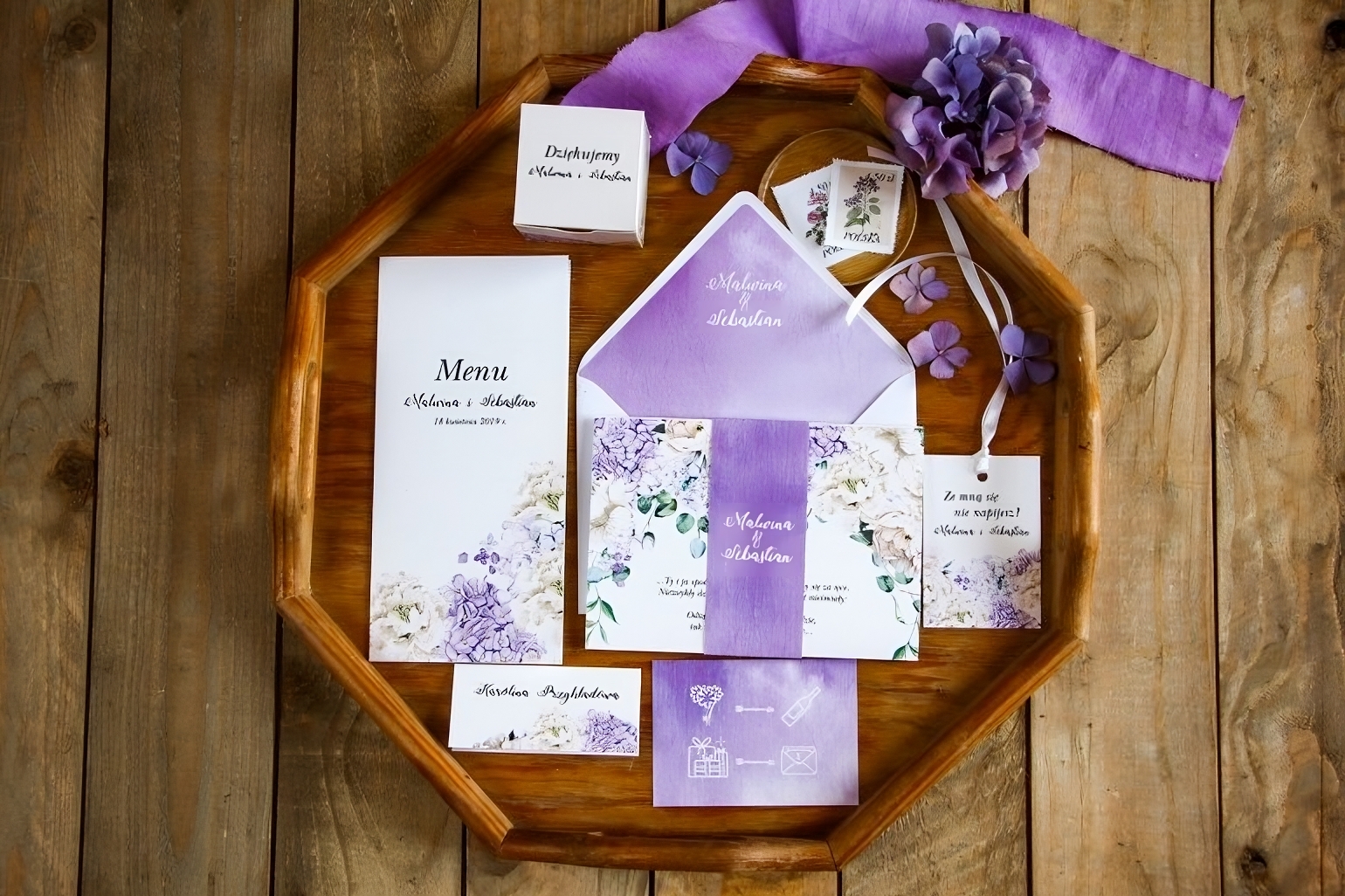
Introduction: The Importance of Order on Invitations
Cultural and ethical significance of the order
When you start planning your wedding, details like the order of names on invitations might seem like a minor issue. However, in reality, this matter has deep roots in tradition and etiquette. In many cultures, the way names are presented on a wedding invitation carries meaning that goes far beyond aesthetics. It is a reflection of respect, social recognition, and even family hierarchy. In Poland, as in many other countries, it is customary for the woman to take the first place on the invitation. This rule, although it may seem trivial, is closely tied to tradition and shows deep respect for women. In this way, from the very first moment guests receive the invitation, the tone of the event is set, and the importance of each invited guest is highlighted.
Why is the order important?
The order of names on a wedding invitation may seem like just a small element in the entire wedding planning process, but it is actually of key importance. It is more than just a rule of etiquette; it is a way to communicate with guests and express their importance. In Polish culture, where weddings are deeply rooted in tradition, every element – from decorations to invitations – has its role and meaning. The order in which we place names is not just a matter of protocol, but also a way to show guests how much they are valued and important to the bride and groom. It is also a reflection of a personal approach and attention to detail, which is extremely important in preparing for this special day. Therefore, the proper placement of names on invitations is not only a sign of good taste but also an expression of respect for tradition and guests.
The impact of order on the reception of the invitation
The order of names on an invitation has a huge impact on how the invitation is perceived by its recipients. It is the first element that guests notice when they receive the invitation. In Polish wedding culture, where special attention is paid to details and etiquette, the way an invitation is presented can say a lot about the bride and groom and the character of the ceremony. Correctly placing names, in accordance with the rules of etiquette, immediately lets guests know that they are dealing with a ceremony that is well-thought-out and organized with attention to the smallest details. It is also a signal that the bride and groom value tradition and etiquette, which is perceived as an expression of respect for the guests and the event itself. The proper order on the invitation, although it may seem like a minor issue, is in fact an important element that contributes to the positive reception of the entire wedding ceremony and the image of the bride and groom.
Article Table of Contents
- Introduction: The Importance of Order on Invitations
- Etiquette Rules: Ladies First
- Formulating Invitations: How to Write Names
- Style and Tone of the Invitation
- Addressing Guests: How to Invite Properly
- Invitations for Different Types of Ceremonies
- Modern Trends in Invitations
- Mistakes to Avoid in Invitations
- Personalization of Invitations: How to Add Originality
- Summary: Order as an Element of Etiquette and Style
Etiquette Rules: Ladies First
The "ladies first" rule
In the world of wedding etiquette, one of the fundamental rules is to place the woman's name first on the invitation. This is a convention that reflects a deeply rooted tradition and respect for women. In Poland, as in many other cultures, the 'ladies first' rule is a key element of etiquette associated with wedding ceremonies. This practice is not just a whim or a trend – it has its justification in the long history of celebrating ceremonies and is considered a sign of good taste and elegance. Introducing the woman's name at the beginning of the invitation is a form of expressing appreciation for her role in the upcoming event. This is especially important in the context of weddings, where every element – from the choice of venue to the form of the invitation – has symbolic meaning. By placing the woman's name first, the bride and groom send a clear signal: attention to detail and adherence to tradition are important to them.
Exceptions to the rule
Although the 'ladies first' rule is widely recognized and applied, there are some situations where it may be modified. These exceptions to the rule often concern specific situations, such as invitations for same-sex couples or in cases where both individuals have hyphenated surnames. In such situations, the bride and groom may decide on a different approach to better reflect their individual situation and preferences. It is important, however, that such a change is well-thought-out and consistent with the overall tone of the ceremony. In the case of same-sex couples, it is recommended to place names in alphabetical order or according to another established rule. When both individuals have hyphenated surnames, various forms of their presentation can be considered, always, however, maintaining elegance and respect for the guests. Although these are exceptions to the traditional rule, it should be remembered that every invitation should be consistent with the character of the wedding and reflect the values and personality of the bride and groom.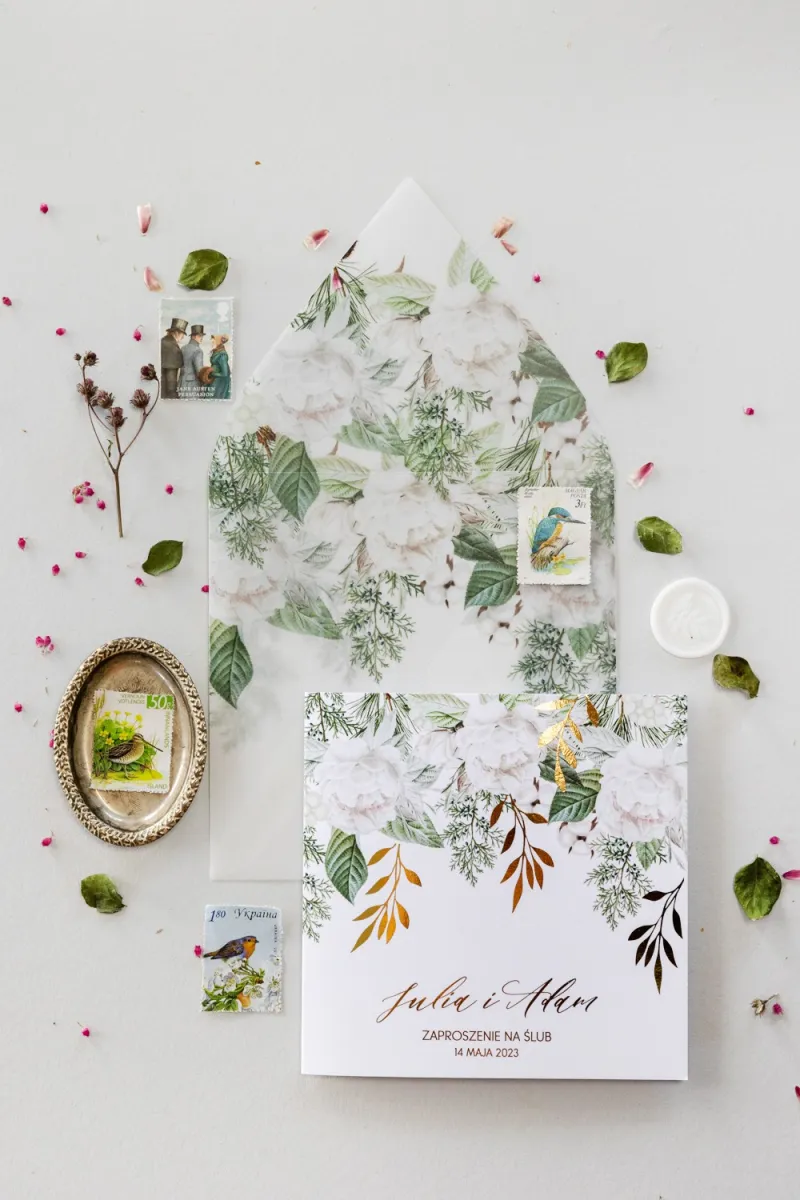
History and origin of the rule
The concept of 'ladies first' on wedding invitations has its roots in ancient traditions and social practices. The history of this rule dates back to times when social roles were strictly defined, and weddings were considered events of great social and cultural importance. Placing the woman's name first on the invitation was a sign of respect and recognition of her role in society and family life. In Poland, as in other European countries, this tradition has been preserved as a cultural element, reflecting respect for women and their importance in wedding ceremonies. Although modern society is evolving and changing in terms of gender roles, this rule of etiquette remains an important element, testifying to a deep understanding and respect for tradition. It is proof that certain values and customs stand the test of time, remaining essential components of wedding ceremonies and celebrations.
Formulating Invitations: How to Write Names
How to write names correctly
In the process of creating the perfect wedding invitation, one of the most important aspects is writing names correctly. This seemingly simple task requires following specific rules of etiquette. It is crucial to always place the woman's name first, which is a universal rule in Poland and many other cultures. It is an expression of respect and recognition for the woman in the context of the wedding. For heterosexual couples, the invitation should first list the woman's name and surname, and then the man's. This practice is not only consistent with tradition but also helps avoid confusion and misunderstandings. It is important to remember that invitations are often the first element of the wedding ceremony that guests encounter, so their proper preparation is key to creating a positive first impression and setting the tone for the upcoming event.
Hyphenated surnames and how to treat them
In cases where the woman has a hyphenated surname, it is necessary to use a slightly different convention. According to etiquette rules, in such situations, the couple is treated separately, which means that the name and both parts of the woman's hyphenated surname are written first, followed by the man's name and surname. For example, if the woman has the surname "Wójcik-Kowalska" and the man has "Nowak", the invitation should read "Anna Wójcik-Kowalska and Mariusz Nowak". Such a form is not only consistent with etiquette rules but also allows for a precise definition of exactly who is being invited to the ceremony. Modern trends in wedding planning increasingly accept diversity and individuality, which is also reflected in the way invitations are formulated, giving couples the opportunity to express their unique identity.
Examples of correctly written names
Understanding how to correctly write names on invitations is crucial for every couple planning a wedding. To provide a clear picture, here are some examples of correctly written names on wedding invitations. Example one: for a couple where the woman has taken her husband's surname, the correct form would be "Małgorzata and Jan Kowalski". Second example: for a couple where the woman has kept her maiden name, you should write "Barbara Nowak and Piotr Wiśniewski". Third example: in the case of a woman's hyphenated surname, the correct form is "Joanna Szymańska-Kowalska and Tomasz Kowalski". These examples show the variety of situations that couples may encounter and emphasize the importance of following etiquette rules in the process of preparing wedding invitations. Properly formulating names on an invitation is not only a matter of good taste but also shows respect for guests and tradition.
Style and Tone of the Invitation
Choosing the invitation style
When choosing a wedding invitation style, the bride and groom face a decision that affects the first impression their ceremony will make on guests. The invitation style is not just a matter of aesthetics, but also a reflection of the couple's personality and the character of the entire event. In Poland, where wedding tradition is rich and diverse, invitation styles can range from classic and elegant to modern and unconventional. It is important that the invitation style harmonizes with the overall wedding theme, the venue, and the couple's preferences. The invitation can be minimalist and subdued, full of splendor and embellishments, or even non-traditional and bold. It all depends on the story the couple wants to tell their guests. Elegant paper invitations with delicate floral motifs can be perfect for a traditional church wedding, while more modern and creative approaches might better suit outdoor or themed weddings. It is crucial that the invitation style is consistent with the rest of the wedding elements, creating a harmonious and memorable whole.
Matching the tone to the character of the ceremony
Matching the tone of the invitation to the character of the ceremony is just as important as choosing its style. The tone of the invitation plays a key role in communicating the nature and atmosphere of the upcoming event to guests. If the wedding is to be formal and solemn, the tone of the invitation should be appropriately serious and elegant, using traditional terminology and formal phrases. On the other hand, for less formal ceremonies, such as outdoor weddings or unconventional ceremonies, the tone can be more relaxed and personal. You can then experiment with more casual language, creative wording, and non-standard layouts. It is important that the tone of the invitation tells guests not only what to expect but also what kind of interaction and atmosphere the couple wants to create. A well-matched tone helps guests prepare for the event, both emotionally and practically – for example, in terms of appropriate attire or expectations.
Examples of invitation styles
To better understand how different invitation styles can be matched to the character of the ceremony, let's look at a few examples. For a traditional church wedding, invitations in shades of white and cream, with delicate gold accents and a classic font, might be ideal. Such an invitation not only speaks of the elegance and formality of the event but also of respect for tradition. In turn, for a beach wedding, a great choice might be invitations in pastel colors, with nautical motifs and a looser, more relaxed text layout. An example of an invitation for a themed wedding, for example in a vintage style, could be invitations with retro graphics, unusual shapes, and interesting paper textures. These examples show how important it is for the style and tone of the invitation to be matched to the type and atmosphere of the wedding, creating a consistent and well-thought-out image of the entire event.
Addressing Guests: How to Invite Properly
Rules for addressing guests
Addressing guests on invitations is a key aspect of wedding preparations, requiring special attention and tact. Addressing guests should be done with due diligence so that every invitee feels important and respected. Etiquette rules state that addressing should be clear, precise, and, above all, consistent with the social and personal relationships that connect the couple with the invited people. This means that both formal titles (e.g., Doctor, Professor) and family relationships (e.g., Aunt, Uncle) should be taken into account. In Poland, where family traditions are strongly cultivated, it is important to reflect these relationships in an appropriate and sophisticated way. Addressing should also take into account cultural and social specifics, which is key to avoiding misunderstandings and building an atmosphere of respect and warmth. Well-constructed addressing is not just a matter of protocol, but also an expression of the personal approach and attention that the couple devotes to their guests.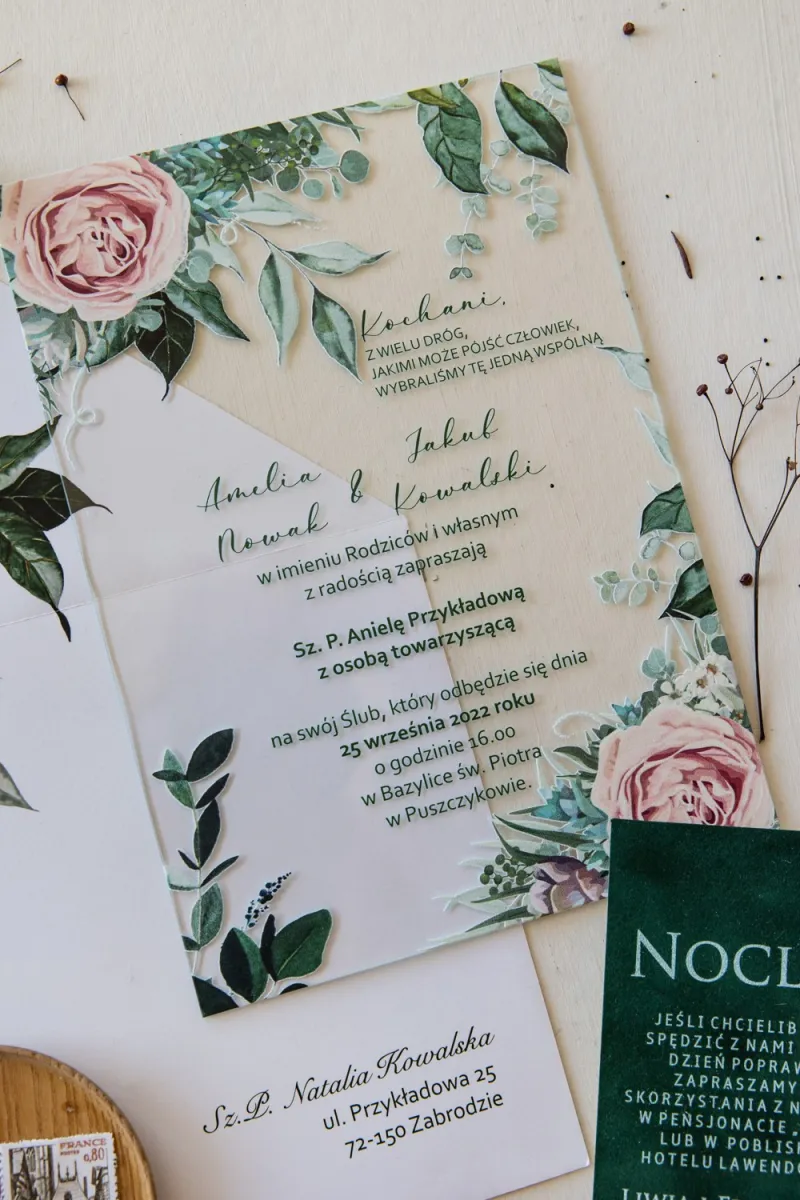
Specifics of inviting different guest groups
Inviting different groups of guests to a wedding and reception requires an individual approach and consideration of the diversity of relationships. Each group of guests – whether family, friends, coworkers, or distant acquaintances – has its own specifics and expects a different kind of attention. Family, especially the closest, should be addressed in a more personal and intimate way. When addressing invitations to family, it is important to use known and accepted forms of address that reflect the closeness and warmth of family relationships. In the case of friends and acquaintances, you can allow yourself slightly looser and more direct formulas that reflect individual bonds and shared experiences. In turn, invitations for coworkers or distant acquaintances should be more formal, maintaining an appropriate level of respect, but at the same time expressing joy at their presence. Each of these groups requires different attention and a way of addressing, which shows how important it is to know etiquette and the ability to apply it in practice.
Examples of correct addressing
To better understand the rules of addressing guests, it is worth citing a few examples. For family members, where a close relationship is key, addressing them as: "Dear Uncle Jan and Aunt Marysia" might be appropriate. In the case of friends, where relations are more informal, you can use the form: "Dear Ania and Tomek". On the other hand, in relation to coworkers or distant acquaintances, more formal addressing will be appropriate, for example: "Dear Mr. and Mrs. Kowalski". These examples show the variety of approaches and emphasize the importance of personalization in the process of creating invitations. Well-constructed addressing not only meets etiquette rules but also conveys the personal feelings and emotions of the couple, which makes the invitation more personal and valuable.
Invitations for Different Types of Ceremonies
Wedding invitations
Wedding invitations are an inseparable element of every wedding ceremony and are the first signal to guests about the character and style of the upcoming event. In Poland, where the wedding is an event with deep cultural roots, wedding invitations constitute a unique category among all types of invitations. They are not only a testament to the upcoming ceremony but also a reflection of the tastes and personality of the bride and groom. Traditional Polish wedding invitations are often characterized by elegance and subtle beauty, with delicate graphic motifs and carefully chosen words. Depending on the wedding style, they can take various forms – from classic and formal to modern and original. It is important that the invitation is consistent with the whole ceremony, reflecting its atmosphere and character, which allows guests to properly prepare for this special day.
Invitations for other ceremonies
Besides weddings, there are many other types of ceremonies that require the appropriate type of invitation. Every event, whether family celebrations such as christenings, anniversaries, or official events, requires invitations that reflect its unique character. For example, invitations for christenings are usually characterized by delicacy and subtlety, with motifs referring to childhood innocence and purity. In turn, invitations for anniversaries or important milestones are often more formal and solemn, with an emphasis on elegance and tradition. In the case of official events, such as galas or business meetings, invitations should be simple, elegant, and above all professional, reflecting the character and importance of the event. In any case, the appropriate invitation not only informs about the event but also builds appropriate expectations and atmosphere, being a key element of communication with guests.
Adapting the invitation to the type of event
Adapting the invitation to the type of event is an important skill that allows for the creation of a consistent and well-thought-out image of every ceremony. Regardless of whether it is a wedding, a family celebration, or an official event, it is crucial that the invitation harmonizes with the character and tone of the event. For example, an invitation to an elegant wedding in a historic church will be significantly different from an invitation to an outdoor boho-style wedding. Similarly, an invitation to a formal business gala will require a different approach than an invitation to an informal family gathering. It is important that every element of the invitation – from the choice of paper and font to the wording and design – is carefully matched to the type and tone of the event. In this way, invitations become not only a formal announcement of the event but also an integral part of its aesthetic and emotional experience.
Modern Trends in Invitations
Modern approach to invitations
Nowadays, the trend in invitation design is evolving, reflecting changing tastes and preferences. The modern approach to invitations focuses on individualism and creativity, allowing couples to express their uniqueness. Modern invitations often break traditional conventions, introducing bold colors, unusual formats, and original graphic motifs. Modern trends in invitations emphasize the importance of personalization, which means that couples are increasingly choosing invitations that are a reflection of their personality and lifestyle. From bold and bright patterns to minimalism and cleanliness – modern invitations offer a wide range of possibilities that enable the creation of unique and memorable designs. Also, the texts on invitations are becoming more personal and less formal, reflecting the direct and sincere nature of the relationship between the bride and groom and their guests.
Digital versus traditional invitations
In the digital age, one of the most noticeable trends in invitations is the growing popularity of digital invitations. This form of invitation is an alternative to traditional paper cards and offers many benefits, such as ease of distribution, the possibility of quick personalization, and a reduced impact on the environment. Digital invitations allow for easy sending to a wide audience and the addition of interactive elements, such as maps, photo galleries, or links to wedding information websites. However, traditional invitations still have their supporters who appreciate the touch and quality of the paper, the elegance of handmade details, and the classic aesthetic. Many couples decide to combine both forms – sending traditional invitations to key guests and digital ones to the rest. This hybrid strategy allows for maintaining a traditional character while utilizing the advantages of digital communication.
Trends in invitation design
In the field of invitation design, modern trends emphasize innovation and personal character. Designers experiment with different paper textures, unusual formats, and sophisticated printing techniques, such as embossing or raised printing. Patterns are inspired by a wide range of themes – from nature to contemporary art, which allows for the creation of invitations that are small works of art. The color palette of invitations is also becoming bolder and more diverse, using both pastel tones and intense, deep colors. Floral motifs, geometric patterns, and even elements inspired by pop culture – all this finds its place in modern invitation design. This evolution in invitation design proves that brides and grooms are increasingly boldly expressing themselves through this important element of wedding preparations, creating invitations that are not only an announcement of the ceremony but also a reflection of their individual stories and style.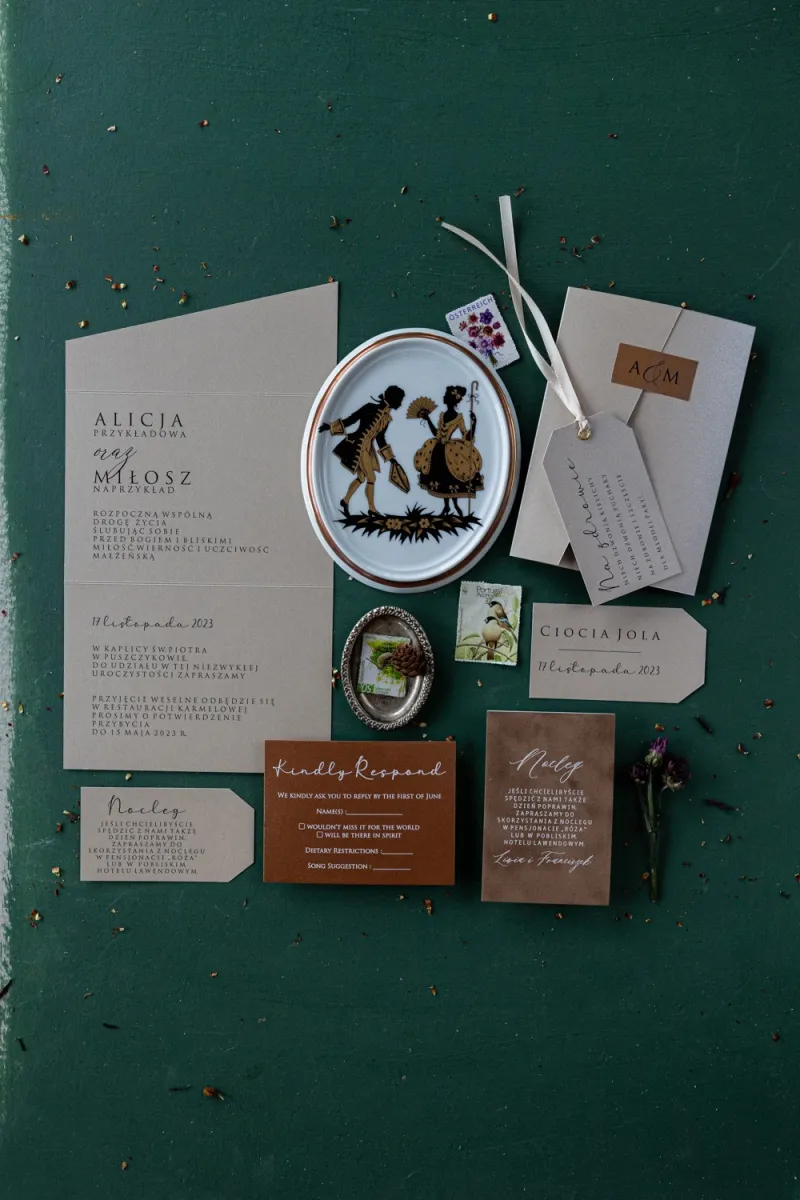
Mistakes to Avoid in Invitations
Common mistakes in invitations
When designing invitations, there are several common mistakes that can not only disrupt communication with guests but also adversely affect the image of the entire event. One of the most common mistakes is incorrect addressing of guests, which can lead to misunderstandings or even offense. Another mistake is the lack of consistency between the style and tone of the invitation and the character of the ceremony, which can be misleading regarding the nature of the event. Spelling and grammatical errors are also common and can testify to a lack of professionalism. Furthermore, unclear or incomplete information about the event, such as the date, time, or location, can cause confusion among guests. It is important to devote time to careful thought and meticulous preparation of invitations, avoiding these mistakes to ensure clear and pleasant communication with guests.
How to avoid misunderstandings
To avoid misunderstandings in invitations, precision and attention to detail are key. Invitations should be clear, understandable, and contain all necessary information. It is worth investing in professional proofreading of texts to avoid linguistic and spelling errors. Ensuring that the style and tone of the invitation match the character of the ceremony is also important to avoid misleading guests. Personalizing the addressing is another way to avoid misunderstandings, especially in the case of guests with similar names or when inviting many people from the same family. It is also important to consult the content of the invitations with trusted people before sending them, as they may catch potential errors or inaccuracies. In this way, you can ensure that the invitations will effectively communicate all important aspects of the event.
Cases when rules can be broken
Although following etiquette and traditional rules is usually recommended, there are cases when rules can be broken. This is especially true for couples who want to create unique and personal ceremonies that reflect their individual style. In such situations, departing from traditional formats, colors, or even the structure of invitations can be a conscious choice. For example, couples opting for more informal weddings may decide on more casual and creative invitations that deviate from convention. Similarly, in the case of themed weddings or unusual ceremonies, non-traditional invitations can better communicate the unique character of the event. It is important that such decisions are well-thought-out and consistent with the overall message and atmosphere of the ceremony to avoid confusion and ensure clarity of the message for guests.
Personalization of Invitations: How to Add Originality
Creating unique invitations
Nowadays, where individuality and personal style are increasingly valued, creating unique invitations has become an essential element of preparations for every ceremony, especially a wedding. Personalization of invitations not only allows couples to express their individuality but also makes the invitations an unforgettable part of the entire ceremony. The possibilities for personalization are practically unlimited – from the choice of colors, patterns, and paper textures to individual text formulas and unique graphic elements. In Poland, where wedding tradition is deeply rooted, more and more couples are deciding to add a personal touch to their invitations. This can be something as simple as the couple's initials on the front of the invitation, or something more complex, such as invitations designed around a shared hobby or passion. Unique invitations not only stand out but are also more remembered by guests, becoming a lasting souvenir of this special day.
Adding a personal touch
Adding a personal touch to invitations is a way to create a deeper, more personal relationship with guests. It can be something as intimate as a photo of the couple, a quote from their favorite book or movie, or even handwritten notes. Such details not only give the invitations an individual character but also allow guests to feel more involved in the ceremony. In Poland, where special importance is attached to family ties and personal relationships, such personalized elements can significantly strengthen the emotional value of the invitations. It is also worth mentioning the possibilities offered by the company Amelia-Wedding.pl, where every client can personalize their invitations for free, creating something unique and one-of-a-kind that perfectly reflects their personality and style.
Examples of personalized invitations
Examples of personalized invitations can serve as inspiration for couples who are looking for unique ideas for their wedding invitations. For example, a couple of nature lovers can choose invitations with forest or floral motifs, and sea lovers can opt for nautical motifs. Invitations can also reflect the couple's shared interests, such as travel, music, or art. Another idea is to use elements related to the place where the couple met or where the wedding will take place. On the Amelia-Wedding.pl website, couples can find a wide selection of designs and motifs that can be adapted to their individual needs and preferences, creating invitations that are not only beautiful but also deeply personal and symbolic. Personalization of invitations thus becomes not only a form of expression but also an unforgettable element of the entire ceremony, remaining in the guests' memory for years.
Summary: Order as an Element of Etiquette and Style
Summarizing the rules of order
In summary, the rules of order in invitations constitute a significant element of etiquette and style, which is of fundamental importance in wedding culture. Correctly establishing the order of names and titles on wedding invitations not only reflects traditions and etiquette rules but also shows respect and care for guests. This is especially important in Poland, where wedding ceremonies are deeply rooted in tradition and culture. Adhering to these rules testifies to the high culture and elegance of the bride and groom, as well as their attention to details, which are an essential part of wedding preparations.
The importance of etiquette in invitations
Etiquette in invitations plays a key role in communication between the bride and groom and their guests. It is more than just a formality – it is a way to express respect, tact, and appreciation for those who will witness this special day. The importance of etiquette in invitations is invaluable because it helps lay the foundation for the entire ceremony, establishing its tone and atmosphere. Well-thought-out invitations that follow etiquette rules are always better received and contribute to creating a positive image of the entire ceremony.
How order affects the perception of the invitation
The order on the invitation has a direct impact on how the invitation is perceived by its recipients. It is the first signal sent to guests, which says a lot about the character and style of the ceremony. The correct order expresses respect for tradition and is a reflection of care for guests. The choice to list the woman's name first is not only consistent with convention but is also a gesture showing the importance and role of women in wedding rites. In this way, the order becomes a subtle but important element that contributes to the overall impression and perception of the invitation.
We also encourage you to read other articles on our blog, which can provide more tips and inspiration regarding wedding planning:
- Is it appropriate to invite only to the wedding ceremony?
- How to involve children in the wedding ceremony
- How to organize a themed wedding: from boho to retro
- What to say when handing out wedding invitations
- What information to include on an invitation for international guests
- Tradition or modernity: who pays for wedding rings
- How to prepare for a wedding in a short time
These and many other articles can be found on Amelia-Wedding.pl, which will help you plan the perfect wedding and reception.

Szymon Jędrzejczak
Wedding industry expert and stationery designer at Amelia-Wedding.pl. For years, she has been helping couples create unforgettable moments by combining tradition with modern design.