Why You Should Involve the Groom in Wedding Planning

Wedding planning is an exciting but demanding process. In many couples, it is traditionally the Bride who takes the lead in organization, while the Groom remains somewhat in the shadows. However, times are changing, and more often engaged couples plan their wedding in Poland together. Involving the future husband in the preparations is not only a way to lighten the Bride's load but, above all, a recipe for sharing the joy of creating this unique day together.
Table of Contents
- Traditional duties of the Groom before the wedding
- Division of responsibilities in wedding and reception organization
- What tasks can the Groom take over?
- Ways to involve your fiancé in the preparations
- Joint planning of the ceremony and reception: practical tips
- Most common wedding planning mistakes and how to avoid them
- Summary: Your dream wedding as a joint creation
Planning together instead of acting alone
The most important decisions regarding the wedding – choosing the date, the style of the celebration, the budget, or the guest list – should be made together. When both partners engage in discussions and share ideas, the wedding becomes a joint project rather than just one person's vision. This builds a sense of partnership and helps avoid misunderstandings. A future Groom who participates in establishing the vision for the ceremony and reception from the beginning will feel co-responsible for the final result and more excited about the upcoming day.
The Modern Groom – an active partner, not a guest
The modern Groom is increasingly stepping out of the role of a "guest at his own wedding" and becoming a full-fledged organizer. An engaged fiancé is a treasure – he can bring fresh ideas, a different perspective on many matters, and specific skills. The Groom in wedding preparations is no longer just the person for finances or transport, but a partner who, together with his chosen one, creates every element of the celebration from scratch. Involving him gives him a chance to express himself – in choosing the suit, music, menu, or wedding attractions – making the wedding day truly yours together and unique.

Gaja No. 2 Wedding Invitation – Sage Green with Letterpress Embossing

Glamour Wedding Invitation with Gilded Branch and Velvet Paper – Ruskus No. 14

Impresja No. 7 Wedding Invitations – Eucalyptus and Greenery Style
Emotional support and less stress
Wedding planning can be stressful, but when wedding preparations are shared between two people, the tension is significantly lower. Solving problems together (e.g., searching for the perfect wedding venue or deciding on the menu) means that each of you has the support of the other. A Groom who participates in the organization from the start better understands the challenges you face and can actively support his fiancé at every step. This way, the Bride doesn't feel that the entire burden rests solely on her – which is a huge relief and brings more joy to the preparations.
Traditional duties of the Groom before the wedding
In Polish wedding tradition, a certain division of pre-wedding duties has developed over the years. Some tasks have always been assigned to the Groom. Although there are no rigid rules today and many couples decide individually who does what, it's worth knowing these classic responsibilities. They provide a great starting point for discussing the division of tasks and show how important the Groom's role is in the preparations.
Wedding formalities and documents
Traditional tasks for the Groom include overseeing formal matters. This means the future husband often handles official paperwork and documents required for the wedding. Whether you are planning a civil or concordat wedding, the Groom can collect the necessary documents (birth certificates, IDs) and handle the booking at the Registry Office or parish. It is also important to settle formalities such as administrative fees, setting the date for pre-wedding confession (for church weddings), or participating in pre-marital courses – these are all areas where the fiancé can show initiative. On the wedding day, the Groom should ensure all wedding documents are ready to be taken to the ceremony to avoid a nervous search for IDs or certificates at the last minute.
Purchasing rings and the Bride's bouquet
One of the beautiful Polish customs is that it is the Groom who buys the wedding rings for himself and his future wife. Of course, both partners should choose them together to match their tastes and sizes, but it is often the future Groom who finalizes the purchase and ensures the rings are ready on time (e.g., with engraved dates or names). Traditionally, on the wedding day, the Groom arrives to pick up the Bride with the wedding bouquet. In practice, this means he selects or orders the bouquet for his fiancé beforehand, often in secret to give her a pleasant surprise. The bouquet should match the style of the ceremony and the Bride's attire – many men consult the choice of flowers with the maid of honor or friends, but the final decision and purchase belong to him. Ensuring that the rings and bouquet are ready and delivered on time is a traditional responsibility of the Groom, symbolizing his care and commitment.

Kraft Place Cards No. 12 – Rustic with Forest Panorama

Lauren No. 3 Wedding Place Cards – Classic Calligraphy Name Cards

Deckle Edge Wedding Place Cards – Golden Edges No. 1 Hand-Gilded
Choosing the Best Man and wedding day preparations
The Groom usually chooses his Best Man – the person who will accompany and help him on the wedding day. Choosing a Best Man is an important decision, and it is the Groom's duty to ask his chosen friend or relative to fulfill this role. Subsequently, the Groom collaborates with the Best Man on several essential matters. For example, the Best Man traditionally organizes the stag party (bachelor party), but the Groom should determine who to invite and what date suits him, as well as communicate his boundaries regarding the nature of the party. On the day of the ceremony, the Groom's tasks (often in cooperation with the Best Man) include providing transport – decorating and preparing the wedding car and ensuring that the arrival at the ceremony and reception goes smoothly. Often, the Groom is also responsible for welcoming wedding guests arriving at the venue (along with the Bride, of course) and for coordinating with the venue staff in the first moments of the reception. Although both newlyweds are the stars of the evening, a Groom aware of his duties can ensure everything runs efficiently and according to plan.
Division of responsibilities in wedding and reception organization
At the very beginning of the organization, it's worth establishing a division of duties between the couple. Each of you has different strengths, skills, and interests – it's good to utilize them. This avoids a situation where one person is overloaded with tasks while the other feels excluded from the preparations. How to divide responsibilities so that both feel involved and satisfied? Here are some key principles.
Talking about expectations and priorities
At the start, sit down together and talk about your vision for the wedding. Each of you should say what matters most: whether it's beautiful floral decorations, excellent music, a delicious menu, or perhaps an intimate atmosphere. Such an honest conversation will reveal which areas of preparation are priorities for you and which are less critical. Set a list of main tasks together (venue booking, catering, photography, attire, invitations, etc.) and note which elements fall more within the Groom's interests or competencies and which within the Bride's. For example, if the future husband is passionate about music, it's a natural choice to entrust him with contacting the band or DJ. If the Bride has a talent for decorations and details, she might focus on the venue's decor. The key is honesty and listening to each other – you will start planning with cooperation rather than preconceived assumptions.

Merci Favour with White Flowers, Green Leaves | Elegant Guest Gifts | Impresja No. 10

Simple No. 3 Soy Candle – Gold Foiling & Elegant Wedding Favours

Mini Chocolate Favours 'Pearls No. 1' – Luxury Wedding Favours with Pearl Accents
Divide tasks according to skills and preferences
The division of duties doesn't have to be based on tradition or stereotypes – it's better if it stems from your personal predispositions. List all tasks related to the wedding organization, even the small ones, and then assign them accordingly. If the Groom is more technical and analytical, he can handle logistical matters: contacting vendors, creating a budget spreadsheet, negotiating contracts, or arranging the wedding day schedule. If he feels better in creative tasks, he can help choose invitations, design the arrival map for guests, or create a wedding playlist. It's important that everyone does what they feel confident in – then the work will move faster, and preparations will be more enjoyable. For example: if the Bride loves cooking or knows about food, she can focus on the menu and cake, while the Groom, who knows about cars, handles hiring and decorating the wedding car. When duties are matched to personalities, everyone has a chance to shine and derive satisfaction from their contribution.
Trust and responsibility
Having divided the duties, trust each other to carry them out. If you've agreed that certain matters belong to the Groom, let him feel fully responsible for them. Avoid the temptation to constantly control or correct – it discourages rather than helps. For the Bride, this might mean consciously letting go of some control: trust that your fiancé will choose a suitable photographer or handle the formalities at the office, even if he does it slightly differently than you would. Give each other space to act. On the other hand, dividing duties is not a competition – help each other if needed. If the Groom gets stuck with a task or feels overwhelmed, it's better for him to ask for support than to abandon the topic. Responsibility also means meeting agreed deadlines and keeping each other informed of progress. Regularly check how each side's work is going – not to point out mistakes, but to synchronize actions and avoid situations where something important is overlooked. Mutual trust and responsibility are the foundation of successful cooperation during wedding preparations.
What tasks can the Groom take over?
Speaking of dividing duties, it's worth mentioning specific tasks that the Groom can take on his shoulders during the wedding organization. It turns out there are quite a few – from big issues to small details that make a difference. Here is a list of examples of what a future Groom can do for the common plan:
List of sample tasks for the Groom
- Preparing the guest list from his side and collecting addresses for sending invitations. Then, a joint decision with the fiancé on who to invite, followed by addressing and sending elegant wedding invitations. The Groom can track RSVPs from his guests and keep his partner updated.
- Contacting wedding vendors – e.g., the photographer, videographer, decorator, band, or DJ. Setting up meetings, comparing offers, negotiating prices and contract terms are time-consuming activities that the fiancé can effectively lead. Men often handle specifics well, so the Groom can call, write emails, ask about availability, and then present the gathered information to the Bride for joint final decisions.
- Wedding logistics – organizing transport for guests, especially those coming from afar. Ordering a coach or shuttle, setting a schedule for guests (hotel–church–venue), and potentially booking accommodation for the Groom's out-of-town family. This also includes taking care of your own transport: hiring the wedding car (or another vehicle if you plan something unusual, like a carriage or vintage car) and car decorations on the wedding day.
- Budget and settlements – the Groom can take on the role of treasurer for your venture. Creating a detailed wedding budget spreadsheet, tracking expenses, keeping an eye on deposit deadlines, and final settlements with vendors is important and responsible work. If the fiancé likes numbers and has an eye for finances, he will certainly find his place here, and the Bride will be calmer seeing that finances are under control.
- Formalities and documents – as mentioned earlier, collecting and submitting documents required for the wedding. Keeping track of appointment dates, participating in pre-marital courses, and picking up the marriage certificate after the wedding. Also obtaining permits if, for example, the ceremony is to take place outdoors or in another unusual location where institutional consent is needed.
- Purchases and pickups – picking up wedding rings from the jeweler (and checking the engraving), ordering alcohol for the wedding (traditionally the Groom often ensures the right amount of vodka, wine, or other spirits, and even negotiates discounts for bulk quantities), buying drinks or wedding extras. If you plan your own transport for the honeymoon – e.g., by car abroad – the Groom can handle the car inspection, insurance, and necessary documents.
- Groom's and groomsmen's attire – obviously everyone chooses their own wedding suit or tuxedo, but the Groom can spend time finding the perfect cut, choosing the shirt, shoes, and accessories (tie or bowtie, cufflinks, pocket square). He can also coordinate the styling of the male part of the bridal party: the Best Man and any groomsmen often choose outfits consistent with the Groom. Deciding if everyone will wear similar bowties or identical boutonnieres is also a task the fiancé can oversee to ensure the entire look is cohesive.
- Seating plan – creating a scheme of who sits with whom at the wedding table is a significant logistical challenge. The Groom can take it upon himself to prepare a proposal for seating guests, especially his family and friends, as he knows their preferences best. Then you will refine the plan together. Once the table layout is ready, all that's left is to order or print place cards. Placing wedding place cards on the tables before the reception is a small detail that the Groom or Best Man can also handle under his supervision.
- Thank-yous and favors for guests – increasingly, couples prepare small gifts for all wedding participants as a thank you for coming. This could be a sweet treat, a small jar of honey, a magnet with the wedding date, or another trinket. The Groom can handle brainstorming and ordering these favors. On the market (e.g., in wedding supply stores), ready-made wedding favors are available – it's worth browsing the offer and choosing something that fits your wedding style. Then the Groom can ensure the gifts are aesthetically packed and distributed to guests at the end of the reception.
- Wedding attractions – if you plan additional attractions such as a photo booth, a slideshow of your photos, fireworks, or a bartender show, the Groom can take over the coordination of these elements. From finding performers to setting details (e.g., what time the fireworks show should be) and ensuring everything runs according to plan during the wedding.
- Honeymoon – although this is a stage after the wedding, the honeymoon organization itself often happens alongside wedding preparations. Many grooms eagerly plan this part – choosing the destination, booking flights and hotels, and developing a sightseeing or activity plan. By taking this off the Bride's plate, he gives her the certainty that after the stressful preparation period, a dream holiday together awaits them.
Of course, every couple can modify this list as they wish. It's important that the Groom actually takes over the selected tasks and feels he has a real contribution to the organization. Even small things he handles will allow him to feel needed and involved, and give the Bride some breathing room.
Ways to involve your fiancé in the preparations
Sometimes it happens that the future Groom approaches the topic of wedding organization with some reservation. It might be that he doesn't know where to start, is afraid he won't manage, or simply thinks that "the Bride cares about it more". How to encourage and motivate your fiancé to participate actively? Here are some proven ways to make wedding planning attractive and engaging for him.

Flores No. 1 Soy Candle in Gypsum – Gilded Wedding Favour

Flores No. 2 Soy Candle in Gypsum – Burgundy Flowers Wedding Favour

Kraft No. 5 Soy Candle in Plaster – Sunflowers Wedding Favour
Talking about interests and preferences
To start, talk to your fiancé about which wedding elements spark his enthusiasm and which ones bore or stress him. Perhaps your future husband doesn't enjoy choosing napkins or the color of ribbons for bouquets, but he would happily handle the music or technical aspects of the reception. Ask what he would like to do to feel useful. Maybe he's always dreamed of having an influence on the song list played at the wedding because he loves music? Or he knows a great DJ he'd like to invite? Use his passions in planning – if he likes good food, let him handle menu testing and choosing dishes with the catering; if he's a movie buff, maybe he'll suggest a cool idea for wedding table names inspired by films. When your fiancé sees that his interests translate into a specific aspect of the wedding, he will feel natural motivation because it's something he enjoys.
Give him specific responsibility and freedom of decision
Nothing is as discouraging as following orders without the possibility of your own initiative. Therefore, instead of saying: "Call here and there and ask about this and that," try an approach: "Could you take over organizing the transport for guests? I trust you'll handle it perfectly." By giving your fiancé a specific task along with the trust that he can manage, you make him feel important. Let him make decisions on the assigned matters. If he's responsible for choosing the cake – give him freedom to look for bakeries, arrange tastings, and choose the flavor he likes best (of course, it's good if he consults you, but let him be the leader of this task). If he has to choose a suit, don't impose every detail – let him decide what he feels best in and what fits the style of your wedding. Joint planning doesn't mean controlling every step of your partner. When the Groom gets room to act on his own terms, his confidence and engagement grow. You'll then see pride in his eyes: "This is my task, and I did it well."
Joint decision making and compromises
Involving the Groom also means joint choices. Instead of deciding on the wedding colors or types of flowers yourself, ask for his opinion. To your surprise, he might have a very specific opinion – e.g., he prefers a classic style wedding over a rustic one, or dreams of your favorite rock ballad playing during the first dance instead of a standard waltz. Even if it seems your fiancé hasn't thought about such things before, it's worth asking. Make decisions as a team – when you have different views, look for a compromise. That's what marriage is about, and this is great practice for life together. If, for example, you want a traditional menu and he wants a modern one with world cuisine elements, maybe you can create a mixed menu that satisfies both sides. When you both have an influence on the final shape of your day, it will be more authentic and "yours." Besides, the fiancé then feels that his voice counts, which strongly motivates further action.

Glamour Wedding Place Cards No. 1 – Satin Name Cards with White Print

Cappuccino Wedding Place Cards No. 1 – Satin Ribbon Table Name Cards

Rose Bow Wedding Place Cards No. 1 – Pink Satin Glass Ribbon Cards
Appreciating the Groom's contribution
Remember to appreciate every contribution your partner makes to the wedding organization. Positive reinforcement works wonders. When you see he's handled something as agreed – praise him sincerely: "You did a great job choosing the photographer, the photos will definitely be beautiful" or "I'm glad you thought of that, I wouldn't have even come up with it!" Such praise will not only please him but also reassure him that his engagement makes sense and is noticed. Avoid constantly criticizing or correcting small details. If the result of his work differs from your vision, instead of saying "You did it wrong," try a diplomatic approach: "Thank you for taking care of this. Maybe we can refine a small detail together so it fits the rest better?" It's important that the Groom feels needed, not like a student being graded. When he sees the Bride's joy from his actions, he will more willingly take on further tasks. Joint planning is also about celebrating small successes together – maybe after a successful cake tasting you'll go out for dinner, or after signing the contract with the band, you'll toast with a glass of wine? Build positive associations with the preparations, and your fiancé will not only engage but might even start to like this whole pre-wedding chaos.
Joint planning of the ceremony and reception: practical tips
Effective and harmonious wedding planning together requires some organization. Here are some practical tips for both of you that will facilitate cooperation and ensure preparations run smoothly, while becoming a source of joy rather than frustration.
Create a preparation timeline
Joint planning should start with establishing a framework timeline. Sit down together (ideally with a calendar or task management app) and write down what needs to be done in each month leading up to the wedding. For example:
- 12 months before – setting the budget, preliminary guest list, booking the venue and wedding date.
- 9 months before – choosing and ordering the wedding dress and suit, booking the photographer and band/DJ.
- 6 months before – ordering wedding invitations, choosing decorations and flowers, setting the menu.
- 3 months before – sending invitations, choosing hair and makeup, buying rings (if not done yet), preparing wedding attractions.
- 1 month before – picking up wedding outfits, hair and makeup trial, creating the seating plan and printing place cards, final RSVPs.
- 1 week before – confirming services (catering, photo, music), venue decoration, picking up the bouquet and boutonniere, packing for the honeymoon.
Of course, this is just an example – adjust the timeline to your own needs and situation. It's important that you both know what should be done when, and that every task has an assigned responsible person. Such a plan will help you keep your finger on the pulse. The Groom, seeing clearly bulleted tasks and deadlines, will more easily understand how much there is to do and where his help is essential. A timeline also prevents chaos and putting everything off until the last minute. Acting according to the plan, step by step, you will check off subsequent points together, giving you a sense of control and satisfaction from progress.
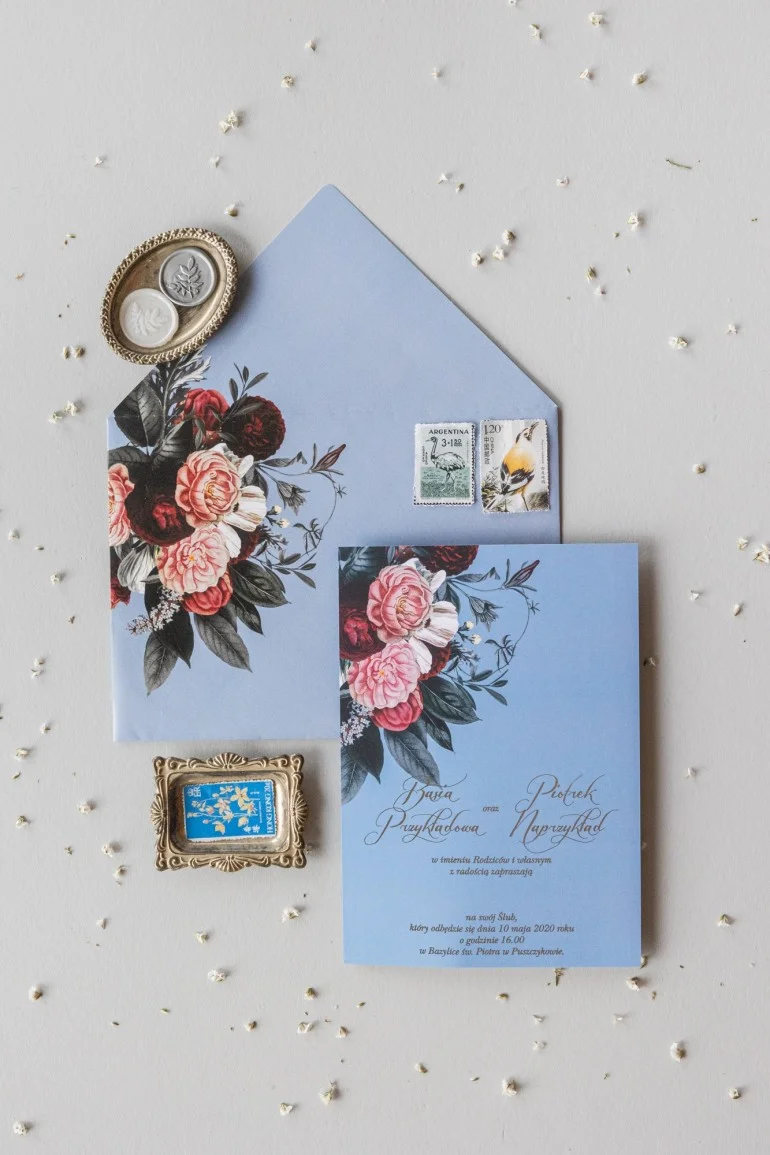
Glamour Invitations with Silver text and burgundy-pink bouquet | Elegant wedding invitations | Pastelowe no. 1

Winter Themed Wedding Invitations with Silver Foil | Pastelowe no. 6
Regular "briefings" and role division at meetings
Set up regular "organizational meetings," e.g., once a week in the evening, when you calmly discuss progress and next steps. Regular communication is key to ensuring both are up to date. At such a meeting, you can review the task list: what was done in the past week, what requires a decision, and if new issues have arisen. It's good if each such meeting has an agenda – e.g., "today we choose the cake" or "we discuss the table layout." This way, you won't jump from topic to topic and will use your time effectively. It's also worth establishing a division of roles during joint meetings with vendors. For example, when you go for a menu tasting at the venue, one of you (whoever is more meticulous) can take a notebook and write down agreements with the venue manager, while the other asks most of the questions. Or when meeting with the photographer, the Groom can prepare a list of technical matters (drone, lighting, photographer's working hours), and the Bride a list of shots and the style of photos you'd like. Play for the same team – outwardly appear as a well-coordinated team that complements each other. This makes a good impression on vendors and makes it easier to get exactly what you want. Regular briefings will also allow you to quickly catch if something has been omitted or if one of you needs help with their scope of duties.
Act as a team and have fun with it
Above all, remember you are on the same side – the goal is a beautiful wedding and reception that you will remember with a smile. Try to approach preparations as a joint challenge rather than a series of separate "yours" and "mine" tasks. Even if you've divided the duties, the final result belongs to both of you. Celebrate small successes along the way: finally chose the perfect venue after a long search? Maybe it's worth celebrating with a glass of champagne for two. Managed to complete the guest list and send all invitations? Reward yourselves with a romantic free evening without wedding talk, for balance. Joint planning is also about building your relationship – you learn to cooperate, make decisions, and get to know each other in new situations. This is great practice for marriage. Try to derive joy from these moments: take photos of the preparations, keep a sample invitation as a keepsake, laugh at small mishaps (because some will surely happen – e.g., the tasting cake turns out to be inedible or you forget to book an appointment at the office and have to run at the last minute). Approach challenges with humor and perspective. When one panics – let the other try to diffuse the atmosphere with a joke or a hug. You are in this together for better or for worse, starting from the engagement stage. When you act as a coordinated team, you will not only organize a wonderful wedding but also create beautiful memories from your engagement period.
Most common wedding planning mistakes and how to avoid them
Even the best-organized couples can fall into certain traps during wedding organization. Here are some of the most common mistakes related to (not) involving the Groom in preparations and tips on how to avoid them so your planning goes without unnecessary tension:
Everything on one person's head
One of the main mistakes is leaving most duties to one person – usually the Bride – assuming that "he doesn't know anyway" or "he cares less." As a result, the Bride is exhausted and frustrated, and the Groom feels excluded and doesn't quite know what's happening. Avoid this situation like fire. If you notice you are doing almost everything yourself, stop and talk to your partner. Perhaps he's not engaging because he doesn't know how, is afraid he'll get in your way, or hasn't been given a specific task. Share the duties with him (following the tips from previous sections) and clearly say where you need help. Remember also that sometimes it's worth letting go of perfectionism and trusting the other person – you don't have to make the invitations yourself, plan every minute of the wedding, and have control over everything. Joint planning means you share not only the work but also the stress – which makes it less.
Succumbing to stereotypes "because that's how it's done"
Many couples fall into the trap of stereotypical thinking: "Organizing decorations is not a man's thing", "A guy won't want to choose the color of napkins", "It's not appropriate for the Groom to handle flowers". Such an approach can unnecessarily limit the fiancé's involvement. Every person is different – perhaps your partner has great taste and an aesthetic sense, so why shouldn't he have a say in the venue's decor? Or maybe he has better contact with your florist than you do? Don't assume beforehand that certain things "belong" only to the bride or only to the groom. Drop the "what will people say" thinking – your wedding, your rules. If the Groom wants to choose invitations or flower colors, great! If the Bride wants to decide on the wedding car, also good. The most important thing is that the division of tasks suits you, not that it fits into established patterns. Avoid the stereotype that a man certainly won't enjoy planning – a lot depends on the approach. If he is treated as an equal partner in organization from the start, and not as an assistant to bring, give, and sweep, there is a good chance he will get into the preparations and find elements interesting to him.
Lack of communication and clear agreements
In the heat of preparations, it's easy for communication slips to happen. For example, the Bride thought the fiancé booked the videographer, and he was convinced she did it – and suddenly, a month before the wedding, it turns out you don't have a film captured. Or the Groom handled something his way without telling the Bride, which complicated other plans. Lack of conversation and information flow is often the source of the greatest stress. To avoid this, try to regularly review tasks (as mentioned – weekly mini-briefings). Use tools for sharing task lists – it could be a shared Google Sheet or an app like Trello, where you both see what needs to be done and who is responsible for what. This way, nothing will escape you. Also, agree that in case of a change of plans, you both inform each other immediately. For example, if the Groom finds out the photographer needs a deposit earlier, let him immediately let the Bride know to reserve this amount in the budget. Openness and clear agreements are the cure for chaos. Don't be afraid to ask each other questions: "Honey, how is the suit selection going? Do you need help?" – it's better than silence and guessing.
Panic and lack of flexibility
A mistake often made at the finish line of preparations is panicking and pointing out each other's mistakes. Stress takes its toll – sometimes couples start arguing over trifles because nerves are frayed. Often the background of such quarrels is precisely the issue of preparations: that he didn't oversee something, that she changed something again without asking. Remember you are on the same side – in the face of problems, look for solutions, not culprits. If it turns out a plan didn't work out (e.g., the dream band can't play at the last minute), it's not time for mutual reproaches, but for joint rescue action. Be flexible: even the best plan can change. It may happen that the Groom doesn't manage to realize something – then instead of anger, focus on how to make up for the backlog (e.g., ask the Best Man or a wedding planner for help if you have one). Conversely, if the Bride suddenly decides to change a previous decision (which can be unsettling for the Groom because it changes the "set plan"), try to discuss it calmly and find a compromise so both sides are satisfied. Avoiding panic and excessive rigidity means giving each other a bit of understanding. After all, you are both only human, organizing perhaps the biggest event in your lives so far – small stumbles are inevitable. It's important to stick together, not turn against each other.
Summary: Your dream wedding as a joint creation
Together you create an unforgettable day
Finally, it's worth highlighting the most important thought: the wedding and reception are your joint celebration. The more heart you both put into it during preparations, the more special you will feel saying the sacramental "I do" or making an oath before an official. Every element of this day that you worked on together – from choosing the song for the first dance, through decoration designs, to the flavor of the cake – will remind you that you created something beautiful together. The Groom's involvement in wedding preparations results in both of you being able to look around with pride on the day of the ceremony and say to yourselves: "We did it, it's our joint creation!". Overcoming organizational challenges together brings people closer. Perhaps during these months, you learned more about each other than in the last years of your relationship – you discovered new talents of your partner, saw how you handle stress, and how you complement each other. These are priceless experiences that will pay off in your married life.
The wedding is just the beginning
The wedding day will pass in the blink of an eye, but the road to it – if you use it well – can be one of the greatest adventures. A future Groom involved in planning is a partner for better or for worse right at the start of the marriage. Show each other that you can cooperate, listen, and support. Thanks to this, when subsequent life challenges arise, you will be certain that you can manage together – after all, you handled the wedding organization, which can be a real test of patience and coordination! Remember not to lose the joy and meaning of all the fuss in the process. The goal is your marriage and life together, and the wedding is a beautiful ritual that begins it. Therefore, even if planning is difficult, try to enjoy every moment – it's the only period like this when you are an engaged couple planning your dream wedding. Then many joint projects await you, perhaps furnishing a home, raising children – now you are practicing your wings as a team.
At your wedding, when the stress has subsided, look around at the faces of smiling guests, look at each other and think: "We did this together." This awareness will give you wings. A jointly prepared wedding tastes better because it is the result of love, compromise, and cooperation of two people who decided to go through life side by side. This is exactly how a successful marriage begins – from being a team already at the stage of planning the most important day. Good luck!
Discover more tips on our blog!
If you liked this article and want to prepare even better for your wedding, be sure to check out our other posts full of practical tips and inspiration:
- When to start planning your wedding? – find out how to organize a wedding step by step and avoid the stress of putting off decisions until the last minute.
- Top 10 mistakes made by couples when organizing a wedding – check what traps await the engaged and how to avoid them.
- Why is it worth having a wedding day schedule? – effective hour-by-hour planning will allow you to avoid chaos and enjoy every moment of this special day.
- Cost of a wedding for 30 people – a step-by-step budget planning guide – learn how to wisely plan expenses and not overpay while organizing an elegant ceremony.
- How to create an atmosphere of luxury at a wedding with a small budget? – discover ways for an elegant and stylish wedding without excessive spending.
- How to choose the perfect outdoor wedding venue? – if you dream of a wedding surrounded by nature, this guide will help you find the perfect place.
- How to invite parents to the wedding? – a guide full of inspiring ideas on how to make inviting parents a special moment.
Don't miss our next articles – on our blog you will find plenty of useful tips to help you organize your dream wedding! 💍✨