Addressing Wedding Invitations - The Key to Success

When you are planning your wedding, one of the most important elements to consider is inviting your guests. At first glance, it seems like a simple task, but as with everything related to wedding planning, the devil is in the details. That is why in this article, we will focus on one of those details - how to properly address wedding invitations.
Addressing wedding invitations is not just a logistical matter, but also an element of etiquette that shows your care and respect for your guests. A good knowledge of the rules for addressing invitations can have a significant impact on the overall impression of the ceremony and reception. Above all, it demonstrates your attention to detail, which is an inherent part of every successful wedding ceremony.
Why is Addressing Wedding Invitations Important?
Imagine a situation where you receive an invitation, but it is not entirely clear who it is addressed to. Is it an invitation for you and your partner, or perhaps just for you? Can you bring your children, or is this an adults-only event? Such ambiguities can cause unnecessary confusion and stress, both for the guests and for the bride and groom.
Also, in terms of wedding etiquette, the way you address invitations is significant. It shows that you care about your guests and that you have spent time and effort understanding who your guests are and what their relationship is with you. Properly addressing wedding invitations also helps avoid potential faux pas, such as failing to include a guest's partner or omitting an important title for older guests or church dignitaries.
How to Properly Address Wedding Invitations?
Addressing wedding invitations involves several basic rules that you should know and understand. These rules apply not only to the addressing itself but also to using appropriate titles, deciding whether the invitation is addressed to a specific person or an entire family, and knowing the differences between formal and informal forms of address.
Special cases, such as addressing invitations to unmarried couples, parents with young children, older individuals, and church dignitaries, also require a proper approach. We will discuss all of this in the following sections of this article.
Wedding planning is a special time, full of emotions and challenges. One of them is properly addressing wedding invitations. Although it may seem like a minor detail, it has great significance for the overall image of the ceremony and how you are perceived by your guests. Keep this in mind when you start creating your invitations, and good luck!

How to Address Wedding Invitations - General Rules
Wedding planning is primarily about logistics. One aspect of this logistics that might seem complicated is addressing wedding invitations. In this article, we will discuss several basic rules that will help you handle this task well.
Writing Out Full Guest Names
The first and most important rule is writing out the full names of your guests. We may know our guests as "Ziuta and Franek" or "Auntie Marysia," but on a wedding invitation, we should use full names. Why? Primarily because it is a sign of respect for our guests.
By writing out the full names of our guests, we show that we take them seriously and that we appreciate their presence at our wedding. Furthermore, this way we avoid potential misunderstandings. It could happen that we have two gentlemen named "Jan Kowalski" among our guests. Writing out full names allows us to avoid such situations.
Using Appropriate Titles
Another important rule is using appropriate titles. If we are inviting someone to the wedding who has an academic, professional, or honorary title, we should include it on the invitation. For example, if we are inviting a professor, we should write "Professor Jan Kowalski" on the invitation.
Let us also remember that some titles have their own specific forms of address. For example, bishops and other church dignitaries are addressed differently than laypeople. Knowing and using these forms is proof of our respect for the person we are inviting.
Addressing the Invitation to the Whole Family or Specific Individuals
The third rule is deciding whether we address the invitation to the whole family or only to specific individuals. This decision depends on several factors. Primarily, on how large our wedding budget is and how many guests we can invite.
If our budget is limited, we may decide to address invitations only to specific individuals. In such a case, we should clearly write on the invitation who it is addressed to. If, however, we decide that the invitation is addressed to the whole family, we should write "The Kowalski Family" or "Mr. and Mrs. Kowalski and Children."
Remember that how you address the invitation also influences how your guests understand your expectations. If we only write "Jan Kowalski" on the invitation, our guest might understand that we are inviting only him, and not his partner or children.
Addressing wedding invitations is not difficult, but it requires knowledge of certain rules. Let us remember that it is primarily about respect for our guests. Therefore, it is worth spending some time learning how to do it correctly. Thanks to this, our guests will feel that their presence at our wedding is important to us, and we will gain confidence that our invitations are well understood.
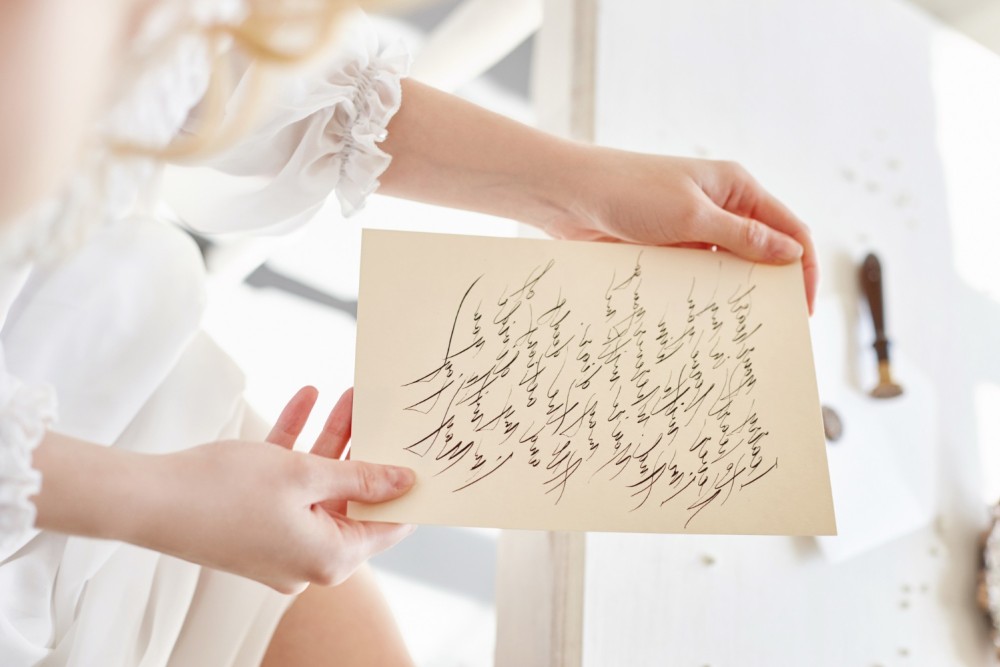
Special Addressing Cases: How to Direct Wedding Invitations?
When creating a guest list, we may encounter situations that require a special approach. How to properly address an invitation to an unmarried couple? How to address invitations for parents with young children? And what should an invitation look like for older people or church dignitaries? We have prepared a few tips for you that will help you deal with these challenges.
How to Address Invitations to Unmarried Couples?
The first group is unmarried couples. If we are inviting a couple who is not married, we should include both full names on the invitation. For example: "Ms. Anna Nowak and Mr. Jan Kowalski."
Remember that the order matters here. According to tradition, we should first list the person we know better or who is more closely related to us. So, if Anna is our friend and we only met Jan through her, we should list Anna first.
How to Address Invitations to Parents with Young Children?
The second group is parents with young children. If we are inviting the whole family to the wedding, we should write "The Kowalski Family" or "Mr. and Mrs. Kowalski and Children" on the invitation. If we want to address the invitation only to the parents, we should write "Mr. and Mrs. Kowalski."
Remember that clearly addressing the invitation is very important. This way, you will avoid misunderstandings and potential problems. If you do not want children to appear at your wedding, do not write "and Children" on the invitation.
How to Address Invitations to Older People and Church Dignitaries?
The last group is older people and church dignitaries. Here, too, appropriate titles are important. If we are inviting an older person, we should use the form "Ms." or "Mr." If we are inviting a member of the clergy, we should use the appropriate title, for example, "Father," "Bishop," or "Cardinal."
Remember that respect for the elderly and clergy is very important. It shows that we know and follow the rules of etiquette. Therefore, it is worth spending some time learning how to properly address wedding invitations.
As you can see, addressing wedding invitations is not difficult, but it requires us to know certain rules. Remember that it is primarily about respect for our guests. Therefore, it is worth spending some time learning how to do it correctly. Thanks to this, our guests will feel that their presence at our wedding is important to us, and we will gain confidence that our invitations are well understood.
Invitation Addressing Etiquette: Formalities, Informality, and Age Groups
Properly addressing wedding invitations is not just a matter of practicality, but also of good taste and knowledge of etiquette rules. Although traditional rules may seem complicated, understanding and applying them will help us show our guests that we value their presence and respect them as individuals. Let's take a closer look at how and when to use formal and informal forms of address and how to address invitations to different age groups.
How and When to Use Formal and Informal Forms of Address?
Let's start with the issue of formality. When should we use a formal form of address, and when can we afford informal phrasing?
The formal form, using titles and full names, is usually recommended for older people, people with a higher social or professional status, and for people with whom we are not on a first-name basis. For friends or younger family members, you can use an informal form, using the first name without the surname.
However, let us remember that regardless of the relationship we have with a given person, a wedding invitation is still formal correspondence. Therefore, even in the case of people with whom we are on a first-name basis, it is worth using the full name.
How to Address Invitations to Different Age Groups?
The second issue is addressing invitations to different age groups. Here, too, there are certain rules worth knowing.
For older people, it is recommended to use a formal form of address, using appropriate titles and full names. For peers or younger people, you can use an informal form, but remember to maintain an appropriate level of respect.
When it comes to children, we can write "and Children" or "with Children" on the invitation, but if we want to emphasize that the invitation is also directed to them, it is worth listing their names. For example: "Mr. and Mrs. Kowalski, Karol and Ania."
Addressing wedding invitations is an art that requires both knowledge of etiquette rules and the ability to apply them flexibly. It is important to always remember that a wedding invitation is an expression of our respect for our guests. Therefore, it is worth spending some time learning how to do it correctly. Thanks to this, our guests will feel that their presence at our wedding is important to us, and we will gain confidence that our invitations are well understood.
Sample Wedding Invitation Addressing Forms: How to Properly Direct Invitations?
During wedding preparations, one of the key tasks is thoughtful and polite addressing of wedding invitations. We have already said that this requires knowledge of certain etiquette rules and the ability to apply them in practice. Now we would like to present you with a few sample forms of addressing invitations for different types of guests.
Addressing Invitations to Married Couples
If we are inviting a married couple and their surname is known to us, we can address the invitation to them using the form "Mr. and Mrs. Kowalski." If we only know one person from the couple, we should first list the person we know better or who is more closely related to us. For example: "Ms. Anna Nowak and Mr. Jan Kowalski."
Addressing Invitations to Unmarried Couples
In the case of couples who are not formally married, we should include both full names on the invitation. For example: "Ms. Anna Nowak and Mr. Jan Kowalski." Remember that the order matters here – we should first list the person we know better or who is more closely related to us.
Addressing Invitations to Parents with Young Children
If we are inviting a family with young children, we should write "Mr. and Mrs. Kowalski with Children" on the invitation. If we want to address the invitation only to the parents, we should write "Mr. and Mrs. Kowalski."
Addressing Invitations to Older People and Church Dignitaries
In the case of older people and church dignitaries, we should use the form "Ms." or "Mr.", and in the case of clergy - the appropriate title, for example, "Father," "Bishop," or "Cardinal."
As you can see, properly addressing wedding invitations requires some knowledge and skill from us. However, let us remember that the main goal of these rules is to show respect for our guests and ensure them that their presence at our wedding is important to us. Thanks to this, we will gain confidence that our invitations will be well understood and appreciated.
Conclusions: The Art of Addressing Wedding Invitations - Key Rules and Tips
A wedding is a unique event in each of our lives. It is a moment when we open a new chapter of our lives, and at the same time, an opportunity to celebrate love and share joy with our loved ones. A key element of preparations for this event is directing wedding invitations. Properly addressing these invitations requires us not only to know certain etiquette rules but also to be able to apply them in practice.
Let us remember that the most important rule is respect for our guests. Therefore, we should always address wedding invitations in such a way that every person who receives them feels important and appreciated. To this end, we should always use the full names of our guests, as well as apply appropriate titles and polite forms.
Let us recall that when we invite married couples, we should use the form "Mr. and Mrs." on the invitation, followed by their shared surname. If we only know one person from the couple, we should first list the person we know better or who is more closely related to us.
In the case of unmarried couples and same-sex couples, we should include both full names on the invitation, and the order should reflect our closer relationship or acquaintance with one of the partners.
If we are inviting a family with young children, we should write "Mr. and Mrs.... with Children" on the invitation. If we want to address the invitation only to the parents, we should write "Mr. and Mrs...."
In the case of older people and church dignitaries, we should use the form "Ms." or "Mr.", and in the case of clergy - the appropriate title, for example, "Father," "Bishop," or "Cardinal."
However, let us remember that these rules are only guidelines to help us correctly address wedding invitations. Every situation is different, and we should always strive to make our invitations as personal and authentic as possible.
We encourage you to share your experiences and tips on addressing wedding invitations. Are there any specific situations that cause you difficulty? What strategies have proven most effective for you? We look forward to your comments and suggestions!
Remember that a well-addressed invitation is the first step to creating an unforgettable atmosphere for your wedding. It is an expression of your care for your guests and their comfort, which will certainly be appreciated and remembered. We wish you successful preparations for this special day!
Conclusion
I know that the process of addressing wedding invitations can seem complicated. But hopefully, this article has proven that with the right knowledge and attention, every bride and groom can handle this task without a problem. I believe that your wedding invitations will be not only beautiful but also well-formulated - and this will certainly be appreciated by your guests.
Now that you know the rules for addressing wedding invitations, I wish you good luck in further preparations for this special day. Do not forget that a perfect invitation is just the beginning. Behind it lies a whole host of other decisions that will help you create an unforgettable wedding.
If you are looking for more advice and tips on wedding planning, I invite you to visit our blog. You might be interested in articles such as:
- Which wines for the wedding? A complete guide to choosing wine for your wedding reception
- Humanist wedding - a modern alternative to a traditional wedding
- How much does a civil wedding cost? A complete guide to costs and budget planning tips
- Wedding invitations - how to choose words that will touch guests' hearts
- 7 ideas for a unique engagement
- How to package money for a wedding
- When to send out wedding invitations - a guide for engaged couples
These are just a few of the many topics available on our blog. We have prepared many guides and articles for you that will help you create the day you have always dreamed of. Read, learn, and enjoy your day!