At What Age Can You Get Married?
Table of Contents
- The significance of marriage age in tradition
- Minimum marriage age around the world
- Polish law and the marriage age
- Psychological aspects of the decision to marry
- The evolution of marriage age over the years
- Pros and cons of marrying at a young age
- Pros and cons of marrying at an older age
- Real-life couple stories – different age perspectives
- Summary
Marriage age is a topic that has always sparked controversy and discussion. Nevertheless, it holds great significance in the context of life choices. After all, the decision to get married is one of those moments that define our life path. But what is the ideal age to take this step? Is the traditional approach to marriage age in Poland still relevant?
The significance of marriage age in tradition
In Poland, the traditional approach to marriage age has always been deeply rooted in culture. A well-known saying suggests that a woman should marry before the age of 30, and a man before 35. Do these guidelines still make sense in today's world?
The traditional approach was strongly linked to social and cultural expectations. The young age at which women entered into marriage was often motivated by the desire for offspring and the roles they played in society. For men, marrying at an older age was associated with providing financial stability for the family.
A modern perspective on the decision to marry
However, in today's world, the decision to marry is becoming increasingly individual. Modern Poland, like many other countries, is undergoing a socio-cultural transformation, as a result of which traditional roles and expectations are beginning to change.
Today, young people are increasingly choosing to marry after finishing their studies, achieving a certain level of professional or financial stability, or even after traveling the world. Expectations regarding marriage age are becoming more flexible, and the choice of the perfect moment to marry is becoming more subjective.
The impact of age on relationship quality
The final decision to marry at a specific age can have various consequences for the quality of the relationship. Contemporary research shows that relationships entered into at a certain, middle age often exhibit greater stability and life satisfaction. However, this does not mean that younger or older couples cannot be happy. The key is emotional maturity, communication, and mutual support.
In Poland, as in many other countries, marriage age is often a topic of discussion and speculation. But does marriage age really matter that much? There are various theories and opinions on this subject, but one thing is certain: the decision to marry is one of the most important choices in a person's life, regardless of age.
Age, tradition, and true love
When we think about the decision to marry, it is worth considering what is truly important. Do we want to follow tradition and social expectations, or follow our own feelings and thoughts? Regardless of our age, the most important things are love, trust, and the readiness to build a future together. After all, as they say, love knows no age.
Minimum marriage age around the world
In the context of wedding planning, one of the key aspects often considered is the marriage age. There are diverse legal regulations regarding marriage worldwide that define the minimum age at which a person can legally marry. This issue is inextricably linked to culture, tradition, and the current social norms of a given country.
European norms regarding marriage age
In many European countries, it has become standard to marry at a mature age. In most European Union countries, the minimum marriage age is 18, although there are some exceptions. For example, in some countries, such as Spain or Poland, with the appropriate consent of parents or legal guardians, it is possible to marry as early as 16. It is worth emphasizing that in such cases, special procedures and justifications are required.
Asian approach to marriage
Moving to the Asian continent, we notice diversity in the approach to marriage age around the world. In countries like India or Bangladesh, the issue of early marriage is deeply rooted in tradition and culture. In India, although the law states that the minimum marriage age for women is 18 and for men 21, in practice, many marriages are concluded earlier, especially in rural areas. Bangladesh, in turn, faces the problem of very early marriages, despite official legal regulations setting the minimum age at 18 for women and 21 for men.
North and South America – continents of contrasts
Looking at the Americas, we notice that although this continent is often perceived as homogeneous, the differences in the approach to marriage age are significant. In the USA, although federal law states that marriage can be entered into at age 18, many states have introduced their own regulations that allow for earlier marriages, especially with parental consent.
In South American countries, such as Brazil or Argentina, the regulations are more uniform. In most of these countries, the minimum marriage age is 18, although there are some exceptions that allow younger people to marry under specific circumstances.
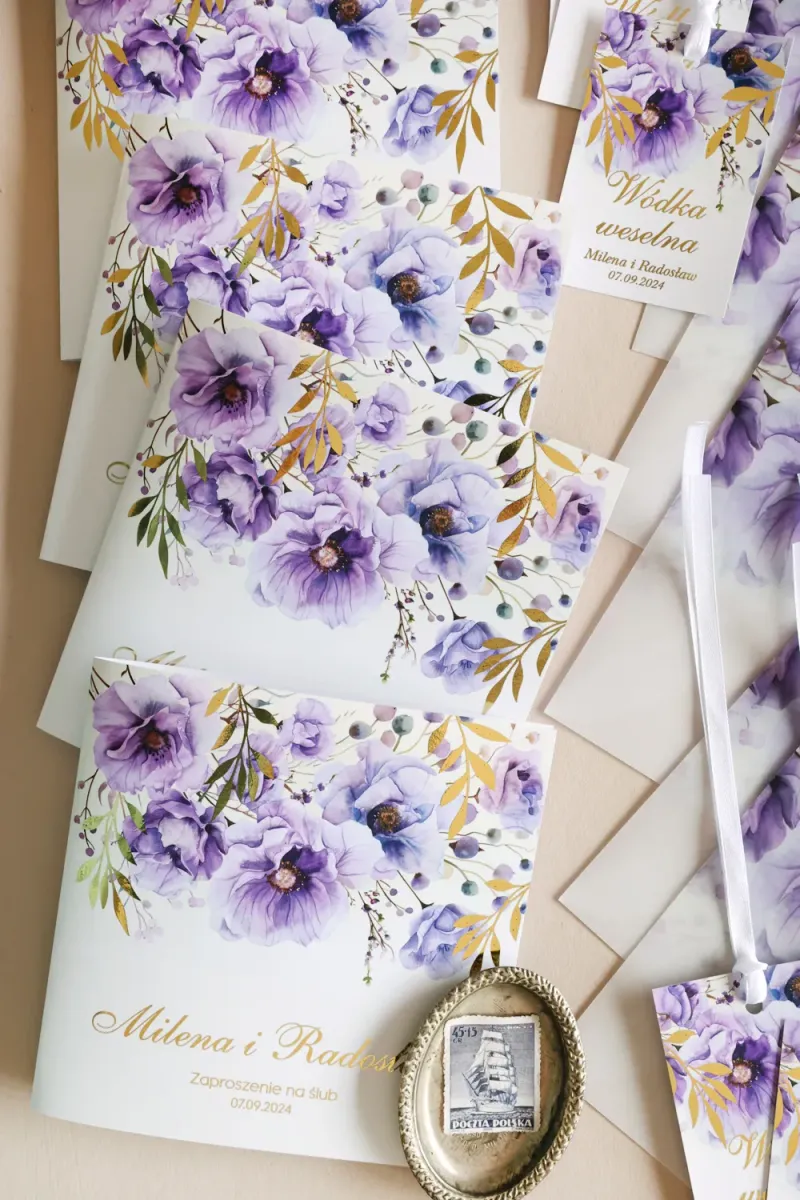
Elegant Wedding Invitations, Purple Flowers, Gold Foil | Glamour Wedding Invitations | Rubin No. 15

Romantic Invitation With Rose Pattern | Silver Details On Wedding Invitation | Rubin No. 14

Elegant Invitation With Hydrangeas And Peonies In Blue Shades | Gold Foil Wedding Invitations | Rubin No. 13
Africa – a continent of diverse traditions
Africa, with its rich mosaic of cultures and traditions, presents a wide range of approaches to the issue of marriage age. In countries like Nigeria or Mali, traditional values often influence marriage decisions, which can lead to unions at a very young age, despite existing legal regulations.
However, it is worth noting that many African countries are taking steps to increase the minimum marriage age in response to international pressure and changing social norms. For example, Malawi, which previously struggled with the problem of child marriage, recently raised the minimum marriage age to 18, striving to promote children's rights and girls' education.
In summary, marriage age around the world is an extremely diverse topic that reflects the richness of cultures, traditions, and applicable legal regulations. Although many countries strive to standardize marriage age based on international norms, there are still exceptions that are deeply rooted in tradition and culture. Therefore, when planning a wedding abroad, it is worth familiarizing yourself with local laws and customs.
Polish law and the marriage age
When we talk about getting married, age is one of the key aspects that influence this decision. In Poland, as in many other countries, there are specific age restrictions that are strictly regulated by family law. Therefore, if you are planning to get married in Poland, it is worth familiarizing yourself with these regulations to avoid unexpected surprises and legal problems.
Rules defining the minimum marriage age in Poland
According to Polish law, to legally enter into marriage, both parties must be at least 18 years old. This is considered the age at which a person becomes an adult and capable of legal actions. However, marriage regulations provide for certain exceptions to this rule. In particularly justified cases, a person who has reached the age of 16 may obtain court permission to marry. In such a situation, the court assesses whether the younger person is able to properly perform marital rights and duties.
The process of obtaining court permission for early marriage
Although exceptions to the main rule regarding marriage age in Poland are possible, the process of obtaining them is strict and demanding. A person who has reached the age of 16 and wishes to marry must apply to the court for permission. Such an application is carefully analyzed, and the court takes into account various factors, such as the mental and emotional maturity of the applicant, their life situation, as well as the opinions of parents or legal guardians.
The role of family counselors and experts in the decision-making process
When a younger person applies for permission to marry before reaching the age of 18, the court may refer them for consultations with a family counselor or an expert psychologist. Their task is to assess the maturity of the applicant and their ability to take on the responsibilities associated with married life. The final court decision is based on these opinions, as well as other evidence presented during the proceedings.
The significance of regulations regarding marriage age in the context of Polish culture and tradition
In Poland, the traditional approach to marriage is deeply rooted in the country's culture and history. Although many people decide to marry at a young age, especially in more conservative and traditional communities, the law provides a balance between tradition and the protection of individual rights. By setting a minimum marriage age, the law strives to ensure that both parties have appropriate maturity and are prepared to make the important decision of entering into marriage.
In summary, getting married in Poland is strictly regulated by law, which puts the well-being of the individual first, while respecting the cultural and traditional approach to this issue. If you are considering entering into marriage in Poland, it is worth paying special attention to the regulations regarding marriage age so that the entire process goes smoothly and in accordance with the law.

Psychological aspects of the decision to marry
The decision to enter into marriage is one of the most important resolutions in many people's lives. Although legal regulations in Poland define the minimum marriage age, they do not guarantee emotional maturity and psychological readiness to make such a decision. So how does age affect our readiness to marry from a psychological perspective? Let's dive into the fascinating world of relationship psychology to understand this aspect more deeply.
Age and emotional maturity in the context of the marriage decision
Although age can be an indicator of physical and biological maturity, it does not always correlate with emotional maturity. Young people may feel ready for marriage due to social pressure, tradition, or impulsive feelings, without realizing the full responsibility and consequences of this decision. On the other hand, older people, having life experiences, may be more aware of the challenges associated with married life, but at the same time, they may be more cautious and hesitant about making the decision to marry due to previous experiences. It is therefore worth considering whether our readiness for marriage is truly the result of emotional maturity or perhaps other factors.
How does relationship psychology explain readiness for marriage?
According to many specialists in the field of relationship psychology, there are certain developmental stages in a person's life that affect their readiness to make important decisions, including the decision to marry. For example, people in their 20s and 30s are in a phase of exploring themselves, their identity, and the world around them. They may be more prone to making risky decisions and acting under the influence of emotions. In contrast, people over 30 who have achieved a certain level of stability in their professional and personal lives may approach the issue of marriage with greater caution and analysis. The key factor here is the ability to communicate, resolve conflicts, and build deep and lasting relationships with a partner.
The importance of support in the decision-making process
One cannot underestimate the role of support from family, friends, and professionals in the decision-making process. Often, what seems to us to be readiness for marriage may be the result of social pressure or family expectations. That is why it is so important to surround yourself with people who can listen to us, understand us, and advise us, but at the same time allow us to make the decision independently. Support from a psychologist or therapist can also be invaluable in the process of understanding yourself and your true motivations.
Challenges and benefits of making decisions at different ages
Ultimately, the decision to marry at different ages carries both challenges and benefits. Younger people may bring freshness, enthusiasm, and openness to new experiences to the relationship, but they may also encounter difficulties related to a lack of life experience and skills in dealing with conflicts. Older people, in turn, may bring experience, wisdom, and stability, but they may also have difficulty adapting to new situations and being open to change. The key is therefore to understand yourself, your partner, and the specifics of your relationship, as well as the willingness to work on yourself and your relationship, regardless of age.
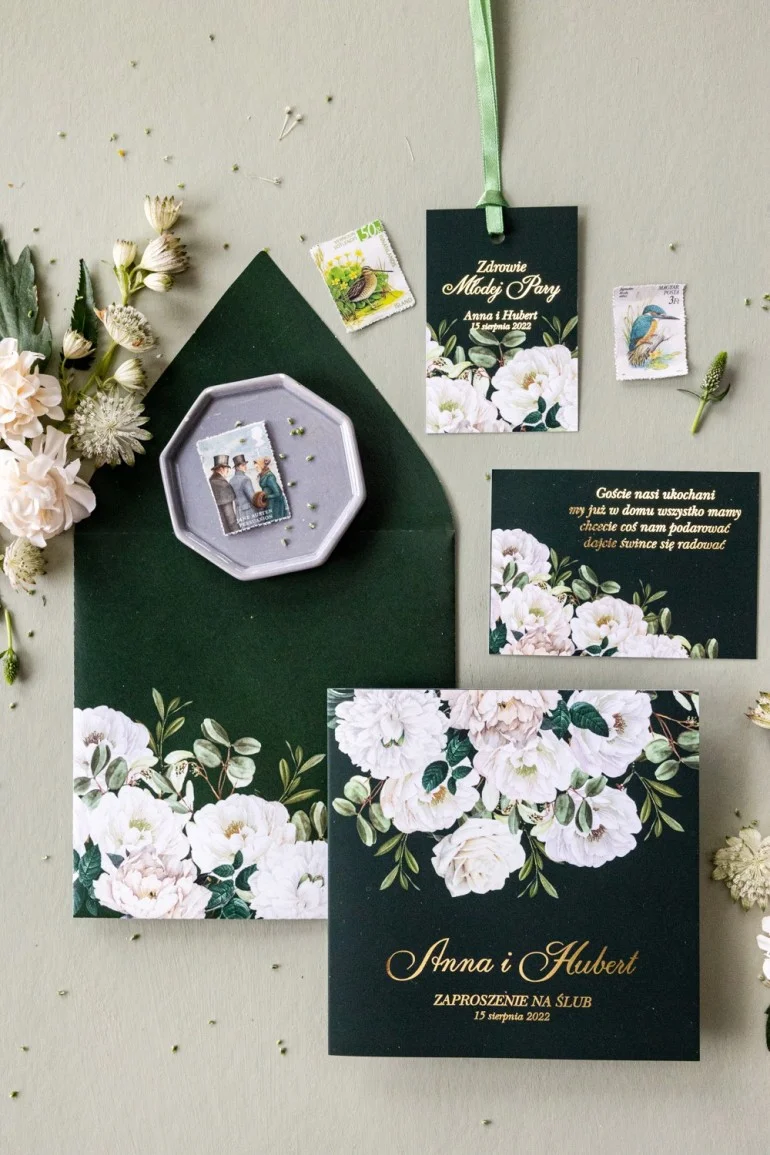
Elegant Wedding Invitations With White Flowers And Gold Foil, Dark Green | Glamour Wedding Invitations | Sapphire No. 3
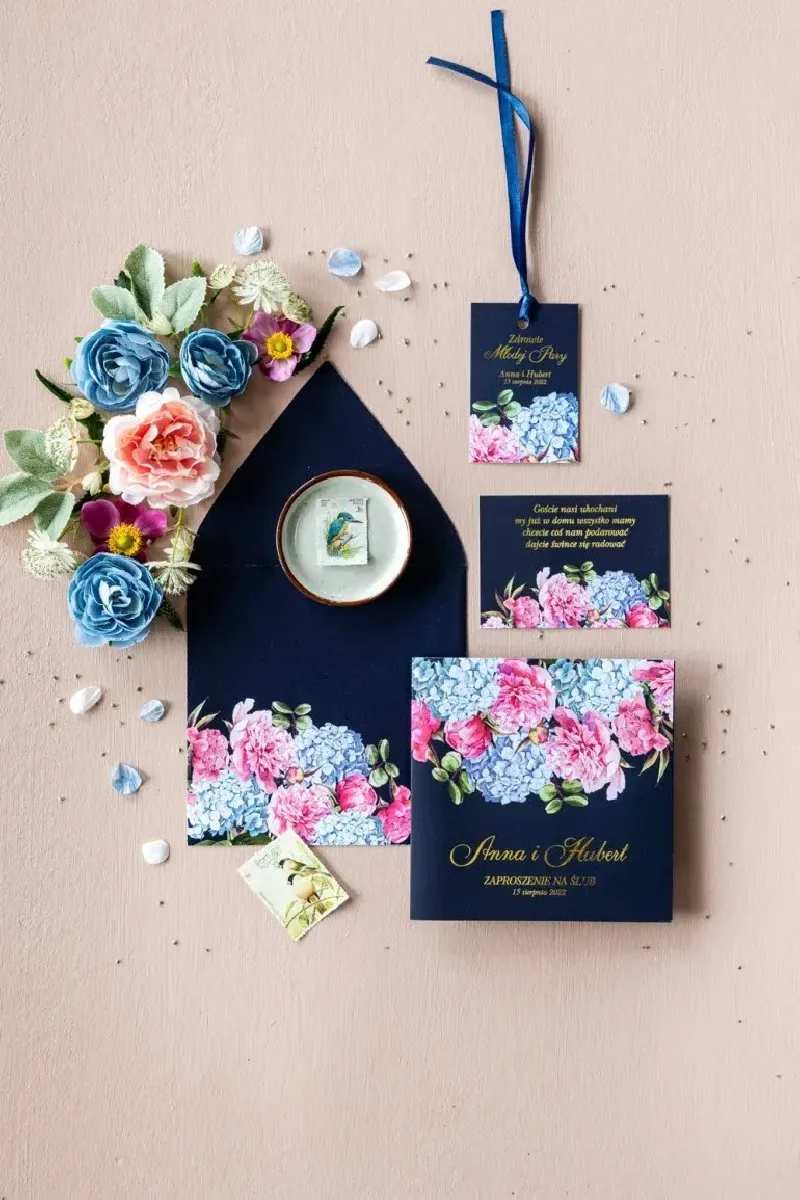
Glamour Style Wedding Invitations With Peony And Hydrangea Flowers | Navy Blue Wedding Invitations | Sapphire No. 5
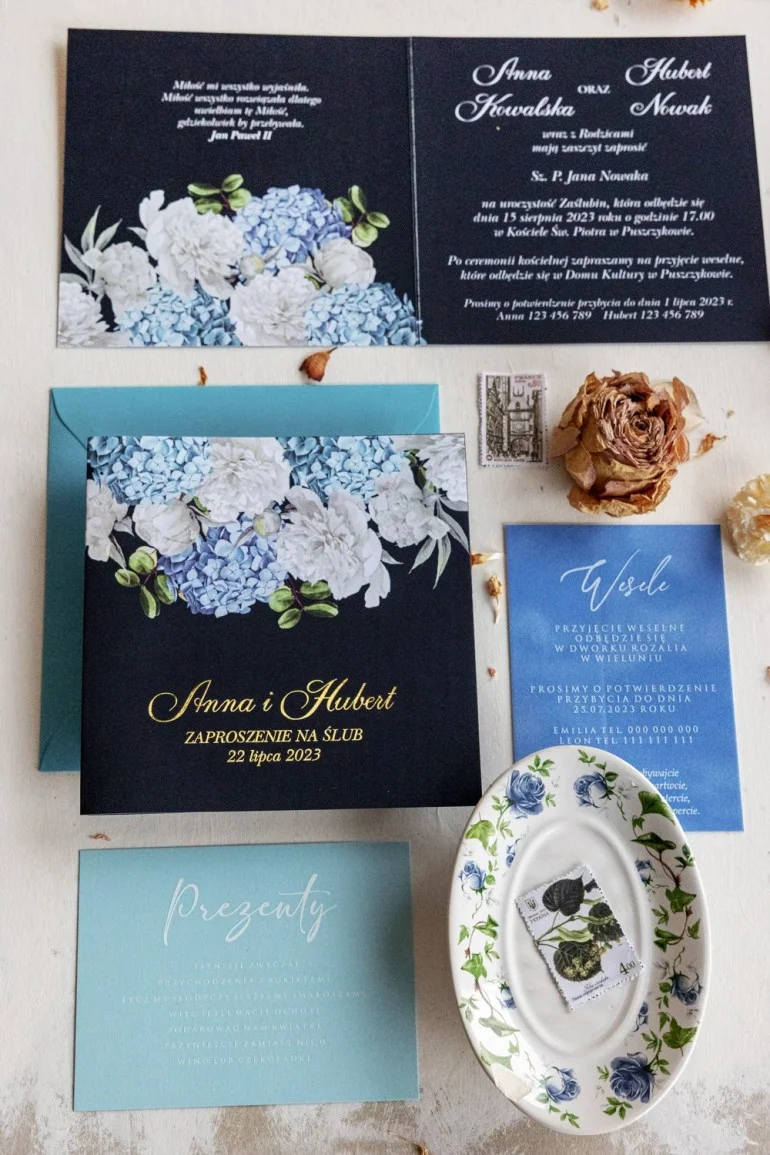
Wedding Invitation With White Peonies On A Navy Background | Elegant Invitation With Gold Foil | Sapphire No. 14
The evolution of marriage age over the years
The decision to enter into marriage was and is one of the key moments in many people's lives. However, the history of marriage shows that the age at which people decide to take this step has not been constant and has evolved depending on cultural, social, and even economic factors. So how have society and culture influenced the age at which people decide to marry, and what are the main trends in this regard?
Antiquity and marriage age
In ancient civilizations, the age of marriage was closely linked to tradition, religion, and social needs. For example, in ancient Rome, young girls often married at the age of just 12-15, mainly for economic and social reasons. Marriage was considered a way to ensure the continuity of the lineage, and the bride's youth was a guarantee of reproductive capacity. In ancient Egypt, marriage between siblings was common among royal families to preserve the purity of the bloodline. In these cultures, the average marriage age was significantly lower than it is today.
Middle Ages and Renaissance: Social changes and their impact
Moving to the Middle Ages in Europe, social structure, religion, and economy had a significant impact on the age of marriage. Although arranged marriages for economic reasons still existed, especially among the nobility, the age of marriage began to rise. In many European countries during the Middle Ages, girls married at 16-18, and boys around the age of 20. However, in the Renaissance, with the rise of individualism and love, the age of marriage began to rise even further, and the idea of marriage for love began to gain popularity.
19th and 20th centuries: Industrial Revolution and women's emancipation
With the advent of the Industrial Revolution and social changes related to urbanization, increased education, and women's emancipation, the age of marriage began to rise significantly. In the 19th century in many European countries, including Poland, the age of marriage began to approach 25 for women and 27 for men. Women's emancipation, the right to work, and education caused many of them to delay the decision to marry.
Modern times: Individualism and changing social roles
Modern wedding trends reflect growing individualism and cultural pluralism. Today, many couples decide to marry after a long period of dating, living together, or even after having children. The marriage age in many countries, including Poland, is now higher than ever before in history, and marriage is often seen as the coronation of a relationship, not its beginning. In many Western societies, where divorce is common, many people approach marriage with greater caution, striving for certainty about their choice of partner.
Over the centuries, the evolution of marriage age has reflected profound social, economic, and cultural changes. From arranged marriages at a young age in antiquity, through medieval traditions and Renaissance ideas of love, to modern tendencies based on individualism and choice – the age at which people decide to marry is a fascinating indicator of the culture and values of a given society.

Pros and cons of marrying at a young age
Deciding to enter into marriage at a young age carries many challenges, but it can also bring many benefits. Young marriage is a term that in many cultures evokes mixed feelings – from admiration and a romantic approach to life to concerns about an ill-considered decision. Why, then, do some couples decide to take such a step? What are the main benefits and challenges associated with such a decision?
Benefits of early marriage
-
Experiencing life together: One of the main arguments for marrying at a young age is the opportunity to experience many important stages of life together. Building a career, deciding on a place to live, and even having and raising children - all this can become a shared adventure.
-
Flexibility and adaptation: Young people are often more flexible and open to change. They can adapt more easily to new situations, which can be beneficial in the context of the challenges of married life.
-
More time spent together: Early marriage also means potentially more time spent together, which gives an opportunity to get to know each other more deeply and build lasting bonds.
Challenges for young couples
-
Emotional immaturity: One of the most common arguments against early marriages is emotional immaturity. Young people may not yet be fully aware of their needs, values, or boundaries, which can lead to conflicts and misunderstandings.
-
Social pressure: In many societies, there is a certain pressure related to expectations regarding the "ideal" age for marriage. Young couples may feel judged and misunderstood by their surroundings.
-
Economic challenges: Young marriage often involves greater financial challenges. This may be related to a lack of professional experience, an unstable financial situation, or the need to balance work with studies.
In summary, the decision to enter into marriage at a young age is an individual choice for each couple and carries both benefits and challenges. It is important that young couples are aware of potential difficulties, but also able to see the opportunities that early marriage brings. This decision should be well-thought-out and based on mutual understanding and support.
Pros and cons of marrying at an older age
Modern society is changing at a dynamic pace, and traditional ideas about marriage and the age at which it should be entered into are also being transformed. Many people consciously choose the path of marrying at a more mature age. Knowing the benefits of late marriage and the challenges that people deciding on this step may face, it is worth considering what the main arguments for and against such a decision are.
Benefits of marrying at a mature age
-
Emotional and financial stability: At an older age, many people have already achieved a certain level of emotional maturity, as well as financial stability. This translates into greater self-confidence in making important decisions and the ability to cope with the challenges of married life.
-
Conscious choices: People who decide to marry at a later age often do so after deeper reflection and analysis of their lives and their relationship with their partner. This can lead to more lasting and harmonious relationships.
-
Life experience: Having a richer baggage of life experiences can help in better understanding yourself and your partner. Thanks to this, it is easier to build a healthy, understanding relationship.
Challenges associated with marriage at a later age
-
Biological and social pressure: For many women and men, the decision to marry at a later age may involve concerns about fertility and the possibility of becoming a parent. Additionally, although society is becoming more open, there are still some stereotypes associated with "late" marriage.
-
Established habits: After many years of living alone, people may already have developed certain habits and routines, which may make it difficult to adapt to living as a couple.
-
The need to combine two "ready-made" worlds: People who have led an independent life for a long time often already have established circles of friends, passions, or lifestyles. Integrating these two worlds into one can be a challenge.
In summary, entering into marriage at a mature age is a choice that carries both numerous benefits and challenges. Everything depends on the individual circumstances, priorities, and values of the person. It is important that every decision is conscious and well-thought-out, regardless of the age at which we make it.
Real-life couple stories – different age perspectives
In love, as in life, there are no clear-cut answers to what is right. Sometimes this feeling appears in our lives suddenly and with momentum when we are young, and sometimes after many years of loneliness, when we have already gained life experience. Each of these paths has its unique challenges and joys. Here are real wedding stories that present different perspectives on marriage depending on age.
Youthful love – Karolina and Mateusz
Karolina and Mateusz met in high school. Their love was the type of feeling that resembled fireworks – intense, passionate, and full of innocence. When both were 21, they decided to get married.
"We always knew we were made for each other," says Karolina. "Despite our young age, we felt we were ready for a life together. Of course, it wasn't without its challenges. We had to learn to deal with financial difficulties, sacrifice for each other, and learn how to live together as a couple."
For Karolina and Mateusz, their young age became an asset because they had time to grow up together, learn about each other, and shape their lives.
Love in middle age – Justyna and Piotr
Justyna and Piotr met when they were both 35. Both were divorced and already had children from previous relationships. Their love was calm, mature, and full of understanding.
"When we met Piotr, we were both full of fears and uncertainties," recalls Justyna. "But over time, we realized that our previous life experiences allowed us to better understand each other. We knew what we wanted and what was important to us."
For Justyna and Piotr, their age and previous experiences became the foundation on which they built a solid and lasting relationship.
Late love – Halina and Andrzej
Halina and Andrzej met at a nursing home. Both were widowed and did not expect to experience the feeling of falling in love again. Their story is proof that love knows no age limits.
"I didn't think that at my age someone would pay attention to me again," says Halina with a smile. "But when I met Andrzej, everything changed. I realized that love has no age and that there is always time for it."
For Halina and Andrzej, their age was a symbol of wisdom, experience, and a deep understanding of the value of love.
Each of these stories shows that there is no single answer to the question of when is the right moment for love and marriage. Everything depends on individual circumstances, experiences, and what we have in our hearts. After all, as the saying goes: "Love knows no boundaries."
Summary
When is the right moment for a wedding?
When asking ourselves what is the right age for a wedding, we can come across various answers. Many people, hearing about young couples deciding to marry, think of youthful passion and innocence. Others see the benefits of waiting for this step until they gain life experience, professional and emotional stability. There are also stories of those who found love in their later years, showing that the heart knows no age limits.
It's an individual decision
The key to solving this puzzle is understanding that choosing the right moment to marry is an individual decision for each person. We are all different, with different experiences, dreams, and values. What works for one person may not work for another. It is important that we listen to our hearts, our instincts, and carefully consider what is important to us.
Is there an ideal age for marriage?
Does an ideal age for a wedding really exist? Perhaps it depends on our individual circumstances, goals, and priorities. For some, the ideal moment may be youth, when everything is new and exciting. For others, the ideal time may come later, when they have gained self-confidence, financial stability, and life wisdom.
When to get married? Listen to your heart
Ultimately, regardless of age, the decision to marry should be based on love, trust, and the readiness to take this important step. When to get married? Perhaps the answer is: when you feel that it is the right time for you.
We encourage all readers to share their own experiences, thoughts, and advice in the comments below. Do you think there is a right age for a wedding? What were your experiences? We are curious about your stories and insights on this fascinating topic.
Your experiences are valuable to us!
Understanding which aspects of a wedding are most important to you allows us to create content more tailored to the needs of our readers. Every wedding is unique, and your experiences can be an inspiration for other couples planning their big day. We encourage active participation in the discussion and sharing your experiences, advice, and insights in the comments.
Explore our other articles
If you appreciate deep, substantive content regarding the wedding industry, we have a few suggestions for you that are worth reading:
-
Musical inspiration for the wedding: Find out which songs are perfect for the first dance.
-
Traditional wedding games and activities: Discover games that will delight your guests.
-
Should you invite parents to the wedding?: Discover the answer to this frequently asked question.
-
How to fill out place cards for children?: Make the youngest guests feel special.
-
Elegance and shine of glamour invitations: Find out why such invitations are the perfect choice.
... and much more. Visit our blog to explore the full range of topics and get inspired by our tips and ideas.
Your opinion is important to us
Don't forget to leave a comment under the selected article. Your feedback, questions, and suggestions help us create better content for you, our readers. And if you have your own unique experiences related to planning a wedding that you would like to share with us - we are waiting for your story!
Join our community
We want to build a community of people for whom a wedding is not just one day, but a whole journey full of emotions, challenges, and joyful moments. Join us and be part of this amazing adventure.