First Dance – How to Choose a Song and Prepare a Routine

Planning a wedding is quite a challenge – you need to take care of every single detail: from choosing the perfect wedding invitations and venue decorations, to seating guests at tables with elegant place cards, all while creating an unforgettable atmosphere. One of the highlight moments of the wedding reception is the newlyweds' first dance. It is the symbolic start of the party, when all eyes are on you – the Happy Couple – and you have the chance to present yourselves together on the dance floor. How can you make this first dance at the wedding magical, stress-free, and truly yours? Below you will find a practical guide: from choosing the first dance song, through preparing the choreography (whether it's a simple sway or an impressive routine), to tips on how to get your guests involved. All this in a relaxed, accessible style – so that preparing for the first dance is a pleasure, not a source of nerves.
Table of Contents
- Choosing the first dance song – what to look for?
- How to prepare the choreography – from simple swaying to an impressive routine
- Dance lessons or self-practice? What to choose and how to prepare
- How to avoid stress during the first dance – practical tips
- Dancing with guests – how to include loved ones in the fun
- FAQ – Frequently asked questions about the first dance
Choosing the first dance song – what to look for?
The first step to an unforgettable first dance is, of course, choosing the perfect song. What should a first dance song be like? Couples are often guided by emotions and memories, but it's worth considering a few practical issues: the lyrics, tempo, rhythm, and the meaning it holds for you. Here are the most important aspects of choosing your first dance song:
-
Lyrics and message – Make sure the chosen track has a positive vibe and tells a story of love (preferably a happy one). Analyze the words – are there any sad themes or profanities? Sometimes a beautiful melody hides inappropriate lyrics, so it's better to check in advance. The ideal first dance song should evoke smiles and emotion, not confusion. If you have your own "love anthem" that reminds you of your first meeting or engagement – it could be a perfect choice, as long as the words truly fit the occasion.
-
Emotions and memories – Most importantly, the first dance song should mean something to you. This is your moment, your story told through dance. Choose a track that evokes warm emotions: be it sentiment or joy. It could be the song you listened to on your first date, the one playing when you said your first "I love you", or one that always puts you in a good mood. Guests don't have to know the song – what matters is that you feel it with all your heart. Remember, you'll be playing it dozens of times during practice, so let it be a melody you truly enjoy!
-
Rhythm, tempo, and dance style – The song determines what kind of dance you'll perform. Think about which style you feel comfortable in. Slow Waltz or Viennese Waltz requires a song in 3/4 time, while most pop romantic ballads are in 4/4 – a free social dance or rumba fits this music better. If you dream of a classic waltz, look for a track that literally pulls you into a waltz (with that characteristic "one-two-three" beat). On the other hand, if you're thinking of something livelier, like salsa or swing madness, the song should have a clear rhythm and appropriate tempo. Most importantly, the tempo must be comfortable for you – if you've never danced fast styles, it's better to choose something slower so you don't lose your steps. You might also consider editing the track to 2-3 minutes if the original is very long – this avoids the feeling that the dance is "dragging on forever."
-
Your skills and comfort – Match the song to your dancing abilities. If you don't feel very confident on the floor, don't pick a song with a breakneck speed that forces complicated figures. It's better to go with something slower and rhythmically simpler. On the other hand, if you both love rocking out to rock and roll or energetic music – nothing stops the first dance from being unusual and upbeat. It's your day and the song should reflect you, not others' expectations. Guests will be most happy seeing your joy on the dance floor anyway.
Floral wedding invitations with green leaves and gold accents | Rubin no. 4
Stylish Wedding Invitations with Gold Accents, Watercolor Flowers | Rubin no. 1
Wedding invitations with pink roses and gold foil, transparent envelope | Rubin no. 9
-
Popularity vs. Originality – Ask yourselves whether you want a classic, well-known hit that will instantly move everyone, or rather a less obvious song that is "just yours." Popular first dance songs like “Perfect” – Ed Sheeran, “All of Me” – John Legend or classics like “L-O-V-E” – Nat King Cole are often chosen because they create a beautiful atmosphere and most guests know them. Timeless Polish first dance songs also work great, carrying a sentimental vibe. If you have "your" less-known song – go for it! An original choice will make your dance stand out. Just remember that the track should match the character of the wedding – a stylish classic might sound better at an elegant ballroom gala, while at a relaxed outdoor reception, you could try something unique, even from a movie soundtrack or musical.
Tip: It's worth consulting your choice of track with your DJ or wedding band. Those responsible for the music can advise if a recording sounds good on the equipment, if it's of the right quality, and if it can potentially be played live. A DJ can also help you trim the track to the right length or create a mix of several songs if that's your idea.
In summary – the best first dance song is one where you feel "that spark." When you hear it, you want to hug and start dancing, or happy tears come to your eyes. Follow your heart, then your head (check the lyrics and tempo). Once the track is chosen, it's time to think about how to dance to it – the choreography.
How to prepare the choreography – from simple swaying to an impressive routine
Got the song? Great! Now the question arises: how do you want to dance your first dance? Do you imagine a calm, swaying dance in each other's arms, or do you dream of a movie-like routine that will surprise everyone? There are many possibilities and there are no wrong choices – the most important thing is that you both feel comfortable. Preparing the choreography should start with determining which dance style you prefer and what level of complexity will be right for you.
Focus on your style and skill level
Not every Happy Couple consists of seasoned dancers – and you don't have to be to impress with your first dance. Remember that the first dance is meant to celebrate your love, not be a performance worthy of “Dancing with the Stars” (unless, of course, you want to put on a show – then go for it!). You have several approaches to choose from for your first dance choreography:
-
Classic swaying in each other's arms – the simplest and, contrary to appearances, a very charming option. It involves dancing in a close embrace, swaying to the rhythm of the music, and perhaps slowly turning on the floor. Steps are minimal here. This dance is easy to learn even for total amateurs, while looking romantic and natural. Pros? You can focus on each other, look into each other's eyes, and whisper sweet nothings – guests will be delighted by the sincerity of the emotions. If performing in front of an audience stresses you out, classic swaying might be perfect – it minimizes the risk of mistakes and maximizes your comfort.
-
Simple routine with a few figures – a compromise between no choreography and a complicated show. You can prepare a few basic dance figures, such as a bride's turn, a change of direction, a dip at the end, or other easy-to-master elements. You can still dance the whole thing in a close hold. This routine is intermediate: it requires some practice but is within reach for most couples, especially if you start rehearsals early enough. The result? The dance still looks natural but has a few flourishes that add character and will look great in photos and video.
Single-card Wedding Invitations with gold foil | Simple no. 2
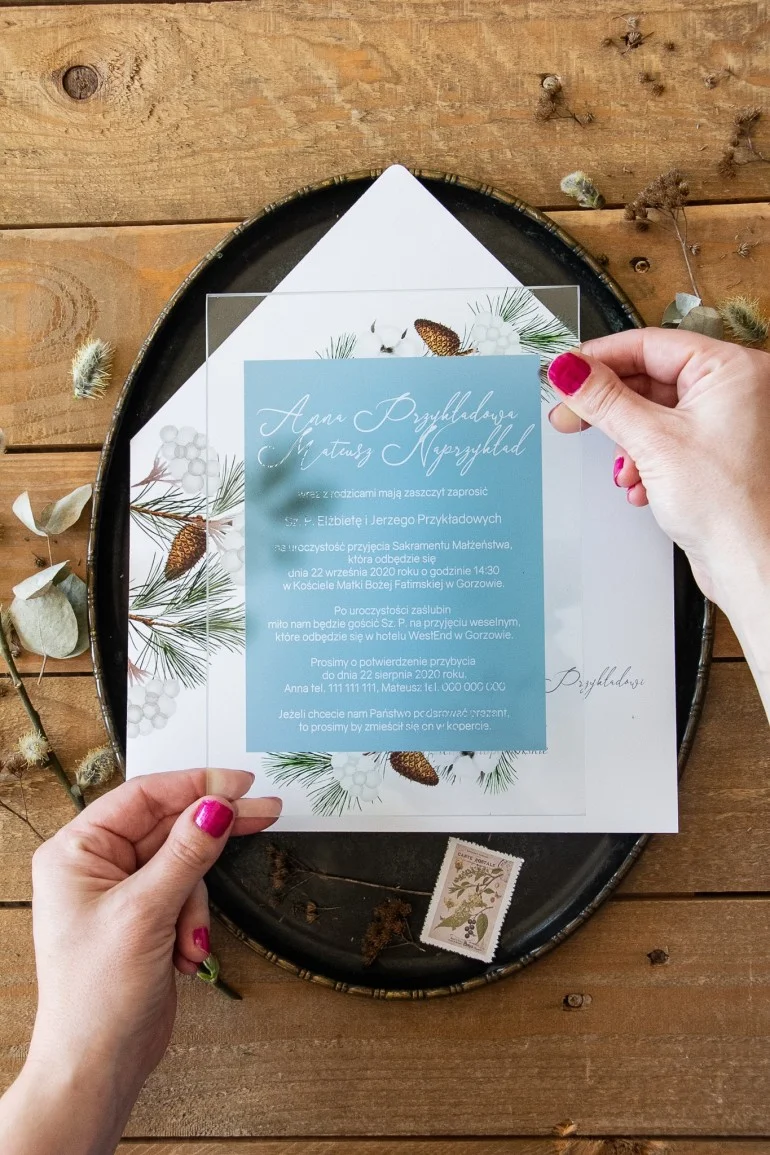
Extravagant Glass Wedding Invitations | Winter Accent | Korani no. 8
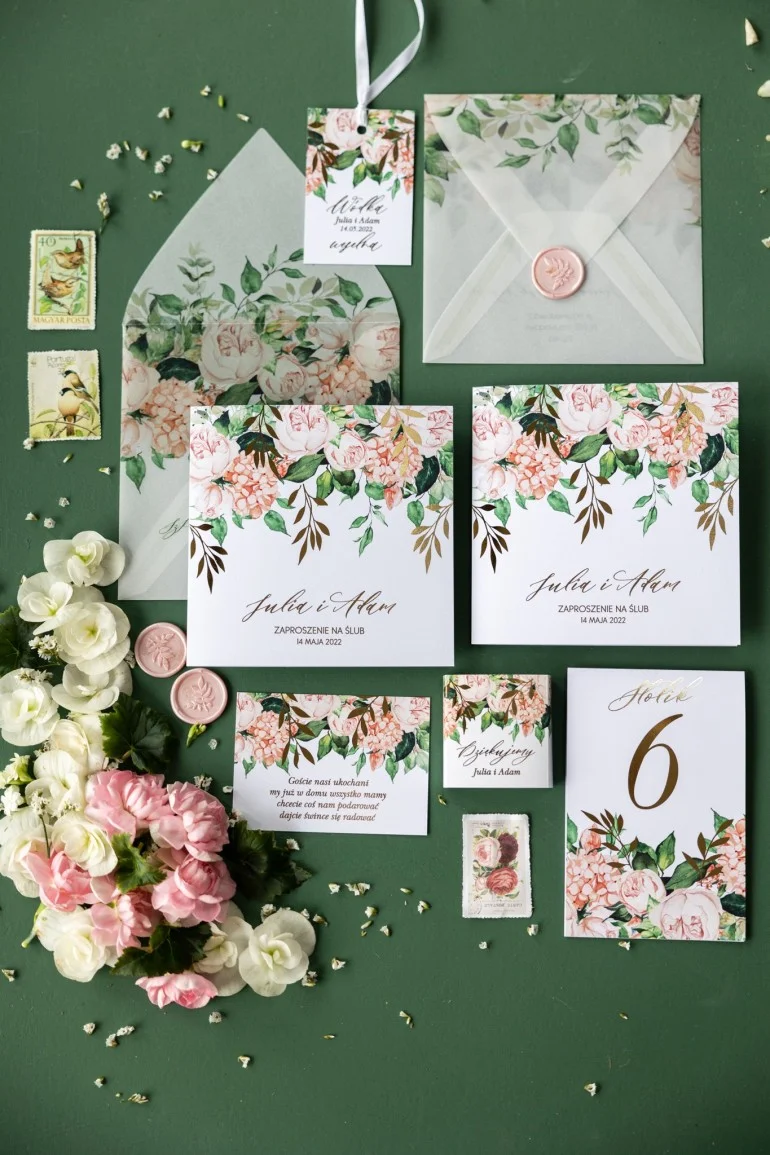
Unique Wedding Invitation with Gold Foil and Pink Peonies | Rubin no. 10
-
Impressive choreography from A to Z – a full dance routine mapped out for the entire track. It can include elements of different dances (e.g., a waltz fragment transitioning into salsa), or even a song mix – starting with a romantic track and switching to an upbeat song where guests or the bridal party join in. Options are endless: you can recreate the famous scene from “Dirty Dancing”, arrange your own routine with lifts and figures, or dance a dynamic hip-hop routine. This is for the ambitious – it takes time and work, but it will certainly be remembered by everyone. If you love being the center of attention and want to surprise your family, this is the way to go.
To decide which option is for you, honestly assess your skills and enthusiasm. There's no point in attempting a complicated choreography if the mere thought of it keeps you up at night. On the other hand, if dancing is fun for you and you have the time – why not try? Remember that the choreography should be matched to the song (or vice versa).
Choose the type of dance for you
If you decide on a specific dance style, make sure it fits the track and your personality. Here are the most popular styles chosen for wedding first dances:
-
English Waltz – elegant, slow, and dignified in 3/4 time. The couple moves smoothly around the floor with steady turns and gentle swaying. The English Waltz is relatively easy to learn and very effective with the right music (e.g., classical pieces or movie waltzes). It's perfect if you want to feel like you're at a royal ball opening the reception.
-
Viennese Waltz – the faster cousin of the English Waltz, also in 3/4 time. Characterized by fast rotations and higher energy. It is slightly more difficult technically (requires stamina and mastering the constant spinning), but it makes a huge impression on guests with its dynamics. If you've always dreamed of a swirling waltz, this is for you – just remember to practice so you don't get dizzy!
-
Social Dance (2-on-1) – a simple partner dance to 4/4 rhythm, often used for popular ballads and calm tracks. This is essentially the aforementioned "swaying" with a few side steps. It can be enriched with turns. Ideal if your song isn't a waltz and you want something more than just standing still. Easy to learn and very universal.
-
Rumba – a sensual, slow Latin American dance known as the dance of love. It has a 4/4 rhythm with accents that give it a characteristic fluid hip movement. Rumba looks beautiful as a first dance if you feel the rhythm and want to present something more passionate. It requires practice but is very intimate and elegant.
-
Other Latin Dances – e.g., cha-cha, salsa or bachata. These are more vivacious, full of energy and fun. Salsa or cha-cha can get the party started from the very first bars! If you choose this, make sure the track has a clear beat. Great for couples who like unconventional solutions and want to show some temperament.
-
Tango – dramatic, passionate tango is also chosen by newlyweds wanting something different. Key here is the right track and confidence in movement. Tango requires good cooperation between partners, but its atmosphere is sure to surprise guests.
-
Mixed Routine (Mix) – song mixes and style mashups are increasingly trendy. You might start with a traditional waltz, then the music "breaks" and an upbeat track comes in – and you have a funny routine ready. These mix choreographies are a great surprise for guests and a way to show two sides – romantic and crazy.
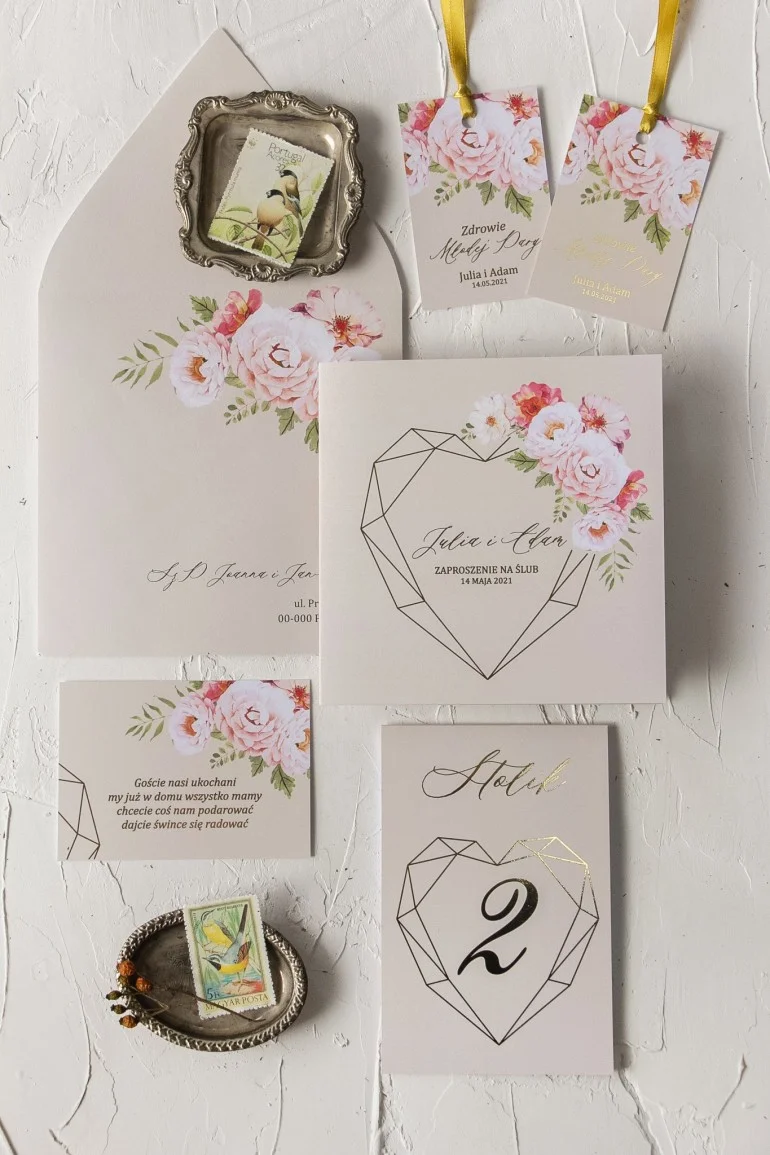
Wedding Invitations with Gold Heart and Floral Motif | Szafirowe no. 8
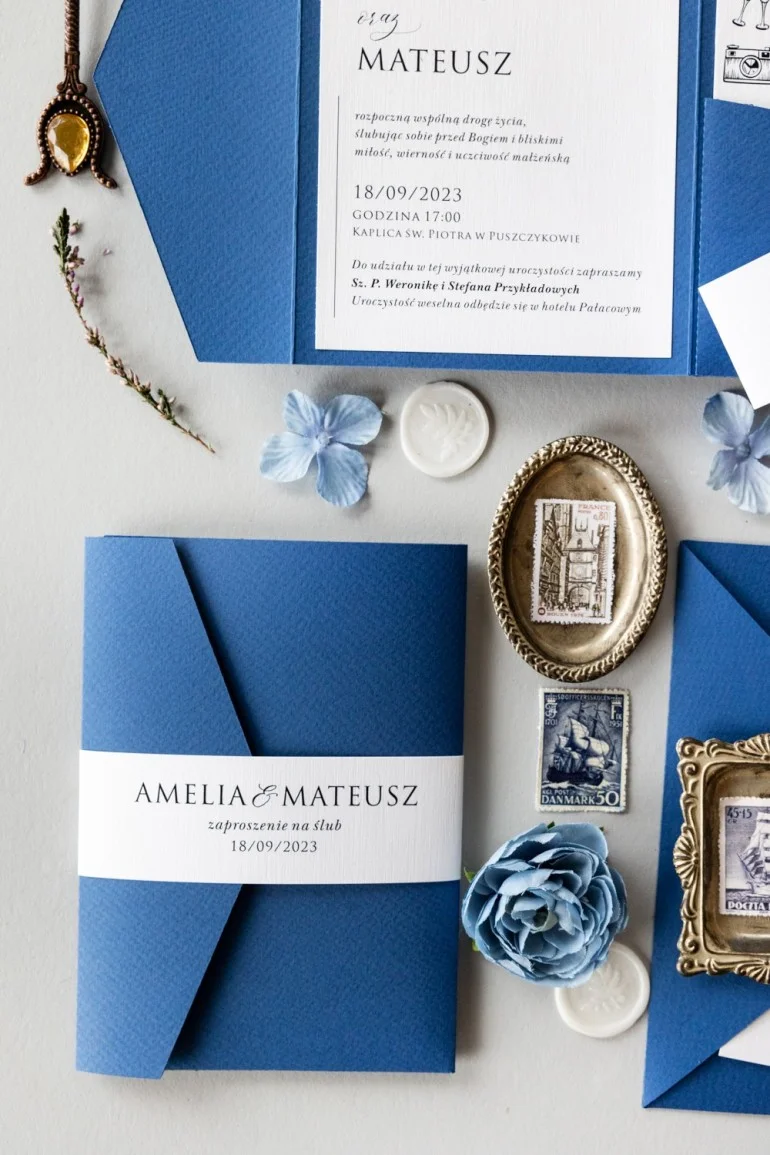
Blue Elegant Wedding Invitation with Pocket | Kraft no. 7
Wedding Invitations with Sunflowers and Gold Foil | Rubin no. 7
Regardless of the style, tailor the choreography to yourselves. High lifts or complicated figures look impressive, but if they are going to paralyze you with stress, it's better to skip them. Sometimes less is more – it's better to dance a simple routine with feeling and confidence than a very difficult one nervously.
Practicing the choreography – practical tips
Once you have a dance idea or a ready routine, it's time for practice. Here are some tips on how to effectively prepare for your first dance:
-
Regular rehearsals – don't leave learning until the last minute. Start practicing several weeks, preferably months, before the wedding. This gives you time to get used to the steps. Practice regularly, e.g., once or twice a week for an hour. Repeat the routine until it becomes second nature.
-
Break the dance into sections – it's easier to learn choreography by dividing it into small parts. Learn the steps for the first verse first, then the chorus, the next verse, etc. This step-by-step method makes it easier to remember and less overwhelming.
-
Practice with music – initially you can count steps out loud, but start dancing to the original music as soon as possible. You'll feel the rhythm and learn to synchronize movements with specific moments in the song.
Wedding Invitations with white flowers and green accents | Impresja no. 9
Elegant Wedding Invitations with Vellum | Opal no. 4
Floral Elegance Glass Wedding Invitations | Korani no. 12
-
Use mirrors or recordings – practice in front of a mirror to see your posture. It's also a great idea to record your rehearsals on your phone. Watching the video will show you how you actually look as a couple – what felt weird might look great, or you might notice a movement that needs fixing.
-
Simulate wedding conditions – if possible, practice in conditions similar to the wedding day. For example, you'll be dressed differently than usual. A wedding dress might have a train or be very full – this affects movement. It's worth doing a trial run in your wedding shoes and a skirt of similar length. If possible, do a rehearsal at the venue to get a feel for the space.
-
Focus on the details – remember that dance is more than just steps. Gestures and facial expressions make an impact. Practice looking at each other and smiling – it sounds funny, but many people forget to smile when they are focused on steps.
The most important thing is not to lose the fun. This is meant to be your time together. If you feel you need help learning – consider dance lessons.
Dance lessons or self-practice? What to choose and how to prepare
Many future Happy Couples face a dilemma: should we sign up for a dance course or practice at home? Both options have pros and cons – choose what's best for you.
Learning the first dance at a course (lessons with an instructor)
Advantages: Private lessons are a great choice if you feel you need professional support. An instructor:
- teaches you basic steps and corrects your technique,
- helps arrange a tailored choreography that fits your abilities,
- gives you space to practice in a professional studio with mirrors,
- keeps you motivated for regular rehearsals,
- shares dance tips and tricks on how to lead or hold your frame.

Gaja No. 2 Wedding Invitation – Sage Green with Letterpress Embossing

Glamour Wedding Invitation with Gilded Branch and Velvet Paper – Ruskus No. 14

Kraft Wedding Invitation No. 12 – Forest Style with Pine Forest Graphic
Dance lessons are also a good way to beat stage fright – the more you dance in front of an instructor, the less stress you'll feel in front of guests. Plus, many couples find these lessons to be great fun and quality time spent together.
Disadvantages: Lessons involve costs and time commitment. You need to fit them into your schedule and travel to the studio. However, instructors are there to teach beginners, so no one is judging you.
Practicing at home
Advantages: Training on your own is absolutely possible. Pros? Savings and flexibility. You can use online materials: YouTube has plenty of tutorials and example choreographies. This is a good solution for couples who enjoy learning things together at their own pace.
Disadvantages: The biggest challenge is discipline and objectivity. Without an instructor, it's harder to judge if you are performing steps correctly. There's also a risk of overlooking technical aspects like hand placement or posture.
Combining both options?
You can be flexible. You could create your own routine and then book 2-3 consultations with an instructor to polish it. This is a great middle-ground solution.

Glamour Wedding Place Cards with Pearls – Pearls No. 1 White

Lauren No. 3 Wedding Place Cards – Classic Calligraphy Name Cards

Kraft Place Cards No. 12 – Rustic with Forest Panorama
How to avoid stress during the first dance – practical tips
Even with the best preparation, the wedding first dance can be nerve-wracking. Anyone can have stage fright. Fortunately, there are ways to minimize stress and truly enjoy the moment:
-
Preparation is key – The more you know the steps, the less you'll worry. Practice until it's automatic. This confidence is very calming.
-
Practice the entrance – Plan how you'll walk onto the floor and where you'll stand. Coordinate with your DJ so you know when they will announce you.
-
Request favorable conditions – Use tricks like dimmed lights and "heavy smoke" (dancing on clouds). It adds romance and hides minor footwork mistakes.
-
Trust each other – You are in this together. Focus on your partner, look at them, and the rest of the world will fade away.
-
Breathe and slow down – Take deep breaths before starting. Don't rush the steps – stress often makes people dance faster than the music.
-
Smile (even if you have to fake it) – Smiling sends a signal to your brain that everything is fine. Plus, you'll look much better in photos!
-
Keep going if something goes wrong – The golden rule: keep dancing no matter what. Guests don't know your choreography, so they won't notice 90% of mistakes unless you stop.
Elegant Embossed Wedding Invitations | Karmen no. 4
Subtle Glass Wedding Invitations with White and Green Flowers | Korani no. 15
Wedding Invitation with Gold Accent and Red Flowers | Ruskus no. 1
Dancing with guests – how to include loved ones in the fun
The first dance is traditionally a moment just for the Happy Couple, but you can involve your wedding guests. Here are some ideas:
-
Inviting guests mid-song – Have the DJ invite everyone to join you after the first verse. It takes the pressure off and creates a beautiful communal moment.
-
Group routine with friends – Prepare a choreography involving bridesmaids and groomsmen. It's a huge hit and great fun for your closest friends.
-
Family dance transition – Transition from your dance into a dance with parents. It's a natural way to bring more people onto the floor.
After a successful first dance, don't forget a small gesture of gratitude. Wedding favors are a lovely way to thank your guests for celebrating with you.
FAQ – Frequently asked questions about the first dance
When should we start learning the first dance?
Ideally about 2-3 months before the wedding. This gives you a comfortable buffer to learn the steps without the last-minute stress of other organizational tasks.
How long should the first dance last?
Usually 2–3 minutes. This is enough time to present yourselves without losing the guests' attention. Better to leave them wanting more!
Is the first dance mandatory?
It's a strong tradition, but nothing is mandatory. It's your party. If you both really don't want to dance, you can skip it and open the floor with a toast instead.
What if we mess up the steps?
Don't stop and don't panic! Just keep improvising. Most guests won't even notice. Smile and enjoy the moment – perfection isn't the goal, joy is.
We hope this guide has added to your confidence. This is your moment of joy. Good luck on the dance floor! 💃🕺
Check out more inspiring tips on the Amelia Wedding blog:
-
For more ideas on entertaining your guests, see Wedding attractions for guests 2025 – ideas to spice up your reception.
-
Need help with your bridal party? Check out Bridesmaids and Groomsmen – roles, duties, and 2025 trends.
-
Avoid chaos with our guide on Guest lists and seating plans – how to create the perfect table plan.