How does a wedding ceremony work?
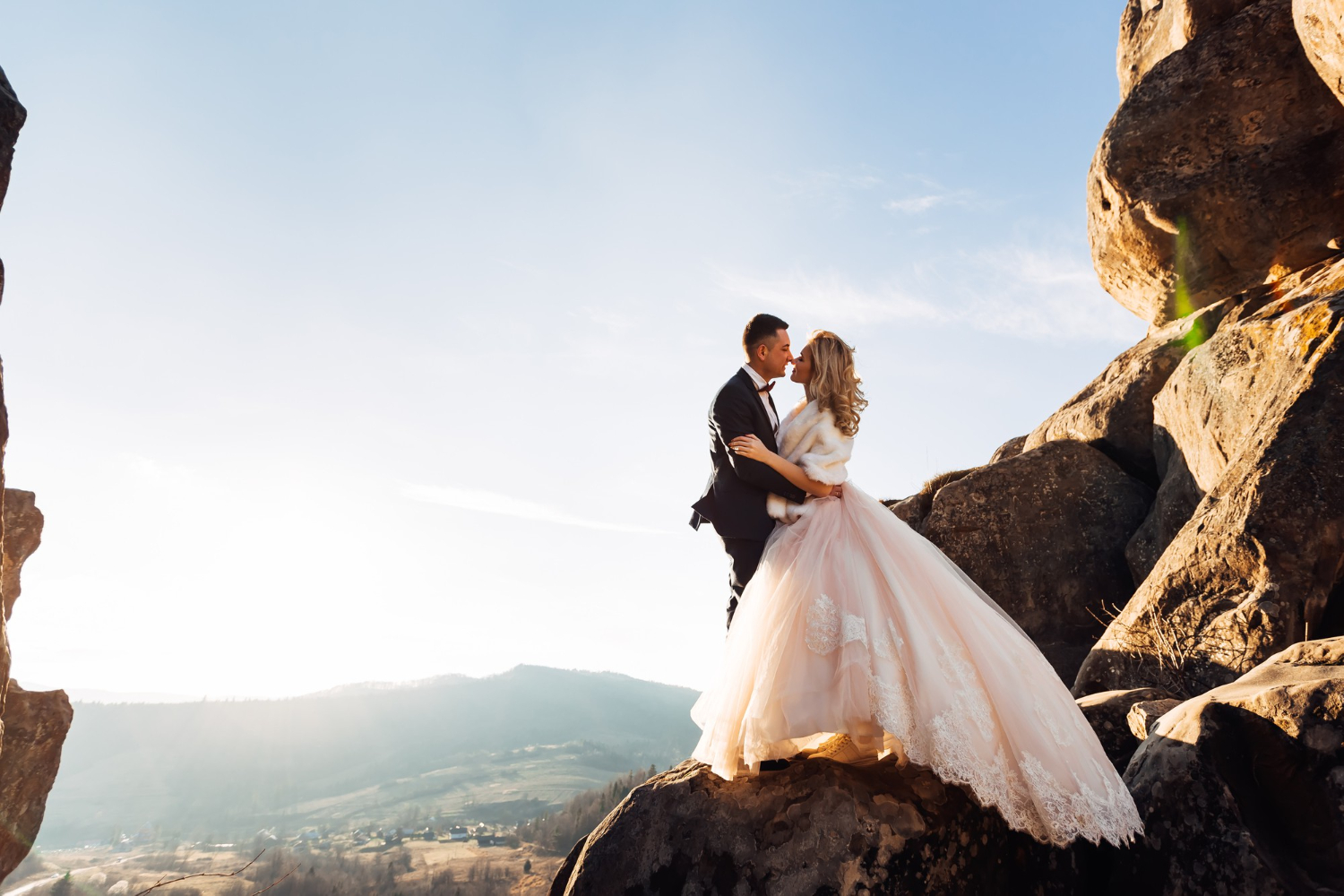
The significance of a wedding in a person's life
Why is it worth getting married?
A wedding is one of the most important events in anyone's life. The decision to get married is not just a legal formality, but above all, a symbolic seal of love and devotion between two people. In today's world, where partnerships take many forms, the meaning of a wedding carries even more weight as an expression of deep commitment and the desire to build a future together.
Marriage offers emotional and social stability, which can translate into better well-being and life satisfaction. Overcoming challenges together, planning for the future, and sharing the joys of everyday life strengthens the bond between partners. Furthermore, a wedding opens the door to many legal and social rights and privileges that are not available to informal couples.
We must not forget the family aspect. Getting married is often an important step for the families of both parties, integrating them and building new relationships. For many, a wedding is also an expression of respect for traditions and values passed down through generations.
Traditions and symbols associated with weddings
A wedding is not just a formality, but a rich mosaic of traditions and symbols that give the ceremony deeper meaning. Wedding traditions vary depending on culture and region, but many of them are universal and recognized all over the world.
One of the most well-known symbols is the exchange of wedding rings, which symbolizes the infinity of love and marital fidelity. Rings are often made of gold or silver and worn on the ring finger of the left hand, which, according to belief, is connected to a vein leading straight to the heart.
Wedding vows are another key element of the ceremony. The words spoken by the newlyweds have the power of a declaration of love, support, and lifelong devotion. Many couples choose to personalize their vows by adding their own words and promises.
The white veil and wedding dress symbolize the purity and innocence of the bride. Although this tradition has roots in Western culture, it has become popular worldwide. Additionally, tossing the bouquet, wedding invitations, or place cards are elements that add charm and personalize the celebration.
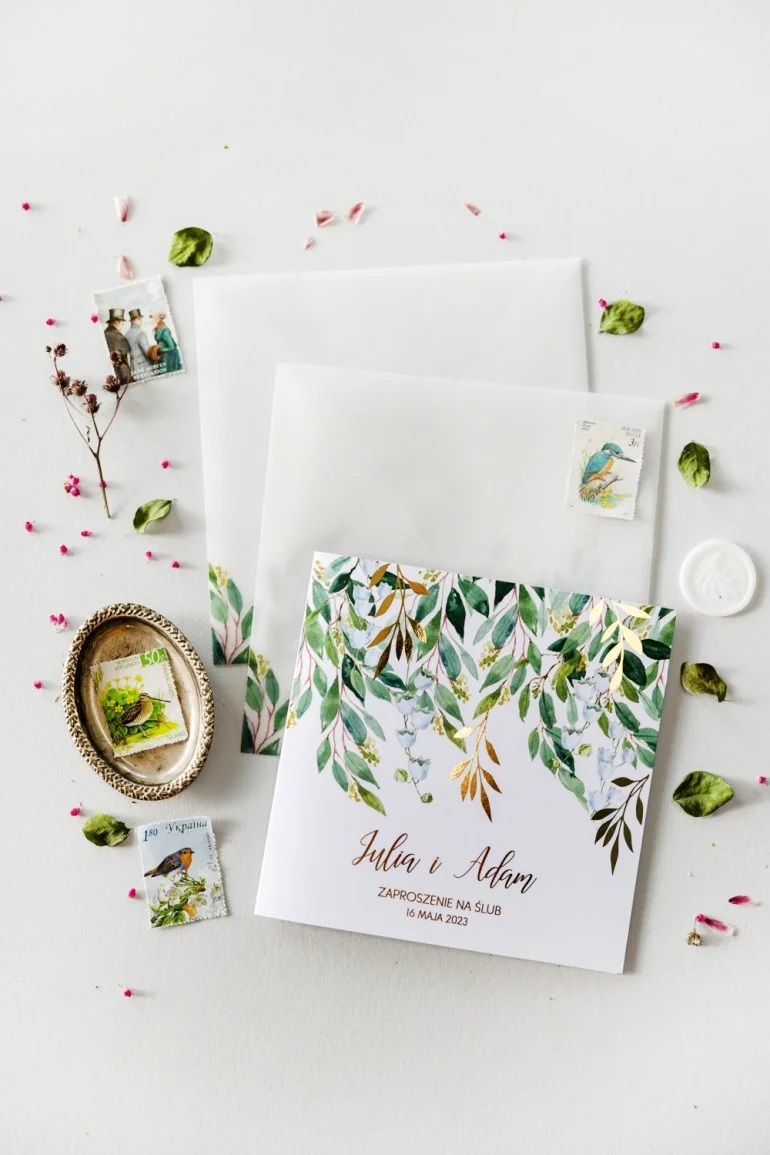
Wedding invitations with green leaves motif, gold accents, classic | Gold wedding invitations | Rubin no. 4
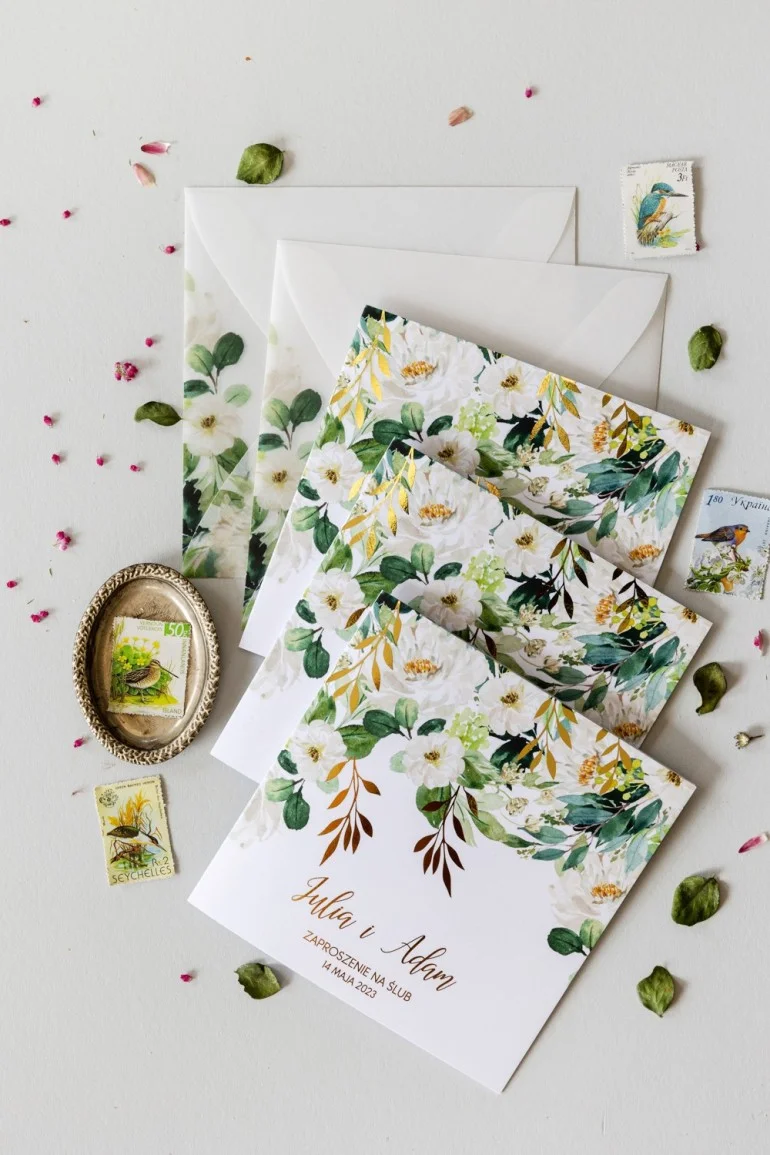
Stylish Wedding Invitations with Gold Accents, Watercolor Flowers | Exclusive Wedding Invitations | Rubin no. 1
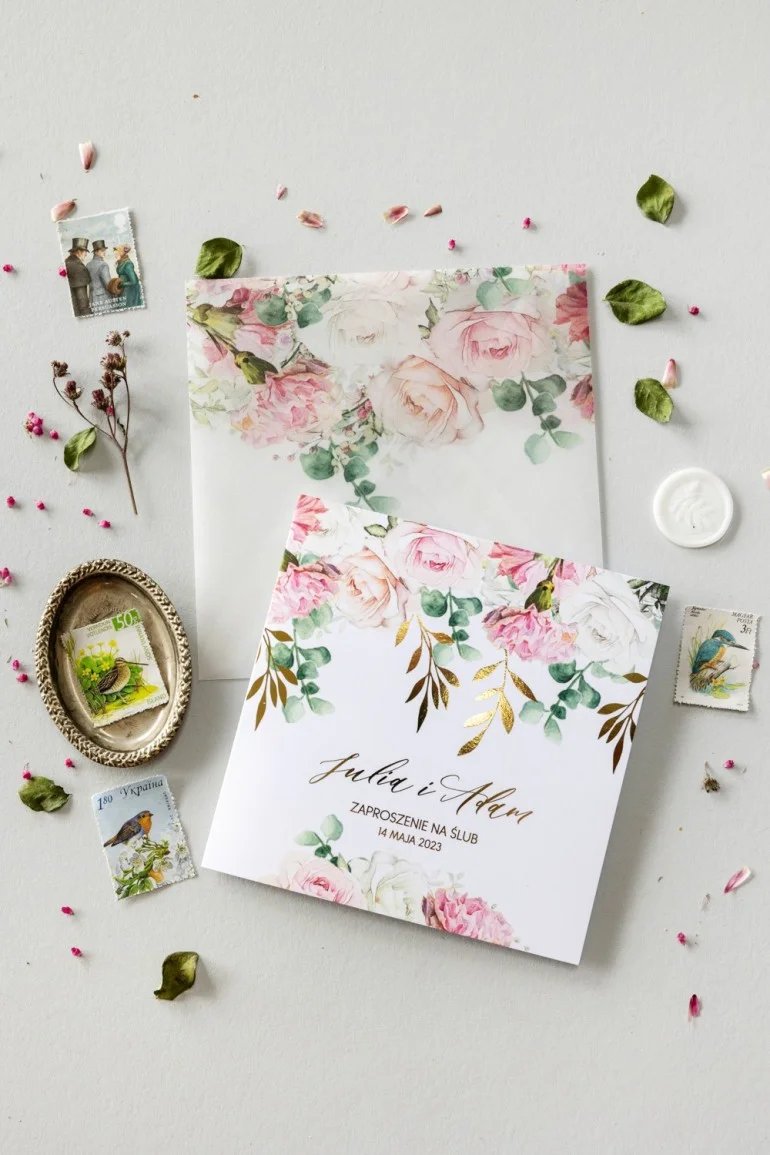
Wedding invitations with pink roses and gold foil, transparent envelope | glamour style wedding invitations | Rubin no. 9
The impact of marriage on family and social relationships
Getting married not only unites two people but also their families and communities. Marriage often acts as a bridge between different cultures, traditions, and values, which can enrich the lives of both parties. Integrating families allows for building stronger social ties and creating a new, extended family.
For many parents, their children's wedding is a moment of pride and fulfillment. The celebration becomes an opportunity to meet with loved ones, thank the guests, and strengthen family relationships. Celebrating together fosters bonding and deepens connections that can last a lifetime.
In a social context, marriage is often seen as a foundation for stability and community development. Marriages contribute to creating strong social structures, which has a positive impact on raising future generations. Furthermore, marriage can influence social status and how an individual is perceived in society, often opening up new opportunities and perspectives.
Table of contents
- The significance of a wedding in a person's life
- Wedding preparations: where to start?
- Civil wedding: procedure and requirements
- Church wedding: tradition and spirituality
- Wedding reception: organization and attractions
- Formalities after the wedding: what needs to be done?
- Tips and advice for future newlyweds
Wedding preparations: where to start?
Budgeting and scheduling
Starting wedding preparations is an incredibly exciting moment, but for everything to run smoothly, careful budget and schedule planning is key. Setting financial possibilities together will allow you to avoid unnecessary tension and focus on what is truly important. It is worth creating a detailed list of all potential expenses, such as:
- Wedding venue rental
- Catering and drinks
- Music (band or DJ)
- Photographer and videographer
- Outfits for the bride and groom
- Decorations and flowers
- Wedding invitations and stationery
- Transport
- Guest favors
- Place cards and other accessories
Creating such a budget will allow you to control expenses and shift funds between categories if necessary. At the same time, it is worth creating an action schedule that includes all stages of wedding organization – from booking the venue, through choosing the menu, to the final dress fittings. Thanks to this, you will gain confidence that no important element will be missed, and wedding preparations will proceed without unnecessary stress.
Choosing the date and venue of the ceremony
Choosing the right wedding date is a decision that will affect many organizational aspects. When setting it, consider:
- Seasonality: Summer months are the most popular, which can affect the availability of venues and service providers as well as their prices. A wedding in spring or autumn can be just as beautiful, and often more economical.
- Guest availability: Make sure that the people who are key to you will be able to attend the ceremony. Avoid holidays and long weekends when many people plan trips.
- Weather conditions: If you dream of an outdoor ceremony, the weather will be crucial.
After choosing the date, it's time to decide on the venue for the ceremony and reception. Will it be a romantic church, a modern registry office, or perhaps a picturesque garden? Venue availability may be limited, especially on popular dates, so it is worth booking well in advance. When choosing a wedding hall, pay attention to its size, decor, available menu, and additional services. Remember that the venue should reflect your style and character, creating an unforgettable atmosphere for you and your guests.
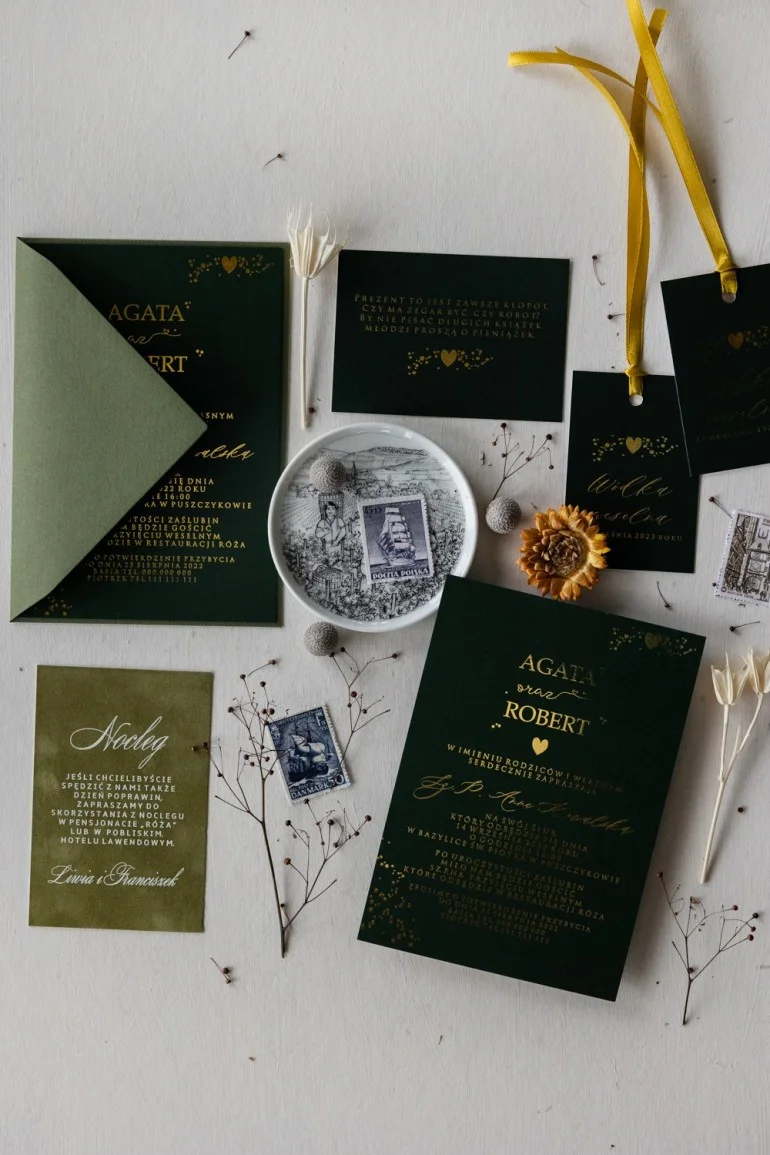
Single-card Wedding Invitations with gold foil | Simple no. 2
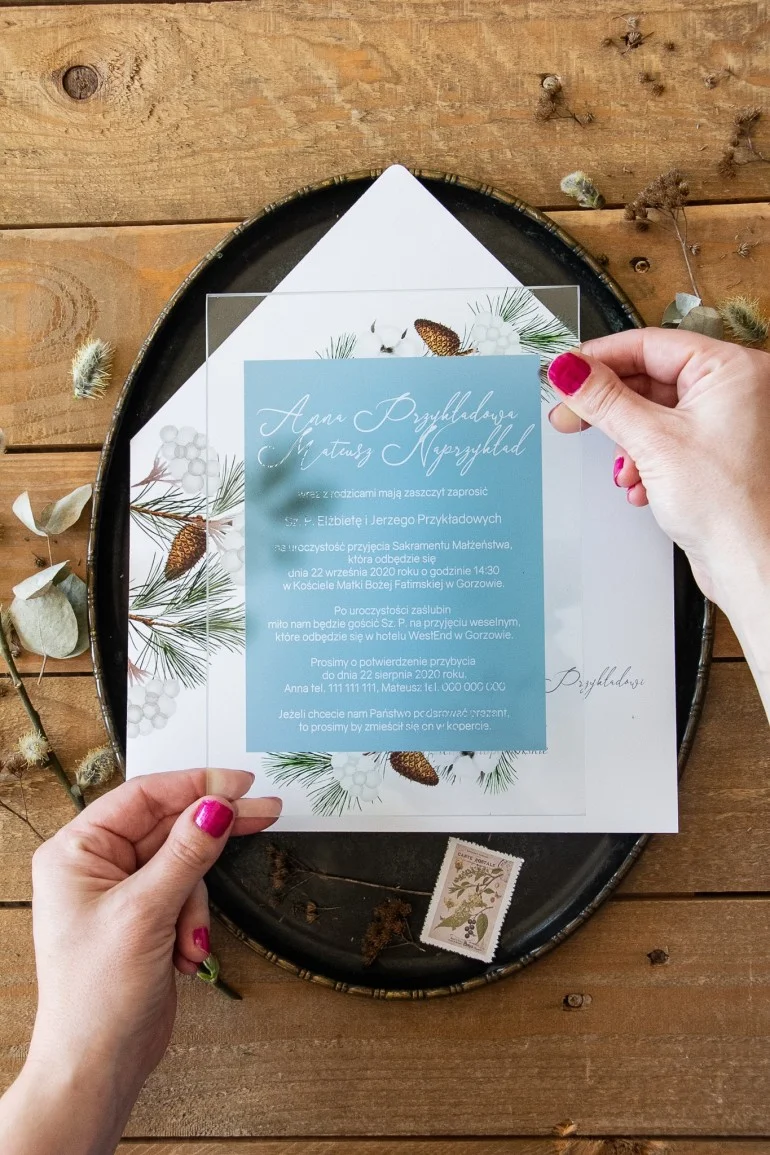
Extravagant Glass Wedding Invitations | Glass Winter Accent | Cotton & Pine | Korani no. 8
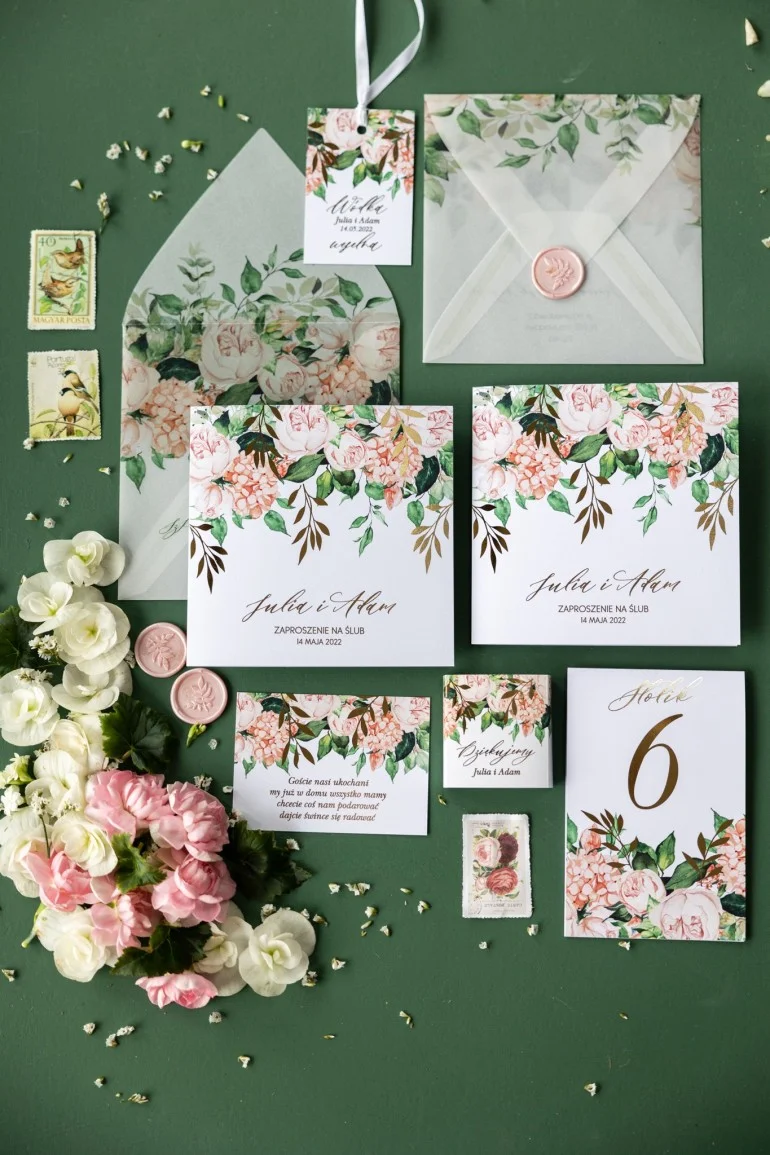
Unique Wedding Invitation with Gold Foil, Pink Peonies and Vellum Envelope | Unusual Wedding Invitations | Rubin no. 10
Formalities and documents needed for the wedding
Organizing a wedding is not just about choosing a dress or decorations, but also about taking care of necessary wedding formalities. Depending on the type of ceremony – civil, church, or concordat – the list of required documents may vary.
For a civil wedding, you will need:
- ID cards of both fiancés.
- Shortened copies of birth certificates (if you do not have a PESEL number).
- In the case of divorced persons – a final divorce decree.
- A completed application for marriage before the head of the registry office.
For a church wedding, the following are required:
- ID cards.
- Baptismal certificates with a "for marriage" annotation.
- Confirmation certificates.
- Certificate of completion of a pre-marital course.
- Pre-nuptial protocol prepared by the priest.
- In the case of a concordat wedding – a certificate from the registry office stating there are no obstacles to marriage.
It is worth remembering that some documents have a limited validity period; for example, the certificate from the registry office is valid for only 6 months. Therefore, step-by-step wedding organization should include dates for visits to offices and parishes. Furthermore, if you are planning a wedding with a foreigner or are foreigners yourselves, the list of documents may be more extensive, and the procedures more complicated.
Do not forget about the formalities related to your surname after the wedding. If one of you intends to change your surname, this information must be reported when submitting documents. After the ceremony, it will be necessary to replace identity documents, driver's licenses, or passports.
Meticulously handling formalities will allow you to calmly enjoy the last days before the wedding, without worrying about potential complications. Remember that well-organized preparations are the key to success and beautiful memories of this special day.
Civil wedding: procedure and requirements
Procedure for registering the wedding at the registry office
Planning a civil wedding begins with formalities at the registry office. The fiancés must personally report to the chosen office at least 31 days before the planned date of the ceremony, although it is best to do so well in advance to ensure the date is available. In exceptional situations, it is possible to shorten this period with the consent of the office head.
During the visit, you must present valid identity documents, such as ID cards or passports. If one of the fiancés is a foreigner, additional documents may be required, such as a copy of a birth certificate or a certificate of legal capacity to marry according to the laws of the country of origin.
During the meeting, a marriage protocol is filled out, in which you provide:
- Personal data of the fiancés.
- The surnames that both spouses and future children will bear after the wedding.
- The date and place of the ceremony.
This is also the moment to pay the stamp duty for drawing up the marriage certificate, which is 84 PLN. If the ceremony is to take place outside the office, e.g., outdoors, it is necessary to pay an additional fee of 1000 PLN and meet conditions ensuring a solemn character and safety of participants.
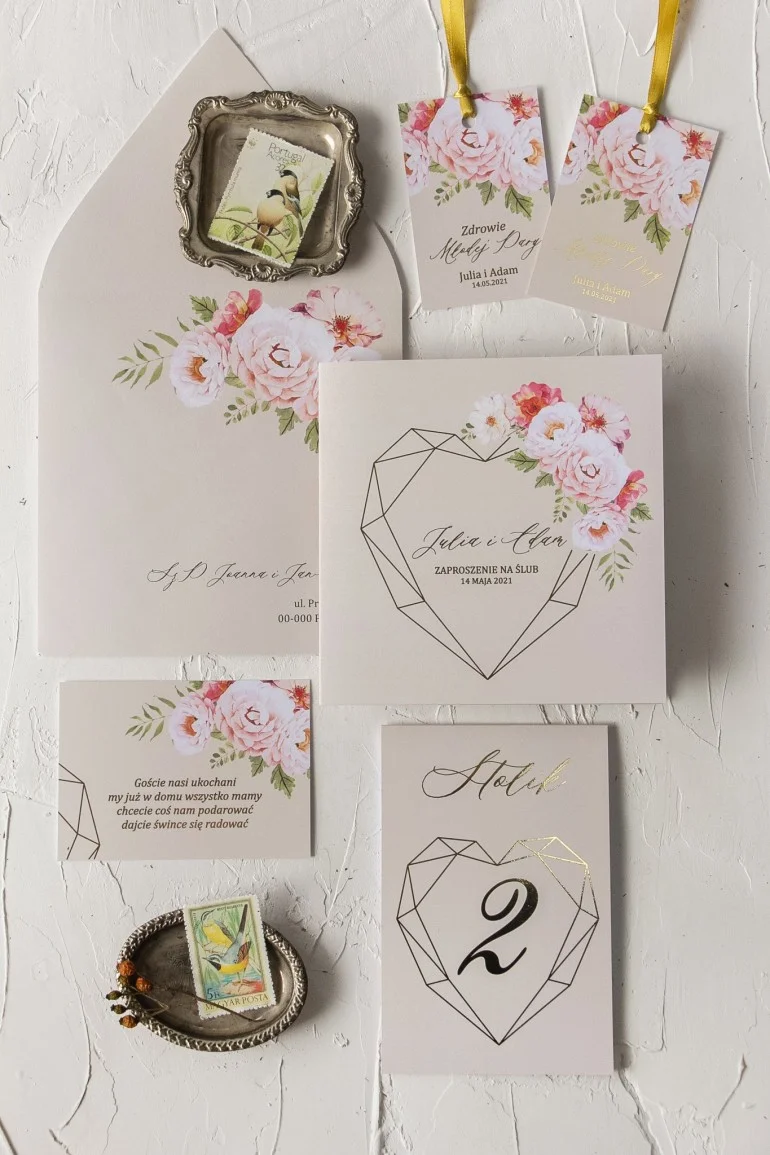
Wedding Invitations with Gold Heart and Floral Motif | Modern and Stylish | Sapphire no. 8
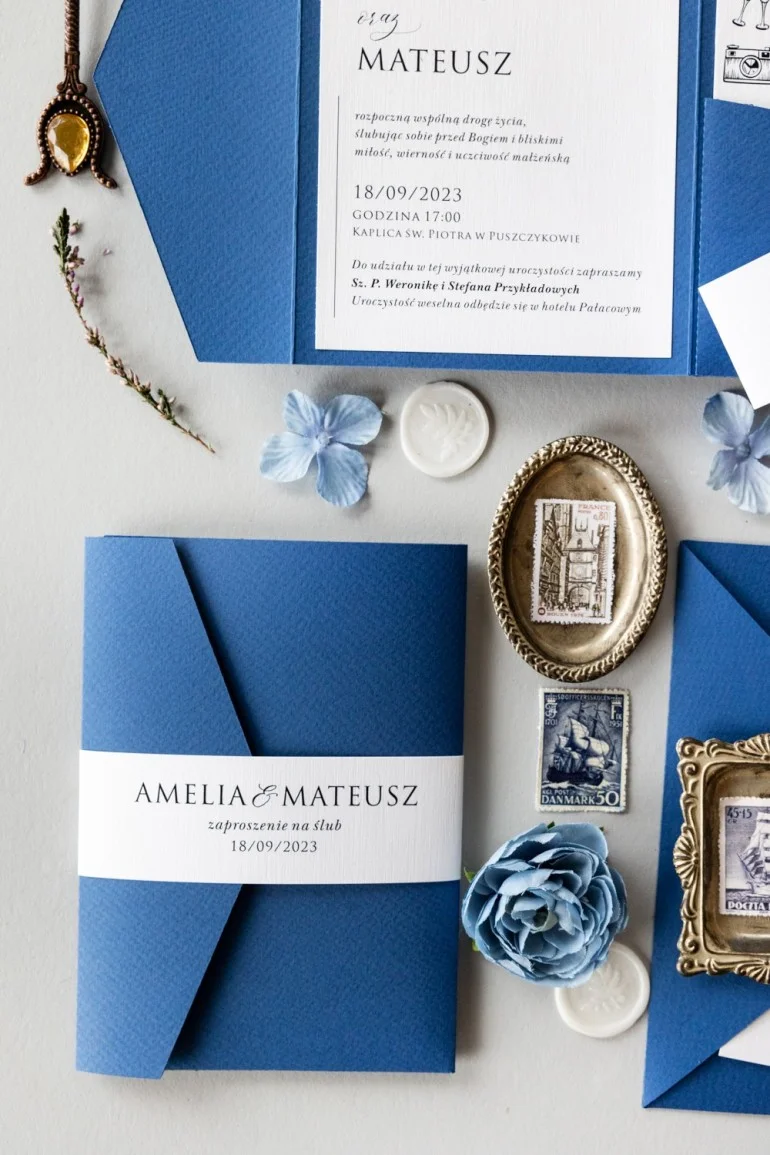
Blue, Elegant Wedding Invitation with Pocket and Personalization | Kraft no. 7
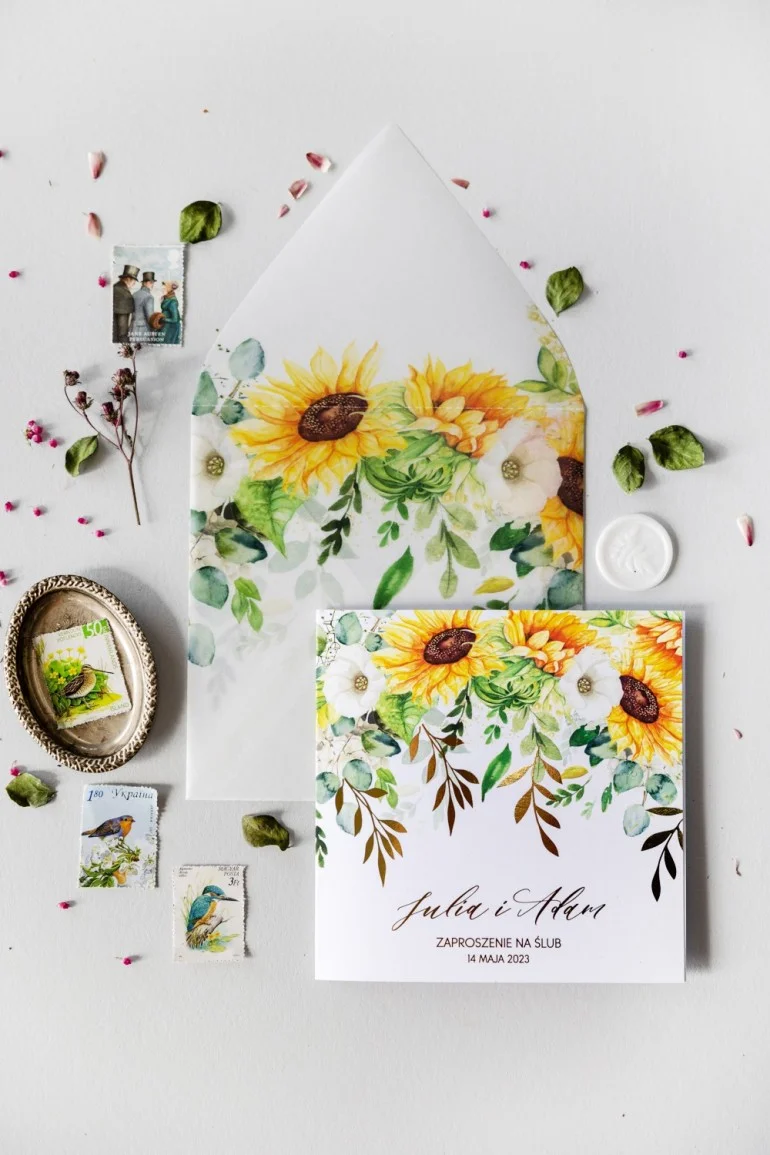
Wedding Invitations with Sunflowers and Gold Foil | Modern and Original | Rubin no. 7
Civil ceremony step-by-step
The civil wedding ceremony is concise but full of significance. Here is how it usually proceeds step-by-step:
- Arrival of the newlyweds and guests: The bride and groom and witnesses should arrive early to complete final formalities and confirm their data. Guests take their seats in the ceremony hall.
- Entrance of the newlyweds: The fiancés can enter together or separately, accompanied by parents or witnesses, depending on their own preferences.
- Welcome by the registry office head: The person conducting the ceremony welcomes those gathered and introduces the purpose of the meeting.
- Verification of identity: The office head asks the fiancés and witnesses to show identity documents and confirm their data.
- Speech: A short speech follows regarding the meaning of marriage, its legal and social consequences, and the duties of spouses.
- Making declarations of will: The most important moment of the ceremony, where the office head asks the fiancés if they wish to enter into marriage. Both answer "Yes", which is equivalent to entering into a marriage.
- Exchange of rings: Although not legally required, most couples choose this symbolic gesture as a sign of mutual love and fidelity.
- Signing the marriage certificate: The newlyweds and witnesses sign the certificate, thereby formalizing the marriage.
- Announcement of marriage: The office head declares the couple husband and wife, wishing them prosperity.
- Congratulations from guests: After the ceremony, guests have the opportunity to offer the newlyweds their wishes and congratulations.
The entire ceremony usually lasts about 15-20 minutes. Despite its simplicity, it is a moment full of emotions and moving experiences that will forever remain in the memory of the young couple.
Possibilities for personalizing the ceremony
Although a civil wedding is a legal formality, there are many ways to give it an individual character and make it unique. Personalizing the ceremony allows you to express the personality of the couple and create an unforgettable atmosphere.
-
Choosing the ceremony venue: You are not limited to the registry office hall. You can choose a romantic outdoor setting, such as a garden, beach, or historic park. It is important that the place guarantees the safety of participants and a dignified setting for the celebration.
-
Decorations and setting: Even in the registry office, you can take care of your own decorations. Flowers, candles, or thematic arrangements will add charm and create the right mood. Remember the small details, such as elegant place cards on the tables or personalized wedding invitations that announce the style of your ceremony.
-
Music: Many offices allow you to play music of your choice during the entrance, vows, or leaving the hall. Favorite songs can emphasize the emotions of the moment and make the ceremony more personal.
-
Own vows: Although a civil wedding has a specific legal formula, some offices allow you to add your own words. Expressing feelings in your own words can be an extremely moving element of the ceremony.
-
Multimedia elements: You can prepare a short video or photo presentation to be shown during the ceremony, telling your love story.
-
Outfits: You are not limited by a formal dress code. You can choose outfits that reflect your style – from traditional to more avant-garde.
-
Guest favors: Prepare small gifts for the ceremony participants as an expression of gratitude for their presence. These can be personalized gifts, sweets, or commemorative trinkets.
-
Bilingual ceremony: If your families come from different countries, you can ask for the ceremony to be conducted in two languages or introduce cultural elements from both sides.
Personalizing the ceremony is a way to ensure that the civil wedding is not just a formality, but becomes a reflection of your love and shared dreams. Thanks to these elements, this special day will take on a unique character and will forever remain in the memory of you and your loved ones.
Church wedding: tradition and spirituality
Church requirements and spiritual preparation
Preparation for a church wedding is not just about organizing the celebration, but above all deep immersion in the spirituality and tradition of the Church. The first step is to report to the parish where you plan to get married. It is recommended to do this at least half a year before the planned wedding date to have enough time to meet all requirements.
One of the key elements of preparation is the pre-marital course. This is a series of meetings during which the fiancés learn about the essence of the sacrament of marriage, learn communication in a relationship, and discuss ethical and moral issues related to family life. These courses aim to strengthen the bond between partners and prepare them for life together in accordance with Church teaching.
Another important aspect is pre-marital confession. This is a moment of reflection and spiritual cleansing, allowing you to enter into marriage with a pure heart. Some also choose to participate in retreats for fiancés, which further deepens their spiritual preparation.
Among the documents required by the church are:
- Current baptismal certificates (with a date of issue no earlier than 3 months before the wedding).
- Confirmation certificates.
- Certificate of completion of a pre-marital course.
- ID cards of the fiancés.
- Certificate from the registry office stating there are no obstacles to marriage (if a concordat wedding is planned).
Taking care of these formalities is necessary for the church wedding to take place in accordance with regulations and tradition.
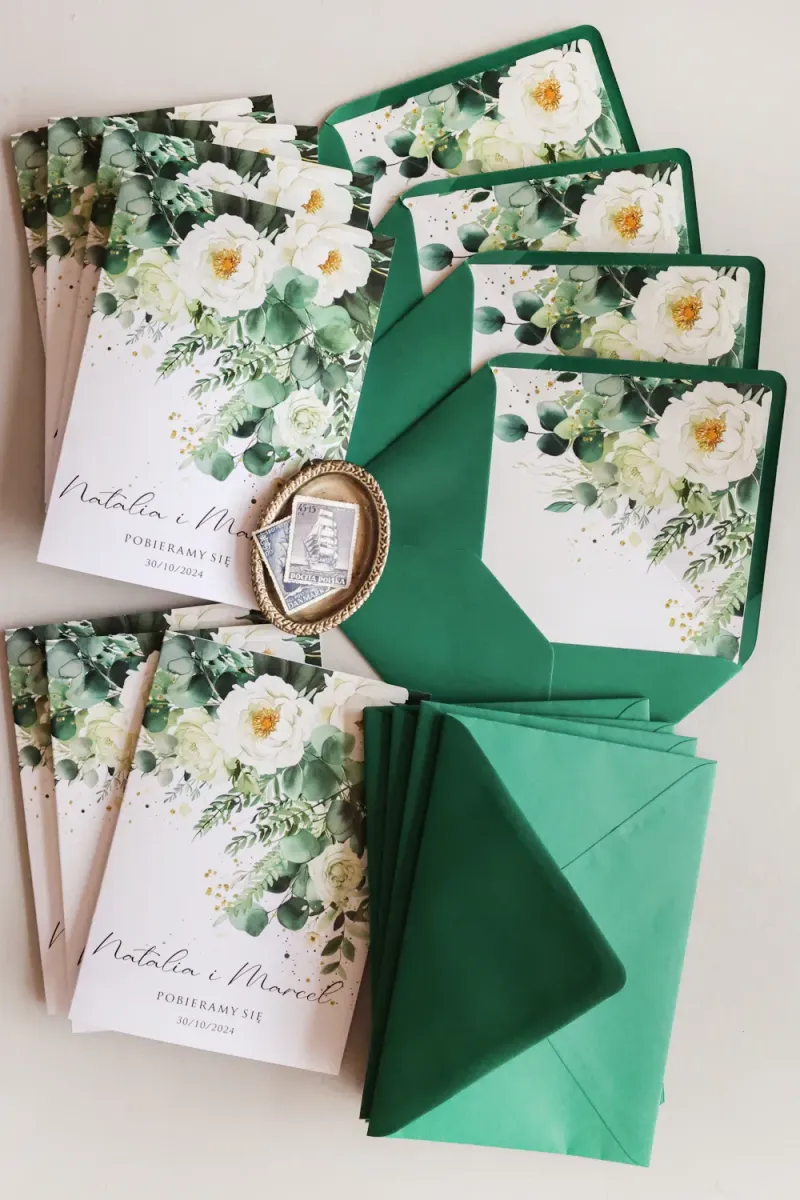
Wedding Invitations with white flowers and green accents | minimalist invitations with personalization | Impression no. 9
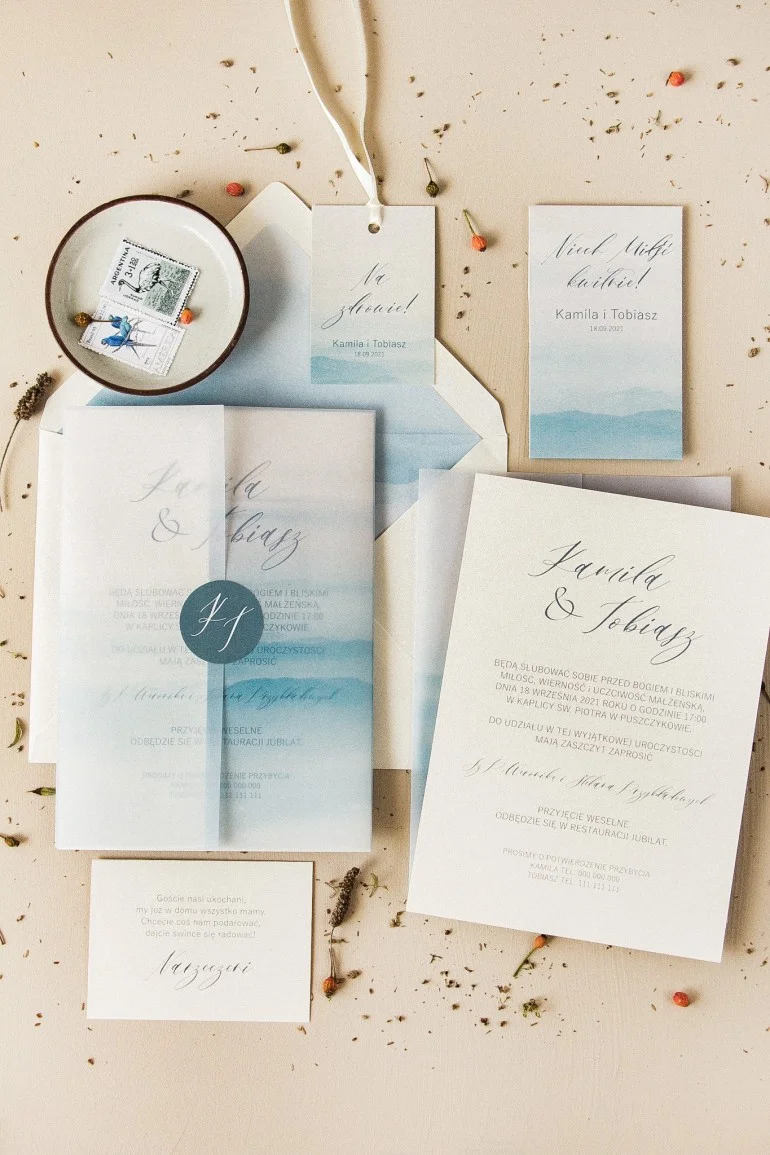
Elegant Wedding Invitations with Vellum | Watercolor and Pearlescent | Opal no. 4
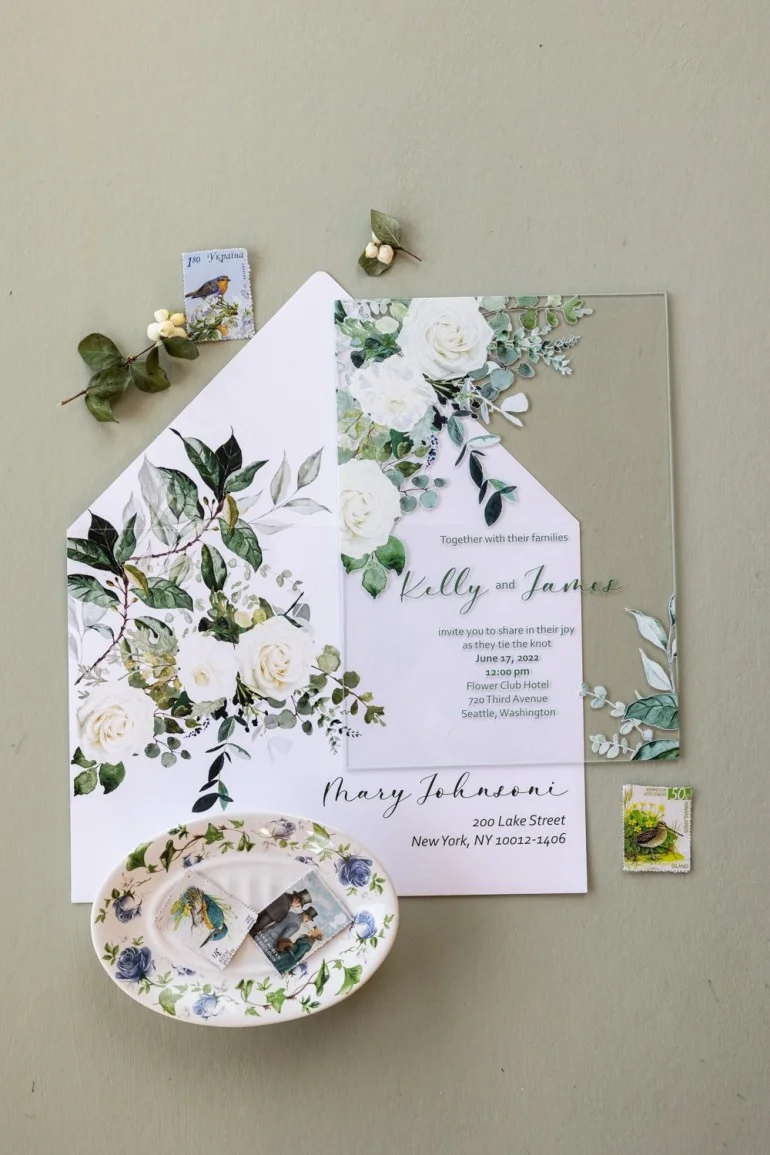
Floral Elegance Glass Wedding Invitations with White Roses and Greenery Envelope | Korani no. 12
Church wedding ceremony procedure
The church wedding ceremony is a unique combination of sacredness and the beauty of tradition. The celebration begins with the entrance of the newlyweds into the church. Often the bride is led by her father, which symbolizes the transition from parental care to a new family created with her husband.
The main stages of the ceremony are:
- Welcoming those gathered by the priest and an introduction to the essence of the sacrament of marriage.
- Liturgy of the Word, during which fragments of the Holy Scripture chosen by the fiancés are read. They can reflect their values and beliefs.
- Homily, in which the priest shares reflections on love, marriage, and living in faith.
- Sacrament of Marriage:
- Asking about the voluntariness of the decision and readiness to receive the sacrament.
- Taking wedding vows, where the fiancés express their will to enter into marriage and promise each other love, fidelity, and marital honesty.
- Placing the rings, which are a symbol of infinite love and unity.
- Prayer of the Faithful, in which those gathered ask for a blessing for the newlyweds.
- Eucharistic Liturgy (if the ceremony is combined with Holy Mass), during which the newlyweds can receive communion.
- Blessing of the spouses, in which the priest asks for God's protection over the newly founded family.
- Conclusion of the ceremony and the exit of the newlyweds from the church accompanied by music.
During the ceremony, you can include place cards with guests' names, which will facilitate the organization of seats in the pews, especially in large churches.
Religious traditions and rites
A church wedding is rich in traditions and rites that give it deeper meaning and emphasize the spiritual dimension of this event. Here are some of them:
-
Parental blessing: Just before leaving for the church, the newlyweds ask their parents for a blessing. This is a moving moment in which parents pass on their support and wishes for the new marriage.
-
Lighting a candle together: Symbolizes unity and the light that is to guide the newlyweds through life. Often it is a baptismal candle, which refers to the sacrament of baptism and inclusion in the Church community.
-
Covering the newlyweds with a veil or stole: This gesture symbolizes God's protection and the unity of the spouses under the care of the Church.
-
Presenting flowers to the Mother of God: The bride offers a bouquet before the image or figure of Mary, asking for protection and intercession in the new stage of life.
-
Ringing bells or throwing flowers by children when leaving the church, which is supposed to bring happiness and joy on the new path of life.
-
Receiving Holy Communion: For many couples, an important moment is receiving communion together, which emphasizes the spiritual unity of the spouses.
We must not forget the beautiful traditions associated with wedding invitations, which are often decorated with religious motifs, or guest favors, expressing gratitude for celebrating this special day together.
Church wedding traditions are deeply rooted in culture and faith, passed down from generation to generation. Participating in them allows for a fuller experience of the ceremony and an understanding of its significance. For many couples, it is not just a formality, but above all an expression of their love and devotion to each other and to God.
Wedding reception: organization and attractions
Choosing the venue, catering, and music
Organizing a wedding reception is one of the biggest challenges that fiancés face. Choosing the right wedding venue, catering, and music requires thoughtful logistics and adaptation to the individual needs of the couple and the number of guests. The wedding venue should not only meet aesthetic expectations but above all practical ones – the size of the space must be adapted to the number of guests, and the location convenient for both the young couple and the invited people.
A key aspect is also choosing catering that reflects the culinary preferences of the newlyweds. Traditional dishes often form the basis of the menu, but more and more often couples opt for vegetarian dishes or international inspirations, such as Mediterranean or Asian cuisine. An important element is also the wedding cake, which is the symbolic culmination of the celebration.
We must not forget about the music. The choice between a live band and a DJ depends on the musical preferences of the couple and the character of the wedding. A band can provide unforgettable live experiences, but a DJ gives more flexibility in the repertoire. It is important that the music is matched to the style of the wedding and the preferences of the guests – from wedding classics to modern hits that will get everyone dancing.
Wedding traditions: oczepiny, toasts, games
Wedding traditions are an important part of the reception, adding a unique atmosphere and engaging guests in active participation. One of the most recognizable traditions is oczepiny, the moment when the bride symbolically transitions from the role of a maiden to the role of a wife. This tradition involves tossing the veil, and the maiden who catches it, according to superstitions, will be the first to get married. At the same time, the groom tosses his tie or bow tie, and the man who catches it is considered the future groom.
Wedding toasts are another important element that allows guests to express their wishes for the newlyweds. Traditionally, the first toast is given by the best man or the bride's father, which opens a series of wishes made by other guests. Toasts are often accompanied by wedding games that engage guests in various activities – from dance competitions and quizzes about the newlyweds to singing together.
Wedding games such as "musical chairs" or "karaoke" are a great way to integrate guests and provide them with entertainment all night long. Well-planned wedding attractions make the reception dynamic, and guests remain engaged and take active part in the celebration. Modern forms of attractions are also becoming more popular, such as photo booths, fireworks displays, or specially prepared artistic performances.
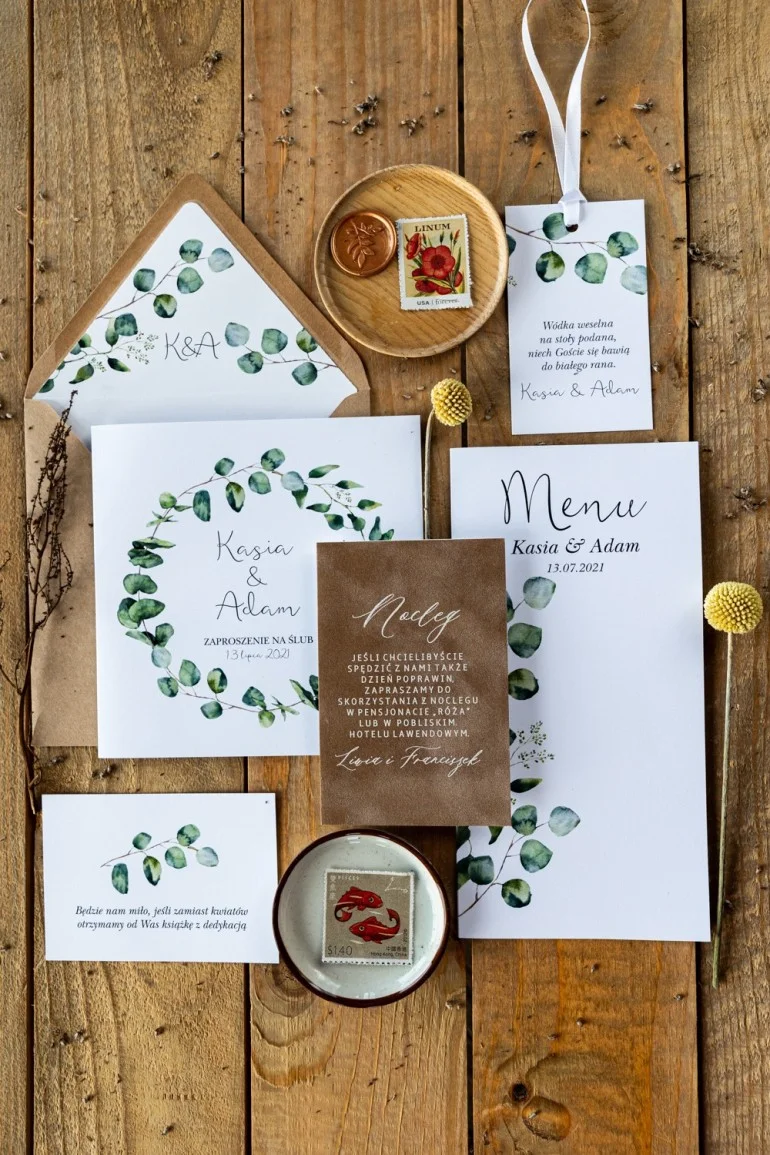
Eco-friendly Invitation with Greenery Styling | Wedding Invitations in eco-friendly envelope | Kalia no. 2
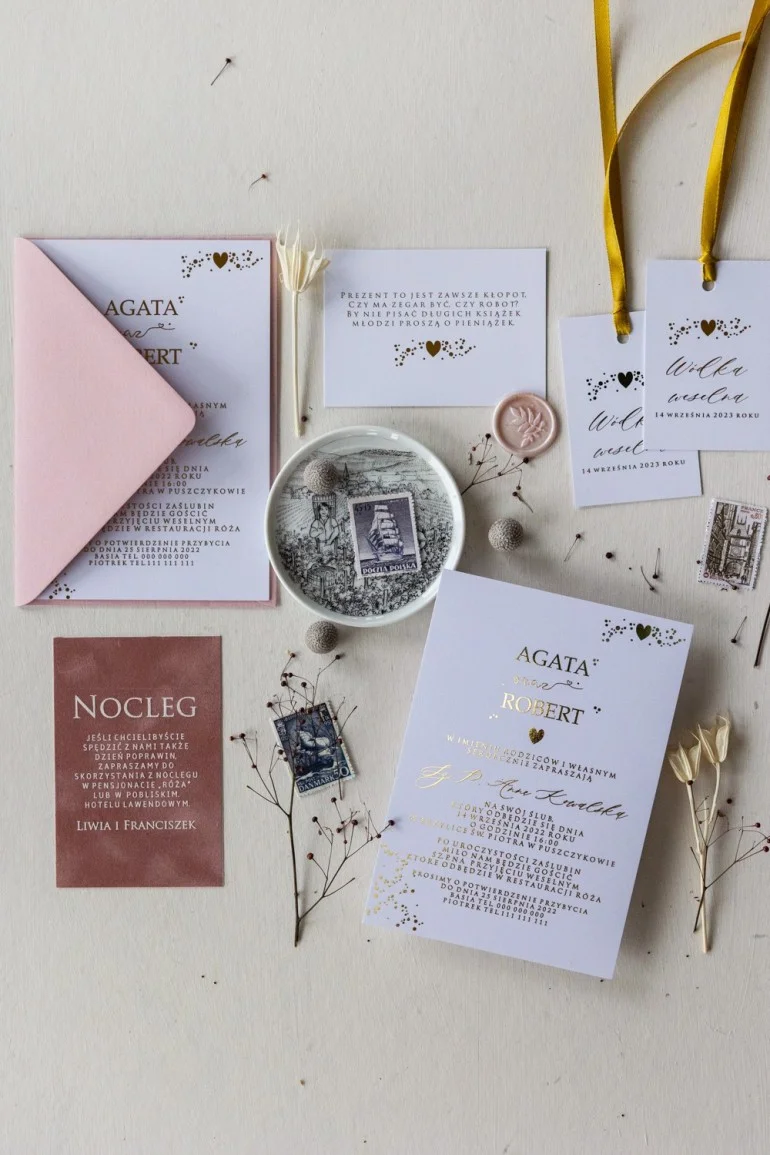
Subtle Wedding Invitations, Minimalist Design with Gold Elements | Simple no. 3
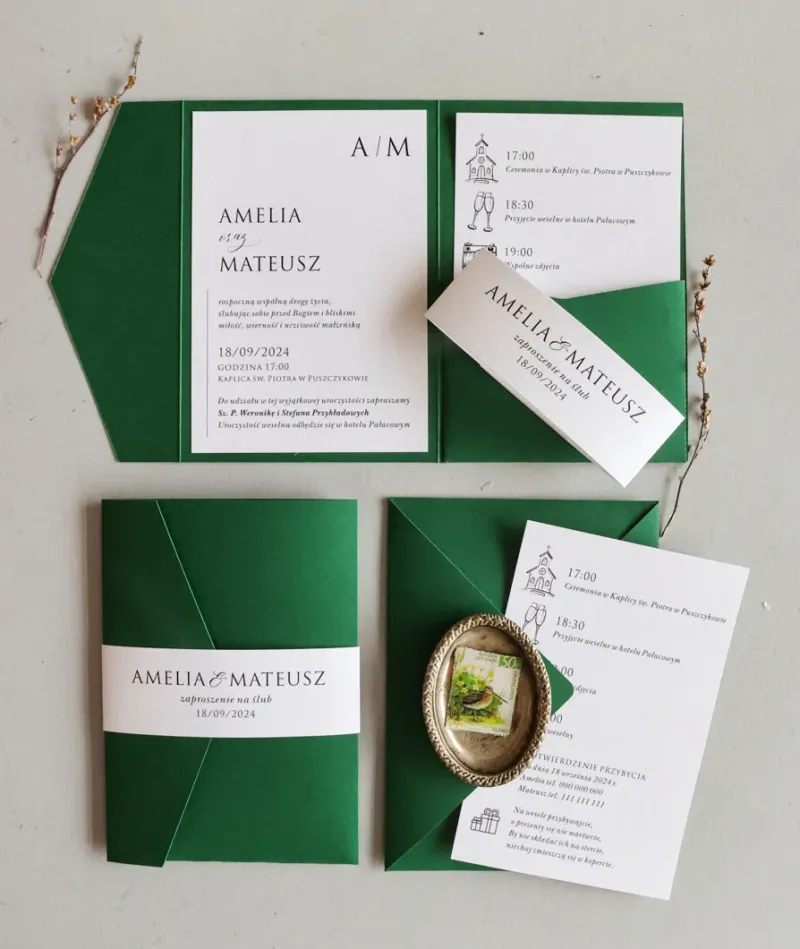
Elegant Wedding Invitations in Bottle Green Shades | Minimalist Design and Modernity | Kraft no. 10
Wedding schedule and event coordination
Creating a detailed wedding schedule is a key element of the success of the entire celebration. Planning events step-by-step allows you to avoid chaos and ensures the fluidity of individual stages of the wedding. The schedule should include exact times for the start of individual attractions – from welcoming guests, through the first dance, to serving the cake and ending the wedding.
A well-thought-out wedding schedule should also include moments for speeches, toasts, and traditional games. It is key to plan enough time for each event so that guests have the opportunity to have fun between individual attractions. Event coordination is a task often entrusted to the person responsible for conducting the wedding – whether it's an MC, DJ, or toastmaster. This person ensures that all elements proceed according to plan and that guests are properly informed about upcoming attractions.
We must not forget organizational trifles, such as place cards, which make it easier for guests to find their place at the table, or guest favors, which are a nice gesture towards loved ones, expressing gratitude for their presence on this important day.
In summary, organizing a wedding reception is a process that requires precision and good logistics. Remember that the key to a successful celebration is a well-planned schedule, appropriately chosen attractions, and a setting that will reflect your dreams and the character of your love.
Formalities after the wedding: what needs to be done?
Surname change and document updates
One of the most important steps after getting married is the decision about your surname. Many people decide to change their surname after the wedding, which involves the need to update many documents. If one of the spouses decides to take the other's surname, this process should be started as soon as possible after the ceremony. Surname change requires submitting an application for new documents that will reflect the new legal status.
The first step is replacing your ID card. To do this, you must submit an application at the municipal or city office along with the marriage certificate, which confirms the surname change. This procedure usually takes up to 30 days, and a new ID costs about 30 PLN. The next step is updating your passport and driver's license. Replacing a passport is a slightly more complicated process that can take up to 60 days, and the cost of a new document is about 140 PLN. A new driver's license, on the other hand, can be obtained for about 100 PLN, and the procedure usually takes from 14 to 30 days.
We must not forget about changing your surname in other important institutions, such as banks, insurers, and social security offices. Updating this data is necessary for proper functioning in the new marital legal status. It is also worth taking care of updating data at work, children's schools, or other places where you are listed under your old surname.
Legal and financial issues after the wedding
Getting married also involves several significant changes in legal and financial matters. The most important of these is community of property, which by law arises automatically at the moment of marriage. This means that all goods and liabilities acquired after the wedding become shared. The exception is those acquired before marriage or those inherited or gifted individually.
If spouses prefer to manage their finances separately, they can enter into a prenuptial agreement, i.e., a marriage contract regulating separation of property. A prenuptial agreement can be drawn up both before the wedding and during the marriage, and its conclusion requires a visit to a notary. It is worth thinking about this decision carefully, as it has far-reaching consequences, especially in the case of running a joint business, purchasing real estate, or inheritance.
Other legal issues that are worth considering after the wedding include changing data in land and mortgage registers, updating health and motor insurance, as well as potentially writing a will if the spouses want to regulate inheritance matters in a way other than provided by law.
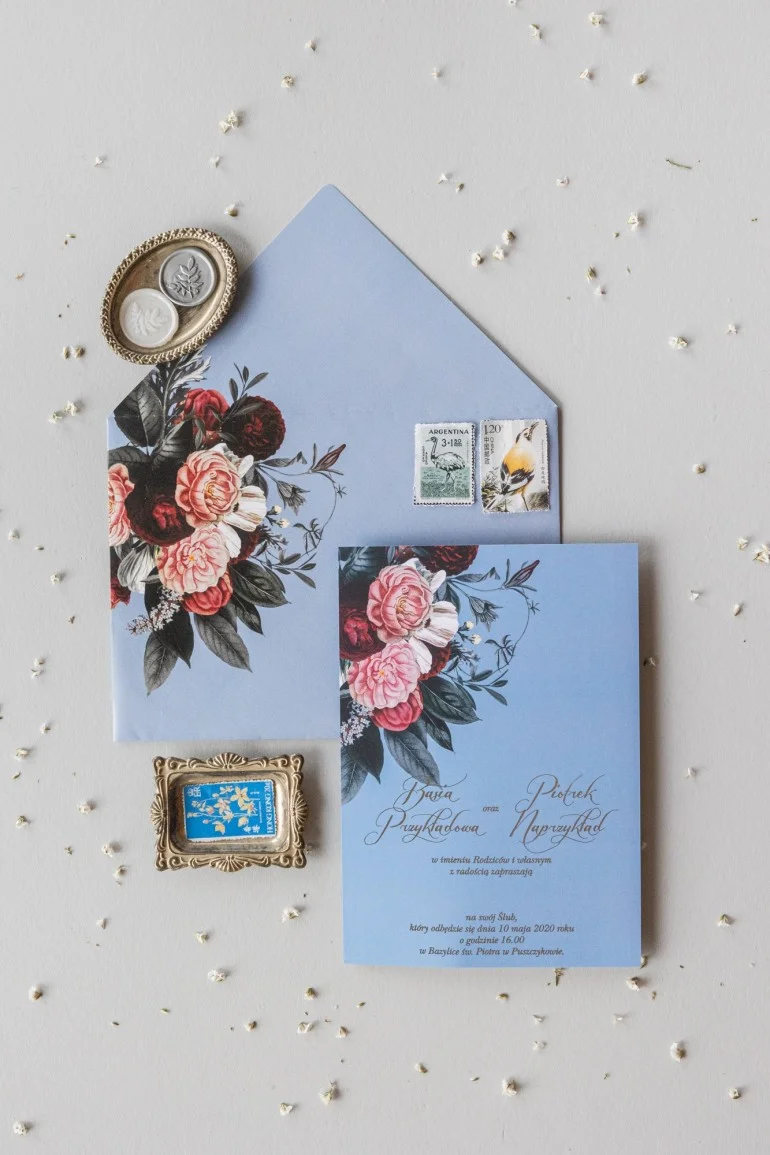
Glamour Wedding Invitations with Silver text and burgundy-pink bouquet | Elegant wedding invitations | Pastel no. 1
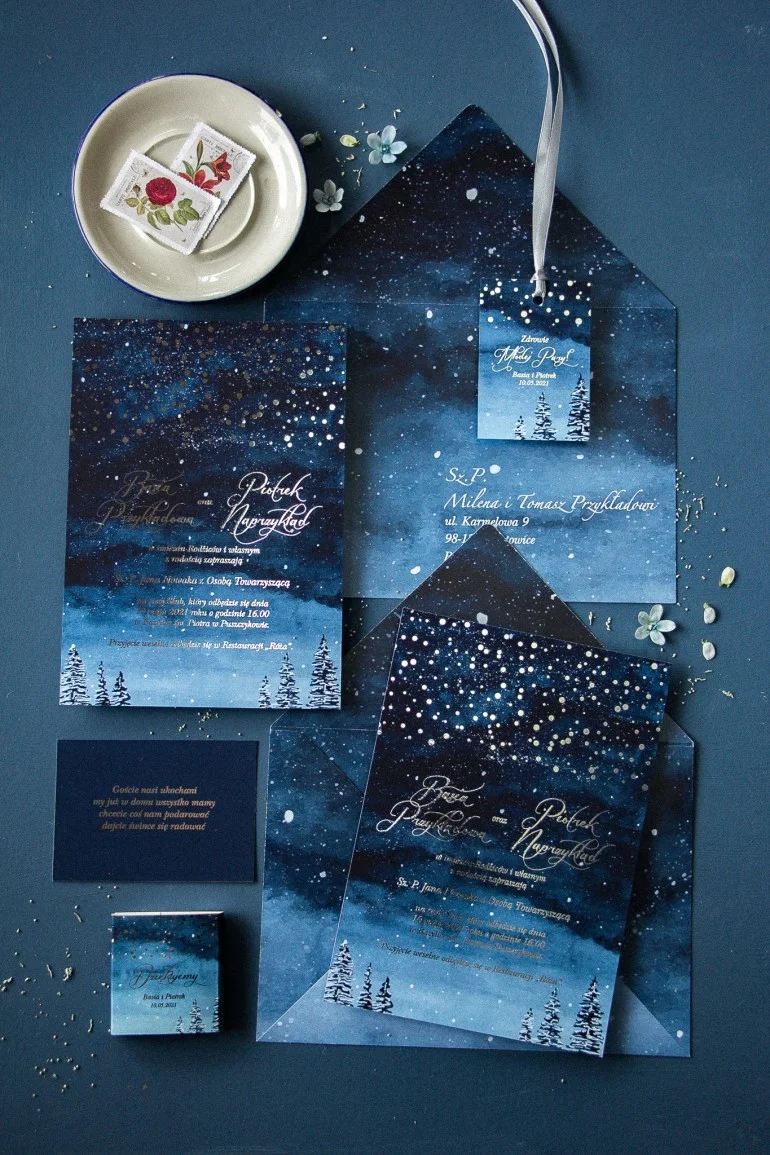
Winter Themed Wedding Invitations with Silvering | Pastel no. 6
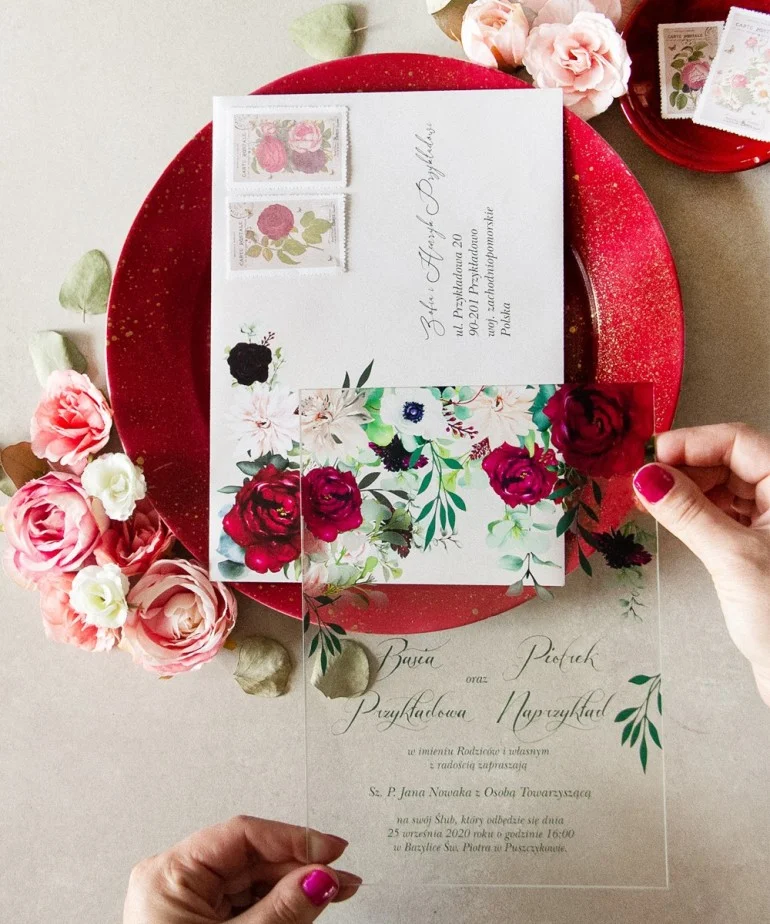
Elegant Glass Wedding Invitations with Floral Motif | Korani no. 4
Guest favors and post-celebration reflections
After the great emotions associated with the wedding and reception, it is worth finding a moment for reflection and expressing gratitude to everyone who participated in this special day. Guest favors are a beautiful gesture that expresses gratitude for presence, support, and warm wishes. This can be done in many different ways – from classic thank-you cards and small gifts to elegant keepsakes that will remind you of this special day.
More and more couples decide to give personalized thank-you gifts, such as handmade cards, sweet treats in the form of pralines, honey, or cookies, as well as small potted plants that symbolize growing love. Small gifts given at the end of the wedding are a great way to express gratitude to guests for participating in the celebration and celebrating this important moment together.
It is also worth taking care of summarizing the event. Sending thank-you cards, as well as creating a shared photo album, is a great opportunity to recall the most beautiful moments once again. It is also good to organize a meeting with the closest family to watch the wedding video or photo album together. Such a return to memories is a great way to extend the emotions that accompanied the newlyweds on their wedding day.
Thank-you gifts are also a time for reflection – it's a moment to remember what was most important in organizing the wedding and reception, what went best, and what could be done differently. Such thoughts can be a valuable lesson for the future, especially if the couple plans further large family events.
Tips and advice for future newlyweds
How to avoid stress during wedding organization?
Organizing a wedding is a process that requires not only careful planning but also great resistance to stress. In the rush of duties, it's easy to forget that a wedding is primarily a unique event that should be enjoyed, not overwhelming. One of the most important steps that can help avoid stress is starting preparations well in advance. The more time you have to refine the details, the lower the risk that something will be overlooked.
Delegating tasks is another key skill that allows for distributing duties among family members, witnesses, or professional service providers. Trusting the people who help with the organization is one of the foundations of success. It is worth using the services of a wedding planner who will support you in coordinating the entire event, especially if you are planning a larger celebration.
Creating an action schedule is extremely important – it is worth drawing up a detailed plan several months before the wedding, and then successively checking off completed tasks. Also, remember that during the wedding itself, it is worth surrendering to the moments and enjoying every minute. Set priorities – not everything has to be perfect, but your shared happiness is the most important thing. On your wedding day, find a moment for yourselves to calm down and remember the special moment.
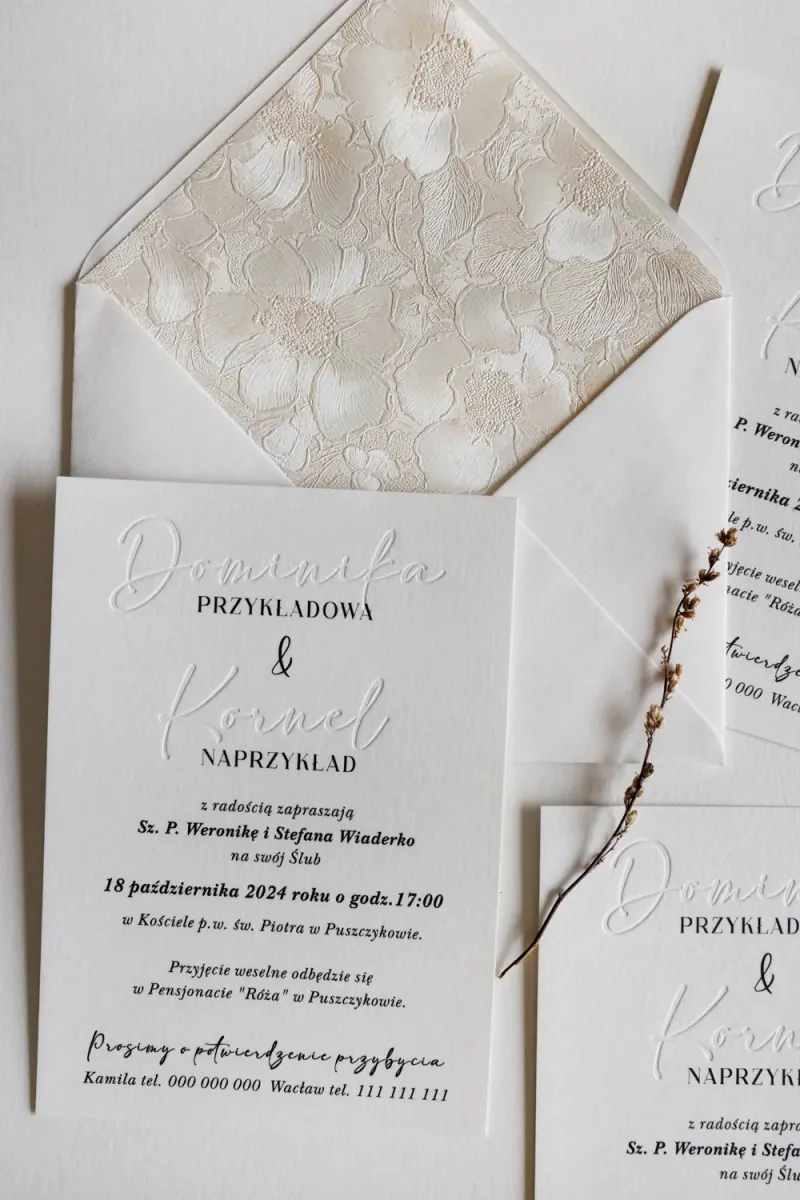
Elegant Wedding Invitations with Embossing | Wedding Invitations | Karmen no. 4
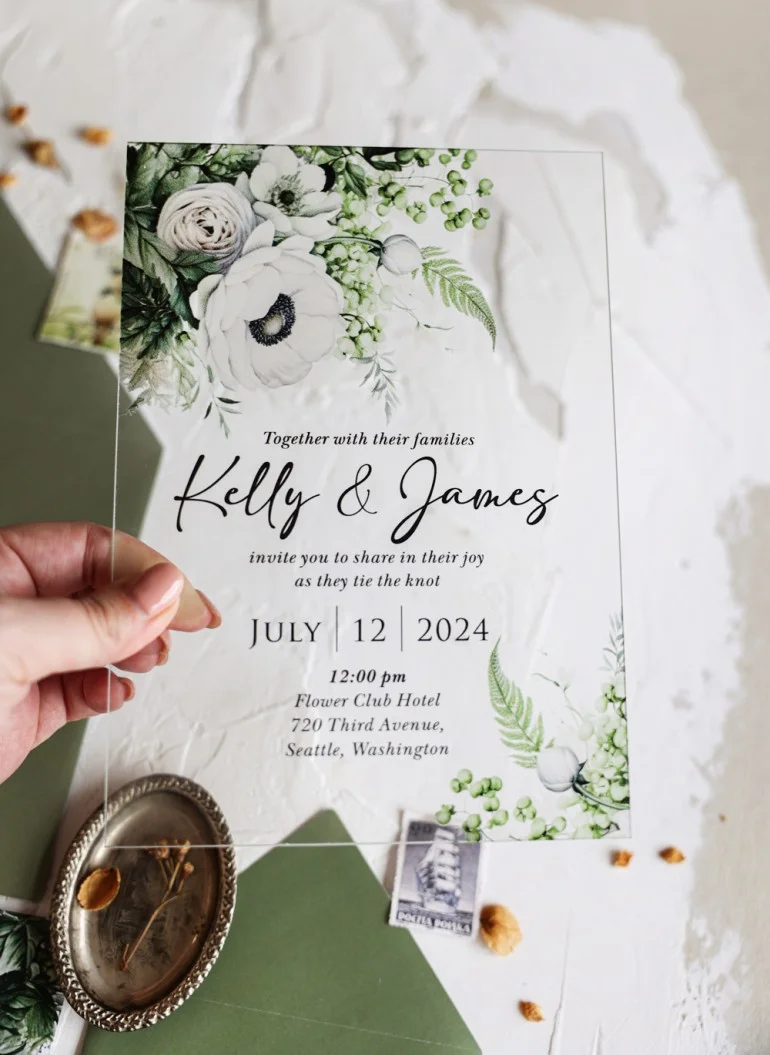
Subtle Glass Wedding Invitations with Floral Motif in Shades of White and Green | Korani no. 15
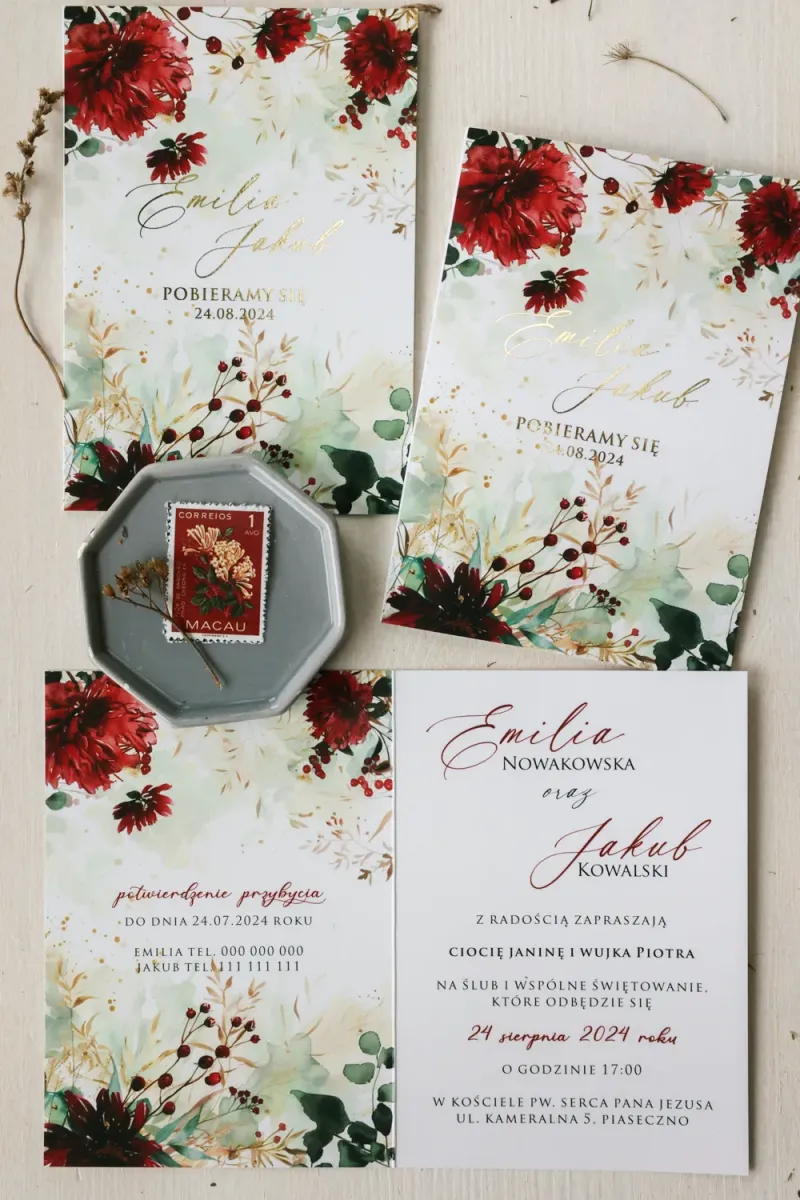
Wedding Invitation with Gold Accent and Red Flowers | Glamour and Boho Wedding Invitations | Ruskus no. 1
Most common mistakes and how to avoid them
Even the best-organized wedding can be prone to minor mistakes that can lead to unnecessary stress. One of the most common mistakes is booking wedding venues, music bands, or photographers too late. The best services are booked well in advance, so it's worth thinking about this at the beginning of your preparations. Avoiding this mistake will allow you greater flexibility in choosing suppliers.
Another problem can be underestimating the budget. Often, newlyweds focus on larger costs, such as venue rental or music, forgetting about smaller expenses that can significantly burden the budget in total. It is worth adding a financial reserve to your plan for unforeseen expenses.
A schedule that is too tight is another mistake that can be easily avoided. Give yourselves more time for preparations, photo sessions, and a moment to breathe. Planning minute by minute can lead to delays, and that generates stress. Creating a realistic wedding schedule with a time buffer will allow you to enjoy the day without feeling rushed.
It is also worth avoiding lack of communication with service providers. Every detail should be discussed with service providers to avoid misunderstandings. This includes not only caterers but also the DJ or photographer – make sure everyone knows your expectations.
Wedding inspirations and trends for the coming year
Each year brings new wedding trends that inspire couples to create unforgettable ceremonies. In 2024, minimalist style weddings will be fashionable, focusing on simplicity and elegance. Subtle, natural decorations based on greenery and whites, with additions in the form of gold accents, will enjoy great popularity. An important element will also be personalizing decorations – couples increasingly choose individual invitation designs, such as wedding invitations, and handmade accessories, such as place cards or guest favors.
In wedding fashion, dresses with simple cuts, with delicate embellishments, will continue to dominate. Brides increasingly choose raw elegance with the addition of lace or embroidery, which give the styling lightness. In 2024, creations in subtle shades of pink, beige, or pastel mint will also appear, breaking with traditional white.
Outdoor weddings are also gaining popularity, especially in the warmer months. Weddings in gardens, on beaches, or in rustic barns give the opportunity to organize a unique celebration in close proximity to nature. Natural decorations made of wildflowers, wooden elements, and light fabrics fit perfectly with such weddings.
When it comes to attractions, in 2024 there will certainly be more fun with technology. Photo booths, multimedia projections, or even drones for photographing and filming the wedding are becoming increasingly popular. Personalized keepsakes for guests, such as guest favors, will also remain on top, and the newlyweds increasingly choose small, original gifts that will remain in the memory of the celebration participants for longer.
Thank you for reading our article! If you are interested in other topics related to wedding organization, be sure to check out our blog, where you will find many useful tips and inspiration. We especially recommend:
- How to choose the perfect venue for an outdoor wedding? – Find out what to pay attention to when choosing a venue for an open-air celebration.
- Sweet favors for wedding guests – what to choose? – Get inspired by ideas for unique thank-you gifts for your guests.
- When to invite parents to the wedding? – A practical guide regarding important family issues when planning a wedding.
- Are place cards made for the newlyweds? – Answers to questions about place cards and their role at the wedding.
- How to write simple wedding invitations? – Practical tips on how to create elegant and clear invitations.
We encourage you to continue reading to plan every detail of your dream wedding!

Szymon Jędrzejczak
Wedding industry expert and stationery designer at Amelia-Wedding.pl. For years, she has been helping couples create unforgettable moments by combining tradition with modern design.