How long should you date before getting married?
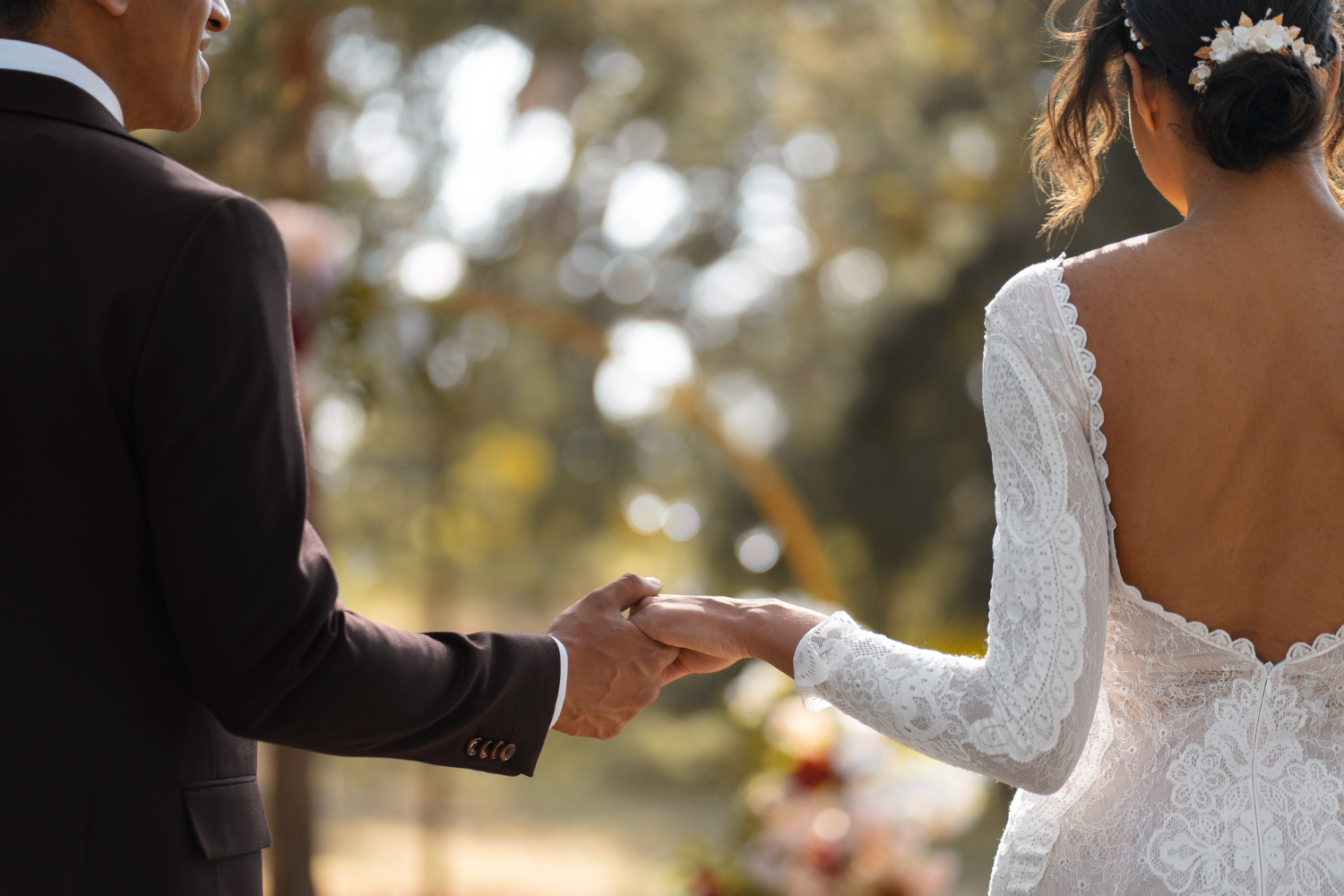
Different paths to marriage
How different couples make decisions about marriage.
Marriage is one of the most important moments in many people's lives, but the road that leads to the altar can be diverse. In Poland, as well as around the world, love stories take on many forms, and every couple has their own unique path leading to the moment of exchanging vows.
For some, marriage is a natural step after a few years of dating; for others, it is the fruit of love at first sight. Sometimes the story begins with a friendship that eventually turns into a deeper feeling. Other couples, thanks to modern technology, find each other in the online world, on dating platforms or social media, where the initial spark turns into full commitment. Traveling together, shared passions, life's challenges, and the desire to build something permanent are just some of the reasons why people decide to get married.
Reflecting on the diversity of paths leading to marriage, one can see that there is no single universal pattern or recipe for success. Polish weddings, although rich in tradition and culture, often blend traditional elements with modern trends, which reflects the diversity of the stories of couples who decide to take this step.
There is no single "perfect" time.
When is the "perfect" time for marriage? This is a question many of us ask ourselves. Is there a universal moment when everything should suddenly "click"? The answer is complicated because, in reality, there is no single perfect time. Every couple and every love story has its own rhythm and pace.
In Poland, traditionally, many couples decide to get married after a few years of dating. Often, this is the result of building a relationship together, planning for the future, or simply the desire to formally confirm their feelings to the community. However, just as many couples decide to take this step after a short time of knowing each other, feeling that this is the right moment. There are also couples who, despite many years of living together, do not feel the need to marry, believing that their feelings do not require formal confirmation.
It is important to remember that every relationship is different, and the "perfect" time for marriage is unique to each couple. What is right for some after a year might be right for others after ten years – and for some, it may never come at all.
What does marriage mean to you? How do you imagine this moment in your life? These are important questions worth asking yourself. Marriage is not just a wedding dress, rings, or a traditional Polish wedding. It is, above all, a decision to build a shared future, share moments of joy and sorrow, and most importantly – to be together, no matter what.
Table of Contents
- Different paths to marriage
- Individual pace in a relationship
- Statistics: Average relationship duration before marriage
- External factors influencing the decision
- The importance of maturity in a relationship
- Preparation for marriage
- The impact of age on the decision
- Relationship length vs. marriage quality
- The importance of intuition and listening to yourself regarding wedding decisions
- Summary: Your own time
Individual pace in a relationship
How different couples develop at different speeds.
In today's world, where the topic of relationships is widely discussed in the media, movies, and even wedding blogs, it is easy to fall into the trap of comparison. However, the truth is that every relationship is unique and develops at its own pace. Different couples develop at different speeds, and what is good for some does not necessarily have to suit others.
Under the influence of social media, many of us feel pressure to follow certain "standards" in a relationship. If a couple we follow on Instagram is planning a wedding after six months of dating, it might seem like we should follow that path too. However, every relationship has its own dynamics, and the individual pace of developing bonds and building trust is the key to a long-lasting and happy relationship. Shared experiences, challenges, and the way of communicating are factors that influence the pace at which a relationship develops.
While traditional Polish weddings are full of symbols and traditions emphasizing the importance of marriage, modern couples are increasingly approaching the topic of weddings with a great deal of individualism. There is no single ideal scenario, and the key is understanding yourself, your partner, and the pace at which both parties want to grow.
Examples of relationships with different development paces.
Regardless of whether we observe the relationships of famous couples or our friends, different paces at which relationships develop are noticeable. Anna and Marek, although they met on a popular dating platform and quickly realized they had a lot in common, decided not to rush the decision to marry. They spent several years together before deciding to move in, and a few years later, the decision to marry was made. Meanwhile, Julia and Tomasz, after a few months of dating, decided they were ready to exchange vows.
In Poland, wedding traditions are deeply rooted in culture, but modern couples often approach them with a modern perspective. There are known cases where couples decide to marry after more than a dozen years of being together, while others vow their love after only a few months of knowing each other. Sometimes it is the result of certainty about the choice of partner, other times the desire to experience the adventure of marriage together and on an equal footing with other couples.
Such differences in the pace of relationship development are natural. Every love story is different, and what is appropriate for one couple does not have to be the same for another. It is important not to compare your relationship with others, but to focus on what is best for both parties.
The impact of individual pace on the decision to marry.
When we talk about the individual pace in a relationship, we often refer to the dynamics of the relationship, building trust, or planning the future together. But how does this affect the decision to marry in the context of Polish wedding traditions?
For many couples, the decision to marry is a natural step in the development of the relationship. However, the pace at which this happens depends on many factors. Sometimes these are shared plans, dreams, or challenges that the couple wants to face as a married couple. Other times, it is simply the certainty that both sides are ready for the next stage. We cannot forget about practical aspects, such as planning a wedding, which in Poland can be conditioned by traditions and family expectations.
However, regardless of the pace at which the relationship develops, the most important thing is that the decision to marry is mutual, thoughtful, and based on a deep understanding of each other. In the era of social media, where it is easy to compare yourself to others, it is worth remembering that every relationship is unique. The decision to marry should be made from the heart, not under the influence of social pressure or trends.
Statistics: Average relationship duration before marriage
Research on the average duration of a relationship before deciding to marry.
As we walk through the streets of Polish cities and pass wedding dress shops and wedding planning offices, we often ask ourselves: How much time do couples spend together before they decide to get married? Statistics and research conducted in Poland and around the world provide us with some answers. According to the latest studies, the average engagement period is 2 to 3 years of being in a relationship. Of course, this is only an average, and many couples decide to marry after a few months, while others wait even 10 years or longer.
Data from Poland also shows that this trend may be culturally conditioned. In countries with more traditional values, such as Poland, a couple often decides to marry earlier than in countries with a more liberal approach to relationships. In Poland, where traditional values and family play an important role, marriage is often seen as a natural step in the lives of young people.
Analysis of factors influencing the length of a relationship before marriage.
Before we move on to analyzing specific decision-making factors, it is worth considering why different couples decide to marry at different times. Decision-making factors can be diverse and relate to both personal beliefs and life situations.
The most important factor is often age. Younger couples who are just beginning their adult adventure may want to wait with the decision to marry to focus on education or building a professional career. Older couples may feel that they already have a certain baggage of life experience and are ready for a faster decision to marry. Other factors include level of education, financial situation, and even cultural and religious beliefs. In Poland, where traditional values are deeply rooted, couples often feel social pressure to follow a certain pattern and not put off marriage for too long.
How different factors can affect the duration of a relationship before marriage.
Poland, as a country with a rich tradition and culture, has many factors that influence the life decisions of young people. When we talk about the duration of a relationship before marriage, we must realize the influence of traditional values on such decisions. In many Polish families, there is pressure for young couples to decide to marry quickly, especially if they have been in a relationship for several years.
However, modern Poland offers young people more choices. Education, career, travel – all this becomes part of the life of young Poles, which may influence the delay of the decision to marry. On the other hand, there are still traditional values that emphasize the importance of marriage as the foundation of a family. Therefore, some couples may feel that marriage is the next natural step in their lives, while others may want to wait until they are ready both emotionally and financially.
In summary, decision-making factors in the context of the duration of a relationship before marriage are complex and diverse. The key is understanding your own...
External factors influencing the decision
The influence of social and family pressure.
In many cultures, including Poland, marriage is not just a matter for two people in love, but also for the environment in which they live. Social pressure plays a key role in decisions regarding marriage. Communities where traditions and family values are deeply rooted often have clear expectations of young people regarding when and who they should marry.
The family, as the most important social institution, has a huge impact on the life decisions of young people. In many Polish families, there is an unspoken rule that after a certain amount of time in a relationship, a couple should decide to marry. These expectations can be a source of stress and uncertainty, especially if the couple is not yet ready for marriage but feels that "it is expected." Often, it is precisely the pressure from the family and the environment that is the deciding factor influencing the speed of the decision to marry, rather than the individual desires and needs of the couple.
Economics and financial stability.
Economics and financial stability are key factors influencing the decision to marry. In Poland, as well as all over the world, the costs associated with organizing a wedding and reception can be huge. They include not only the purchase of a wedding dress, renting a wedding hall, or paying for a photographer's services, but also many other costs that are not visible at first glance. For many couples, the decision to marry is synonymous with the need for saving and financial planning for many months, or even years.
Financial stability is often considered the foundation of a successful marriage. Joint budget planning, managing expenses, and saving for the future are challenges that await every couple. For many young people in Poland who enter adulthood in times of economic uncertainty, the decision to marry can be closely linked to their financial situation and sense of security.
Planning other important life events.
Marriage is not just a ceremony and a wedding party, but above all, a decision to live together. Therefore, many couples in Poland decide to postpone marriage, focusing first on other important events in their lives. This could be pursuing higher education, building a career, traveling, or realizing other dreams and passions.
Life planning is not an easy task, especially in today's times, when young people have so many possibilities before them. The decision to marry can be one of many important steps in a couple's life, but it does not necessarily have to be the first. Modern Poland offers young people more freedom in choosing their life path, which allows them to make more conscious and thoughtful decisions regarding marriage.
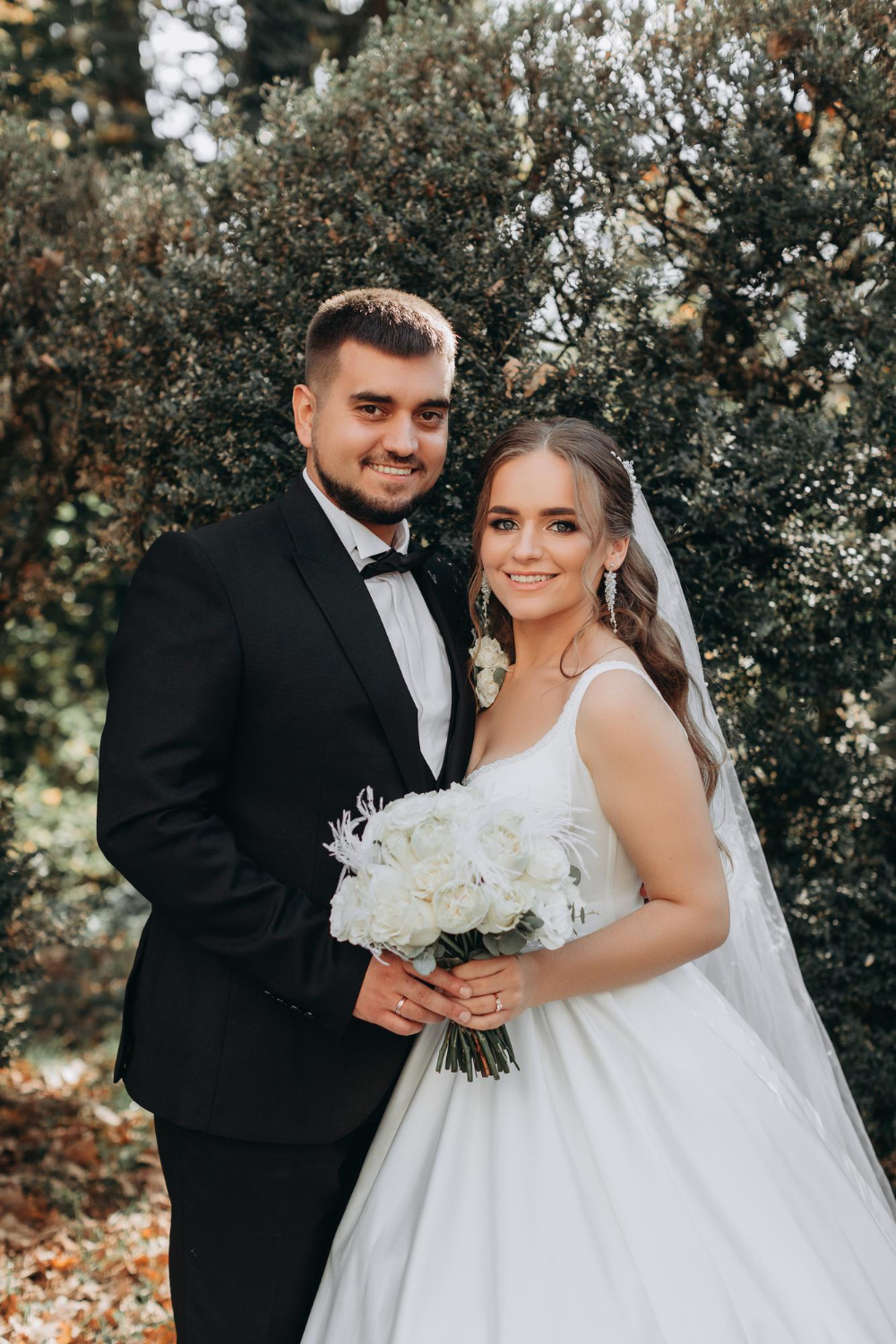
The importance of maturity in a relationship
How life experiences influence the decision.
Every relationship is a unique journey during which a couple goes through many life experiences. Shared moments of joy, sadness, successes, and failures shape their relationship and teach them how to deal with challenges. Life experiences play a key role in the process of maturing a relationship and are often a determinant of a couple's readiness to make the decision to marry.
Shared experiences, such as traveling, moving, career changes, or even losses in the family, teach partners mutual support, communication, and compromise. Thanks to them, a couple learns to understand each other, build trust, and strengthen bonds. Every new experience is an opportunity to get to know your partner more deeply, their reactions, emotions, and ways of coping in difficult situations. All these moments form the foundation upon which true love and a mature relationship are based.
The role of crises and difficulties.
Although every relationship dreams of eternal harmony, reality often brings various challenges. Crises and difficulties are an inevitable part of every relationship. Contrary to appearances, they are not solely a threat to the relationship. In reality, they can become a valuable lesson that will allow the couple to understand each other more deeply and strengthen the relationship.
Both smaller misunderstandings and more serious conflicts are an opportunity for learning and growth. By overcoming them together, a couple learns empathy, patience, and the ability to compromise. Difficult moments also remind us of the value of support, loyalty, and selflessness in a relationship. Therefore, for many couples, crises are a time for reflection and assessment of whether their relationship is strong enough to make the decision to live together forever.
Does the length of a relationship equal its maturity?
It is often said that the longer the relationship, the more mature it is. However, can the length of a relationship actually be a measure of its quality and depth? The answer to this question is not straightforward. Maturing a relationship is not a linear process that always occurs in the same way. Every relationship is different, and its maturity depends on many individual factors.
Some couples may mature to the decision to marry after a few years, while others need a decade to feel confident enough. The key is not so much time, but the quality of moments spent together, shared experiences, and above all, the readiness to make joint decisions and build a future. It is important not to compare your relationship with others and not to let stereotypes or social pressure dictate the pace of its development. What really counts is affection, communication, and the readiness to live together.
Preparation for marriage
The role of pre-marital counseling.
When a couple decides to get married, they often wonder if they are truly ready. In Poland, where wedding traditions are deeply rooted in culture, pre-marital counseling is gaining popularity. It is a form of support that helps couples better understand each other and prepare for life together.
Pre-marital counseling offers engaged couples sessions with professionals, such as psychologists or family therapists, who help analyze the relationship and identify potential areas of conflict. Thanks to this, the couple can learn more about their expectations, values, and behavioral patterns that may affect the quality of their future marriage. These classes can also cover practical aspects of married life, such as finances, family planning, or conflict resolution.
The importance of talking about values and the future.
Conversations about values are one of the most important aspects of preparation for marriage. Shared values form the foundation of every relationship and are the key to its durability and satisfaction. Before making the decision to marry, every couple should think about what is important to them, what their priorities are, and what dreams they want to realize in the future.
It is not just about big ideas, such as faith, family, or career. Everyday matters are also important, such as the approach to money, raising children, or spending free time. Open and honest conversations about these issues allow for avoiding many misunderstandings and conflicts in the future. Therefore, it is worth dedicating time to deep conversations and discussions that will help better understand each other and develop common goals.
How preparation can affect the timing of the decision.
Preparation for marriage is an investment in the future and can significantly affect the timing of the decision to marry. For some couples, intensive preparation can shorten the waiting time for the wedding because they gain certainty about their choice and are confident in their relationship. For others, it may be an opportunity for deeper reflection, which leads to postponing the wedding to a later time.
There is no single answer to the question of whether intensive preparation shortens or lengthens the waiting time for a wedding. One thing is certain - a well-prepared couple has a better chance of a successful and lasting marriage. Therefore, it is worth dedicating time to analyzing your relationship, talking about values, and participating in pre-marital counseling. In this way, the couple has a chance to better understand each other and build solid foundations for their future marriage.
The impact of age on the decision
How age can affect readiness for marriage.
Age is one of the most frequently discussed factors in the context of readiness for marriage. Modern society, including Polish society, wonders how age affects emotional maturity, financial stability, and readiness to make difficult marital decisions.
Younger people who are at the beginning of their life path may not possess full certainty about their life decisions, which results from a lack of experience. By reaching a certain age, we gain life experiences that shape our views, values, and expectations. In many cultures, it is believed that older people are more emotionally mature, which theoretically should favor a more stable marriage.
However, age itself is not the only determinant of readiness for marriage. Many young people possess a deep understanding of themselves and their partner, are responsible, and well-prepared for life together. Conversely, some people in middle age may still be searching for themselves, struggling with unresolved emotional or financial issues.
What is the optimal age?
It is a paradox that although many people look for the answer to the question about the optimal time to marry, there is no single answer. Each of us is different, and what is good for one person will not necessarily be appropriate for another.
In Poland, the average age of entering into a first marriage has increased slightly over the last few years. More and more people decide to marry after finishing their studies, gaining a certain professional or life stability. On the other hand, there is no shortage of couples who decide to marry while being very young and successfully build a life together.
The most important thing is that every decision is conscious and based on a deep understanding of yourself and your partner. Instead of focusing on numbers, it is worth thinking about whether we are ready emotionally, financially, and socially to make such an important decision.
Examples of couples of different ages making the decision.
Anna and Jakub met in high school and at the age of 21 decided to marry. Despite their young age, their decision was conscious and thoughtful. Their shared values, dreams, and plans for the future allowed them to successfully survive difficulties and enjoy every moment spent together.
Katarzyna and Michał, on the other hand, met in college but decided to wait with the decision to marry until they turned 30. They wanted to gain some financial stability, travel, and gain new experiences before making such an important decision.
Beata and Tomasz married in their forties. Both had previous relationships and children. Their decision was based on a deep understanding of themselves and the desire to build a life together in full harmony.
These examples show that there is no single, universal path to a happy marriage. Age, although important, is not the only factor deciding on readiness to marry. It is important that every decision is conscious, based on mutual understanding and the desire to build a life together.
Relationship length vs. marriage quality
Does the length of a relationship before marriage affect the durability of the marriage?
When we look at the relationships around us, we often wonder if the length of a relationship before making the decision to marry has a real impact on its quality and durability. Modern couples often decide on a long engagement period or even living together "on a trial basis" before marriage. For many people, this is a way to get to know their partner more deeply before making the decision to live together.
But is there really a connection between the length of knowing each other and the durability of the marriage? On one hand, the length of the relationship can allow for a better understanding of the partner, their needs, expectations, and values. This allows for building solid foundations upon which the marriage is based.
On the other hand, some couples who decide to marry after a short time of knowing each other claim that their marriage quality does not differ from those who were together for many years before marriage. For them, shared values, commitment to the relationship, and readiness to work on the relationship are more important than the length of the relationship itself.
Research and expert opinions on the impact of relationship length on marriage quality
There is no doubt that the topic of the length of a relationship before marriage and its impact on the quality of marital relationships has long attracted the attention of scientists, psychologists, and experts in the wedding industry in Poland. Many of them have attempted deep analysis and research on this issue, striving for an answer that could serve as a guide for future spouses.
One of the better-known studies conducted in our country focused on analyzing the divorce rate among couples who were together for different amounts of time before making the decision to marry. The results were quite surprising to many. It turned out that couples who were in a relationship for at least three years before marriage were characterized by a lower tendency for divorce compared to those who decided to tie the knot after a shorter time of knowing each other. Experts, analyzing this data, suggest that such a period of time may allow partners to deeply get to know each other's characters, expectations, and dreams. This allows for building a stronger foundation before marriage, which in turn can translate into its greater durability.
However, although the length of a relationship before marriage is undoubtedly an important factor, many experts emphasize that it is not the only, or even necessarily the most important, indicator of the future quality and durability of a marriage. Communication in a relationship is one of the key elements of building a strong relationship. Couples who can openly talk about their feelings, needs, and also problems have a better chance of surviving difficult moments in marriage. Shared values are another pillar of a lasting relationship. When both partners share similar beliefs, life goals, or values, it is easier for them to agree on many issues, which in turn minimizes the risk of serious conflicts. Furthermore, the commitment of both parties to the relationship and the ability to deal with crises are just as important, if not more so, than the length of the relationship before marriage.
It is therefore worth remembering that although the length of a relationship may have some impact on the quality of marriage, there are other, equally important factors that are worth taking into account when planning a life together.
Real stories of couples as a point of reference.
Ewa and Marek met in high school and were together for 10 years before making the decision to marry. The long time allowing for shared experiences and challenges made their relationship stronger. Today, after 15 years of marriage, they are happy and claim that it was precisely this length of relationship before marriage that allowed them to build solid foundations.
Kasia and Piotr, on the other hand, met during vacation and after only six months decided to marry. Despite the initial concerns of family and friends, their marriage is strong and full of love. They claim that it is not the length of the relationship, but deep understanding and commitment to the relationship that are the key to a lasting marriage.
These two stories show that there is no single answer to the question about the impact of relationship length on marriage quality. Every couple is different, and what works for some may not work for others. The most important thing is that every decision is conscious, based on a deep understanding of yourself and your partner.
The importance of intuition and listening to yourself regarding wedding decisions
How can our intuition tell us when the right time is?
It is no secret that intuition plays an important role in our lives, often guiding us through important decisions and choices. In the context of the wedding industry in Poland, many engaged couples wonder when the right time is to say "I do" and commit to a loved one for life. Many times we hear the advice: "listen to your heart" or "trust your intuition." But how exactly can our inner wisdom help us with this?
Intuition, often called the "sixth sense," is our internal compass, a signal that tells us whether we are heading in the right direction. In the context of the decision to marry, our intuition can manifest in various ways: self-confidence, peace of mind, the feeling of the "rightness" of a given moment. Often it is a subtle inner voice that tells us whether we are ready for this step. Many couples, when deciding to marry, speak of a certain "glimpse" or "feeling" that now is the right moment. For some, it is a sudden epiphany, for others, a gradual sense of certainty.
The importance of being authentic to yourself and your partner
In a world where so many things are superficial, authenticity becomes a precious treasure. In a relationship, authenticity consists of being true to yourself and your partner. This applies to feelings, thoughts, desires, or fears. In the wedding industry in Poland, where many things are planned to the last detail, authenticity can be the key to a deep and lasting relationship.
Being authentic in a relationship means openness to true feelings, acceptance of yourself and your partner fully, without attempts to change or adjust to certain patterns. It also means the courage to speak about your feelings, even if they may be difficult to express. In many cases, it is precisely authenticity that builds a deep level of trust and intimacy in a relationship, which translates into the quality of the marriage.
Stories of couples who listened to their intuition
In Poland, as well as around the world, there are many stories of couples who, relying on their intuition, made the decision to marry. One such example is the story of Ania and Piotr. They met by chance at a wedding and immediately felt that they shared something special. Despite the skepticism of family and friends, who thought everything was happening too quickly, the couple decided to trust their feelings. After just a year, they decided to marry, and today, after ten years, they are happy spouses with three children.
Another example is the story of Małgosia and Krzysztof. They were together for many years, going through various ups and downs. Although many advised them to marry at the beginning of the relationship, both felt that they had to wait. When that "true moment" arrived, both knew that now was the right time. In their case, intuition told them that it was worth waiting and giving themselves time.
These stories show how diverse the experiences of couples who decide to marry can be. There is no single universal path or right time. The key is listening to yourself, your intuition, and being authentic to yourself and your partner.
Summary: Your own time
In today's times, when everything seems to be accelerating, your own time is becoming an increasingly valuable resource. Stop for a moment and think: what place does marriage occupy in your life? Is it a relationship in which you invest your time and energy, or do you treat it as something obvious, something that just is? Each of us needs a moment of reflection to better understand ourselves and our needs. Marriage is not just a relationship of two people, but also a fundamental pillar of our emotional, social, and cultural life. Therefore, it is worth dedicating a moment to think about what our approach to this unique relationship is.
A reminder that every couple is different and every decision is individual
In a world full of wedding guides, inspiration, and trends, it is easy to forget that every marriage is different. An individual decision regarding a wedding, reception, or even organizing life after the wedding should be a reflection of your values, dreams, and expectations. There is no single universal answer to the question of what an ideal marriage should look like. It is important that you always remember that what is good for one couple will not necessarily be appropriate for another. Take care of your relationship, guided by your heart and intuition, and not by what is currently "on trend."
Weddings and marriage are topics that evoke many emotions and thoughts. Therefore, it is so important to share your own experiences and opinions. When you share your story, you not only help others understand their choices but also build bridges between people who may have different approaches to marriage. We encourage you to share your thoughts, advice, and experiences about life together. Perhaps your story will be an inspiration for someone else?
If this article has inspired you, you will certainly be interested in other posts on our blog. Here are a few that are worth reading:
- Can you get married without notice?
- How to organize a humanist wedding?
- When to start handing out wedding invitations?
- What is most important in a marriage?
- What are the benefits of hiring a wedding planner?
Reading these articles will help you deepen your knowledge about weddings and marriage, and will also give you plenty of inspiration for your own reflections and decisions.