How to write a wedding invitation? Our guide
Introduction: Discover the Art of Writing Invitations
An invitation is more than just a simple informational document. It is a crucial communication tool that provides not only the details of an upcoming event but also expresses its atmosphere and essence. Whether it's for a wedding, a birthday, or a business conference, an invitation should always speak to the recipient and encourage attendance. That is why we invite you to discover the art of writing invitations in this detailed guide.
Understanding the purpose of an invitation is extremely important. In our wedding industry in Poland, wedding invitations are undoubtedly some of the most important ones you will ever write. They set the tone for the entire event and are the first official announcement of your wedding to your guests. Therefore, the wording of a wedding invitation is something that should definitely be well thought out.
In this article, we will show you how to prepare an invitation that not only conveys all the necessary information but also delights guests with its style and elegance. You will learn how to choose the right words, how to use the appropriate tone and style, and how to avoid common mistakes that could spoil the first impression. Regardless of whether you are organizing a modest party or planning a lavish ball, our tips will help you create an invitation that perfectly matches your event.
Knowledge about writing invitations is valuable not only for those planning a wedding. It can also be useful for people organizing various types of events – from family celebrations and business meetings to large conferences or events. A well-written invitation is the foundation of every successful event. After all, it is thanks to it that guests learn about the upcoming gathering and feel welcome.
Writing invitations is not just a creative process, but also a responsible task. For an invitation to fulfill its role, it must be thoughtful and well-planned. In this article, we will show you how to do it step by step. We will explain what to pay attention to, what elements are essential in every invitation, and what to watch out for to avoid mistakes.
When creating an invitation, you need to pay attention to many details. Is the invitation understandable to the recipient? Does it contain all the necessary information? Are the tone and style appropriate for the occasion? We will try to answer these and many other questions in this article.
Our guide is a collection of the most important rules and tips regarding writing invitations, which will help you prepare the perfect invitation for any occasion. Whether you are an individual or a business owner, you will find many practical tips here that will certainly make preparing invitations easier for you.
Remember that a well-written invitation is not just a way to convey information about an event. It is also a way to show your guests how much you care about their presence. By placing great importance on the invitation, you show your guests that they are important to you and that their presence at your event is valuable to you.
We invite you to continue reading and wish you an inspiring discovery of the secrets of the art of writing invitations. May each of your invitations be a small work of art that surprises and delights your guests.
Understanding the Purpose of an Invitation: Creating Perfect Communication
When we consider different types of invitations, understanding the purpose of each is key. An invitation is primarily a communication tool - it conveys essential information about an upcoming event while simultaneously creating a first impression and building expectations.
Wedding Invitations: The First Step in Wedding Planning
The main goal of wedding invitations is to inform guests about the details of the ceremony and the wedding reception. But that's not all. In the wedding industry, especially in Poland, invitations also serve many other functions.
Firstly, wedding invitations create the first impression of the style and tone of the entire wedding. They can be treated as a preview of what guests can expect at the wedding. For example, if the invitation is elegant and formal, guests will expect a traditional ceremony and a formal reception. Conversely, if the invitation is casual and informal, guests may expect a less traditional celebration and a more relaxed atmosphere.
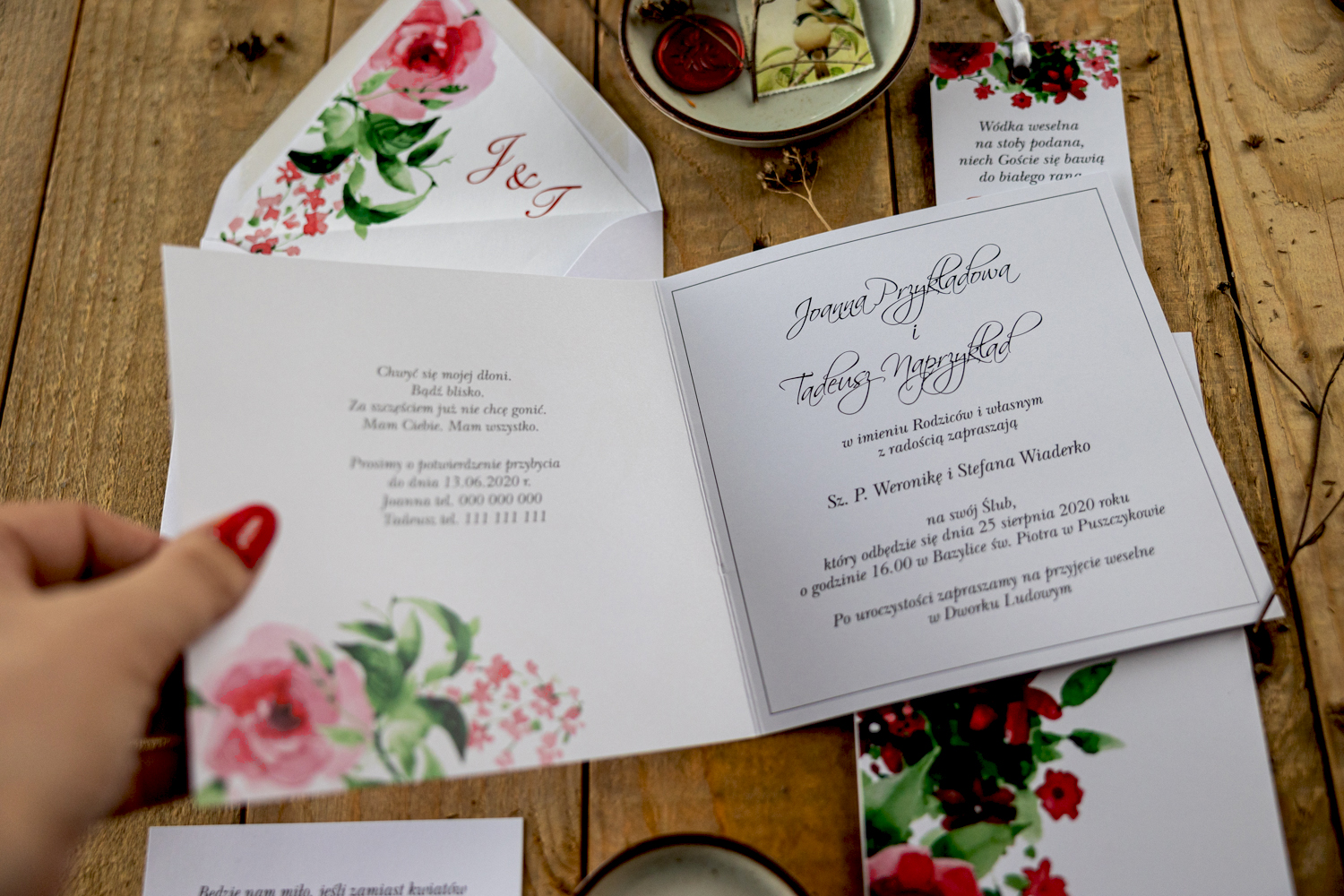
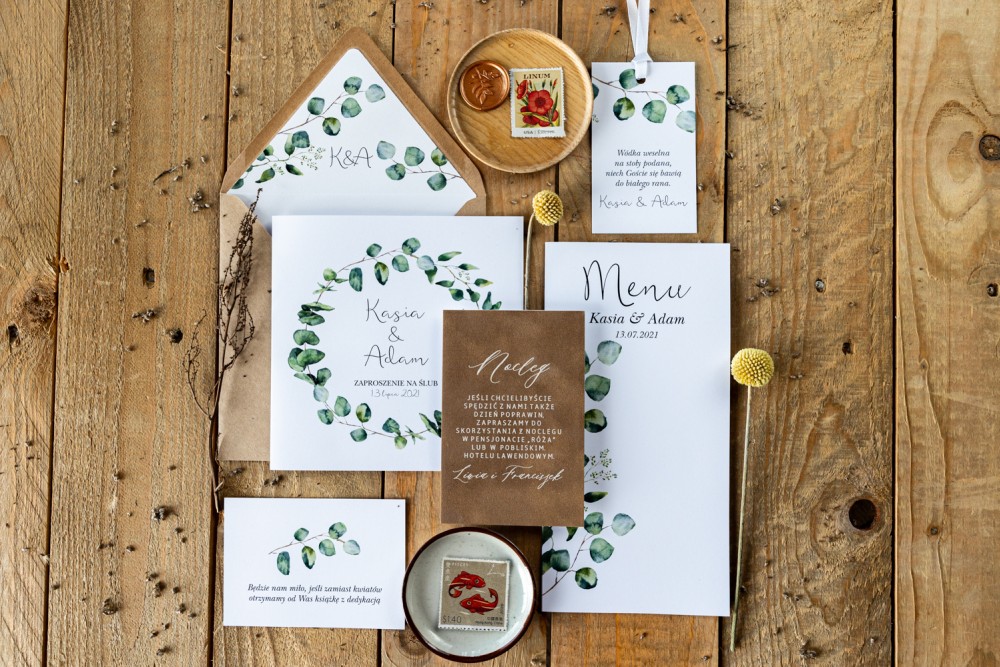
Secondly, wedding invitations are also a way to express the personality and taste of the bride and groom. The design and style of the invitation can reflect your personality, taste, and even interests. For example, if you are nature lovers, you can choose invitations with floral motifs. If you like traveling, you might opt for passport or airline ticket-style invitations.
Party Invitations: Setting the Mood
Invitations for various types of parties, such as birthdays, anniversaries, or themed parties, serve a similar role to wedding invitations but are usually less formal. Their main goal is to inform guests about the details of the party, such as the date, time, and location, as well as the party theme, if there is one.
Just like with wedding invitations, party invitations are also a way to set the tone and atmosphere of the event. For example, if you are organizing a costume party, the invitation can clearly express this through appropriate design and text.
Business Invitations: Professionalism and Details
In the case of business invitations, such as those for conferences, training sessions, or company meetings, the goal is slightly different. Here, precision of information and professionalism are key. Business invitations should contain all necessary details regarding the event, such as date, time, location, agenda, and any additional information, such as dress code requirements.
In summary, understanding the purpose of an invitation is crucial for its effectiveness. Remember that an invitation is not just a way to convey information - it is also a way to set the tone for the event and create a first impression. With this in mind, you can now easily create invitations that not only inform your guests about the event details but also delight them with their style and originality.
Key Elements of an Invitation: How to Create Excellent Communication
An invitation - regardless of the type of event - is not only an artistic expression of your style but, above all, an effective communication tool. Understanding the key elements of an invitation is essential to ensure guests have all the information they need and to encourage them to participate in the event. Let's take a look at what elements are necessary in every invitation.
Recipient: Who the Invitation Is Addressed To
At the very beginning, there should be the recipient of the invitation. Is it addressed to a specific guest or a broader group? Is each person receiving an individual invitation, or is it an invitation for a couple or a family? This information can significantly influence the reception and response to the invitation. In the wedding industry, especially in Poland, addressing invitations is often individual, which emphasizes a personal approach to each guest.
Date, Location, Time: Basic Information
The most important elements of an invitation are, of course, the date, location, and time of the event. Guests need to know when and where the event will take place so they can plan their time and arrange any necessary travel. This information should be provided in a clear and legible manner.
Theme: What Kind of Event It Is
Another key element is the theme of the event. Is it a wedding, birthday, anniversary, or business conference? Guests need to know what the event is so they can prepare accordingly. In the case of themed parties, it is also worth stating the theme so guests can adjust their attire or bring appropriate gifts.
Details: Additional Information
Depending on the type of event, additional information may be required. For example, in the case of a wedding, it is worth providing information about the dress code, gift registry, or details regarding accommodation. For conferences or business meetings, these might be details about the agenda, speakers, or registration requirements.
Contact and RSVP
At the end of the invitation, don't forget your contact details and information about confirming attendance - the so-called RSVP. This will allow guests to easily contact you if they have any questions and confirm their presence at the event.
In summary, an effective invitation must contain all the necessary information that will help guests easily understand what is happening, where and when, and what is expected of them. Remember that an invitation is your first chance to make an impression, so carefully consider each of these elements to create an invitation that will be not only beautiful but also functional.
How to Convey the Tone and Style of an Invitation: Perfecting the Art of Communication
When creating an invitation, especially in the context of the wedding industry in Poland, it is crucial not only to convey the necessary information but also to capture the right tone and style. It is precisely the tone of the invitation and its style that largely determine the guests' expectations regarding the upcoming event.
Formal or Informal: Choosing the Tone
The first step in adjusting the tone and style of an invitation is understanding the nature of the event. Is it a formal occasion, like a traditional Polish wedding, or more of an informal gathering, like a birthday party or a family picnic? Formal invitations usually use more official language and traditional polite phrases, while informal ones can be more relaxed and casual.
Expressing Personality: The Style of the Invitation
The style of the invitation is more than just a choice between a formal and informal tone. It is also an opportunity to show your personality and creativity. In the wedding industry, where invitations are often the first business card of the bride and groom, the style of the invitation can reflect your individual tastes and interests.
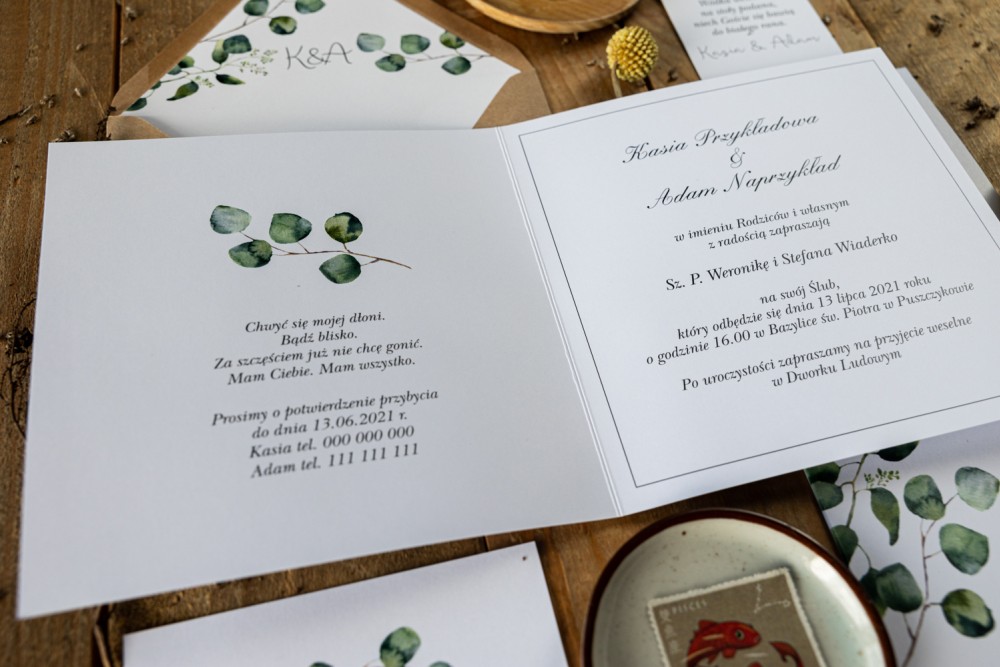
This can include the choice of color palette, typography, illustrations, and even the materials on which the invitation is printed. Is it a traditional, romantic invitation in pastel colors, or perhaps a modern and minimalist invitation in black and white? Does it have hand-drawn illustrations, or is it decorated with gold foil stamping? Each of these choices conveys something about the tone and style of the event.
Style Consistency: Cohesion in Communication
Once you have established the tone and style of the invitation, it is important to maintain consistency across all elements of the event. In the context of a wedding, this means that the style and tone of the invitation should be consistent with the style and tone of the ceremony, the reception, and even the wedding website or other informational materials.
In summary, a well-thought-out tone and style of an invitation are crucial for creating the right expectation and atmosphere for your event. Remember that an invitation is not just information - it is also an expression of your personality and a foretaste of what is to come.
Instructions for Responses: How to Ask for RSVP
In the world of event planning, especially in the context of the wedding industry in Poland, one of the key elements is confirming attendance. In English, the abbreviation "RSVP" is used, which comes from the French "répondez s'il vous plaît" and means "please respond". This section of the invitation is essential for effective communication with guests and helps with event logistics.
How to Ask for Confirmation
The first thing to include is how to phrase the request for confirmation of attendance. For formal events, such as weddings, traditional phrasing may be most appropriate. You could, for example, write "Please RSVP by [date]", providing a specific deadline by which guests should respond.
For less formal events, you can use a more casual form. For example: "Let us know if you will be celebrating with us!" or "We look forward to your response!".
Where to Place Confirmation Information
Information about confirming attendance should be placed in a visible spot on the invitation, but usually, it is at the end. This way, guests can first familiarize themselves with the event details and then see how they can confirm their presence.
How to Respond: Different Methods of Confirmation
Depending on the type of event and your preferences, you can offer guests different methods of confirming attendance. Traditionally, guests respond by sending back a response card. However, nowadays, electronic methods of confirmation are increasingly used, such as email, a form on a website, or even a response via social media.
Remember to clearly indicate which confirmation methods are available and how to use them. For example, if you prefer confirmation via email, make sure you provide your email address and clearly state that guests should send their confirmations there.
In summary, the request for confirmation of attendance is a key element of every invitation. It ensures effective communication with guests and helps in efficient event planning. Remember to phrase your request in a clear and understandable way, and adjust it to the tone and style of the rest of the invitation.
Examples and Templates: Inspiration for Your Invitation
Creating invitations is an art that requires both precision and creativity. The right use of words, the choice of tone and style, and the ability to encourage guests to confirm their attendance - all of this is of great importance. But how do you transform these elements into an effective invitation? Often, the best solution is to use examples and templates that can be customized to your needs. This makes the process of creating an invitation much simpler.
In the wedding industry in Poland, where individuality and originality are valued, there are various examples of invitations and invitation templates available. These inspirations help future Brides and Grooms create invitations that perfectly match their style and personality. That is why today we would like to present a few of them.
Example 1: Traditional Polish Wedding Invitation
Traditional Polish wedding invitations are often characterized by elegance and class. Typical of them are formal phrases, beautiful typography, and references to the religious aspects of the wedding. When choosing this type of invitation, remember to include all key information, such as the date, location, and time of the ceremony, as well as instructions regarding confirmation of attendance.
Specific text and examples of such an invitation can be found on the Amelia-Wedding website.
Example 2: Modern Polish Wedding Invitation
Modern wedding invitations combine tradition with a modern approach. They may contain informal phrases, creative graphic elements, and even references to the couple's interests. As with traditional invitations, it is crucial to include all necessary information, but in a way that reflects the couple's individual style.
To find inspiring texts and examples of modern wedding invitations, visit the Amelia-Wedding website.
Every couple is different, and a wedding invitation should reflect this uniqueness. By choosing the right style and tone of the invitation, you can create a unique and personal invitation that will surely delight your guests. Remember that the invitation is the guests' first contact with the event, so it is worth ensuring it is the best it can be. Examples and templates are a great starting point, but don't be afraid to add your own unique elements!
Mistakes to Avoid: Rules for the Perfect Invitation
Creating an invitation, especially one as important as a wedding invitation, is a process that can be full of pitfalls. Mistakes in invitations can lead to misunderstandings, confusion, and even guest absences. Therefore, it is worth knowing the most common mistakes so you can prevent them. Below, we present the most important rules that will help you avoid typical mistakes when creating invitations.
Mistake 1: Missing key information
Key information, such as the date, location, time, and theme of the event, is absolutely essential in every invitation. Omitting these elements can lead to misunderstandings and guest confusion. Therefore, always check if your invitation contains all the necessary details.
Mistake 2: Unclear instructions regarding confirmation of attendance
Instructions regarding confirmation of attendance, also known as RSVP instructions, should be clear and precise. Ambiguities in this matter can lead to problems with guest counts and logistics. Make sure guests know how and by when they should confirm their presence.
Mistake 3: Too much information
While missing information is a mistake, too much information can also be problematic. An invitation should be concise and convey only the most important information. Too much text can be tiring for the eyes and cause guests to miss key information.
Mistake 4: Mismatching the tone and style to the event
The tone and style of the invitation should reflect the nature of the event. An invitation to a formal event should be formal, while an invitation to an informal event can be more relaxed. Remember that the invitation is the first impression guests have of your event, so it is worth making it consistent with its character.
Creating an invitation is not an easy task, but it is certainly achievable. By remembering these mistakes and tips on how to avoid them, you will certainly create an invitation that will delight with its precision and originality. Above all, remember what is most important - an invitation is an expression of your joy and desire to share an important moment with your loved ones.
Summary: The Key to Success in Writing Invitations
Summing up our journey through the world of invitations, it is worth recalling a few key points that will help you in creating unique and unforgettable invitations, regardless of the occasion. Writing invitations can be a demanding task, but with the right knowledge and tools, it can become a real pleasure.
At the very beginning, you must understand the purpose of the invitation. Is it a formal ceremony, like a wedding, or a more casual occasion, like a house party? Guided by the purpose, it is easier to focus on the right elements and create something that truly fits the atmosphere of the event.
Next, remember the key elements of an invitation, such as the date, location, time, and theme of the event. This information should always be clear and easily understandable for guests.
The tone and style of the invitation should reflect the nature of the event. An invitation to a formal event should be formal, while an invitation to an informal event can be more relaxed.
When you invite guests, make sure you provide clear instructions regarding confirmation of attendance. This will allow you to better plan the event logistics.
Remember that examples and templates can be a great starting point. You can use available online resources, such as wedding invitation interiors or interiors and texts for wedding invitations and accessories, but don't be afraid to add your own unique elements.
Ultimately, it is worth remembering the mistakes to avoid. Always check if all information is correct, clear, and consistent with the tone and style of the event.
Writing invitations is an art that requires both precision and creativity. But with the right preparation and attention to detail, you will certainly create invitations that will impress your guests and make your event truly unforgettable.
Conclusion: Your Turn to Create the Perfect Invitation
At the end of this comprehensive guide, we would like to encourage you to put the knowledge you have gained into practice. Now that you understand how to compose an invitation that reflects the essence of the event and touches the hearts of your guests, it's time to create your own one-of-a-kind invitation.
We encourage you to experiment with various invitation styles. Whether it's glamour, or perhaps invitations with gold foil, choose what best suits your style and the mood of the event.
Plan the process carefully. From the moment of choosing words that will touch the hearts of guests, through choosing a unique form, such as glass wedding invitations, to the decision about the timing of sending invitations.
Also, remember to elegantly add thank you gifts for guests. And consider what kind of thank you gifts will be most appropriate for your wedding; you can find inspiration on this topic here.
Wedding accessories are also an important aspect. For example, wedding place cards are subtle but influence the overall look of the celebration.
Also, think about other elements, such as the seating chart at the wedding, for which you can find practical tips and inspiration here.
Explore our blog, where you will find even more tips and inspiration, as well as information about modern alternatives to a traditional wedding, such as a humanist wedding.
Prepare your pencil, paper, open your laptop, whatever you prefer, and start creating. Your journey to creating an amazing, personalized invitation for that one unforgettable event has just begun. Discover your creativity, let your words speak, and create something unique. Happy creating!