Including Children from Previous Relationships in Your Wedding – How to Involve Them in the Ceremony and Reception
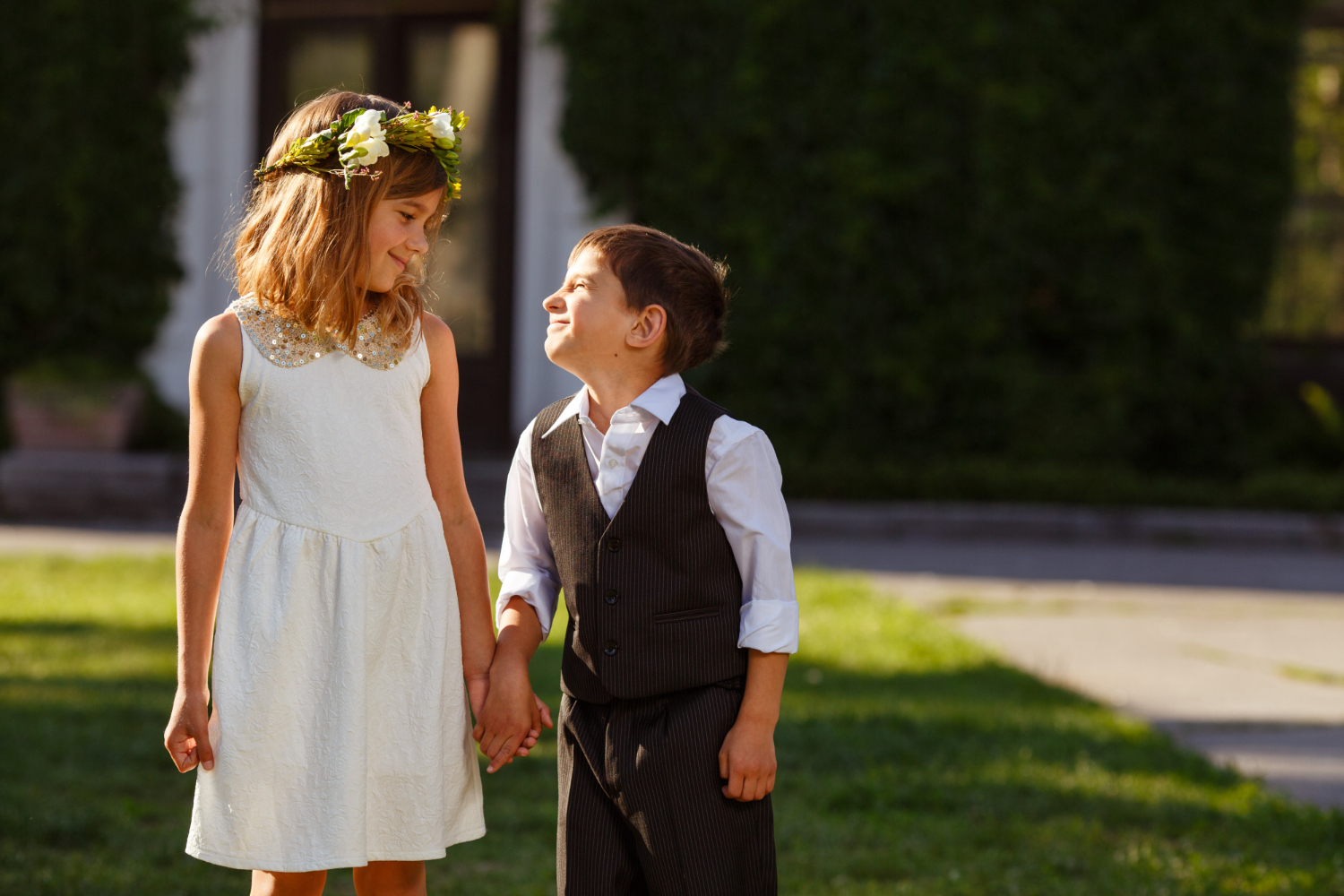
Involving Children in the Wedding Ceremony and Reception: Creating Shared Memories
Planning a wedding is a unique time full of excitement and challenges, especially when the future newlyweds already have children from previous relationships. In such a situation, the wedding day becomes a celebration not just for the two people in love, but for the entire new family. It's no wonder that couples want their little ones to feel important and loved during the ceremony and the wedding reception. After all, a wedding is a celebration of love and family – so it's worth ensuring that the youngest participants also have their part in it. Including children in the wedding ceremony and reception brings many benefits. Toddlers can bring authentic joy, smiles, and spontaneity, making the atmosphere more relaxed and heartfelt. The presence of children at a wedding symbolizes a new beginning and family unity, emphasizing that on this day you are celebrating not only the union of two adults but also the coming together of all family members. Moreover, children who feel involved in the preparations and the course of the ceremony are often calmer and less prone to whims – they know they play an important role and want to meet expectations. So, how can you make your children from previous relationships feel like a part of this big day? Below we present practical tips and ideas on how to include children in the wedding ceremony and reception in a natural, beautiful, and stress-free way. You will learn how to prepare a child for the change, what roles they can play during the wedding, what attractions to provide for the youngest guests at the reception, and how to use elements of the wedding setting – such as wedding invitations or decorations – to involve children in creating an unforgettable celebration.
Honest Conversation: Preparing the Child for a Parent's Wedding
Table of Contents
- Involving Children in the Wedding Ceremony and Reception: Creating Shared Memories
- Honest Conversation: Preparing the Child for a Parent's Wedding
- Children as Little Helpers in Wedding Preparations
- Wedding Ceremony with Children
- Child-Friendly Wedding: Attractions and Tasks for Kids
- Kids' Zone at the Wedding Reception
- Comfort and Safety of Children on the Wedding Day
- Emotional Support and Appreciating the Child
- New Family: Building Bonds After the Wedding
- Summary
Openness and Communication from the Very Beginning
Every child reacts differently to the news of a parent's planned wedding with a new partner. The key to success is an honest, calm conversation and an open approach. Inform your little ones about the engagement and wedding plans in a warm, safe atmosphere – preferably when you have plenty of time to talk and listen to their questions. Avoid surprises or announcing such an important change in passing. The child should feel that their feelings and opinion are important. Ask what they think about it, if they have any fears or doubts. Perhaps a younger child will ask: "Will you still be my mom/dad if you get married?". Then explain patiently that your love for the child will not change, and the wedding means expanding the family with a new, kind person, not losing anyone. It is also worth adjusting the way you talk to the child's age. Older children can be presented with the situation in a more mature way – emphasize that you understand their possible anxiety and that you also went through a breakup, but now you want to create a happy blended family together. For younger children, it's better to explain everything with simple words and visual comparisons. For example, you can compare the family to a jigsaw puzzle, where the new partner is the missing piece that completes the picture of your shared happiness. The most important thing is to reassure the child that they will always be loved and important, regardless of the changes.
Building Acceptance and Trust Before the Wedding
The conversation itself is not everything – equally important is the time preceding the wedding, which you can use to strengthen the bond between the child and the future stepfather or stepmother. If possible, plan shared activities as a trio (or in a larger group if both of you have children from previous relationships). These could be family outings to the park, board games, cooking together, or even a short weekend getaway. The goal is for the child to get to know the parent's new partner better on neutral ground and start feeling comfortable around them. Thanks to this, on the wedding day, the sight of mom or dad alongside a loved one will not be a stressful novelty for the toddler, but a natural continuation of an already built relationship. Patience and understanding are very important. Some children quickly accept the new situation, others need more time to get used to the idea of a parent's wedding. Respect the child's pace and their possible mixed feelings. Allow them to ask questions – even the difficult ones, concerning, for example, the role of the biological parent who is not participating in the ceremony. Answer honestly, but without negative emotions. For example, if the question arises: "Will my real dad/mom also be at the wedding?", you can explain that this ceremony is for you and your closest people, and the other parent certainly wishes you happiness (even if the real relationship is complicated – it's important that the child doesn't feel a loyalty conflict). Your attitude of peace and certainty will help the child gain confidence that everything will be fine.
Emphasizing the Child's Important Role in the Family
Children from previous relationships often fear that with a parent's new marriage, they will fall into the background. To dispel these fears, it's worth reassuring the child of their important place in the new family already at the wedding preparation stage. Tell the child how happy you are that they will be with you that day. You can look at photographs from your childhood together or discuss family traditions you'd like to continue after the wedding. Involve the child in coming up with small elements of the ceremony symbolizing family unity – for example, choosing a family motto to be read during the vows or a favorite song to be played at the wedding. A good idea is also to make a kind of declaration or promise to the child during the wedding. More and more couples decide on a special thank you or a short speech addressed to the children during the ceremony. This can be a few sentences where you reassure the child that they are still the "apple of your eye" and that from now on you are all creating one family together. Such a gesture, spoken publicly in front of witnesses, has great power – the child will feel pride and security, and the guests will certainly appreciate such a moving touch. If you don't feel comfortable with a speech, you can consider writing a letter to the child to be given on the morning of the wedding day or just before the ceremony. In the letter, you will express your feelings and reassure them that this day is important for all of you.
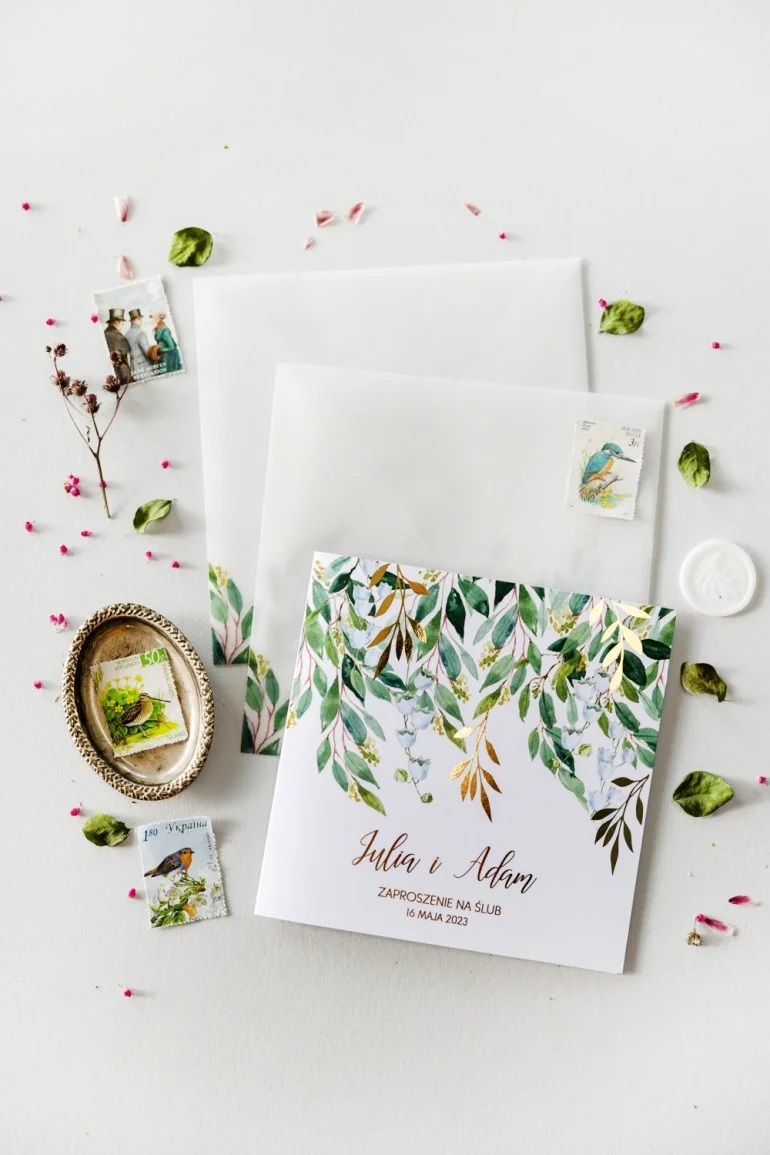
Wedding invitations with green leaf motif, gilded accents, classic | Gilded wedding invitations | Rubin no. 4
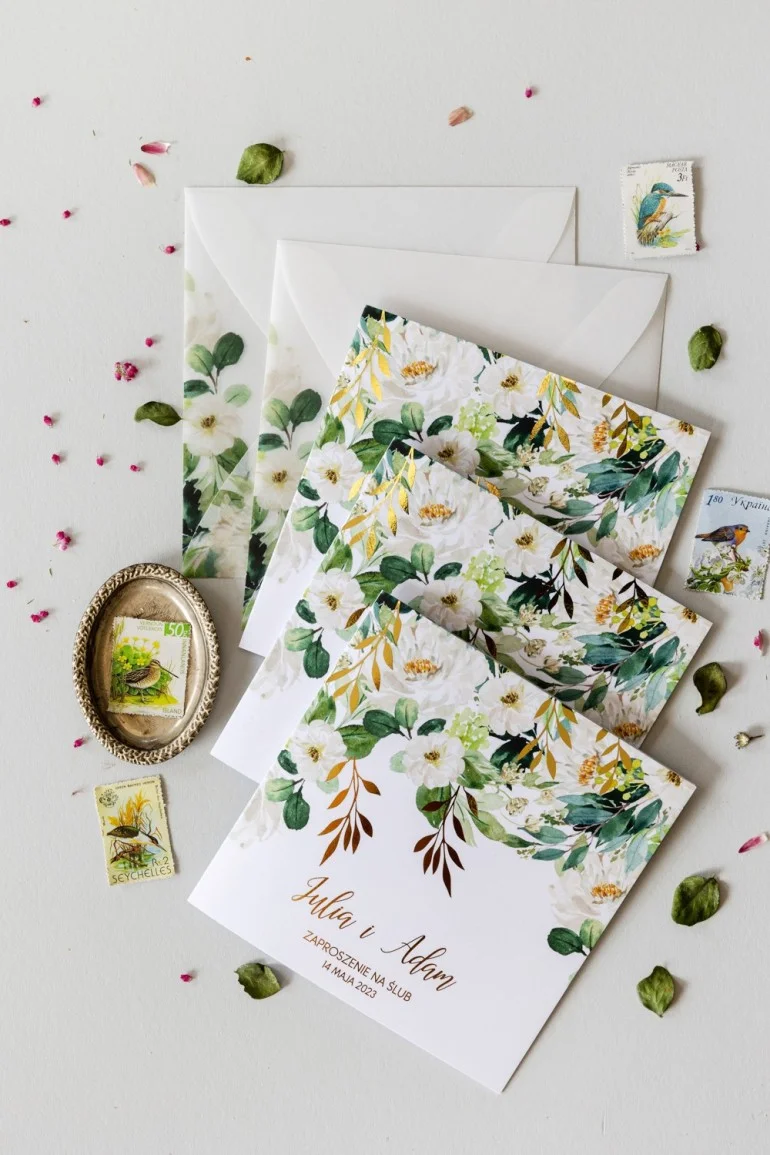
Stylish Wedding Invitations with Gold Accents, Watercolor Flowers | Exclusive Wedding Invitations | Rubin no. 1
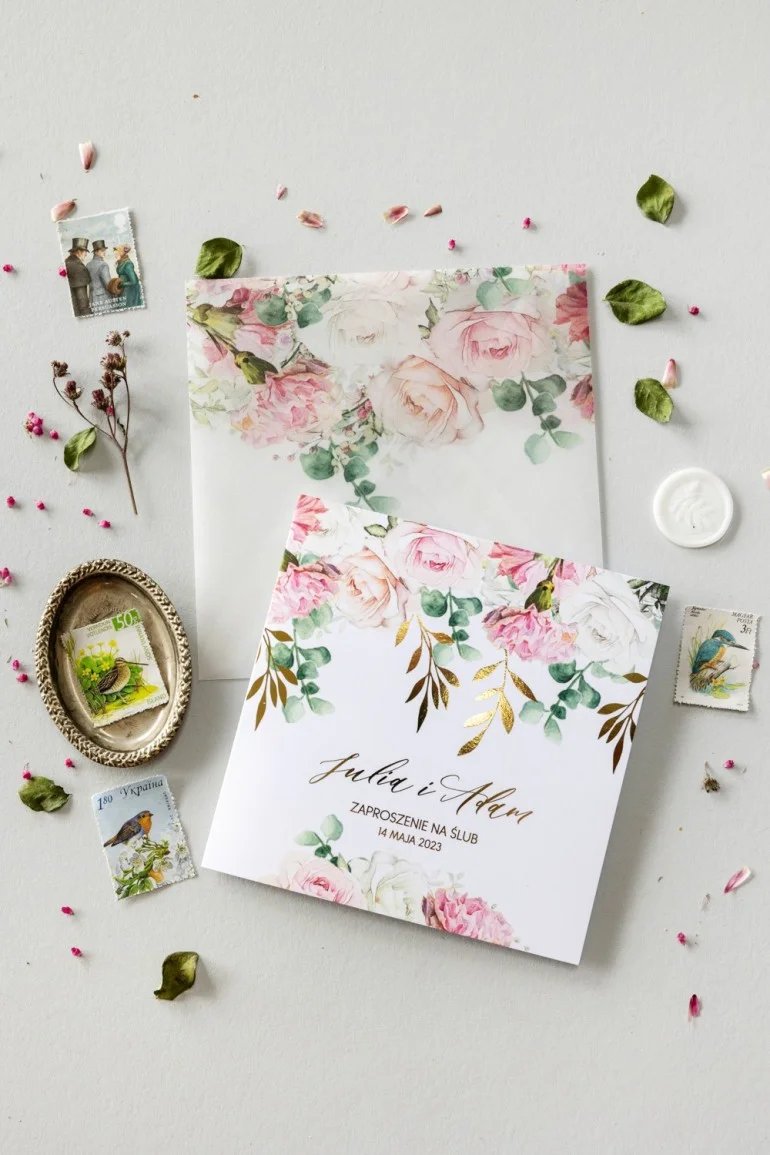
Wedding invitations with pink roses and gilding, transparent envelope | glamour style wedding invitations | Rubin no. 9
Children as Little Helpers in Wedding Preparations
Joint Planning and Decision Making
Involving a child in wedding preparations will not only allow them to feel part of the event but will also actually relieve you of some small decisions. Of course, it's not about a toddler deciding on the menu or the color of the wedding dress, but you can give them a choice in matters that are understandable to them. For example, ask your daughter what flowers she would like to see in the bouquet or decorations, or ask your son for help in choosing the flavor of the wedding cake (cake tasting is something many little ones will surely enjoy!). If you are planning a wedding theme, it's worth including the child's favorite fairy tales or interests when choosing the theme color or decoration style. For example, if the child loves the sea, you can weave small nautical accents into the hall decorations. Another idea is to let the child participate in decisions regarding their own outfit and role. Ask who they would like to be during the ceremony – do they dream of the role of a little ring bearer, or maybe they would like to scatter flower petals before the bride? When a child chooses a task for themselves, they will feel responsible and appreciated. Together you can look through inspirations on the internet or watch a video of another wedding so the toddler can see what such roles look like in practice. It's important that these decisions are made together in an atmosphere of fun, not coercion – the child should feel that their opinion matters, but at the same time shouldn't be overwhelmed by too much responsibility.
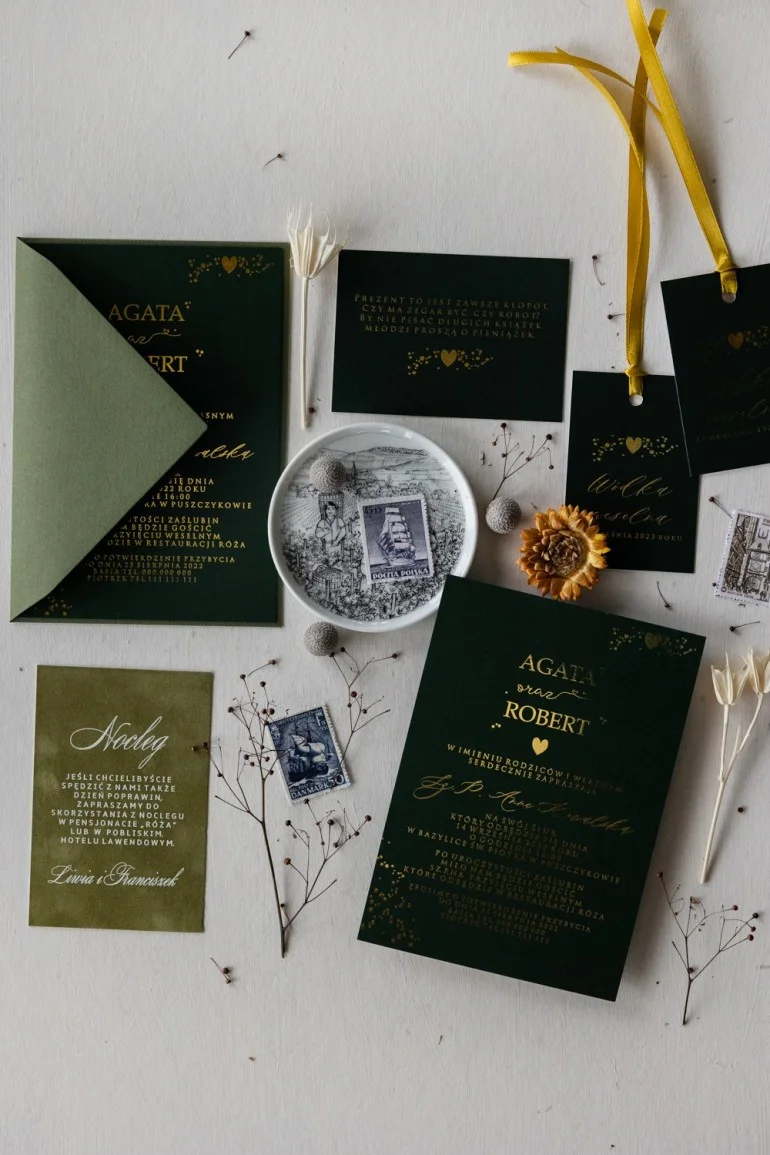
Single-card Wedding Invitations with gilding | Simple no. 2
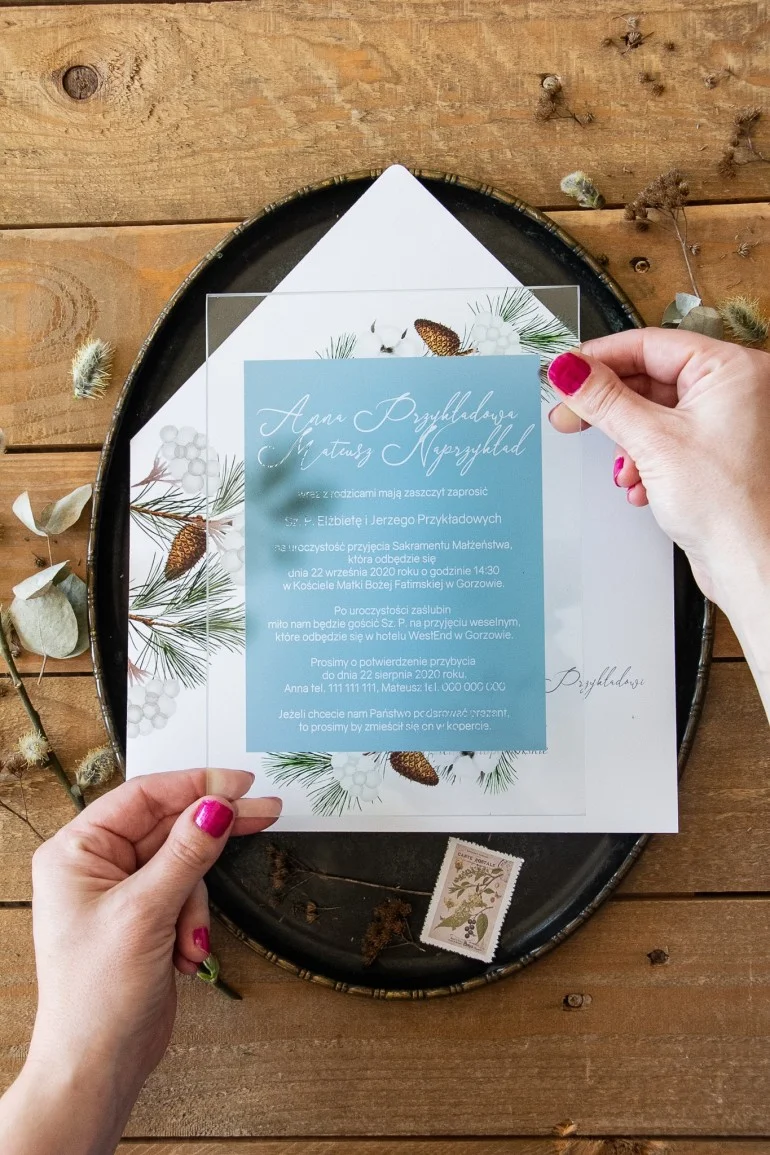
Extravagant Glass Wedding Invitations | Glass Winter Accent | Cotton & Pine | Korani no. 8
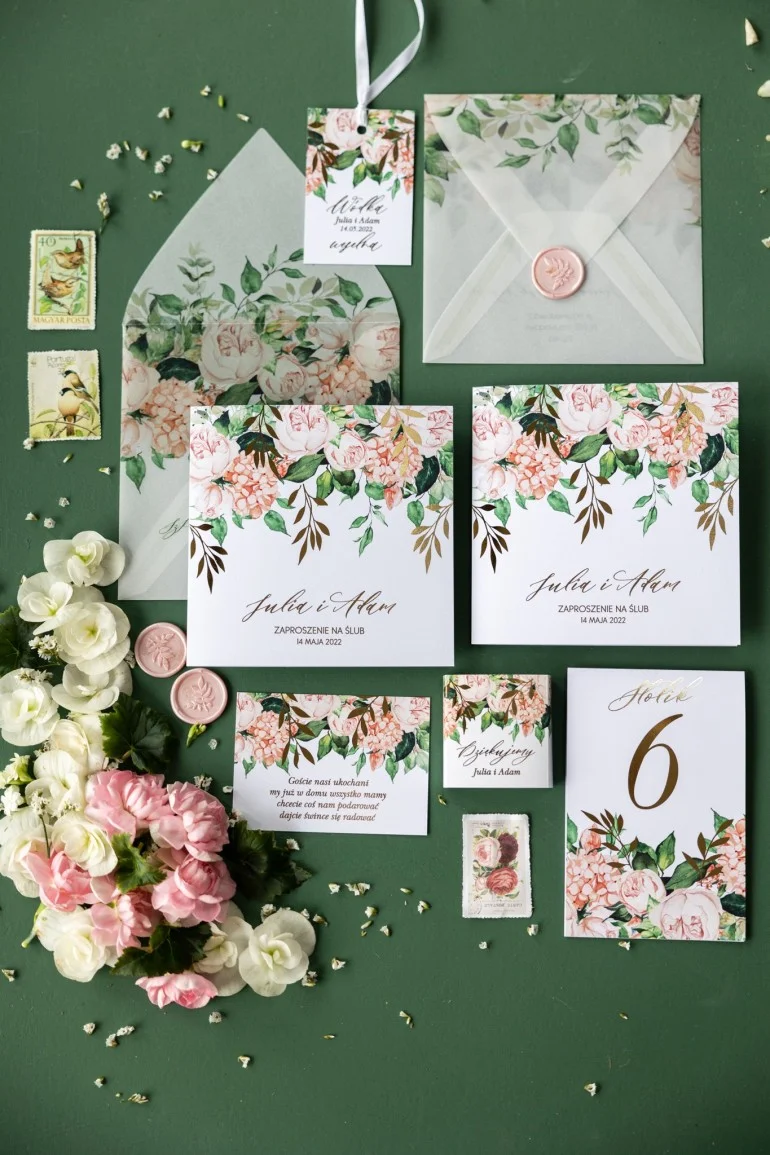
Unique Wedding Invitation with Gilding, Pink Peonies and Vellum Envelope | Unusual Wedding Invitations | Rubin no. 10
Creating Decorations, Invitations, and Accessories Together with Children
Children love arts and crafts and all creative activities, so it's worth involving them in preparing some elements of the wedding setting. Shared handicraft is a great opportunity to spend time together and build memories even before the big day. You can organize a small "craft evening" – prepare materials and create simple decorations for tables or the wedding hall together with the child. Little ones can hand-decorate menu cards, color welcome signs, and even make cards for close family members, which you will then give to grandparents or godparents during the wedding as a thank you. If you have an artistic toddler, encourage them to design the cover of the family wedding album or guest book. Children's drawings have their unique charm – such a hand-prepared guest book will be a moving souvenir when you see traces of your child's creativity in it years later. Another great idea is to fill out or decorate elements of wedding stationery together. The child can help stick stamps on envelopes or put invitation cards inside. Older children who write nicely can hand-write guests' names on invitation envelopes or on decorative place cards at the tables. If you care about an elegant effect, you can of course order ready-made place cards from a print shop, but it's worth leaving the child at least a small accent to perform – it could be, for example, decorating place cards with a small drawing or a sticker. Thanks to such tasks, toddlers will feel that they really contributed to the creation of the wedding decoration and will proudly look for the fruits of their labor in the hall. Let's not forget about wedding invitations – it's the first element of the wedding puzzle that guests come into contact with. You can involve the child in their selection and preparation. Browsing through catalogs or a wedding stationery website together, ask which invitations they like best. Perhaps they will choose a pattern with a motif referring to your family, e.g., with silhouettes of parents with children or an image of a pet that is also a member of your blended family. If you personalize the content of the invitations, consider adding the child's name, e.g., by phrasing the text like: "Together with our child [Name], we cordially invite you...". For the little one, this will be a signal that they are a host of this ceremony just as much as the Bride and Groom. You can read more about what texts to put on wedding invitations in our other article. When addressing envelopes, you can also include the child – e.g., by adding their surname in the header of the invitation addressed to grandparents or relatives ("The Smiths with daughter Anna invite..."). Such small accents will make your child feel from the beginning: "This is our wedding, not just mom's or dad's".
Small Pre-Wedding Duties Appropriate for Age
In the heat of pre-wedding preparations, it's worth finding simple tasks that the child can perform independently or with little help. Thanks to this, they will not only feel involved but also learn responsibility and cooperation. Remember, however, to match the duties to the child's age and capabilities – the point is for it to be fun for them, not stress. For toddlers, you can entrust, for example, gluing small boxes for gifts for guests or pouring sweets into bags with wedding favors. Such an activity is simple enough for a little one to handle, and at the same time, they will be proud to be preparing gifts for the guests. If you are looking for more inspiration for wedding favors for guests, check out our ideas. Older children (school age) will work great checking the guest list or arranging the seating plan – they can, for example, check off names on the RSVP list, arrange cards with names according to a given order, or help in planning who sits with whom. Of course, you ultimately decide on the placement of guests, but the process of arranging place cards or table numbers can be an interesting logic game for a child. An interesting issue is also whether place cards are made for the Bride and Groom – it's worth considering when planning the seating. By the way, you will explain to them how the wedding hall is organized and who in the family is who (which can be educational during large family gatherings). If you have culinary skills in the family, you can bake cookies or muffins for the wedding together with the child (e.g., for the sweet table) or prepare small jars with homemade jam as gifts. Hand-made favors for guests are always popular, and working on them with your little one is a great way to spend time together before the wedding. Just remember not to put pressure on perfect execution – uneven icing on cookies or a crookedly stuck label will add charm because they will be the work of small hands. Praise the child for effort and creativity, showing them that you appreciate every help. On the wedding day, when guests praise these homemade baked goods or hand-made gifts, your child will surely burst with pride that they had their part in it.
Wedding Ceremony with Children
Traditional Roles: Flower Girls, Page Boys, and Ring Bearers
In wedding tradition, children have long played important roles during the ceremony. The sight of little flower girls or page boys leading the Bride and Groom to the altar can move every guest. If your child dreams of appearing in such a role – it's worth enabling them. A little flower girl or page boy can carry the hem of the veil behind the bride, hold the rings on a decorative pillow, or simply walk just ahead of you, leading the wedding procession. Girls often love to scatter flowers – if the ceremony takes place in a church or outdoors, you can prepare a basket with rose petals for the little flower girl to scatter before the bride walks. Boys, on the other hand, feel great as "guardians" of the rings. You can hand them an elegant box or hang a small pillow with rings on a ribbon, which they will proudly carry. It's worth taking care of the appropriate outfit for such little assistants. Children appearing in the wedding procession often have outfits referring to adult clothing: girls are dressed in lovely dresses resembling miniatures of the wedding dress or bridesmaids' dresses, and boys have elegant shirts, vests, or bow ties color-matched to the groom's suit. Such stylizations not only look beautiful in photos but also make the toddlers feel distinguished and "grown-up". Remember, however, that the clothes should be comfortable – preferably made of natural materials and not too tight – and adapted to the weather so that the child doesn't freeze or overheat during the ceremony. A good idea is to prepare a second, less formal outfit for the child for the reception, especially if the toddler doesn't like formal clothes. If you have more than one child or other friendly toddlers (e.g., nieces, nephews, friends' children) are to participate in the procession, you can create a whole line of little flower girls and page boys. Such a group walking before the Bride and Groom looks charming and emphasizes the family character of the ceremony. Many couples who have a larger number of children in the family decide on such an extensive procession with the participation of several little ones, so that no child feels left out. Distribute roles fairly: one girl scatters flowers, another carries a sign saying "Here comes the Bride", a boy carries the rings, and another proudly marches with your pet on a leash (if you plan to include a beloved pet in the ceremony). Just make sure all children know what they are supposed to do – practice the entrance with them at a rehearsal so they feel more confident on the wedding day.
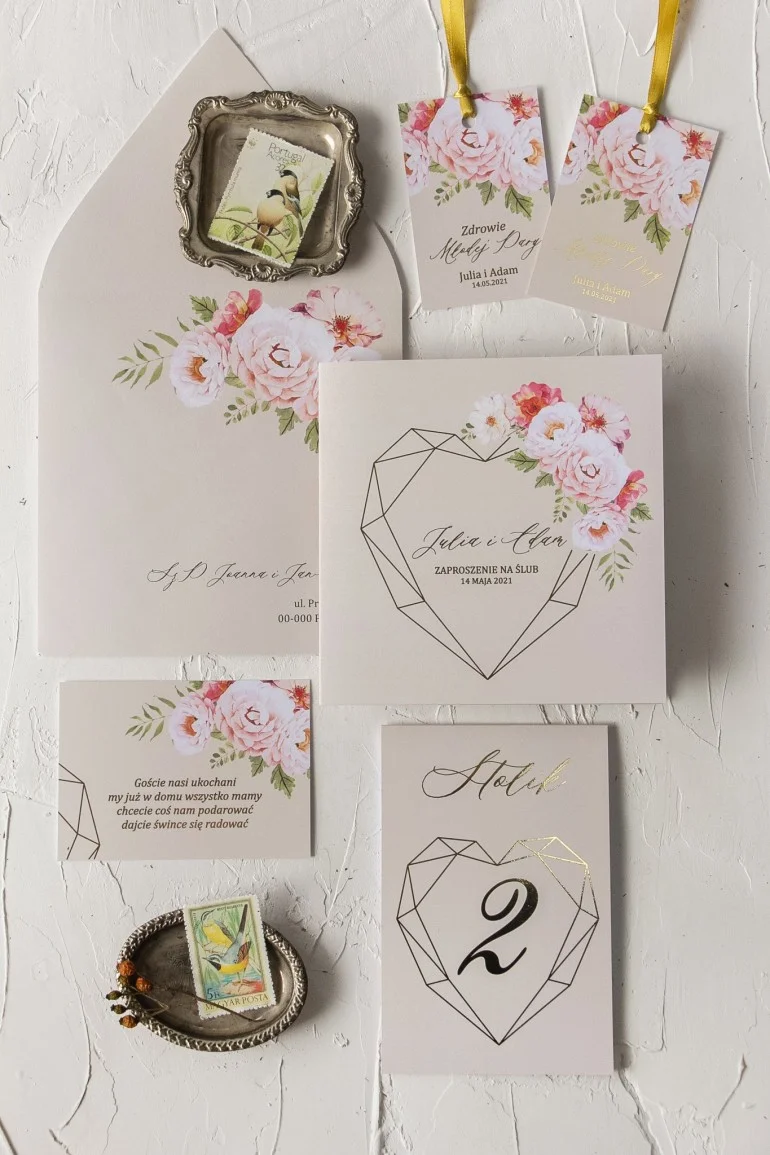
Wedding Invitations with Gold Heart and Floral Motif | Modern and Stylish | Szafirowe no. 8
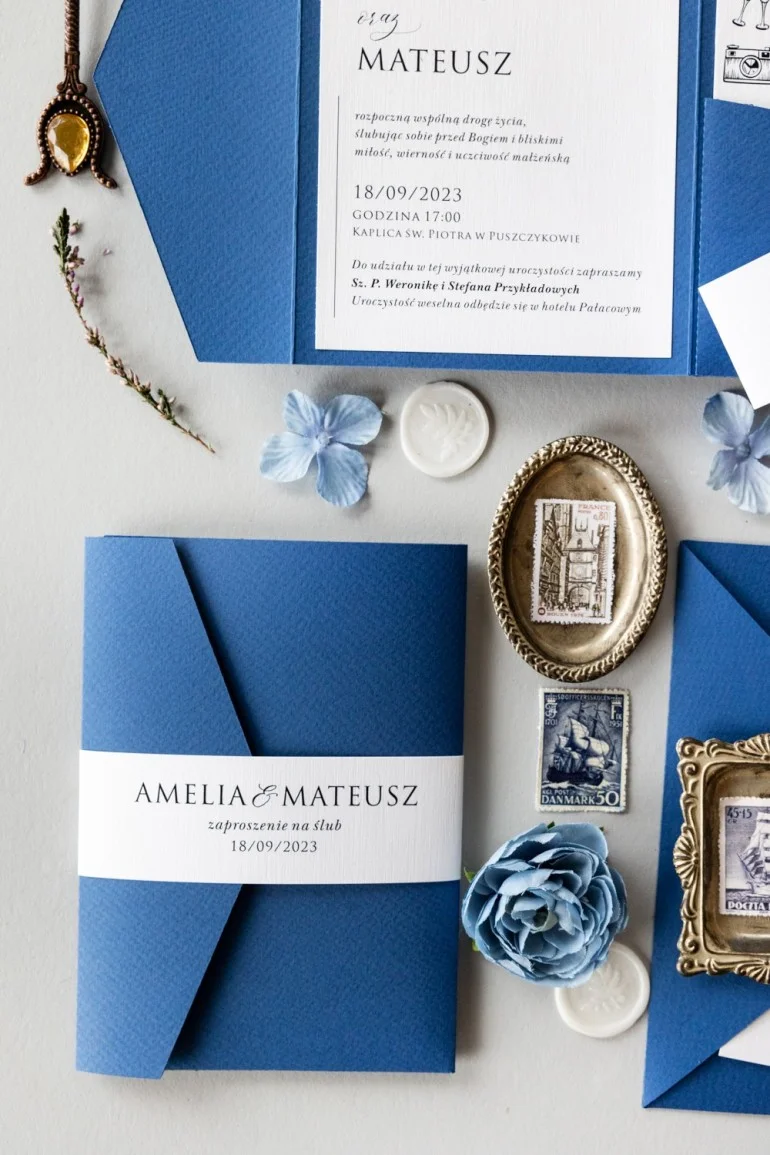
Blue, Elegant Wedding Invitation with Pocket and Personalization | Kraft no. 7
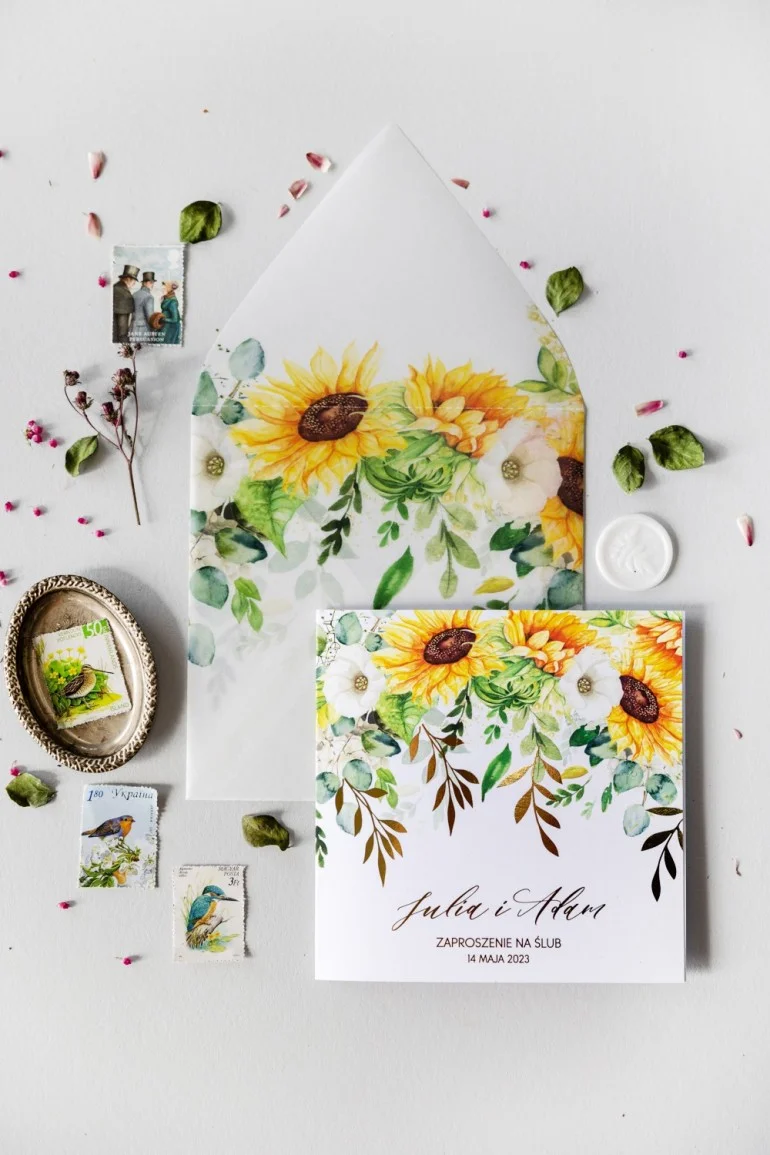
Wedding Invitations with Sunflowers and Gilding | Modern and Original | Rubin no. 7
Non-Standard Ideas for Child Participation in the Ceremony
Traditional roles are not the only way to include children in the ceremony. If you want something more original or your little one has unusual talents – it's worth using this occasion for them to shine. For example, if a son recites poems beautifully or a daughter plays the violin, you can ask them for a performance during the ceremony. A moving poem read by a child or a melody played on an instrument will introduce a unique atmosphere and will surely delight the gathered guests. It is important, however, that such a proposal comes from you gently and without pressure – the child must want to perform themselves. Additionally, it's worth having a plan B in case they get stage fright at the last minute and back out (e.g., the prepared text can be read by a witness or the music can be played by a DJ). An interesting idea is also to involve children in all kinds of symbolic rituals that you plan as part of the ceremony. Currently, many couples decide to enrich the ceremony with an informal unity ritual to emphasize the merging of two families. This could be lighting a unity candle (where you and the children successively light candles, lighting them from a common flame) or a sand blending ceremony – each member of the new family pours sand in a chosen color into a common vessel, creating a colorful mosaic symbolizing unity in diversity. Children in such a ritual play an equal role with you, which is a great experience for them and a clear signal that from this day on you all constitute one family. If the ceremony takes place in a church, you can talk to the priest about whether they will allow a small accent with the participation of a child – some pastors allow, for example, a short blessing of children at the altar or reading the prayers of the faithful by them. Another non-standard solution is to ask the child to deliver wishes or a blessing for you as newlyweds during the ceremony. This can take the form of a few sentences in their own words (e.g., "I wish my mom and dad to be always happy") or reading a previously prepared letter to you. Such a moment is extremely moving and stays in the memory of everyone present for a long time. Of course, not every child has the courage to speak before a crowd – if your little one is rather shy, it's better not to put them in such a situation. You can, however, involve them differently: for example, by presenting the rings. When the culminating moment of exchanging rings arrives, it is the child who can approach with the box and hand them to you with the words "Here, mom" / "Here, dad". Such an action is simple and at the same time very symbolic, because the child becomes, in a way, the trustee of your marriage vows.
Symbolic Family Rituals During the Wedding
The wedding of a couple raising children is an ideal opportunity to mark the unification of families also through symbols and rituals. Ceremonies in which, in addition to the classic marriage vows, a family vow or a child acceptance ritual appears, are gaining popularity. What can it look like? In practice, there are many scenarios, and you are limited only by your imagination (and possibly the framework of a religious ceremony, if applicable). One idea is the previously mentioned lighting of the unity candle. At some point in the ceremony (e.g., after the exchange of rings), the bride and groom together with the children approach a prepared candlestick. Mom and dad light two smaller candles symbolizing their separate lives, after which you jointly light one large candle from them – the symbol of the new family. Then you hand each child a small candle lit from that central one – it's a sign that the fire of your love also includes the children. You all hold the flames for a moment, celebrating this shared moment of unity. Another possibility is the sand ceremony – prepare a transparent vessel and one container with colored sand for yourself and for each child beforehand. During the ceremony, each person successively pours their sand into a common bowl. The layers of colors will intertwine, creating a one-of-a-kind pattern – just as you merge into one family. You can then place such a vase with colored sand at home as a souvenir of the wedding day. Importantly, these kinds of rituals are universal and non-denominational, they can be performed both at a civil, humanistic wedding, and – after agreement – during a religious ceremony (usually after the official part has ended). Many families also decide to exchange small gifts or symbols during the wedding. For example, the groom can put a locket or a pendant on his future wife's daughter as a sign that from now on she is like his own daughter to him. Similarly, mom can pin a small commemorative tie clip to the groom's son or give a bracelet to his daughter. Such rituals do not have to be officially commented on by the person conducting the ceremony – often a few words of explanation from you or even the silence itself and the guests observing the gesture is enough. Exchanging symbolic gifts between new parents and children is sometimes as moving as the exchange of rings between you. The child receives tangible proof that they are an important part of this moment. Don't forget also about the blessing of children by grandparents or loved ones, if such a tradition exists in your family. Usually, before the wedding, parents bless the couple – you can extend this custom and ask the family elders to also bless the grandchildren, asking for prosperity for the entire new family. It's a beautiful gesture that shows the continuity of generations and the acceptance of the new family order by all family members.
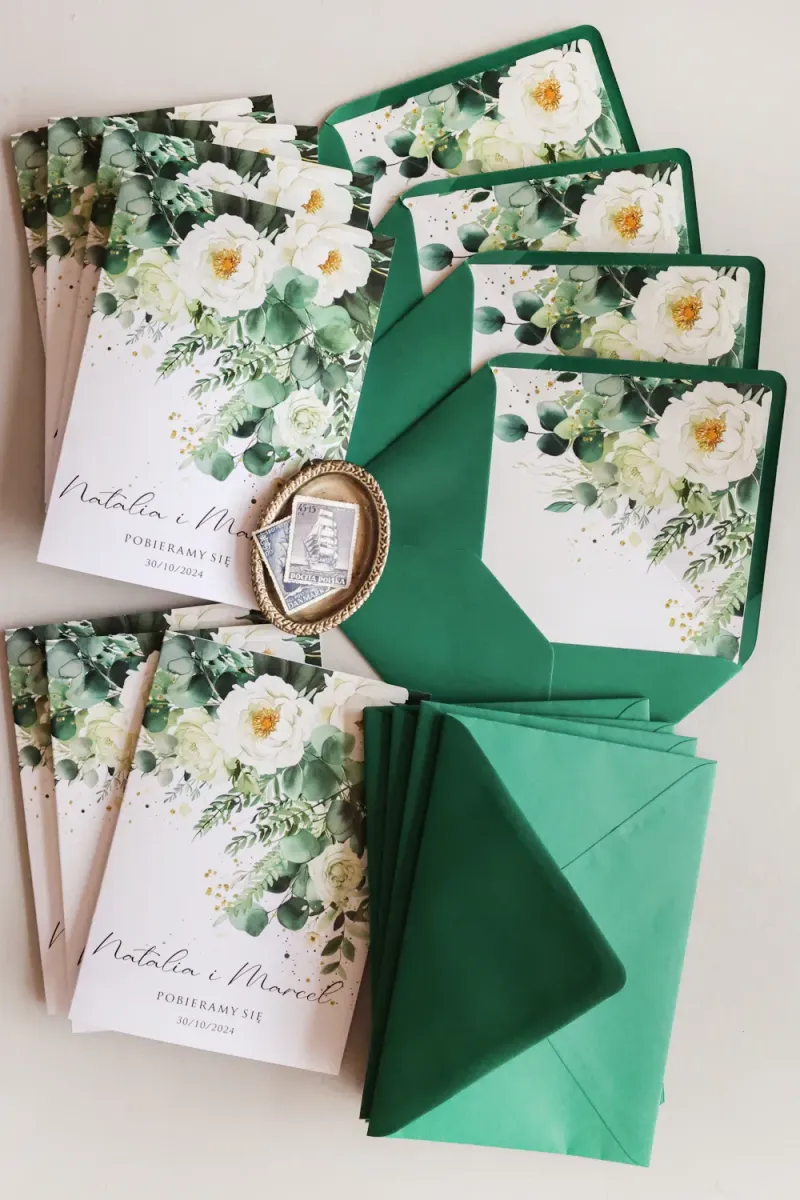
Wedding Invitations with white flowers and green accents | minimalist personalized invitations | Impresja no. 9
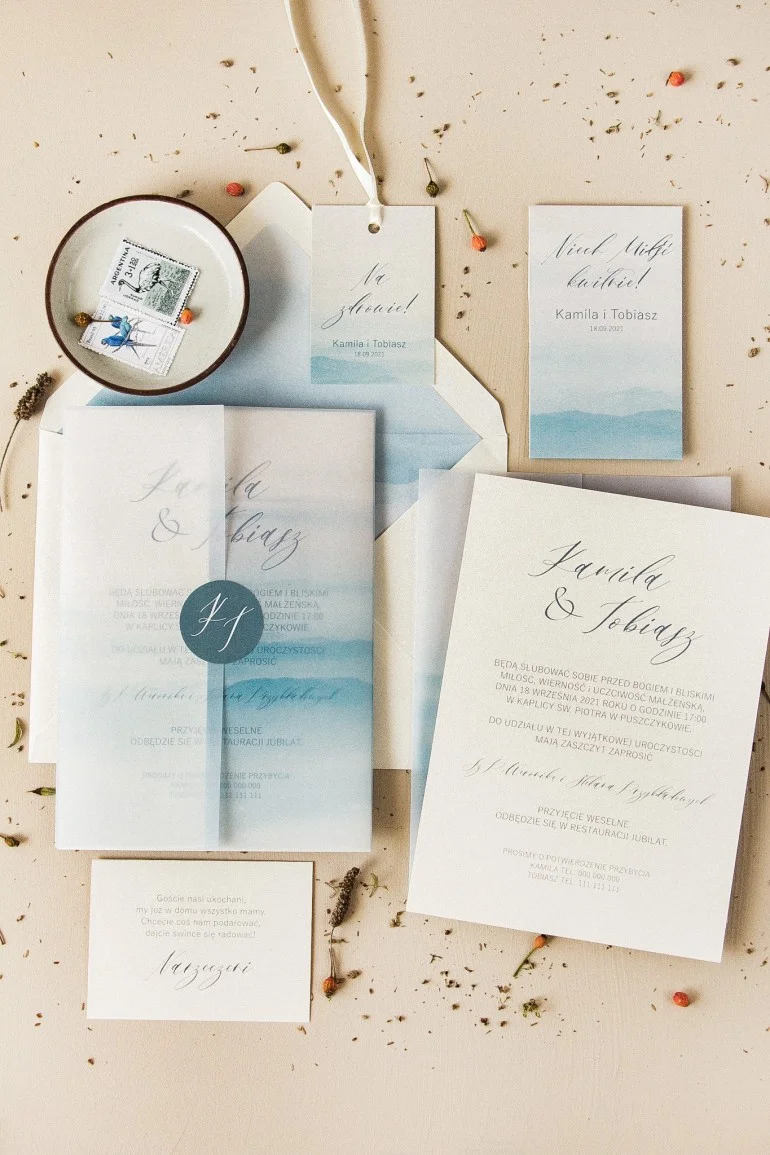
Elegant Wedding Invitations with Vellum | Watercolor and Pearl | Opal no. 4
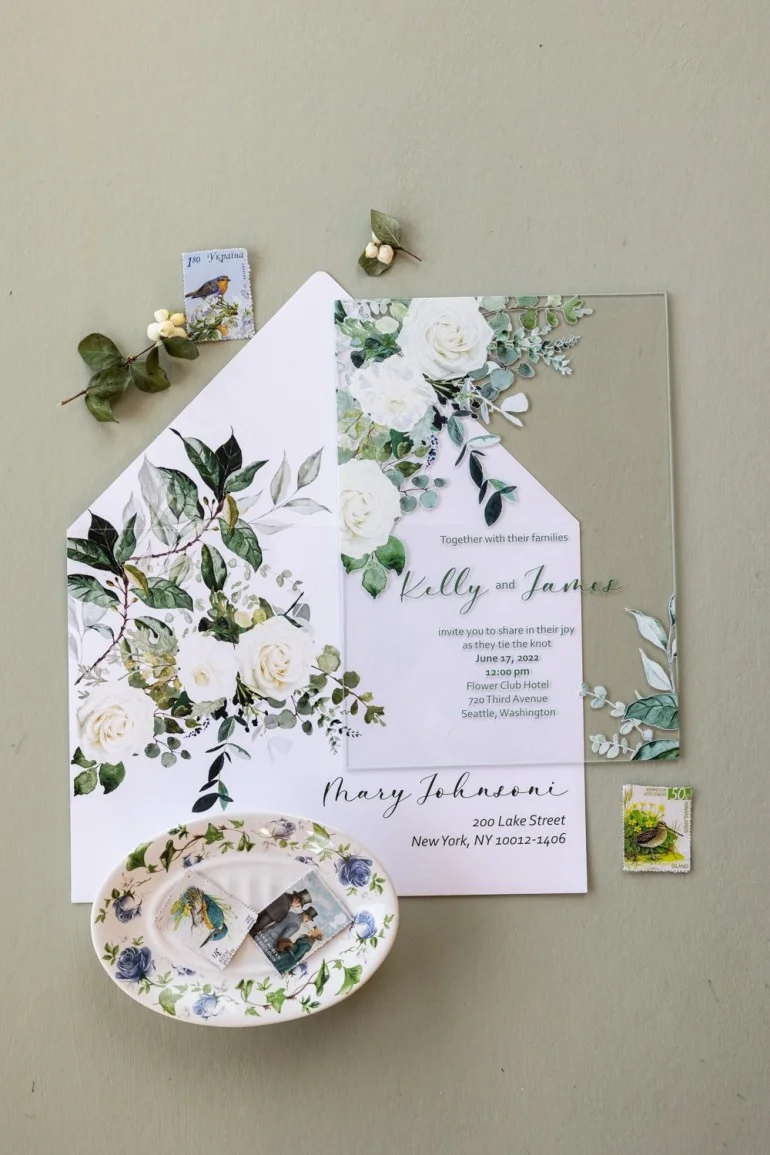
Floral Elegance Glass Wedding Invitations with White Roses and Greenery Envelope | Korani no. 12
Child-Friendly Wedding: Attractions and Tasks for Kids
Entrusting Children with Special Roles at the Wedding
Once the official part of the wedding is over, it's time for the wedding fun. You can also find responsible and pleasant activities for your little ones during the reception. Children love to feel needed, especially if they receive "serious" tasks – like adults. Think about at what moments of the wedding your child could shine. One idea is to entrust the child with the role of a little host of the ceremony. This might sound serious, but in practice, it's about small gestures of hospitality towards the guests. For example, if you have gifts prepared for everyone present, ask your little one to help distribute them. A toddler with a basket full of trinkets walking from table to table and giving guests favors (e.g., thank-you cookies or small jars of honey) is a sight that will melt many hearts. The child will be proud that such an important task was entrusted to them, and you will gain a helper in the pleasant act of gifting guests. If the wedding favors are delicate or require explanation (e.g., cards with a personalized message), you can go together with the child so they feel your support. Another special role for a child at a wedding is assisting at important moments. For example, during the cake cutting, you can take the child between you, let them hold the knife with you – and cut the first piece together. Such a small thing, and it will make them feel part of the wedding traditions. Similarly, when making a toast – fill the child's glass (with juice or lemonade, of course!) and include them in the first toast to your marriage. Raising a "symbolic glass" together with adults is a great experience for a child – a kind of initiation into the adult wedding community. If your children are already teenagers, you can go for even more responsible tasks. For example, a daughter or son can act as an assistant to the emcee or DJ for a while – announcing one song or contest. Of course, only if they feel up to it and want to. Another task for an older child can be taking care of the guest book – ask them to encourage every guest to write wishes and help take Polaroid photos if you have such a corner. This is an integrating and responsible activity, and the teenager will feel that you treat them like an adult. When involving children in the course of the wedding, remember, however, not to overdo the duties – it's still supposed to be fun for them, not a job to do.
First Dance and Shared Moments on the Dance Floor
Traditionally, the first dance belongs to the Bride and Groom, but nothing stands in the way of inviting your children to it after a few bars. If you have small children, it can look adorable: mom and dad start a slow song, and after a while, they give their hands to the toddlers and continue dancing in an enlarged group. Guests will surely reward such a sight with applause, and your children will feel that even in this special moment you remembered them. Dancing together with children also looks beautiful in photos – photographers often capture these moments full of laughter and tenderness between parents and children. You can practice a few turns at home with your little one beforehand so they feel confident on the dance floor. If, on the other hand, your children are older (e.g., teenagers), you can simply invite them onto the dance floor right after the first dance ends – e.g., the signal to join can be a change of song to something more lively or your family's favorite track. After the first dance, it's worth planning other special program points with the participation of children. A popular idea is dedicating one musical track just for the kids. You can warn the DJ or band to insert a song from a fairy tale or a children's hit (e.g., from Disney movies) after a few universal hits for all guests. As soon as the familiar melody sounds, invite all the children to the center and encourage them to play together. Dancing to a favorite song in the company of peers and parents will relax the atmosphere – adults will watch with a smile as the toddlers go wild on the dance floor, and they will probably be happy to join in themselves. Such integration moments show that the wedding is for everyone – not just for adults. Don't forget also about traditional family dances that can be extended to include children. If you are planning parent thank-yous (i.e., a special dance with the parents of the Bride and Groom), consider joining your little ones – e.g., dancing a part of the song also with the child in your arms. You can also provide a separate program point: e.g., "mother-son dance" or "father-daughter dance" if you have children of the opposite sex. Such a symbolic equivalent of the "father-daughter dance" adapted to our situation will be extremely moving. Imagine the Groom's father dancing with his granddaughter or the Bride's mother dancing with her grandson – generations and new roles mix on the dance floor, which emphasizes family bonds. Of course, everything depends on the child's age and their willingness – if they are very shy, let's not force them to dance before an audience, it's better then to go for spontaneous dancing in a smaller group.
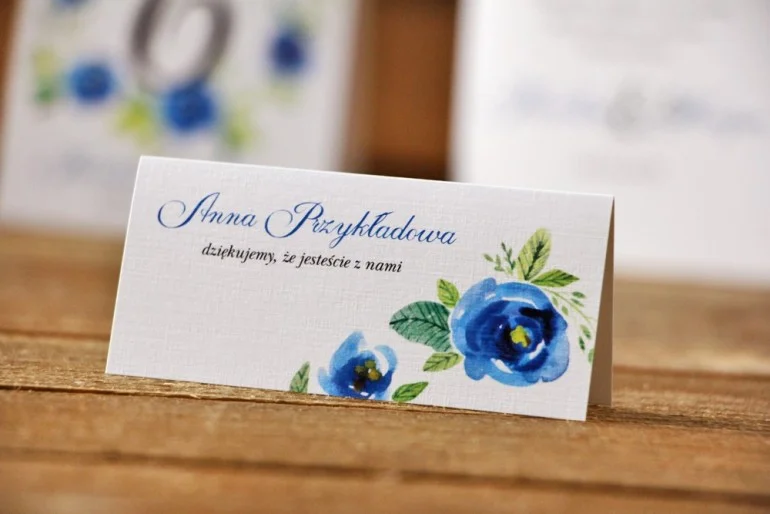
Place cards on linen-textured paper with roses in blue shades | Akwarele no. 10
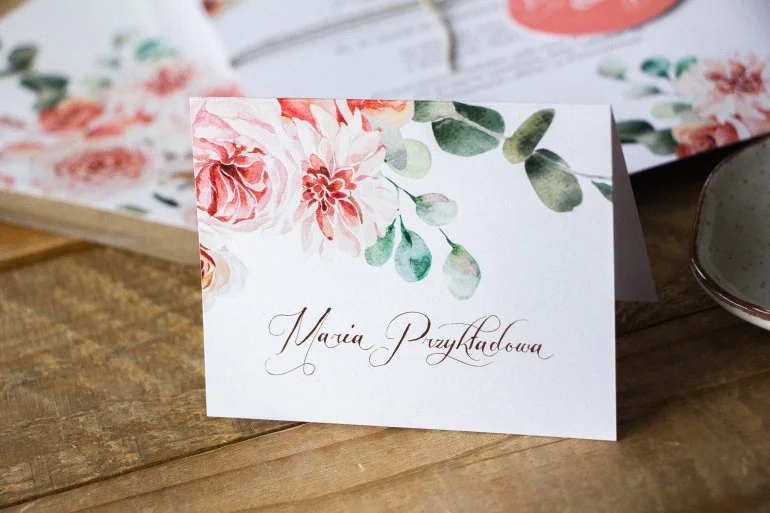
Place cards with pink bouquet composition | Indygo no. 7
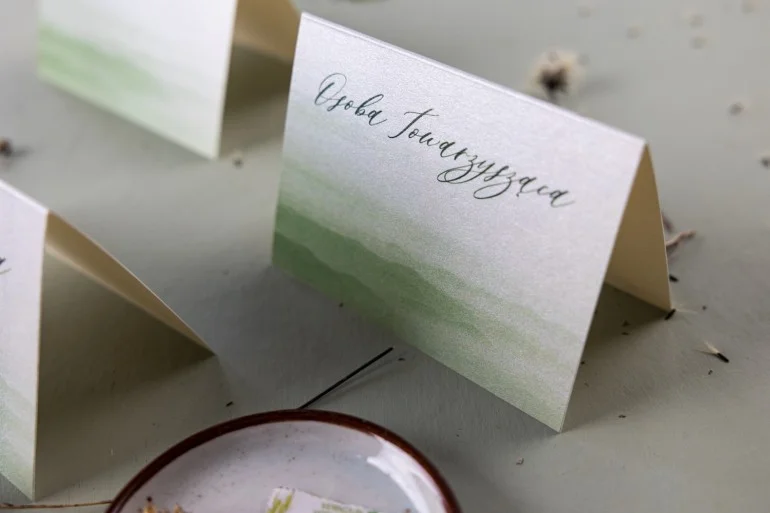
Wedding Place Cards on pearl cream paper with green decorations | Opal no. 11
Wedding Games and Activities Involving the Youngest
Weddings are famous for various games and activities – from the bouquet toss to photo booths. It's worth thinking about attractions that will allow children to actively participate in the fun. Thanks to this, they won't get bored with adults feasting at the tables, and by the way, guests will have extra fun watching the little ones. If you are planning a traditional bouquet or garter toss, you can prepare a children's version in parallel. For example, at the moment when the bride is getting ready to toss the bouquet, a witness or emcee can organize a contest for children: a toss of a plush bouquet or a mascot. Girls and boys will happily take part in such a mini-contest, and the winner can receive a symbolic prize (e.g., chocolate or a balloon). Similarly, you can do with the groom's bow tie – for younger guests, prepare a funny XXL bow tie to toss and select the "next bachelor to get married" in a humorous form. Another proposal is to organize several simple dance games that will integrate big and small. Popular are, for example, the conga line (all adults and children hold hands and dance in a procession that meanders around the hall) or a balloon dance (children bounce balloons to the rhythm of the music, and adults help so that no balloon touches the floor). The emcee can also lead a mini-dance contest for children – just choose a bouncy track, invite the toddlers to the center, and encourage them to show their best moves. The audience (i.e., the rest of the guests) will choose the most dancing child with applause, who will receive a small gift. Here it's worth preparing prizes for all participants (even candy bars) so that no one feels like a loser. If you have the opportunity to go outside (e.g., a garden by the hall), think about outdoor activities. Soap bubbles, jump ropes, frisbee, or even hopscotch drawn with chalk on the sidewalk – these are things that children love, and which can be a great break at a wedding. You can also hire a professional service like a photo booth with props – children love dressing up, so they will surely drag an aunt or uncle to a joint photo in funny glasses and a wig. Such a photo booth integrates generations and leaves great souvenirs in the wedding album. It's important to plan these attractions wisely: too long and complicated games can bore toddlers, it's better to focus on a few short, dynamic program points scattered from time to time during the wedding. And if you want to wake up a bit of creativity in the youngest, give them disposable cameras or Instaxes (instant cameras). Let them try their hand as wedding paparazzi, capturing the reception from their own, child's perspective. We guarantee that the effects can be hilarious – in the photos, perhaps not all heads will fit in the frame, but the captured moments will be one of a kind. This will give children a lot of joy, and you, after developing these photographs, will gain a priceless souvenir full of spontaneity and authentic emotions.
Kids' Zone at the Wedding Reception
Play Area and Professional Animation
Even the most loved and well-behaved child after many hours of a wedding can become cranky – after all, events of this type often last until late at night, and intense emotions can tire no less than running. Therefore, when planning the reception, it's worth thinking in advance about creating a child-friendly zone where they can rest or go about their business under the eye of a caregiver. If the budget allows, a great solution is to engage a professional children's entertainer for the duration of the wedding. Such a person (or a whole team) will appear on site with a set of toys, games, and ideas to organize time for the youngest while adults are busy with themselves. Animators often paint children's faces, twist balloons into animals, do mini contests, and can even occupy the group's attention for an hour or two with interesting workshops (e.g., arts and crafts). Hiring an animator has the advantage that your little ones and the children of other guests are in good hands – you can breathe for a moment, eat a meal in peace, or talk, knowing that the toddlers are not bored and are not misbehaving unsupervised. If, however, you do not plan to hire an animator, try to designate at least a small play corner in the hall. You can spread a soft rug or mat there, set up a few pillows, a table with coloring books and crayons, a box with blocks or toy cars. Soap bubbles, a set for blowing bubbles that children can do themselves outside, or dexterity games like target toss work well too. Such a play corner will allow the youngest to take a break from the noise and at the same time still be near their parents. It's worth establishing shifts for supervision with someone from the family – e.g., an aunt or older cousin will check on the children from time to time to see if everything is okay. If your child has a favorite nanny, consider asking her to exceptionally accompany you to the wedding as a babysitter. A familiar face in the company of so many guests will give the child a sense of security. You can find more ideas on whether to organize a kids' corner at a wedding in a dedicated post.
Menu and Snacks Adapted for the Youngest
In the heat of planning attractions, let's not forget that children also have specific culinary needs. Many dishes served at weddings do not appeal to the youngest – spicy seasonings, fancy sauces, or hard-to-digest dishes can make a child refuse to eat. Therefore, discuss children's menu options with the catering or chef. Ideally, these should be simple and liked by toddlers: chicken soup instead of spicy soup, chicken nuggets instead of a cutlet with mushroom sauce, fries or mashed potatoes instead of exotic grains, pancakes with cheese for dessert instead of coffee tiramisu, etc. Most wedding venues are prepared for such modifications and are happy to serve children "safe" sets that they will actually eat. It's also good to provide constant access to small snacks and drinks suitable for children. A sweet table full of eclairs and cake-pops looks beautiful, but for a several-year-old tot, it may turn out to be too rich in sugar and creams, which might lead to a stomach ache. In the children's corner, it's worth putting a bowl with pretzels, corn puffs, or cut fruit – something a child can reach for between meals when they get hungry after playing. Don't forget about drinks: prepare a pitcher of juice, lemonade, water – so that toddlers can help themselves without hunting for a waiter with a tray of drinks. Avoid caffeine and excess sugar, because they will have enough emotions even without it. And when it's time for the cake, make sure your child gets their piece as one of the first – toddlers impatiently wait for sweets, so it's better not to make them wait long so they don't get the idea to taste the cake with a finger straight from the platter!
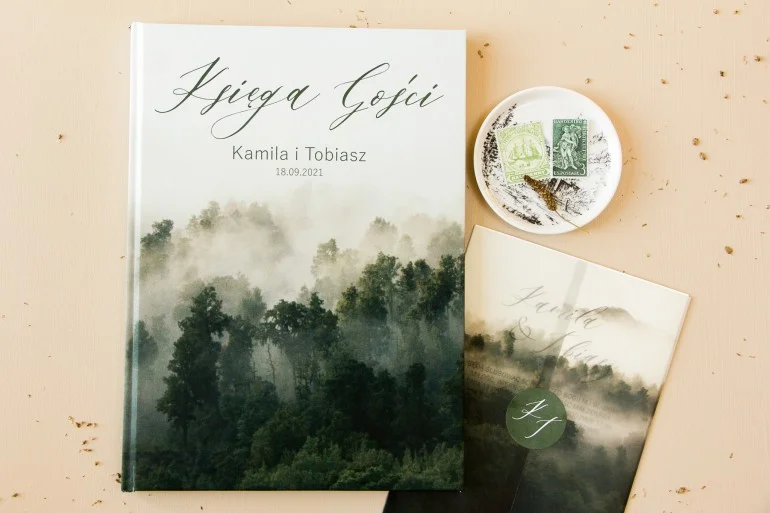
Wedding Guest Book with forest motif | Opal no. 2
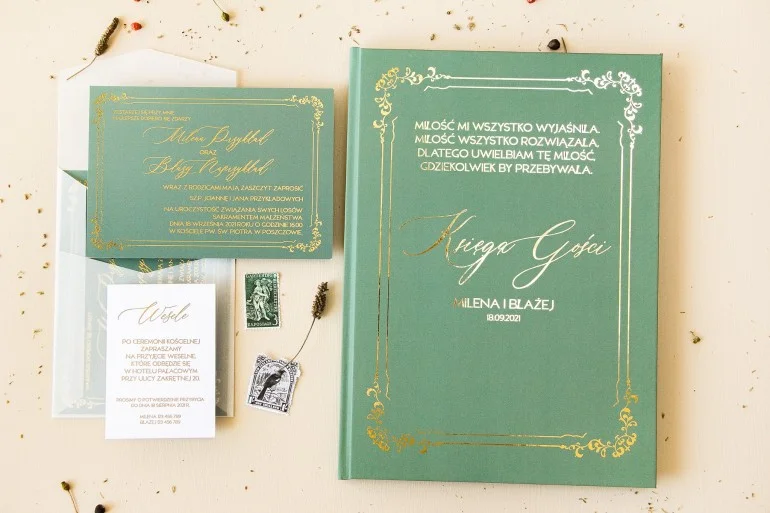
Personalized Guest Book with calligraphic gold lettering | Sand no. 3
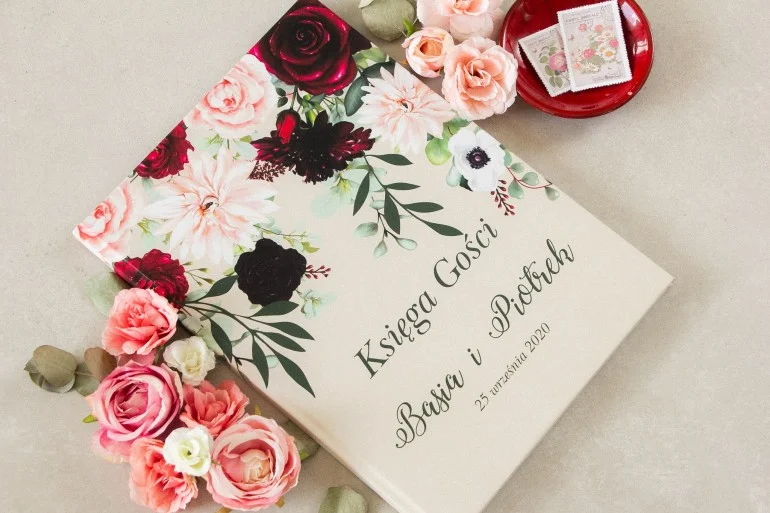
Burgundy Guest Book with anemones and dahlias | Korani no. 4
Rest and Support for Children During the Wedding
Despite all attractions and amenities, there will probably come a moment when the child simply gets tired. For a toddler, 10 or 11 PM is already late at night, and many will fall asleep much earlier. Therefore, it's worth preparing a place for sleep or rest in advance. If the wedding hall has a side room, a small room, or even a quiet corner, arrange a small bedroom there – spread out sun loungers or mattresses, put a blanket, the child's favorite stuffed animal, dim the light. As soon as you notice your little one rubbing their eyes or being cranky from fatigue, accompanied by a trusted person (e.g., grandma or nanny), take them to this corner for a nap. Don't worry that they will miss something – a rested and relaxed child will remember the wedding much better, even if they slept through part of it, than if they were to be cranky from fatigue until the very end. Older children might not go to sleep, but they also need a moment of respite from the loud music and the crowd. It's worth having noise-canceling headphones on hand (hearing protection for children) if you plan a loud party until dawn – a teenager might be embarrassed, but a several-year-old toddler might gladly wear them at least for a while to let their ears rest. Remember also to find moments for your child during the wedding. As newlyweds, you will be sought after by guests, someone will constantly want to talk to you, make a toast, or dance. In all this, it's easy to accidentally overlook the little one, who might be sitting at the table and looking longingly at their busy parents. Try to approach the child from time to time, hug them, ask if everything is okay, encourage them to dance or play. Your attention is priceless for the child, especially on such an important but also intense day. It's good to warn a few trusted guests (e.g., grandparents or close friends) to keep an eye on the child while you are busy with formalities or greetings. Such "shadow care" will ensure that the toddler is never completely alone, even if you are busy cutting the cake or talking to a long-unseen uncle. When the child sees that a beloved grandma or aunt is sitting nearby and is ready to take care of them, they will immediately gain self-confidence. In case of a worse moment (e.g., minor crying or nervousness), a close person will be able to react quickly and calm the situation before it even reaches you.
Comfort and Safety of Children on the Wedding Day
Outfits and Preparation of Little Ones
The wedding day is a lot of stress not only for adults but also for children – especially those who are to play an important role in it. To minimize the risk of whims and crying fits, take care of the comfort of the little ones from early morning. Start the day with a calm breakfast in the family circle, trying to maintain an atmosphere of excitement but also peace. It's worth preparing a schedule of the day for the child in simple words: tell them what will happen in order ("First we will go to the hairdresser to do your hair beautifully, then we will put on nice clothes, we will go to the church/registry office where there will be many people, and then there will be a party with dancing"). Children feel more confident when they know what to expect, so such a discussion of the plan can help avoid surprises. The issue of clothing is key – even the most beautiful stylization will not pass the test if it pinches or restricts the child's movements. Try on the outfits a few days earlier, let the child walk around the house for a while in the dress or suit to make sure nothing rubs, doesn't scratch (labels! it's best to cut them out immediately) and that the child can dress/undress themselves as needed. Take the weather and conditions into account – if the wedding is in summer, a light cotton lining and a spare t-shirt to change into in case of being spilled with juice is a must-have; if in winter – warm tights, an additional sweater or bolero for the church. In addition to the main outfit, also pack the child's favorite comfortable clothing, which they can put on after the ceremony or late in the evening. The toddler will be happy to be able to throw off the patent leather shoes and put on their favorite sneakers, and you will avoid complaining that "scratchy tights" are spoiling the fun. Also prepare a toddler's kit for the wedding day in advance. It's worth including: a few snacks (a bar, biscuits, a banana – something the child likes and that will quickly satisfy hunger between meals), a small bottle of water, wet wipes, adhesive bandages (for rubs or cuts during play), a favorite toy or stuffed animal for comfort in stressful moments, and possibly medicines if the child takes them regularly (e.g., an inhaler for an asthmatic or syrup for possible fevers). This set is best handed over to someone in the family to look after (e.g., the Bride's mother) or packed into a small backpack and ask the older child to carry it themselves. A well-organized background will ensure that whatever happens – hunger, cut, boredom – you will be prepared to remedy the problem without panic.
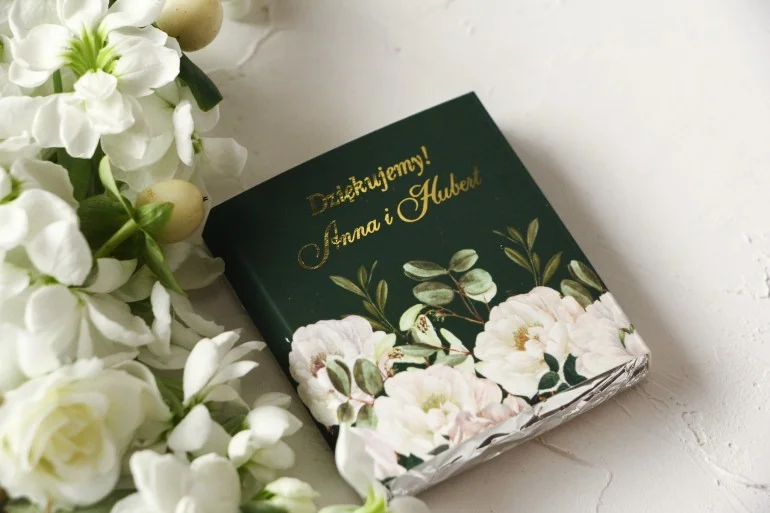
Wedding chocolates with a bouquet of white roses and eucalyptus | Szafirowe no. 3
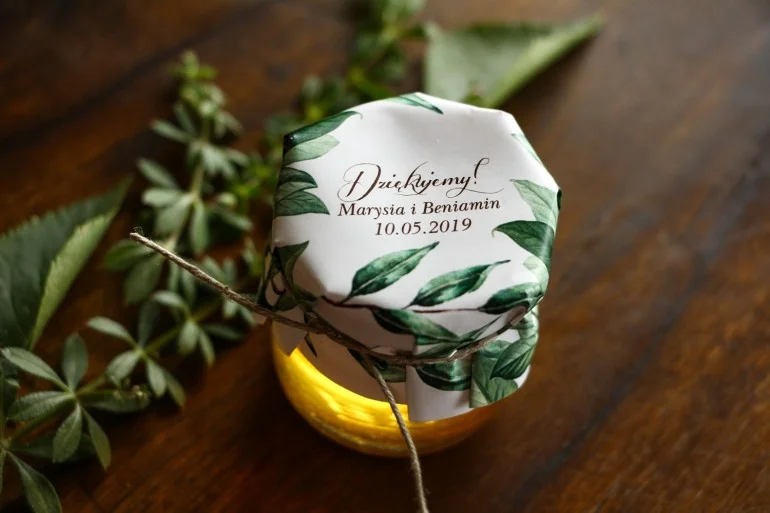
Wedding honey with olive branches | Indygo no. 2
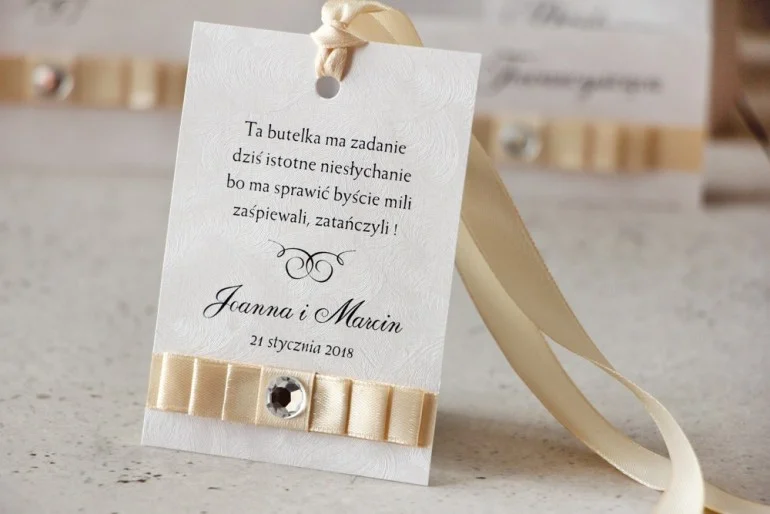
Elegant wedding vodka tags with rhinestones | Amaretto no. 1
Emergency Plan Just in Case
Although we dream of a perfect course of the wedding and reception, life is unpredictable, and with the participation of children – especially so. Therefore, it's worth developing a "plan B" for various eventualities. Here are some crisis situations that might happen and suggestions on how to react to them:
- Stage fright before entering: The child was supposed to lead you to the altar or carry the rings, but just before the ceremony they panicked and said they couldn't do it. Solution: Don't force them. Be ready to let go of this role or take it over yourselves (e.g., a witness can take the rings). Kneel by the child, say "It's okay, we understand, come with us by the hand or sit with grandma". It's important to show support, not disappointment. If after a while the little one says they want to try after all – allow it, but signal with a look and a smile that everything is fine.
- Sudden crying or shouting during the vows: Small children sometimes decide to express their emotions with a loud voice at the least appropriate moment. Solution: This is where it's useful to have an earlier arrangement with someone in the family that they will take the toddler outside or to the sacristy for a while if necessary. Don't interrupt the vows – trust that the designated person will calm the child. Guests usually approach such incidents with understanding (many of them are parents and know life). After everything, hug the little one and jokingly say that they were also moved by the ceremony – turning the situation into a joke will diffuse the atmosphere.
- Accident during play at the wedding: A cut knee, spilled drinks on a dress, a quarrel between kids – such things can happen. Solution: Have a first aid kit on hand (the mentioned bandages, hydrogen peroxide) and a spare outfit. When a child gets hit or falls, don't panic – hug them, calmly assess the situation, dress the wound. In case of a more serious injury, do not hesitate to ask a witness or someone close to drive you to a medical point – the child's health is more important than catching all wedding moments. As for quarrels between children – designate an older cousin as a mediator beforehand, or take on the role of a play judge yourselves to quickly settle the dispute (sometimes it's enough to separate the quarreling toddlers for a while and occupy them with another game).
- Overstimulation and fatigue: The child starts to have a tantrum for no apparent reason – it's possible that the excess of impressions has overwhelmed them. Solution: Take them to a quiet place, dim the lights, speak in a calm tone. It's possible they need to quiet down or sleep. Don't punish or shame them ("Everyone is looking at you!") – that will only make matters worse. Instead, say: "I see you're tired, I know, a lot is happening. Let's rest for a moment together on the couch, give me a hug". Sometimes five minutes of such a reset works wonders and the child returns to the hall like new.
The key in every emergency situation is to stay calm and flexible. Remember that this is your big day, but for the child, it is also a huge experience that they handle in different ways. Having an emergency plan and the support of loved ones will make it easier for you to react on the fly without spoiling the wedding atmosphere. Every even less-than-ideal situation will one day become an anecdote – who knows, maybe in a few years you will laugh remembering how your son hid under the table just when you were supposed to dance, or how your daughter fell asleep in dad's arms just before the bouquet toss. A wedding with children is more unpredictable, but also full of charm – just a bit of distance and a sense of humor is enough to draw joy from every moment.
Place at the Table and the Child's Company
An equally important issue is seating the guests in such a way that the child is provided with close company during the wedding. Ideally, your little one should sit right next to one of you or at least surrounded by loved ones, such as grandparents or godparents. Thanks to this, during meals, toasts, or speeches, the child will not feel lonely, and if necessary, someone will lend a helping hand (e.g., cut the meat on the plate or take them to the bathroom). If you are planning a separate table for children, make sure your child will have children they know to play with there – e.g., favorite cousins. Otherwise, it's better to seat them with you at the main table or nearby so they feel your presence. Children, seeing a parent within sight, are usually calmer and more boldly participate in the shared fun. On the other hand, seating a toddler at the other end of the hall among strangers could cause stress or a sense of alienation. When planning the seating, remember that the child should feel part of your closest group, not a "second-class" guest. A few extra places for family at your table can make a huge difference in the child's well-being during the reception.
Elegant wedding menu with a delicate accent of pink | Nefryt no. 1
Glamour style alcohol tags with gilding | Glamour no. 5
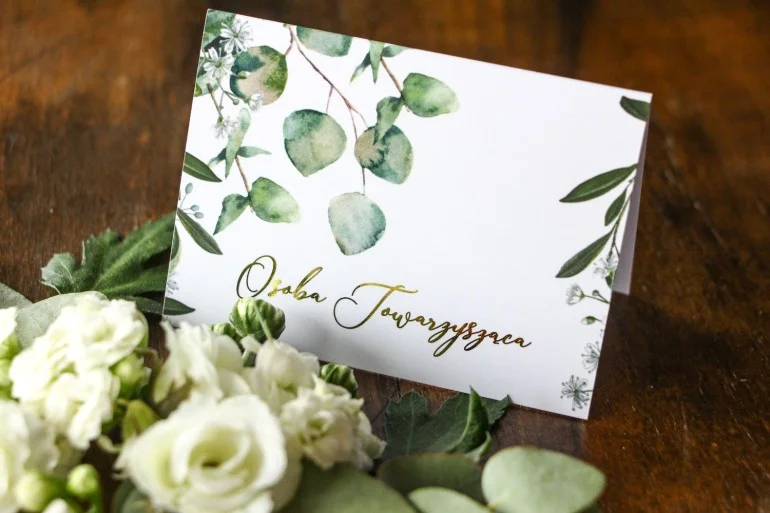
Gilded place cards with eucalyptus and baby's breath | Soreli no. 5
Emotional Support and Appreciating the Child
In the rush of organizational matters and guests to host, it's easy to forget that our little person is also experiencing a whole range of emotions. That is why it is so important to constantly show emotional support to the child on the wedding day. Find a moment before the ceremony begins to kneel by the child, look them in the eyes, and say something nice: "We are happy that you are with us today, remember that we love you. Have fun!". Such a simple message will give them confidence. During the greetings from guests, when you are busy, someone might give your little one a compliment or a small gift – don't dismiss it. If an aunt says: "You looked so beautiful as a flower girl!", lean over and thank her together with the child, emphasizing their contribution: "Yes, isn't it true? She helped us a lot and we are proud of her". Appreciating the child in public strengthens their positive experiences related to the wedding. Don't forget also to honor your own children in the heat of thank-yous. Often the bride and groom thank parents, godparents, witnesses during the wedding... And what about the little ones? You can prepare special thank-yous for them, e.g., during the official parent thank-you moment, add a sentence: "And now we would like to wholeheartedly thank you too, [child's name], for being with us today. Thank you for your help and for being the most wonderful son/daughter in the world. We love you". Then give the child a symbolic gift – it could be a teddy bear with the wedding date on its shirt, a small photo album of your family, or even a huge heart-shaped balloon. Such a gesture, however informal, will make your little one feel truly noticed and important on this breakthrough day for you. Guests will probably react with enthusiasm – everyone appreciates it when parents show love to their children. Finally, don't skimp on praise and hugs. When the emotions have subsided, tell the child how great they did. Remind them of funny or beautiful moments with their participation: "You were so brave walking with the basket before mom!", "I saw how beautifully you danced with grandma, you did a great job!". These words will make an image of their own success and a joyful memory from the parent's wedding day stay in the child's head. After all, that's what it's about – for everyone, both big and small, to remember this day as full of love, joy, and mutual closeness.
New Family: Building Bonds After the Wedding
Shared Memories and Rituals After the Ceremony
Once the wedding dust has settled and life returns to calmer tracks, it's worth maintaining that magical bond you created on the wedding day with your child. Celebrating memories of the ceremony together is a great way to prolong the emotions and strengthen family ties. Sit down together a few days after the wedding to watch photos taken by guests' phones (the ones from the photographer will probably come later) or play back the first dance recorded on a phone. Let the child tell you what they remember most – perhaps they will mention a funny situation or say they felt like in a fairy tale when they danced with you. These conversations will help you understand how the little one experienced that day and what made the biggest impression on them. A great idea is also to create a wedding album or scrapbook together. Print out a few photos (also those taken by the child if you gave them a disposable camera or Instax), keep souvenirs like a dried flower from the bouquet or a ribbon from a gift, and then jointly stick them into the album and decorate them with captions, the child's drawings, and stickers. For the child, this will be creative play and at the same time a way to process the events. You can ask them to draw their favorite moment from the ceremony – you will see the wedding through the eyes of a child, which is moving and instructive at the same time. Family creation of an album after the wedding will also become the first ritual of the newly formed family.
Continuation of Family Integration
With the wedding, you formally become one family, but true integration of all members takes time and shared experiences. It's important that after this big event, there is no slackening – it's worth consciously maintaining the child's enthusiasm for the new situation. Plan regular family activities, not just for holidays. Maybe you will introduce weekly "movie nights" with popcorn, where everyone takes turns choosing a movie (the child too, which will give them a sense of agency)? Or maybe you will sign up for some family classes together – e.g., going to the pool on Saturdays or bike trips every two weeks? By continuing to build the relationship already as an official family, you will show the child that the wedding was not the end of efforts for mutual closeness, but the beginning of a new, even better stage. Don't forget to celebrate anniversaries and small successes as a blended family. First wedding anniversary – make a toast also for how much your child has brought to your life over this year. Maybe a joint outing on this occasion, even for ice cream? Also celebrate the child's achievements – let the new parent (stepmother/stepfather) be just as involved in praising for good grades or cheering at a school performance. The more such positive interactions, the stronger the bond becomes. The child must feel that they have both of you, that they did not gain a new parent at the expense of the old one, but that they simply have more people who love them.
Openness to Conversation and Feelings
Building a happy family after experiences is a process that is not always easy. The child may have worse days, miss the old arrangement, sometimes show anger or sadness directed at the new situation. It's important that you as parents are always ready to listen and talk. The wedding was an important milestone, but life goes on – so try to maintain the same open communication you started before the ceremony. Ask the child from time to time how they feel in the new family, if anything is worrying them. Resolve conflicts on the fly, don't sweep problems under the rug. If difficult emotions appear, look for solutions together – maybe a conversation with a child psychologist or workshops for blended families? It's no shame, and it can greatly help understand the perspective of each family member. Remember also that a family is created every day, not just for holidays. Including the child in your wedding was a beautiful gesture, but the real test will be the subsequent years of being together. Therefore, be patient, understanding, and full of love. Go back in your thoughts to the wedding day, remind yourselves of those moments when you all laughed and were moved together – this is your foundation. Children from previous relationships can bring a huge amount of love and joy to a new marriage if only we give them space to be themselves and show unconditional acceptance. Your wedding is also their celebration – and the successful inclusion of the little ones in its course will pay off with better understanding, trust, and happiness in the entire blended family.
Summary
Including children from previous relationships in the wedding ceremony and reception is a wonderful way to show them love and respect on such an important day for you. Thanks to honest communication, joint planning, and entrusting the little ones with appropriate roles, you will make the wedding day an unforgettable experience for the youngest as well. From solemnly leading a parent to the altar, through participation in rituals uniting the family, to dancing on the floor and helping with distributing gifts – children can be present in almost every element of the wedding, adding authentic warmth to it. Remember to always be guided by the child's well-being and comfort. Nothing by force – true involvement is born from desire and joy, not from coercion. Sometimes a small gesture, a smile, playing together is enough for the toddler to feel like an important part of the event. Providing them with support, attention, and praise will make them feel pride and happiness instead of stress. And a happy child means happy parents and a successful wedding that everyone remembers with a smile. When organizing your dream wedding, don't forget about those smallest dreamers who want to be a part of it. Include children in your love story – writing its next chapter together, hand in hand, regardless of who the biological parent is. Your family, though starting from different paths, unites in a shared celebration on the wedding day. Let it be a day where everyone – both big and small – feels special. Such an atmosphere will result in beautiful relationships for years and become the foundation for building a strong, loving blended family. Finally, it's worth emphasizing that a wedding with children, full of emotion, laughter, and fun, is a true picture of life – not perfect, yet wonderful in its diversity. By creating these priceless memories together with your little ones, you give them the best gift: a sense of belonging and love. After all, that's what this big day is all about. Because love is not only the vow of two people but also the care for the whole family that is being created that day.
Recommended Articles
- How to involve children in the wedding ceremony?
- When to start planning a wedding?
- Guest list and seating guests: How to create the perfect seating plan?
- Wedding attractions for guests 2025: Ideas to diversify the reception
- How to choose wedding invitations? 10 key steps
- What are place cards?
- Thanking guests: Why it's worth choosing fortune cookies?