Is It Worth Having a Sunday or Off-Season Wedding?

Not so long ago, the idea of a Sunday or winter wedding raised a few eyebrows. Today, it’s one of the hottest topics in the wedding industry. Modern couples are increasingly opting for alternative dates, discovering that hosting a wedding outside of a Saturday or the peak season can bring not only real savings but also a unique atmosphere that guests will talk about long after the party ends. But is it always worth it? Are there any hidden catches nobody talks about? In this article, we’ll break the topic down into its core elements—without sugarcoating.
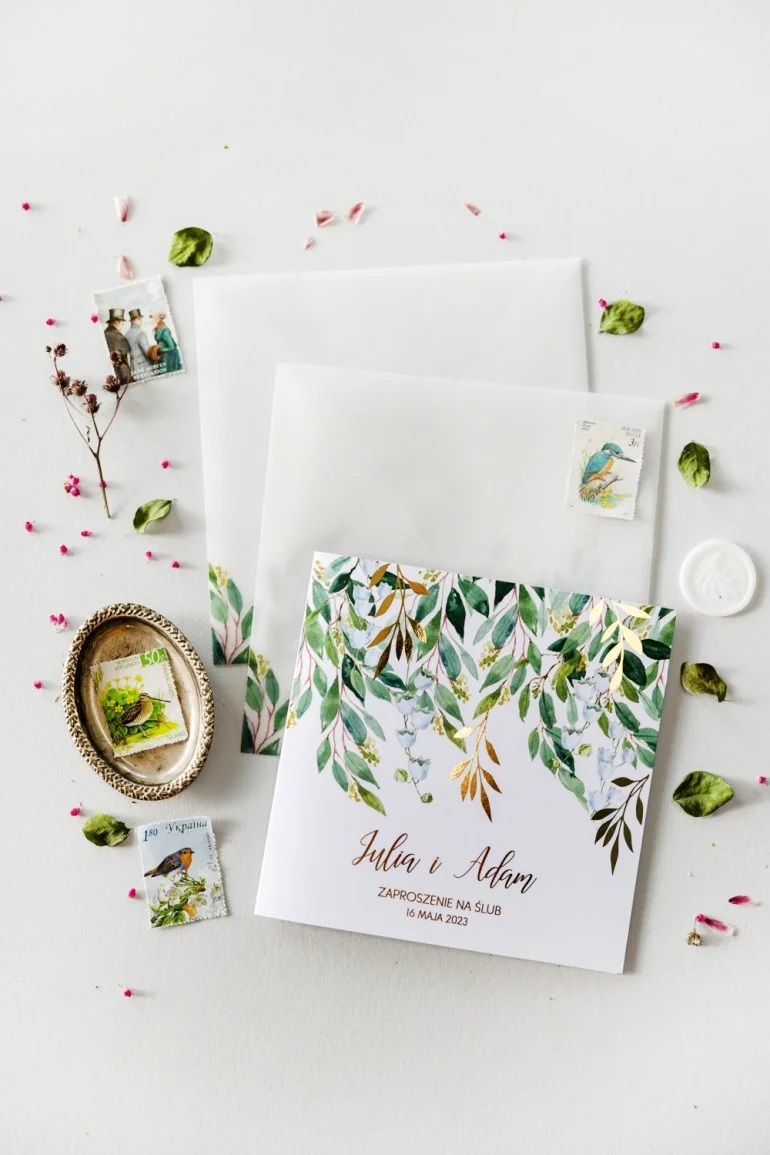
Classic Greenery Wedding Invitations with Gold Foil Accents | Gold Foiled Wedding Invites | Rubin No. 4
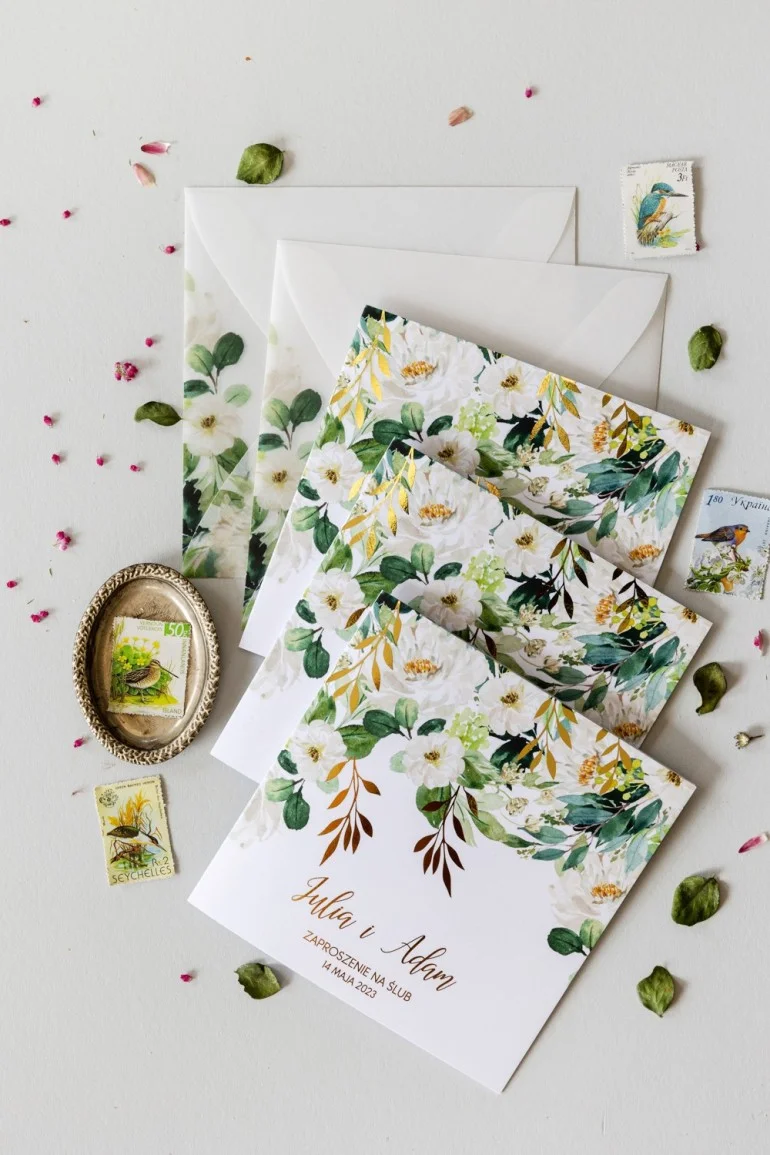
Stylish Wedding Invitations with Gold Accents and Watercolor Flowers | Exclusive Wedding Invites | Rubin No. 1
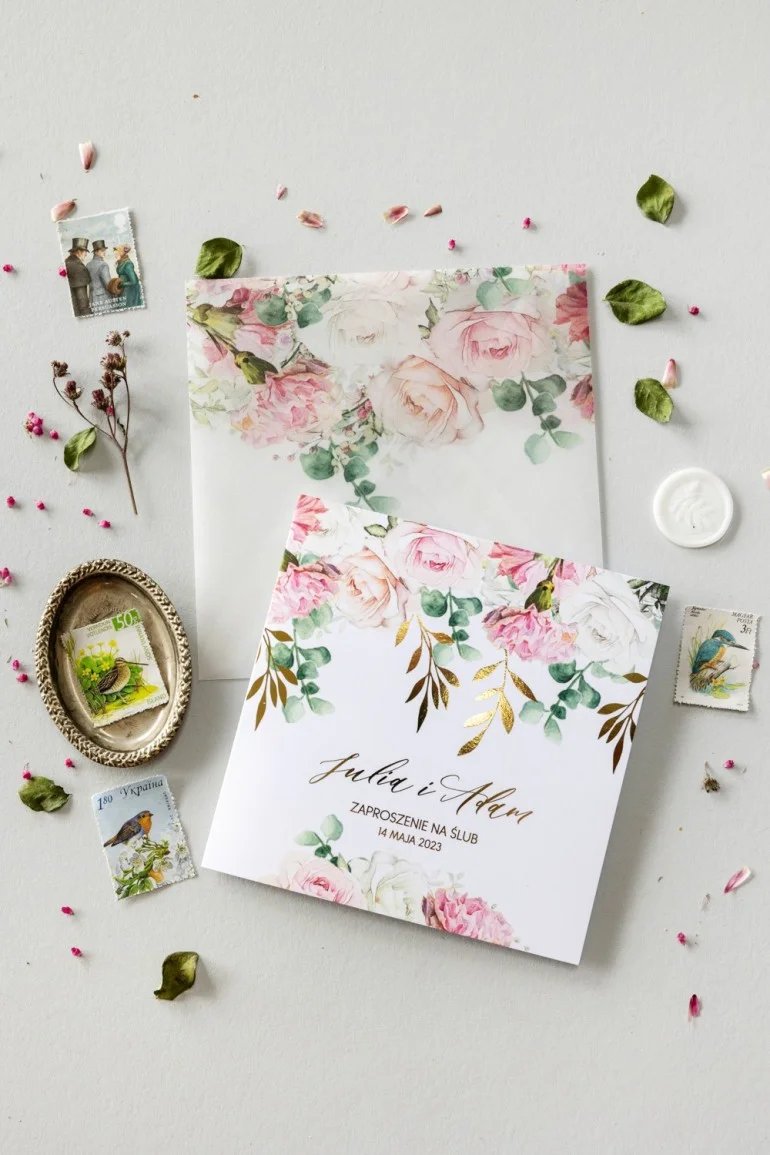
Pink Rose Wedding Invitations with Gold Foil and Vellum Envelope | Glamour Wedding Invites | Rubin No. 9
1. Why Are Sunday and Off-Season Weddings Gaining Popularity?
A shift in mindset – a new generation, new priorities
Today's couples approach wedding planning entirely differently than previous generations. Just a few decades ago, the wedding date was largely dictated by tradition, local customs, and family expectations—Saturday, the long May weekend, or August, end of discussion. Nowadays, newlyweds have a different mindset: they want their day to be unique, personal, and tailored as closely as possible to their lifestyle. This shift in mentality has made weddings on Sundays, Fridays, or even Wednesdays perfectly normal and widely accepted. Guests have changed too—if they truly want to attend, they will happily take a day off or rearrange their plans.
Moreover, venue availability plays a massive role. The traditional wedding season in Poland runs roughly from May to September. During this time, popular Saturdays at top-tier venues are booked years in advance. Couples who fall in love with a specific location—a palace, a manor house, or a restaurant with a stunning view—often have to wait two, three, or even four years to secure their dream Saturday. Choosing a Sunday, Friday, or an off-season date opens those doors almost instantly. This is an invaluable advantage for couples who don't want to or simply can't wait that long.
The financial aspect is equally significant. Wedding costs are rising every year. In 2025, the average cost of a 100-guest wedding in Warsaw ranged from PLN 85,000 to 100,000—a staggering amount that forces many couples to look for savings. Opting for a non-traditional date has become one of the most effective ways to lower the final bill without compromising on quality. And that is the crux of the matter: you can have the wedding of your dreams just by choosing your date wisely.
The wedding season – when is the peak?
The traditional wedding season kicks off in May and lasts until the end of September. These are the five months when the wedding industry operates at full throttle. June, August, and September are the absolute peaks—weekend after weekend, venues, photographers, and bands are fully booked. Naturally, this high demand translates into premium prices and limited availability. October and April remain relatively popular, but from November to March, the industry experiences a noticeable slowdown. This is exactly where the greatest potential for savings lies.
It's also worth noting that the popularity of specific days of the week varies greatly. Saturday has always ruled—and still does. Fridays have been gaining traction for a few years now, especially before long holiday weekends. Sunday was long treated as a necessary evil or a last resort, but that perception is rapidly changing. Thursdays and Wednesdays remain a true niche, but they have their devoted fans, particularly among couples aiming for a truly intimate celebration or maximum budget efficiency. Understanding this hierarchy of popularity is crucial because it directly impacts the prices and discounts offered by vendors.
For a couple planning their big day, the most important realization is this: when you book a Saturday in June or August, you are paying a premium simply because it's peak season. When you choose a Sunday in November, you are paying for the actual value of the service—and that difference can amount to tens of thousands of zlotys. Keep in mind that a well-planned off-season wedding doesn't look or taste any worse. On the contrary, a slower period allows vendors to focus on your celebration with 100% of their attention.
Market trends – what do the numbers say?
The wedding industry is one of the most dynamic service sectors. Year by year, the number of couples opting for non-Saturday weddings grows, and venues are increasingly promoting their offers for alternative days. This isn't a coincidence—it's a response to real market demand. Couples are better informed, bolder in negotiations, and more willing to question tradition if that tradition costs them significantly more.
Key market observations:
- More and more venues actively advertise discounts for Fridays, Sundays, and off-season dates.
- Photographers and videographers are happy to offer lower rates during off-peak times.
- The availability of DJs and live bands is vastly better outside of peak Saturdays.
- There is a rise in intimate weddings and microweddings, which naturally suit unconventional dates.
When planning a wedding, it's worth taking care of the smallest details right from the start—and this is where the free wedding app Blissaro comes in handy, helping you manage the entire process from your first decisions to the big day. Similarly, when putting together your wedding stationery, be sure to visit amelia-wedding.pl—one of the best local stores to get your dream wedding invitations, featuring designs tailored to every style and season.
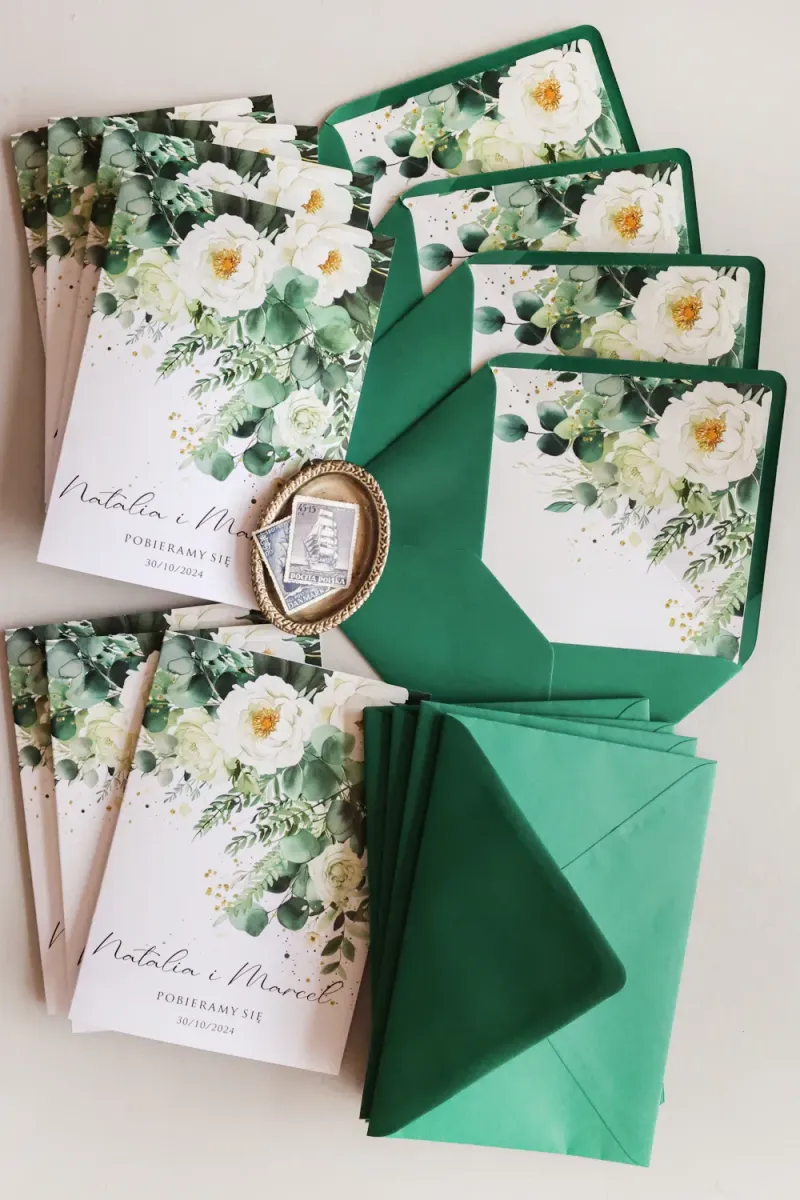
Wedding Invitations with White Flowers and Green Accents | Minimalist Personalized Invites | Impresja No. 9
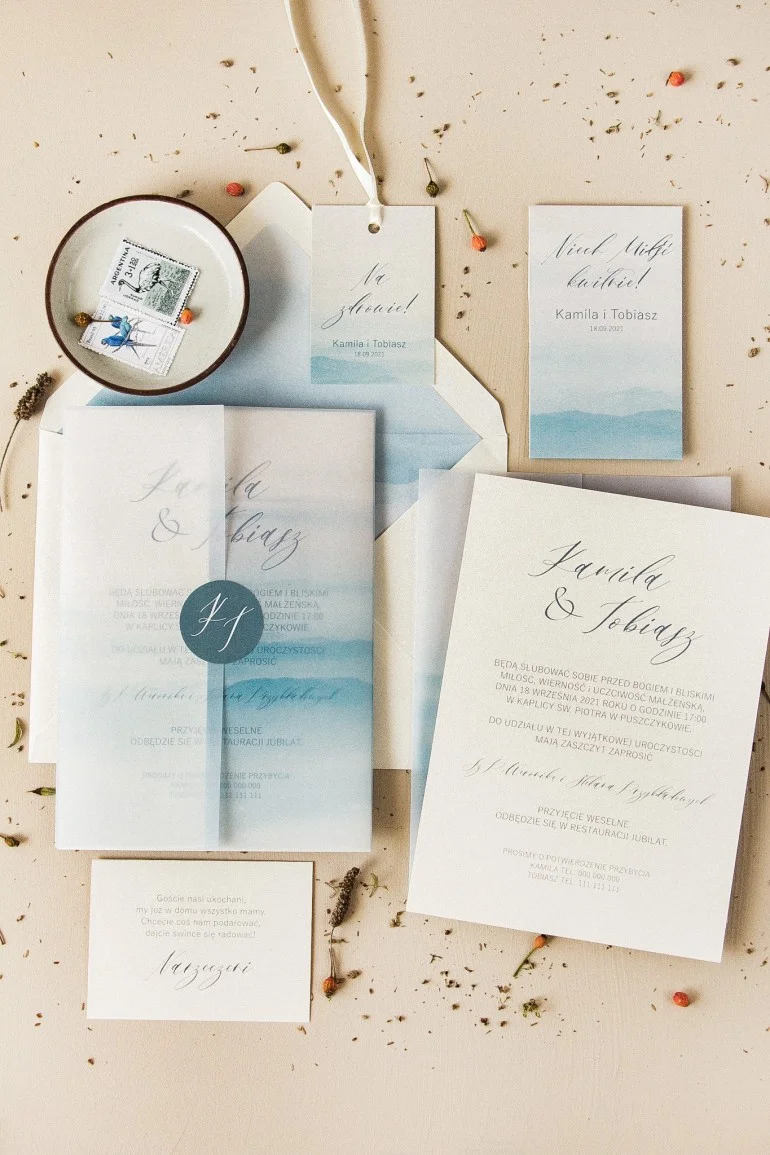
Elegant Vellum Wedding Invitations | Watercolor and Pearlescent | Opal No. 4
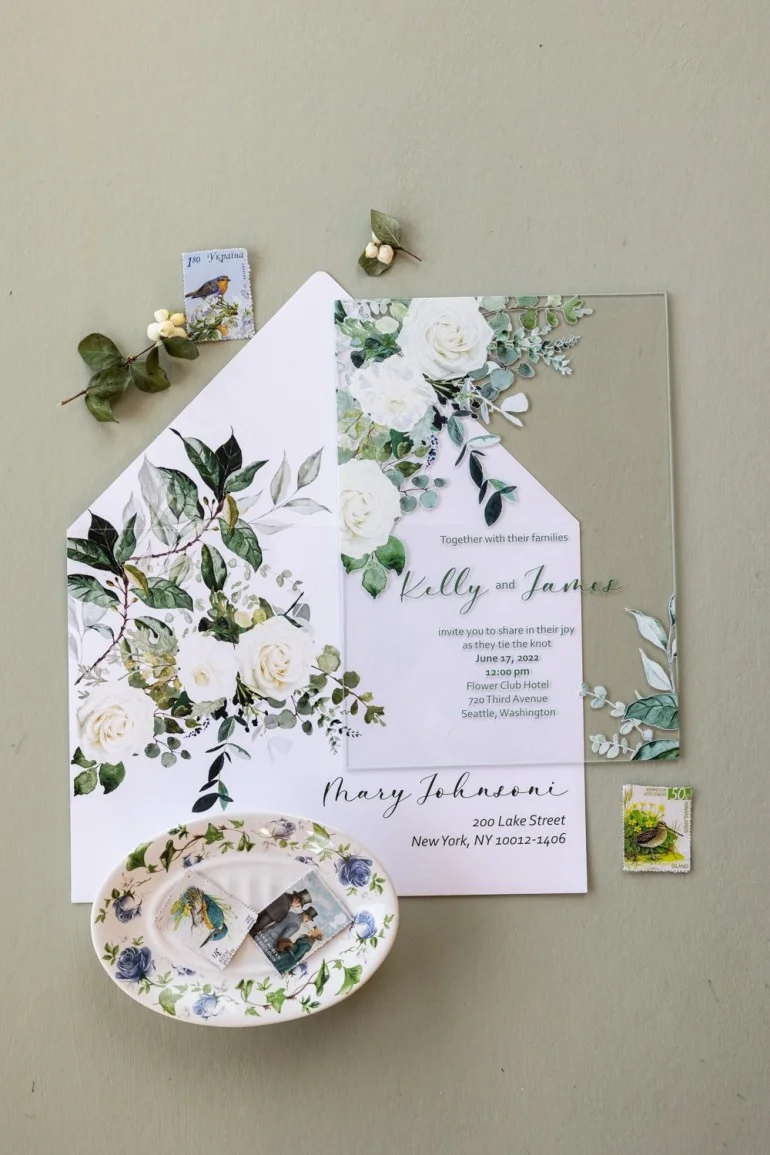
Floral Elegance Glass Wedding Invitations with White Roses and Greenery Envelope | Korani No. 12
2. The financial side of a Sunday wedding – how much can you actually save?
The wedding venue – where are the biggest savings?
Venue rental is one of the largest components of a wedding budget, and simultaneously the area where you can save the most by choosing the right date. Venues use various pricing models—some have flat rates regardless of the day, but an increasing number consciously adjust their pricing based on the date's popularity. And this is where the math gets really interesting.
A typical discount for a Sunday wedding compared to a Saturday ranges from 10 to even 40 percent. For example: one venue might offer a PLN 30 discount per guest for Sunday weddings, while another might drop the price by PLN 50 per guest for events held from Monday to Thursday. For a 100-guest wedding, that’s a saving of PLN 3,000–5,000 just on the catering, not to mention potential discounts on the venue hire fee itself. Some prestigious locations offer winter discounts reaching up to PLN 13,000 for the entire event—money that could easily cover your photographer or fund a chunk of your honeymoon.
It is estimated that by organizing a wedding outside the summer season, you can save between 20 and 30 percent of your total budget. With a budget of PLN 80,000–100,000, that’s a real PLN 16,000–30,000 staying in your pocket. These savings apply not only to the venue—similar discounts are offered by photographers, videographers, bakers, and florists. If you approach this strategically and negotiate favorable terms with all key vendors, the difference compared to a mid-season Saturday party can be truly impressive.
Vendors – who gives discounts and on what terms?
Wedding photographers are a special category when it comes to off-season availability and pricing. A top-tier photographer is booked years in advance for peak-season Saturdays, and their rates are non-negotiable. On a Sunday or during the off-season, the situation is completely different—availability is much better, and many photographers apply lower rates or offer extra perks, such as faster photo delivery. To help you make the right choice, we highly recommend reading our post on what questions to ask a wedding photographer before hiring them.
The same goes for DJs, MCs, and live bands. On peak-season Saturdays, the best acts are booked solid for months ahead. On Sundays and off-season dates, they have far more open slots, giving the couple much better negotiating power. Importantly, this availability doesn't mean lower quality—quite the opposite, you get to choose exactly the artists you want, rather than settling for whoever happens to be free. Great music is the backbone of any wedding, so being able to secure the best band without the pressure of time is invaluable.
Hotels and external catering companies also have their own off-peak discount systems. One venue near Toruń offered a 15 percent discount per guest from November to March, plus 20 percent off hotel rooms and the same discount for the next-day brunch (poprawiny). In real numbers: instead of the standard rate of PLN 385 per plate, you paid PLN 325; instead of PLN 420, it was PLN 355; and for a premium menu: PLN 505 instead of PLN 595 per person. For 100 guests, that’s thousands of zlotys saved just on food and drinks—with zero compromise on quality.
Cost comparison table – peak season vs. off-season
| Wedding Element | Peak Season (Saturday, June–August) | Off-Season / Sunday | Estimated Savings |
|---|---|---|---|
| Price per guest (Poznań, 100 guests) | PLN 245–255/person | PLN 215–235/person | approx. PLN 2,000–4,000 |
| Price per guest (Warsaw, 100 guests) | PLN 450–700/person | PLN 380–560/person | approx. PLN 7,000–14,000 |
| Photographer | Full rate | 0–15% cheaper | Up to a few thousand PLN |
| Wedding Venue | Full rate | 10–40% cheaper | PLN 2,000–13,000+ |
| DJ / Band | Full rate | Better availability, sometimes cheaper | Hundreds to thousands of PLN |
| Accommodation (100 guests) | Full rate | -20% and more | Hundreds to thousands of PLN |
| Total Savings | — | — | 20–30% of the budget |
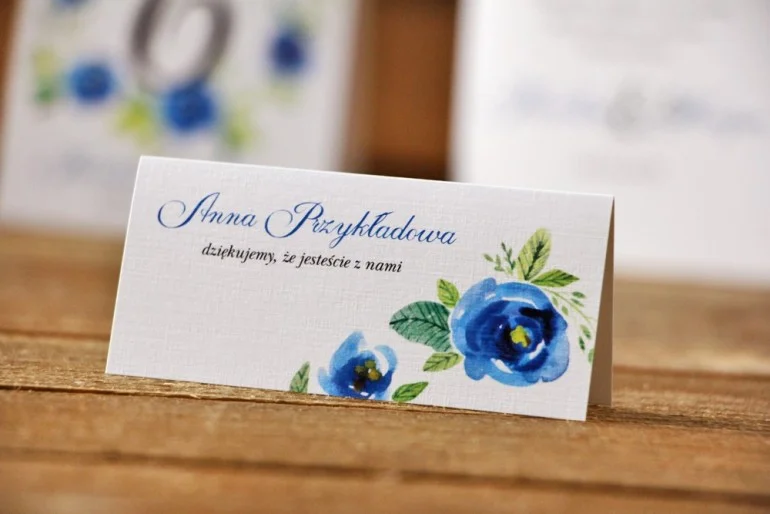
Textured Linen Paper Place Cards with Blue Roses | Akwarele No. 10
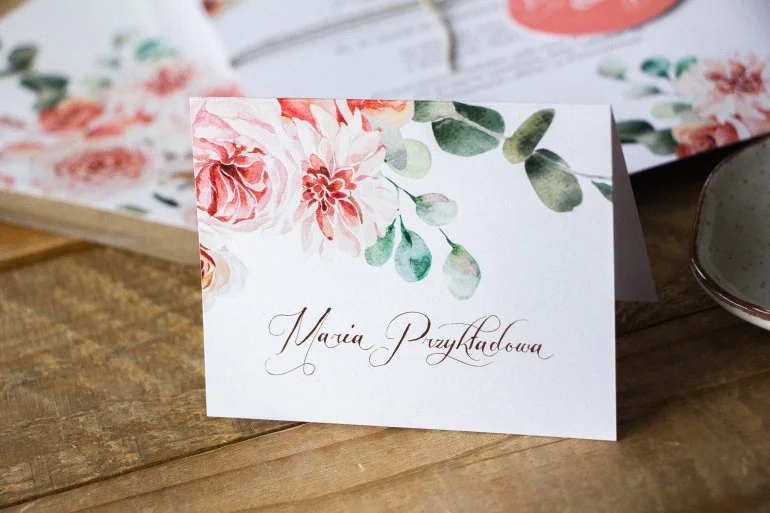
Place Cards with a Pink Bouquet Composition | Indygo No. 7
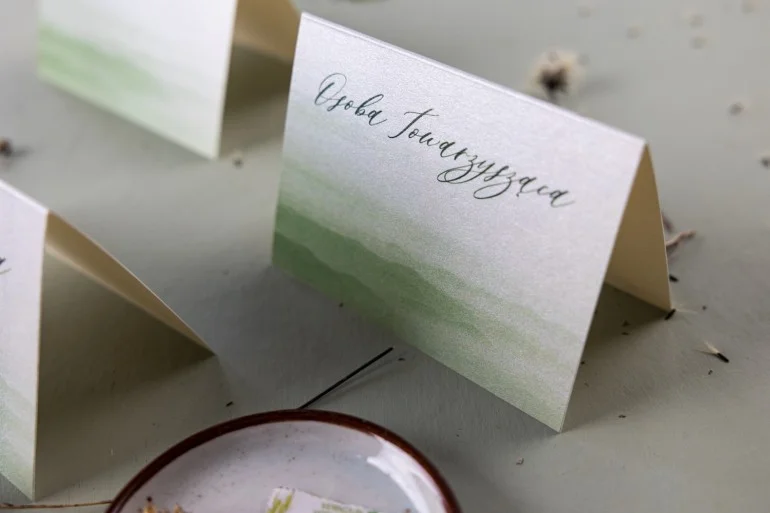
Pearlescent Cream Wedding Place Cards with Greenery | Opal No. 11
3. Sunday weddings – pros and cons for the couple and their guests
Why might Sunday be the perfect choice?
Sunday has one undeniable argument in its favor: it is a day off for the vast majority of guests. On a Saturday, you might have guests arriving straight from work or exhausted from a stressful week. On a Sunday, they arrive rested after Saturday—either in a relaxed mood or having spent quality outdoor time with their kids. Because of this, the atmosphere is often calmer and more focused on you as a couple, rather than on partying wildly until 5 AM. Many couples who opted for a Sunday wedding describe it as an elegant, intimate reception—exactly what they dreamed of.
Another advantage is the ability to create a one-of-a-kind mood. A Sunday wedding shares the warmth of a Sunday family dinner—slow-paced, full of conversations and laughter. If you want your guests to truly connect and spend time at the table, rather than just bouncing between the open bar and the dance floor, a Sunday might be exactly what you need. Of course, nothing stops the party from going hard and late, but the day of the week naturally sets a different context—one that many couples absolutely love.
Pros of a Sunday wedding in a nutshell:
- Guests have the day off and don't need to take leave.
- Bigger discounts than on Saturdays—up to 40% in savings.
- A calmer, more elegant atmosphere.
- Better availability of vendors.
- Next-day celebrations (poprawiny) naturally fall on a Monday (you can skip them or keep them modest).
- The ability to book your dream venue much sooner.
Downsides of a Sunday wedding – what might not work?
It wouldn't be fair to only highlight the positives—Sunday weddings have their challenges, too, and you should know them before making a decision. The biggest hurdle is the end of the party. Monday is a workday for most people, which means a significant portion of your guests will have to leave earlier than they would on a Saturday. This especially applies to guests with children and those traveling from afar who need to factor in the drive home. This doesn't have to ruin the party, but it's worth anticipating. You can either start the celebration earlier or accept that the dance floor might be a bit emptier after midnight.
Civil registry offices can also pose a challenge. In many places, registry offices are closed on Sundays, meaning a civil ceremony might only be possible on a Saturday or a weekday. This means you either have the legal ceremony the day before, or you opt for a church/religious ceremony on Sunday and handle the legalities on another date. It's an extra logistical step worth tackling early to avoid last-minute surprises.
Cons of a Sunday wedding:
- Monday is a workday – some guests will leave early.
- Civil ceremonies at the registry office might only be possible on weekdays or Saturdays.
- Next-day celebrations might need to be scaled down or reimagined.
- Not all out-of-town guests can attend without taking a day off.
- Some vendors may have restricted working hours on Sundays.
Ultimately, it's all about perspective. As experienced wedding planners often say: guests who truly want to be there will find a way, regardless of the day of the week. Those looking for an excuse would find one anyway. So, don't stress too much over potential difficulties—focus on what truly matters to you.
How to make your guests love a Sunday wedding?
If you're hosting a Sunday wedding, taking care of a few details can ensure your guests embrace the idea with enthusiasm. First and foremost—give them plenty of notice. A Sunday wedding isn't something you announce a month in advance. Your beautiful wedding invitations should reach your guests at least 4–6 months prior, and you can send save-the-dates even earlier so they have time to plan their logistics. It's also a great idea to include a short note about accommodation or transport for those traveling from afar.
Equally important are the stationery and decor details that set the tone and show your guests you care. Elegant place cards with each guest's name, a beautiful menu, and personalized wedding favors create the atmosphere of a meticulously planned, exclusive event—regardless of the day of the week. Guests who feel pampered and welcomed won't be thinking about the fact that it's a Sunday. They'll be thinking about how lucky they are to be part of such a beautiful, touching celebration. And that's exactly the goal.
4. Off-season weddings – what does it mean in practice?
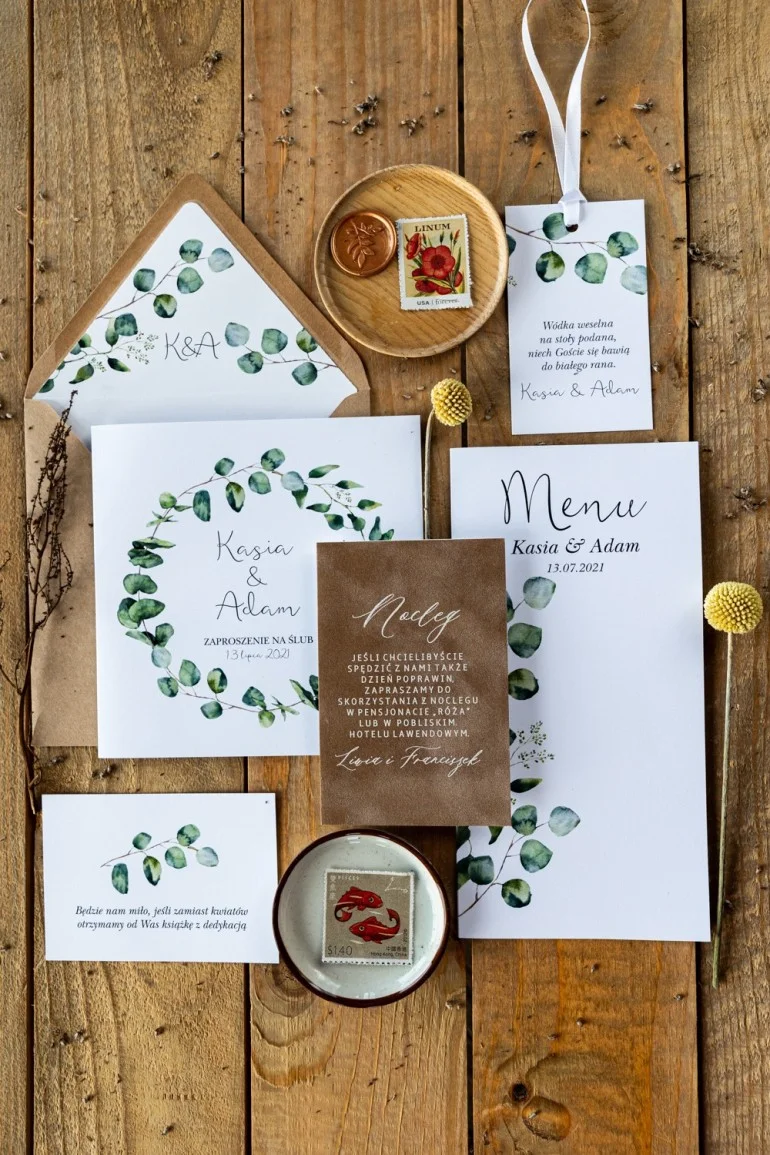
Eco-Friendly Greenery Wedding Invitations | Rustic Invites in a Kraft Envelope | Kalia No. 2
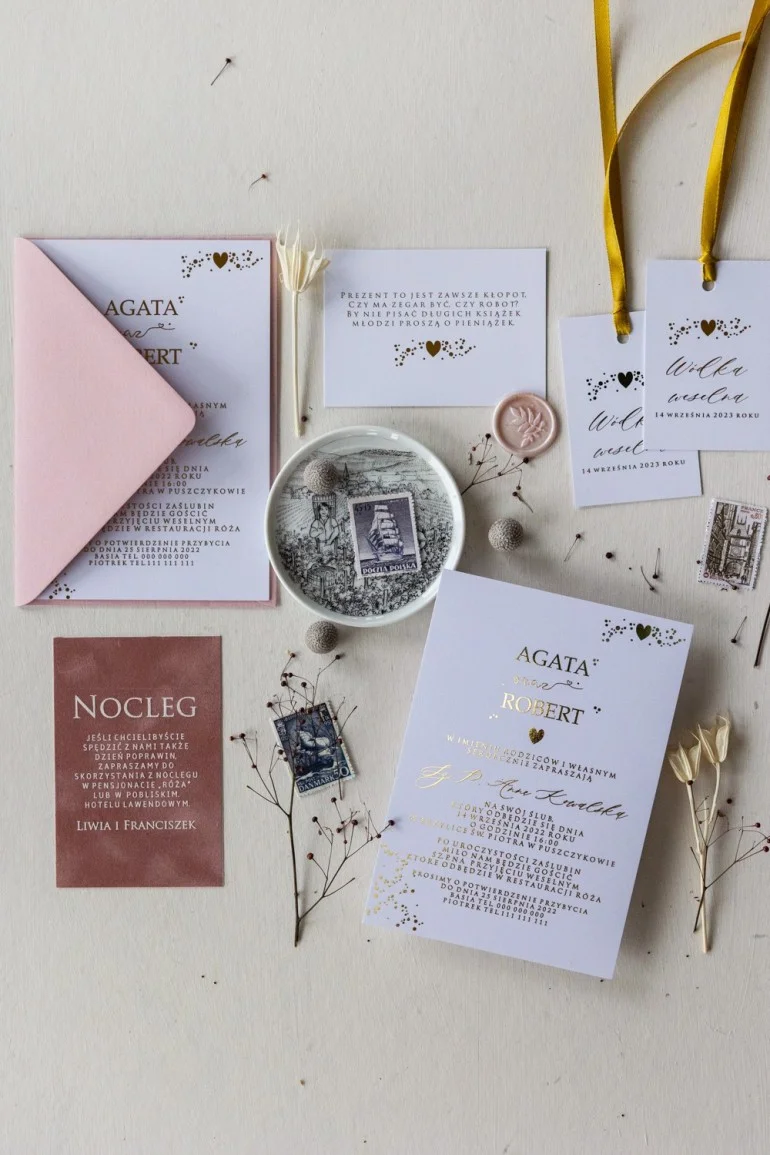
Subtle Wedding Invitations, Minimalist Design with Gold Elements | Simple No. 3
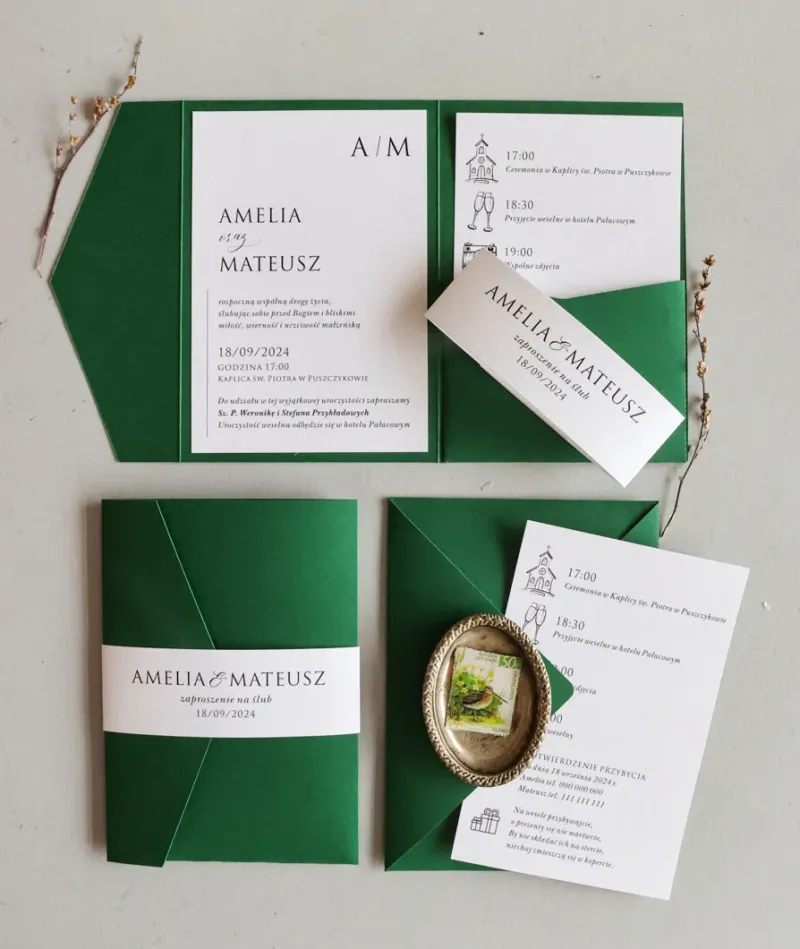
Elegant Bottle Green Wedding Invitations | Minimalist and Modern Design | Kraft No. 10
Peak vs. off-peak – the boundary you need to know
When industry pros talk about "off-season weddings," they primarily mean the months from November to the end of March—full-blown autumn and the entirety of winter. October and April are a gray area: many venues treat them as shoulder months, meaning discounts might not be as steep as in December or February. However, both autumn and winter have their own unique charm, which couples are increasingly using as the core theme of their wedding—and rightly so. If you are considering a winter date, be sure to read our detailed article: Planning a winter wedding – challenges and magical atmosphere.
January and February see the lowest demand for weddings. Venues, hotels, and vendors are most open to negotiations during this time, and discounts can be massive. On the flip side, these are the months when the weather is the most unpredictable and hardest to manage if you're hoping for outdoor elements. But for couples dreaming of fairy-tale snow, a roaring fireplace, and a romantic winter vibe, it's an absolute bullseye.
November and December combine lower prices with an atmosphere that other dates simply cannot offer. Advent and Christmas weddings have a growing fanbase—the warm glow of candles, Christmas tree decorations, mulled wine, gingerbread ornaments, and that unmistakable winter magic make such a wedding unforgettable for guests. More and more couples are consciously choosing these dates not despite the season, but because of it.
An autumn wedding – gold, crimson, and breathtaking scenery
For many couples, October and early November are the most beautiful times to get married. The vibrant colors of autumn act as a natural decorator that is second to none—golden and crimson leaves, the soft, warm glow of the autumn sun, mist rolling over meadows, and the rich scents of damp earth and wood. If you're planning a rustic, boho, woodland, or vintage wedding, autumn plays right into your hands. Venue decorations become simpler and more affordable because nature does the heavy lifting for you.
Autumn is also a time for seasonal delicacies that can elevate your wedding menu in ways impossible to replicate at other times of the year. Creamy pumpkin soups, venison dishes, mushrooms in every form, apple desserts, fruit wines, and liqueurs—wedding chefs have incredible creative freedom during this season. Guests attending an autumn wedding often go home feeling like they've had one of the best wedding meals of their lives. It's no coincidence—seasonal produce is simply fresher, tastier, and more interesting than standard summer fare.
An autumn wedding is also a perfect opportunity for stunning photos and videos. Wedding photographers often admit that autumn provides conditions for creating cinematic shots. Soft, diffused light without harsh shadows, dramatic backdrops of rust-and-gold trees, a misty morning during an outdoor session—these elements look absolutely spectacular on camera. Couples who choose an autumn wedding often receive albums with a completely different vibe than summer weddings—deeper, more atmospheric, and highly emotional.
A winter wedding – fairy-tale, intimate, and surprisingly affordable
Winter weddings still hold a somewhat exotic status, but that niche appeal is their greatest strength. Guests invited to a winter wedding know it will be something different—and they are ready for it. White snow, crisp frosty air, warming welcome drinks, and decor in rich tones of copper, gold, and white—it's a recipe for a wedding everyone will remember. Plus, you can include attractions that summer could never offer: a horse-drawn sleigh ride, ice skating, a bonfire with sausages, an outdoor hot tub, or even snow games if your guests are up for some fun.
From a financial standpoint, winter is a paradise for budget-conscious couples. On average, you can save between 15 and 30 percent on venue costs, and photographers and other crews are also more willing to negotiate. There are venues that offer winter discounts of up to several thousand zlotys for the whole event—amounts that make a real difference to your budget. Importantly, these savings do not mean a lower standard. Many prestigious venues actually have more time in the winter to truly perfect every detail of your big day.
Winter wedding attractions worth considering:
- A horse-drawn sleigh ride for the guests and the couple
- An outdoor bonfire with mulled wine and roasted treats
- Interactive snow games between dancing sets
- A winter outdoor photo session right after the ceremony
- A hot tub or heated barrel on the venue's terrace
- A menu featuring seasonal, warming dishes and mulled beer or cider
- Winter-themed decor—snow globes, ice sculptures, and an abundance of candles
5. Logistics and planning an off-season wedding – what to prepare for?
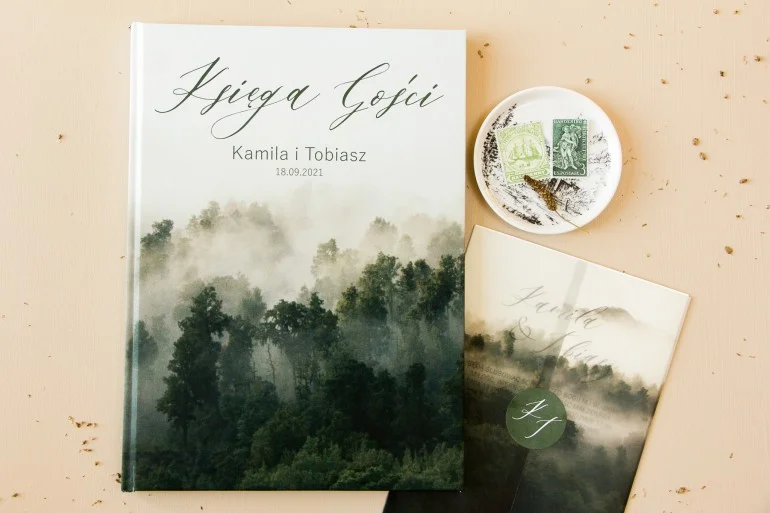
Wedding Guest Book with a Woodland Theme | Opal No. 2
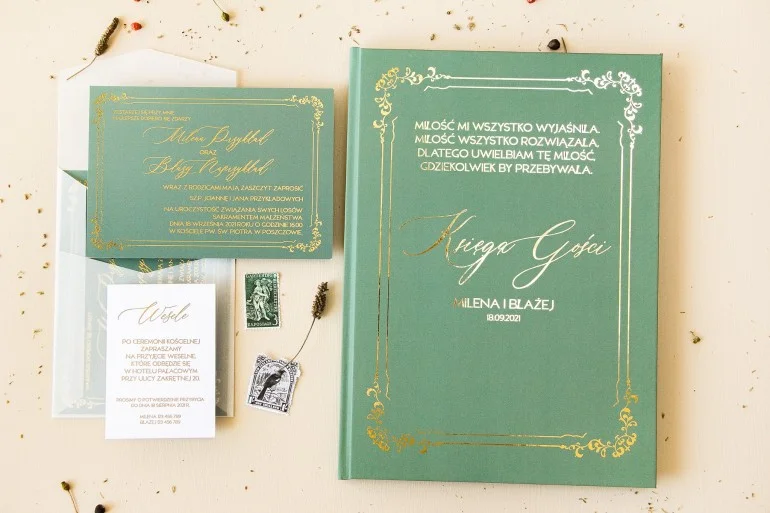
Personalized Guest Book with Gold Calligraphy | Sand No. 3
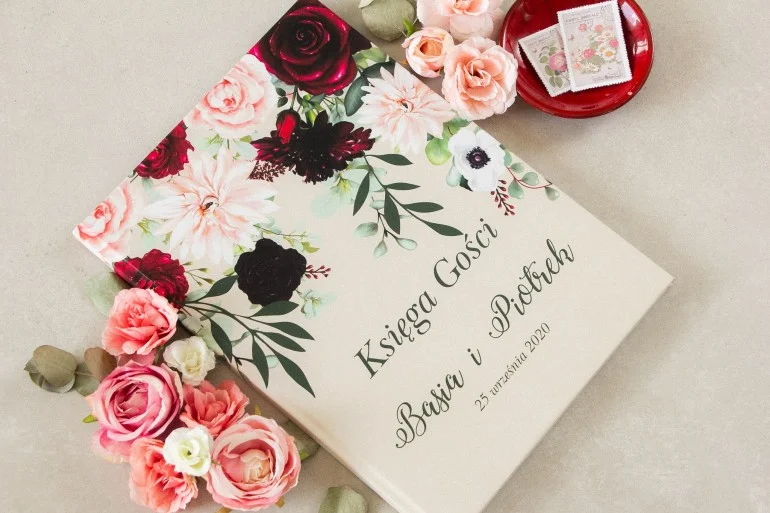
Burgundy Guest Book with Anemones and Dahlias | Korani No. 4
Accommodation and transport – a crucial puzzle piece
An off-season wedding often takes place in a location that requires guests to travel. This is where good planning can turn a potential problem into a massive perk. Accommodation is cheaper off-season, and hotels or guesthouses near your venue are usually happy to offer attractive group discounts. It's a great habit to negotiate room blocks early and inform your guests about the special rates—these are gestures that guests truly appreciate and remember. You can find detailed advice on this in our post about organizing transport and accommodation for wedding guests.
Transport is another issue many couples overlook during the planning phase. If the wedding is on a Sunday, some guests might struggle with the journey home, as trains and buses run less frequently on Sunday evenings than on Saturdays. It's worth checking schedules in advance and either organizing an extra return shuttle or suggesting that guests book a room and leave in the morning. This information should be included right from the invitation stage or as a separate insert—clear, specific, and helpful. Your guests will be grateful for your thoughtfulness.
When it comes to invitations, ensure all logistical details are in one place. Professional designs featuring an insert with accommodation, transport, and dress code info are a standard that makes life much easier for everyone. On amelia-wedding.pl, you'll find a wide selection of designs tailored to every season and wedding style—from elegant minimalism and rustic autumn motifs to shimmering winter designs with delicate silver and gold accents.
Decor and styling tailored to the season
One of the biggest secrets to a successful off-season wedding is not fighting the season, but embracing it. Trying to force a summer vibe in the middle of winter—with imported exotic flowers and outdoor fountains—is a fast track to disappointment and overspending. However, if you let the season be your ally, the results can be breathtaking.
In autumn, natural materials work wonders: wooden accents, moss, pumpkin and gourd arrangements, and wreaths made of dried flowers and rosehips. The color palette is already there—earth tones, copper, gold, dark green, burgundy, and deep red naturally create a beautiful, cohesive look. In winter, lean into the warm glow of candles, velvet fabrics in deep colors, pine branches, pinecones, white feathers, and silvery glitter paper. Add a welcome drink of hot cocoa or mulled wine, and your guests will be in the festive spirit before the first dance even begins.
Small details play an extraordinary role in setting the mood—the ones guests might not recall by name, but which create an overall impression of care and style. Even simple place cards with a guest's name, beautifully matched to the wedding theme, are a seemingly minor detail that sends a strong signal that the couple thought of everything. On amelia-wedding.pl, you'll find a rich selection of them in rustic, glamour, boho, and many other styles—perfect for both autumn and winter weddings.
Weather – how to minimize the risk?
This is probably the biggest fear for couples planning an off-season wedding: what if the weather ruins everything? And let's be honest—the risk of rain, wind, snow, or frost is higher in autumn and winter than in June. But—and this is key—summer can be incredibly temperamental too. Torrential downpours in August, thunderstorms in July, or unbearable heatwaves that leave guests fainting on the dance floor are not uncommon. No date guarantees 100% perfect weather.
The answer to this challenge is buffer planning and transparent communication with your guests. Let them know in advance that the wedding is taking place during a specific season and what that means for their attire. Ensure the venue has heated walkways, a covered terrace, or at least cozy indoor spots where guests can relax. If you're planning an outdoor photo session, always have a Plan B—a nearby forest, a winter conservatory at the venue, or a charming historic corridor can provide photos just as stunning as a summer meadow.
6. The psychology of choosing a date – what scares guests and what pleasantly surprises them?
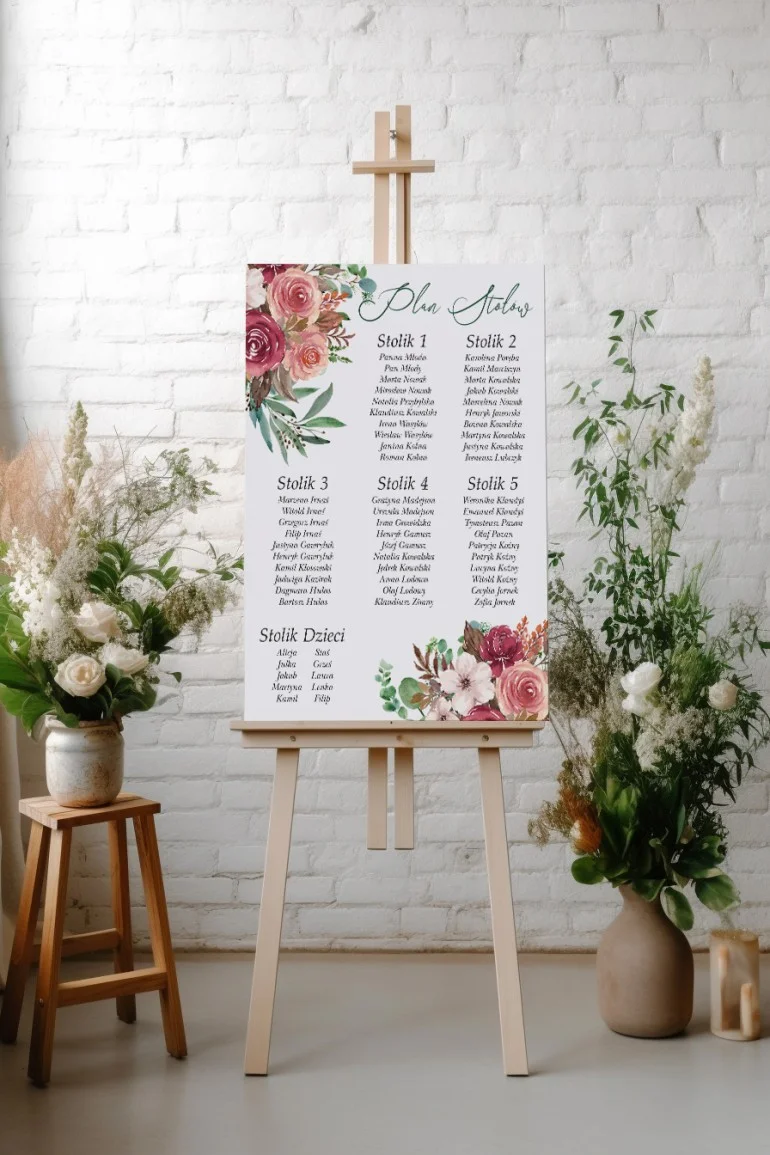
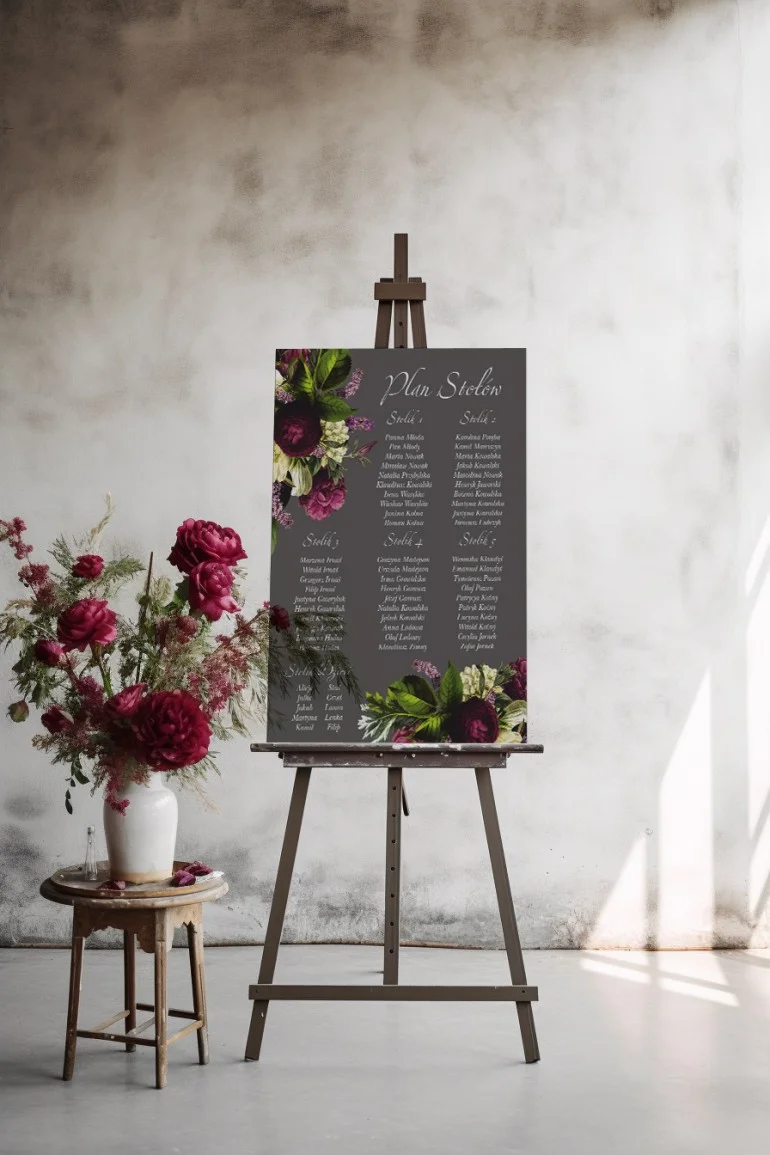
Wedding Seating Plan Delize No. 3
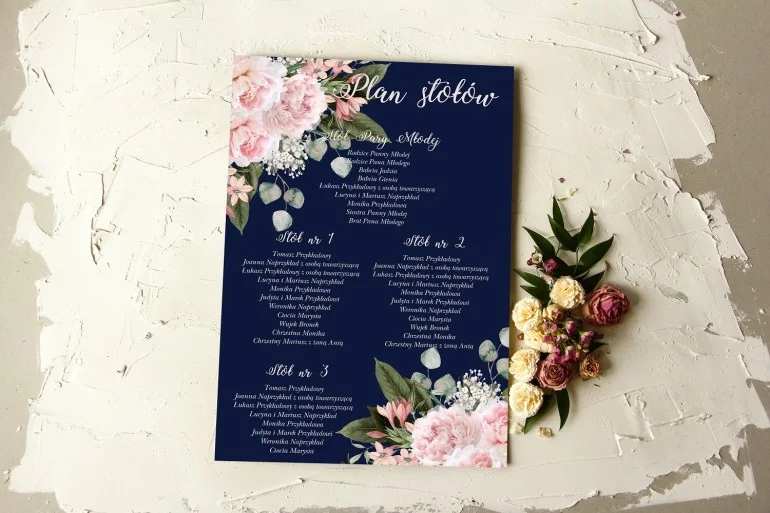
Wedding Seating Plan Eteryczne No. 2
Wedding Seating Plan Pastelowe No. 3
Fear of family reactions – how to overcome this barrier?
Many couples postpone opting for an unconventional date not because they have doubts themselves, but because they fear their family's reaction—especially the older generation. And it's understandable: wedding traditions are deeply rooted, and comments like "What do you mean, on a Sunday?!" or "Winter?! Are you crazy?" can seriously test an engaged couple's nerves. However, experience shows that these fears are usually far worse in your imagination than in reality.
The key to breaking down resistance is explaining your choice with passion and enthusiasm, rather than apologizing for it. Instead of saying, "We had to pick Sunday because we can't afford Saturday" (even if that's part of the reason), say: "We chose Sunday because we want this specific vibe, this venue, this photographer, and this exact atmosphere we've been dreaming of." As couples who have hosted unconventional weddings often report—parents and grandparents who initially objected are usually the first to admit afterward that it was one of the most beautiful celebrations they've ever attended.
It's also worth taking a pragmatic approach: the earlier you inform your guests, the less resistance you'll face. Guests who receive invitations a year in advance have plenty of time to plan everything without rushing. Guests who get a notice two months before the wedding—even for a peak-season Saturday—might struggle with logistics. Time is the most valuable gift you can give your guests when announcing your wedding date.
What genuinely surprises guests in a positive way?
Guests attending a Sunday or winter wedding for the first time almost always say the same thing: they were worried at first, but it turned out to be wonderful. The unique atmosphere, delicious seasonal food, original decor, less chaos, more attentive service, and stunning photos in a unique setting are the most frequently mentioned pleasant surprises. Add to that the feeling of being part of something special: not just another cookie-cutter summer wedding, but something original that will be remembered.
Guests particularly appreciate small gestures of care from the couple. Thoughtful wedding favors—a mini jar of homemade liqueur, a gingerbread cookie with a personalized tag, sachets of herbs and teas, or winter chocolate with a note in the wedding colors—cost roughly the same as standard wedding trinkets but evoke completely different emotions. At a winter wedding, such gifts take on an extra dimension: they are warm, cozy, seasonal, and unique. Every guest leaves with the feeling that the couple truly thought about them. You can find more inspiring ideas in our article on sweet wedding favors for guests.
Stories of couples who chose an unconventional date
The wedding industry is full of stories about couples who took a chance on an unconventional date and came out on top. Couples who chose a Sunday countryside wedding right in the middle of a golden autumn. Couples who threw a winter wedding in the mountains in February and woke up the next morning to fairy-tale snow. Couples who got married on Christmas and still say it was the best decision they ever made.
These stories share a few common denominators: courage, early planning, and consistency in executing their vision. Couples who knew what they wanted and didn't let family fears or stereotypes sway them ended up creating weddings their guests still talk about today. Ultimately, your wedding is your day—your style, your love, your decision. The date and season are just the backdrop, but a well-chosen backdrop can turn any story into something truly extraordinary.
7. How to plan an off-season wedding step by step? A practical guide
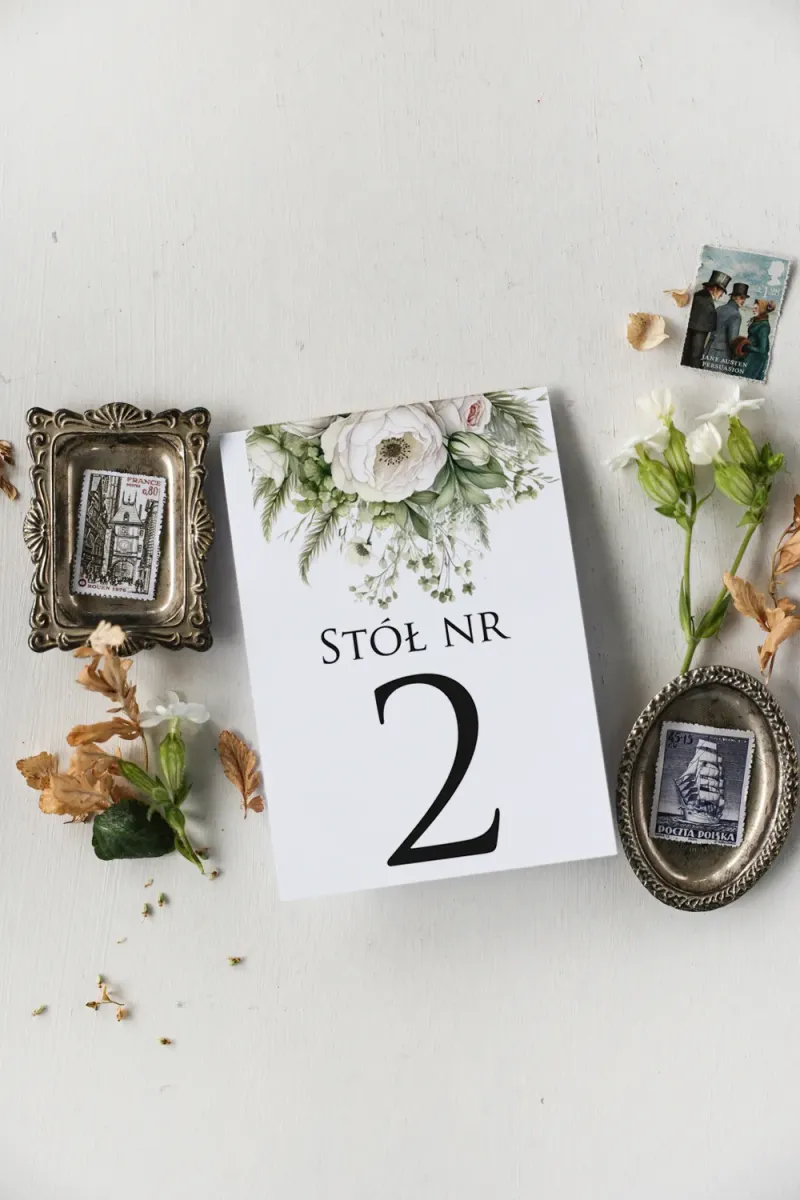
Original Table Numbers with a Peony Bouquet | Impresja No. 3
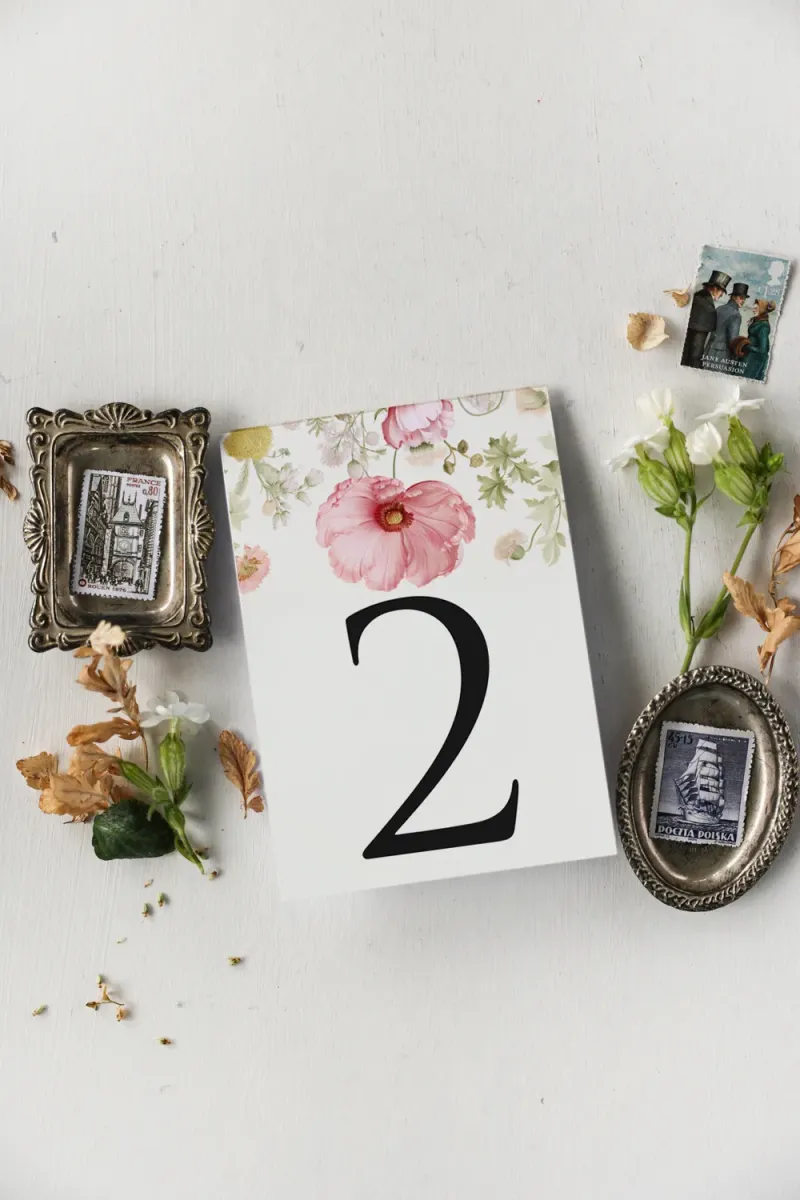
Pastel Wedding Table Numbers | Impresja No. 1
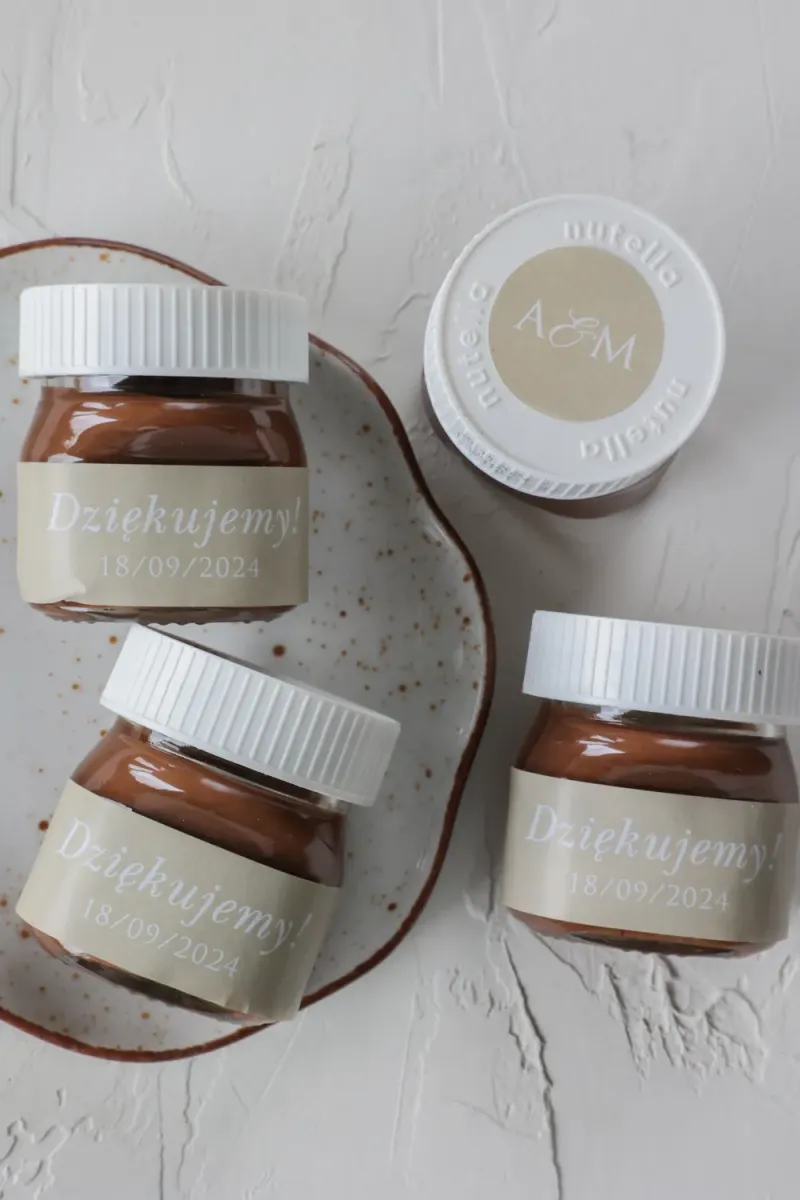
Mini Nutella Jars with Floral Labels | Kraft No. 11
Stage one – budget, vision, and choosing the date
Planning any wedding starts with two things: the budget and the vision. For an off-season or Sunday wedding, it's worth approaching this a bit differently than a standard peak-season Saturday. Start by determining how much you can realistically spend—without loans and without relying on cash gifts (because gifts are a bonus, not a foundation). Then, decide what your absolute priority is: the photos, the music, the food, the venue, or the decor? Start by securing that one crucial element for your preferred dates.
Next, loosely define the season that draws you in. Is it a romantic autumn with golden leaves and warm tones? A fairy-tale winter with snow and candles? Or perhaps you prefer spring or early summer, but on a Sunday instead of a Saturday to save money without sacrificing the weather? Every combination has its own unique possibilities. The key is to have a vision—and to stick to it, even when external pressure tries to push you toward a standard summer Saturday.
Make active use of tools that simplify planning. A fantastic example is the free wedding app Blissaro, one of the best wedding planners available—you'll find tools for managing your budget, guest lists, wedding day timeline, and vendor contacts. The app helps you track your progress and stay on top of deadlines, which is especially valuable for an off-season wedding—because while you might have more time, there are also more temptations to put things off until later.
Stage two – booking and negotiating with vendors
Once you have a vision and a rough date, it's time to book. Start with the venue—this is the element that largely dictates everything else. Actively look for off-season offers and negotiate: ask outright what discount you can get for a Sunday or a winter month. Most venues have this info in their pricing, but many are also willing to negotiate individually, especially if you book early and remain flexible on the exact date.
After the venue, it's time for the photographer and videographer—the vendors who have the biggest impact on how you'll remember your day. With unconventional dates, you have a genuinely great selection: you can approach photographers whose work you admire but whose Saturdays were booked a year in advance. Off-season, they have open slots, and that's your chance. Don't forget about the DJ or band—availability here is also incomparably better than on peak Saturdays.
Action timeline for planning an off-season wedding:
- 12–18 months before – determine the budget, choose the date and season, research venues
- 10–12 months – book the venue (negotiate off-peak discounts), initial talks with the photographer and videographer
- 8–10 months – book the DJ or band, select and order your wedding invitations
- 6–8 months – send out invitations, book accommodation for guests, choose a caterer (if separate)
- 4–6 months – menu tasting, cake selection, finalize the decor concept
- 2–4 months – order decorations, choose place cards, and plan small gifts to have your wedding favors ready, suit and dress fittings
- 1–2 months – confirm all bookings, finalize the wedding day timeline, hair and makeup trials
- 2 weeks before – final confirmation of guest numbers, briefing with venue staff and vendors
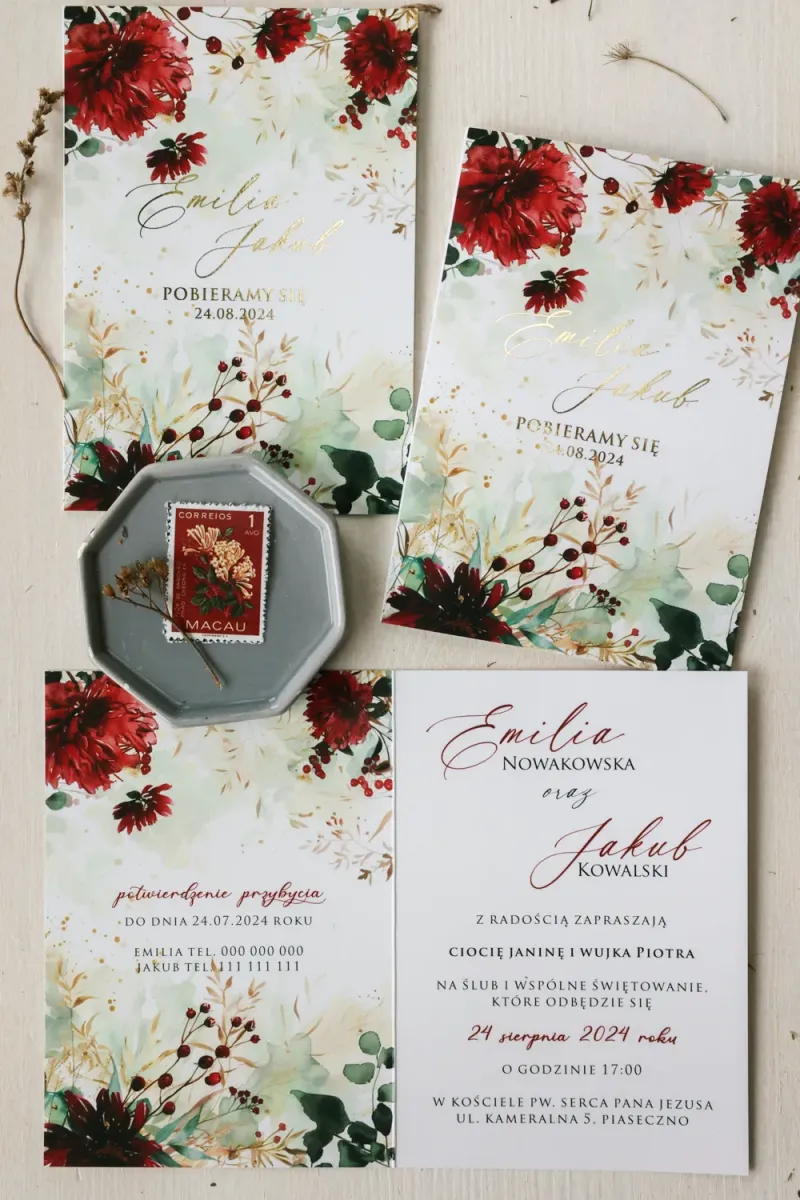
Wedding Invitation with Gold Accents and Red Flowers | Glamour and Boho Wedding Invites | Ruskus No. 1
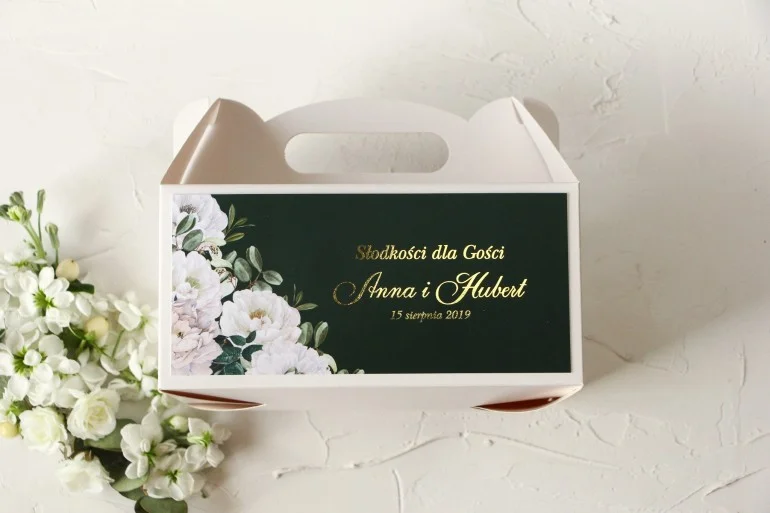
Elegant Personalized Wedding Cake Box | Sapphire No. 3
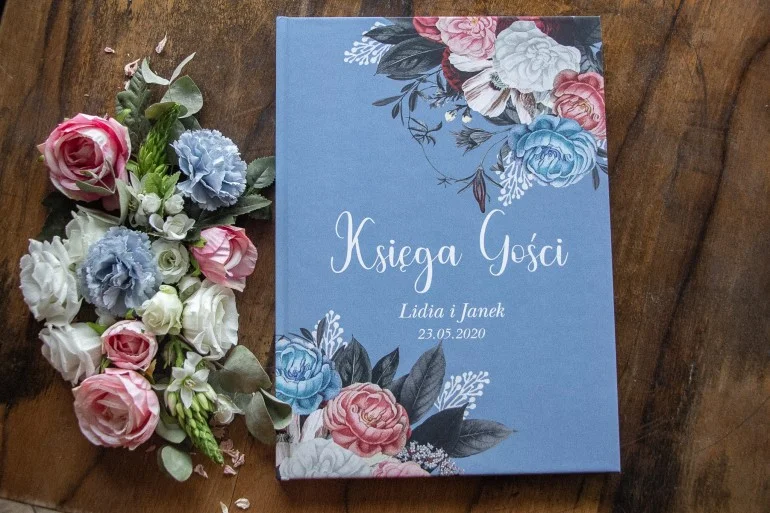
Watercolor Guest Book in Dusty Blue and Pink | Eteryczne No. 4
Stage three – stationery and details that make a difference
Couples organizing an off-season wedding have a unique opportunity to create cohesive, themed wedding stationery that instantly tells guests what to expect. An autumn invitation with a leaf motif and a warm, earthy color palette? A winter invitation with a delicate snowflake pattern and a velvet envelope? These details don't just inform; they evoke emotions and build anticipation.
On amelia-wedding.pl, you'll find a full range of wedding stationery—from invitations to menus, place cards, table numbers, and guest favors. Importantly, the ability to personalize means every design can be tailored to the specific style and season of your wedding. A glamorous winter wedding? Rustic autumn? Scandinavian winter? Each of these vibes can be reflected in your stationery, creating a cohesive visual narrative from the first invitation to the final thank-you gift handed out at the door.
Don't forget that wedding stationery is more than just a pretty piece of paper. It's a way of communicating with your guests that sets the tone for the entire event. Carefully crafted, beautiful stationery says: we care about every detail. It says: this day is important, and we want you to feel at home here. It says: we've prepared something special for you. And that message—expressed through elegant fonts and high-quality printing—reaches your guests long before they step onto the dance floor.
Expert summary – is it really worth it?
The answer is unequivocal: yes, it is worth it—provided you do it consciously, with plenty of advance notice, and with a clear vision of what you want. A Sunday or off-season wedding is not a Plan B or a compromise. It is increasingly a deliberate choice by couples who know exactly what they are looking for: a unique atmosphere, specific vendors, their dream venue, and real savings that can be put toward a honeymoon or a down payment on a house.
The wedding industry has matured enough to treat every date with equal respect. The best photographers love working in winter because they know it offers unique creative opportunities. The best venues offer discounts on Sundays and in winter not because those dates are inferior, but simply because there is less demand—and that is your chance to save without compromising on quality.
Start with a solid plan, equip yourself with the right tools—like the free wedding app Blissaro—and take care of every stationery detail at amelia-wedding.pl. The rest is your story—unique, unforgettable, and written exactly the way you wanted.
Recommended Articles
- Friday Weddings and Off-Season Celebrations – Are They Worth It?
- How to Choose the Perfect Wedding Date?
- Planning a Winter Wedding – Challenges and Magical Atmosphere
- Organizing Transport and Accommodation for Wedding Guests – A Guide
- How to Save on Your Wedding Without Compromising Quality?
- Sweet Wedding Favors for Guests – What to Choose?

Szymon Jędrzejczak
Wedding planning expert and stationery designer. For years, he has been helping couples turn their dreams into perfectly executed weddings, advising on unique invitation styles and decorations.
Szymon Jędrzejczak
Wedding industry expert and stationery designer at Amelia-Wedding.pl. For years, she has been helping couples create unforgettable moments by combining tradition with modern design.