Unplugged Ceremony: How to Politely Ask Guests to Put Away Their Phones
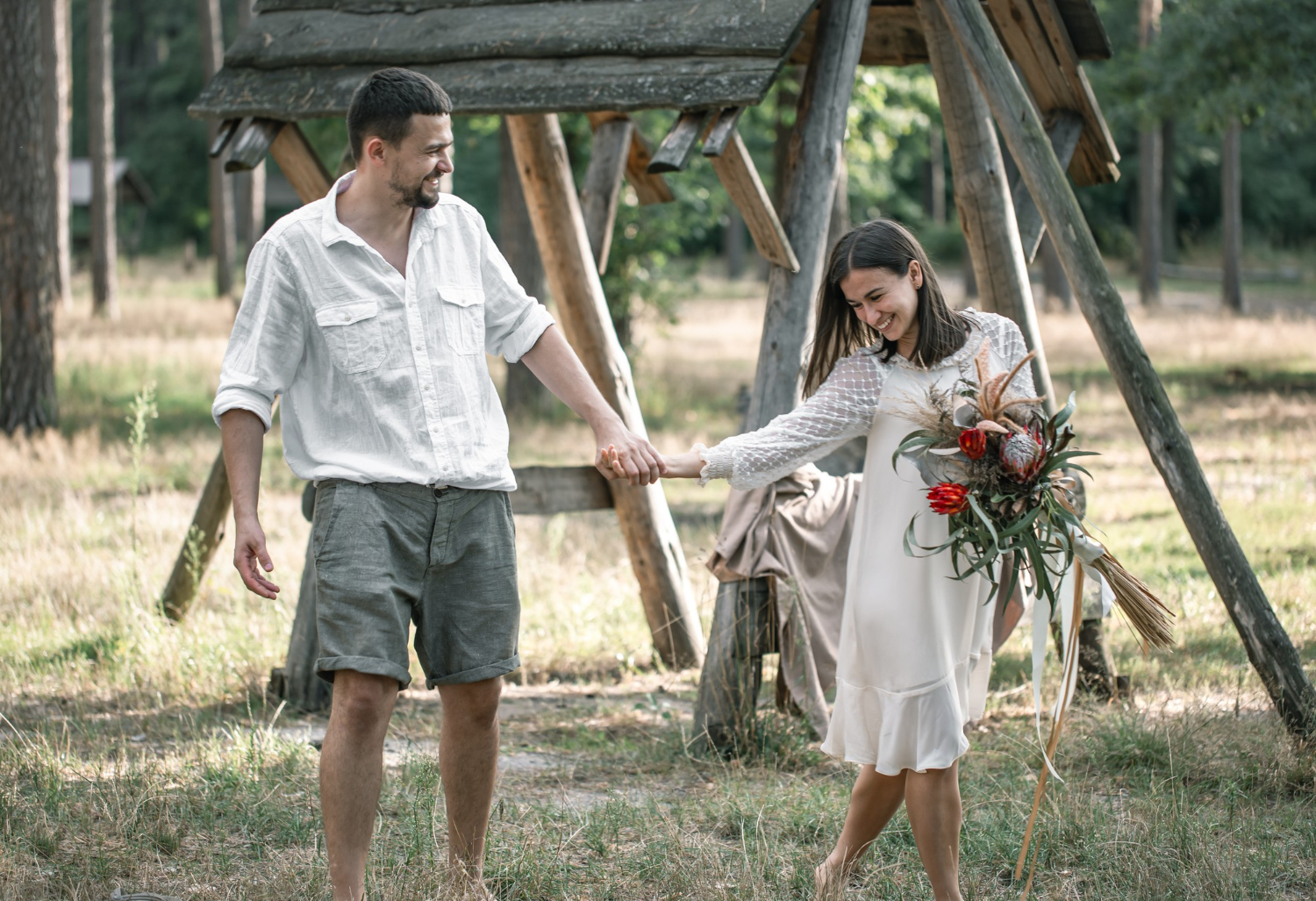
Unplugged ceremony – should you ask guests to turn off their phones and how to do it tactfully? What exactly is an unplugged ceremony and where did this trend come from?
What is an unplugged ceremony and why are more couples talking about it?
An unplugged ceremony is simply a wedding without phones, cameras, and constant photo-taking by guests, at least during the most important, official part of the celebration. The couple asks their loved ones to put away their smartphones, silence their devices, and hide their tablets during the vows, the processional, the exchange of rings, or the first kiss, allowing everyone to simply be "present in the moment." In practice, this means that instead of a forest of screens in the photographer's frame, we see the faces of the guests – moved parents, smiling friends, and focused witnesses. More and more couples are noticing that a phone in a guest's hand can be a barrier between truly experiencing the moment and "hunting for the perfect shot," which is why they consciously choose an unplugged format for those few dozen minutes of the ceremony.
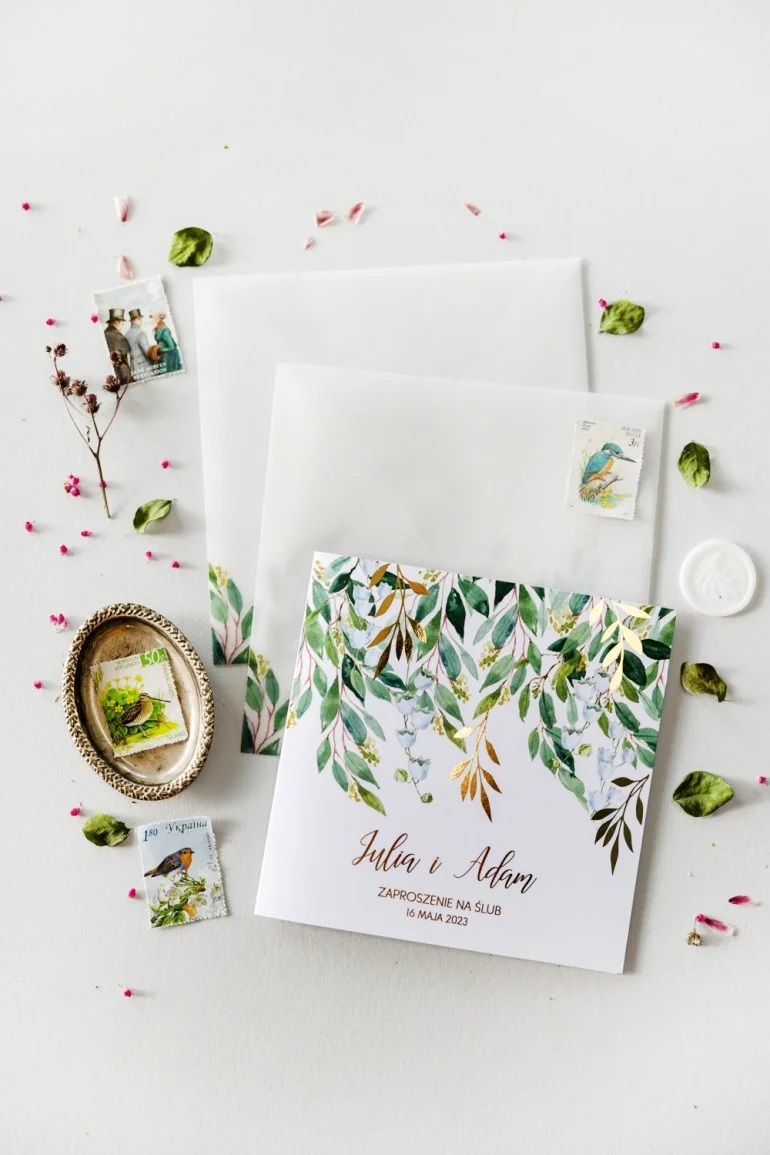
Wedding invitations with green leaves motif, gold accents, classic | Gold-foiled wedding invitations | Rubin no. 4
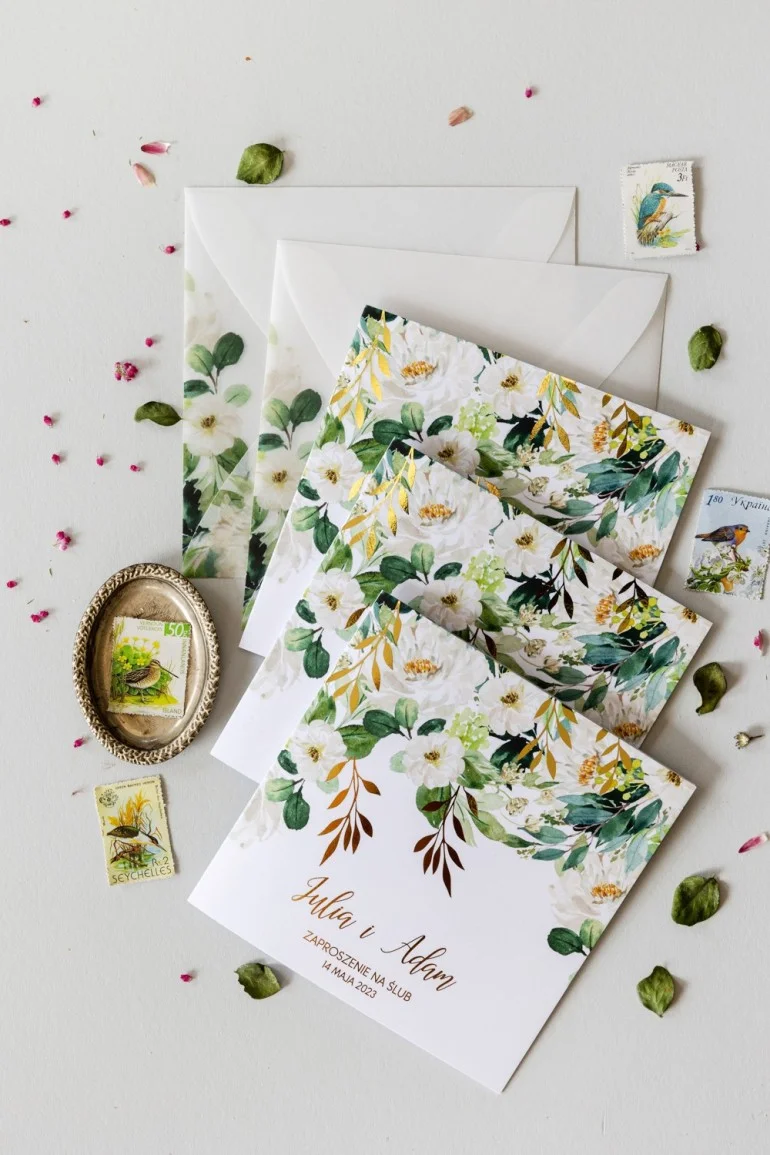
Stylish Wedding Invitations with Gold Accents, Watercolor Flowers | Exclusive Wedding Invitations | Rubin no. 1
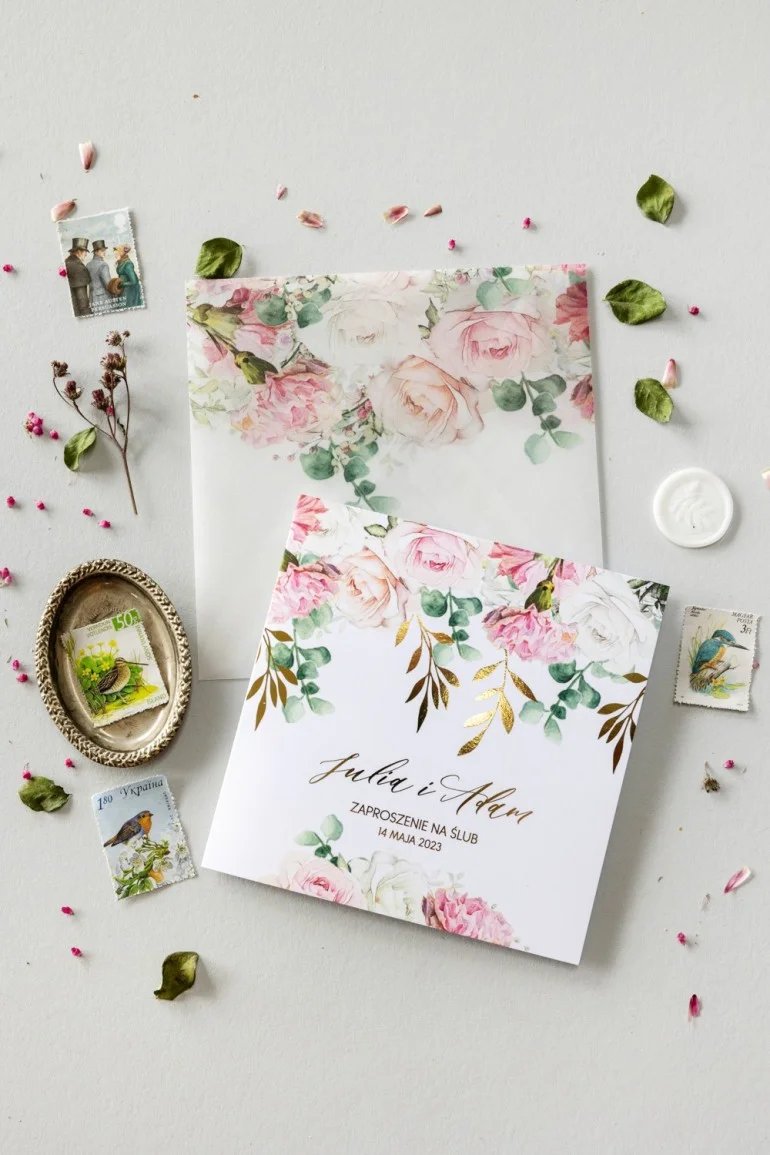
Wedding invitations with pink roses and gold foil, transparent envelope | glamour style wedding invitations | Rubin no. 9
Contrary to appearances, an unplugged ceremony is not a whim of "controlling newlyweds," but a response to a very real problem: photos of the vows where a dozen outstretched hands with phones are visible in the background; a photographer whose shot is blocked by someone jumping into the aisle during the first kiss; or footage of the ceremony posted on Instagram before the service has even ended. For many couples, it's simply too much – they have put a lot of heart into the organization and hired a professional photographer, yet a random hand with a phone or a tablet obscuring half the altar appears in the frame. An unplugged ceremony is therefore an attempt to restore peace, intimacy, and respect for what is happening between two people.
It is also important to note that unplugged doesn't have to mean a total ban on photos for the entire day. Many couples opt for a hybrid solution: an unplugged ceremony, but a wedding reception that is very much "online," with phones, photos, stories, hashtags, and shared fun. The key is clear communication: when you are asking for phones to be put away and why it matters to you. A well-written request in the invitation, an elegant sign at the entrance, and a brief mention by the officiant or celebrant ensure that guests understand your intention, don't feel attacked, and respect the rules. This is why it's so important to consider how you want to share your vision of the ceremony as early as the wedding invitations design stage.
Where did the "unplugged wedding" trend come from?
The unplugged wedding trend first appeared in the United States and other English-speaking countries, where wedding photographers began openly showing online how much guests with phones could ruin a perfect shot: blocking the bride's entrance, stepping into the middle of the aisle, or suddenly standing in front of the photographer during the ring exchange. Over time, couples joined the discussion, looking for ways to reclaim their own experience of the ceremony – without a wall of phones between them and their loved ones. It quickly became clear that the simple rule of "please turn off your phones during the ceremony" drastically changes the atmosphere – more eyes on the altar, more authentic emotions, and less nervous clicking.
Table of Contents:
- What is an unplugged ceremony and why is it trending?
- Where did the "unplugged wedding" trend come from?
- Weddings vs. Smartphone Culture – why talk about a phone ban?
- Why consider a phone-free wedding? Key benefits for the couple and guests
- Potential downsides and concerns – how to talk about them wisely
- How to tactfully ask to turn off phones – from invitations to the officiant
- Ready-to-use texts: for invitations, signs, and speeches
- What instead? Providing beautiful memories after an unplugged wedding
- How to implement an unplugged wedding step-by-step
In Poland, this trend appeared a few years later but fit naturally into the broader fashion for more conscious, "slow" weddings: intimate barn celebrations, rustic farmhouse weddings, humanist garden ceremonies, and outdoor weddings without the fuss. Wedding portals and photographers began writing about "phone-free weddings" as a way to get more beautiful photos and a more intimate atmosphere. Today, it is no longer rare to see an elegant sign at Polish weddings saying "Please refrain from using phones during the ceremony" or for a priest to ask guests to silence their mobiles and trust the professional photographer to document the moment before the service begins.
Interestingly, as this trend became more popular, a new aesthetic for wedding stationery and accessories emerged – beautifully designed "Unplugged ceremony" signs, minimalist cards included in the invitation envelope, and elegant boards placed at the church entrance. In the offer of Polish stationery brands like Amelia Wedding (amelia-wedding.pl), you can consistently design an entire "story" around this idea: wedding invitations with a delicate mention of unplugged, a graphically matching sign at the entrance, and small pieces of information in the order of service on the tables. This way, the request to turn off phones isn't random; it's part of a larger, well-thought-out concept for your day.
Weddings vs. Smartphone Culture – why talk about a phone ban?
It's hard to imagine life today without a smartphone – it's our camera, map, communicator, calendar, and notepad all in one. However, a problem arises when the phone lens becomes more important than what is actually happening in front of our eyes. At weddings, this is seen through a magnifying glass: guests don't look at the bride walking down the aisle, but at the screen to make sure the shot is "in focus"; instead of listening to the vows, they check if the recording is definitely working; during the first kiss, they think more about whether they'll catch the photo than about what is happening between the couple.
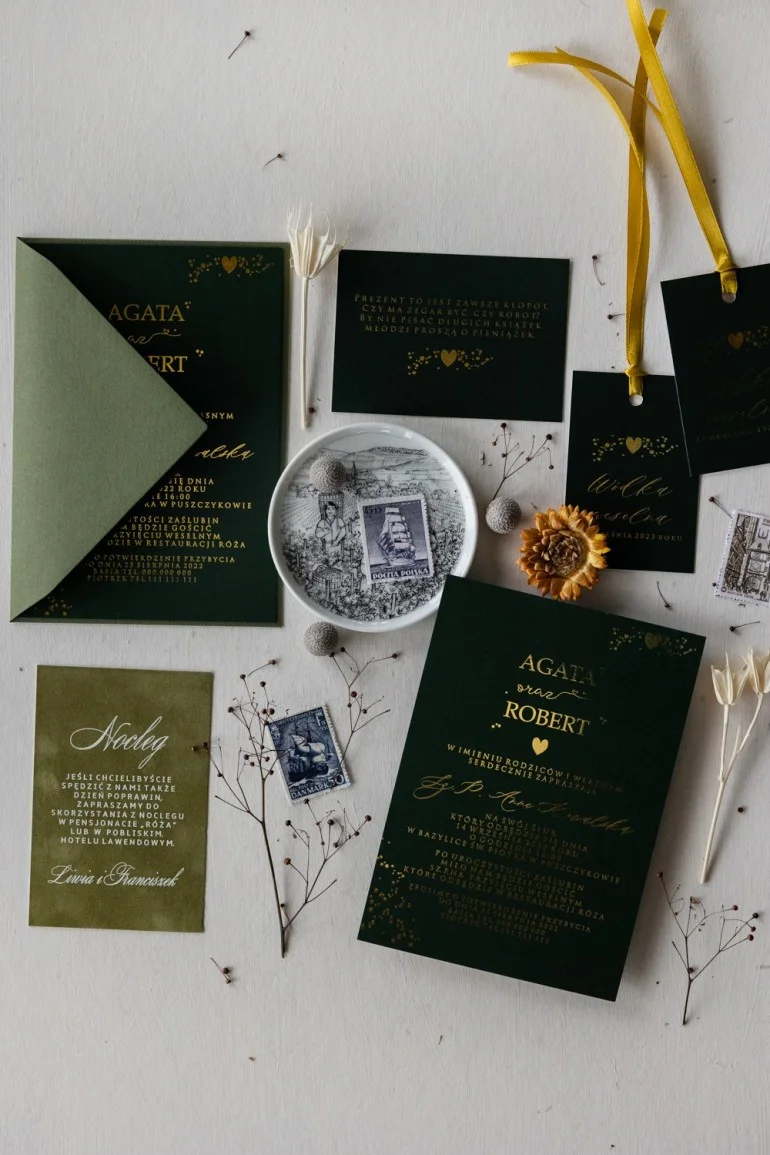
Single-card Wedding Invitations with gold foil | Simple no. 2
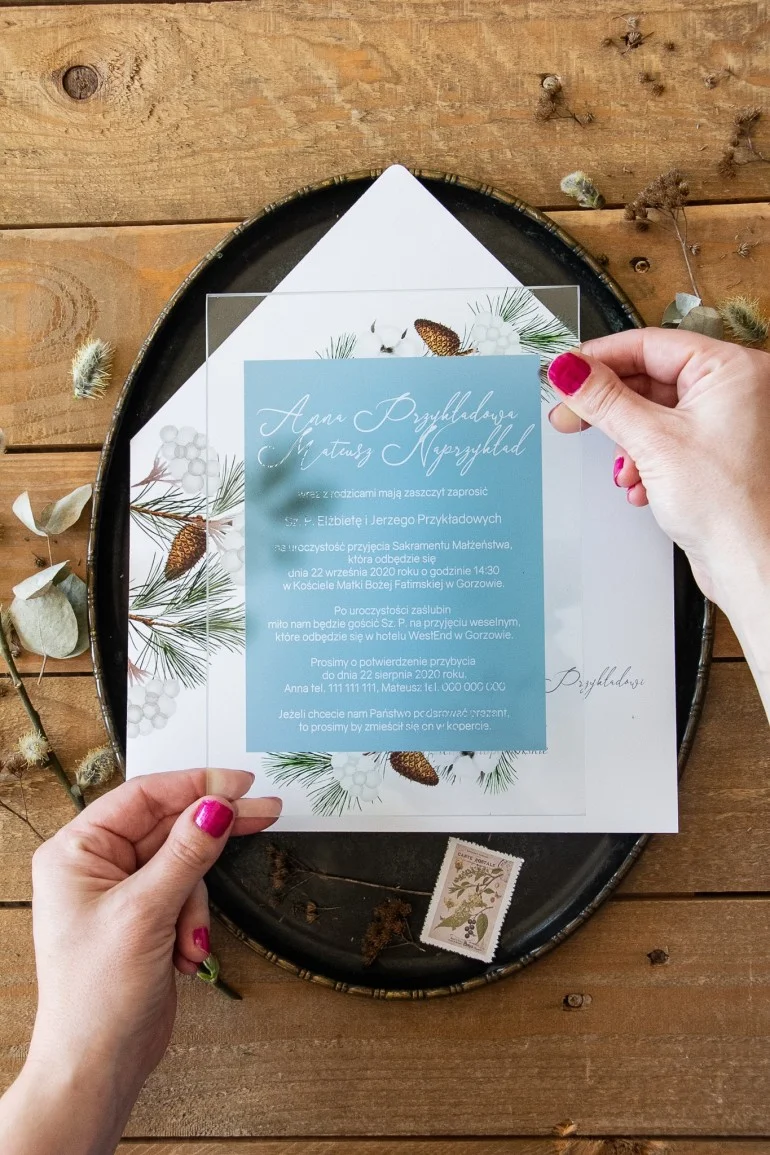
Extravagant Glass Wedding Invitations | Glass Winter Accent | Cotton & Pine | Korani no. 8
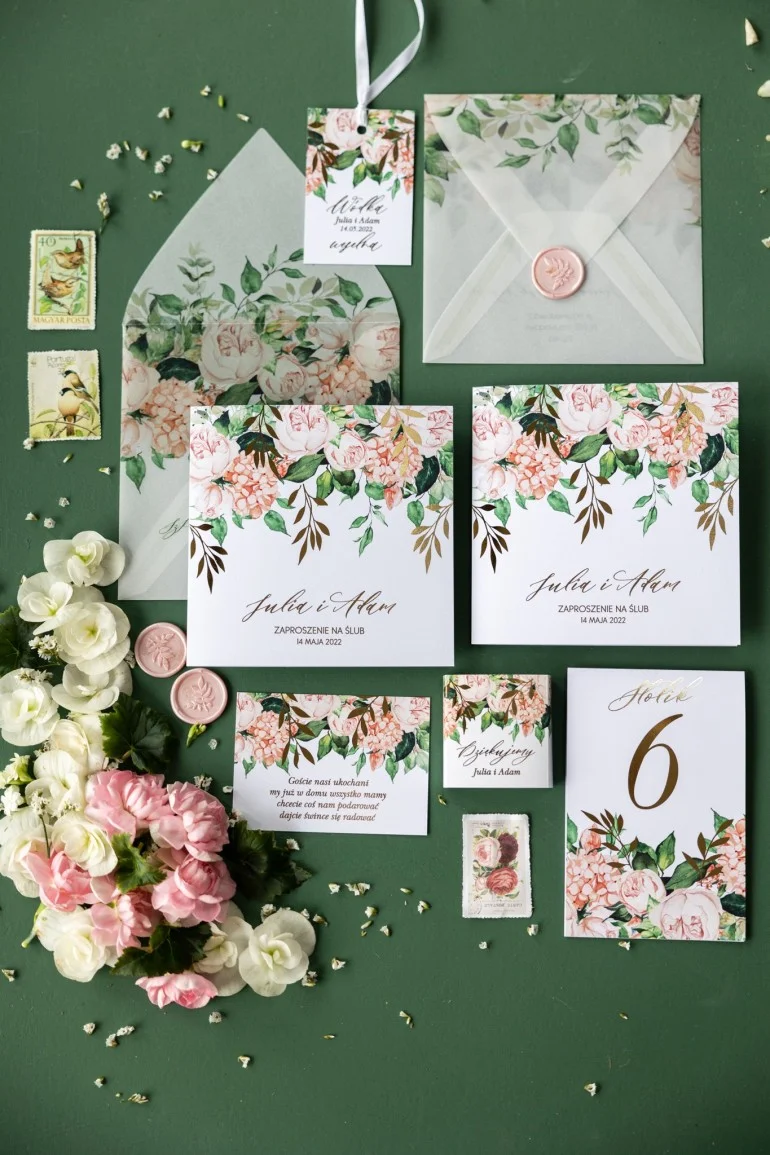
Unique Wedding Invitation with Gold Foil, Pink Peonies and Vellum Envelope | Unusual Wedding Invitations | Rubin no. 10
From the couple's perspective, this sometimes means a painful collision of dreams with reality. Imagine receiving your photo gallery after the wedding and seeing: at the moment of the processional, half the pews are holding phones above their heads; at the first kiss, someone is standing in the middle of the aisle; and during the blessing, a guest is visible in the background adjusting their smartphone frame instead of participating. This isn't a matter of "bad manners" – it's more about the power of habit, where we've learned to experience important moments through a screen. An unplugged ceremony is a conscious decision to turn that habit off for a while.
The second very important aspect is privacy and online safety. For some couples, a major issue is that photos from their wedding end up on social media before they've even had a chance to publish anything themselves – often in unflattering shots, with eyes closed or mid-sentence. For influencers, entrepreneurs, or public figures, it's also a matter of brand image, contracts, and even protecting the privacy of children or guests who don't want to be the "background" of internet stories. A wedding is an intimate, family event – even if there are 150 people, it's still your day, not an open social media event. Hence the increasingly common decision: phones are put away for the ceremony, and beautiful, professional photos will be shared later in a controlled manner.
Why consider a phone-free wedding? Key benefits for the couple and guests
More presence, more emotion – how unplugged changes the atmosphere
The most frequently cited argument for an unplugged ceremony is surprisingly simple: guests who don't have phones in their hands are truly present. They look at you, not the screen. They listen to the vows, react with a smile, a tear, or a look, rather than clicking "record." You can feel this difference almost physically – the energy in the church or outdoor setting is different, more focused, and full of real human contact. Many photographers emphasize that at unplugged weddings, much more deep, sincere emotion appears in the frame because guests aren't preoccupied with "hunting" for the best shot.
From a psychological perspective, this is also hugely important for you. What you remember from the ceremony years later won't be the quality of an aunt's phone recording, but the feeling that everyone was truly with you – that you felt their presence, focus, and support. If you only see a row of screens during the processional, it's easy to feel slightly disconcerted: instead of smiles and tears of joy, you see black rectangles, and the thought "do I look okay?" pops into your head. When everyone's hands are free, the atmosphere immediately becomes more human: someone waves discreetly, someone clasps their hands, someone reaches for a tissue. No decor can create that.
It's also worth remembering that being present in the moment is a luxury we often lack in daily life. We usually live between notifications, messages, calendars, and emails, constantly "online." An unplugged wedding is a lovely excuse for your guests to let go of being "on the grid" for those few minutes and immerse themselves in what is happening in front of them – to feel the music, the words, the scents, and the color of the light. For many, such a ceremony becomes a symbolic experience: a reminder that the most important things in life happen off-screen. It's a gift you give not only to yourselves but also to your loved ones.
Place cards on linen-textured paper with blue roses | Watercolors no. 10
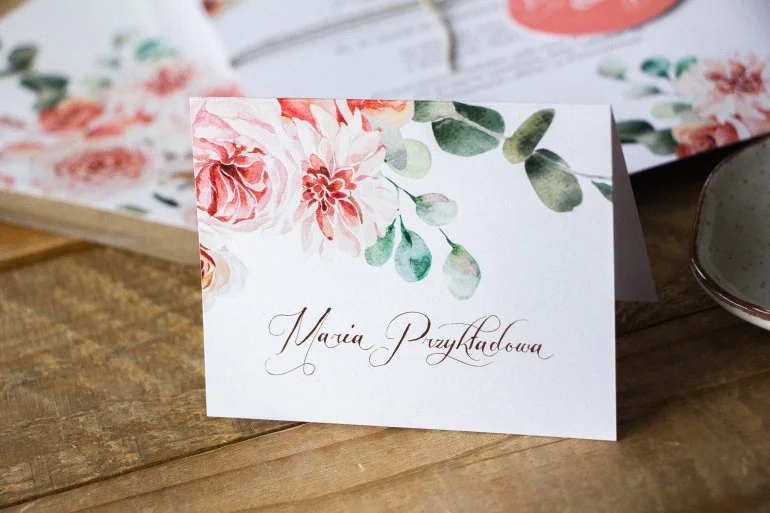
Place cards with pink bouquet composition | Indigo no. 7
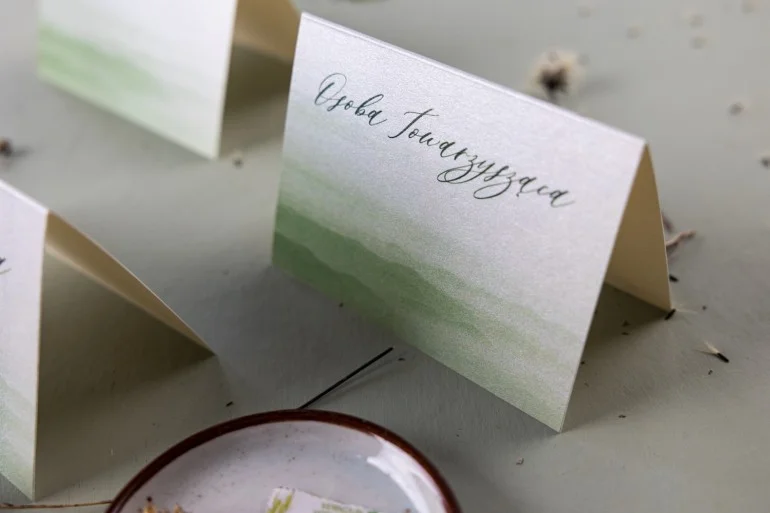
Wedding Place Cards on pearlescent cream paper with green decorations | Opal no. 11
Unobstructed professional photos – why your photographer will love your unplugged wedding
The second, very practical advantage of an unplugged ceremony is the comfort of the wedding photographer's work. Even the most experienced professional has limited options if someone jumps into their frame every few minutes, stands in the middle of the aisle, or suddenly raises a phone above their head, obscuring the bride's face. Unfortunately, in the smartphone era, this is not an exception but a sad norm. Photographers worldwide share comparisons online: on one side, a perfectly composed photo; on the other, the same moment with a guest who stepped into the aisle with a tablet.
At an unplugged wedding, the situation changes dramatically. The photographer has full freedom of movement and can position themselves where the shot will be most beautiful, not just where "someone isn't standing with a phone." They have a clean background showing the architecture, decor, candlelight, and most importantly – the faces of your loved ones, not glowing screens. As a result, the end product is a consistent, aesthetic story without random, amateur interference in the key shots. If you are investing in a good photographer, an unplugged wedding is one of the easiest ways to maximize that investment.
Another advantage: control over the first photos the world sees. If you allow guests to photograph freely and upload everything to the web immediately, you have no influence over which photos "go out" first. It could be a shot before your dress was adjusted, a photo from an unflattering angle, or a mid-sentence frame. By choosing unplugged, you clearly say: "please experience this moment with us, and we will send you beautiful photos from the photographer later." Guests receive a polished gallery instead of random shots – and you can be sure that professional photos will represent your wedding.
Privacy, social media, and controlling your own wedding story
A wedding is one of the most intimate events in life – even with 150 guests, it's a day that matters most to you and your inner circle. In the age of social media, more couples are asking: "do we want this story to take on a life of its own online during the ceremony?" For some, the answer is yes – they love the coverage and want hashtags and Instastories. For others – especially those who value privacy or work in public-facing roles – the answer is a firm no.
An unplugged ceremony gives you a real tool to manage that privacy. By asking guests to put away their phones, you are saying: "we want this moment to remain an experience for the people here with us, not content for social media." This is particularly important when children, elderly people, or guests who don't want their image online are involved. It's worth emphasizing that this isn't about a lack of trust, but about everyone's comfort – and ensuring that the photos eventually shared come from one consistent source.
You can also opt for a mixed model: an unplugged ceremony followed by full openness for photos and hashtags at the reception. In the invitation or on a sign, you can add a sentence like: "After the ceremony, we will happily pose for photos and encourage you to share your shots from the party!" This clearly sets a boundary: the vows and official part are private space, while the reception can be as "social media friendly" as you like. Furthermore, tools like the free Blissaro wedding app can help you organize all this communication, allowing you to describe your rules regarding phones and social media in a clear, modern format.
Potential downsides and concerns – how to talk about them wisely
Guests used to their phones – what about those who love taking photos?
It's natural that some of your guests love photography: they have good phone cameras and treat taking photos as a way of showing affection ("I took a beautiful photo of you, look!"). From their perspective, an unplugged ceremony might initially sound like: "we don't trust you, we don't want your photos." It's important to build the message around respect and gratitude rather than prohibition. Instead of a harsh "phones forbidden," choose messages like: "We want you to be with us with all your heart – please put your phones away during the ceremony, and we will ensure beautiful photos are shared with you later."
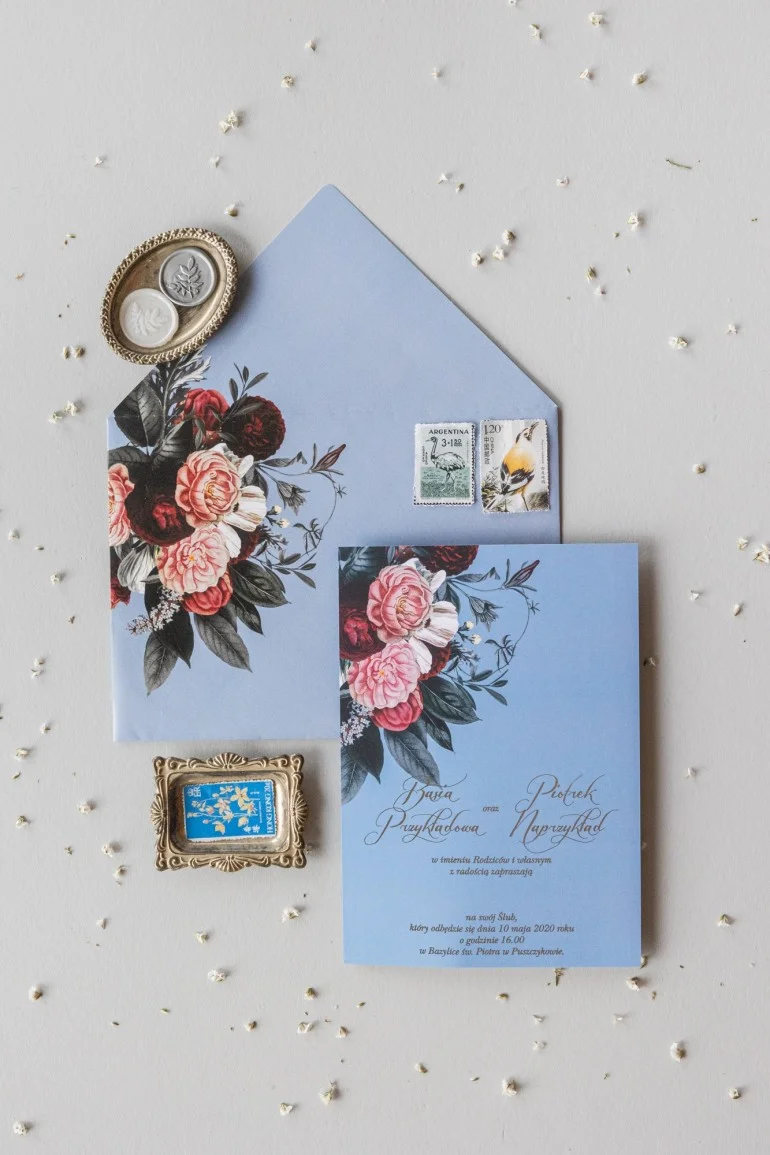
Glamour Invitations with Silver text and burgundy-pink bouquet | Elegant wedding invitations | Pastel no. 1
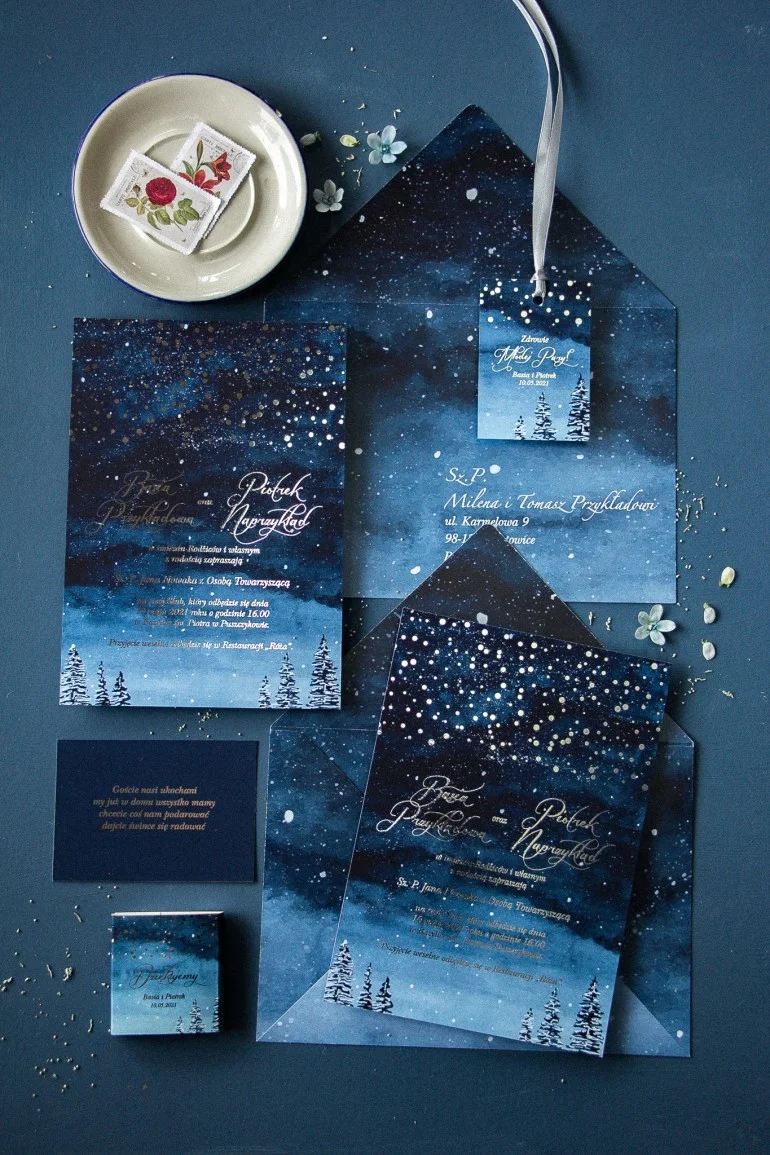
Winter Themed Wedding Invitations with Silvering | Pastel no. 6
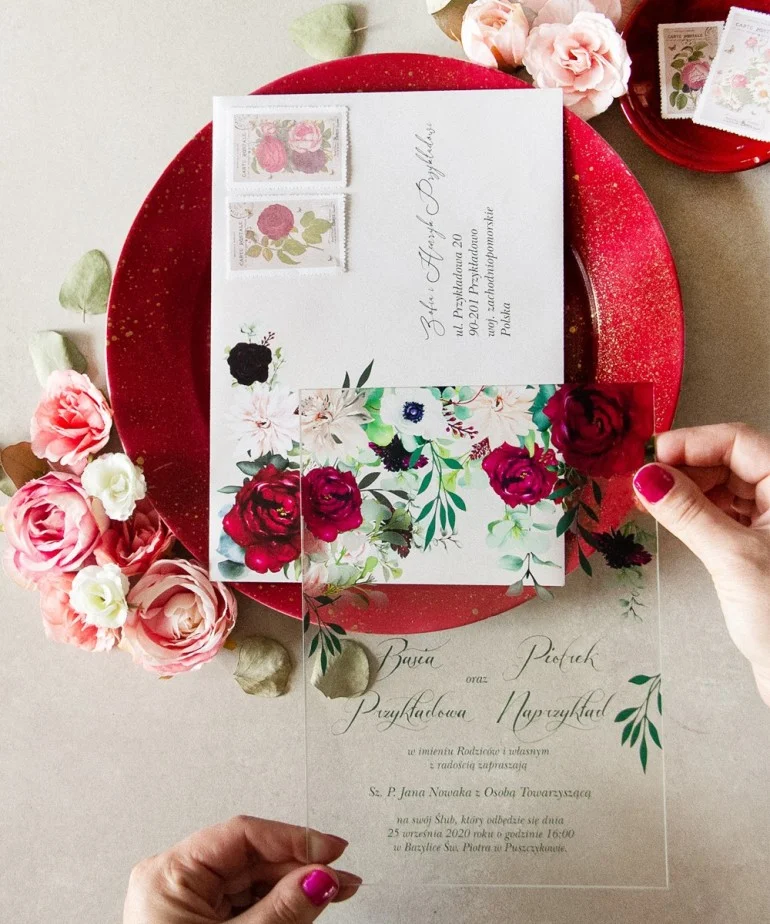
Elegant Glass Wedding Invitations with Floral Motif | Korani no. 4
Remember also that for some guests, taking photos is a way of "dealing with emotions" – in stressful or moving moments, it's easier to hide behind a camera than to truly experience them. An unplugged ceremony can be a challenge for them, but it can also become a valuable experience: it allows them to experience a loved one's wedding more consciously. In your communication, you can emphasize that this request comes from a place of caring for their experience too: "We want you to experience these emotions with us, not through a phone screen."
A good compromise for avid photographers is to suggest other times for photos: after the ceremony, during the group shot, or at the reception. You can even ask one or two trusted people to take a few "guest perspective" shots after the official part, while clearly stating you want an "offline zone" for the vows. Combined with clear information that you will provide an easy way to access photos later (e.g., via the Blissaro app or a link in the thank you notes), most people will accept this with understanding.
Loved ones who couldn't attend – how to balance unplugged with the need to share?
One common argument against unplugged weddings is concern for those who cannot be present: grandparents who can't travel, family abroad, or distant friends. Some guests have a natural instinct: "I'll record the vows for grandma." It's important to understand this and plan how you will care for those people's experience without breaking the unplugged rule. Working with your photographer or videographer is key here. You can commission a recording of the vows or a segment of the ceremony to send to those who couldn't attend.
If you really want to share something "live," a good compromise is designating one trusted person (e.g., a sibling) to handle a discreet online stream from the side, where they won't interfere with the photographer. You can exempt this one person from the unplugged rule – but only them. This allows you to balance the need for intimacy with the desire for absent loved ones to feel the atmosphere – without the "forest of phones" effect.
Remember that sharing wedding memories doesn't have to mean instant social media posting. You can plan this more consciously: create a private online gallery, send a link via SMS or email, and use tools like the free Blissaro wedding app. Through it, you can share the schedule, logistics, and later the link to the photo gallery. Guests who couldn't attend will receive high-quality, organized material instead of chaotic, rushed phone videos.
How to tactfully ask to turn off phones – from invitations to the officiant
Information in wedding invitations – a delicate but clear message
The first place to communicate the unplugged idea is the wedding invitations. It's good to include a brief but clear note so guests can get used to the idea in advance. It doesn't have to be a large block of text; often a small note at the bottom or a separate small insert in the envelope, matching the invitation style, is enough.
Examples of such notes could be:
"We kindly ask for phones and cameras to be put away during the wedding ceremony. We want you to be fully present with us, and we will share the photographer's beautiful photos with you after the wedding."
or more concisely:
"Unplugged Ceremony – please refrain from using phones during the service. Thank you for being with us with all your heart."
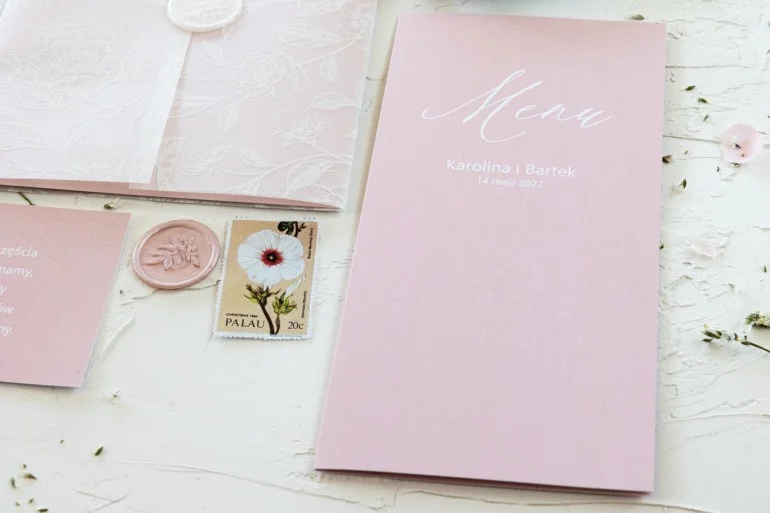
Elegant wedding menu with a delicate touch of pink | Nefryt no. 1

Glamour style bottle tags with gold foil | Glamour no. 5
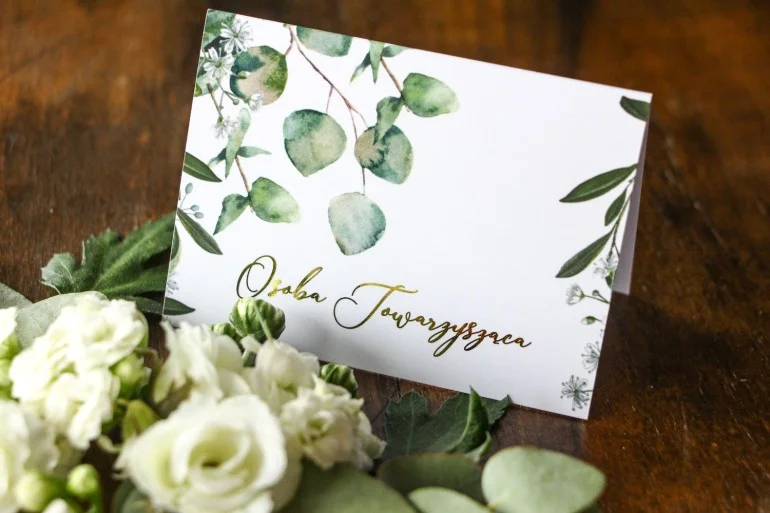
Gold-foiled place cards with eucalyptus and baby's breath | Soreli no. 5
When choosing an invitation design, look for options that allow for content personalization. On the Amelia Wedding website (amelia-wedding.pl), most designs have space for additional information – so you can easily add your own paragraph about the unplugged ceremony while maintaining the chosen graphic theme. In practice, this means your request becomes a natural part of the invitation, not a "stuck-on" afterthought.
Entrance signs, place cards, programs – visual support for your decision
Information in the invitation alone might be forgotten. Therefore, an elegant sign at the entrance to the church or ceremony venue is an excellent supplement. It doesn't have to be a loud board; an aesthetic design that fits the rest of the decor works much better. It can be a framed print, a large board on an easel, or a minimalist poster – the important thing is that it's legible and placed prominently.
The text on such a sign should be short and punchy, e.g.:
"Welcome to our unplugged ceremony. Please put away your phones and cameras during the wedding – we want you to experience this moment with us. Thank you!"
In the Amelia Wedding offer, you will find many wedding accessories matching the invitation collections – you can prepare a consistent set: invitations, table plans, menus, unplugged signs, and even matching place cards. This isn't just about aesthetics; it's about communication – guests intuitively understand that everything they see is part of a deliberate whole.
Announcement by the officiant – the power of authority
Even the most beautiful stationery cannot replace a short, clear announcement just before the ceremony begins. Many couples ask the priest, registrar, or celebrant to speak – someone who will be speaking anyway and has natural authority. Such a public request is often more effective than any sign because it takes the burden of "policing" off you and emphasizes the solemnity of the moment.
A sample formula you can provide to the officiant might be:
"Dear guests, before we begin the ceremony, I have a request on behalf of the couple. They want you to be here with them with all your heart today, so they ask that you silence and put away your phones and cameras for the duration of the service. Beautiful photos taken by the professional photographer will be shared with you after the celebration. Thank you."
Ready-to-use texts: for invitations, signs, and speeches
Elegant and classic phrasing
Example 1 – for the invitation
"We kindly request that phones and cameras are not used during the wedding ceremony. We look forward to sharing this special moment with you fully present, and we will provide professional photos after the wedding."
Example 2 – for a small insert
"Unplugged Ceremony
We gratefully ask that you silence and put away your phones during the ceremony. We want this moment to stay in your hearts, not on your screens. Thank you."
With humor and a personal touch
Example 1 – for an entrance sign
"Dear Guests,
Today we are vowing our love, not signing a contract with a mobile provider.
Please put away your phones for the ceremony and look at us, not your screens – the photographer has got this covered. Lots of love!"
Example 2 – for an invitation insert
"We’re playing in offline mode for our ceremony.
Please put your phones away – we want to see your smiles, not your devices.
We promise to share the professional photos and videos with you later!"
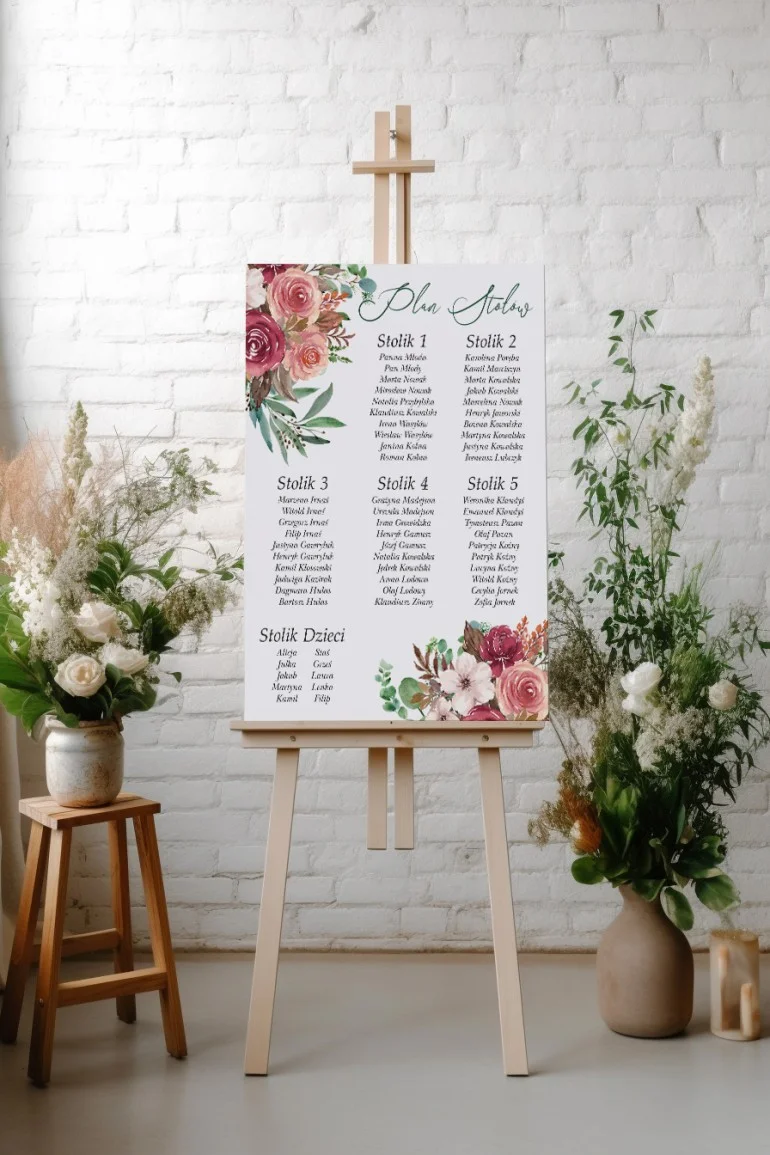
Table plan Delize no. 3
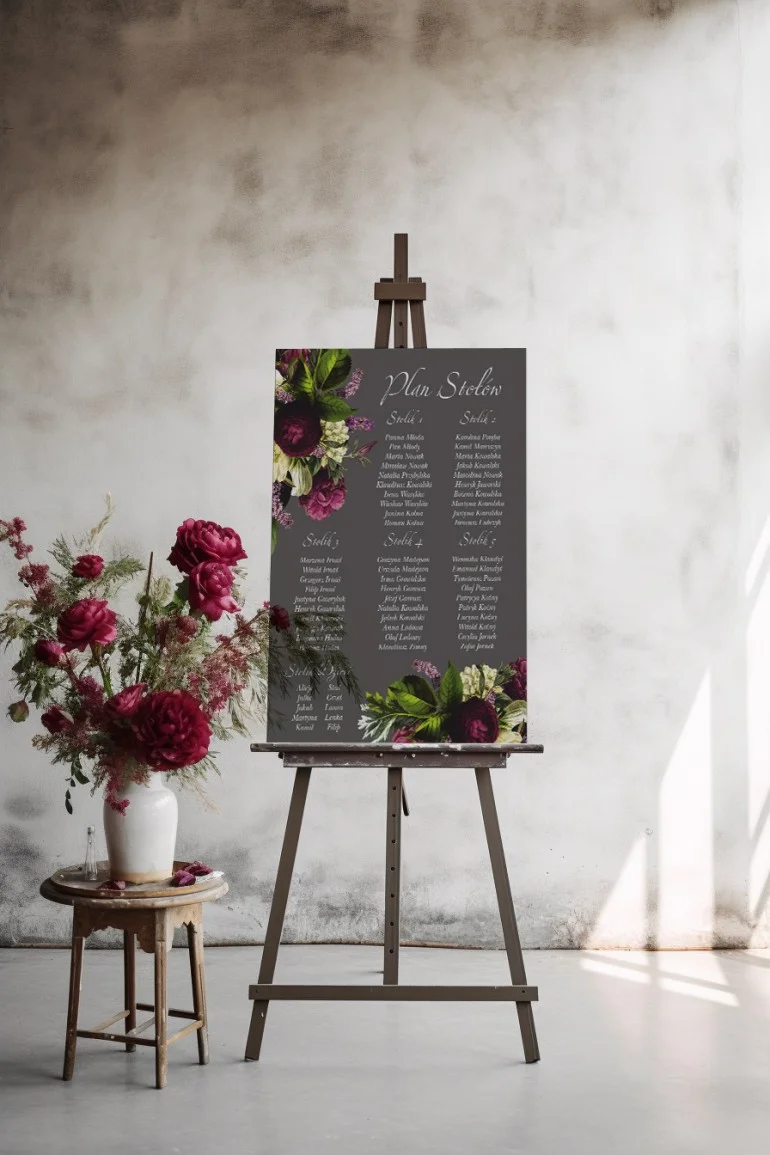
Table plan Ethereal no. 2
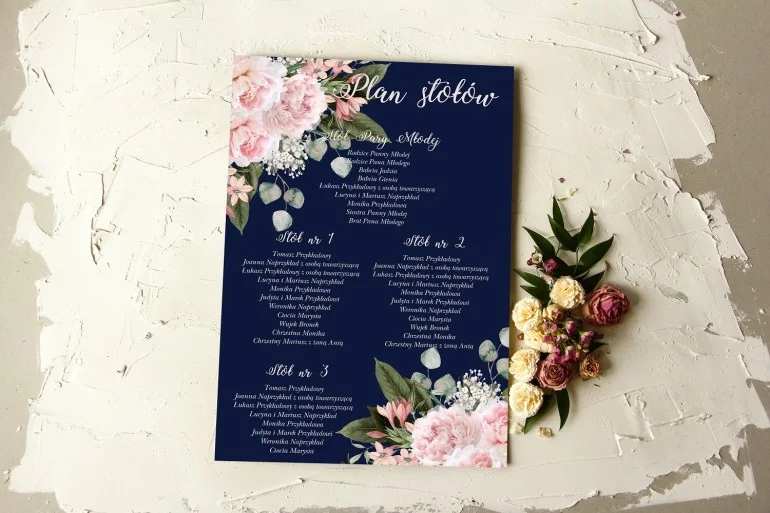
Table plan Pastel no. 3
What instead? Providing beautiful memories after an unplugged wedding
Cooperation with the photographer – online gallery and prints
If you ask guests to forgo photos, you must have a solid alternative. The first step is a good talk with your photographer: determine how many photos you'll receive and how quickly you can get a "sneak peek" to share with family. The second step is the distribution plan. A password-protected online gallery is the easiest solution. You can share the link in an elegant way: by sending printed thank you cards after the wedding with a link or QR code. Such a card is a beautiful keepsake and a practical gateway to the wedding photos.

Wedding Guest Book with forest motif | Opal no. 2
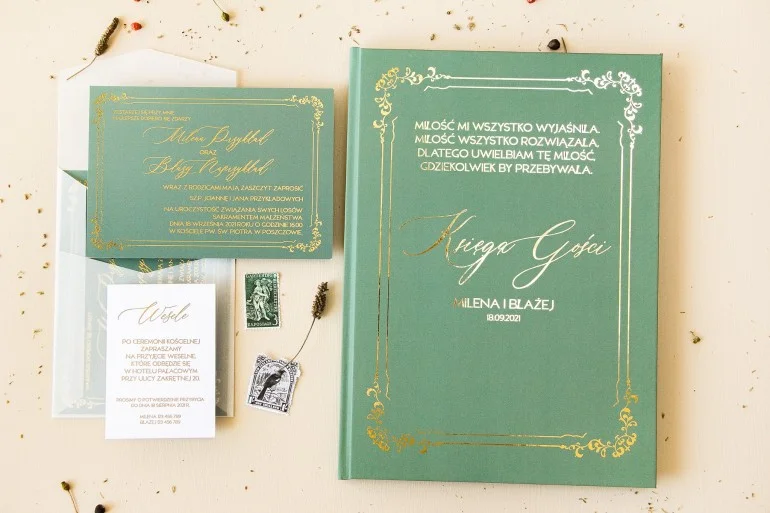
Personalized Guest Book with calligraphic gold lettering | Sand no. 3
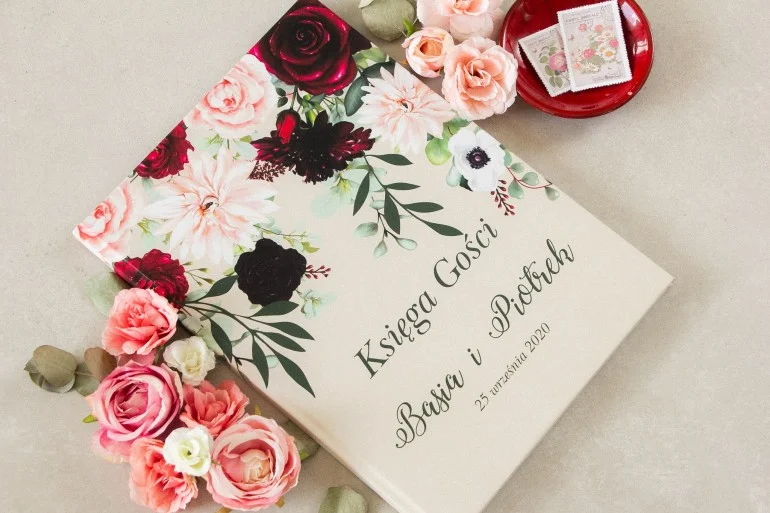
Burgundy Guest Book with anemones and dahlias | Korani no. 4
Free Blissaro wedding app – a modern way to share
Modern couples often use tools like the free Blissaro wedding app to organize communication. Regarding unplugged ceremonies, Blissaro allows you to clearly describe the rules in an FAQ section and later post the link to the photo gallery. It's much more convenient for guests than a traditional flyer. You can also specify your social media hashtag for the reception there. Read more in our guide on modern technologies at weddings.
How to implement an unplugged wedding step-by-step
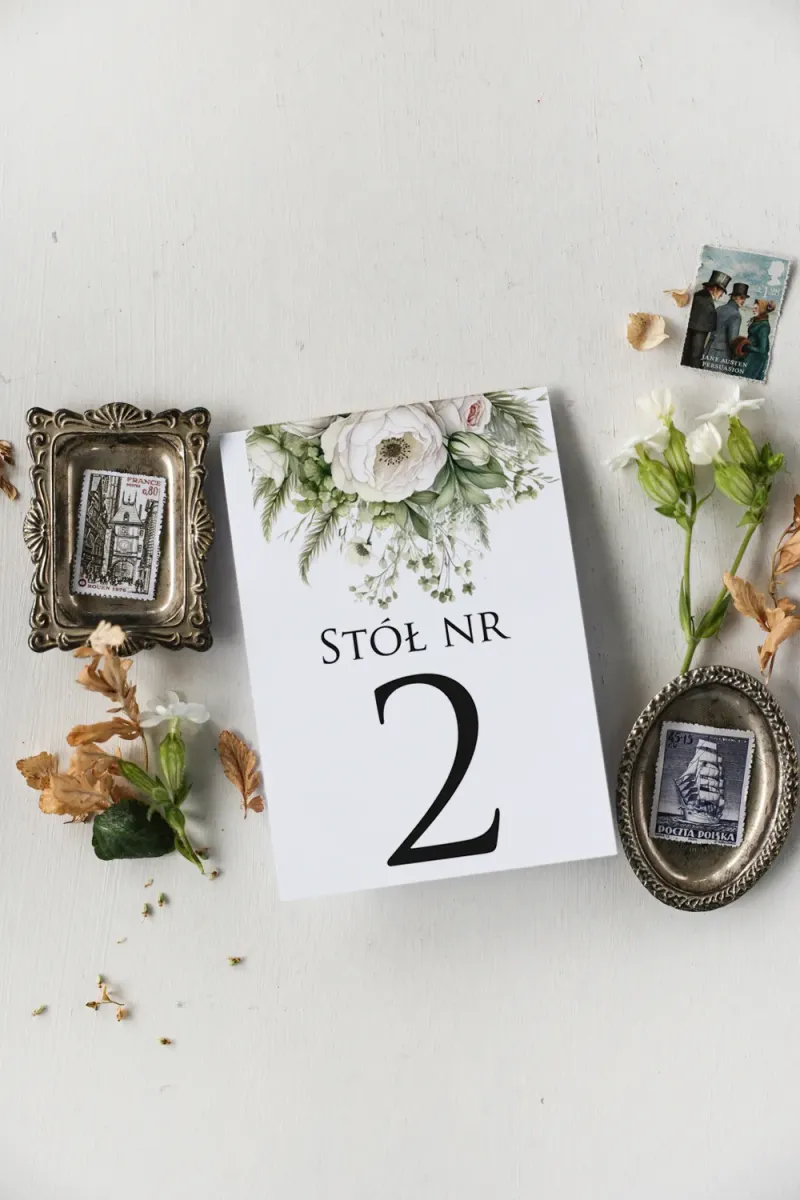
Original table numbers with peony bouquet | Impresja no. 3
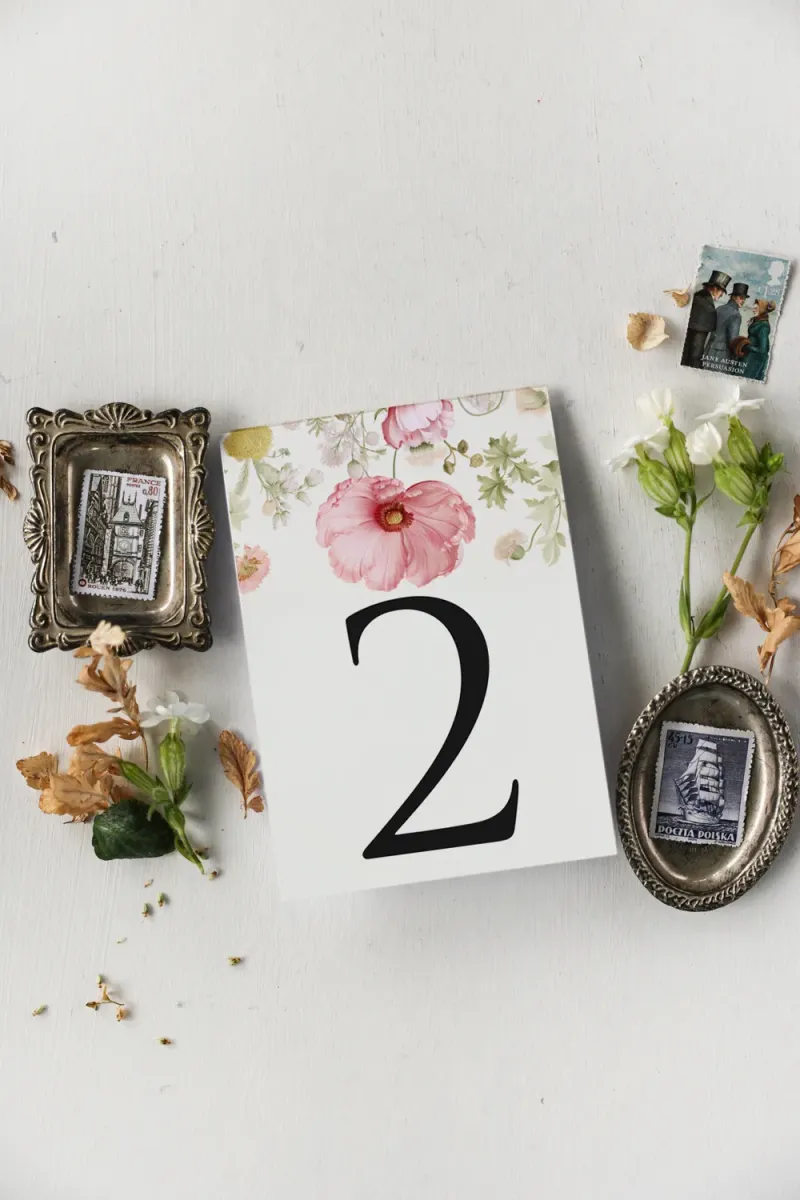
Wedding table numbers in pastel colors | Impresja no. 1

Mini Nutella jars with floral label | Kraft no. 11
A simple checklist for your unplugged wedding:
- Decide on the scope (ceremony only or full wedding).
- Talk to your photographer about the gallery and "sneak peek."
- Order invitations with the unplugged note from Amelia Wedding.
- Set up the Blissaro app with ceremony details.
- Arrange the announcement with your officiant.
- Place an elegant sign at the ceremony entrance.
This way, your unplugged ceremony becomes a meaningful part of your story – one told with Amelia Wedding and Blissaro in a modern, consistent, and respectful way.
Recommended articles:

Szymon Jędrzejczak
Wedding industry expert and stationery designer at Amelia-Wedding.pl. For years, he has been helping couples create unforgettable moments by combining tradition with modern design. His passion is creating consistent visual concepts that give celebrations a unique character.