Working with a Wedding Photographer – How to Plan Perfect Wedding Photos

Choosing a wedding photographer is one of the most important decisions when planning a wedding – after all, they are the ones who will capture the fleeting moments and emotions of this special day. However, making the choice is just the beginning. Equally important is the collaboration with the wedding photographer during the preparation stage and the ceremony itself. Good communication and planning will allow you to get those dream shots that you will proudly look back on for years to come.
In this guide, we present practical tips for couples on how to effectively work with a photographer: from creating a dream shot list, to establishing a wedding day photo schedule (including using the "golden hour" for your session), and clearly communicating your expectations regarding the photography style. We will also suggest ideas for unique shots that are worth planning in advance to make your wedding album truly one of a kind.
Table of Contents
With these tips, you will learn, among other things, how to prepare a list of the most important wedding shots, how to organize group photos, and when to reserve time for an outdoor session. We will reveal what questions to ask your photographer to ensure their style matches your vision, and how to present your inspirations. In the article, you will also find insights from experienced wedding photographers and examples of beautiful shots described so you can imagine or plan similar ones for yourselves.
Our goal is to help you make the most of your collaboration with the photographer so that your wedding photos meet and even exceed your expectations. We invite you to read on – step by step, we will go through all the key issues.
Dream Shot List – How to Prepare the Perfect List
One of the first tasks worth completing with your photographer is creating a so-called wedding shot list of your dreams – a list of frames that you absolutely must have in your album. This shot list helps guide the photographer toward the moments and people that are particularly important to you. Remember, however, that it's not about strictly "checking off" items on a list, but about agreeing on priorities. A good photographer will capture most significant moments anyway, but your guidance will allow them to focus on the details that mean the most to you.

Gaja No. 1 Wedding Invitation – Minimalist Style with Letterpress Embossing

Glamour Wedding Invitation with Gilded Branch and Velvet Paper – Ruskus No. 14

Impresja No. 7 Wedding Invitations – Eucalyptus and Greenery Style
Why is it worth creating a shot list? Primarily to ensure that no key photo is missed in the heat of the moment. By writing down ideas beforehand, you can calmly consider which people and situations must be in the photographs. Such a list can be a lifesaver, for example, when organizing group photos – in the excitement, it's easy to forget a photo with a distant aunt or a favorite uncle. With a list, the best man or maid of honor can help the photographer gather the right people for the shots. A shot list is also a great form of communication with the photographer – it lets them know what you expect and what matters most to you.
It's worth emphasizing that a shot list is only a suggestion. It should not stifle the photographer's creativity or limit the reportage to artificially posed scenes. As one industry expert notes: "A shot list is just a suggestion. If you have an unusual idea, it's always worth mentioning. Professionals can combine your wishes with their own creative flair, leading to results that might pleasantly surprise you." In other words – feel free to share your dreams with the photographer (e.g., a photo in a specific setting or with an important family member), but at the same time, trust their experience.
Key Wedding Shots – Inspiration for Your List
If you don't know where to start, below are examples of essential wedding shots that usually appear in every album. Use them as inspiration and add those that fit your vision:
- Couple's Preparations: the moment of putting on the wedding dress and suit, a close-up of the veil being fastened, adjusting the bowtie, details such as rings, jewelry, shoes, and stationery (e.g., elegant wedding invitations with your theme – it's worth preparing one copy for photos).
- Portraits with Loved Ones: the bride with mom and dad, the groom with parents, a photo with siblings. This is also a good moment to capture emotional highlights – like a mother's hug or a father's proud look.
- The Ceremony: the bride walking down the aisle with her father, the groom's reaction when he first sees his bride (the first look at the church or registry office), the exchange of vows and rings, the first kiss as a married couple, and the exit through rice or confetti.
- Guests' Emotions: parents' tears during the vows, the smiles of the witnesses, guests' reactions to key moments (it's worth letting the photographer know who among the guests should be photographed more often – e.g., a beloved grandmother or friends who traveled from afar).
- Group Photos: a collective shot with all guests (if planned) and series of smaller groups: with parents, grandparents, friends, bridesmaids, and groomsmen. We will discuss organizing group photos later in the guide.
- Couple's Mini-Session: romantic shots of the two of you right after the ceremony (e.g., a short session in a nearby park). These can be your first private moments as a married couple, captured naturally from a distance or in a few planned poses.
- Wedding Reception Details: the first moments at the venue – table decorations, the bride's bouquet, venue decor, the wedding cake. These photos build the atmosphere of the reportage. If you ordered personalized items (e.g., a welcome sign, place cards, or wedding favors from Amelia Wedding), ask the photographer to capture them before the guests settle in.
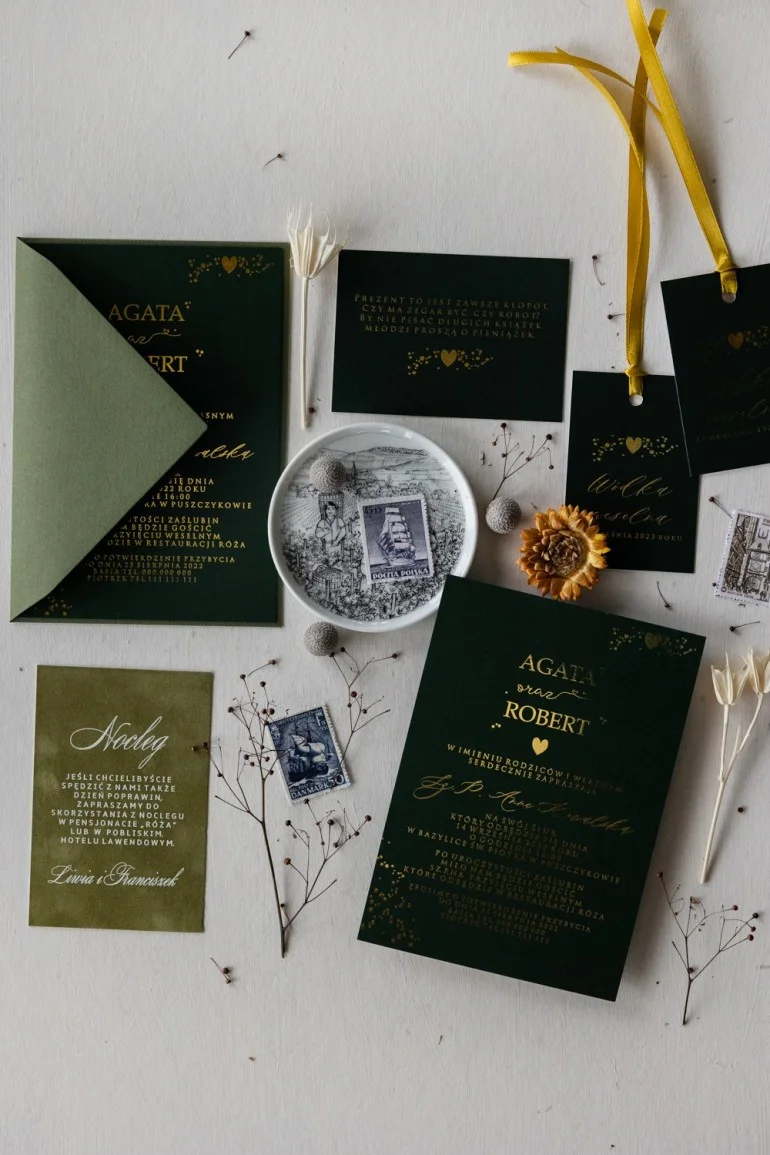
Single-card Wedding Invitations with gold foiling | Simple no. 2
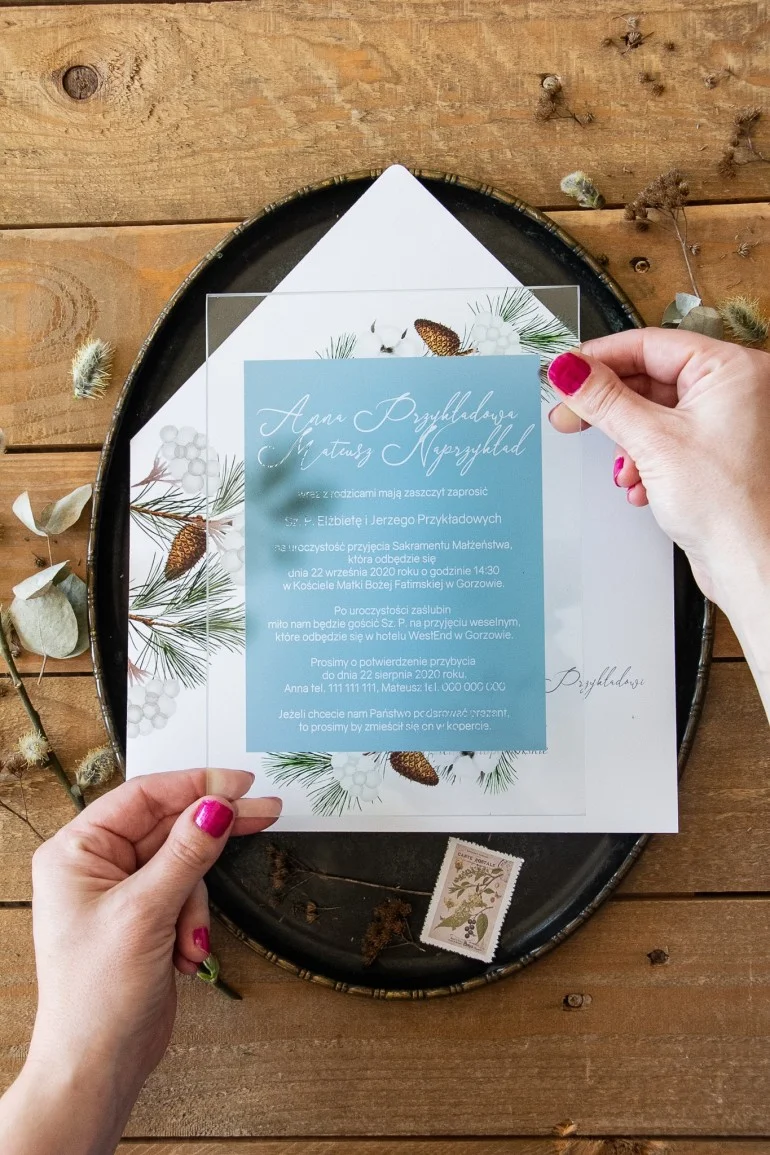
Extravagant Glass Wedding Invitations | Glass Winter Accent | Cotton & Pine | Korani no. 8
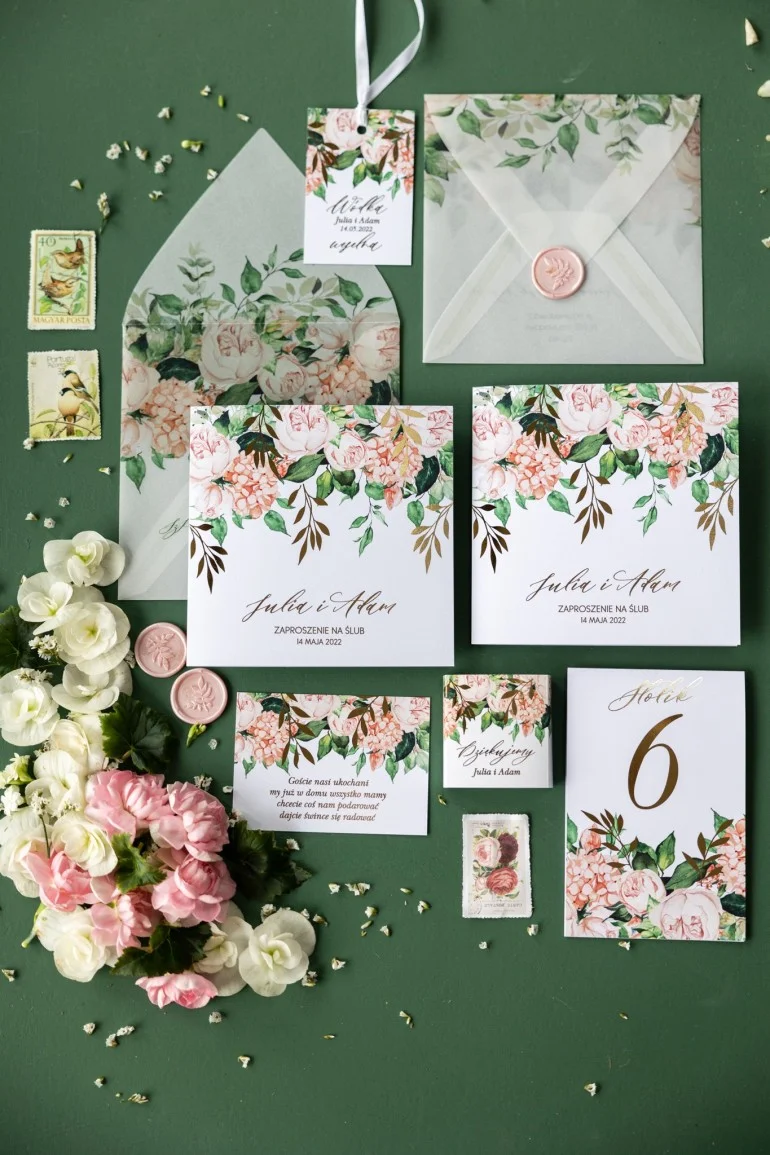
Unique Wedding Invitation with Gold Foiling, Pink Peonies and Vellum Envelope | Unusual Wedding Invitations | Rubin no. 10
- First Dance and Party: of course, photos of the first dance are a must – often one of the most emotional shots. Then: the cake entrance and cutting, midnight traditions (if you're doing them), and games led by the DJ or band. The photographer usually hunts for the best moments on the dance floor – funny situations, guests having fun, children playing, etc.
Of course, every list will be slightly different – tailored to your schedule and the elements you care about most. For one couple, family photos will be key; for another, artistic portraits of just the two of them. If you have an unusual shot idea, be sure to tell the photographer in advance. Maybe you've always dreamed of a heart-shaped group photo from a drone? Or a pose straight out of a movie poster? A good professional will gladly take on the challenge and try to make it happen (or honestly explain what is feasible). The most important thing is to communicate your expectations openly – the photographer is there to fulfill your photographic dreams.
Finally, remember that flexibility and observing the moment are key. It's good to have a list, but trusting the photographer is just as important. Agree on a "must-have" list and leave the rest to their creativity. A professional will closely watch the flow of events and react to what's happening – often the most beautiful photos are the unplanned, spontaneous shots full of real emotion. As one experienced photographer emphasizes: "What I want to encourage is sensitizing yourself and learning to observe relationships between people and photographing in a mindful way. Checking off points on a list without deeper reflection is no different from working on an assembly line." In other words – the list should help, not limit.
Wedding Day Photo Schedule – Step-by-Step Planning
A well-organized wedding day timeline is the best friend of both the couple and the photographer. The wedding day photo session, including both short outdoor shots of the two of you and family photos, should find its place in the daily plan so it doesn't clash with the flow of the celebration. Thanks to it, you know how much time is allotted for each element and when to plan breaks for photos. A chaotic schedule can result in missing important shots or rushing from place to place. Conversely, a thoughtful schedule allows you to enjoy the moment, and the photographer – to work calmly and always be where something noteworthy is happening.
How to plan your wedding day for photos? Start by listing all the main points: preparations, travel to the ceremony, the ceremony itself, greetings from guests, travel to the venue, dinner, first dance, cake, games, etc. Then, think about where to weave in a mini outdoor session and group photos. Remember that a wedding photographer usually accompanies the couple for many hours – from early afternoon until late at night – but cannot be in two places at once. If you want photos of both the bride's and groom's preparations, this needs to be logistically coordinated (e.g., both happen in the same hotel or the photographer has an assistant/second shooter).
From the experience of many couples, it's worth leaving a time buffer for every planned activity. On your wedding day, many things can be delayed – makeup might take longer, the service might run over, traffic might delay arrival at the venue. Give yourselves and the photographer a 15-20 minute buffer here and there so that in case of a delay, you don't have to panic and skip photos.
Below is an example of a framework wedding day schedule including time for photos. Every wedding is different, but this scheme will help you estimate how much time to allocate for each stage:
- 12:00 PM – 2:00 PM – Preparations (makeup, hair, dressing). During this time, the photographer takes detail shots (dress on a hanger, suit, rings, wedding invitations), then captures the final makeup touches, putting on the dress with the help of mom/maid of honor, and the emotions of the morning. Ensure the preparation room is tidy and well-lit (natural light is a photographer's best friend).
- 2:00 PM – 2:30 PM – First look / Blessing. If you are planning a first look, your first meeting in wedding attire before the ceremony, this is the time. Often the photographer arranges this in a secluded spot – this intimate moment is very touching and photogenic. Alternatively, a traditional family blessing at home is also captured.
- 3:00 PM – 4:00 PM – Wedding Ceremony. The photographer is usually on-site early to photograph arriving guests and church/registry office decorations. During the ceremony, they work discreetly, documenting key moments (entrance, vows, rings, kiss, signing) and the reactions of those gathered. After the ceremony, plan a moment for guest greetings – this is an opportunity for many spontaneous photos (hugs, congratulations, the joy of the newlyweds).
- 4:00 PM – 4:20 PM – Group Photos at the Ceremony Site. Right after the ceremony, all guests are still together, so it's the best time for quick wedding group photos. Usually, it starts with a large group shot, followed by smaller groups: parents, siblings, grandparents, witnesses, friends. In 15-20 minutes, you can easily do a dozen setups. It's important to have a list of these groups ready to avoid chaos.
- 5:00 PM – 5:30 PM – Grand Entrance and Welcome Toast. The photographer travels with you to the reception. They capture the welcome (bread and salt if traditional), your entrance to the venue, and the first toast. This is a good time for shots of the decorated tables before guests settle in (beautiful flowers, place cards, menus – all these details create the album's atmosphere). If you have unique decor elements (e.g., a family photo corner, guest book, photo booth), the photographer should capture those too.
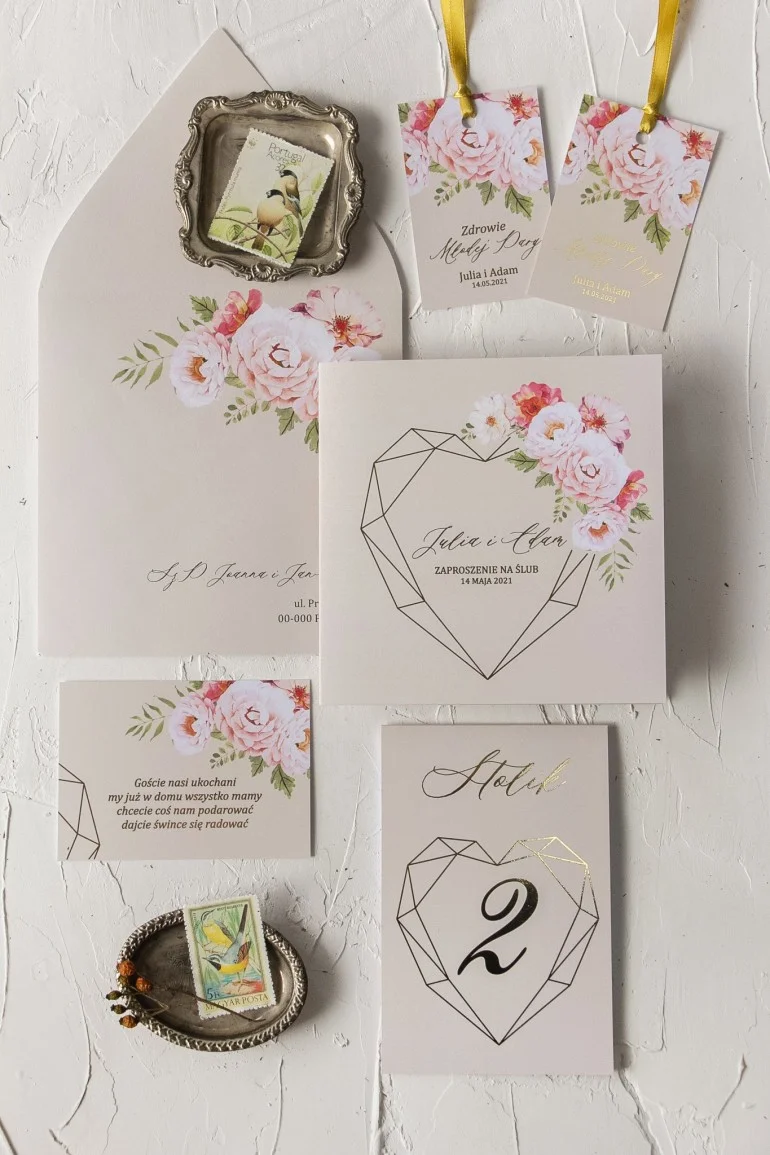
Wedding Invitations with Gold Heart and Floral Motif | Modern and Stylish | Szafirowe no. 8
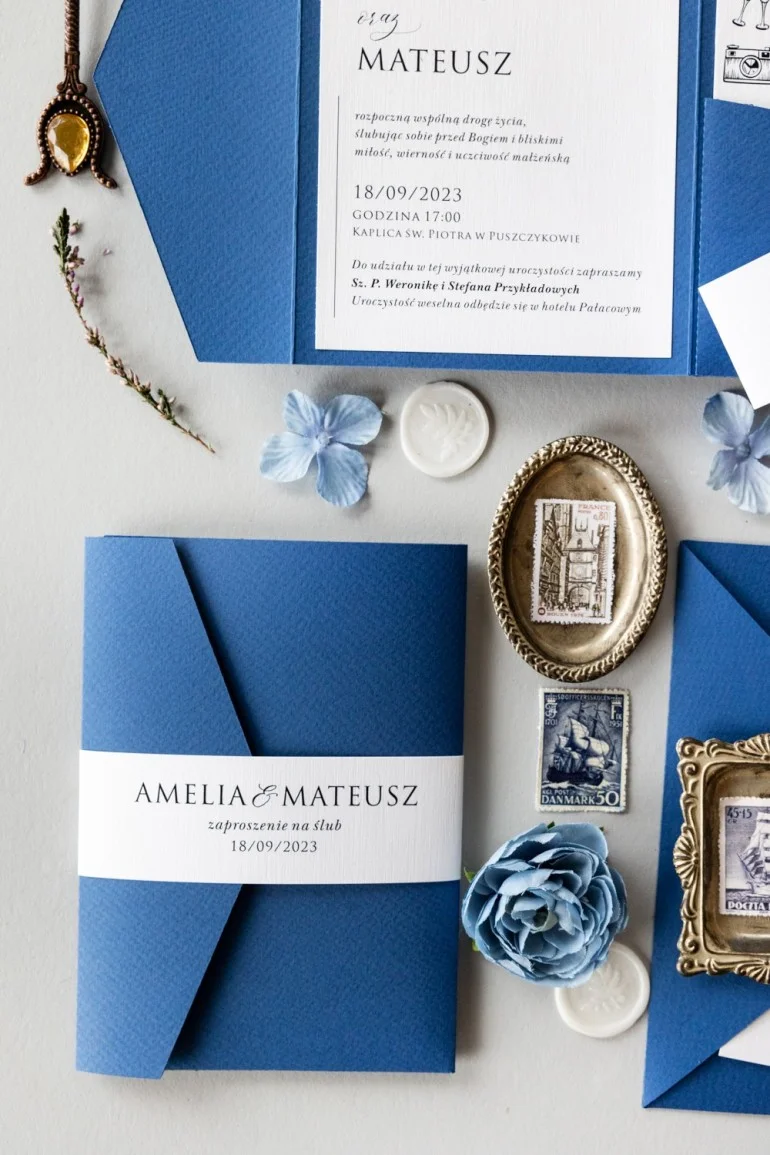
Blue, Elegant Wedding Invitation with Pocket and Personalization | Kraft no. 7
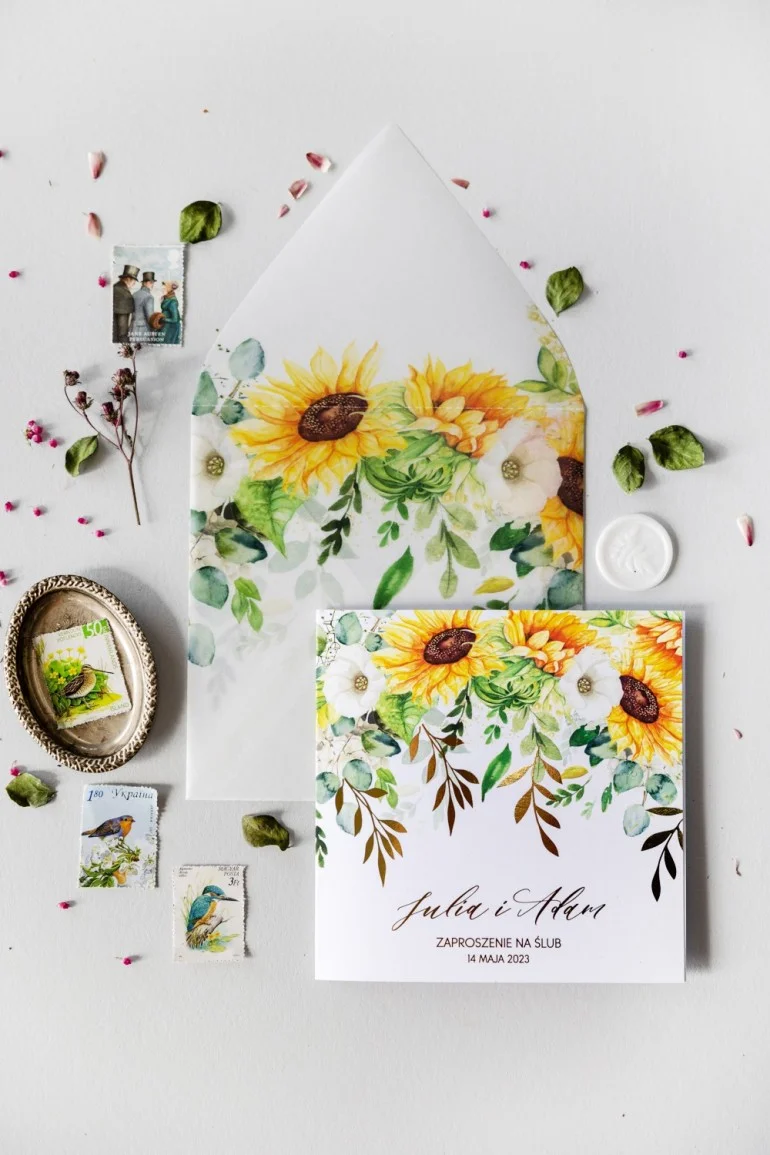
Wedding Invitations with Sunflowers and Gold Foiling | Modern and Original | Rubin no. 7
- 5:30 PM – 6:30 PM – Dinner and Break. During the meal, photos of guests are usually not taken (no one likes being photographed while eating), so it's a breather for everyone. After dinner is often the time for a short outdoor session near the venue. Many couples choose this time for 15-20 minutes of photos together before dark. If the venue has a nice garden or interesting architecture, it's worth utilizing.
- 6:30 PM – 8:00 PM – First Dance and Party Kick-off. After the break, the dance floor opens. The photographer is ready for the first dance – one of the most photogenic moments. Ensure the DJ or band only starts effects (like heavy smoke) once the photographer is ready. Then, the photographer captures spontaneous scenes of guests dancing.
- 8:00 PM – 10:00 PM – Wedding Fun. A lot happens here – dancing, games, conversations at tables. The photographer discreetly documents the party, but let them know if you have special elements planned (e.g., a performance, fireworks) so they don't miss them.
- 10:00 PM – 10:30 PM – Wedding Cake. Traditionally, the cake enters before midnight. Ensure the photographer knows when this will happen to get a good perspective. Photos of cutting the cake together and the sweet moments that follow are wedding reportage classics.
- 12:00 AM – Midnight Traditions. The climax of the party – tossing the bouquet/veil and other traditional games. There's lots of action and laughter for the photographer to capture here.
The above plan is just an example – yours may look different, but the key is to inform the photographer of the schedule in advance. It's best to provide a timeline a few weeks before the wedding and confirm details a few days prior. This allows them to prepare so nothing comes as a surprise. Highlighting the times of key moments like the first dance or parent thank-yous is a signal for the photo and video team to be fully ready.
Stay in touch. If there are any changes (makeup delays, ceremony time changes), inform your key vendors (DJ, photographer, videographer) as soon as possible. Small delays are normal – the most important thing is to stay calm and flexible. A good photographer can adapt. If the golden hour (which we'll discuss next) is approaching, they might suggest a quick 5-minute exit during dinner to catch the last rays of sun.
Golden Hour – The Best Moment for Romantic Photos
It's impossible not to mention a term that frequently comes up with photographers – golden hour. This refers to the time just after sunrise or shortly before sunset when the light is soft, warm, and incredibly picturesque. Golden hour at a wedding is about using this magic moment. Photographers love it because even a simple setting looks fairytale-like – the light is warm-gold, and the low sun creates long shadows that beautifully wrap around the subjects.
In practice, if the weather permits, it's worth planning 15 minutes for a short session at sunset. In summer, golden hour falls roughly between 7:00 PM and 8:00 PM. Talk to your photographer about when the sun sets on your wedding day and if there's a chance for a golden hour shoot. Often, the couple slips out of the reception for a moment – guests won't even notice your brief absence, and you'll gain breathtaking shots. The soft, golden light warms every photograph and adds a romantic vibe.
If your wedding is in autumn or winter, golden hour might fall during or right after the ceremony – in which case, consider quick outdoor photos immediately after the wedding before it gets dark. In summer, it gets dark late, so you can also do some night shots. The key is flexibility – if you see a beautiful sunset outside, give the photographer a knowing look, and they will surely take you out for a moment. Such spontaneous decisions often result in the best photos.

Simple No. 1 Wedding Place Cards – Table Name Cards with Gold Star Motif

Glamour Wedding Place Cards with Pearls – Pearls No. 1 White

Impresja No. 9 Wedding Place Cards – Botanical Eucalyptus Table Cards
In summary: golden hour is an ally of both the photographer and the couple. It's worth including it in the schedule and enjoying its charms. Even 10 minutes of photography during this time can produce results that will be the highlight of your album.
Wedding Group Photos – How to Organize Them Smoothly?
Shared photographs with family and friends are a mandatory part of wedding reportage. However, couples often worry that taking group photos will drag on and be a boring chore for guests. Fortunately, it can be done quickly and without chaos if you approach it with a bit of planning. Here are some tips on how to organize wedding group photos efficiently:
- List of Groups to Photograph: As mentioned, prepare a list of combinations. E.g.: 1) all guests, 2) parents of both sides + siblings, 3) grandparents, 4) immediate family, 5) college friends, 6) work colleagues, etc. Give this to the photographer and a trusted person (like the best man) who can help gather people.
- Timing: The best moment is right after the ceremony or immediately upon arriving at the venue before guests disperse. After the ceremony, everyone is already around you, so they are easy to hold for 10 minutes.
- Location: Choose a sensible spot. Ideally, the front of the church (steps are great for layering groups), the venue garden, or a decorative wall inside. Avoid harsh direct sunlight. The photographer will suggest the best spot.
- Witness Support: Ask your witnesses or the DJ to assist. Their job is to call out the next groups over the microphone or physically "round up" the right people. This way, you just stand and smile while the assistants organize the rest.
- Atmosphere: Good energy works wonders. Often, the photographer will loosen up the crowd by asking for a cheer or a funny face at the end. Start with the "polite" version first, then go wild on the second frame.
- Time: Don't drag it out. It's better to have fewer combinations in a good mood than to tire guests with twenty setups. 5-10 well-planned shots are plenty.
Finally, remember that group photos aren't just for you. For parents or grandparents, these are often the most valued keepsakes. Many couples also use a group photo of all guests as part of their thank-you cards after the wedding. It's worth having them!

Mini Chocolate Favours 'Pearls No. 1' – Luxury Wedding Favours with Pearl Accents

Satino No. 3 Wedding Chocolate Favors – Custom Photo Napolitains

Simple No. 3 Soy Candle – Gold Foiling & Elegant Wedding Favours
Wedding Session on the Day or Another Date?
We mentioned a short outdoor session during the reception. It's a great way to get romantic shots without a separate meeting. However, it has limits – usually little time and staying close to the venue. That's why many couples also choose a post-wedding photo session on a different day.
This session takes place a few days or weeks after the wedding when emotions have settled. Its huge advantage is full freedom of location and time. You can go to a dream location – the sea, mountains, a picturesque town – without the pressure of time or worrying about guests. You can also wait for better weather conditions.
If you dream of wedding photos in nature, at sunrise on an empty beach, or in an autumn forest, a separate session is a hit. On the wedding day, it's hard to find hours for this, and you likely won't take your attire on a mountain trail. When meeting separately, you can go all out. You don't worry if the dress gets a bit dirty – after the wedding, that's no longer a problem.
Of course, a separate session is an extra cost and requires getting ready again (hair, makeup, flowers). However, the results often reward the effort. Many of the most spectacular shots in portfolios come from these post-wedding sessions. If budget and time allow, it's worth considering. Your photographer will surely advise on the best spots.
Communicating Expectations Regarding Photography Style
Every wedding photographer has a unique style – so ensure it matches your taste and communicate any specific preferences clearly. For some, ideal photos are romantic and bright; for others, dynamic reportage full of movement; and some prefer artistic, cinematic shots. Communicating style expectations is key to ensuring both the couple and the photographer are happy with the result.
Choose Your Preferred Photography Style
First, think about what you like. You likely looked at many portfolios – what caught your eye? Was it natural, unposed shots (reportage style)? Classic, posed portraits (traditional style)? Or creative shots with interesting light (artistic style)? Here are the main styles in wedding photography:
- Reportage (Documentary) – the photographer is an observer, trying not to interfere. Shots are spontaneous and natural. It captures the true atmosphere of the day.
- Traditional (Classic) – based on planned shots and poses. The photographer directs the couple and guests for perfect composition. These are elegant, timeless frames.
- Artistic – the photographer plays with form, light, and color. Shots may have unusual framing or creative editing, looking like a fashion magazine or film scene.
- Rustic/Boho – very trendy. Characterized by warm tones, nature settings, and a relaxed, romantic atmosphere.
- Glamour – the opposite of boho; all about shine, chic, and luxury. Perfectly posed shots like a red carpet event.
Many photographers combine styles. It's a good idea to create an inspiration board (e.g., on Pinterest) and show it to your photographer. This helps them understand if you like bright and pastel, moody and high contrast, or black and white.

Soy Candle Wedding Favours | Wedding Gifts with Beige Label | Nefryt No. 4

Flores No. 1 Soy Candle in Gypsum – Gilded Wedding Favour

Kraft No. 2 Soy Candle in Plaster – Peonies Wedding Favour
Discuss Your Vision with the Photographer
The best time for this is the pre-wedding meeting. Be ready to show examples, mention what you don't want, and define the proportions of reportage vs. posed shots. Tell them about yourselves – the more they know your vibe, the more personal the shots will be.
Trust vs. Control – Find the Balance
Clear expectations are vital, but trusting the photographer is equally important. You chose them for their work. Give them space to create. Constant control makes for unnatural photos and stressed couples. A partnership results in the best photos because they will be yours, not just a template.

Rose Bow Wedding Place Cards No. 1 – Pink Satin Glass Ribbon Cards

Glamour Wedding Place Cards No. 1 – Satin Name Cards with White Print

Navy Blue Ribbon Wedding Place Cards No. 1 – Satin Ribbon Table Names
Ideas for Unique Shots to Plan in Advance
Want your album to stand out? Beyond classic shots, think about unconventional frames. Here are some ideas for unique photos that require a bit of organization but guarantee a "wow" effect.
Include Your Passions and Story
The most personal photos refer to your unique story or shared interests. Themed wedding shots can turn a session into a narrative about you. For example: instruments if you're musicians, suitcases if you love travel, or even lightsabers if you're Star Wars fans! Don't be afraid to be different.
Pets in the Session – Love with Four Paws
More couples are involving their pets – dogs, cats, even horses! Photos with animals are full of authentic emotion. If planning this, inform the photographer and ensure someone is there to handle the pet while you are busy.
Night Shots and Special Effects
After-dark photos are magical. Consider night shots under the stars, silhouettes against lights, or the classic sparkler exit. These require technical prep, so coordinate with your photographer on the timing.
FAQ – Frequently Asked Questions
Do we need to prepare a shot list?
It's not mandatory, but it's worth highlighting a few key shots. Professionals know the basics, but if you want a specific photo with a godparent or a particular detail, let them know. Use the list as a guide, not a rigid script.
How much time should we plan for photos on the day?
Aim for about 1.5–2 hours total for posed shots, spread throughout the day. This includes preparations, mini-sessions, and group photos. The rest happens naturally in the background.
What is "golden hour" and is it worth it?
It's the time just before sunset when the light is soft and warm. It's definitely worth slipping out for 15 minutes to catch this light – the results are fairytale-like.
Should we provide a meal for the photographer?
Yes, it is polite and standard practice to provide a hot meal for the photographer and videographer. They work long hours and need energy to stay sharp for your memories.
We hope this guide has provided practical tips for your wedding. Collaborating with a wedding photographer is a partnership – the better you understand each other, the more beautiful the results will be.
Finally – have fun and enjoy the moment! The best photos happen when you are happy and relaxed. Happy planning!
Check also:
- Wedding Photographer – What to look for when choosing?
- Engagement Session – How to prepare? Ideas and inspiration
- First Dance – Choosing a song and preparing the routine
- Wedding Attractions for Guests – Trends and Ideas for 2025
- The Last Week Before the Wedding – Final Preparation Checklist
Happy preparations!
Szymon Jędrzejczak
Wedding industry expert and stationery designer at Amelia-Wedding.pl. For years, she has been helping couples create unforgettable moments by combining tradition with modern design.