Wedding Formalities: A Complete Preparation Calendar from Documents to Bookings

Are you planning your wedding and find yourself overwhelmed with questions: what documents do you need, when should you book the venue, how far in advance should you hire a photographer, and what exactly needs to be handled at the Registry Office? Don't worry – I have been guiding couples through this process for over ten years, and I know that wedding formalities can overwhelm even the most organized people. That is why I have prepared this extensive guide to walk you through every stage of wedding organization – from initial budget decisions and booking key vendors to the final touches a week before the ceremony. Treat this article as your personal wedding calendar that you will return to throughout the preparations. Whether you are planning an intimate civil ceremony outdoors, a solemn church wedding, or a practical concordat wedding combining both – you will find all the information you need here to ensure nothing is missed. If you are just starting out, be sure to read when to start planning your wedding to give yourself enough time to make every dream come true.
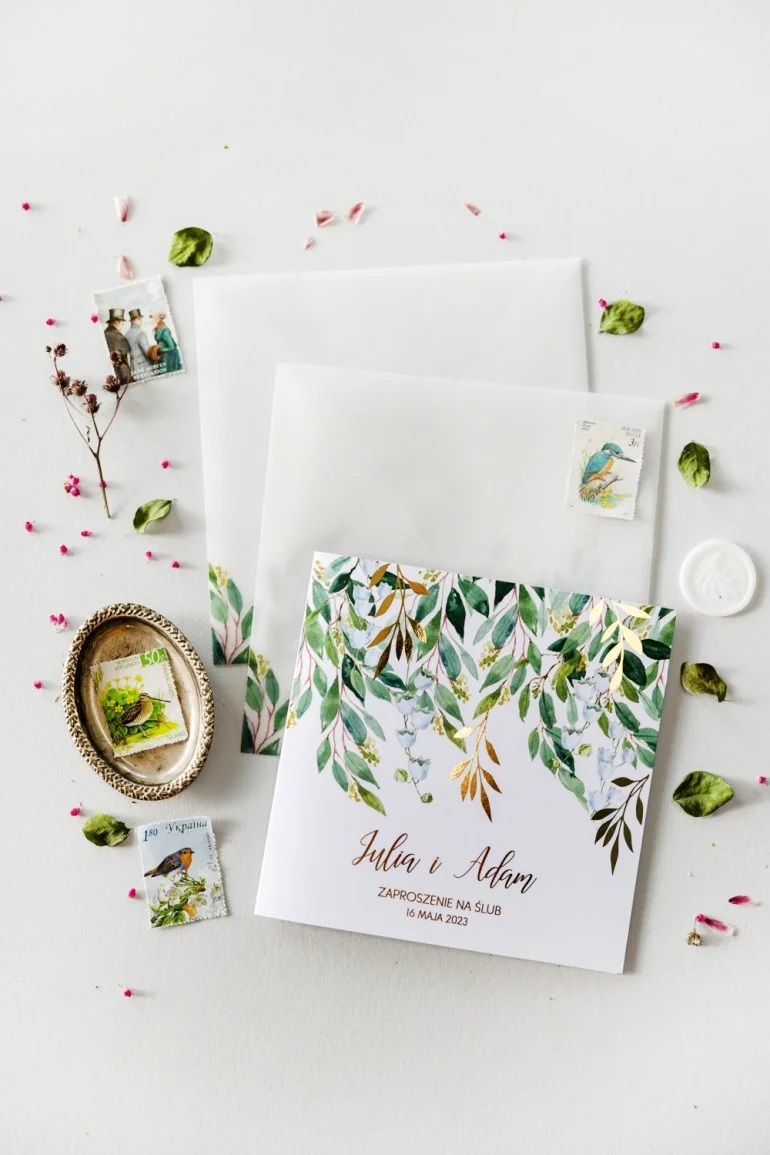
Wedding invitations with green leaves motif, gold accents, classic | Gold-foiled wedding invitations | Rubin no. 4
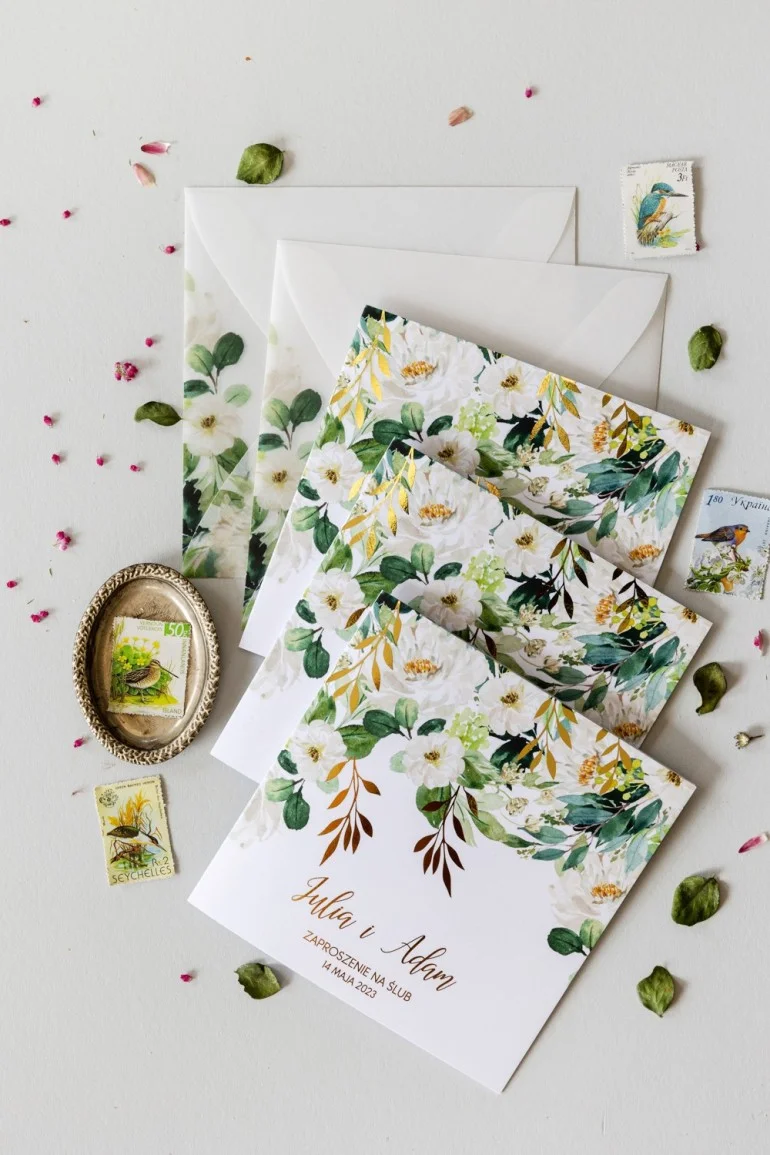
Stylish Wedding Invitations with Gold Accents, Watercolor Flowers | Exclusive Wedding Invitations | Rubin no. 1
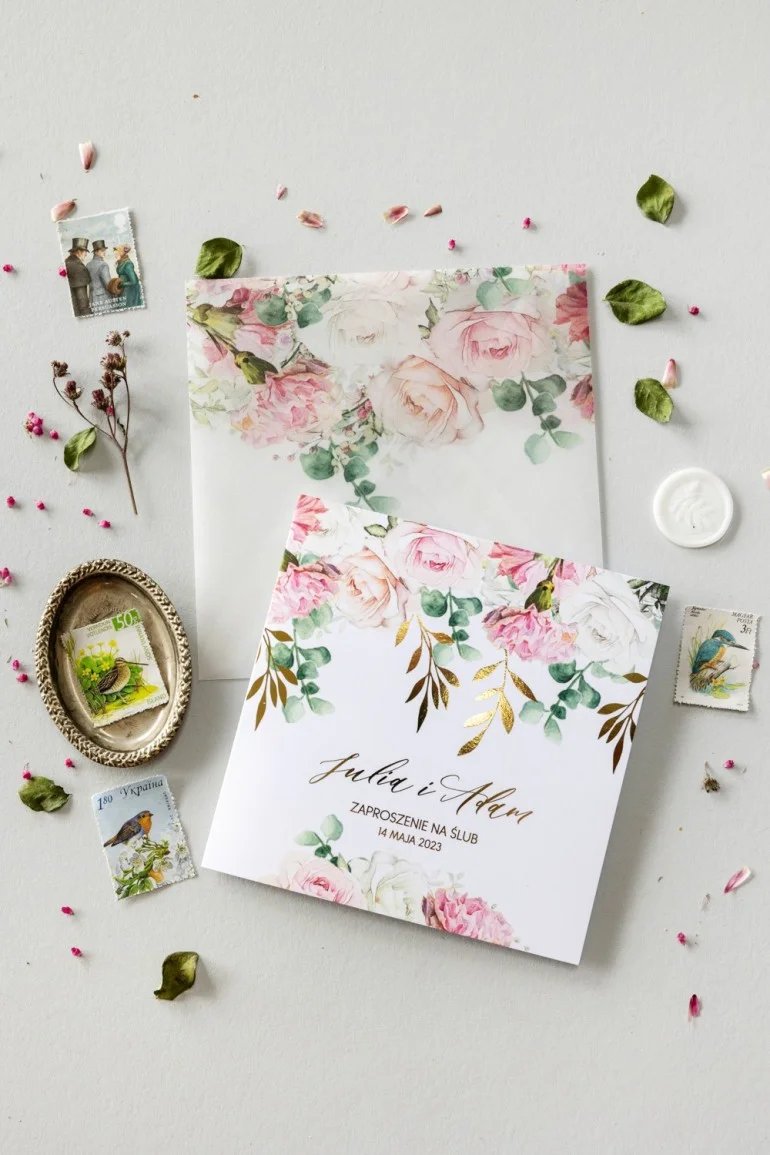
Wedding invitations with pink roses and gold foiling, transparent envelope | glamour style wedding invitations | Rubin no. 9
Many couples start their planning by browsing inspiration on Pinterest or Instagram, which is a great way to develop a shared vision, but true wedding organization begins with something much more practical – a complete list of what to arrange before the wedding and a realistic schedule. In my experience, couples who use a structured wedding checklist from the very beginning are not only less stressed but also make better financial and logistical decisions. That's why I strongly encourage you to download a planning tool right at the start – for example, a free wedding app that will help you track progress, keep an eye on deadlines, and share tasks. Believe me, after a few months of planning, you will be grateful for every organizational shortcut.
In this article, I discuss the wedding preparation timeline broken down into specific periods – from 18 months before the wedding right up to the day of the ceremony. Each section is dedicated to a different aspect of organization: budget, bookings, civil and religious formalities, stationery, attire, decorations, and final preparations. Treat the whole thing as your personal wedding to-do list that you will systematically check off. At the end, you'll also find a convenient calendar table that you can print or save to your phone to keep everything in one place. Let's get started!
Budget and Initial Decisions – 12–18 Months Before the Wedding
How to Set a Realistic Wedding Budget
Before you start looking for a venue, dress, or photographer, you must sit down together and have an honest conversation about money. I know it's not the most romantic topic, but believe me – the wedding budget is the foundation of the entire organization, and every subsequent decision depends on it. Start by determining how much money you have available from your own savings, and then gently explore whether your parents plan to contribute – in Polish tradition, this is still very common, but don't assume it. Once you know the total amount, divide it into categories: about 40–50% of the budget usually goes to the venue and catering, 10–15% to music and entertainment, another 8–12% to the photographer and videographer, and the rest is spread between attire, decorations, stationery, flowers, transport, and other expenses. Write down these proportions and stick to them – this will help you avoid spending half your budget on one thing and then running out for everything else. Also, remember a reserve for unforeseen expenses – I recommend setting aside at least 5–10% of the budget as a "safety cushion," because I guarantee that costs you hadn't even thought of will arise during planning.
It is very helpful to keep a detailed budget spreadsheet where you record every expense – both planned and actually incurred. You can use a simple Excel sheet, but even more convenient is a wedding planning app, which automatically sums up expenses, shows how much is left in each category, and reminds you of upcoming payment deadlines. If you're wondering roughly how much organizing a smaller party might cost, check out our comprehensive guide on the cost of a wedding for 30 people. From experience, I know that couples who don't track their budget regularly often exceed it by 20–30% and then start saving on elements that truly matter – it's better to prevent this from the start.
Choosing the Type of Ceremony – Civil, Church, or Concordat
One of the first and most important decisions you need to make is the type of wedding ceremony. In Poland, you have three basic options, and each involves different formalities, costs, and preparation schedules. A civil wedding is a ceremony conducted by the head of the Registry Office (USC) – it can take place at the USC itself or, for an additional fee, at a location of your choice (e.g., outdoors, in a wedding hall, or a hotel). This is the simplest option formally – you basically just need documents from the USC and one visit to the office to submit a declaration of no legal impediments to marriage. A church wedding is a religious ceremony that in itself does not have civil legal effects – meaning you must first have a civil wedding at the USC and then the religious one at the parish. It requires much more preparation: pre-cana classes, family counseling meetings, gathering church documents, and pre-wedding confession. The third option is a concordat wedding, which combines both elements – the religious ceremony in the church simultaneously has civil effects, so you don't need to go to the USC separately. This is by far the most popular form of wedding in Poland. Regardless of the option chosen, remember that pre-wedding formalities vary depending on the type of ceremony, so it's worth making this decision as early as possible.
When choosing the type of ceremony, consider not only your personal beliefs and preferences but also practical matters. A civil wedding at the USC is the cheapest – the stamp duty of 84 PLN is the only mandatory cost, although you will pay an additional fee for a wedding outside the office. Church and concordat weddings involve "voluntary" donations to the parish, fees for church decoration, the organist, and sometimes fees for pre-marriage courses. Calculate all costs before making a final decision and include them in your budget.
Preliminary Guest List and Choosing a Wedding Date
The next step you must take right at the beginning is creating a preliminary wedding guest list. Why so early? Because the number of guests determines practically everything – the size of the venue, catering costs, the number of wedding invitations, the quantity of place cards, and even the choice of location. Start by making separate lists: your joint list (friends, acquaintances, colleagues), the groom's family list, and the bride's family list. At this stage, write down everyone you would like to invite – you can trim and adjust it later. My advice: divide the list into category A (people who must be at the wedding) and B (people you will invite if there is enough space). This way, if someone from list A declines, you can send an invitation to someone from list B. A typical wedding guest list in Poland ranges from 80 to 150 people, although I organize both intimate weddings for 30 people and grand parties for 250 guests – every option is good as long as it is conscious and planned.
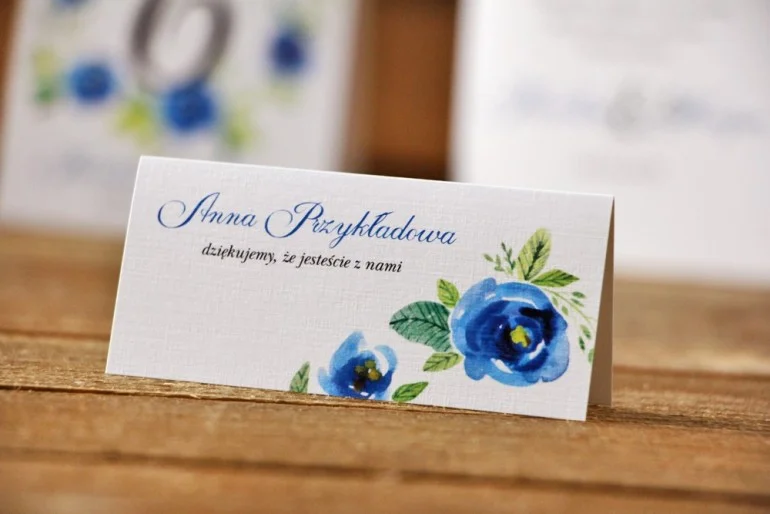
Place cards on linen-textured paper with blue roses | Watercolors no. 10
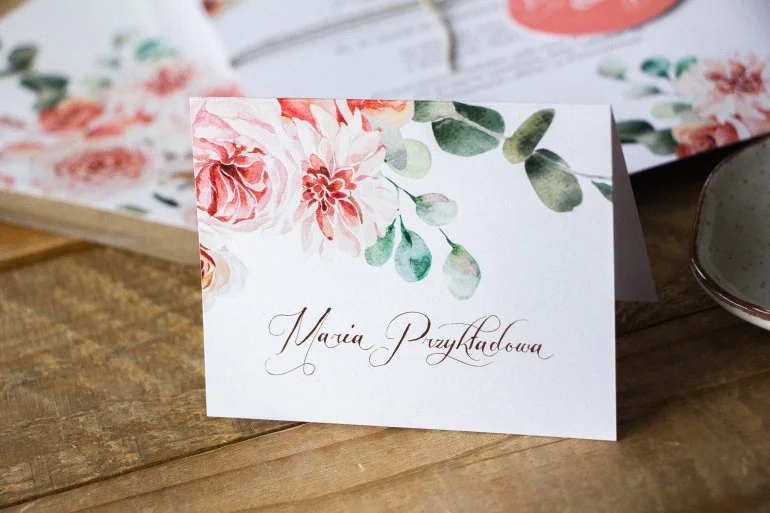
Place cards with pink bouquet composition | Indigo no. 7
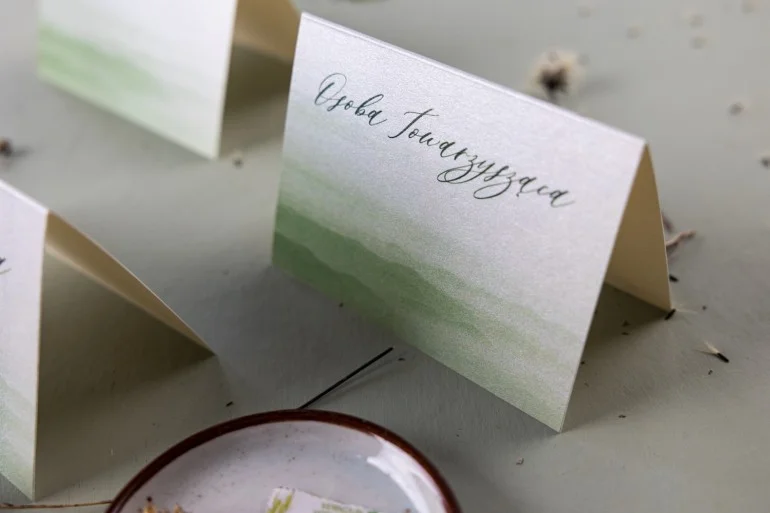
Wedding Place Cards on pearlescent cream paper with green decorations | Opal no. 11
Choosing a wedding date is a decision that should consider several factors simultaneously. First of all – the wedding season in Poland is May, June, August, and September (July can be very hot, and October is risky weather-wise). Saturdays in these months are booked earliest, so if you plan a wedding in peak season, you should have the date set at least 12–18 months in advance. Also, consider dates that don't conflict with important family events, holidays, or long weekends – unless you're doing it on purpose. More and more couples are also opting for weddings on Fridays or Sundays, which gives better availability of venues and vendors, and often lower prices. After setting 2–3 preferred dates, you can check the availability of the wedding venue and key vendors. Also, remember the dilemma with the youngest guests – before sending invitations, it's worth deciding whether you plan children at the wedding with a play area, or an adults-only reception.
It is also worth thinking about the general style and theme of the wedding at this stage. It's not about detailed decoration planning – that will come later – but about the general vision: do you dream of a rustic barn wedding, an elegant party in a palace interior, or perhaps an outdoor garden reception? These decisions affect the choice of venue, colors, and consequently, the entire wedding stationery – from invitations and place cards to menus and table plans. The earlier you develop a shared vision, the easier it will be to make consistent decisions throughout the following months of planning.
Booking the Venue and Key Vendors – 12–18 Months Before the Wedding
Wedding Venue – How to Choose and When to Book
Booking the wedding venue is definitely one of the most important tasks on your to-do list and one that you should complete earliest. Popular wedding venues in large cities – especially those with good reviews, a beautiful garden, or unique decor – can be booked up to 2–3 years in advance. Of course, this doesn't apply to every venue in Poland, but if you have a dream location, don't delay. Before you start calling venues, establish a few key criteria: maximum number of guests, preferred location, style (rustic barn, elegant palace, modern space, outdoor tent), and of course, the budget. Remember that the venue cost is usually the cost per person multiplied by the number of guests, plus any fees for renting the space itself, overtime, corkage, and additional services. Always ask for a full price list and read the contract carefully – especially clauses regarding deposits, payment terms, cancellation conditions, and exactly what is included in the price.
Once you have shortlisted 3–5 venues, arrange site visits – preferably on a weekend so you can see how the venue looks in daylight and check if you like the surroundings. During the visit, pay attention to the state of the dance floor, lighting quality, parking availability, and catering facilities. Be sure to ask for a menu tasting – most good venues offer it for free or a symbolic fee, and the taste of the food is one of the things guests remember best. Don't be afraid to negotiate – many venues are open to adjusting the menu or setting individual terms, especially if you book well in advance or for a less popular date.
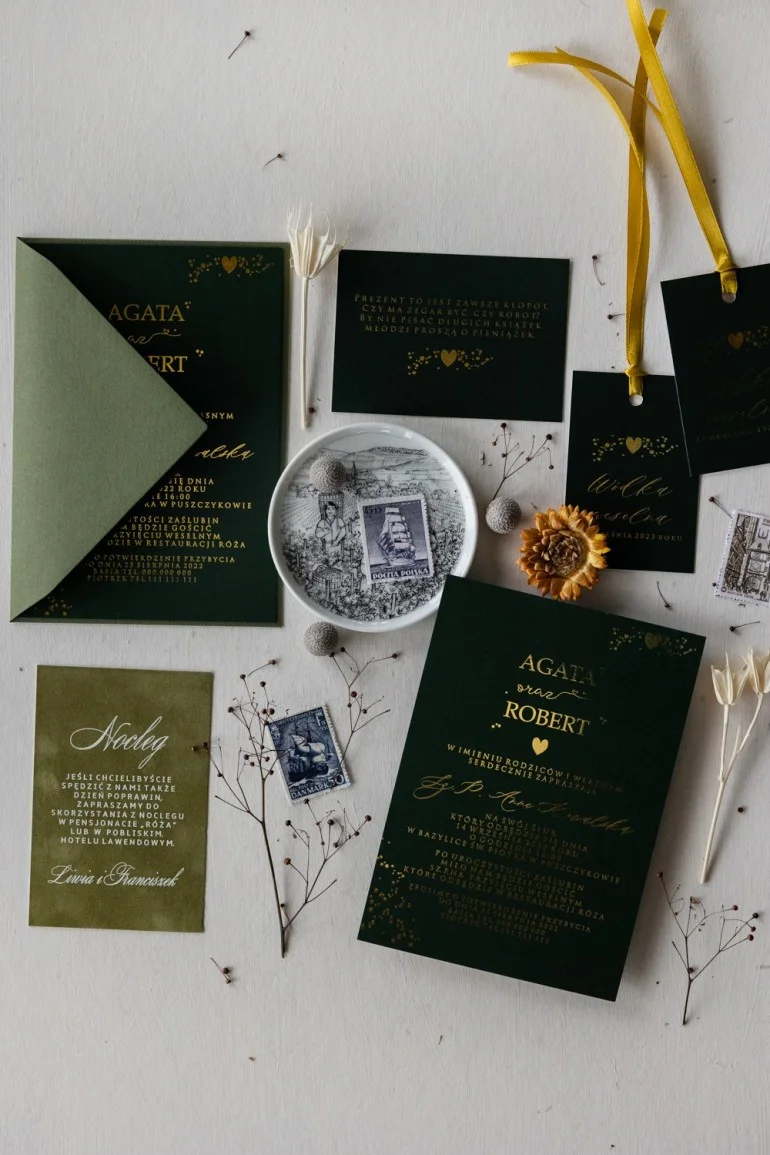
Single-card Wedding Invitations with gold foiling | Simple no. 2
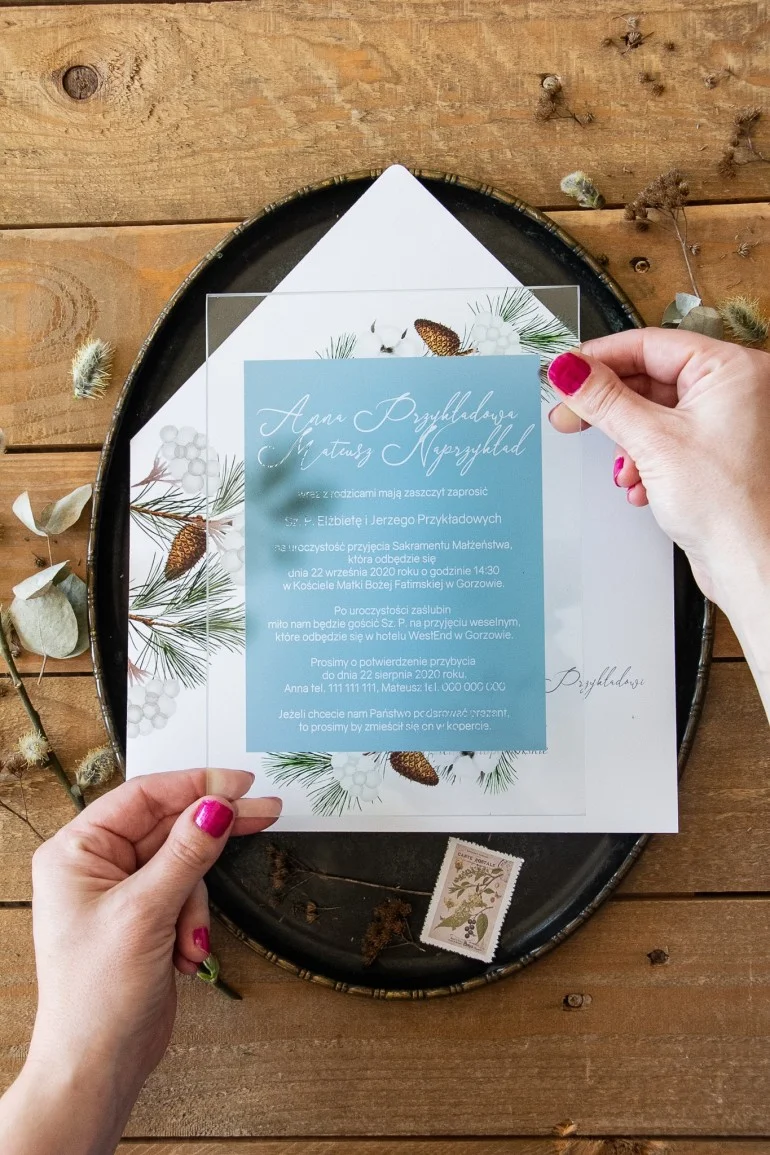
Extravagant Glass Wedding Invitations | Glass Winter Accent | Cotton & Pine | Korani no. 8
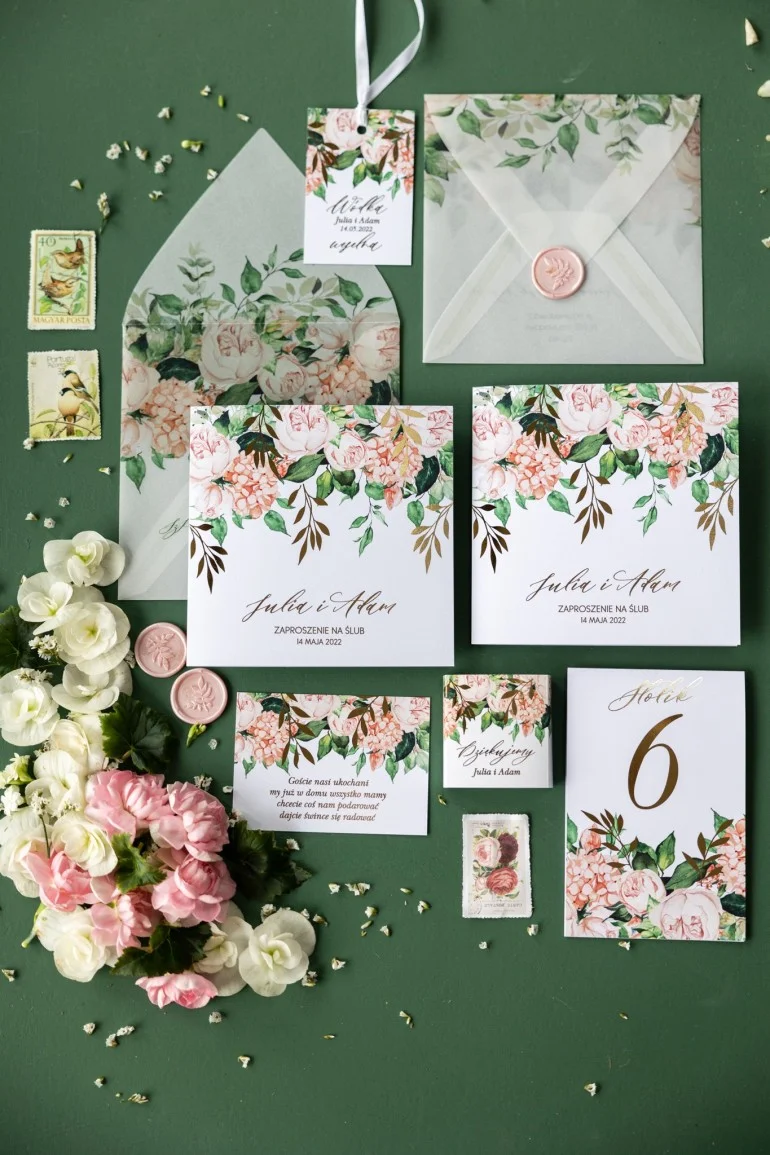
Unique Wedding Invitation with Gold Foiling, Pink Peonies and Vellum Envelope | Unusual Wedding Invitations | Rubin no. 10
Wedding Photographer and Videographer – Why Booking Early Matters
The wedding photographer is the second – right after the venue – vendor you should book as early as possible. Why? Because top photographers in Poland have calendars filled 1–2 years in advance. Wedding photos are the only thing that will stay with you forever (besides rings and memories), so it's really not worth skimping on this element or leaving it to the last minute. Before you start searching, decide what style of photography suits you: reportage (natural, spontaneous), classic (elegant, posed portraits), artistic, or mixed. Review the portfolios of at least a dozen photographers, paying attention not just to their best shots, but to complete reportages – this will give you a true picture of their work.
A videographer is another vendor with long lead times. A wedding highlight film is a beautiful keepsake, but it's not mandatory – many couples opt for photography alone. If you want a film, book the videographer simultaneously with the photographer to ensure both are available on your date. Remember: both the photographer and videographer should have a signed contract with a clearly defined scope of services, number of hours, delivery dates, and copyright rules.
DJ, Wedding Band, and Music
Music greatly determines the atmosphere of the entire wedding, so the choice between a wedding DJ and a wedding band should be a conscious decision. A DJ is usually a more affordable option, offering great repertoire flexibility – a good wedding DJ can read the floor and adjust the music to the guests' energy. A wedding band, on the other hand, offers more spectacle – live music has a unique character, but it is also less predictable and more expensive. The best DJs and bands, like photographers, have calendars booked 1–2 years in advance. Ask for the opportunity to see a performer "in action" – e.g., at another wedding or through video recordings of their performances.
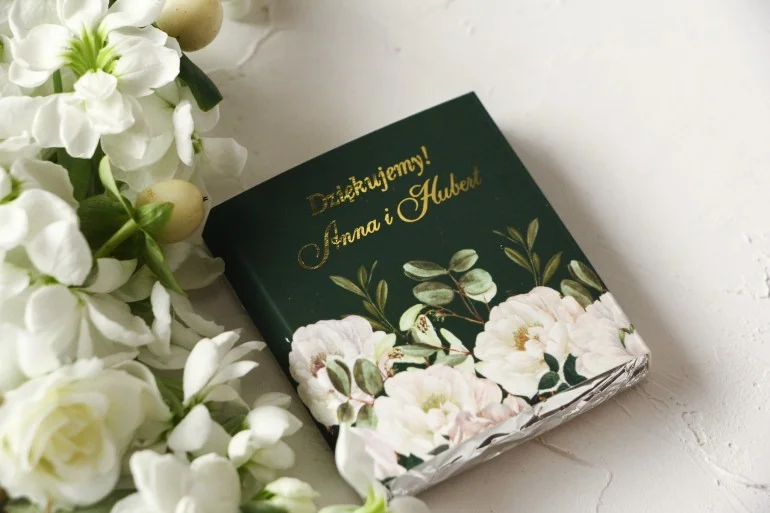
Wedding chocolates with white roses and eucalyptus bouquet | Sapphire no. 3

Wedding honey with olive branches | Indigo no. 2
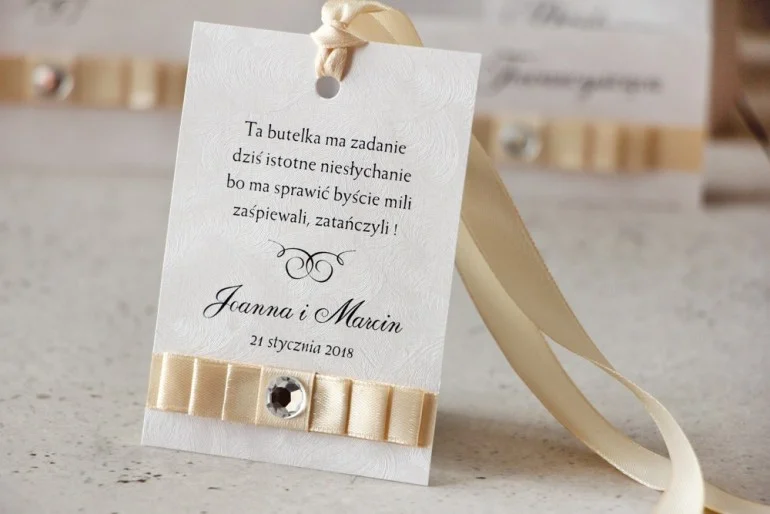
Elegant wedding vodka tags with rhinestones | Amaretto no. 1
Civil Registry Office Formalities – What to Arrange and When
Documents for a Civil Wedding – Complete List
Formalities at the USC are often feared by couples, but in practice, they are much simpler than they seem. To get married in the Registry Office, you need a relatively small set of documents. Both must present ID cards (or passports), and if either of you was previously married – a certified copy of the final court divorce decree or a death certificate of the previous spouse. A key document is the so-called assurance of no legal impediments to marriage – this is a written statement you submit in person to the USC head. You can submit this at most 6 months before the planned wedding date, and at the latest 30 days before – this is crucial because the certificate is valid for 6 months.
The stamp duty for preparing the marriage certificate is 84 PLN. In the case of an outdoor civil wedding – for example, in a garden or wedding hall – you must pay an additional fee of 1,000 PLN. This is a popular option as it allows you to combine the ceremony and reception in one place. Remember that an outdoor wedding must take place in a dignified location – the USC head has the right to refuse if the conditions are not met.
Church Formalities and Pre-Cana – Preparing for a Religious Wedding
Church Documents – What You Need to Gather
If you plan a church wedding or concordat wedding, you must prepare for a more extensive set of formalities. The Catholic Church requires: baptismal certificates (issued no earlier than 6 months before the wedding), confirmation certificates, USC certificate of no impediments, ID cards, and for widows/widowers – the death certificate of the previous spouse. If you were baptized in a different parish than the one where you are getting married, you will need a license – permission from your home parish priest.
All these documents are taken to the parish office where the wedding will take place, and based on them, the priest completes the pre-nuptial protocol. This is an interview where you discuss your faith, vision of marriage, and openness to children. It's best to plan this 3–6 months before the wedding.
Pre-Cana Classes and Family Counseling
Pre-Cana classes are a mandatory part of preparing for a church wedding. They cover topics like communication, conflict resolution, and family planning. These can be weekly meetings, weekend retreats, or sometimes online courses. Sign up early, ideally 6–12 months before the wedding. Additionally, you must attend 2–3 meetings at a family counseling center. These are individual meetings with a counselor and should not be left until the last minute, as centers can be very busy during wedding season.
Wedding Invitations and Stationery – From Design to Delivery
When to Order Wedding Invitations
Wedding invitations are the first "preview" of your wedding's style. Ideally, you should order wedding invitations 6–8 months before the wedding, so they are ready to be sent or delivered 3–4 months before the ceremony. This gives guests time to book time off work and arrange travel. If you have international guests, send them even earlier – 4–5 months in advance.
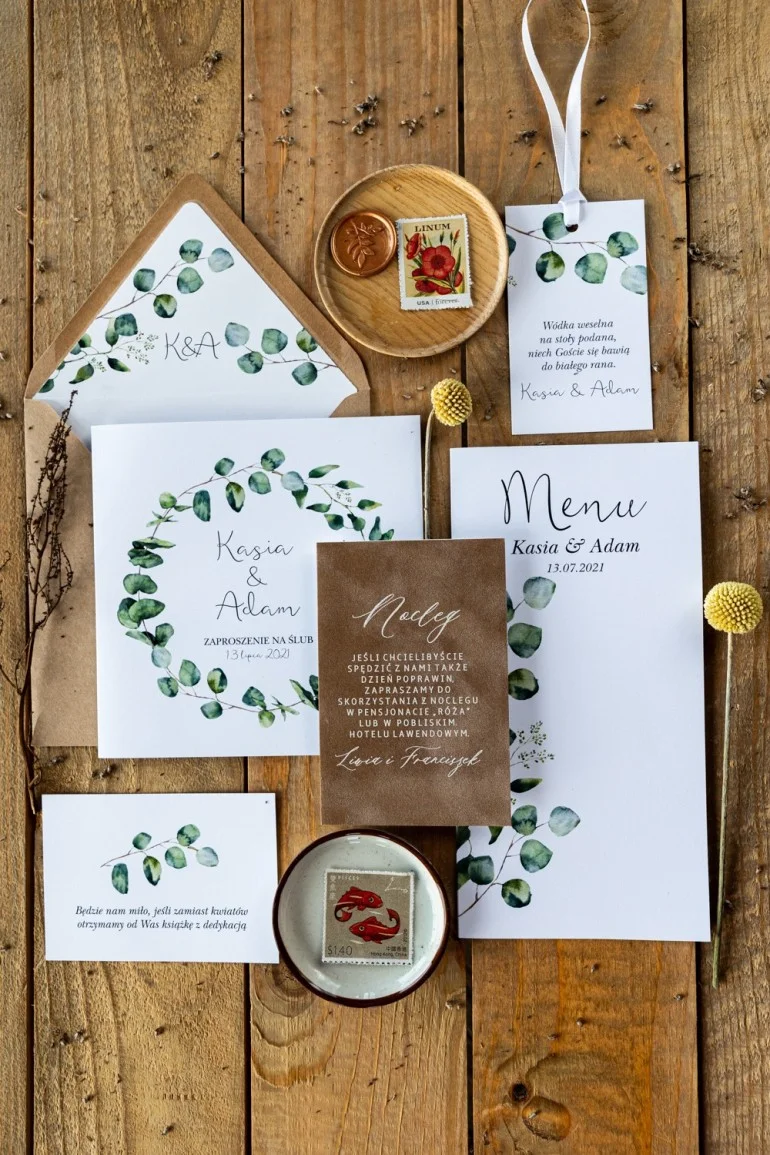
Eco-friendly Invitation with Greenery Styling | Wedding Invitations in eco envelope | Kalia no. 2
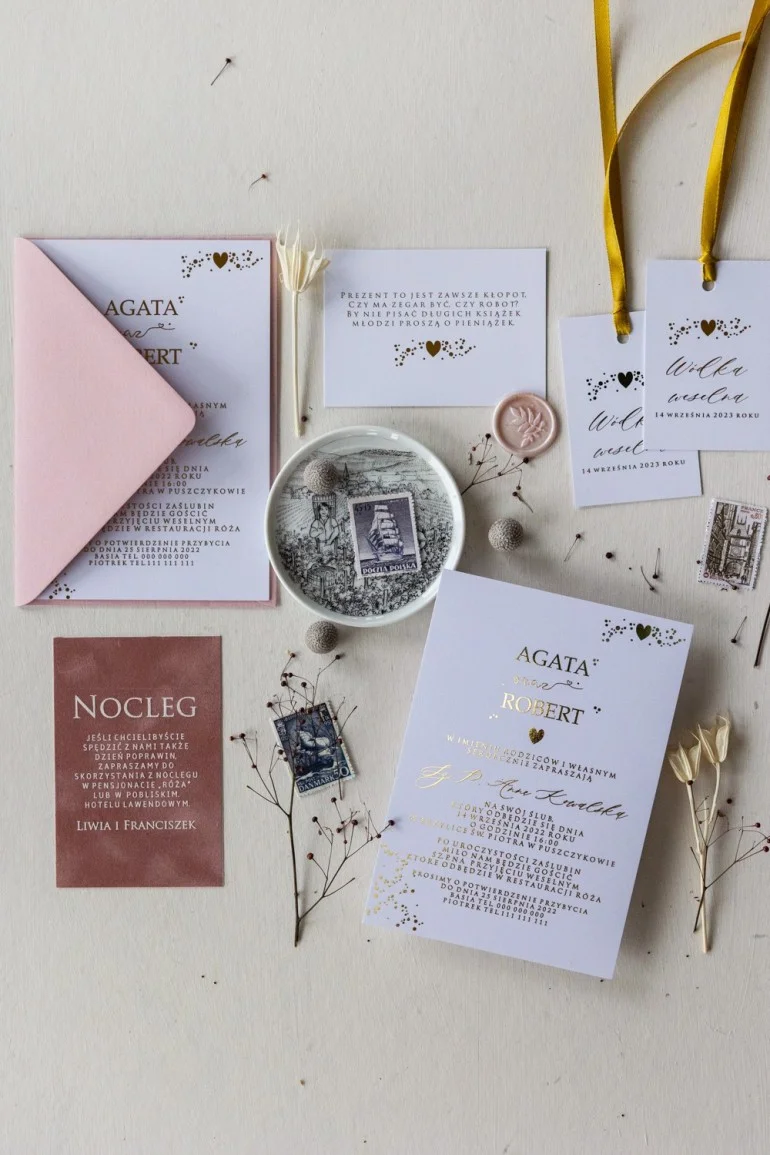
Subtle Wedding Invitations, Minimalist Design with Gold Elements | Simple no. 3
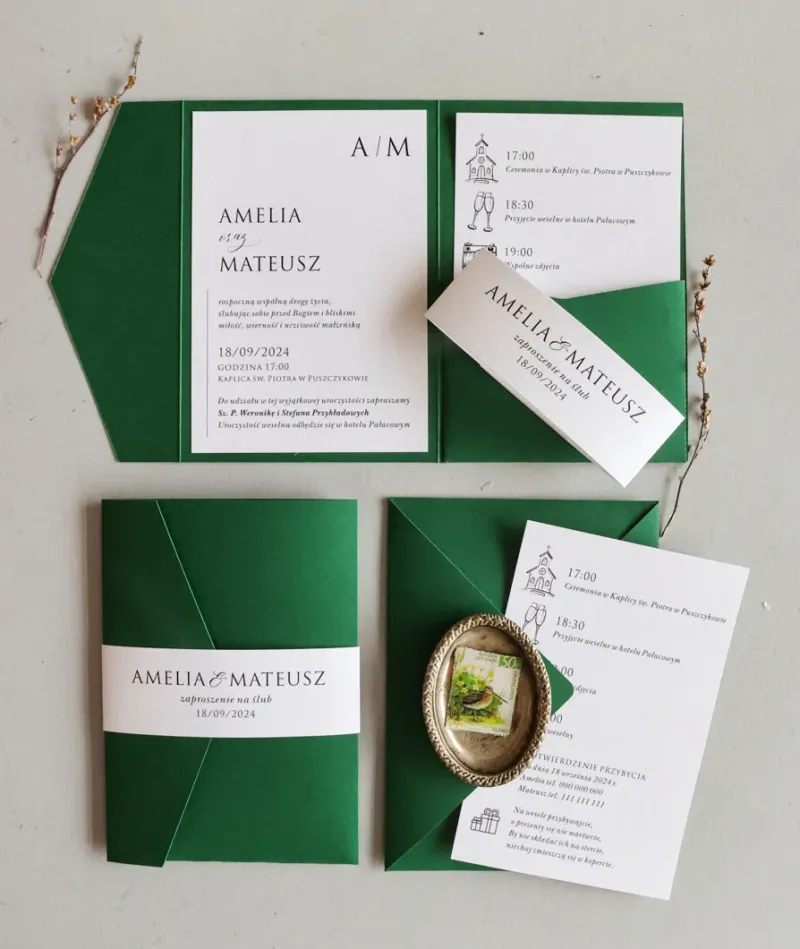
Elegant Wedding Invitations in Bottle Green Shades | Minimalist Design and Modernity | Kraft no. 10
Complete wedding stationery includes more than just invitations: place cards, table plans, menus, table numbers, bottle tags, and thank-you cards. While invitations are sent early, items like place cards and table plans are finalized 2–4 weeks before the wedding once the guest list is confirmed. Don't forget wedding favors for your guests – small gifts like honey jars or soaps with personalized labels add a lovely touch.
Wedding Attire and Rings – 6–9 Months Before the Wedding
A wedding dress search should begin 9–12 months before the wedding. Ordering a dress can take 3–6 months, plus time for alterations. For the groom, a wedding suit made to measure requires about 3–4 months. Don't forget the wedding rings – order them 3–6 months in advance to allow for engraving and any size adjustments. Popular materials include yellow, white, or rose gold, platinum, and titanium.
Decorations, Flowers, and Attractions – 3–6 Months Before the Wedding
Start working with a wedding florist 4–6 months before the wedding. They will handle the bridal bouquet, buttonholes, and decorations for the church and venue. For the wedding cake, book a tasting and place your order 2–3 months before the wedding. Consider adding attractions like a photo booth, a cocktail bar, or a candy bar to enhance the guest experience.
Calendar Table: Step-by-Step Wedding Preparation Timeline
| Timeline | Task | Category |
|---|---|---|
| 18–12 months | Set the wedding budget | Budget |
| 18–12 months | Choose ceremony type (Civil / Church / Concordat) | Decisions |
| 18–12 months | Book the wedding venue | Bookings |
| 6–8 months | Design and order wedding invitations | Stationery |
| 6 months | Visit USC – submit assurance (84 PLN fee) | Civil Formalities |
| 3–4 months | Send out wedding invitations | Stationery |
| 1 week | Final check of documents and rings | Organization |
How Not to Go Crazy – Golden Rules of Wedding Planning
Don't try to do everything yourself – delegate tasks to bridesmaids, groomsmen, and parents. Use digital tools like a wedding planning app to keep everything organized. Most importantly, take care of your relationship. Don't let wedding planning consume your life; remember to go on dates where wedding talk is forbidden. The most beautiful weddings are those where the couple is truly happy and relaxed.
This article is your complete guide to wedding formalities and organization. Save this wedding calendar and refer to it throughout your journey – and if you're looking for a great tool, check out the Blissaro app. Good luck and have a beautiful wedding!
Recommended articles you might find interesting:
- Wedding Day Timeline - How to Plan Your Celebration Step-by-Step
- Choosing Wedding Vendors: When and How to Book Specialists
- What Needs to be Arranged for a Civil Wedding - A Step-by-Step Guide
- What Documents are Needed for a Church Wedding in 2024 and 2025?
- How to Avoid the Most Common Wedding Planning Mistakes?