Bilingual or Intercultural Ceremony – How to Combine Traditions and Languages

In today's globalized world, more and more couples are choosing international relationships, building bridges between different cultures, traditions, and languages. Organizing a wedding that harmoniously blends the heritage of both sides requires not only careful planning but, above all, a deep respect for diversity and an openness to compromise. A bilingual or multicultural ceremony is a unique opportunity to celebrate the richness of diversity and create an event that will remain in the memory of all guests forever – regardless of which corner of the world they traveled from.
International weddings in Poland are becoming increasingly popular, and mixed-nationality or interfaith couples are looking for ways to combine their traditions into a cohesive whole. The key to success is not just logistics and perfect organization, but also empathy and understanding for the needs of all participants. In this article, you will find a comprehensive guide to help you organize a ceremony and reception where every guest feels comfortable and your love becomes a symbol of the unity of two cultures. From legal formalities and bilingual wedding invitations available at Amelia Wedding, to musical rhythms and culinary fusion – you'll find it all in the guide below.
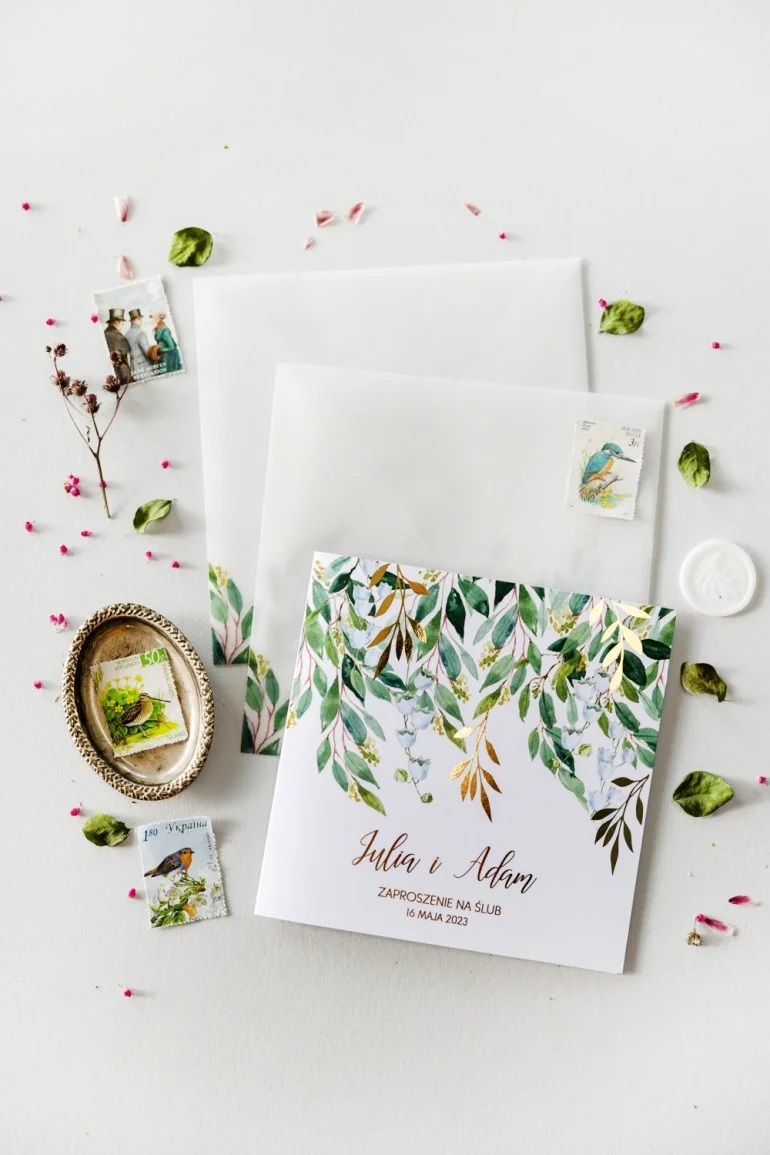
Wedding invitations with green leaf motif, gold accents, classic | Gilded wedding invitations | Rubin no. 4
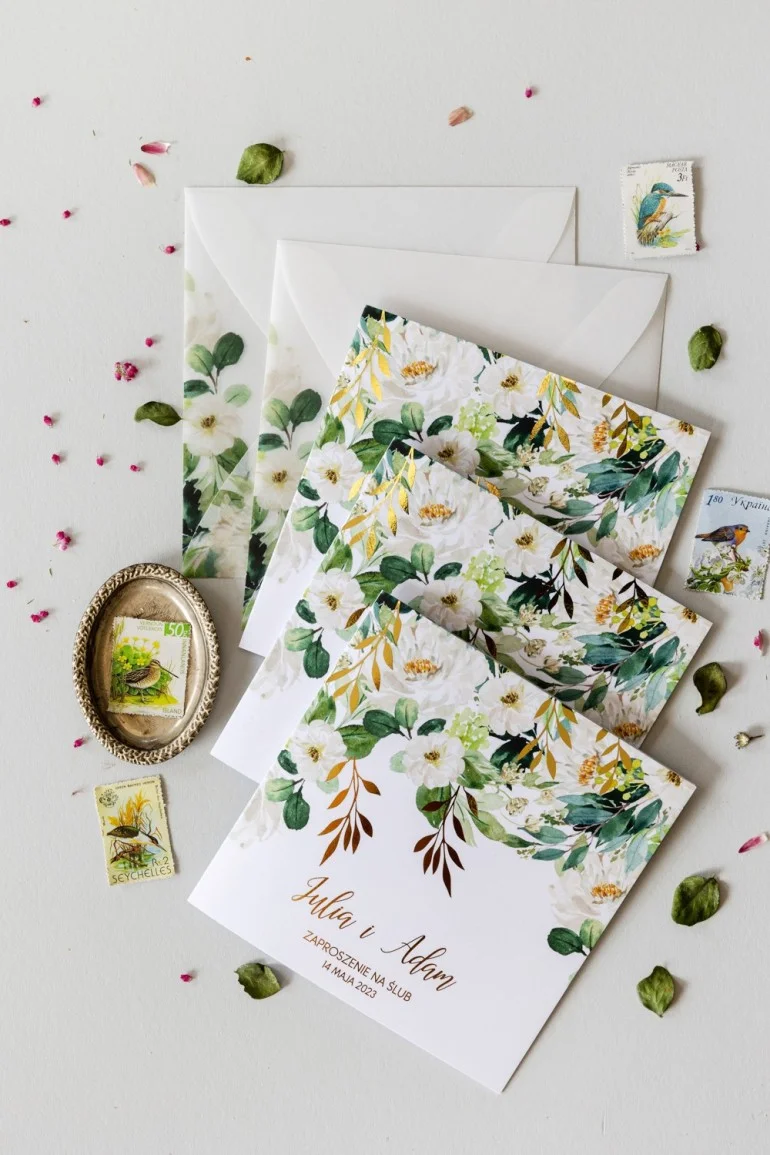
Stylish Wedding Invitations with Gold Accents, Watercolor Flowers | Exclusive Wedding Invitations | Rubin no. 1
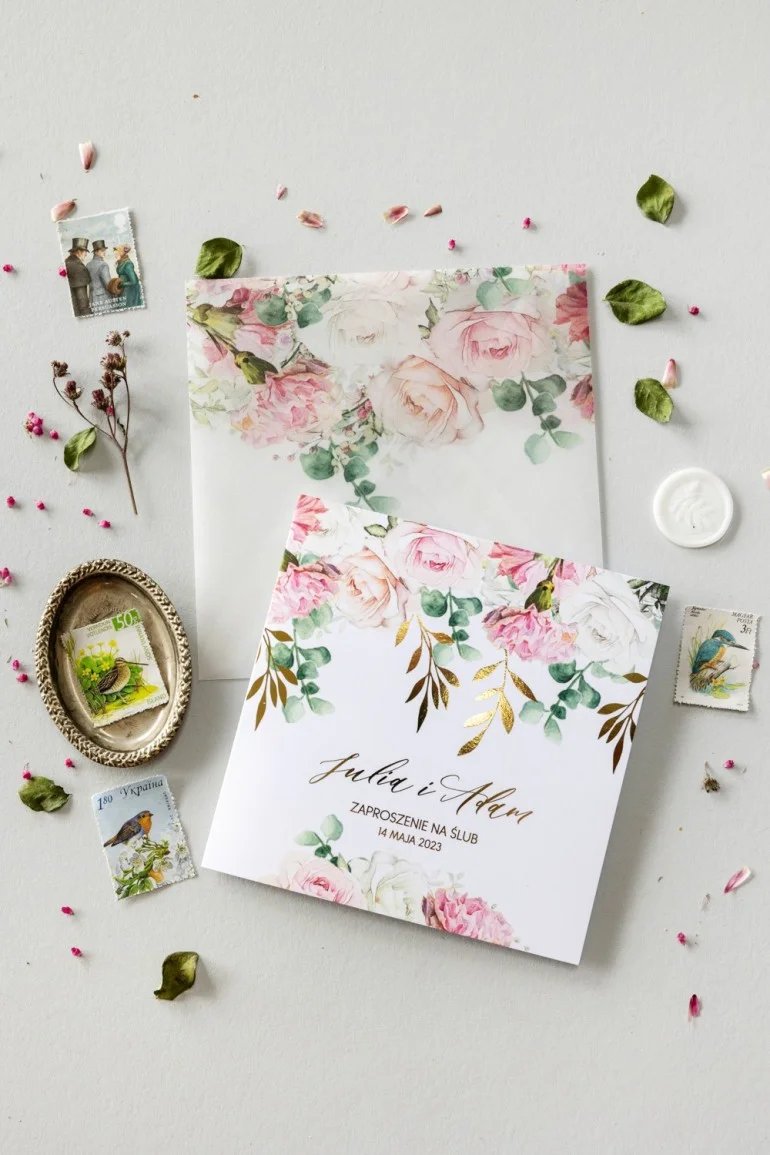
Wedding invitations with pink roses and gilding, transparent envelope | glamour style wedding invitations | Rubin no. 9
Formal preparations for a mixed wedding – documents, consents, and bilingual ceremony
Legal foundations and church requirements for interfaith couples
Organizing an interfaith wedding requires a thoughtful approach to formal and religious issues that can significantly affect the course of the ceremony. In Poland, where Catholicism dominates, couples from different faiths or cultures often encounter additional administrative and clerical requirements that must be completed well in advance. It is worth starting wedding preparations at least six months before the planned date to have enough time to collect all necessary documents and obtain appropriate consents.
If you are planning a church wedding in the Roman Catholic rite where one party is of a faith other than Catholic, it is necessary to obtain a dispensation from the diocesan bishop. This dispensation is a form of permission to enter into a mixed marriage and requires meeting several conditions. The Catholic party must make a pledge of faith, a solemn promise to do everything in their power to ensure that children from this union are baptized and raised in the Catholic faith. This commitment can be emotional and requires honest conversations between partners before starting formal procedures. Equally important is informing the non-Catholic party about the nature of Catholic marriage, especially its unity and indissolubility. The entire procedure requires a visit to the parish, a meeting with the priest, who then applies to the curia for the appropriate permission. Documents you need to prepare from the Catholic side include a baptismal certificate (issued no earlier than six months before the wedding), a confirmation certificate, and a certificate of completion of a pre-marriage course.
The non-Catholic party must also provide appropriate documents confirming their faith and single status according to the canon law of their Church. For persons baptized in other Christian denominations (e.g., Orthodox, Protestant), a certificate from their religious community confirming membership and the absence of impediments to marriage will be needed. For unbaptized persons, the procedure may be slightly more complicated, as we then speak of a dispensation from the impediment of disparity of cult. In any case, both parties must also present documents from the Civil Registry Office – shortened copies of birth certificates and a certificate of no impediment to marriage. It is worth remembering that in the case of a concordat wedding, which has legal effects in both the religious and civil spheres, all these formalities are absolutely necessary. If one of the partners is a foreigner, foreign documents must be translated by a sworn translator and often require an apostille – a special certification of the document's authenticity according to international regulations.
An important decision that interfaith couples must make is the choice of rite in which the ceremony will take place. According to canon law, you cannot marry twice or organize a ceremony with representatives of two different Churches simultaneously. This means you must choose one rite – either Catholic or consistent with the other partner's faith. Some couples opt for a solution involving two separate ceremonies at different times or locations – first a civil wedding at the Registry Office, followed by separate blessings in both religious communities. This approach allows for respecting the traditions of both sides and gives families the opportunity to participate in ceremonies consistent with their values. However, this requires particular sensitivity and open communication with the clergy of both faiths to work out a harmonious plan that does not violate the rules of either community. For many couples, such a double ceremony becomes a symbolic moment of connecting two worlds into one common union that draws from the richness of both traditions and creates the foundations for building family micro-multiculturalism.
The role of a sworn translator in a civil ceremony and pre-wedding formalities
When one party is not fluent in Polish, the presence of a sworn translator becomes not just recommended, but mandatory at every stage of preparation and during the civil ceremony itself. A sworn translator plays a key role in ensuring that the person who does not know Polish fully understands all the legal consequences of marriage and is aware of the content of the declarations and marriage vows being made. This is not just a formal issue, but above all a practical one – thanks to the presence of a translator, the foreigner feels safer and can fully experience this unique moment instead of wondering what exactly is being said and signed.
The first stage where the help of a sworn translator is essential is the preparation of pre-wedding documents. Most foreign documents – such as a passport, birth certificate, certificate of no impediment to marriage, or a document confirming civil status – must be translated into Polish by an authorized sworn translator entered on the list of the Ministry of Justice. This is a standard procedure that guarantees the documents are authentic and compliant with Polish law. Next, during the visit to the Civil Registry Office to sign the pre-wedding declarations, the sworn translator accompanies the couple and performs an oral translation of all declarations made by the non-Polish speaking party. At this point, the head of the Registry Office asks a series of questions regarding personal data, current civil status, and the absence of legal impediments to marriage. The translator translates every question and answer, and then signs the declaration with the annotation "translated into the language..." along with the date. Thanks to this, the foreigner is certain that they fully understand the content of the document they are signing and are aware of all legal consequences.
During the wedding ceremony at the Registry Office itself, the role of the sworn translator is even more significant. It is they who translate the entire content of the official's speech in real-time, which includes information about the rights and duties of spouses, the meaning of marriage in Polish law, and the symbolism of this solemn moment. Then, the translator translates the words of the marriage vow. This is an incredibly moving moment that, thanks to the presence of a professional translator, can be fully experienced by both parties and their families. Importantly, the translator should use a microphone so that all guests – both Polish-speaking and foreign – can follow the course of the ceremony and understand every word. It is also worth noting that the translator does not have to be a translator of the foreigner's native language – it can be an English translator, provided the non-Polish speaking person is fluent in English and consents to it.
Choosing the right sworn translator is a task worth spending time and attention on. It is best to look for someone who has experience in translating wedding ceremonies and understands not only the language but also the cultural context of both sides. A professional translator can not only perform a precise translation but also create the right atmosphere for the entire event, adjusting the tone and manner of translation to the solemn nature of the ceremony. Thanks to their assistance, the entire course of the wedding becomes smooth, and guests from both sides feel engaged and can fully participate in this unique moment. It is also worth asking the translator about their availability for the wedding day well in advance, as experienced translators are often busy, especially during the wedding season. The cost of a sworn translator's service may vary depending on the region and language, but it is an investment that significantly affects the comfort and legal security of the entire ceremony. For many international couples, the presence of a translator is not only a legal necessity but also a symbol of respect for both cultures and languages that meet on this special day.
Table of Contents
- Bilingual Ceremony – How to Find a Priest or Celebrant
- Bilingual Wedding Stationery
- Wedding Website and Apps
- Combining Traditions and Rituals from Two Cultures
- Compromises and Open Communication
- Communication with Guests During the Reception
- Culinary Fusion of Cultures – Wedding Menu
- Decorations and Visual Setting
- Practical Organizational Aspects – Logistics
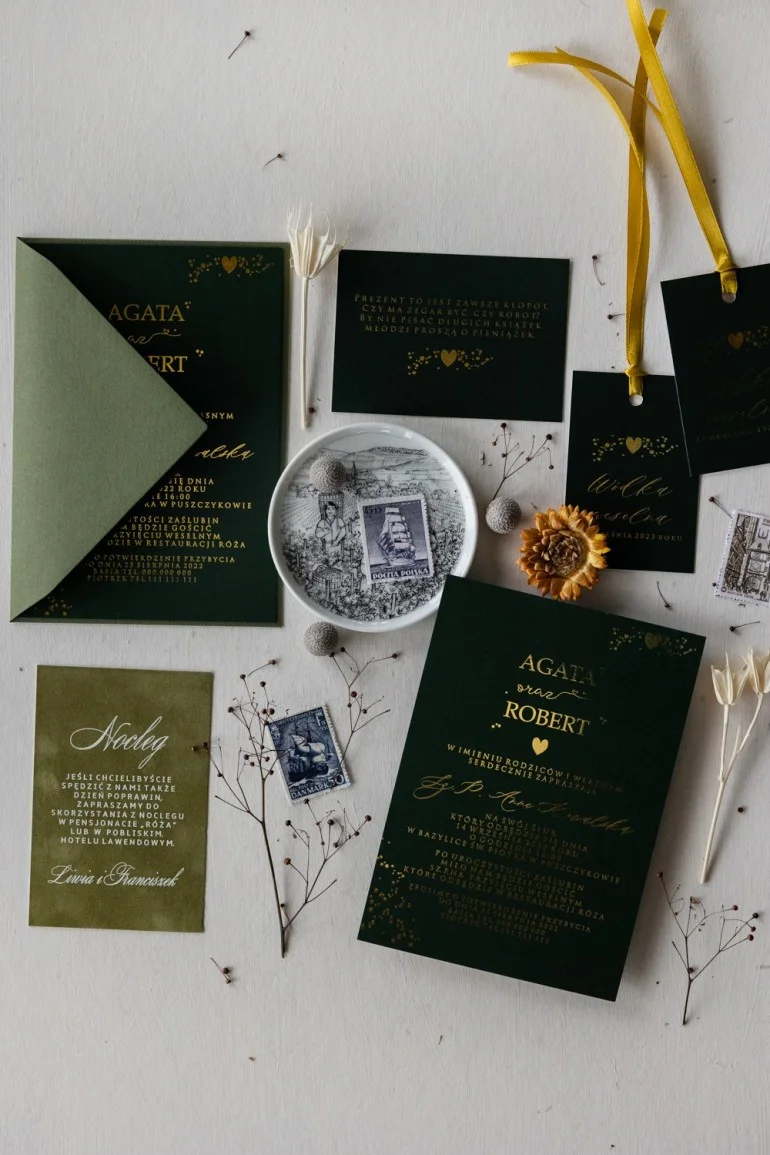
Single-card Wedding Invitations with gilding | Simple no. 2
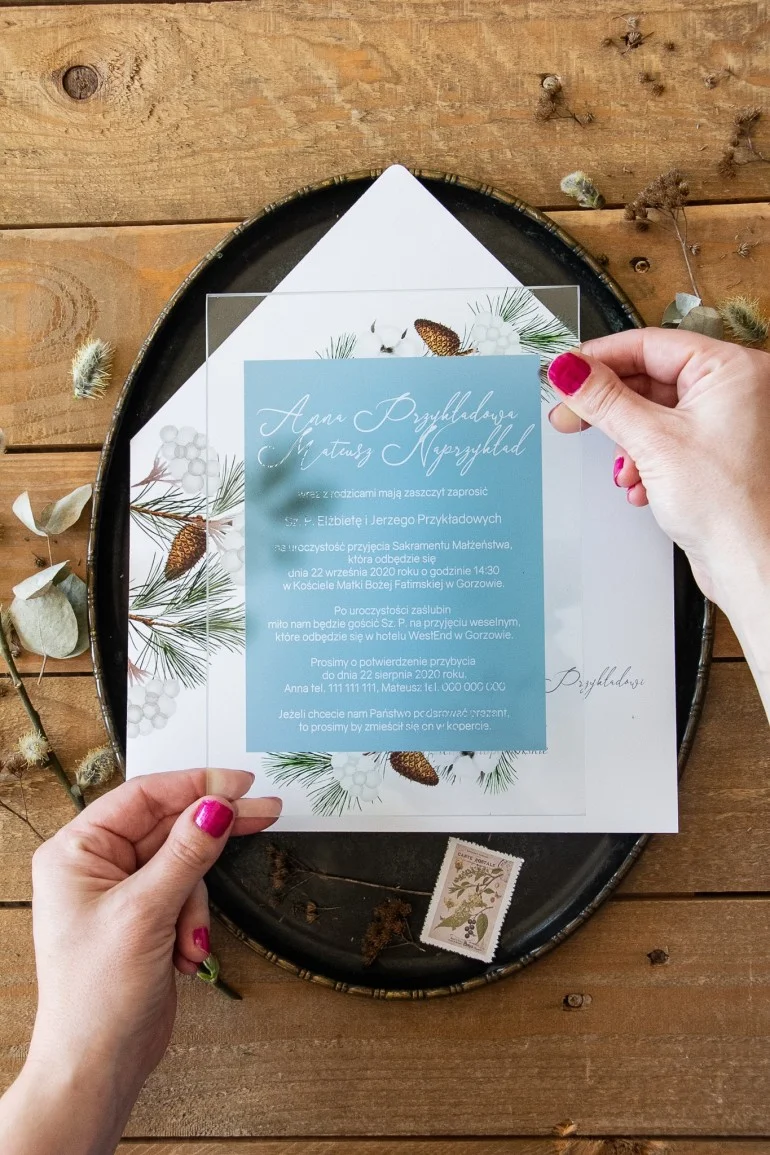
Extravagant Glass Wedding Invitations | Glass Winter Accent | Cotton & Pine | Korani no. 8
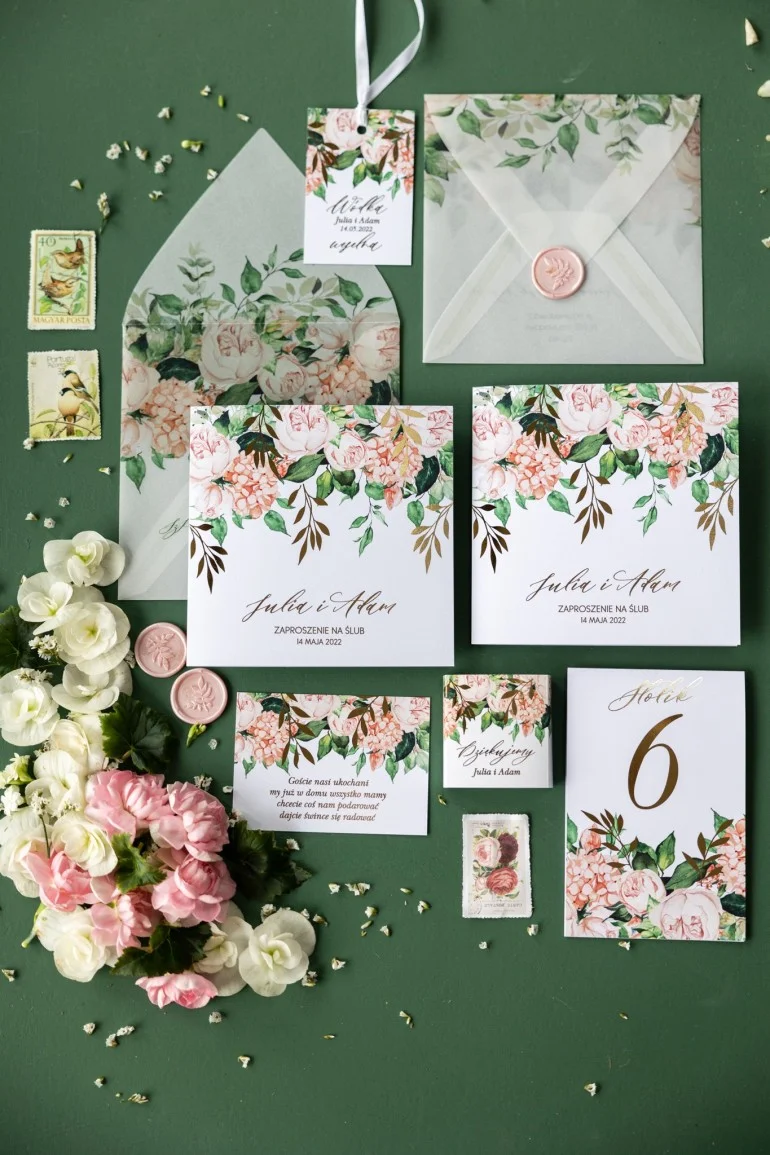
Unique Wedding Invitation with Gilding, Pink Peonies and Vellum Envelope | Unusual Wedding Invitations | Rubin no. 10
Bilingual ceremony – how to find a priest or celebrant who knows both languages
One of the most important organizational challenges when planning a bilingual wedding is finding a ceremony leader who can communicate in both languages or will work with a translator in a way that ensures a smooth and solemn course of the ceremony. In the case of a church wedding, the ideal solution is to find a priest who knows both Polish and the foreign partner's language. Such a clergyman will be able to lead the ceremony alternately in both languages or translate key fragments of the liturgy, so that all guests – regardless of their origin – feel involved in this solemn moment.
If you are planning a church wedding in Poland, it is worth starting the search for a suitable priest well in advance, preferably about six months before the planned date. In larger cities, where more foreigners live and international parishes exist, it is easier to find clergy speaking English, German, French, or Spanish. Many parishes also conduct Holy Masses in foreign languages, which proves they are open to multiculturalism and have experience in serving international couples. A good idea is to contact the diocesan curia or the chaplaincy office for foreigners, which can help in finding a suitable clergyman. During the first meeting with the priest, it is worth discussing your expectations regarding the course of the ceremony, emphasizing the importance of bilingualism and the comfort of all guests. Some priests propose a solution involving leading the ceremony mainly in one language, with translations of the most important fragments – such as the homily, liturgical readings, and marriage vows – into the second language. Another approach assumes alternating both languages, which creates a more integrated and smooth course of the ceremony.
If you cannot find a priest who knows both languages, you can consider hiring a translator who will assist during the ceremony and translate the clergyman's words in real-time. In this case, it is crucial to prepare the ceremony script in advance and agree on all details with the translator – from biblical readings and the homily to the content of the marriage vows. The translator should have access to a microphone so that all guests can hear the translation effortlessly, which significantly affects the solemnity of the moment. It is also worth preparing printed ceremony programs in both languages and distributing them to guests before the wedding begins. Such programs should contain the order of the ceremony, song lyrics, liturgical readings, and the content of the marriage vows in both language versions. Thanks to this, every participant will be able to follow the course of the ceremony and feel part of this unique moment, even if they do not fully understand the language used by the clergyman.
For couples who opt for a civil wedding or a humanist ceremony, the situation may be slightly simpler, as greater flexibility in choosing the person leading the ceremony allows for finding a celebrant who specializes in bilingual or multicultural ceremonies from the start. Wedding celebrants – an increasingly popular group of professionals in Poland – often have experience in leading ceremonies for international couples and offer personalized scripts that combine traditions of both cultures into a harmonious whole. During the first conversations with the celebrant, you can tell your story, share the values that are most important to you, and discuss symbolic rituals you would like to include in the ceremony. The celebrant will then prepare a unique script that reflects your personality and cultural heritage, leading the ceremony in a way that touches the hearts of all guests. This is particularly valuable for couples who want to celebrate their diversity in an authentic and emotional way, going beyond standard religious or official formulas.
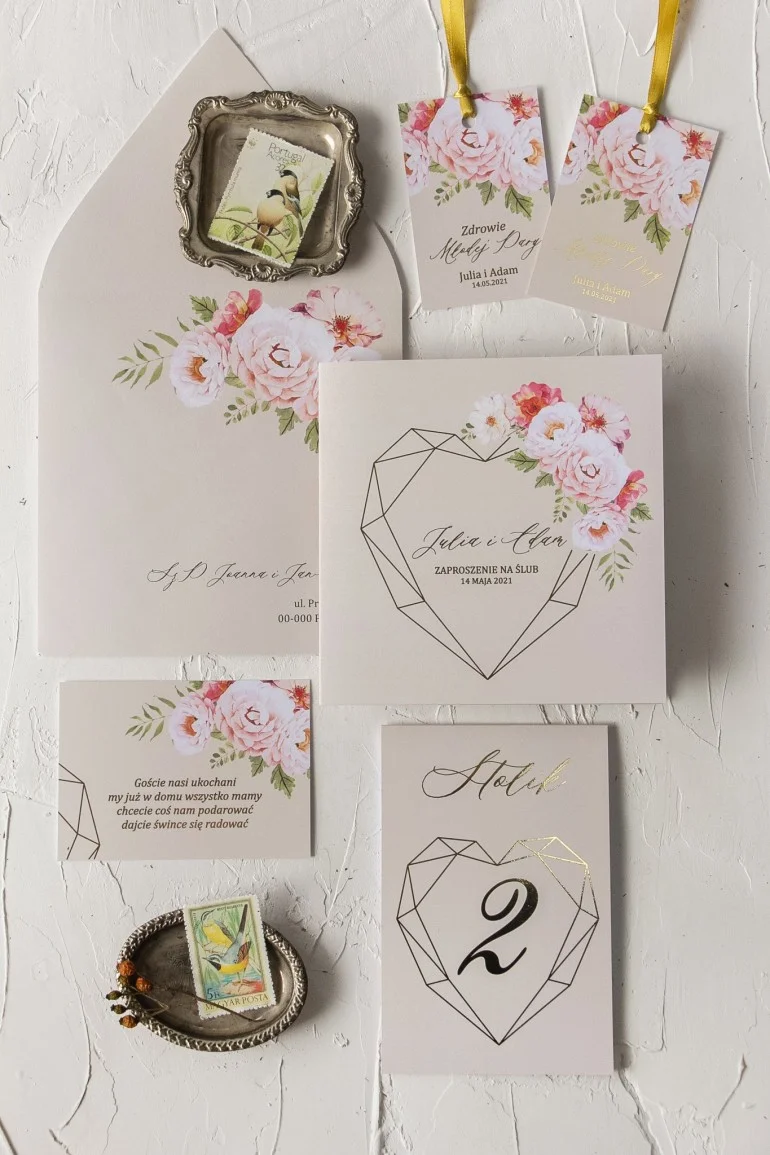
Wedding Invitations with Gold Heart and Floral Motif | Modern and Stylish | Szafirowe no. 8
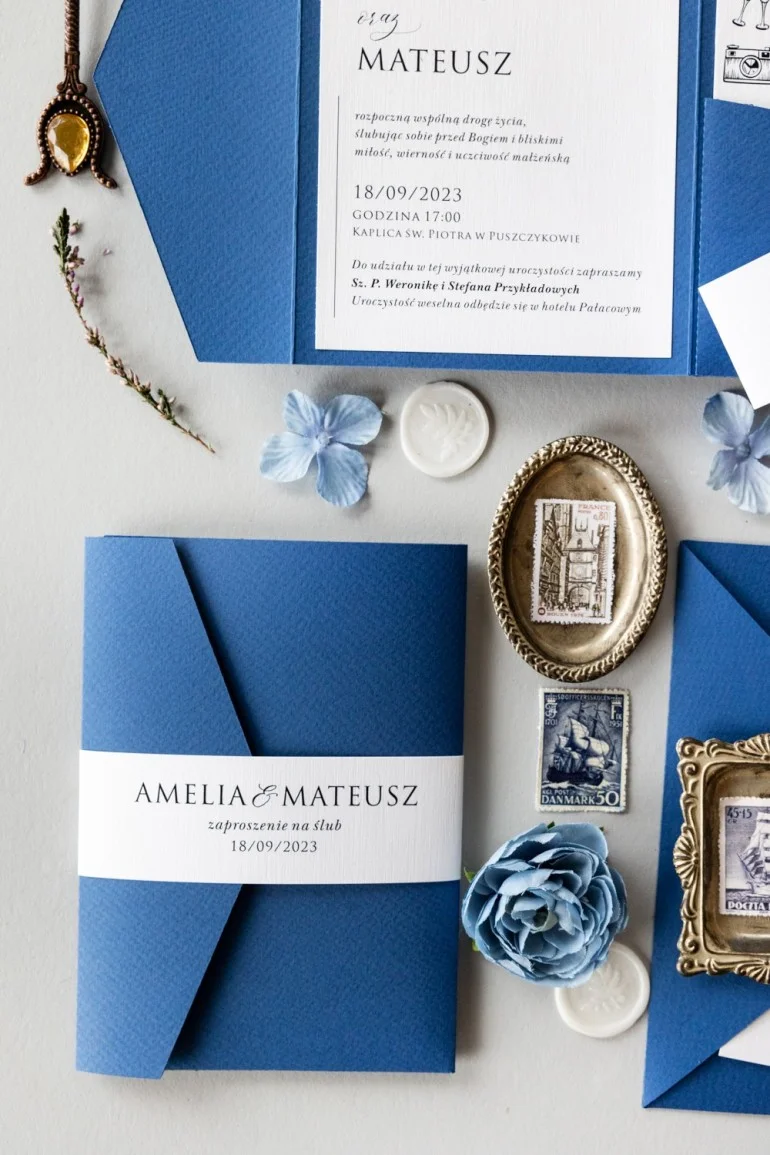
Blue, Elegant Wedding Invitation with Pocket and Personalization | Kraft no. 7
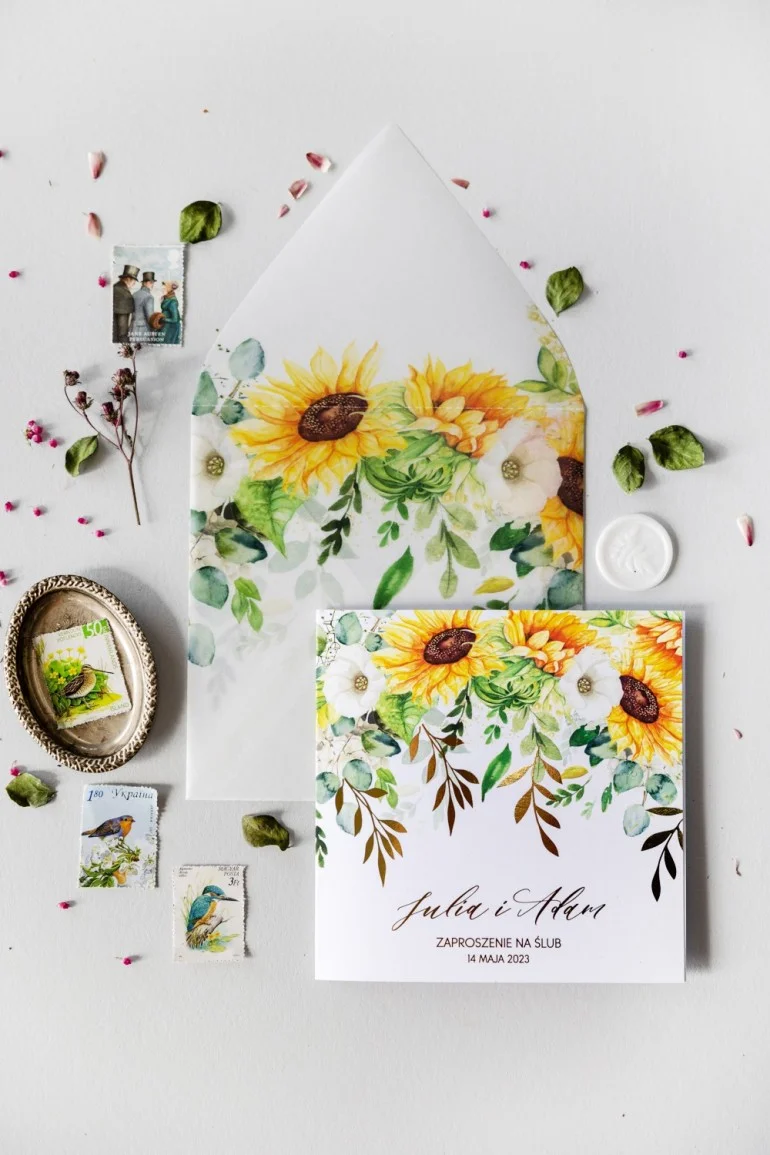
Wedding Invitations with Sunflowers and Gilding | Modern and Original | Rubin no. 7
Bilingual wedding stationery – invitations, menus, and place cards for international guests
Designing wedding invitations in two languages – elegance and functionality
Wedding invitations are the first piece of information your guests will receive about the upcoming celebration, so it's vital that they are not only aesthetic but also functional and understandable for all recipients – regardless of the language they speak. Bilingual wedding invitations are an elegant way to show respect for guests from both sides and emphasize the international character of your wedding. A well-designed invitation combines harmonious graphic aesthetics with clear information delivery in both languages, creating a cohesive whole that announces the unique character of the ceremony.
When designing bilingual wedding invitations, the first decision you need to make is the choice of content layout. There are several proven solutions that work in practice and ensure clarity and elegance. One of the most popular is the two-column layout, where one column contains text in Polish and the other in a foreign language – most often English, German, French, or Spanish. This layout is clear and allows guests to quickly find the language version they understand best. An alternative solution is placing one language version on the front of the invitation and the other on the back. This approach works particularly well for more minimalist designs where you don't want to overload one side with too much text. Yet another option is preparing two separate versions of invitations – one fully in Polish, the other fully in a foreign language – and sending them accordingly to Polish and foreign-speaking guests. Such a solution gives full freedom in choosing graphics and style but requires more work and printing costs.
Regardless of the chosen layout, it is crucial to maintain consistency in graphic and typographic style in both language versions. If you decide on elegant, classic fonts for one version, it is worth keeping a similar style for the other so that the whole looks harmonious. In the case of vintage or calligraphic invitations, you can opt for more decorative fonts, but always remember readability – especially when guests will be reading text in a language foreign to them. It is also worth introducing subtle graphic elements that refer to both cultures – it could be a combination of national colors, symbols characteristic of traditions of both sides, or even a map showing where you come from and where you will meet on the wedding day. Such details not only add charm but also tell the story of your love that connected two worlds.
When planning the content of invitations, remember to include all necessary information in both languages: the names of the Bride and Groom, the date and time of the ceremony, the location of the ceremony and reception (with detailed address and possible directions), information about the dress code if you have one, and a request for confirmation of attendance (RSVP). In the case of international weddings, additional practical information can be particularly useful, such as accommodation suggestions, contact phone numbers, or links to your wedding website or a free wedding app like Blissaro, where guests can find a more detailed schedule of the day, maps, and other useful tips. Thanks to modern technologies, you can also place a QR code on the invitation leading directly to such an app, which will significantly facilitate guests' access to up-to-date information.
Choosing a wedding invitation provider is another essential step. At Amelia Wedding, you will find a wide range of elegant wedding invitations that can be personalized in two languages. Professional printing houses and stationery studios offer a wide selection of designs – from classic and modern to boho or rustic – which can be adapted to your style and wedding theme. It is worth paying attention to paper quality, type of printing (thermography, letterpress, digital printing), and additional elements such as ribbons, wax seals, beads, or gilding, which will give the invitations a unique character. Collaborating with native speakers of foreign languages can be invaluable if you want to be sure that the invitation content is not only grammatically correct but also culturally appropriate. Some polite formulas, phrases, and information hierarchy may differ depending on the culture, so consulting an expert will help avoid potential blunders and ensure that your invitations are received with joy by all guests.
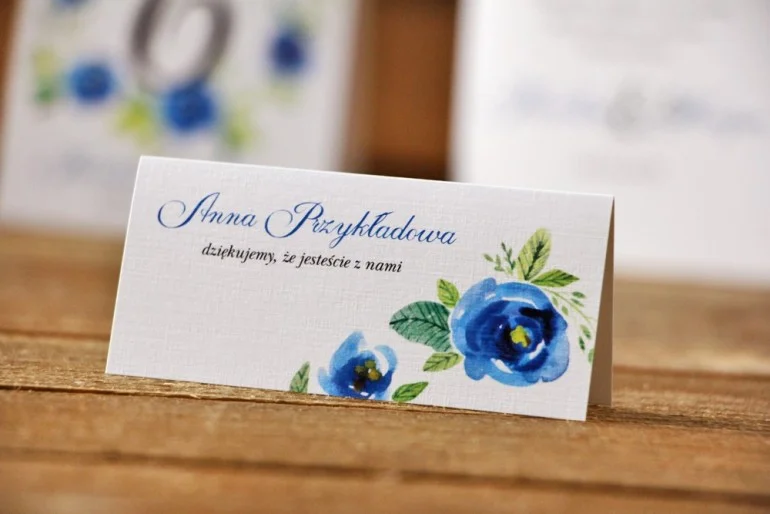
Place cards on linen-textured paper with blue roses | Watercolor no. 10
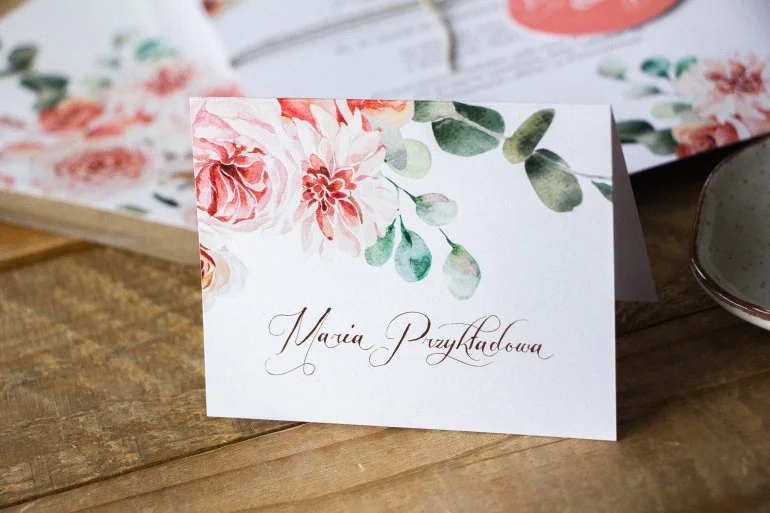
Place cards with pink bouquet composition | Indigo no. 7
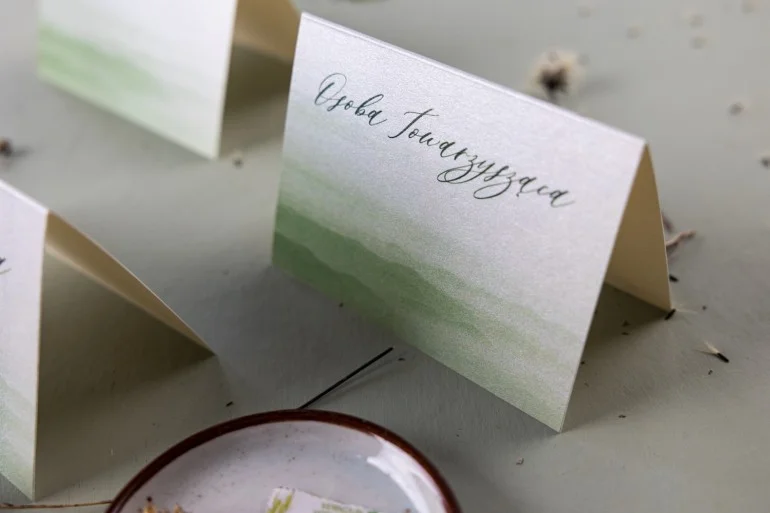
Wedding Place Cards on pearlescent cream paper with green decorations | Opal no. 11
Wedding menu and place cards in a bilingual version – details that matter
Bilingual wedding menus and place cards are further elements of stationery that significantly affect the comfort and sense of belonging of all guests at your wedding. Preparing these additions in both languages shows that you care about every participant feeling welcome and being able to fully enjoy the celebration without worrying about what is on their plate or how individual dishes are called. It is also an opportunity to emphasize the multicultural character of the party and make guests feel special.
A bilingual wedding menu should include all items served during the reception – from appetizers and soups to main courses, desserts, and additional late-night meals. It is worth taking care of a clear layout that will allow guests to quickly find out what is being served and at what time. The best solution is a two-column or double-sided layout, similar to invitations, where one language version is next to the other, and all stationery maintains a consistent graphic style with the wedding invitations. If you are planning a tasting menu with many courses, make sure each item is described in detail – not just the name of the dish, but also the main ingredients, preparation method, or information about allergens, which is particularly important for foreign guests who may have specific dietary requirements. Bilingual menus can be placed on tables at guests' settings or a larger, elegant banner with the full reception schedule and menu can be created and placed at the entrance to the wedding hall. Thanks to this, everyone will be up to date with what awaits them and won't have to ask additional questions.
Place cards – elegant cards with guests' names placed at settings – are seemingly a small detail that, however, has huge significance in the context of an international wedding. It is worth ensuring that guests' names are written correctly, including diacritics characteristic of their languages (e.g., German umlauts, French accents, Polish characters). This is an expression of respect and attention to detail that will surely be appreciated. Place cards can also contain a short greeting or thank you in both languages, which will add a personal touch. At Amelia Wedding, you will find a wide range of elegant place cards that can be personalized according to your wedding theme, from minimalist to richly decorated. Additionally, you can combine place cards with the menu in the form of one elegant composition – for example, a mini-menu at each setting that combines the guest's name with an overview of the dishes served, all in both languages.
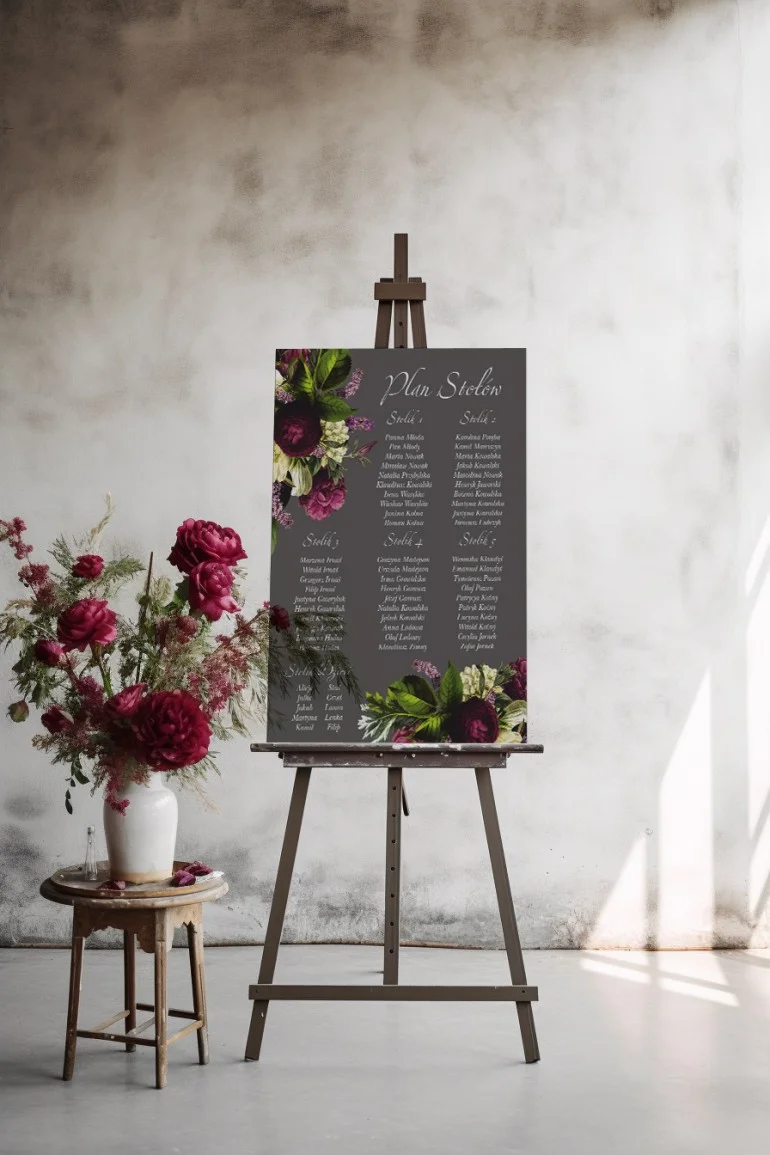
Besides the menu and place cards, it is also worth thinking about other stationery elements that can be prepared in a bilingual version to further facilitate guests' orientation during the wedding. The seating chart should be clearly marked, with names written legibly and correctly, and table numbering should be intuitive for everyone. If you are planning any special attractions, contests, or wedding games, prepare short leaflets or cards with instructions in both languages that you can distribute to guests or place at tables. A great idea is also mini-cultural guides that will explain Polish wedding traditions to foreign guests, such as "oczepiny", bread and salt, throwing the bouquet, or wedding favors available at Amelia Wedding. Conversely, for Polish guests, you can prepare similar materials explaining customs from the foreign partner's culture. Thanks to this, everyone will know what is happening and why, which will significantly increase their involvement and joy in participating in such a unique event.
Remember that the visual consistency of all stationery elements – from invitations and menus to place cards and wedding favors – is the key to creating an elegant and professional setting for your international wedding. The choice of colors, fonts, graphic motifs, and materials should be thought out to create a cohesive visual story that reflects your personalities and cultural heritage. This is an investment in details that will make your wedding remembered as unique, elegant, and full of respect for all participants.
Wedding website and apps as a modern tool for guest communication
In the era of digitalization and universal access to the Internet, wedding websites and apps have become invaluable tools in organizing international weddings, offering much more possibilities than traditional stationery. Thanks to them, you can easily and clearly convey all necessary information to guests, update schedules in real-time, and create a space for interaction that will make everyone feel part of your big day. This is a particularly valuable solution for international couples where guests live in different countries, speak different languages, and need access to comprehensive information in one convenient place.
A wedding website should be designed responsively so that it looks good on both computers and mobile devices, which is crucial as most guests will use their phones to check details on the go. It is worth having the site available in at least two languages – most often Polish and English, although depending on the guest list, you may consider adding more language versions. The site should include all the most important information: the date and time of the wedding and reception, exact addresses of the ceremony and party locations with detailed maps and links to Google Maps, accommodation suggestions in the area along with group reservation information (if prepared), dress code information, and practical tips for foreign guests such as the weather in Poland during that period, currency converter, contact numbers for you or the wedding coordinator, and an FAQ (Frequently Asked Questions) regarding airport transport, car rental, or local tourist attractions.
Even more advanced solutions are dedicated wedding apps like Blissaro.com or Weddie.app, which offer a range of functions far exceeding the capabilities of a static website. Through the app, guests can not only browse the wedding schedule, menu, and seating plan but also add photos and videos from the celebration in real-time, creating a shared gallery of memories that you can later browse and enjoy every detail of the day you might have missed. Apps often also allow for sending push notifications to guests, which is extremely useful when you want to inform everyone about a change in the time of an attraction, the start of the "oczepiny", or the serving of the wedding cake. Thanks to this, everyone is up to date and won't miss any important moment. Some apps also offer a music request function for the DJ, allowing guests to actively participate in creating the playlist and making the party even more engaging and tailored to the taste of all participants.
Setting up a wedding app is usually simple and intuitive. Just register, create an event, and choose which functions you want to make available to your guests. Then you generate a special QR code or link that you place on wedding invitations, the wedding website, or send directly to guests via email or SMS. Guests scan the code or click the link and automatically have access to all information and app functions – without the need to download complicated programs or create accounts. This solution is particularly convenient for older guests or people less familiar with modern technologies, as one simple step is enough to gain access to everything they need. What's more, apps are usually multilingual, meaning guests can choose their preferred interface language and use the app in a way that is most comfortable for them.
Using a wedding website and app is also a way to reduce the amount of paper stationery, which aligns with the trend of sustainable, eco-friendly weddings gaining popularity in 2025. Instead of printing dozens of ceremony programs, wedding schedules, or maps, you can simply direct guests to the app where everything is available in one place and can be easily updated if necessary. This is not only a cost saving but also convenience and flexibility, which is particularly valuable when organizing international weddings where plans can change and communication with guests scattered across different countries can be a challenge. Thanks to modern digital tools, you can be sure that everyone is well-informed, feels taken care of, and can fully enjoy your special day.
Combining traditions and rituals from two cultures in one ceremony
Choosing key rituals representing both cultures
One of the most exciting aspects of organizing a multicultural wedding is the opportunity to include rituals and traditions in the ceremony that are close to the hearts of both sides and reflect their cultural heritage. This is the moment where you can create something truly unique – a ceremony that is not just a combination of two separate traditions, but a new, unique rite that celebrates your love and the diversity you bring to the relationship. The key to success is carefully considering which elements of both cultures are most important to you and how they can be harmoniously combined to create a cohesive whole instead of a chaotic mix of mismatched elements.
Wedding traditions vary significantly depending on culture and region, so it's worth first thinking about what the characteristic rites for your family traditions are and which of them you would like to include in the ceremony. In Polish culture, the most recognizable traditions include: the parents' blessing given to the young couple before leaving for the church or Registry Office, the welcome with bread and salt symbolizing prosperity and the durability of the union, throwing glasses after drinking champagne to bring luck, or "oczepiny" – a traditional wedding game where the bride symbolically says goodbye to her maiden status. Each of these elements carries deep symbolism and is firmly rooted in Polish culture, so their inclusion in the ceremony can be a beautiful gesture towards the Polish family and guests.
On the other hand, in other cultures, we find completely different, equally beautiful traditions. In Indian culture, an inseparable element of wedding preparations is painting the bride's hands and feet with henna (Mehndi), symbolizing luck, love, and prosperity. The wedding ceremony itself often lasts several days and is rich in colorful outfits, music, dance, and spiritual rituals. In China, the traditional tea ceremony is one of the most important moments of the wedding – the young couple serves tea to the parents of both sides as an expression of respect and gratitude, and the parents in return offer them gifts and blessings. In Mexico, the "Las arras matrimoniales" ritual is popular, where the groom gives the bride 13 gold coins symbolizing Christ and the 12 apostles, which is meant to bring wealth and blessings for the new path of life. In Japan, newlyweds drink sake three times from three different cups, symbolizing three aspects of life and ensuring harmony in the marriage. Each of these traditions has deep meaning and can become a beautiful element of your ceremony, provided it is introduced in an authentic and respectful way.
When planning the ceremony, it's worth choosing one or two key rituals from each culture and incorporating them in a way that creates a smooth narrative for the entire celebration. It's not about making a ceremony overloaded with dozens of different elements, but rather about carefully selected moments that are most important to you and have deep personal meaning. For example, you can start the ceremony with a traditional Polish parents' blessing and then include a ritual from the partner's culture – it could be a tea ceremony, exchanging flower garlands, lighting candles together, or a sand mixing ritual in different colors, which comes from Hawaiian tradition and symbolizes the joining of two lives into one. Such a combination of traditions creates a beautiful story of how your love connects two different worlds and cultures, creating something new and unique. It is also worth explaining the symbolism of each ritual to guests – either through the celebrant's/priest's words during the ceremony or by placing short descriptions in the ceremony programs available to guests. Thanks to this, everyone will understand the deeper meaning of what they are observing and feel more involved in your story.
Symbolic gestures connecting two traditions – sand mixing, candle lighting, handfasting
In addition to traditional rituals characteristic of specific cultures, there are a number of universal, symbolic gestures that work great in multicultural ceremonies because their meaning is intuitive and understandable to everyone, regardless of origin. These rituals have the power to express deep emotions and values – such as unity, love, mutual support, and the durability of the union – in a visual and symbolic way that touches guests' hearts and creates unforgettable moments.
One of the most popular symbolic rituals is the sand mixing ceremony, which originates from Hawaiian tradition and is extremely popular at symbolic and humanist weddings worldwide. It involves the young couple having two transparent vessels filled with sand in different colors – each color representing one person, their history, family, and heritage. During the ceremony, the newlyweds take turns pouring their sand into a common, larger vessel, creating beautiful, colorful layers that intertwine and mix. This gesture symbolizes the joining of two separate existences into one, and the fact that the sands can no longer be separated emphasizes the durability and indissolubility of the marriage. Interestingly, parents or other loved ones can also be invited to the ceremony to add their sand to the vessel, thus symbolizing the support of families and the joining of two lineages. The sand mixing ceremony is visually very effective and often becomes one of the most remembered moments of the entire wedding.
Another beautiful symbolic ritual is the candle lighting ceremony, which has deep roots in Christian traditions, but its universal message makes it frequently used in secular or interfaith ceremonies as well. In this ritual, three candles are placed on the ceremonial table – two smaller, burning candles on the sides represent the lives of the bride and groom before the wedding, and one large, unlit candle in the middle symbolizes their common life. During the ceremony, the newlyweds take their candles and together light the central candle from them, symbolizing the joining of two hearts and the beginning of a new, common path. Sometimes after lighting the central candle, the couple blows out their individual candles to emphasize that they are now one, although some couples choose to leave all three candles lit to emphasize that despite the union, each spouse retains their individuality. The candle lighting ceremony can be enriched by inviting the mothers of both newlyweds to light the side candles at the beginning of the ritual, symbolizing the transfer of life and the parents' blessing for the new union.
The ritual of binding hands with a sash, also known as "handfasting", comes from ancient Celtic traditions and symbolizes the binding of spouses not only before God or the law but also on a spiritual and emotional level. During this ritual, the celebrant or person leading the ceremony gently wraps the couple's hands with a colorful sash, ribbon, or cord, creating a symbol of infinity – a knot that is strong but does not choke, that connects but does not restrict. Sashes in colors representing both cultures or families can be used, further emphasizing the multicultural nature of the ceremony. This gesture is incredibly moving and intimate, and the fact that the young couple stands face to face, holding hands and looking into each other's eyes at the moment of binding, makes the emotions exceptionally intense. After saying the vows, the couple can remain bound by the sash for a while, after which the celebrant gently unties the knot, symbolizing that although physically free, their hearts and souls remain connected forever.
All these symbolic rituals can be easily adapted to your needs and preferences, adding elements characteristic of both cultures. For example, during the sand mixing ceremony, you can use sands in the colors of your countries' flags, and in the case of candle lighting, you can choose candles in shapes or decorations referring to both traditions. The key is that every element of the ceremony is thought out and has deep meaning for you, rather than just being a decorative addition for effect. It is also worth involving the celebrant or priest in the process of creating the ceremony script so they have time to prepare appropriate words that explain the symbolism of each gesture and introduce guests to the magic of the moment. Thanks to this, the ceremony will become not only a legal or religious celebration but, above all, a deep, personal experience that will stay in the memory of all participants forever.
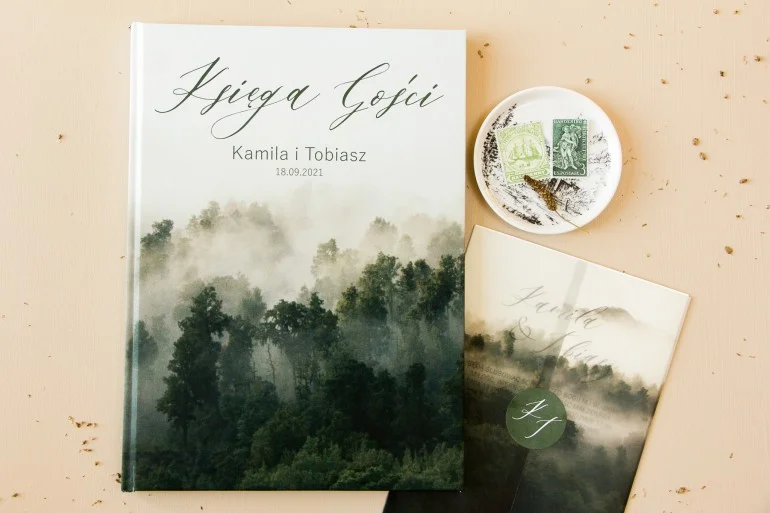
Wedding Guest Book with forest motif | Opal no. 2
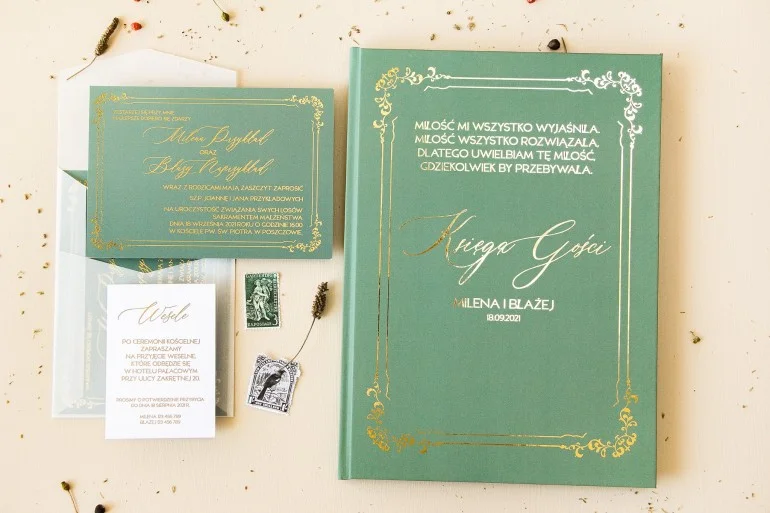
Personalized Guest Book with calligraphic gold lettering | Sand no. 3
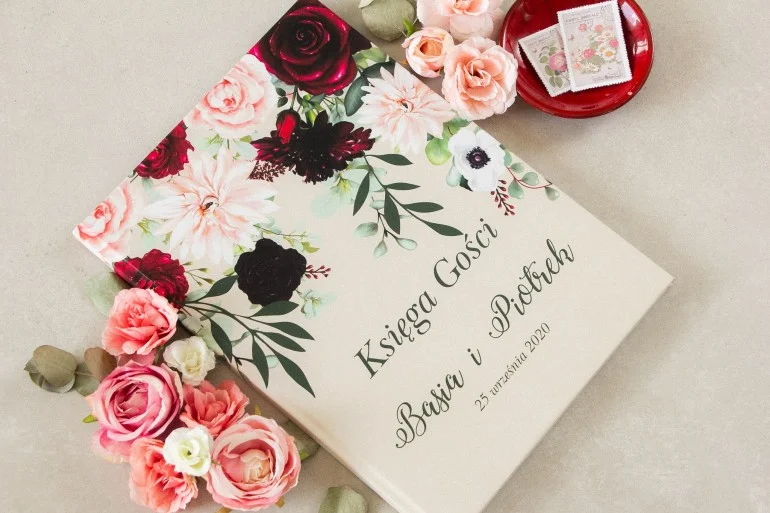
Burgundy Guest Book with anemones and dahlias | Korani no. 4
Compromises and open communication – how to avoid family conflicts
Organizing a multicultural wedding, though full of exciting possibilities, also brings challenges, especially when it comes to reconciling the expectations and traditions of two families who may have completely different ideas about what an ideal wedding and reception should look like. The key to avoiding conflicts and creating a harmonious atmosphere is open, honest communication and a willingness to compromise that respects the values of both sides without forcing anyone to give up what is most important to them.
The first step is a serious conversation between you, as a couple, about your priorities and expectations regarding the wedding. Ask yourselves: which traditions are absolutely crucial for us, and which can we give up? What is important for our parents and families? What elements of the ceremony and reception will have the greatest emotional significance for us? These conversations should take place in advance, before you involve families in planning, so you can present a cohesive vision and clearly defined boundaries. Remember that the final decision belongs to you – it is your wedding and your day, so you must feel comfortable with every chosen element. At the same time, it is worth being open to suggestions and desires of families, especially when they concern traditions of deep cultural or religious significance. Finding a balance between your dreams and the expectations of loved ones is an art that requires patience, empathy, and good will from all involved parties.
One of the largest areas of potential conflict in multicultural marriages is the issue of raising children – although at the wedding planning stage this may seem like a distant topic, it's worth addressing it early to avoid misunderstandings in the future. Agree together on which religion you want to raise your offspring in, what values and traditions will be a priority for you, and how you intend to pass on the heritage of both cultures to your children. If these issues are difficult for you, consider consulting a marriage counselor or psychologist who can help you work out a common vision for the future. Equally important is managing family expectations – some parents may have strong beliefs about what their child's marriage should look like, so open conversations, explaining your choices, and ensuring that you respect their traditions can significantly ease tensions.
Another potential source of conflict is differences in communication and expressing emotions characteristic of different cultures. In some cultures, direct, open communication is the norm, while in others, subtlety, understatements, and saving face are more valued. The language barrier can also be a challenge – even if you both speak English or another common language, nuances of meaning, humor, or tone of voice can be interpreted differently. That's why it's so important to be patient, ask clarifying questions, and never assume that the other party understands exactly what you meant. Regularly check if you are on the same page and don't be afraid to ask for explanations or repetition if something is unclear. In the context of wedding planning, this may mean extra meetings with families, translating important information into both languages, and involving people who can act as cultural mediators – for example, friends who know both cultures and can help explain misunderstandings.
Compromise is a word that will recur throughout the planning process of a multicultural wedding. This may mean organizing two separate ceremonies – one according to the tradition of one side, the other according to the customs of the other – giving each family the opportunity to fully participate in a rite they understand and value. It could also mean dividing the reception into two parts: a ceremony in one style and a reception in another, or combining elements of both cultures in one celebration so that everyone feels represented. It is important that these compromises are worked out together, with full respect for both sides, and that neither side feels marginalized or forced to give up something fundamental to them. A successful compromise is one where everyone wins, not one where everyone loses – so it's worth looking for creative solutions that will be a celebration of diversity, not its negation.
Communication with guests during the reception – breaking language and cultural barriers
Bilingual DJ, emcee, or host – why it's crucial?
The music and artistic setting of the wedding are elements that greatly influence the atmosphere of the entire reception and the level of guest engagement in the fun. In the case of an international wedding where some participants don't speak Polish and some don't know the foreign language, the person leading the event – the DJ, emcee, or host – plays a key role. They must be able to communicate with guests in both languages and create an atmosphere of integration despite language barriers. This is not just a practical issue, but also a symbol of respect for all participants and a way to make everyone feel invited to actively participate in the fun, rather than being mere passive observers.
Choosing a bilingual DJ or emcee should be one of the priorities on your organizational task list. The person leading the wedding must not only know both languages to a degree allowing smooth communication but also understand the cultural context of both sides to lead games, contests, and interactions in a way that is understandable and fun for all guests, regardless of their origin. An experienced bilingual host can seamlessly switch between languages, translate jokes and cultural references in a way that preserves their original meaning and humor, and adjust the pace and character of the fun to the audience's reaction. This requires not only language skills but also emotional intelligence, intuition, and experience working with international groups.
During the first meetings with a potential DJ or emcee, it's worth discussing your expectations and guest profile in detail. Provide information about which countries the guests will come from, which languages they speak, what their musical preferences are, and if there are any specific traditions or games you'd like to include in the program. A good international wedding host will ask you for details about both cultures to prepare appropriately and avoid potential blunders or misunderstandings. For example, some jokes or games popular in Poland may be misunderstood or even offensive to guests from other cultures, so it's vital to discuss these issues beforehand. The DJ or emcee should also be open to suggestions regarding the music playlist to create a repertoire that satisfies guests of different ages and musical tastes, combining Polish hits with international favorites and, if possible, music characteristic of the foreign partner's culture.
It's also worth considering hiring two people – one leading the event mainly in Polish, the other in English or another foreign language – who will collaborate and translate for each other what is happening on stage and on the dance floor. This approach ensures smooth communication and makes sure no group of guests feels left out or uninformed. At the same time, it's important that the translation isn't mechanical and boring – the hosts should add their own commentary, energy, and enthusiasm to keep the party atmosphere high. Professional hosts can also improvise and react to situations in real-time, which is invaluable during a dynamic wedding where plans can change and guest reactions are unpredictable.
Music plays as important a role as words in creating the atmosphere of an international wedding. The playlist should be carefully composed to reflect the diversity of guests and offer something for everyone. A good idea is to create themed blocks – for example, a block of Polish disco polo and folk music to get Polish guests moving, followed by a block of international dance hits that everyone knows and can have fun with, as well as a block of music characteristic of the foreign partner's culture, which will be a nice gesture towards foreign guests and allow Polish participants to experience something new. Universal hits – such as "Despacito", "Happy", "Uptown Funk", "Sweet Caroline", or "Dancing Queen" – always work at international weddings because their melodies and rhythms are recognized worldwide and easily pull people to the dance floor. Don't forget about quieter moments and music for meals, which should be toned down and allow for conversations at the tables.
Translator at the wedding – is one needed and how to organize their presence?
In addition to a bilingual DJ or emcee, some couples choose to hire an additional translator who will accompany guests throughout the day and translate the most important moments of the celebration in real-time – speeches, toasts, wishes, or wedding games. This solution is particularly recommended when a significant part of the guests doesn't speak Polish or when you plan many traditional Polish games that require explanation so that foreign guests can fully participate and understand what's happening.
The role of a translator at a wedding is slightly different from a sworn translator during a civil ceremony – it's not about formal, legal translation of documents, but about creating an atmosphere of openness, communication, and engagement for all guests. The translator should be an open, sociable, and energetic person who can not only precisely translate words but also convey the emotions, humor, and mood of the speech. Ideally, the translator knows both cultures and can explain the cultural context of jokes, references, or traditions that might be misunderstood by some guests. A good solution is to involve someone from your circle of friends or family who is bilingual and has natural communication skills – this will be a person everyone trusts and who knows your story, adding a personal dimension to the translation.
If you decide on a professional translator, it's worth discussing the exact wedding plan with them and providing the script of the most important moments requiring translation. Guest speeches are a particularly delicate issue – if someone plans to give a longer speech, a good solution is to ask that person to provide the text to the translator beforehand or at least a general outline so they can prepare. The best practice is to translate in real-time after every few sentences, rather than waiting until the end of the entire speech, as guests who don't understand the original language quickly lose interest and feel excluded. The translator should also have access to a microphone so everyone in the hall can hear them effortlessly, which is key to maintaining attention and the flow of the entire event.
In the case of traditional Polish wedding games, such as "oczepiny", the scarf game, dance contests, or "bidding" for the cake, the translator acts not only as an interpreter of words but also as a cultural guide explaining the meaning and symbolism of each game. Thanks to this, foreign guests can not only observe but also actively participate, understanding what is happening and why. This significantly increases their involvement and makes them feel part of the community, rather than outside observers. Some couples also prepare short leaflets or cards with descriptions of the games in both languages, which are distributed to guests before the start of a given attraction – this is a simple yet very effective solution.
It's also worth thinking about organizing a short moment during the wedding where you formally welcome guests in both languages and thank them for coming, emphasizing how much it means to you that they traveled such a long way to be with you on this special day. You can also briefly tell the story of how you met, what connected you despite cultural and language differences, and what it means to you that two families and two worlds meet today in one place. Such a personal touch, translated into both languages, touches guests' hearts and creates an atmosphere of warmth, respect, and mutual understanding, which is the foundation of a successful international wedding.
Wedding games and attractions tailored to an international audience
When planning the program of attractions for an international wedding, the key is to find activities that are universal, easy to understand, and engaging for everyone, regardless of origin, language, or age. The best wedding games are those that don't require advanced language knowledge or specific cultural knowledge but rely on music, movement, interaction, and joy, which are universal to people all over the world.
Dance is the most universal language, so dance games always work at international weddings. You can organize simple dance contests where guests dance in pairs or groups to different music styles – from Polish Polonaise and waltz to Latin salsa and bachata, to contemporary pop hits. The DJ can lead such contests in both languages, encouraging everyone to participate and creating an atmosphere of fun and good-natured competition. Another idea is to organize a short demonstration of a traditional dance from one or both cultures – for example, a Polish "oberek" or "krakowiak" or a dance characteristic of the foreign partner's culture – and then invite guests to learn basic steps and join in. This is not just an attraction but also an educational moment that allows everyone to experience something new and feel part of the tradition.
Photo booth – a photo station with props – is another very popular and universal attraction that works perfectly at international weddings. Props can refer to both cultures – for example, Polish folk costumes, highlander hats, mustaches, or elements characteristic of the partner's culture, such as sombreros, fans, carnival masks, etc. Guests can take funny photos solo, in pairs, or in groups, creating memories they will later look through and remember this special day together. The photo booth often becomes a place of integration where guests from different parts of the world meet, laugh, and create shared photos, breaking language barriers through spontaneous fun and joy.
Musical games and interactive activities also work great. For example, you can organize "guess the song", where the DJ plays short fragments of hits from different countries and decades, and guests have to guess the title and artist. You can also use wedding apps like Blissaro.com, which allow guests to suggest music tracks for the DJ in real-time, making everyone feel involved in creating the playlist and party atmosphere. Another idea is quiz games about the Bride and Groom – prepare questions about your story, interests, funny situations from your life, and guests can answer individually or in teams. Questions and answers should be translated into both languages so everyone can participate. Such quizzes are not only fun but also allow guests to get to know you better and understand your unique love story.
It's also worth considering cultural workshops or short demonstrations that introduce guests to the atmosphere of both traditions. This could be a demonstration of preparing a traditional dish from one or both cultures, a henna painting workshop for interested guests (if one side comes from an Indian culture), learning a few basic phrases in both sides' languages, or even a short history and culture lesson. Such elements not only provide entertainment but also educate and create space for dialogue and mutual understanding, which is one of the most beautiful values of international weddings. Remember that not every game has to be loud and dynamic – moments of silence, reflection, and intimate conversations are equally valuable, so it's worth providing chillout zones where guests can rest, talk in smaller groups, and make new acquaintances in a more relaxed atmosphere.
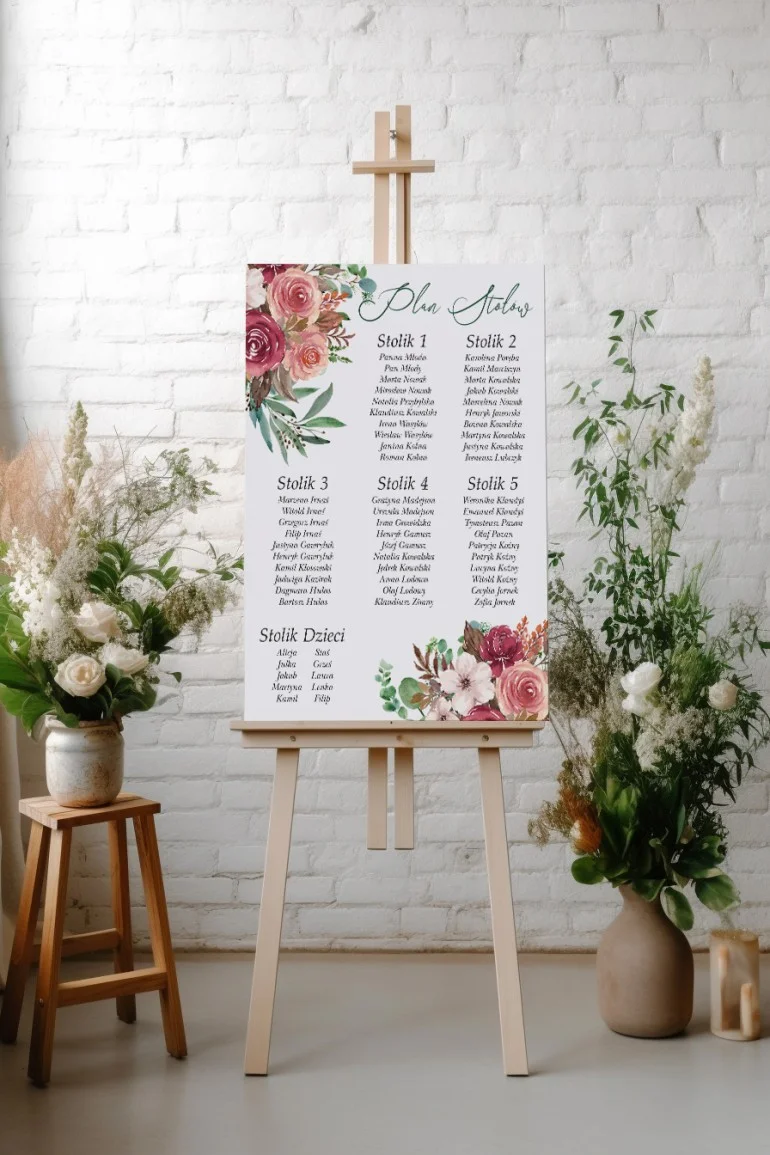
Seating plan Delize no. 3
Seating plan Ethereal no. 2
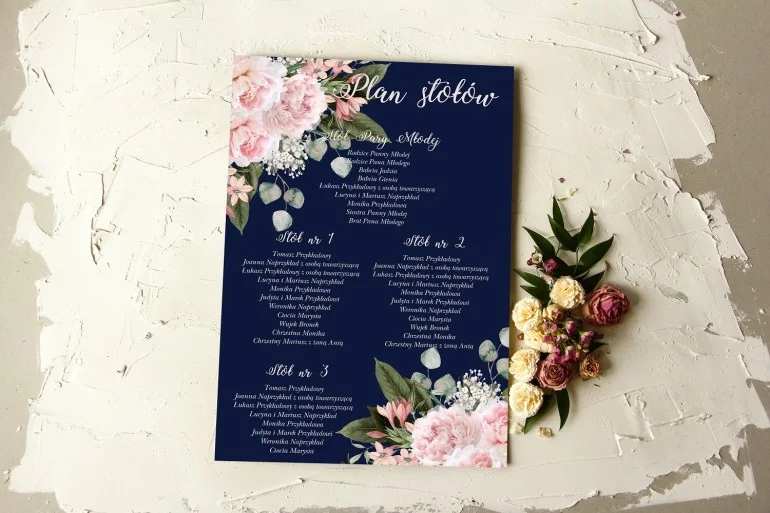
Seating plan Pastel no. 3
Culinary fusion of cultures – a wedding menu that satisfies everyone
Fusion menu – combining flavors and culinary traditions of both countries
Food is one of the most universal ways to experience and celebrate culture, so the wedding menu at an international reception should not only be delicious but also reflect the richness of flavors and traditions of both countries you come from. Fusion cuisine – combining culinary elements from different cultures in one dish or menu – is a perfect solution that allows you to create a unique gastronomic experience, surprising guests with new, exciting flavor combinations while maintaining respect for the traditions of both sides.
When planning a fusion wedding menu, it's worth collaborating with an experienced chef or caterer who has experience in combining different cuisines and understands the ingredients, techniques, and cultural context of the dishes. A well-composed fusion dish is not just a combination of random elements but a thoughtful composition where every ingredient plays an important role and different cultures harmoniously complement each other. For example, you can combine traditional Polish pierogi with Asian dim sum, creating pierogi with fillings inspired by Chinese or Japanese cuisine – for example, with shrimp, ginger, and cilantro, served with soy sauce instead of traditional sour cream. Or create a version of Polish chicken soup (rosół) inspired by Japanese ramen, adding ramen noodles, a marinated egg, nori seaweed, and green onions to the classic Polish soup, creating an interesting fusion of flavors and textures.
Appetizers are a perfect place for fusion experiments. You can prepare a tapas station inspired by Spanish cuisine but with the addition of Polish cold cuts and cheeses, or a sushi buffet where, alongside traditional maki, there are Polish pierogi served dim sum style, steamed, with various sauces to choose from. Mini burgers are another universal option that can be adapted to both cultures – for example, a burger with Polish sausage, pickled cucumber, and mustard-horseradish sauce, or a burger inspired by Mexican cuisine with beef, guacamole, and jalapeño. Such combinations not only taste unique but also become a topic of conversation and shared culinary discoveries for guests.
Main courses can also be created in the spirit of fusion, combining the favorite dishes of both sides. If you come from Poland and your partner from Italy, you can serve Polish cabbage rolls (gołąbki) in a tomato sauce with the addition of Italian herbs, parmesan, and basil, giving them a Mediterranean character. Or create a version of Italian risotto with Polish forest mushrooms, buckwheat instead of arborio rice, and with the addition of cream – such a combination of traditions will be both surprising and delicious. For couples where one side comes from Asia, you can consider serving Polish pork cutlets (schabowy) in a breading with added curry spices and served with jasmine rice instead of potatoes, or a Polish roast with a Thai-inspired sauce – sweet and sour with soy sauce, cilantro, and chili.
Desserts are another opportunity for culinary creativity. You can combine Polish cheesecakes with Italian panna cotta, creating a cheesecake dessert with layers of mascarpone and a forest fruit sauce, or prepare traditional Polish poppy seed cakes served in the form of elegant cookies accompanied by Italian tiramisu. French croissants filled with Polish chocolate-covered plums, Mexican churros with Polish vanilla pudding, or Indian gulab jamun (sweet fried balls in syrup) served with Polish cream ice cream – all these combinations can become unforgettable accents of your wedding menu. It's important to present each dish to guests with a short explanation of where it comes from and what ingredients it contains – this can be done through elegant menu cards in both languages or a short verbal introduction from the waitstaff.
Themed buffets and live cooking – interactive culinary experiences
In addition to traditional table service, themed buffets and live cooking stations are becoming increasingly popular, where guests can choose their own dishes, watch them being prepared, and interact with the chefs. This is not just a way to diversify the menu but also a form of entertainment and integration that works perfectly at international weddings where guests have different dietary preferences and want the ability to choose.
A buffet with Polish and international cuisine can include various stations – one with traditional Polish dishes like pierogi, żurek, bigos, cold cuts, and cheeses, another with dishes characteristic of the foreign partner's country, such as Italian pasta, Spanish tapas, Indian curry, or Mexican tacos. Each station can be decorated in the style of the respective culture, with flags, national colors, or characteristic background music, creating an atmosphere of a culinary journey around the world. Guests can freely move between stations, try different dishes, and discover new flavors, which encourages conversation and the exchange of impressions.
Live cooking – preparing dishes live by chefs in front of guests – is one of the most effective and engaging culinary attractions. You can organize a station with fresh sushi preparation, where a sushi master rolls maki and nigiri to guests' orders, adding ingredients of their choice and creating unique flavor compositions. Another station could be dedicated to preparing Italian pasta – the chef cooks pasta al dente and prepares various sauces on the fly – carbonara, bolognese, aglio e olio – which guests can choose according to their preferences. A grill station is also a great idea, especially if the wedding is held outdoors – guests can order fresh meats, fish, and grilled vegetables, all prepared in front of them and seasoned to taste.
Food trucks are a modern, trendy solution that also works brilliantly at international weddings. You can hire several food trucks representing different cuisines – for example, a truck with Polish "zapiekanki" and sausages, a truck with Mexican tacos and burritos, a truck with Asian wok dishes, or a truck with Italian pizza baked in a traditional oven. Guests can stroll between trucks, order what they feel like, and create their own culinary experience. This solution works particularly well for garden party or outdoor style weddings, where a more relaxed atmosphere encourages freedom and experimentation. Food trucks are also photogenic and become part of the decoration of the entire event, adding a modern, urban character.
Regardless of the chosen food service format, it is crucial to consider the special dietary needs of guests – vegetarians, vegans, people with food allergies, lactose or gluten intolerance, as well as people following religious diets such as kosher or halal. It is worth asking guests to report any dietary requirements in the wedding invitations or during confirmation of attendance so that the catering can prepare accordingly and ensure everyone finds something for themselves. This is an expression of respect and care for the comfort of all participants, which is particularly appreciated by foreign guests for whom the availability of appropriate food can be a challenge in an unknown country.
Alcohol and beverages – adapting the bar for international guests
Alcohol and beverages are another essential element of the wedding menu that is worth adapting to the international character of your wedding. Traditionally, vodka, wine, and beer dominate Polish weddings, but it's worth expanding the offer to satisfy the diverse tastes and habits of guests from different cultures. A rich bar with varied options will not only increase participant comfort but also become an additional attraction and topic of conversation.
It's worth starting with classic Polish alcohols – good vodka (can be several types – clear, flavored, regional), Polish craft beer, which is gaining popularity, and wine (red, white, rosé). To this, it's worth adding alcohols characteristic of the foreign partner's country – if they come from Mexico, it could be tequila and mezcal, from Japan – sake, from Italy – prosecco and limoncello, from Spain – sangria, from Greece – ouzo, or from Ireland – whiskey. Such a combination of alcohol traditions of both countries is not only practical but also symbolic and allows guests to experience new flavors and toast in the style of both cultures.
A cocktail bar is an increasingly popular solution that works perfectly at international weddings. Hiring a professional bartender who prepares classic cocktails and signature drinks created specifically for your occasion will add elegance and uniqueness to the entire reception. You can create drinks inspired by both cultures – for example, a "Polish Sunset" cocktail with vodka, cranberry juice, and blackcurrant syrup, and a "Mexican Mojito" with tequila, lime, mint, and sparkling water. Each drink can have a name referring to your story or places you've visited together, adding a personal touch and becoming a nice accent. It's also worth ensuring non-alcoholic options – fresh juices, lemonades, iced teas, smoothies – for people who don't drink alcohol for religious, health, or personal preference reasons.
In some cultures, alcohol is treated quite differently than in Poland – for example, in Islamic countries, alcohol consumption is forbidden, in Scandinavian countries, people drink much less and more moderately, and in American culture, happy hours with cocktails before the main meal are popular. It's worth being aware of these differences and adapting the way alcohol is served and its quantity to your guest profile. If a significant part of the participants are Muslim guests, ensure that non-alcoholic options are as elegant and rich as the alcoholic ones so that everyone feels comfortable and not excluded. You can also organize a toast in both versions – with champagne for some, with grape juice for others – which symbolically unites everyone in one gesture of celebration, regardless of their preferences.
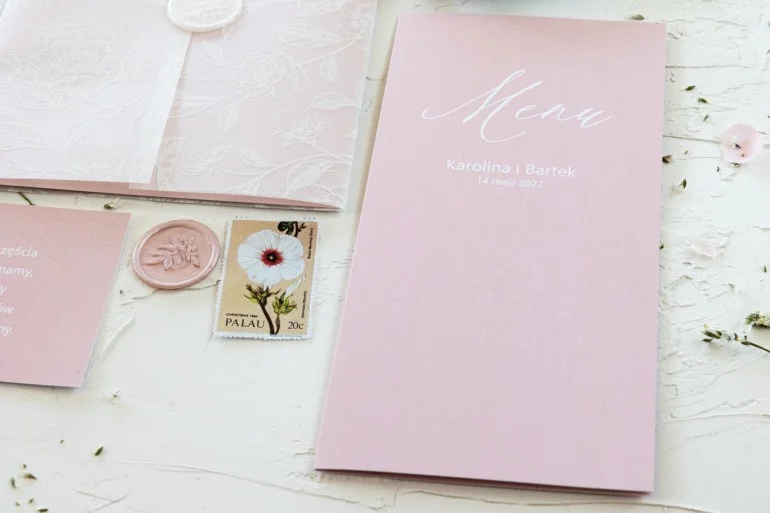
Elegant wedding menu with a delicate touch of pink | Nefryt no. 1
Bottle tags in glamour style with gilding | Glamour no. 5
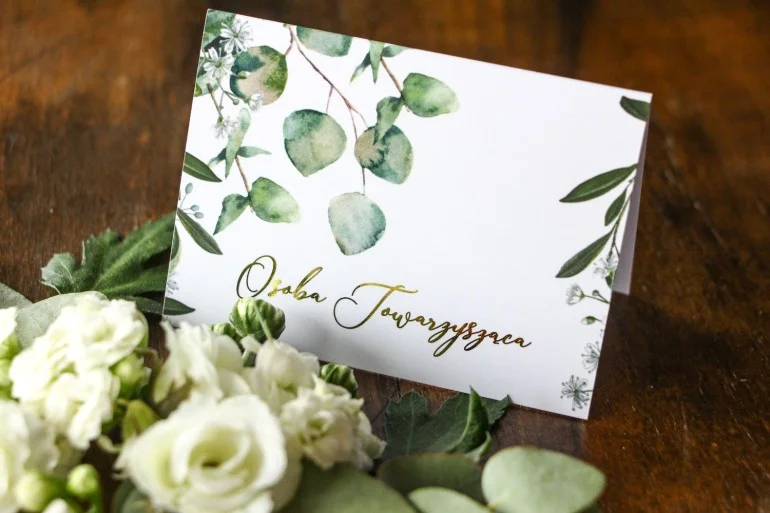
Gilded place cards with eucalyptus and baby's breath | Soreli no. 5
Decorations and visual setting connecting two cultures
Color palette and national symbols in wedding hall decoration
Wedding decorations are not just about aesthetics, but also a way to express your identity, values, and cultural heritage. For multicultural couples, decorations represent a unique opportunity to combine symbols, colors, and motifs characteristic of both cultures into a harmonious whole that tells the story of your love and unity in diversity. The key is finding a balance between elements of both traditions so that neither side feels dominated, and at the same time, the whole is aesthetic and cohesive.
Color palette is one of the simplest and most effective ways to introduce motifs of both cultures into decorations. You can choose national colors or those characteristic of traditions of both sides and combine them in an elegant way. For example, if one side comes from Poland (white and red) and the other from France (blue, white, red), you can create a color palette combining these shades – white as the main color, with accents of red and blue, creating an elegant, fresh, and harmonious effect. Colors can be introduced in flowers, tablecloths, napkins, ribbons on chairs, lighting, and even in the outfits of the groomsmen and bridesmaids. It's important that colors are subtly woven into the entire arrangement, rather than literally dividing the hall into a "Polish side" and a "foreign side", which could look artificial and introduce an unintended division between guests.
National and cultural symbols can also be part of the decorations, but it's worth using them with moderation and elegance to avoid a kitsch effect. Instead of hanging flags or painting national emblems on every wall, you can introduce subtle accents – for example, small flags or pennants placed in flower bouquets on the tables, decorations inspired by folk patterns or ornaments characteristic of both cultures, or graphic details in stationery (invitations, menus, place cards) referring to traditional motifs. If one side comes from a culture with a rich textile tradition – such as Indian saris, Scottish tartans, or Mexican ponchos – you can use fabrics in these patterns as tablecloths, table runners, or wall decorations, adding color and authenticity.
Flowers are another element that can be adapted to both cultures. Choose flowers characteristic of both countries – for example, Polish roses, peonies, lilacs, and daisies combined with flowers typical of the partner's country, such as lotus (Asia), hibiscus (Hawaii), calla lily (Mexico), or lavender (Provence). A florist can create compositions combining these plants into beautiful, harmonious bouquets and decorations that will be both visually attractive and full of symbolic meaning. Additionally, you can place a small card with each bouquet explaining the meaning of the flowers in both cultures, adding an educational dimension and allowing guests to better understand your intention.
Lighting plays a huge role in creating atmosphere and can also refer to both cultures. Paper lanterns, popular in Asia, can be combined with traditional Polish candles or candlesticks, creating a warm, romantic atmosphere. Colored LED lights can be used to emphasize the colors of both nationalities – for example, white and red on one wall and the colors of the second country on the opposite one. It's also worth considering multimedia projections that can show photos from your life, a map of places you've visited together, or even short films presenting the traditions of both countries. This is a modern, effective solution that engages guests and creates a unique visual setting for the entire event.
Themed tables and photo zones – creative ideas for cultural integration
Themed tables are a great way to introduce elements of both cultures in a fun and interactive way that encourages conversation and guest integration. Instead of traditional table numbers, you can name each table after a place that has meaning for you – cities where you lived, places where you met, where you got engaged, or countries you've visited together. Each table can be decorated in a style corresponding to that place – for example, a "Kraków" table with decorations referring to Polish folk culture, a "Paris" table with the Eiffel Tower and lavender, a "Tokyo" table with lanterns and cherry blossoms, etc. Guests will thus be able to get to know your story and learn more about the places that are important to you.
Another idea is themed tables representing different aspects of both cultures – one table can be dedicated to culinary tradition (with photos and descriptions of characteristic dishes), another to music (with information about traditional instruments and songs), a third to architecture, a fourth to art, etc. Educational materials, photos, trivia, and even small gifts representing the given theme can be found at each table – for example, mini bottles of traditional alcohol, spices typical of the given cuisine, or postcards with characteristic views. Guests will be able to move between tables, read, talk, and share their experiences related to the given topics, creating a natural opportunity for integration and getting to know each other.
The photo booth zone is a place that can become a central point of fun and integration at an international wedding. Prepare a background referring to both cultures – it could be a collage of photos from both countries, flags, a world map with marked places that are important to you, or even a painted background showing characteristic views of both countries. Photo props should be diverse and fun – Polish folk costumes, hats, mustaches, wreaths, beads, but also elements characteristic of the second culture – sombreros, carnival masks, fans, bamboo canes, flags, signs in different languages ("Love", "Miłość", "Amore", "Amor"), etc. Guests will be able to take photos in various configurations, mixing elements of both cultures in a fun way, which will not only create great memories but also physically connect symbols of both traditions in one frame.
You can also prepare an interactive memory wall where guests can stick Polaroid photos, notes with wishes, drawings, or short messages in different languages. Such a wall will become a living, developing work of art throughout the wedding and will be a beautiful souvenir that you can later frame and hang at home. It's also worth considering creating a guest book in the form of a world map where every participant can pin a pin or sticker in the place they come from and write wishes or a memory next to it. This visualizes the international character of your wedding and shows how many different people and cultures meet this day to celebrate your love.
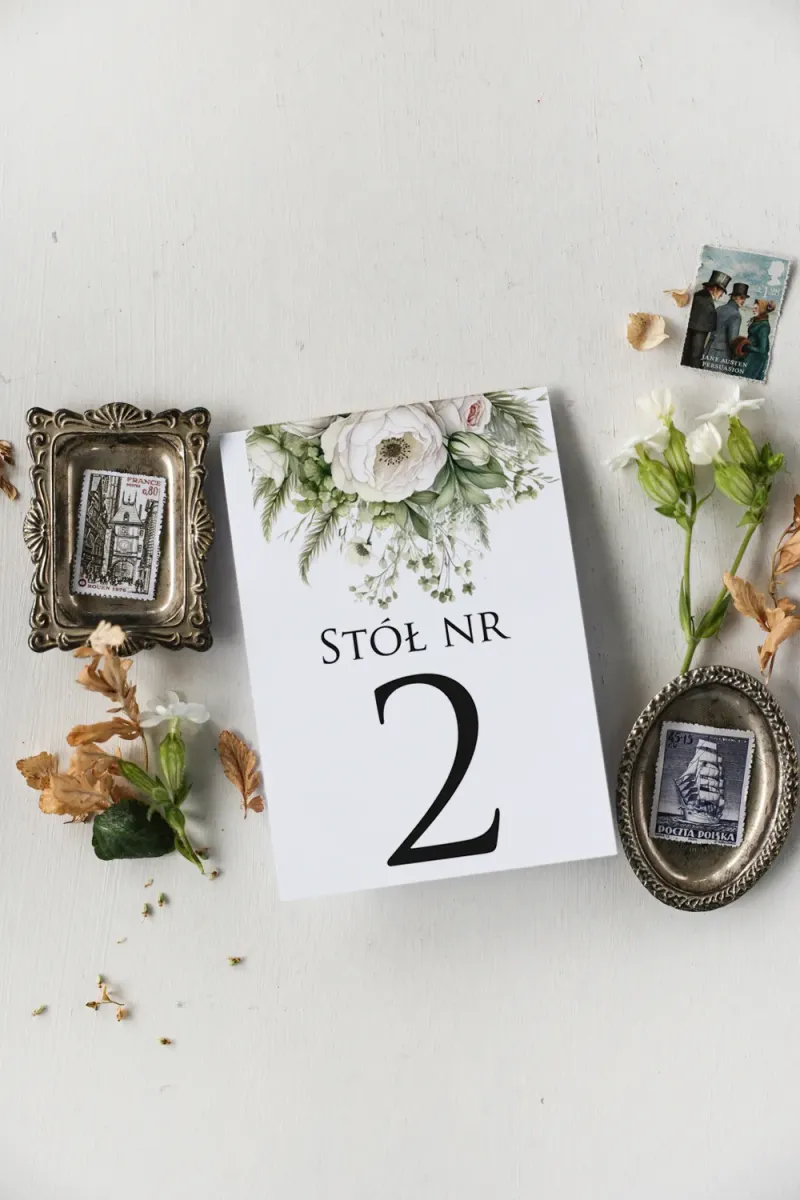
Original table numbers with a peony bouquet | Impression no. 3
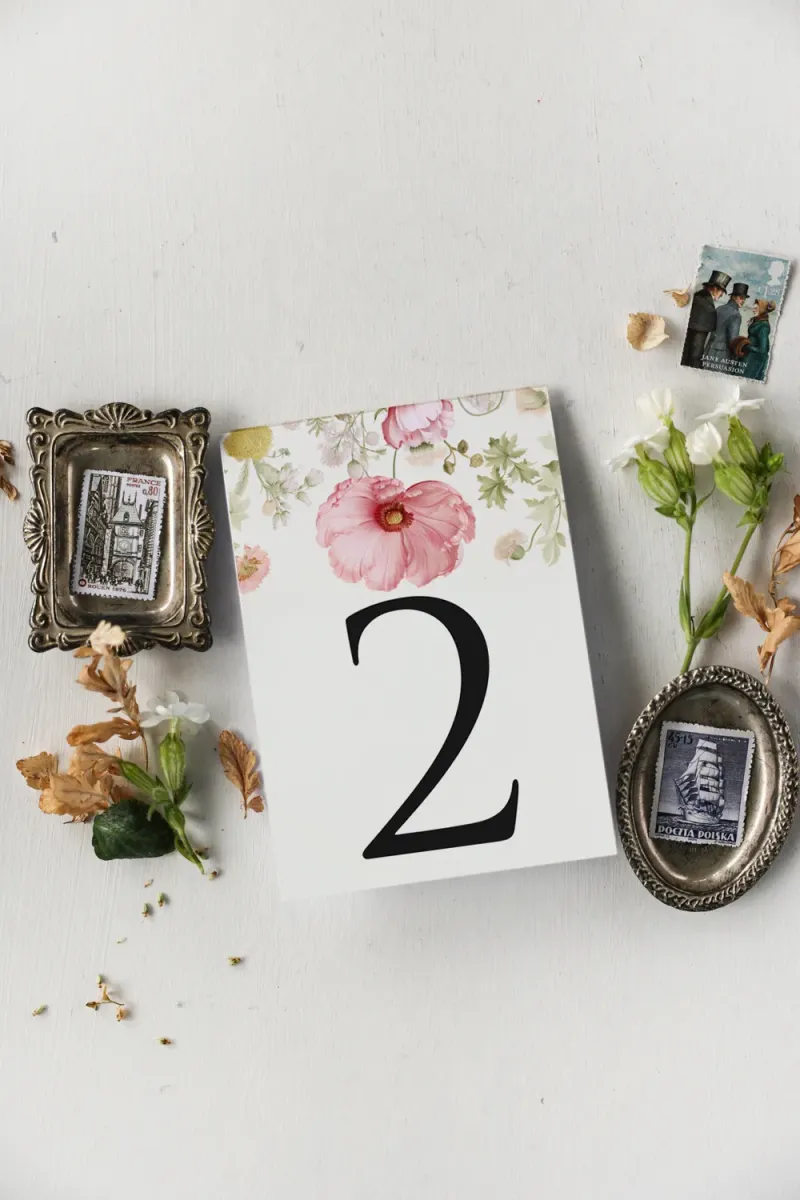
Wedding table numbers in pastel colors | Impression no. 1
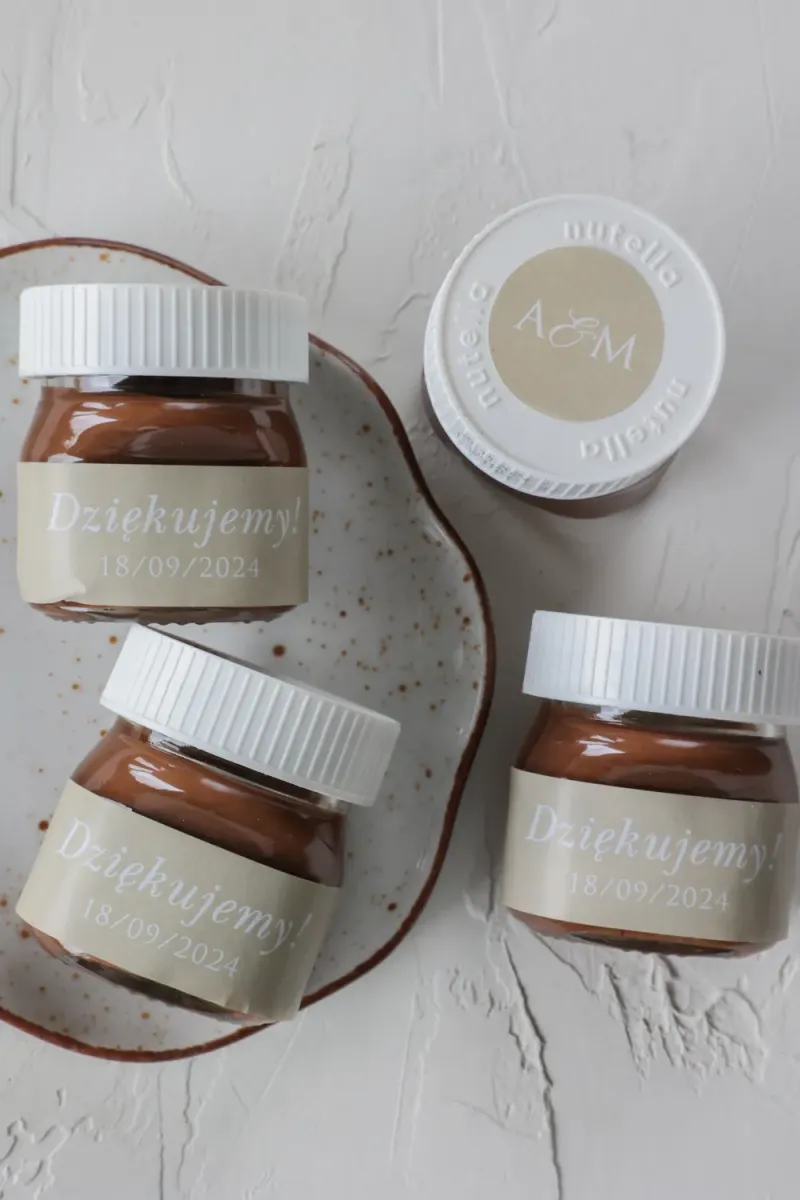
Mini Nutella jars with floral label | Kraft no. 11
Practical organizational aspects – logistics for foreign guests
Accommodation, transport, and support for guests from abroad
Organizing an international wedding involves additional logistical challenges, especially when some guests come from abroad and don't know the local language, road layout, or country specifics. As hosts, you have the duty, but also the privilege, of ensuring that your guests feel safe, comfortable, and can fully enjoy your wedding without unnecessary stress related to travel and staying in an unknown place.
Accommodation is one of the most important elements of logistics. It's worth choosing a wedding venue that offers on-site accommodation or is located close to hotels, guesthouses, or apartments that can accommodate all foreign guests. Ideally, wedding halls with hotel facilities allow guests to simply walk to their rooms after the party without the need to organize transport at night. If such a solution is not possible, prepare a list of recommended accommodation places in the area in various price ranges and send it to guests in advance, preferably with the invitations or via the wedding website. You can also negotiate group discounts with hotels or reserve a block of rooms in advance, which will facilitate booking for guests and often bring financial savings. Ensure that the chosen accommodation places have staff speaking English or another language your guests use – this will significantly increase their comfort and sense of security.
Transport is another key element. If most foreign guests fly to Poland by plane, ensure clear information on how to get from the airport to the wedding and accommodation venue. You can prepare detailed instructions containing: airport transfer options (taxi, Uber, Bolt – apps operating in Poland), approximate prices and travel times, phone numbers for proven taxi companies, links to public transport schedules (if an option), and maps and GPS addresses in formats ready to be copied into navigation. If the budget allows, you can organize a shared group transfer from the airport to hotels or the wedding venue – renting a bus or coach that will pick up guests at specific times and bring them directly to the place is a solution highly appreciated by participants who feel taken care of and don't have to worry about logistics in an unknown country.
On the wedding day, also ensure transport for guests between the accommodation and the ceremony and reception venue if these locations differ. Renting coaches or minibuses that will run according to a fixed schedule is a convenient solution that additionally allows guests not to worry about driving after consuming alcohol. On the wedding website or in the wedding app, place a detailed schedule of trips, pickup locations, and the phone number of the driver or transport coordinator so guests can contact them in case of any problems. After the wedding, ensure return transport to hotels for all guests – this is not only a matter of convenience but also safety.
Pre-wedding communication is key. It's worth creating a group on WhatsApp, Facebook Messenger, or another popular communication platform where you can stay in touch with guests, answer questions, share current information, and create a sense of community even before the big day. In the group, you can post useful links, tips, weather, information about local attractions, restaurant and cafe recommendations, or even organize shared outings for guests who arrive earlier and would like to explore the area. Some couples also organize an integration evening the day before the wedding – this could be an informal BBQ, dinner at a restaurant, or a meeting in the garden – where guests can get to know each other, break the ice, and create a friendly atmosphere that will continue during the wedding. This is particularly valuable when guests from both sides don't know each other beforehand and may feel uncertain in an international group.
Recommended articles:
- Guests from abroad – how to ensure their comfort?
- How to organize an international wedding step by step
- Wedding menu – how to surprise guests with unusual dishes
- Wedding superstitions – a practical guide
- Guest attractions – photo booth, games, and other ideas
- How to choose the perfect wedding hall

Author: Szymon Jędrzejczak
Wedding stationery designer at Amelia-Wedding.pl. Expert in wedding trends and organization with years of industry experience.
Szymon Jędrzejczak
Wedding industry expert and stationery designer at Amelia-Wedding.pl. For years, she has been helping couples create unforgettable moments by combining tradition with modern design.