Guest entertainment – photo booths, games, and other wedding reception ideas
Modern Photo Booths – From Classics to Revolutionary 360 Booths
Classic Photo Booths with Props – A Proven Classic That Never Gets Boring
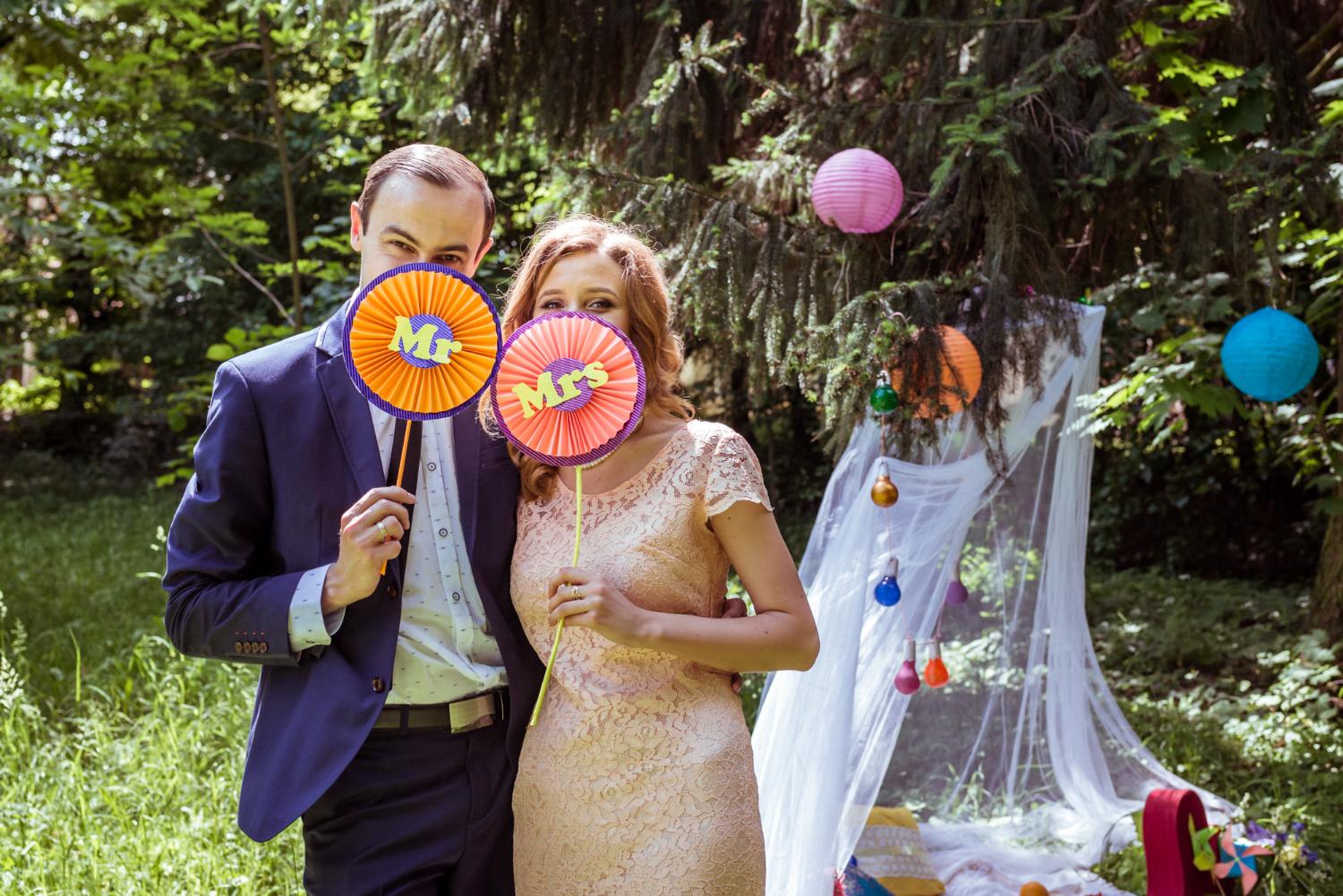
The photo booth is undoubtedly one of the most popular wedding attractions, gaining more fans every year among couples looking for interactive fun. This seemingly simple addition can turn any wedding into a real party, giving guests the chance to create spontaneous, often hilarious memories. A classic photo booth is a photography kiosk that takes high-quality photos and prints them instantly, usually in two copies – one for the guest as a keepsake, and the second for a special guest book where they can write a message for the newlyweds. Photo props are the heart of the attraction – colorful glasses, stylish hats, funny moustaches on sticks, extravagant wigs, signs with slogans, masks, boa scarves, and many other accessories ensure that every photo has a unique character. Guests of all generations, from the youngest to the oldest, take equal joy in posing for photos, creating amazing compositions and unleashing their creativity.
When organizing a photo booth for a wedding, it's worth keeping a few key aspects in mind that determine the success of this attraction. First of all, the location must be well thought out – the photo booth should be in a place easily accessible to all guests, but at the same time, it shouldn't interfere with other wedding activities. An ideal spot is a space close to the main hall but slightly to the side, so the queue doesn't block walkways. Lighting is another crucial element – professional photo booths are equipped with special flashes that provide perfect facial illumination and guarantee high-quality photos regardless of the time of day or the lighting conditions in the hall. It's also worth personalizing the prints – photos can include the names of the bride and groom, the wedding date, special graphics, or even a wedding hashtag that will link all memories from that day. Additionally, all photos taken in the booth can be available in a digital version for a certain time after the wedding, allowing guests to download and share them on social media.
Choosing props is a true art that can decide the success of the entire attraction. The best results come from props matched to the wedding style and the couple's personality – an elegant wedding in a classic style will require more sophisticated accessories, such as stylish monocles, elegant hats, or signs with classy inscriptions, while a boho-style wedding can be enriched with colorful flower crowns, ethnic masks, or funny signs with casual slogans. The quality of the props matters immensely – cheap, plastic gadgets break quickly and don't look good in photos, so it's worth investing in solid, aesthetically made accessories. Professional photo booth companies regularly renew their prop sets, adding new elements according to current trends and ensuring that the accessories are always clean and in perfect condition. It's also worth considering seasonal additions – for spring weddings, floral crowns and pastel accessories work well; in summer, sunglasses and sun hats are popular; in autumn, you can add autumn leaves and warm scarves; and in winter, festive hats and winter-themed props.
360 Photo Booths – The New Trend Revolutionizing Wedding Keepsakes
Table of Contents:
- 360 Photo Booths – The New Trend Revolutionizing Wedding Keepsakes
- Magic Mirror and Other Innovative Photo Solutions
- Contests and Integration Games – Proven Ways to Break the Ice
- Traditional Wedding Games with a Modern Twist
- Spectacular Flair Bartending Shows – Art and Entertainment in One
- Tastings and Cocktail Workshops for Guests
- Attractions for the Youngest – A Family-Friendly Wedding
- Culinary and Tasting Attractions – A Feast of Flavors
- Modern Technologies in the Service of Wedding Entertainment
- Summary
The 360 photo booth is the latest trend in the world of wedding entertainment, rapidly gaining popularity among couples looking for something unique and modern. This revolutionary technology completely changes the way guests create wedding memories – instead of static photos, spectacular dynamic videos are created that look like scenes from a Hollywood movie. A rotating platform with a professional camera circles the guests a full 360 degrees, recording them in various poses and expressing different emotions, creating a several-second video in slow motion or with special effects. Guests step onto a special platform in groups of one to several people; they can dance, gesture, throw confetti, rose petals, or other decorative elements that create a magical swirling effect around them in slow motion. The result is truly spectacular – a professional clip that can be immediately shared on social media and go viral among friends.

Gaja No. 1 Wedding Invitation – Minimalist Style with Letterpress Embossing

Minimalist Wedding Invitations – Glare No. 1 with Embossed Frame

Photo Wedding Invitations – Tender No. 1 with Black Belly Band
The technical capabilities of 360 photo booths are truly impressive and constantly evolving with technological progress. Modern systems can record in 4K resolution and offer various recording modes – from classic slow motion to the bullet-time effect (popularized by the Matrix films), to dynamic transitions with various color filters. Some systems allow for adding special effects in real-time – sparks, flames, magic particles, and even virtual backgrounds that transport guests to completely different places. LED lighting can be programmed to create multi-colored effects synchronized with the camera movement, further enhancing the spectacular nature of the recordings. Professional 360 photo booths are also equipped with high-quality sound systems that play music during recording, helping guests get into the right rhythm and mood. After recording, the film is automatically processed by special software that adds selected effects, an overlay with the couple's names and the wedding date, and then shares the ready clip with guests via a QR code or directly to their phones.
Organizing a 360 photo booth requires a bit more planning than a traditional one, but the results more than compensate for the extra effort. First of all, more space is needed – the platform along with the rotating camera requires a circle with a diameter of about 4-5 meters; additionally, a safe distance must be maintained for spectators and the queue. The ground must be perfectly level and stable, as any vibrations during recording can affect the quality of the final video. It's also worth ensuring proper guest movement control – a professional 360 booth operator instructs participants on how to stand, which way to move, and what effects can be achieved, which significantly improves the quality of the recordings. Each recording typically lasts 15-30 seconds, but the entire process including instructions and processing can take 2-3 minutes per group, so it's worth planning enough time for this attraction. The costs of a 360 photo booth are higher than a traditional one, but the uniqueness and spectacular nature of the materials received make many couples consider this investment fully justified, especially when they want to stand out and create truly exceptional memories.
Magic Mirror and Other Innovative Photo Solutions
The Magic Mirror (Fotolustro) is another fascinating alternative to traditional photo booths, combining elegance with modern technology and interactive possibilities. It is a high-end mirror equipped with a hidden camera, a touchscreen, and advanced software that allows guests to create personalized photos in an intuitive and fun way. When guests approach the mirror, a friendly interface appears on its surface, guiding them through the entire process of taking a photo – from choosing the shooting mode and posing to editing and personalizing the final image. The interactive features of the Magic Mirror are truly impressive – guests can draw on their photos, add colorful emojis, write dedications, choose from various frames and filters, and even record short video messages for the newlyweds. After editing, the photo is printed in high quality, and a digital copy can be instantly sent to the participant's email or phone.

Minimalist Wedding Place Cards – Glare No. 1 with Embossed Border

Glamour Wedding Place Cards with Pearls – Pearls No. 1 White

Impresja No. 4 Wedding Place Cards – Romantic Blue Hydrangea Table Cards
The latest trends in wedding photography also include other innovative solutions that can diversify the traditional approach to capturing wedding memories. Photography drones are becoming increasingly popular, especially at outdoor weddings – they allow for spectacular aerial shots capturing the entire ceremony from a wider perspective. Polaroids are experiencing a true renaissance – their retro character and instant print make them a unique keepsake that guests can take with them right away. The Photobus is a mobile photo booth placed in a stylish, vintage bus (often the iconic VW T2), which works great for outdoor weddings and adds a unique vibe to the whole event. Photographic boards with creative slogans and the wedding date are becoming more popular as a backdrop for spontaneous guest photos – they can be made in various styles, from elegant to funny, matching the character of the wedding.
Personalizing photographic attractions is the key to creating truly unique memories that reflect the personality and style of the couple. Wedding invitations often provide inspiration for designing graphics and inscriptions on photo booths – colors, fonts, and motifs from the invitations can be repeated in personalized photo frames. It's also worth thinking about dedicated wedding hashtags that will appear on all photographic materials and allow for easy discovery of all wedding photos on social media. Thematic photo sessions during the wedding are another idea for variety – for example, a vintage-style zone with appropriate props, a glamour corner with gold accessories, or a boho zone with natural decorations. Some couples also opt for photo challenges for guests – lists of interesting situations to photograph during the wedding, which then create a complete story of the whole event told from the perspective of the invited guests.
Contests and Integration Games – Proven Ways to Break the Ice
Newlywed Trivia Quizzes – Getting to Know Each Other Better Through Fun
The newlywed quiz is one of the most effective forms of wedding guest integration, which both entertains and allows everyone gathered to better understand the couple's love story. This seemingly simple attraction has the power to connect people of different generations and backgrounds – grandparents, parents, and friends from different periods of the couple's life suddenly discover shared stories and anecdotes they previously only knew in fragments. A professionally prepared quiz should contain questions from various categories – from basic information about the couple (where they met, their hobbies, favorite movies) to funny anecdotes from their lives and more intimate details that only those closest to them might know. The best results come from a quiz consisting of 15-25 questions divided into several rounds of varying difficulty – easy warm-up questions, medium ones for most guests, and difficult ones to test the knowledge of best friends and family.
Organizing a quiz requires careful preparation and a good host who can hold everyone's attention and create an atmosphere of friendly competition. Questions should be prepared in consultation with the couple, but a certain element of surprise should be maintained – even the newlyweds don't have to know all the questions, which can lead to funny situations when they themselves can't answer a question about each other. A team format works best – guests divide into teams consisting of a mix of people from the bride's and groom's sides, different generations, and levels of acquaintance with the couple. Such a division forces participants to cooperate, exchange information, and brainstorm answers together. Prizes don't have to be expensive but should be symbolic and commemorative – they can be small wedding-themed gifts, sweets, or even wedding favors prepared specifically for this occasion.

Golden Fortune Cookies with Personalized Label | Affordable Wedding Favours | Cejla No. 3

Mini Chocolate Favours 'Pearls No. 1' – Luxury Wedding Favours with Pearl Accents

Lauren No. 2 Personalised Wedding Mini Chocolates – Napolitains with Initials
Types of questions in a wedding quiz can be very diverse, but they should always be matched to the age and composition of the guests and the couple's character. Questions about the relationship history are the foundation – where they met, how long they dated before the engagement, where the first date took place, and their first trips together. Questions about preferences and hobbies let guests know more about the couple's daily life – favorite movies, music, dishes, vacation spots, and ways of spending free time. Funny anecdotes from the couple's life are the greatest source of entertainment – embarrassing situations, funny mishaps, or unusual habits that guests had no idea about. Prediction questions regarding the couple's future also work great – how many children they will have, where they will live in 10 years, or what jobs they will do. Be careful with sensitive questions – the quiz should entertain and integrate, not cause awkward situations or recall painful events. All questions should be checked and approved by the couple beforehand, and the quiz host should be prepared for situations where an answer might trigger an unpredictable reaction.
Traditional Wedding Games with a Modern Twist
Traditional wedding games are an inseparable part of wedding culture, but modern couples are increasingly looking for ways to refresh classic forms of fun and give them a modern character. "Pass the Rolling Pin" is one of the most popular ice-breaking games, where guests stand in a circle and pass a kitchen rolling pin without using their hands – using their chins, elbows, knees, or backs. This seemingly simple game triggers explosions of laughter and forces participants to be creative. A modern version can include various objects – from a traditional rolling pin to funny props or symbolic items related to the couple. "You Can Dance" is a wedding version of the popular dance show, where couples must perform dance tasks in various styles and configurations – dancing while squatting, on one leg, with balloons they must keep in the air, or with props.
"Wedding Millionaires" is a quiz conducted in the format of the famous game show, but with questions about the couple, wedding guests, and events from the wedding. Participants can use lifelines – phone a friend (any person in the room), 50/50, or ask the audience. "Name That Tune" in a wedding version can include songs related to the couple – tracks from their first dance, favorite music, or songs from the period they met, which further personalizes the fun. Generational dance contests are a great way to integrate different age groups – the older generation dances to contemporary music, and the young ones to classics from years ago. "Wedding Figures" require couples to perform different arrangements while dancing – when the music stops, the host calls out the number of hands and feet that can touch the floor, creating often very funny and complicated poses.
Modernizing traditional games can happen in various ways – by introducing modern music, using technology (mobile apps for voting, multimedia presentations), or combining classic rules with modern props. Personalization is the key to success – games should be matched to the character and interests of the couple and the guest list. At a wedding with many children, it's worth introducing additional, simpler game variants that allow the youngest to participate actively. Intergenerational integration is one of the most important goals of wedding games – grandparents and grandchildren, parents and friends from different periods of the couple's life should have equal chances for fun and success. Inclusivity also means considering people with different physical abilities – not all games must require physical activity; many can be successfully conducted in a seated form or with limited movement requirements. Good wedding games are those where everyone finds something for themselves and can feel part of the shared joy and celebration.
Modern Forms of Contests – Technology in the Service of Fun
Mobile applications are revolutionizing the way wedding contests and games are conducted, offering new opportunities for interaction and guest engagement in ways that were unthinkable just a few years ago. Live quizzes via smartphones allow all guests to participate in a knowledge contest simultaneously, vote for the best answers, or express their opinions in real-time. Special wedding apps enable the creation of personalized quizzes, word games, photo riddles, or challenges that guests can perform throughout the wedding. Interactive voting via phones allows for democratic selection of contest winners, deciding the order of games, or even influencing the wedding music playlist. QR codes placed around the wedding hall can lead to various mini-games, fun facts about the couple, or special prizes for the most active participants.

Flores No. 1 Soy Candle in Gypsum – Gilded Wedding Favour

Kraft No. 2 Soy Candle in Plaster – Peonies Wedding Favour

Cejla No. 13 Soy Candle – Mountain Motif Wedding Favours
Scavenger hunts during the wedding are an innovative idea that works particularly well for receptions organized in interesting locations – palaces, manors, or venues with a rich history. Guests receive special apps or maps with tasks to complete in different parts of the venue – finding hidden information, taking a photo in a specific spot, or solving a riddle related to the history of the place or the couple. Wedding geocaching is an advanced version of a scavenger hunt where guests use GPS on their phones to find hidden "treasures" – small gifts, riddles, or further clues leading to the main prize. Photo challenges are lists of specific situations, people, or places that guests are to photograph during the wedding – from classic "photo with all the groomsmen" to more creative "find something blue" or "photograph a moment of happiness."
Augmented Reality (AR) is slowly entering the wedding world, offering guests completely new experiences. Special apps allow for overlaying virtual elements onto the real environment – guests can "try on" various accessories, change backgrounds in photos in real-time, or participate in virtual games taking place in the hall space. Hashtag contests on social media engage guests right during the wedding – a special wedding hashtag allows for tracking all photos and posts from the event, and the most creative entries can be rewarded. Live streaming of some contests allows for engaging even those guests who, for various reasons, could not attend the wedding in person – they can vote, comment, and cheer online. Digital guest books are interactive terminals or tablets where guests can write wishes, record short video messages, draw, or participate in digital surveys about the wedding.
Spectacular Flair Bartending Shows – Art and Entertainment in One
Professional Flair Bartending – Juggling Bottles as an Art Form
A professional bartending show is one of the most spectacular wedding attractions, combining the highest artistic level with the practical preparation of exquisite drinks for guests. Flair bartending, the art of juggling bottles, shakers, and glasses while mixing cocktails, is a true spectacle that hypnotizes viewers and turns ordinary beverage preparation into an unforgettable show. Professional bartender-artists can perform amazing evolutions – throwing and catching several bottles simultaneously, spinning shakers behind their backs, juggling flaming bottles, all to the rhythm of specially selected music synchronized with every gesture and trick. The spectacular nature of the show lies not only in the difficulty of the tricks but also in the fluidity and elegance of movements that make it look as if the bartender is dancing with the bottles and bar equipment.
Different styles of flair bartending offer varied experiences for wedding guests – from an elegant, subtle style that emphasizes finesse and precision of movement to a dynamic, flashy style with pyrotechnic effects, flaming bottles, and spectacular high throws. Working flair focuses on the practical execution of cocktails with added juggling elements that don't interfere with drink preparation – every trick has its practical justification and speeds up or beautifies the mixing process. Exhibition flair is pure art for art's sake – the bartender performs complicated choreographies with empty bottles and props, focusing solely on the showmanship. A fire show with flaming bottles is the most spectacular but also the most demanding type of show, requiring appropriate safety conditions and an experienced artist. Team flair involves shows performed by two or more bartenders simultaneously, passing bottles to each other, synchronizing their movements, and creating complex group choreographies.
Preparing a flair show is a complex process requiring proper technical and logistical preparation. The mobile bar must be adequately equipped – professional bar tools, specially selected bottles for juggling (often reinforced or training ones), a sound system synchronized with the show, and appropriate lighting to highlight the spectacular tricks. Safety is the most important aspect – a safety zone must be maintained around the bar, guests must be informed about behavior rules during the show, and in the case of a fire show, fire protection is necessary. The duration of the show should be carefully chosen – too short may disappoint guests, but too long may bore them, so standard shows last 15-30 minutes with the possibility of repetitions or continuation in a more intimate service form. Guest integration is a key element of any good show – experienced bartenders can include volunteers from the audience, teach them simple tricks, or organize a mini-bartending contest for those interested.
Tastings and Cocktail Workshops for Guests
Interactive cocktail workshops are an excellent complement to spectacular flair shows, allowing guests to actively participate in creating drinks and learning the secrets of the bartending craft. Unlike passively watching a show, workshops engage participants directly, teaching them basic mixing techniques, ingredient knowledge, and how to create their own signature flavor compositions. The educational nature of the workshops ensures that guests not only have fun but also gain new skills and knowledge they can use later at home. Professional bartenders leading the workshops talk about the history of cocktails, the origin of specific spirits, flavor pairing rules, and drink presentation techniques. The group nature of the workshops integrates guests – participants work in small teams, help each other, exchange ideas, and celebrate successes together while laughing at minor mishaps.
The structure of a cocktail workshop should be carefully planned to ensure maximum participant satisfaction while maintaining safety. The theoretical introduction covers basic information about the spirits used, bar tools, and mixing techniques – participants learn how to properly hold a shaker, what technique to use for shaking, how to strain ingredients, and how to elegantly pour finished cocktails. The practical part starts with simple drinks with few ingredients, gradually moving to more complex compositions. Non-alcoholic alternatives are equally important – not all guests drink alcohol, but everyone can participate in the fun by preparing juicy mocktails, smoothies, or aromatic lemonades. A competitive element can be introduced in the form of a contest for the most original cocktail, the best presentation, or the most creative name for the created drink. Personalization involves preparing special ingredients or techniques related to the couple's preferences – if they love exotic flavors, Asian ingredients can be introduced; if they prefer classics, the workshop can focus on timeless recipes.

Emerald Elegance No. 1 Wedding Place Cards – Satin Ribbon Tags with White Print

Glamour Wedding Place Cards No. 1 – Satin Name Cards with White Print

Rose Bow Wedding Place Cards No. 1 – Pink Satin Glass Ribbon Cards
Thematic tastings are a more refined form of flavor education that can accompany workshops or stand as a separate attraction. A whisky tasting led by an expert allows guests to learn the differences between various types and regions of origin of this noble spirit, learn the proper way to taste, and distinguish flavor notes. A gin evening with a presentation of various botanicals, tonics, and garnishes is a journey through the world of this currently trendy spirit. Rum tastings transport participants to tropical climates, telling the story of the spirit and presenting a variety of flavors from different islands and distilleries. Wine workshops can include learning the basics of sommelier skills, proper wine serving, food pairing, or creating various wine blends. Connection with local culture – tastings of traditional spirits, regional beers, or meads can be an interesting alternative to international trends. Tasting place cards with information about individual spirits, tasting notes, and historical facts can serve as an elegant wedding keepsake and a guide for future home tastings.
Live Cooking and Culinary Shows as an Extension of Bartending Attractions
Live cooking during a wedding is a spectacular culinary attraction that blends perfectly with bartending shows, creating a complete gastronomic experience for guests. The chef performs in front of the guests, preparing selected dishes live, talking about the ingredients used, cooking techniques, and sharing culinary secrets. It's not just food preparation, but a true culinary show that engages all the guests' senses – they can observe the process, smell the aromas from the show kitchen, listen to the chef's stories, and of course, taste the results. The educational aspect of live cooking ensures that guests gain new culinary knowledge, discovering new ingredients and techniques they can later use in their own kitchens. Interaction with the audience can include inviting volunteers to help prepare dishes, answering cooking questions, or even organizing mini-culinary contests.
Various forms of live cooking can be matched to the wedding's character and guest preferences. A flambe show involves spectacular lighting of dishes using high-proof spirits, which creates impressive flames and intensifies flavors. A sushi show with a Japanese sushi master fascinates with the precision of fish cutting, rice rolling, and artistic arrangement. A paella show transports guests to sunny Spain, where a huge pan and aromatic ingredients create a colorful and tasty dish. A pasta show with an Italian chef is a lesson in authentic pasta making from scratch – from kneading the dough to forming shapes and preparing the perfect sauce. High-level grilling can include the precise preparation of steaks, fish, or vegetables with explanations of temperatures, grilling times, and marinating methods. A dessert show with chocolate tempering, caramel making, or creating complex confectionery constructions is a sweet finale to the culinary part of the wedding.
Organizing a culinary show requires proper space and equipment preparation, but the results are truly spectacular. The mobile show kitchen must be equipped with all necessary appliances – hobs, oven, blender, food processors, along with proper ventilation and safety measures. Safety is a priority – guests must be at a proper distance from the work zone, especially during shows with fire or sharp tools. Synchronization with the wedding program should consider dish preparation time, the needs of the photographer and videographer, and fitting the show into the natural rhythm of the reception. Tasting for everyone is a vital aspect – prepared dishes should be in such a quantity that every guest can try, or at least a significant portion can participate in the tasting. Connection with local culture can include preparing regional specialties, using local ingredients, or telling stories about culinary traditions related to the region. Souvenir recipes handed out to guests after the show allow them to recreate the wedding flavors at home and serve as a practical memento of the event.
Attractions for the Youngest – A Family-Friendly Wedding
Professional Animation and Play Zones for Children
Professional children's animation at a wedding is an investment that benefits not only the youngest participants but also their parents, who can fully enjoy the celebration knowing their children are under the care of experienced animators. Modern weddings are increasingly family-oriented events where several generations meet, so providing attractions for children has become a necessity rather than a luxury. Professional animators are individuals with appropriate pedagogical or artistic backgrounds who can engage children of various ages, adapt forms of play to their developmental stages, and create a safe, joyful atmosphere. The variety of the animation program includes movement and skill games, creative art workshops, science shows and experiments, theatrical and educational games, contests and quizzes, as well as quieter activities for children who need a moment of rest.
The age of participants is crucial when planning the animation program – different attractions work for toddlers aged 2-4, school children aged 6-10, and teenagers. Animations for the youngest focus on simple, colorful games with plenty of movement – scarf dances, balloon games, simple songs with gestures, finger painting, or soap bubbles. Preschool children can participate in more complex games – puppet theaters, simple science experiments, themed games, costume contests, or art workshops. School-aged children are ready for more demanding challenges – kids' escape rooms, knowledge contests, sports games, culinary workshops, or even simple magic shows. Teenagers require a completely different approach – this could be photography workshops, a mini-disco for younger ones, team games, or integration activities preparing them to participate in the main wedding program.
The play zone for children should be properly separated and secured, but at the same time, it shouldn't be isolated from the rest of the wedding – parents must be able to observe their children and have easy contact with them. The zone's equipment should include colorful mats and rugs, safe toys suitable for different age groups, tables and chairs for art activities, a place to store children's coats and bags, and basic first aid supplies. Safety is an absolute priority – all toys and props must be certified and safe, the animator should have first aid training, and the zone should be regularly cleaned and disinfected. Communication with parents occurs throughout the animation – parents should be informed about the program, can receive the animator's phone number for emergencies, and sometimes can be invited to join in children's and adults' shared games. Program flexibility means a good animator can adapt to the current situation – if children are tired, they introduce quieter games; if they are very energetic, they propose more movement activities; and if a child has difficulty integrating, they find a way to include them in the group.
Golden Fortune Cookies with Personalized Label | Affordable Wedding Favours | Cejla No. 3

Personalized Fortune Cookies, Light Grey | Original Wedding Favours | Cejla No. 7

Personalized Greenery Fortune Cookies | Original Wedding Favours | Cejla No. 5
Creative and Educational Workshops Adapted to Age
Art workshops are one of the most universal forms of children's animation, working at practically any age and easily adaptable to participants' abilities and interests. Face painting is a classic of children's animation that never gets boring – professional face painters can turn the youngest guests into fairy-tale characters, animals, princesses, or superheroes using safe, certified paints that wash off easily. Ceramic workshops with salt dough or clay allow children to create their own works of art to take home as a wedding souvenir – these could be simple figurines, bowls, fridge magnets, or handprints. Jewelry making from colorful beads, ribbons, and strings develops manual precision and allows each child to express their individual style. Decoupage workshops teach the basics of this artistic technique, allowing for the decoration of wooden boxes, photo frames, or other functional items.
Science experiments presented as fun fascinate children and show that learning can be exciting and colorful. Chemical shows with safe substances – creating colorful reactions, volcanoes from baking soda and vinegar, invisible lemon ink, or colorful soap bubbles in unusual shapes. Physical experiments – experiments with magnetism, static electricity, simple levers, or inclined planes, all presented in a way that is understandable and safe for children. Astronomy workshops with a telescope (if the wedding takes place in the evening) or planet models, stories about stars and constellations adapted to the participants' age. Biological experiments – observing insects through a magnifying glass, planting seeds in small pots for children to take home, or creating simple terrariums. Age-appropriate culinary workshops – older children can prepare simple snacks, while younger ones can help decorate cookies or create colorful fruit skewers.
Theatrical and musical games develop children's creativity and social skills while providing them with immense joy from performing. Puppet theaters can be presented by animators, but even better results come from involving children in creating the show – they can operate the puppets themselves, invent dialogues, or create simple sets. Workshops for creating mascots from socks, gloves, or simple materials allow each child to create their own unique character to play with for the rest of the wedding. Musical games with simple instruments – maracas, bells, drums – teach rhythm and allow for group music-making. Learning simple dances adapted to children's age and abilities can be great preparation for shared fun with adults on the dance floor. A talent show allows children to present their skills – singing, dancing, reciting a poem, or showing a hobby – which builds their self-confidence and allows them to present themselves to other wedding participants. Creating a commemorative wedding newspaper, where children can draw their impressions, write wishes for the couple, or paste art pieces made during workshops, is a beautiful keepsake for the newlyweds and shows the wedding from the perspective of the youngest guests.
Special Shows – Clowns, Mimes, Magicians for Young Viewers
Clown performances are a classic form of children's entertainment that still delights young viewers with spontaneity, humor, and interactivity. A modern children's clown is a trained artist who can adapt their program to various age groups and situations, combining traditional clowning elements with modern forms of entertainment. A clown's program can include juggling colorful balls or scarves, creating fantastic balloon figures, magic shows adapted to a child audience, funny interactions with viewers, or comic skits with volunteers. The clown's costume and makeup should be colorful and friendly, avoiding scary elements that might frighten the youngest participants. Interaction with the audience is the heart of a clown performance – a good clown can connect with every child, involve them in the fun, and even convince shy children to participate in the show.
Magic shows for children require a special approach that combines magic with an understanding of child psychology and perception. A children's magician must be able to present wonders in a fascinating but not scary way, using colorful props, friendly characters, and simple effects that children can understand and remember. Classic tricks like disappearing handkerchiefs, magic wands, a rabbit in a hat, or colorful scarves pulled from an empty bag still make a huge impression on children. Engaging the audience by inviting children on stage as magician's assistants allows them to feel part of the show and gain new experiences. Mini-magic courses after the main show, where the magician teaches children simple tricks they can later present to their parents, add extra value that extends the joy of the performance. Personalizing the show can include incorporating elements related to the couple – for example, the "magic" appearance of their photos or symbols related to their love story.
Mime performances are a delicate art that fascinates children with expressiveness and the ability to communicate without words, which is particularly attractive for international groups of guests or children of different ages. A children's mime can tell stories through gestures, imitate various situations and characters, and create invisible objects that become real in the viewers' imagination. Pantomime games involving children teach body expression, help overcome shyness, and develop imagination. Acrobatic shows performed by experienced artists – juggling, stilt walking, simple acrobatics – delight children and show what can be achieved through training and perseverance. Circus workshops allow children to try simple circus tricks under the guidance of professionals – juggling scarves, balancing, simple acrobatics on a mat, or playing on stilts adapted to children's height. Combining different forms – a show that blends elements of clowning, magic, mime, and simple acrobatics – can last longer and provide diverse impressions, keeping children's attention throughout the performance. An interactive conclusion with the distribution of small gifts, modeling balloons, or simple magic props ensures that children have a memento of the show and can continue the fun independently.
Culinary and Tasting Attractions – A Feast of Flavors
Culinary Stations and Live Cooking Stations
Culinary stations are revolutionizing the way food is served at weddings, moving away from the traditional model of a served dinner toward an interactive culinary experience that engages guests and allows them to explore diverse flavors. Live cooking stations are mobile culinary stands where professional chefs prepare dishes live in front of guests, creating not only delicious food but also a culinary spectacle. The variety of stations can include themed stands – an Asian station with a wok and fresh ingredients, a Mediterranean station with a grill and rotisserie, a Mexican station with tortillas prepared on the spot, or a sushi station with a Japanese master cutting fresh fish. Interaction with guests means they can observe the preparation process, talk to the chefs, ask about ingredients and techniques, and even state their own preferences for seasoning or ingredients.

Elegant Wedding Welcome Sign with Black & White Photos – Photo Design No. 7

Perełki No. 1 Wedding Seating Chart – Elegant Heart Design with Head Table

Rustic Sunflower Wedding Seating Plan | Personalized Guest Seating Chart | Impresja No. 5
A grill station is one of the most popular forms of live cooking, attracting guests with the aroma of freshly prepared meats, fish, and vegetables. A professional grill master can advise guests on the best degree of meat doneness, tell them about the origin of specific cuts, marinating and seasoning techniques, and present signature sauces and sides. A sushi and sashimi station with a Japanese chef is true culinary mastery, where guests can observe precise fish cutting, sushi rice forming, and artistic plate arrangement. A tartare station offers fresh preparation of various tartares – beef, salmon, tuna, or vegetarian versions with vegetables, with the possibility for guests to choose ingredients. A pasta station with an Italian chef shows authentic techniques for preparing fresh pasta, various sauces, and sides, creating personalized portions according to each guest's preference.
Organizing culinary stations requires careful logistical planning and proper space preparation. The placement of stations should ensure smooth guest flow, avoid bottlenecks, and allow for comfortable observation of the cooking process. The infrastructure must include appropriate electrical connections for heating equipment, access to water, ventilation systems to remove smoke and odors, and proper lighting to highlight the attractiveness of the dishes. Food safety is a priority – all ingredients must be fresh and properly stored, chefs must follow hygiene rules, and food temperature must be constantly monitored. Menu personalization can include the couple's culinary preferences, local specialties, or seasonal ingredients. Allergens and special diets must be properly labeled, and chefs must be prepared to serve guests with various dietary requirements – gluten-free, vegan, lactose-free, or other specialized diets. Synchronization with the wedding program means that stations must be open at the right moments, not conflict with official program points, and be flexible in adapting to the reception's current rhythm.
Tastings of Wines, Cheeses, and Regional Specialties
Wine tasting at a wedding is an elegant form of entertainment that allows guests to discover new flavors, learn about the diversity of the wine world, and gain basic sommelier knowledge in a friendly, informal atmosphere. A professional sommelier leads guests through the world of wines, talking about the origin of individual bottles, production techniques, characteristic flavor notes, and proper tasting rules. The wine selection should be diverse but adapted to guests' tastes – it can include Polish wines from recognized vineyards, classic French or Italian positions, or a thematic selection of wines from one region. Tasting technique is a true science – the sommelier teaches guests how to properly hold a glass, how to swirl the wine to release aromas, how to smell and recognize individual scent notes, and how to evaluate the taste, acidity, and finish of the wine with small sips. Tasting notes allow guests to record their impressions, favorite wines, and interesting information, creating a personal memento of the tasting.
Cheese tasting pairs perfectly with wines, creating a complete experience of flavors and aromas. The variety of cheeses can include classic French aged cheeses – camembert, roquefort, or brie; Italian parmesans and gorgonzolas; Polish regional cheeses from small manufactories; or even exotic goat or sheep milk cheeses. The educational aspect of the tasting includes stories about cheese production techniques, regional cheese traditions, aging processes, and proper storage. Sides for cheeses – various types of honey, nuts, dried fruits, chutneys, and jams – show the variety of flavor combinations that can be created. Cheese and wine pairings allow guests to experiment with matching different cheeses with appropriate wines, discovering how they complement and enhance each other's flavor qualities. Regional Polish cheeses deserve special attention – oscypek, bryndza, Koryciński cheese, or regional cottage cheeses are treasures of our culinary tradition that are worth presenting to guests, especially those from outside Poland.
Regional tastings are an excellent way to promote local culinary culture and present the diversity of Polish cuisine. The regional character of the tasting can be adapted to the wedding location – tasting Silesian specialties in Silesia, Podhale cuisine in Zakopane, or Pomeranian fish by the sea. Local suppliers are a source of authentic products – small manufactories, traditional smokehouses, regional bakeries, or agritourism farms offer products not found in regular stores. Culinary education can include stories about the history of individual dishes, traditional preparation techniques, or the cultural significance of various ingredients. Interactive elements – guests can try their hand at traditional culinary techniques, for example, making pierogi, smoking fish, or preparing regional recipes. Older generation members can be invited to share memories related to traditional dishes, creating an intergenerational bridge between tradition and modernity. Tasting souvenirs – recipes for traditional dishes, lists of local suppliers, or even small samples of products to take home – allow guests to continue their culinary discoveries after the wedding.
Sweet Tables and Dessert Stations as a Finale to Culinary Experiences
A sweet table is an elegant alternative to a traditional wedding cake, offering guests a rich selection of various desserts, cookies, pralines, and other sweets, creating a spectacular visual presentation and unlimited flavor possibilities. The variety of desserts satisfies all guests' tastes – from classic cream cakes and eclairs to modern macarons and cake pops, to traditional Polish mazurkas and cheesecakes. The visual attractiveness of the sweet table is as important as the taste – a professionally designed sweet table with an elegant display of desserts, colorful decoration, varying stand heights, and appropriate lighting creates a true feast for the eyes. Personalization can include the couple's favorite desserts, colors matching the wedding theme, or even miniature versions of the wedding cake as part of a larger sweet composition. Seasonality of desserts – fresh fruit in summer, apple desserts in autumn, or festive spices in winter – adds authenticity and freshness to the entire presentation.
Minimalist Wedding Place Cards – Glare No. 1 with Embossed Border
Glamour Wedding Place Cards with Pearls – Pearls No. 1 White
Impresja No. 4 Wedding Place Cards – Romantic Blue Hydrangea Table Cards
Live dessert stations are interactive stands where pastry chefs prepare desserts live in front of guests, combining education with entertainment and fresh ingredients. A chocolate station with chocolate tempering, praline making, or a chocolate fountain attracts all cocoa lovers. An ice cream station with a gelato machine allows guests to choose flavors and toppings, creating personalized ice cream compositions. A flambé station with the preparation of flaming desserts – crepes suzette, bananas flambé, or pears in cognac – is a spectacular show and a unique taste experience. A coffee and dessert station with a barista preparing various coffees and cappuccinos with latte art, served with exquisite cookies and pralines. A regional station with traditional Polish sweets – faworki, cheesecakes, babkas, or handmade gingerbread – is a blend of tradition and modern presentation. A gluten-free and vegan station ensures that guests with dietary restrictions can also enjoy sweet pleasures.
Organizing a sweet zone requires considering both practical and aesthetic aspects to create an unforgettable experience for all guests. The location of the sweet table should be strategic – easily accessible but not conflicting with other attractions, ideally in a place with natural guest flow. Proper storage of desserts requires temperature control, especially for creams, chocolate, and ice cream, which means a need for professional cooling or heating equipment. Hygiene and safety are key aspects – all desserts must be properly secured, labeled for allergens, and serving must take place using appropriate tools. Timing is critical – some desserts must be served immediately after preparation, while others can wait longer, requiring precise coordination with the wedding rhythm. Aesthetic presentation includes not only the desserts themselves but also decorations, lighting, labeling, and the overall visual composition, which should harmonize with the decor of the entire wedding. Interaction with guests can include the possibility of packing sweets to go, sharing recipes by pastry chefs, or even mini-cookie decorating workshops for interested guests. Photographic documentation of the sweet table is an important element – spectacularly presented desserts deserve professional photos that will become part of the wedding memories and promote the talents of the pastry chefs involved in the project.
Modern Technologies in the Service of Wedding Entertainment
Virtual Reality and Immersive Technologies
Virtual Reality (VR) at a wedding is a true revolution in the world of wedding attractions, transporting guests to completely different worlds and allowing for experiences that would be impossible in reality. New generation VR goggles offer incredibly realistic experiences – guests can "visit" exotic places from the couple's honeymoon together with them, relive moments from their acquaintance in a virtual reconstruction, or even participate in fantastic adventures that combine their shared interests. The variety of VR experiences can include calm, relaxing journeys through beautiful landscapes of the world, exciting adventure games for brave guests, educational tours of museums or monuments, or even artistic experiences where guests can create their own works in three-dimensional space. Group VR experiences allow several guests to participate in the same virtual adventure simultaneously, communicate with each other, and cooperate in completing tasks.
Technical requirements for a VR station at a wedding include high-performance professional computer equipment, the latest generation of VR goggles, appropriate motion controllers, and a safe space to move during the virtual experience. Participant safety is a priority – every user must be properly instructed, the space around the VR station must be free of obstacles, and usage time should be limited to avoid "motion sickness" or eye fatigue. Hygienic aspects require regular disinfection of VR glasses between users and providing disposable protective masks. The station operator is a trained person who will help guests put on the equipment, explain the usage rules, monitor the experience, and be ready to intervene in case of technical problems or user discomfort.
Personalizing VR experiences can be adapted to the couple's history and interests – if they love to travel, a virtual route through places they've visited or dream of visiting can be created. Special wedding experiences can include a virtual reconstruction of places important to the couple – the place of their first meeting, first date, proposal – allowing guests to "visit" these places and better understand the newlyweds' love story. Educational aspects of VR can be used to present information about culture, traditions, or history related to the couple's family, especially if guests come from different countries or regions. Artistic experiences allow guests to create shared works of art in virtual space, painting in the air or sculpting in digital clay, which can become a symbolic part of the wedding. Documentation of experiences can include recording guest reactions, taking photos while using VR, or even saving works created in virtual reality as digital wedding souvenirs.
Drone Shows and Modern Lighting Effects
Drone shows are the latest trend in wedding attractions, combining state-of-the-art technology with artistic vision to create spectacular light shows in the night sky. Choreographed drone formations can create various shapes and patterns – from simple geometric figures and symbols to complex animations telling the couple's love story. Synchronization with music means that every drone movement is precisely matched to the rhythm and melody of the music chosen by the couple, creating a full-scale audiovisual spectacle. Each drone's LED lighting can change colors, intensity, and effects, allowing for the creation of various moods – from romantic, soft tones to dynamic, energetic flashes. The scale of the show can be adapted to the budget and space – from intimate shows with 10-20 drones to spectacular performances involving hundreds of flying machines.
Safety of a drone show requires professional preparation and appropriate permits. Licensed operators must have the right qualifications and insurance, know the regulations regarding drone flights in a given location, and have experience in conducting shows in the presence of many spectators. Weather conditions are crucial – strong wind, rain, or fog can make it impossible to conduct a show safely, so an alternative plan is necessary. The safety zone around the flight area must be properly secured and marked, and viewers must be informed about the rules for safe observation of the show. Technological backup means that professional teams have spare equipment and are prepared for an emergency landing in case of technical problems with any of the drones.
Lighting effects accompanying a drone show or constituting a separate attraction can transform the wedding space into a magical, fairy-tale place. Projection mapping on buildings or natural landscape elements allows for the creation of illusions where architecture comes to life through projections, changing colors, shapes, and seemingly transforming the structure of the object. A laser show with professional lasers can create fantastic effects in the air, especially effective when using fog machines that make the light beams visible. LED light wallpapers are giant screens composed of LEDs that can display any images, animations, or even live broadcasts from the wedding, creating a large-scale cinematic effect. Intelligent lighting reacting to music, voice, or guest movement creates a dynamic, interactive environment that changes with the energy of the wedding participants. Holographic projections are the state-of-the-art technology that allows for creating three-dimensional images floating in the air – this could be a hologram of the couple greeting guests, virtual characters, or even an effect where all guests seem to dance surrounded by holographic elements.
Interactive Wedding Apps and Social Technologies
Dedicated wedding applications are a modern tool that can significantly streamline wedding organization and increase guest engagement in various activities during the reception. App functionalities can include a wedding schedule with notifications of upcoming attractions, a map of the venue with important points marked, a guest list with the possibility of getting to know each other, photo galleries where everyone can share their photographs from the event, or even a voting system for the best performances or contests. A free wedding app can be personalized with graphics and colors matching the wedding theme, containing the couple's stories, the day's schedule, and practical information for guests. Interactive features allow guests to give wishes in digital form, participate in quizzes and contests via smartphones, or even influence the music playlist by suggesting favorite tracks.
Social media plays an increasing role in documenting and sharing wedding experiences in real-time. Wedding hashtags allow for collecting all posts, photos, and stories from the wedding in one place, creating a digital chronicle of the event from various perspectives. Instagram stories and Facebook Live enable guests who couldn't attend the wedding to follow the event live and feel part of the celebration. Dedicated AR filters on Instagram or Snapchat can be created specifically for the wedding, containing graphic elements related to the couple and serving as an additional attraction for guests who enjoy photography. A digital guest book in the form of a dedicated website or app allows guests to give wishes, share photos, and memories in a more permanent form than traditional social media.
Gamification of the wedding through mobile apps can introduce an element of competition and extra fun throughout the event. Digital scavenger hunts can lead guests through various places in the wedding location where they must find hidden QR codes or perform specific tasks to receive points or prizes. A photography contest can encourage guests to take creative photos according to specific categories or themes, with the possibility of voting for the best in real-time. Wedding Bingo in app form can contain a list of typical wedding situations that guests are to mark while observing events. Live quizzes conducted through the app can engage all guests simultaneously, with rankings and prizes for the most active participants. Integrating challenges can encourage guests to get to know each other, find common interests, or perform group tasks. Digital souvenirs generated by the app – personalized participation certificates, photo collages, or activity summaries – can be shared with guests as a long-lasting wedding memory they can keep on their mobile devices and share with family and friends.
Summary
Modern weddings are much more than a traditional ceremony – they are complex experiences that combine the best elements of traditions with modern trends and technologies. Guest attractions are no longer just an addition to the main program but an integral part of the entire event that shapes the atmosphere, creates memories, and connects people in unique experiences. From spectacular 360 photo booths and professional flair bartending shows to the latest VR and drone technologies – every couple can find attractions matched to their style, budget, and guest expectations.
The key to success lies in the appropriate selection of attractions for the wedding's character, the guest list, and the couple's preferences. Most importantly, every element should be professionally executed, safe for participants, and integrally woven into the overall program of the event. Integrating guests of different generations and backgrounds is the primary goal of any good wedding attraction – whether through singing together during a quiz, cooperating in dance contests, or sharing experiences during culinary tastings.
The future of wedding attractions will likely develop toward even greater personalization, interactivity, and the use of the latest technologies. Artificial intelligence, augmented reality, interactive holograms, or even greater integration with social media will likely shape the coming years of the wedding industry's development. However, no matter how modern the available technologies become, the foundation of any successful wedding attraction will always be authentic human emotions, the joy of celebration, and the desire to share happiness with those closest to you.
Remember that the best wedding attractions are those that naturally fit into your love story and allow guests to get to know you better. Whether you choose a classic photo booth with funny props, a spectacular drone show in the night sky, or an intimate tasting of regional specialties – the most important thing is that every element is thought out, professionally organized, and serves one goal: creating unforgettable memories of the most important day of your life.
Recommended Articles
- Wedding Trends 2025: Colors, Themes, and Innovations You Should Know
- Guest List and Seating: How to Create the Perfect Table Plan?
- Why It's Worth Having a Wedding Day Timeline?
- How to Compose the Perfect Wedding Menu? A Guide for Couples
- Wedding Favors: Ideas, Trends, and Inspirations for Unforgettable Thank-Yous