Common Mistakes When Creating Wedding Invitations
Declining Names in Wedding Invitations
Correct Name Declension
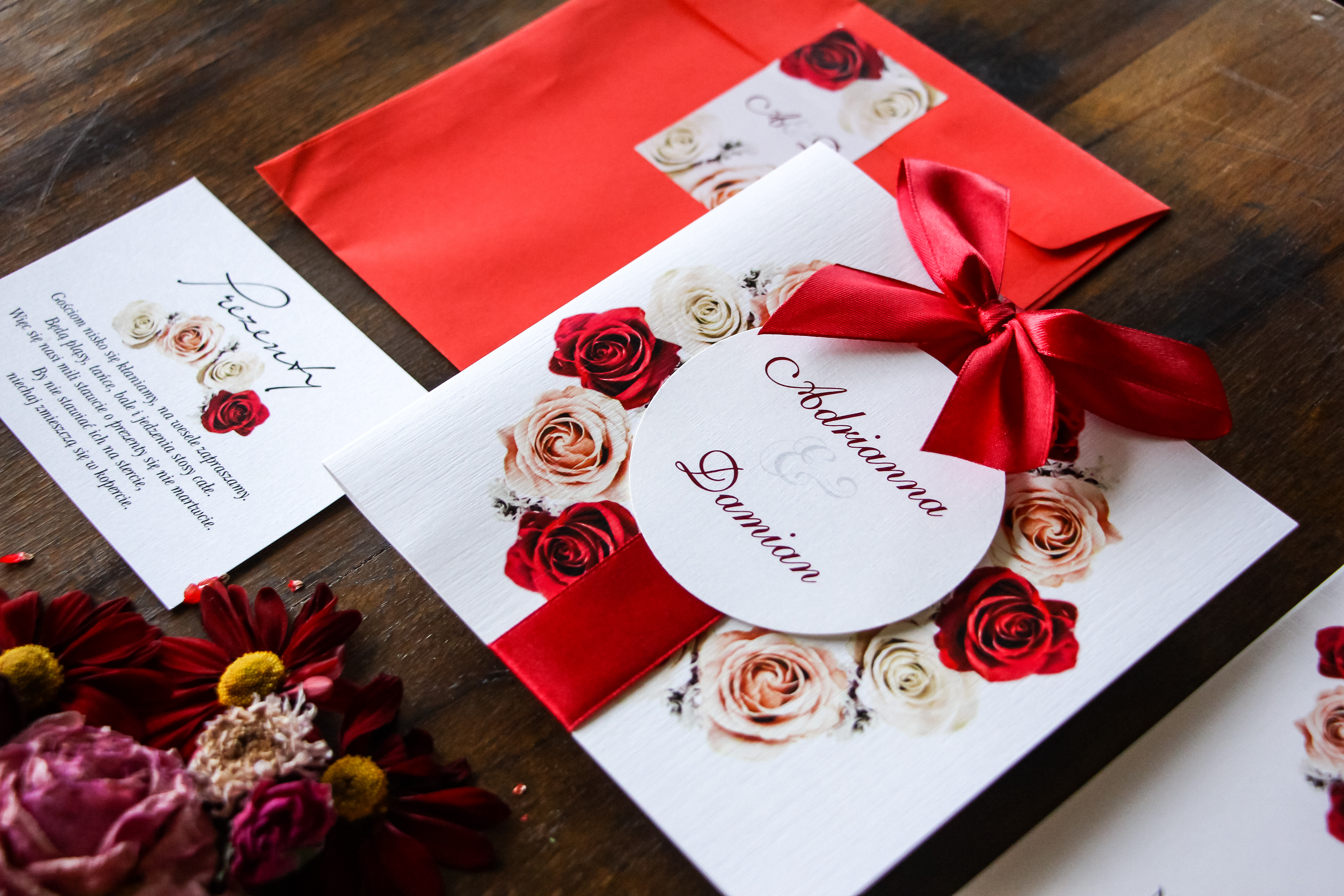
Wedding invitations are a unique form of communication where every detail carries meaning. One of the fundamental yet often overlooked aspects is the correct declension of names. In Polish, declining names is not just a matter of etiquette; it is a sign of respect for your guests. Since names are a key element of invitation personalization, their correct grammatical form is absolutely crucial. A mistake in declension can be perceived as a sign of carelessness or lack of respect, which is highly undesirable for such an important event as a wedding. It is worth paying special attention to ensure that every name on the invitation is declined according to the rules of Polish grammar.
How to Avoid Declension Errors
Avoiding errors in name declension is a task that requires precision and attention to detail. The safest way is to consult directly with the guests or their families. In the digital age, asking for confirmation of the correct name form is not a big challenge and can save you from many awkward situations. Alternatively, there are many online resources that can help you decline even the most complex names. Remember that in wedding invitations, every element has symbolic value, so accuracy and care for every word is an expression of respect for tradition and your guests.
Invitation Personalization and Declension
Personalizing wedding invitations is not just a matter of aesthetics; it is an expression of an individual approach to each guest. Name declension is a key element here, highlighting the hosts' care and attention to detail. In Polish wedding tradition, where the ceremony and reception are often considered very personal events, attention to detail in invitations is perceived as a sign of deep respect and warmth. By correctly declining names, the bride and groom show that every guest is important and unique to them, which further strengthens the atmosphere of closeness and celebration of this special day.
Article Table of Contents
Date and Time Format
Correct Date Format
In the context of wedding invitations, the date is one of the most important elements - it informs guests about the day of this special celebration. Correct date formatting is therefore crucial. In Poland, the most readable and accepted format is the numeric one, where the day and month are separated by a dot, and the year is written in four digits. It is key to avoid common mistakes, such as omitting the zero before single-digit days or improper use of dots with Roman numerals. Equally important is the declension of months, which must comply with Polish language rules. Correct date formatting not only adds professionalism to the invitation but also avoids misunderstandings and planning errors for guests.
Date Formatting Errors
Errors in date formatting on wedding invitations can take various forms, and each negatively affects the reception and clarity of the invitation. For example, a common mistake is writing the date in the format "15/08/2023" or "15-08-2023", while the correct format is "15.08.2023". Another mistake is using the American format, where the month is presented before the day (e.g., "08.15.2023"), which can cause confusion among Polish guests.
If Roman numerals are used, the correct format is "XV.VIII.MMXXIII", not "15.VIII.2023" or "XV.08.2023". Such errors may seem minor, but in reality, they have a significant impact on how guests perceive information about the wedding. Especially in the wedding industry, where every detail matters, taking care of the correct date format is an expression of professionalism and respect for the guests.
Time Formatting Rules
Like the date, the time is an essential element of a wedding invitation, indicating the exact start time of the ceremony. The rules for writing the time are simpler but equally important. In Poland, the 24-hour format is most commonly used, which is clear and understandable for all guests. It is important to remember to write the time correctly, especially for weddings held in the evening. A precise time helps guests plan their day properly, ensuring they arrive on time for this important celebration.
Layout of Content on the Invitation
Planning the Content Layout
Designing a wedding invitation is an art that requires precise planning of the content layout. Every element, from the date and venue to the names of the bride and groom, must be placed with harmony and aesthetics in mind. Balance is key - the content should neither be too condensed nor too scattered. It is important that the space on the invitation is used in a way that makes all essential information easy to read while maintaining the aesthetic charm of the invitation.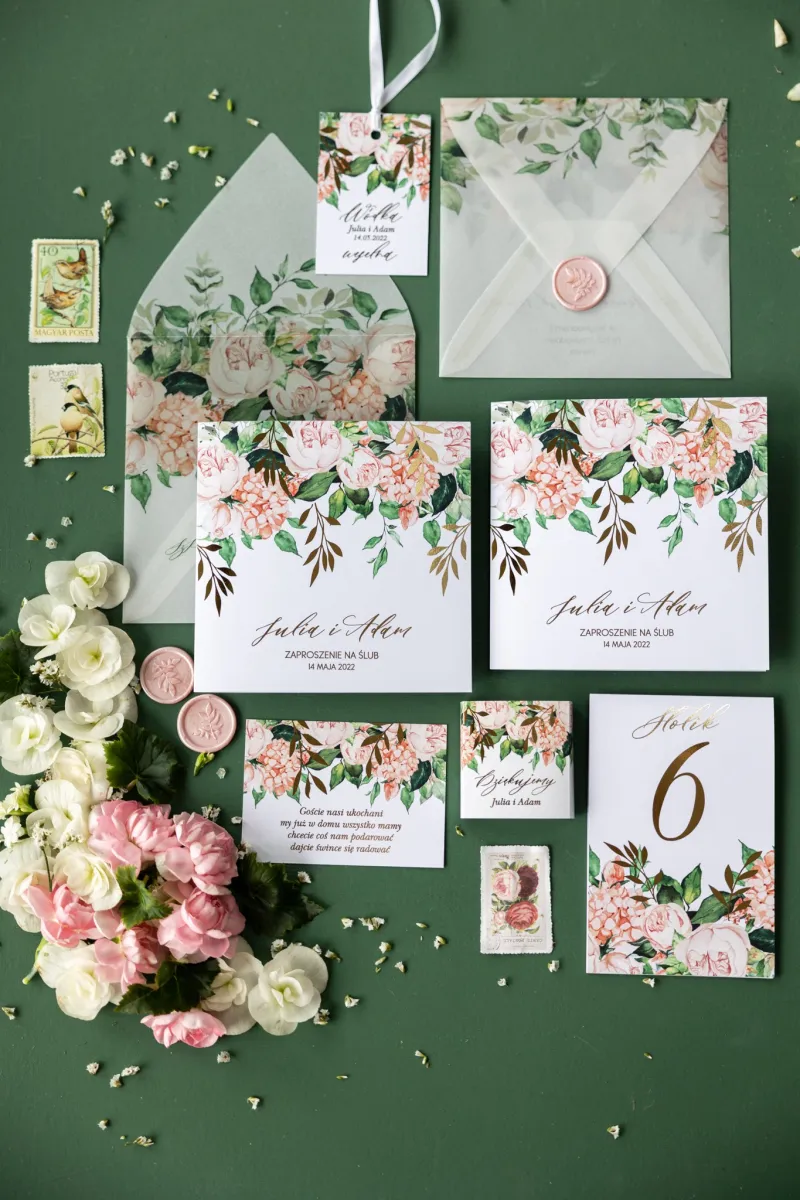
Avoiding Text Overlays on Decorations
In wedding invitations, we often encounter various decorative motifs, such as flowers, ornaments, or graphics. It is important that the text does not cover these decorative elements, which could diminish the aesthetic value of the invitation. Instead, the content should be integrated with the graphic motifs in such a way that the whole is cohesive and eye-catching. Thanks to this, the invitation not only informs but also serves as a beautiful decorative element that will surely be appreciated by the guests.
Importance of Margins and Readability
The last, but no less important element of invitation design is maintaining appropriate margins and text readability. Margins not only affect aesthetics but also ensure that no important information is accidentally covered while holding the invitation. Readability can be improved by choosing the right font and size. Remember that a wedding invitation should be accessible and understandable for every guest, regardless of age or eyesight, which is why paying attention to these aspects is extremely important in creating the perfect wedding invitation.
Choosing the Font
Font Selection Criteria
Choosing the right font for wedding invitations is a decision that has a huge impact on the reception and aesthetics of the entire invitation. Key criteria should be readability, elegance, and consistency with the overall style of the celebration. It is important that the font is easy to read for all guests, both younger and older. The elegance of the font should reflect the character of the wedding, whether it is classic, modern, or rustic. Therefore, it is important that the font is consistent with the theme and style of the event.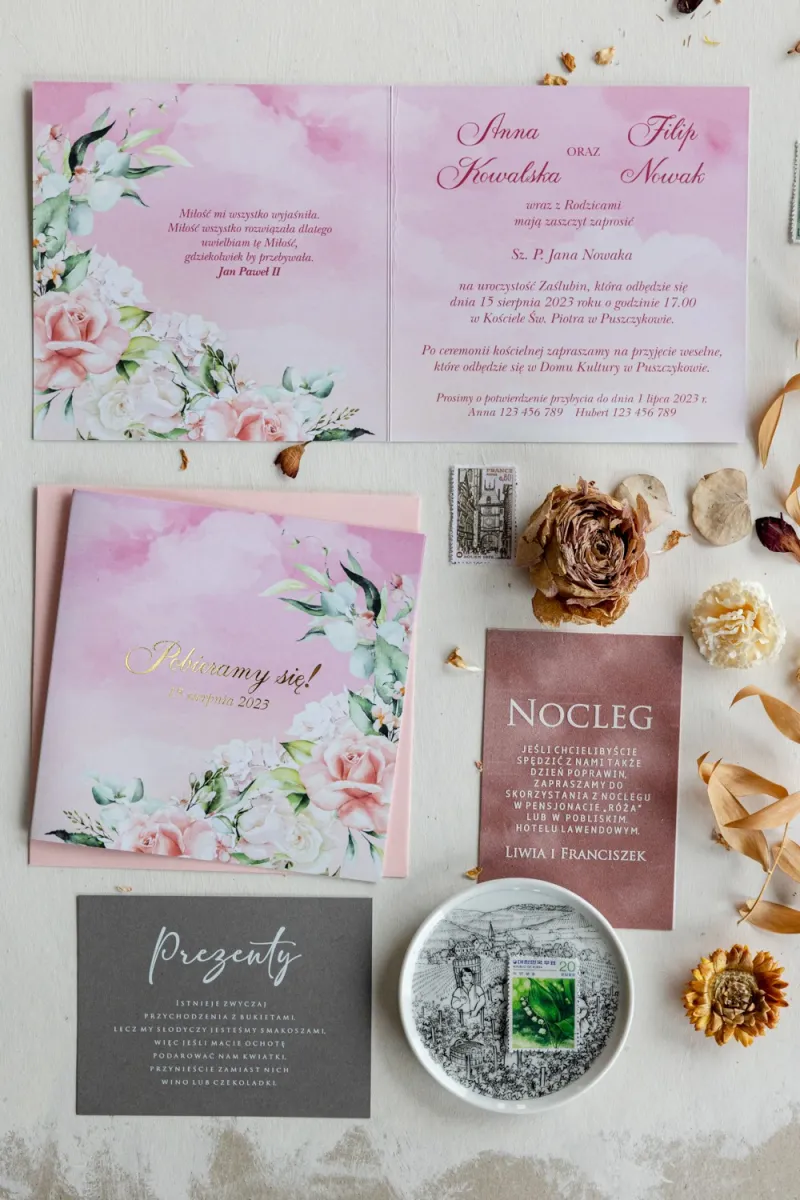
Avoiding Illegible Fonts
Illegible fonts can significantly lower the quality of a wedding invitation. Fonts that are too decorative or too small can make the content difficult to read, which can lead to misunderstandings and organizational problems for guests. It is important to avoid fonts that are too complex, especially for essential information such as the date, venue, or time of the ceremony. It is worth choosing fonts that are elegant but also simple and legible.
The Importance of Font for Invitation Reception
The font in wedding invitations plays not only a practical but also an aesthetic role. A well-chosen font can emphasize the atmosphere and style of the wedding, influencing the guests' first impression. The font is part of the visual message that communicates the character of the celebration, its elegance, and uniqueness to the guests. The right font choice contributes to creating an invitation that will be remembered and cherished by guests as a beautiful keepsake of this special day.
Personalization of Invitations
Handwritten vs. Computerized Personalization
Personalizing wedding invitations can take various forms, and one of the key choices is the decision between handwritten and computerized personalization. Handwritten personalization, although it has its unique charm and personal character, is time-consuming and prone to human error. Modern trends lean towards computerized personalization, which not only saves time but also ensures uniformity and precision in data presentation. Technology also allows for the use of various fonts and styles, which can further enhance the aesthetics of the invitation.
Importance of Accuracy in Personalization
Accuracy in personalization is absolutely crucial. Every first name, last name, or address must be carefully checked and entered correctly. Errors in data can be a source of awkwardness and can cause confusion among guests. This is why computerized personalization is often recommended, as it minimizes the risk of mistakes that are easier to make when entering information by hand. Diligence in checking and entering data is the foundation that guarantees every guest will feel special and appreciated for their presence at the celebration.
Use of Honorifics
The last, but no less important aspect of invitation personalization is the use of honorifics. Titles such as "Dear Mr./Ms." or using formal address forms add a formal character to the invitation and emphasize respect for the guests. This form of communication is particularly important in the context of traditional Polish weddings, where etiquette and tradition play an important role. Honorifics can be easily integrated into the computerized personalization process, ensuring consistency and elegance of the entire invitation.
Quantity of Invitations
How to Calculate the Number of Invitations
Planning the number of wedding invitations is a task that requires thought and organization. A key aspect is understanding to whom and how many invitations to send. For couples, the standard is to give one invitation covering both people. However, for single individuals or young people over 18, it is appropriate to give a separate invitation. This is a matter not only of etiquette but also of practicality and respect for the personal status of each guest.
Invitations for Couples and Single Guests
When approaching invitations for couples and single guests, it is crucial to treat each guest individually. For couples living together, a natural choice is one joint invitation, which emphasizes their shared presence and role in the lives of the bride and groom. However, in situations where people are in a relationship but do not share an address, considering sending two separate invitations is a gesture of acknowledging their individuality. Such a choice not only reflects respect for the personal circumstances of each guest but also emphasizes their unique contribution to the lives of the bride and groom. This ensures that every guest, regardless of their personal status, feels appreciated and important.
Importance of Spare Invitations
Spare invitations play an important role in wedding planning. It is always worth ordering a few extra copies in case you forget someone important or if there is a need to invite additional guests. Spare invitations can also serve as a keepsake or be used in case of any mistakes or damage. Planning for extra invitations is a strategy element that can save a lot of stress and misunderstandings in the later stages of wedding preparations.
Invitations with or without Children
Formulating Information About Children
When creating wedding invitations, it is important to clearly and understandably communicate information about the presence of children. If the bride and groom decide on a wedding and reception without children, they should clearly state this in the invitation. It is important to formulate such information in a delicate and tactful way, avoiding unnecessary misunderstandings. This can be done, for example, by stating that the celebration will be an adults-only event, which allows for maintaining elegance and respect towards all guests.
Notes Regarding Children
Notes regarding children on invitations should be clear and direct, yet always maintain a good tone. It should be remembered that such information can be sensitive for some guests, so it is important that they are formulated in a polite and understandable way. Possible phrasings include, for example, "We are pleased to invite you to our wedding, which will be an adults-only celebration" or "Due to the nature of the evening, we have decided to limit attendance to adult guests."
Understanding the Message by Guests
Ensuring the message is understood by guests is key to avoiding misunderstandings and tensions. Clearly communicating the decision not to include children in the celebration ensures that all guests are aware of the bride and groom's expectations. It is important that the bride and groom are prepared for potential questions or requests for clarification from guests and respond to them with empathy and understanding, emphasizing that this decision was made for specific reasons aimed at ensuring the best possible atmosphere during the celebration.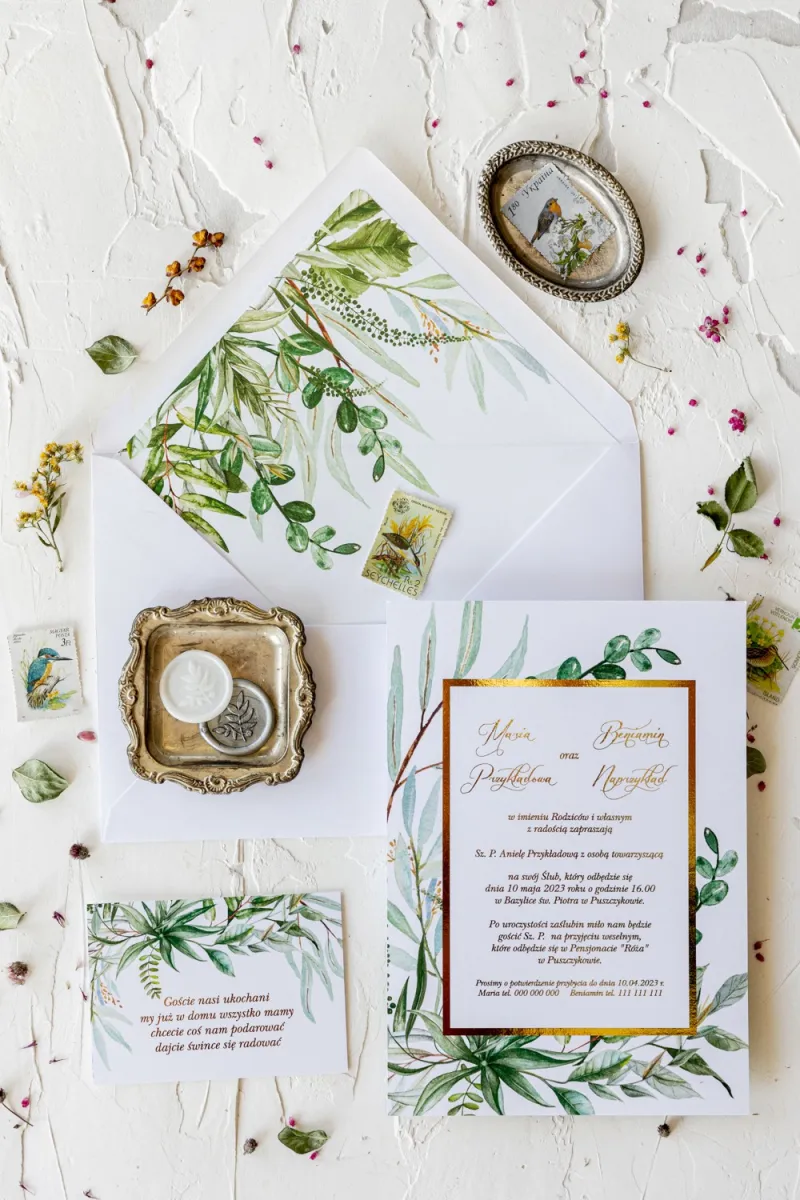
Linguistic Correctness of Invitations
Polish Language Rules in Invitations
Linguistic correctness in wedding invitations is just as important as their visual aspect. Applying the rules of the Polish language not only testifies to culture and elegance but also ensures that the message is clear and understandable for every guest. Key rules include the correct use of verb, noun, and adjective declensions. Attention should also be paid to spelling and punctuation, which are the foundation of a professionally prepared invitation. Special attention should be paid to avoiding common mistakes, such as incorrect use of "ó" instead of "u" or errors in name declension.
Declension of Names and Surnames
Declining names and surnames in invitations is a matter that requires special attention. Every guest's name and surname should be declined according to the rules of Polish grammar. This is a form of respect towards the invited guests and demonstrates attention to detail. Correct name declension often requires an individual approach, especially in the case of unusual or foreign names. In case of doubt, it is always worth consulting an expert or the person concerned directly to avoid potential errors and misunderstandings.
Use of the Third Person in Text
Traditional wedding invitations are written in the third person plural, which gives them an official and solemn character. Using this form emphasizes the ceremonial tone of the entire event and is in line with classic etiquette. For example, instead of "we invite" (first person), one should use "invite" (third person). This style of writing is elegant and timeless, making it an ideal choice for couples wishing to give their invitations a traditional and dignified character. It is worth remembering that such language requires precise selection of words and grammatical forms so that the entire message is cohesive and aesthetically refined.
Planning and Lead Time for Invitations
Importance of Proper Planning
Proper planning of wedding invitations is an essential element in the process of preparing for a wedding. The key here is starting the process early enough, which ensures enough time for designing, printing, and then sending out the invitations. It is important that the bride and groom take into account all aspects related to invitations - from choosing the design and text to the method of distribution. Early planning allows for avoiding haste and stress, and also provides the opportunity to make any necessary corrections.
Avoiding Late Execution
Dealing with wedding invitations too late can lead to a series of problems, including delays in their distribution. Delays in sending invitations can, in turn, result in problems with guest RSVPs, which affects other aspects of wedding planning, such as catering or seating arrangements. To avoid this, it is recommended to start working on invitations at least a few months before the planned wedding date, which gives enough time for their preparation and distribution.
Speed of Feedback
One of the key aspects of the invitation realization process is the speed of receiving feedback from invited guests. Couples often want to receive quick responses, which helps in further planning the celebration. In this context, it is worth considering adding RSVP cards to the invitations, which make it easier for guests to quickly confirm their attendance. Couples can also use various online tools to track responses, which is especially useful for large weddings.
Inviting Plus-Ones
Formulating Invitations for Couples
When formulating invitations for couples, it is important to consider the relationship status of each invited person. For couples in marriages or partnerships, one invitation addressed to both people is sufficient. In the case of couples not in a formal relationship, it is worth considering personal preferences and interpersonal relationships. In such situations, two separate invitation cards may be more appropriate and show an individual approach to each invited person.
The "Plus One" Phrase
In the case of inviting guests who are not in a steady relationship, the formula "and guest" (or "plus one") is often used. This is an elegant and universal way to invite guests without having to specify a particular companion. Such a formula is particularly useful when the bride and groom do not know all their guests' partners or want to give them the freedom to choose the person who will accompany them.
Communication with Guests
Effective communication with guests plays a key role in the process of inviting plus-ones. It is worth ensuring clear and transparent messages to avoid misunderstandings and uncertainty. In case of doubt, the bride and groom can directly ask guests about their preferences regarding a companion. Such direct communication allows for a better understanding of guest needs and builds an atmosphere of openness and trust.
If you are interested in further tips and advice on organizing a wedding and reception, we encourage you to read more on our blog. Here are a few selected articles that may interest you:
- Is it appropriate to invite only to the wedding ceremony?
- Must an invitation include formal titles?
- Creative ideas for a wedding photo session
- How to involve children in the wedding ceremony
- How to organize a themed wedding: from boho to retro
- Is it appropriate to ask for money for the wedding?
- What to say when handing out wedding invitations
- How to make place cards
Article updated on 11.11.2023