Dream Honeymoon – How to Plan a Unique Honeymoon or Mini-moon?
Behind you are months of intense wedding preparations – planning the wedding budget, finalizing organizational details, and caring for every aspect of the reception. You have sent out beautiful wedding invitations to family and friends, prepared elegant place cards for the tables, and taken care of atmospheric wedding decorations. During the reception, you also gave out symbolic gifts as wedding favors. Once you have finally said your sacramental "I do" and danced until dawn, the next exciting stage begins – the honeymoon. It is your first trip as a married couple, a truly romantic getaway for two, serving as the culmination of all your wedding emotions.
The honeymoon is a special time when you can enjoy each other's company away from the daily grind. Finally, you have the chance to rest after the hardships of wedding planning and share an unforgettable adventure together. Do you dream of a paradise beach under palm trees? Or perhaps you are tempted by mountain landscapes and an adrenaline-filled expedition into the unknown? For some, a week of laziness in a luxury all-inclusive resort will be perfect, while others prefer an active road trip full of sightseeing. A dream honeymoon can take many forms – the important thing is that it is tailored to your personal desires and preferences.
In this article, you will find travel inspiration for 2025 – from exotic beaches to charming European city breaks – as well as tips on how to plan both a grand honeymoon and a shorter mini-moon. We will advise you on when to start preparations and how to hunt for honeymoon discounts, what to remember before you leave (documents, insurance, vaccinations, packing), and how to take care of logistics, budget, and local attractions. With these tips, your honeymoon will be truly special, full of romantic moments and memories for a lifetime.
Travel inspiration for 2025
Exotic beaches – paradise places for a honeymoon
White, soft sands, the sound of the azure ocean, and palm trees leaning over the water – exotic trips to paradise corners of the world have been topping honeymoon rankings for years. It is no wonder – after months of stress, many newlyweds dream of blissful relaxation on a tropical beach. Such scenery is offered by, among others, the Maldives, small islands in the Indian Ocean with luxury resorts and overwater bungalows. The Maldives are synonymous with paradise for newlyweds – privacy, romantic dinners on the sand, and amazing sunset views make this place unique for a honeymoon.
Of course, this is just one option. Equally magical moments will be provided by the Seychelles – an archipelago of granite islands famous for huge boulders on the beaches and azure water, or Mauritius, which tempts with a mix of cultures and a beautiful coral reef. Increasingly popular among couples is Zanzibar, a picturesque island off the coast of Tanzania, combining African exoticism with paradise beaches. Asian destinations also have a lot to offer – for example, Bali is not just about beaches, but also unique culture and temples, which will allow you to combine laziness with sightseeing. In turn, the Caribbean (e.g., the Dominican Republic, Jamaica, or Mexico) guarantees wonderful beaches with palm trees and a climate of eternal summer. The choice is huge – from the small atolls of Polynesia (like Bora-Bora) to the islands of the Pacific, everyone will find their dream piece of paradise.
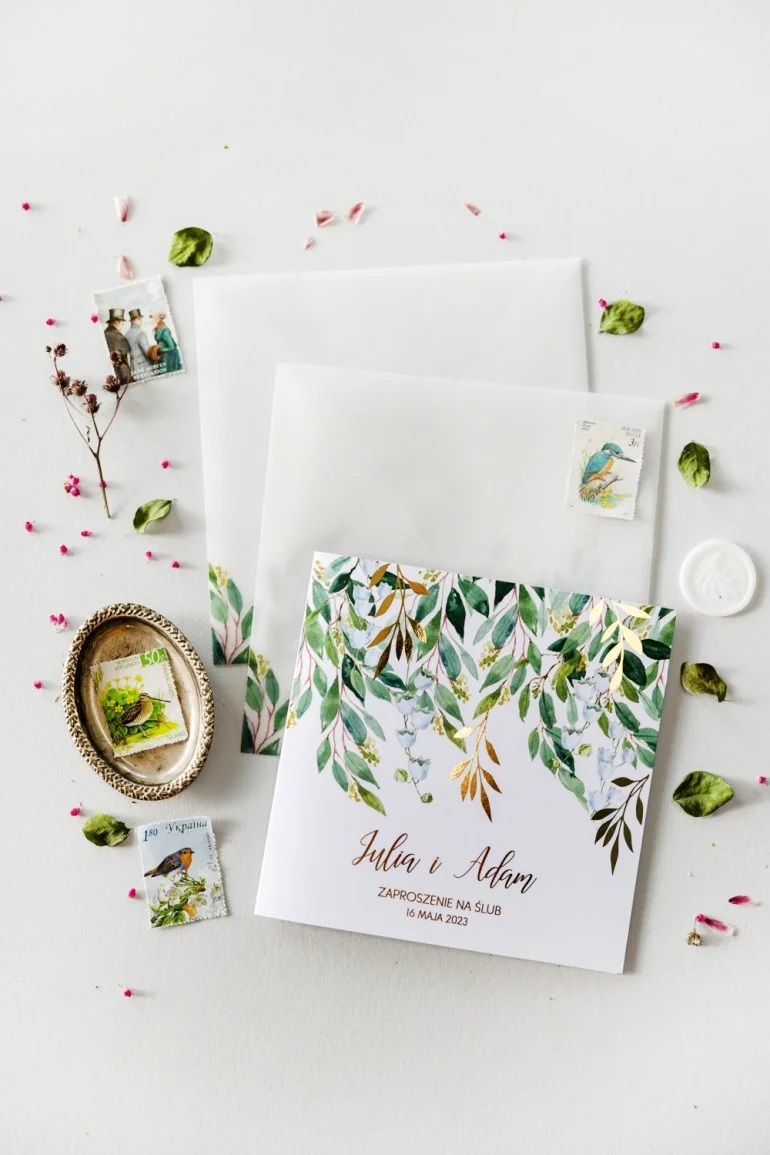
Wedding invitations with green leaves motif, gold accents, classic | Gold wedding invitations | Rubin no. 4
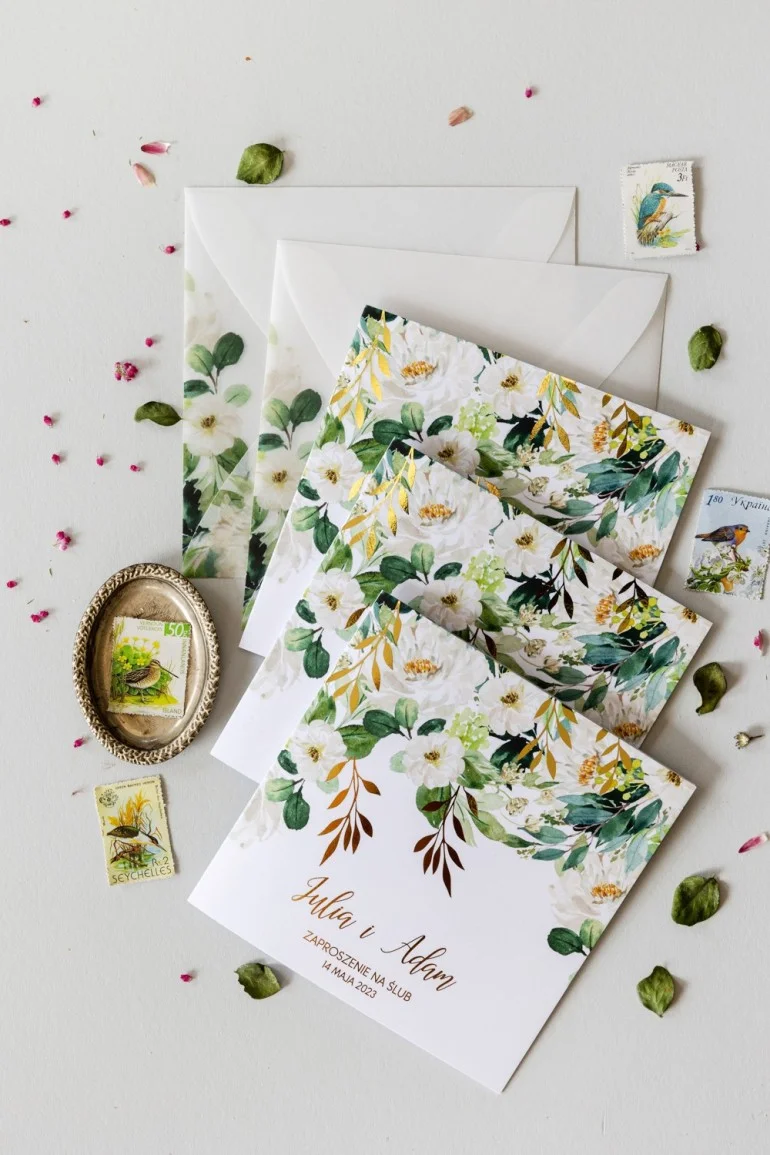
Stylish Wedding Invitations with Gold Accents, Watercolor Flowers | Exclusive Wedding Invitations | Rubin no. 1
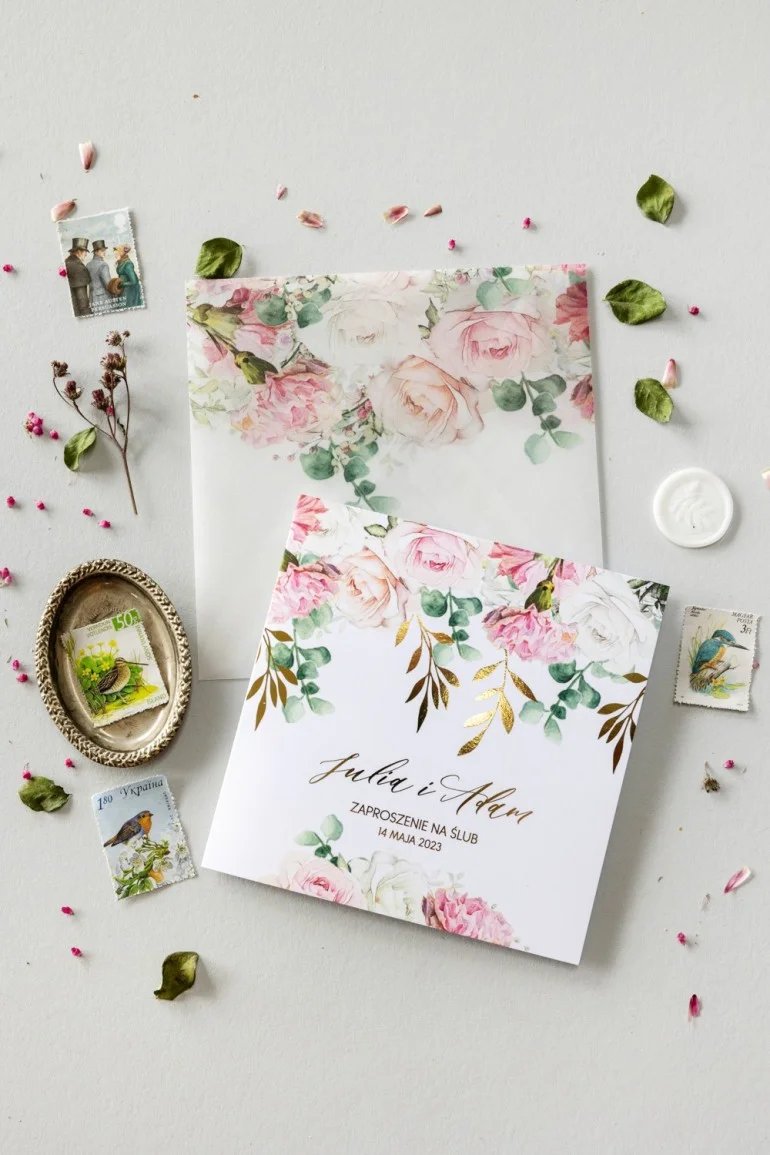
Wedding invitations with pink roses and gold foil, transparent envelope | glamour style wedding invitations | Rubin no. 9
When planning a honeymoon on an exotic beach, remember a few practical issues. Check seasonality – for example, in the Maldives or Seychelles, the rainy season falls during our spring/summer, so a trip in the autumn or winter would be better. In turn, the Caribbean has a hurricane season in late summer. It is good to adjust the date of your honeymoon to the weather in the chosen region, even if it means postponing the trip for a few months after the wedding. It is also worth booking in advance – the best resorts fill up quickly, especially when they offer honeymoon packages with additional attractions (e.g., a romantic dinner on the beach, a massage for two, a bottle of wine upon arrival).
If you have a limited budget or less time, exoticism can be found closer to home, or you can look for less obvious destinations. Perhaps instead of the popular Maldives, you will choose the equally beautiful coasts of Thailand or the Philippines? Or instead of expensive Bora-Bora, you will opt for the Indonesian Gili Islands? An unconventional idea could also be to combine beach relaxation with adventure – for example, a few days on a safari in Africa, and then relaxation in Zanzibar, or sightseeing in Sri Lanka ending with a week in the Maldives. Thanks to this, you will experience two different adventures within one trip. Regardless of the destination, an exotic beach will provide you with a fairytale setting that will be the dream background for your love story.
Campervan travel – adventure on four wheels
Can you imagine setting off on a journey right after the wedding, having your own campervan as a "hotel" and the freedom to stop wherever your soul desires? A honeymoon in a campervan is a proposal for couples looking for adventure and independence. Instead of one resort, you have constantly changing views outside the window – every day you can wake up in a different place. A romantic morning by the shore of a mountain lake, an evening bonfire under a starry sky, or a picnic on a wild beach at sunset – all this is at your fingertips when your home on wheels travels with you.
Europe offers plenty of picturesque routes perfect for a campervan honeymoon. You can, for example, drive along the Adriatic coast – starting from charming towns in Italy, through sunny Croatia, to the wild beaches of Montenegro. Another idea is an expedition through the fairytale fjords of Norway and further north beyond the Arctic Circle to admire the northern lights. Road trips across the United States are also popular – the legendary Route 66 or a trip along the California coast will provide cinematic impressions. If you have a longer vacation, maybe you will be tempted by distant New Zealand, known for its fairytale landscapes and great infrastructure for campervans. Such a trip guarantees variety – one day you are visiting bustling cities, the next you are close to nature away from the crowds.
Of course, a campervan trip requires a bit more planning and logistical preparation. You need to plan the route (though leave a little spontaneity – the most beautiful places are sometimes discovered by accident), take care of overnight stays at campsites or wild parking spots (check where this is allowed), and above all, feel confident behind the wheel. It is important that both partners are involved – taking turns driving will allow everyone to enjoy the views and rest.
Before you leave, make sure you have all the necessary documents: a driver's license (international, if you are planning a trip outside the EU), vehicle insurance, and basic tools in case of a breakdown. It is also good to practice operating the campervan – if this is your first time, consider renting one for a trial weekend before a longer trip. This form of honeymoon can be slightly cheaper than a luxury resort, but remember that there are costs for fuel, highway tolls, or campsites. On the other hand, you save on hotels and have full control over your meals – you can cook together in the campervan or eat out in local taverns when you feel like it. A campervan trip is a great test of compatibility for newlyweds – it teaches cooperation, compromise, and enjoying simple things. The reward will be memories of a unique adventure, different from all typical catalog trips.
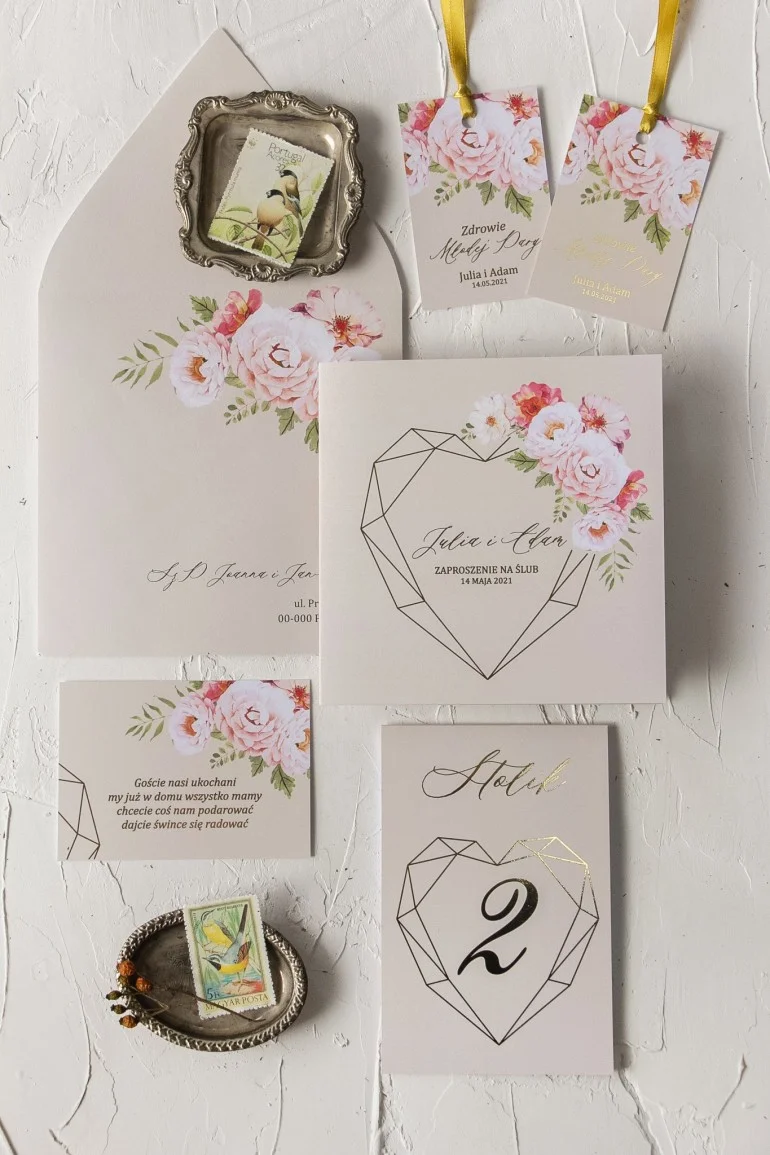
Wedding Invitations with Gold Heart and Floral Motif | Modern and Stylish | Sapphire no. 8
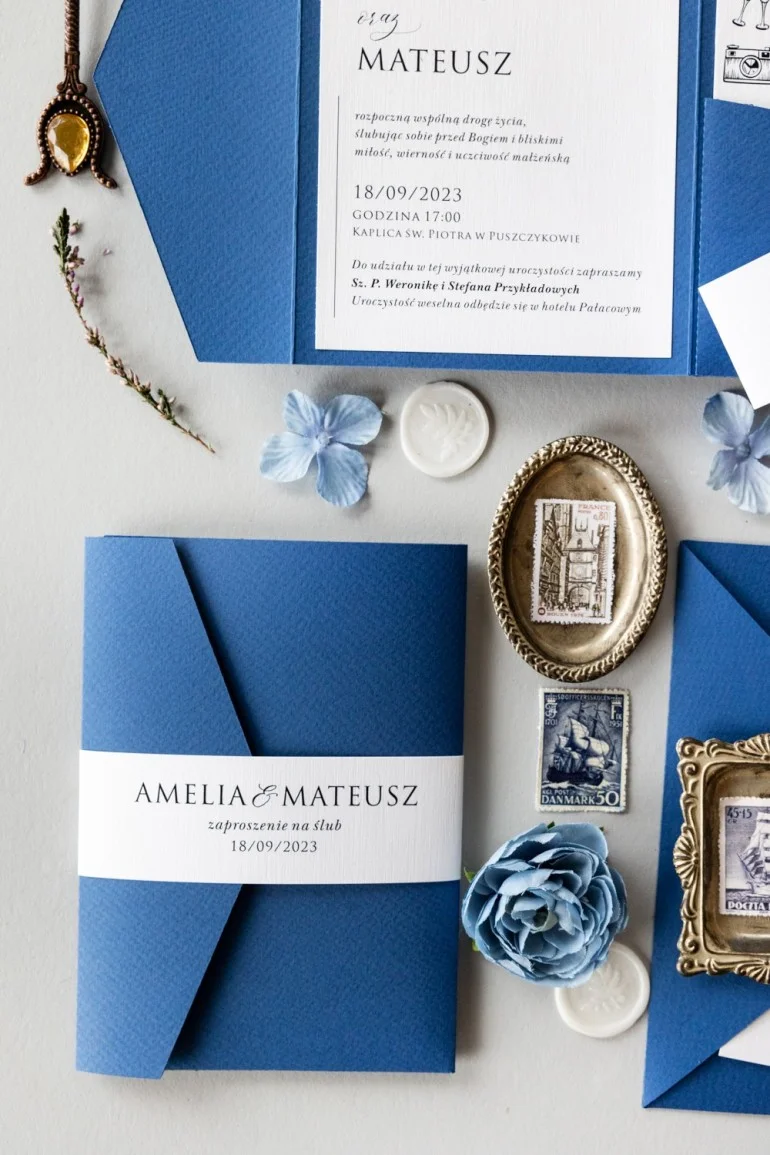
Blue, Elegant Wedding Invitation with Pocket and Personalization | Kraft no. 7
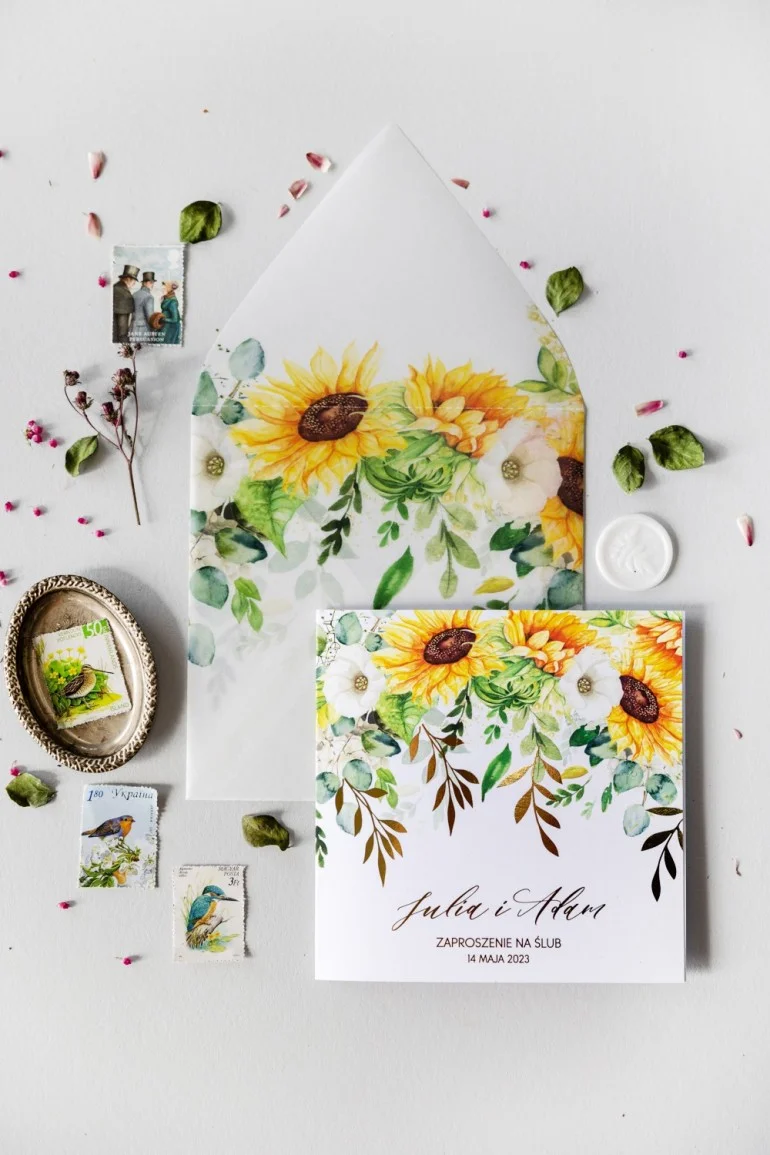
Wedding Invitations with Sunflowers and Gold Foil | Modern and Original | Rubin no. 7
Romantic city-break in Europe – charms of an urban honeymoon
Not every couple dreams of spending weeks on a remote island – for many, the dream honeymoon is discovering the charms of big cities and their culture. A romantic city-break in Europe can be just as magical as a beach stay. Paris, known as the City of Love, tempts with walks along the Seine, the view from the Eiffel Tower, and atmospheric cafes where you can spend hours enjoying coffee and croissants. Venice offers an unforgettable gondola ride through the canals and a candlelight dinner overlooking the Grand Canal. In turn, Rome delights with history at every turn – admiring the sunset from the Pincio terrace or throwing a coin into the Trevi Fountain are moments like from a movie.
European metropolises have a unique romantic atmosphere that fits perfectly with celebrating the first days of marriage. If you prefer a slightly quieter atmosphere, you can opt for smaller, charming towns. Bruges in Belgium will enchant you with its medieval architecture and boat trips through the canals, and Verona in Italy – known for the story of Romeo and Juliet – will allow you to feel the atmosphere of Renaissance love in the streets of the old town. It is also worth considering a city-break in a duo of cities – for example, combining a visit to Prague and Vienna (a few hours' drive apart) to experience two different cultures during one trip. Such a tour of European cities is an opportunity to see a lot in a short time, but remember not to plan too intense a schedule. A honeymoon is not a race against time – it is better to fully enjoy a few places than to hurriedly tick off a dozen.
To make an urban honeymoon successful, a bit of planning in advance will come in handy. Book tickets for top tourist attractions (museums, palaces, observation towers) in advance to avoid standing in queues – it's a waste of time on your honeymoon for such mundane matters. It is also worth thinking about unique experiences: maybe an evening at the Vienna Opera, a jazz concert in a Parisian basement, or a luxury dinner on the roof of a building with a panoramic view of the city? Such attractions will add a unique character to your trip.
However, remember to maintain a balance between sightseeing and rest. Find time for leisurely walks without a plan, a picnic in the park, or lazy mornings at the hotel. This is your time to enjoy each other, not just to tick off more monuments from the list. If you feel unsatisfied with traveling after a few days, you can always treat the city-break as an introduction to a longer trip – for example, a mini-moon right after the wedding, and go on a further expedition later.
The mini-moon trend – a short getaway after the wedding instead of a long trip
Table of contents:
- Travel inspiration for 2025
- The mini-moon trend – a short getaway after the wedding instead of a long trip
- When to start planning your honeymoon and how to look for the best offers?
- How to prepare for your honeymoon – documents, insurance, health, packing
- The most important elements of a successful honeymoon – logistics, budget, attractions
Not every couple can afford a two-week trip to the other side of the world right after the wedding. That is exactly where the mini-moon trend came from, i.e., a shorter trip right after the wedding, with the actual, longer honeymoon postponed for later. Such a mini-honeymoon often lasts only a few days – for example, an extended weekend in some charming place in the country or just across the border. It allows newlyweds to enjoy each other right after the wedding, even if they don't have the time or funds for a long trip. Couples decide on a mini-moon for various reasons: professional duties, a limited budget after wedding expenses, the wrong time of year for a dream destination, or simply the desire to rest now and leave the bigger adventure for the wedding anniversary.
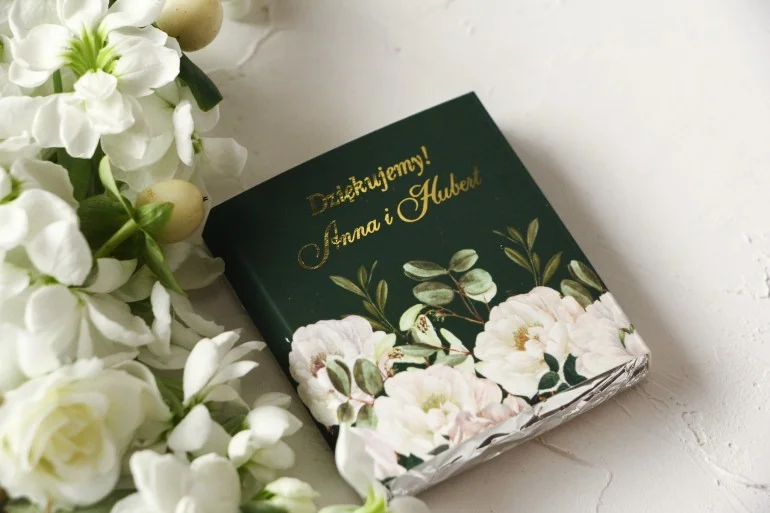
Wedding chocolates with a bouquet of white roses and eucalyptus | Sapphire no. 3

Wedding honey with olive branches | Indigo no. 2
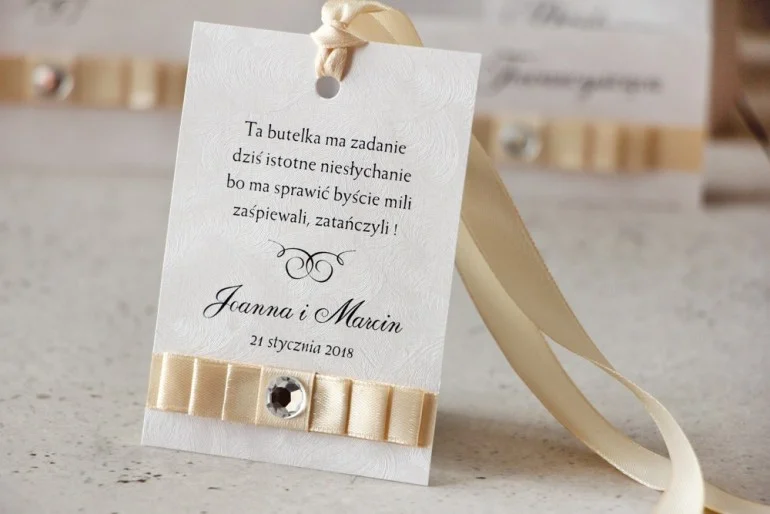
Elegant wedding vodka tags with rhinestones | Amaretto no. 1
Pros of a mini-moon
- Quick relaxation after the wedding: You don't have to wait many months for a trip together – right after the wedding, you can escape for a short vacation and rest after the intense period of preparations.
- Lower starting cost: A short getaway means lower costs than a long exotic trip. This is important, especially when the wedding budget has been heavily strained by organizing the reception. A mini-moon allows you to enjoy a honeymoon with lower financial outlays.
- Better timing adjustment: If your dream honeymoon destination has unfavorable weather right after your wedding, you can go there at another time, and choose something else now. A mini-moon is a bridge that allows you to postpone the big trip to a season with better weather, without giving up on rest right after the wedding.
- Less stress when planning: Organizing a short getaway is simpler and faster – it is easier to reconcile with the hot period of finalizing wedding matters. You can, for example, choose a place you know or rely on a weekend SPA package offer, without long comparisons of flights and hotels.
Cons of a mini-moon
- Unsatisfied travel hunger: A short trip can leave a certain sense of dissatisfaction. After a few days, you return to everyday life and work, while a classic honeymoon is a longer break from reality. You have to be very careful later to actually plan that postponed big honeymoon, because in the whirlwind of duties, it is easy to delay it indefinitely.
- Planning twice: Deciding on a mini-moon means you are actually waiting to organize two trips – first a short one, and then a second, longer one. This is a double logistical effort (though spread out over time) and potentially a higher total cost than if you went on one long trip right away.
- Less spectacular start: If you have always dreamed of a grand trip to distant lands right after the wedding, then a few days in a nearby retreat may seem less exciting. For some couples, it is important to feel that right after the wedding they are setting off on the "trip of a lifetime" – a mini-moon may not provide such a wow effect, although it will still be a nice memory.
- Short time for regeneration: After a wedding marathon, a longer rest is often needed. A mini-moon only gives a foretaste of relaxation – upon return, you have to quickly return to duties, which can be difficult if you still feel tired from the preparations and the wedding day itself.
How to organize a successful mini-moon?
To fully utilize the charm of a short honeymoon, it is worth planning it well. First of all, choose a place that is not too far away, so as not to waste many hours traveling – a picturesque corner in your region or a European capital reachable in a 2-3 hour flight will work perfectly. Focus on quality, not quantity: it is better to choose one great hotel or guesthouse and plan 3-4 days of maximum relaxation than to try to "tick off" too many attractions at once.
A good idea is to raise the standard of the trip, since it is short – you can splurge and book, for example, a honeymoon suite in a mountain spa or an atmospheric boutique hotel only for adults, which will provide an intimate atmosphere. Make sure that right after the wedding you have peace and time for the trip. Inform your employers in advance that you will take a few days off right after the ceremony – even if you are not going far, a few days of breathing room will come in handy.
Pack in advance before the wedding, because right after the reception you may not have the head for it. If you are planning a trip by car, make sure it is fueled and in good working order, so that on the day after the wedding you can get in and drive without stress. Treat the mini-moon like a celebration of your wedding in peace – enjoy your presence, let go of checking emails and duties. Even a short trip can recharge your batteries if you fully relax and enjoy each other's company. And when you return, you can start making plans with new energy for that bigger honeymoon that is still ahead of you.
When to start planning your honeymoon and how to look for the best offers?
Optimal time to start planning
It is worth starting to plan your honeymoon with appropriate advance notice – ideally when the first emotions after the engagement have subsided and you have set the wedding date. Although organizing a wedding takes up a lot of time, it is good to think in parallel about where you will go on your honeymoon. If you dream of a trip to popular places in peak season (e.g., France in August or tropical islands during the Christmas and New Year period), start planning even a year in advance. This will allow you to hunt for price opportunities and ensure a greater choice of offers.
Do not leave travel planning for the last minute – right before the wedding you will have plenty on your plate anyway, and last-minute offers may not meet your expectations for a dream honeymoon. If the wedding is in the summer season, and you want to set off right after the reception, you will practically have to make all reservations (flights, hotels) a few months before the ceremony. It is worth setting a budget for the honeymoon at the stage of planning wedding expenses – thanks to this, you will reserve the necessary amount for the trip in advance, instead of putting aside what is left after paying for the reception. Think of the honeymoon as an integral part of your wedding plan – just as you book a venue or a photographer in advance, also reserve time and funds for a dream trip for two. You can read more about when to start planning a wedding and its individual elements on our blog.
Wedding Invitations with white flowers and green accents | minimalist invitations with personalization | Impression no. 9
Elegant Wedding Invitations with Tracing Paper | Watercolor and Pearlescent | Opal no. 4
Floral Elegance Wedding Invitations on Glass with White Roses and Greenery Envelope | Korani no. 12
Offers and discounts for newlyweds
When planning a honeymoon, be sure to check if certain places offer special amenities or discounts for newlyweds. Many hotels and resorts have packages for couples on their honeymoon – often under the banner "Honeymoon Package". They may include, for example, a welcome with champagne and fruit in the room, a romantic candlelight dinner, a massage for two in the hotel spa, or a late check-out. Sometimes it is enough to indicate when booking that you are on your honeymoon, and the staff will try to provide pleasant surprises themselves.
Don't be shy about mentioning that it is your honeymoon – both when booking and once you are there. Hotel staff or even airlines often try to make the stay more pleasant for newlyweds with small gestures, even if there is no formal discount. It could be a room upgrade to a higher standard, a free dessert in the restaurant, or even an announcement of congratulations from the pilots during the flight! Travel agencies often propose special offers for young couples, e.g., a discount on an exotic tour package when booking right after the wedding or additional attractions included in the price. Ask your tour operator about this if you are using one.
Some places (especially luxury resorts in the Maldives, Bali, etc.) also offer "stay 7 pay 6 nights" discounts for honeymooners or bonus services. It is worth doing a quick research before making a reservation: type the hotel name plus "honeymoon offer" into Google or simply write an email to the facility asking about possible perks for newlyweds. Often, a marriage certificate or a statement that the trip is within, for example, 3 months of the wedding is enough to take advantage of such offers.
Seasonality and destination choice
The season in which you plan your trip has a huge impact on its course – both in terms of weather, as well as prices and crowds of tourists. Think about what time of year will be best for your dream destination. If, for example, you are getting married in July and dream of the Caribbean, it is worth knowing that this is the middle of the hurricane season in that region (January-February would be better). In turn, when planning a honeymoon in winter after a December wedding, avoid, for example, Thailand during the monsoon season (the peak of which falls around October-November, but some regions may also have rains in winter) – maybe it would be better to choose the Caribbean or the southern hemisphere (e.g., the Maldives, Zanzibar have a dry season).
If you absolutely want to go right after the wedding regardless of seasonality, choose a destination that offers friendly weather at that time of year. Alternatively, consider delaying the trip for a few months to hit better weather – in the meantime, you can have a mini-moon so as not to wait so long for a vacation. Seasonality also affects prices: the peak tourist season means more expensive flights and accommodation, so if your budget is tight, consider a honeymoon in the so-called shoulder season. For example, instead of flying to Bali in August, it is better in September – the weather will still be good, but there will be fewer tourists and prices may drop. Also, avoid holiday periods and so-called golden holiday weeks if you don't care about a specific date – e.g., the May long weekend or the Christmas period is a time when everything is crowded and expensive.
Best moments for reservations
In the travel industry, there are concepts of first minute and last minute – both options can bring financial benefits, but they involve a different approach. First minute, i.e., early booking (often 6-12 months before the trip), is sometimes rewarded by travel agencies or airlines with lower ticket prices or additional services. If you are planning your honeymoon well in advance, hunt for first-minute promotions – many exotic trips or cruises have attractive prices for those who book with more than six months' notice.
In turn, last-minute offers can tempt with a low price shortly before departure, but this does not always work for a honeymoon. First, your departure date is strictly determined by the wedding date, so you do not have full flexibility. Second, your dream destination may not appear in the last-minute offer – it's a lottery. Of course, if you cannot decide until the end and have nerves of steel, you can try to hunt for something at the last minute, but rather in the case where you do not have a specified dream destination (e.g., you know you want it warm and by the sea, but whether it will be Greece or Spain – the price opportunity will decide).
For most couples, a better approach will be to plan and book key elements of the trip in advance. The best time to buy airline tickets varies depending on the destination – it is often said that about 2-3 months before departure for European flights and 4-6 months before for intercontinental flights is the optimal price window. It is worth tracking flight prices earlier, setting price alerts on services like Skyscanner or Google Flights, and taking advantage of the opportunity when a promotion hits. In turn, it is best to book hotels as soon as you know the dates – by choosing the option with free cancellation, you have the possibility to change plans or find a better offer. Also, don't forget about loyalty programs and credit card points – maybe during the wedding preparation time you managed to collect airline miles or hotel points that you will now use for a class upgrade on the plane or a free night at a hotel. Every saving or bonus is doubly pleasing when it comes to a honeymoon!
How to prepare for your honeymoon – documents, insurance, health, packing
Checking documents – formalities before departure
Checking documents is the basis that is worth taking care of long before the wedding day. Make sure you both have valid passports (if you are going outside the EU) or ID cards (for trips around Europe). A passport in many countries must be valid for a minimum of 6 months from the date of return – verify the requirements for your destination so that you do not encounter an unpleasant surprise.
The bride should consider the issue of the surname: if you are planning a trip right after the wedding and changing your surname, it is better to travel on a passport with your maiden name and book tickets and hotels under those details. You can take care of changing documents after returning from your honeymoon, thanks to which you will avoid discrepancies between documents and reservations. Also, find out if you will need a visa for the country you are going to. In some cases, you can get it online (e.g., ESTA to the USA, e-visa to Turkey or Australia), but sometimes you have to submit an application at the embassy – and that takes time. Visa information is best checked on the official website of the consulate of the given country.
If you have a flight with layovers, make sure the transit country does not require a transit visa. It is also worth making copies of all important documents (passports, booking confirmations, insurance policies) and having them with you or in the internet cloud. In case of loss or theft, copies will facilitate the handling of formalities. When planning to rent a car on site (e.g., a campervan or a car for rides), check the requirements regarding a driver's license. Outside the EU, an international driver's license is often needed, which should be obtained at the district office before the trip.
It is also good to write down the address and contact to the Polish embassy or consulate in the destination country – this is useful in case of emergency situations. More and more couples are also registering their trip in the Ministry of Foreign Affairs' "Odyseusz" service, so that in case of crisis situations (e.g., a natural disaster), the Polish state knows about their stay abroad. It doesn't cost much effort, and it can increase the sense of security. In short – approach formal issues seriously, so that later on the beach or mountain trail you don't think about bureaucracy.
Travel insurance – better safe than sorry
Although the honeymoon is a time of carelessness, it is worth protecting yourself just in case by purchasing good travel insurance. A travel policy is a relatively small expense, and it can save you huge stress and costs. Standardly, it should cover medical expenses abroad (for a sufficiently high sum, especially if you are going to countries where medical care is very expensive, like the USA), accident insurance (NNW), and luggage insurance.
The option of trip cancellation insurance will also come in handy, especially if you book everything well in advance – in case of a sudden random event (e.g., illness just before departure), you will recover money for unused tickets or accommodation. Check if the policy covers all the activities you are planning. If, for example, you are diving, horse riding, climbing, or practicing extreme sports, make sure there are no liability exclusions in such cases or purchase an additional sports extension. Also, pay attention to private civil liability insurance (OC) – it will come in handy if you accidentally cause damage to someone (even if you damage rented water equipment).
In EU countries, it is worth getting an EHIC card, but remember that it only covers basic public treatment and does not replace full insurance (e.g., it will not cover the costs of medical transport to Poland). When buying a policy, read the terms and conditions carefully and keep the policy number and the insurer's emergency phone number in an easily accessible place during the trip. Let's hope it won't be needed, but better safe than sorry!
Vaccinations and health issues
Health issues before an exotic honeymoon absolutely cannot be overlooked. If you are going to the tropics, Africa, Asia, or South America, consult a travel medicine doctor at least 6-8 weeks before departure. They will advise you on which vaccinations are recommended or required. For example, a trip to some African countries requires a yellow fever vaccination (and having a so-called yellow book as proof). In many exotic destinations, vaccinations against typhoid, Hepatitis A and B, diphtheria/tetanus, polio, or receiving a booster dose against measles are recommended. This is an individual matter depending on the region – the doctor will help arrange a vaccination calendar.
Also, think about malaria prophylaxis if you are going to regions threatened by this disease (Sub-Saharan Africa, part of Asia, the Amazon) – there are tablets that you start taking before the trip. Before the trip, stock up on a basic first-aid kit: painkillers and fever reducers, something for diarrhea and stomach revolutions (unfortunately, "Pharaoh's revenge" can strike even in a 5-star hotel), plasters and small dressings, a preparation for burns and insect bites, a mosquito repellent. If either of you is constantly taking medication, take a supply for the entire trip as well as prescriptions or a certificate from a doctor (especially when you are transporting medicines containing strong-acting substances).
Think about your comfort – e.g., take probiotics to support the digestive system when changing the bacterial flora, and electrolytes, which will come in handy for dehydration or after a long flight. In the tropics, drink only bottled water and avoid ice in drinks if you are not sure about the quality of the water. Also, avoid raw food from street stalls unless you have iron stomachs – food poisoning is the last thing you want on your honeymoon. Also, don't forget about sun protection – the tropical sun can be treacherous. Pack a cream with a high UV filter (SPF 30-50), headgear, and sunglasses with a good filter. It is also worth having an antibacterial hand gel and masks with you – the COVID-19 pandemic taught us that hygiene while traveling is very important, and some countries may still require masks in public transport or tests upon entry (check current covid requirements just before the trip). Take care of your health in advance, so that on site you can just enjoy the rest.
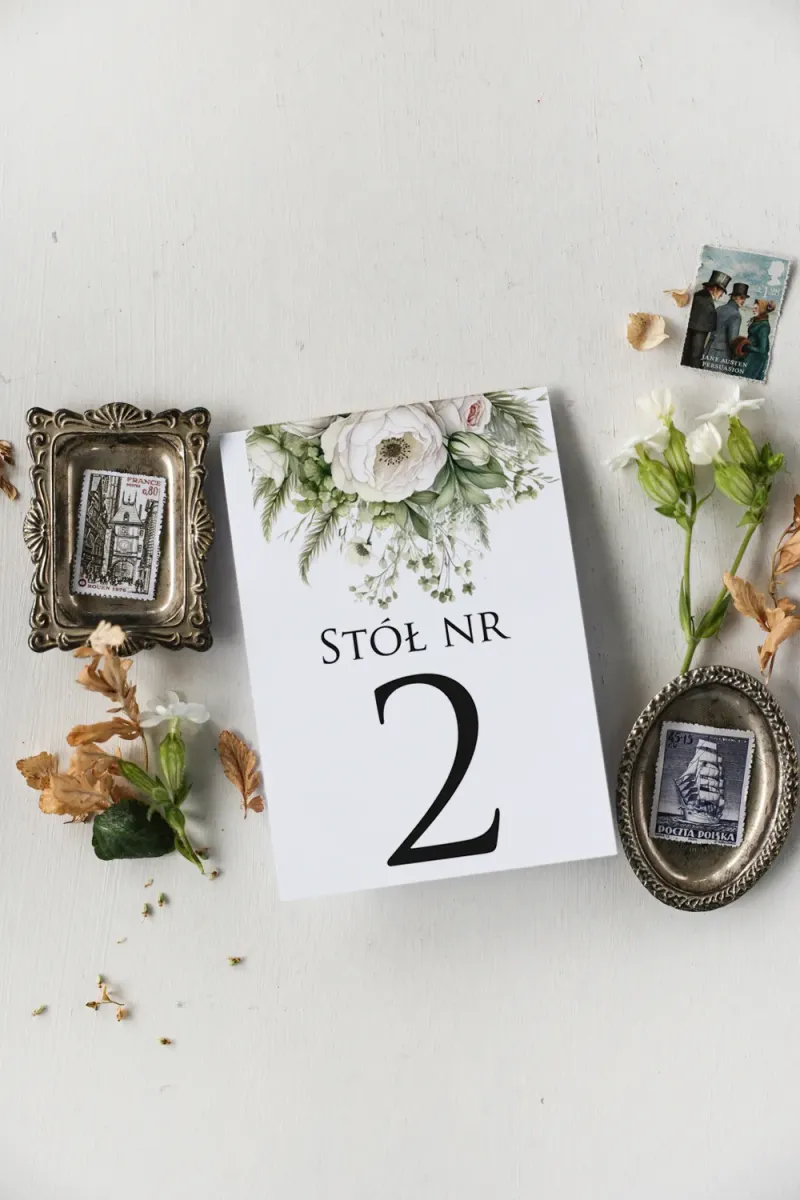
Original table numbers with a bouquet of peonies | Impression no. 3
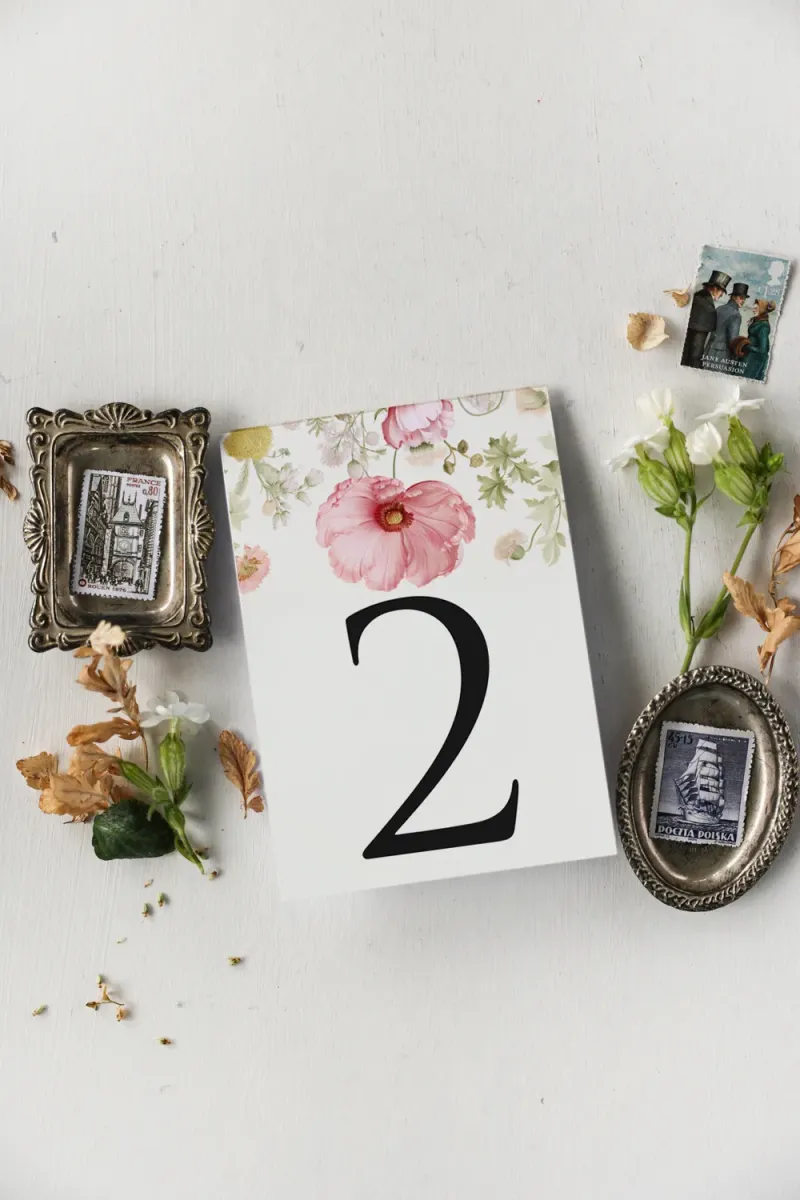
Wedding table numbers in pastel colors | Impression no. 1
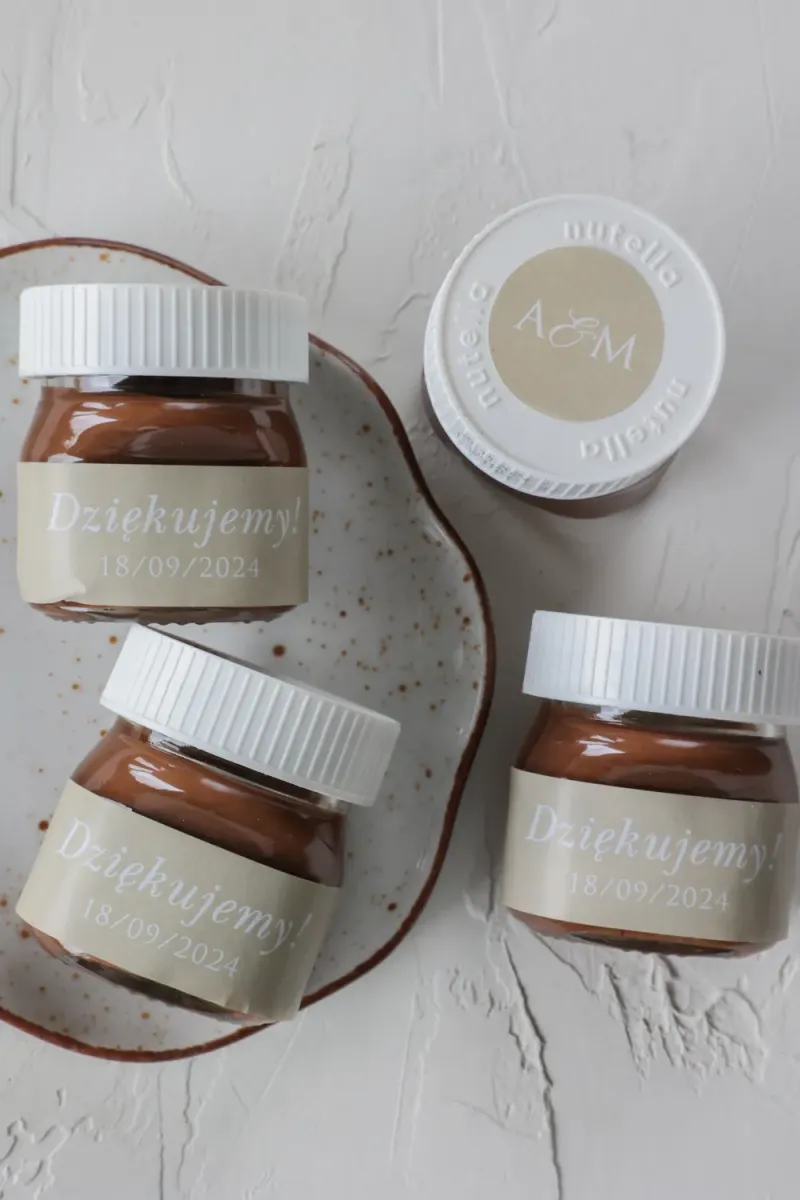
Mini Nutella jars with floral label | Kraft no. 11
Packing for your honeymoon
Packing for your honeymoon can be great fun and a prelude to the adventure awaiting you. The key is good organization – make a list of things to take so you don't forget anything. If you are leaving right after the wedding, try to pack most of your luggage before the ceremony, because after it you may be too tired to think about suitcases.
Start with essential documents and valuables: passports/IDs, tickets, booking vouchers, payment cards, some cash (in local currency or dollars/euro to exchange). If as a gift for newlyweds you received cash from guests intended for the trip or useful travel gadgets, remember to take them with you and distribute them appropriately – e.g., buy local currency while still in Poland or pack the new camera you received as a gift.
Adjust clothes and accessories to the climate of the place and planned activities. For an exotic beach, swimsuits, airy clothes, sandals will come in handy, but also one more elegant outfit for a romantic candlelight dinner. In the case of a road trip, pack comfortable walking shoes, a raincoat, and layers of clothing (onions) for changing weather conditions.
Remember the little things that often slip your mind: an adapter for sockets (different continents – different plugs), chargers for all devices, a powerbank, a camera or camcorder (to capture the most beautiful moments), possibly a Kindle or a favorite book for long flights and lazy mornings. It is worth taking a small backpack or bag for day trips, as well as an extra bag for souvenirs that you will probably want to bring back.
When packing cosmetics, think about miniature capacities so you don't lug around huge bottles of shampoo or lotion. Take proven products that you use – this is not the time for experiments that could cause allergies. Of course, pack hygiene products, as well as basic cosmetics like sunscreens, an insect repellent, or lip balm (it will come in handy in dry air on the plane and in the sun).
A good idea is to divide things between the luggage of both partners – so that in case of losing one suitcase, each of you has some clothes and basic items. Pack the most important things (documents, medicines, electronics, change of clothes) in your carry-on luggage. Thanks to this, even if the main luggage is delayed, you will be prepared for the first days. Finally, don't overdo the amount of things – a honeymoon is not a fashion show, and often we walk in our favorite, most comfortable clothes anyway. Leave some slack in the suitcase for souvenirs and new acquisitions. The most important thing is to take a good mood, an open mind, and each other – everything else is secondary.
The most important elements of a successful honeymoon – logistics, budget, attractions
Efficient logistics and organization
Even the most beautiful place in the world will not guarantee you an ideal honeymoon if the logistics fail. That is why it is worth spending time refining the travel plan from an organizational side. Start by laying out an itinerary (travel plan): determine how many days you will spend in individual places, when the transfers or flights between them are. Avoid an overly tight schedule – leave a time margin for possible flight delays, an extra day for acclimatization after arrival, or simply lazy rest without sightseeing.
If possible, do not plan your departure on the day directly after the wedding. It is better to give yourself at least a dozen hours of breathing room – pack the last things in peace, get some sleep, and recover from the emotions of the party. Thanks to this, you will set off on your journey rested, not exhausted. It is worth taking care of practical aspects earlier: order transport to the airport (maybe someone from the family will drive you, or maybe you will rent a shuttle or parking at the airport for your own car), check the baggage requirements of airlines, print or save all booking codes and boarding passes on your phone.
It is good to have all documents and confirmations in one place – e.g., in a folder or in a dedicated travel app on your smartphone. If you use apps, make sure you have offline access to tickets in case of no internet. Also, make a plan B in case of unforeseen events: what will you do if, for example, you lose your payment card or it turns out that the train to the airport is delayed. This is not paranoia, but foresight – it is better to have an alternative than to look for solutions on the spot in a panic.
Division of duties is another element of successful logistics. You can agree in advance who is responsible for what: one person takes care of keeping documents and passports, the other checks if the suitcases have arrived and organizes transport on site. In this way, you complement each other and reduce the risk that something will slip through the cracks. If you are flying on a long trip with layovers, consider whether it is better to pay for a longer layover (e.g., 3-4 hours instead of 1 hour) – after the wedding, you will be tired and rushing at the airport is the last thing you need. For longer trips, it is also worth taking care of comfort: maybe you can afford seats with more legroom on the plane, access to an airport lounge, or a transfer from the airport by private car for collected miles or for an extra charge? Such amenities can significantly make traveling for two more pleasant.
Honeymoon budget
Financial issues are an aspect that needs to be talked about honestly and openly. Set a common budget for the honeymoon, taking into account your possibilities and priorities. Some couples treat the honeymoon as a one-time unique experience and are willing to spend more on it (especially if, for example, for the wedding they received a significant sum of money from guests). Others prefer to stick to more reasonable frameworks so as not to return from the trip with debts. Neither approach is wrong – it is important that both partners are satisfied and that travel expenses do not become a bone of contention. You will find more about how to effectively plan expenses in the article about planning a wedding budget.
If your wedding budget was tight and after paying all wedding costs there was little left, consider cheaper solutions: a honeymoon outside the peak season, closer to home, or shorter, and a further trip at a later date when you save up additional funds. When planning expenses, make an approximate cost estimate: flights, accommodation, food, local transport, entrance tickets, souvenirs, insurance – write down all potential costs. Add a margin for unforeseen expenses (about 10-15%). Such a plan will allow you to get an idea of how much money you need and what you can possibly save on, and what you want to spend more on (e.g., maybe you care about a luxury hotel, but food can be cheaper because you like street food).
Many young couples today ask guests instead of flowers for envelopes with a contribution for the honeymoon – if you have also done so, you probably have a fund that you can spend with a clear conscience on pleasures during the trip. Maybe it is worth using this money to treat yourself to some unique attraction on site – something that the budget would not normally handle, e.g., a balloon flight over the desert or a dinner in an exclusive restaurant? These are, after all, gifts from loved ones that you can turn into unforgettable experiences.
Realizing the budget during the trip is another matter. We recommend agreeing on a few issues before departure: whether you have a common "pool" and pay from a joint account/card, or split expenses in half (e.g., each takes on specific costs). Many people today decide to use multi-currency cards or apps like Revolut to avoid conversion fees – this is a good idea for foreign trips. Take at least two different payment cards (in case one is blocked) and some cash – preferably in local currency or dollars/euro – in case you cannot pay by card everywhere.
It is also worth monitoring expenses on an ongoing basis: set an approximate daily limit or use apps to control costs during the trip. Thanks to this, you will avoid an unpleasant surprise upon return when it comes time to summarize expenses. If you are planning exceptionally expensive pleasures (e.g., a balloon flight or a luxury spa), include this in the calculation earlier or treat it as an additional gift for yourself for the wedding. The most important thing is to make financial arrangements together – this will allow you to enjoy the trip without unnecessary stress about money.
Planning attractions and joint activities
The honeymoon is not just a place and a hotel, but above all time spent together. It is worth thinking about what attractions and activities will bring you both the most joy. This is your trip, so adjust the daily plan to your own preferences – if you both love adrenaline, plan a joint dive on a coral reef, a paragliding flight, or mountain climbing. If one of you prefers to laze on the beach and the other to visit monuments, find a compromise: alternate days full of impressions with days of blissful relaxation.
The key is balance – don't try to force every day with attractions, because you may return more tired than before the trip. Leave space for spontaneity: sometimes the most beautiful memories are born when you deviate from the beaten path and discover a small tavern with local food or a charming, unplanned corner. Joint activities on the honeymoon can also be an opportunity to try something new as a married couple. Maybe you have never ridden a horse along the seashore or participated in a cooking class for local dishes? A honeymoon is a great moment to enrich your joint experiences.
When planning attractions, include small surprises for your other half: e.g., organize a romantic picnic at sunset in secret or book a private boat trip just for two. Such gestures make the trip even more special. Also, remember that you don't have to stick to the plan rigidly – if on a given day you feel like doing nothing by the pool or, on the contrary, a spontaneous trip out of town, allow yourself to do so. After all, it is your time together and it is meant to be a source of joy, not ticking off points from a list.
Regardless of how you spend your honeymoon – whether it will be lying under palm trees, exploring mountain trails, or visiting bustling cities – the most important thing is that you are doing it together. Create memories, catch every moment of happiness, and celebrate the fact that you have a beloved person by your side. A well-planned honeymoon, full of attractions tailored to your dreams, will certainly become one of the most beautiful chapters of your story. Upon return, you will long remember these extraordinary days, and your bond will become stronger thanks to the adventures experienced together.
Recommended articles:
- Wedding budget planning: Tips on how to effectively plan expenses
- Guest list and seating wedding guests – how to create the perfect table plan?
- How to choose wedding invitations? 10 key steps
- Wedding favors - ideas, trends, and inspiration for unforgettable thank-yous
- Honeymoons in Poland - the most beautiful places for a honeymoon in the country
- The last week before the wedding - a checklist of final preparations
- What texts to put on wedding invitations?
Szymon Jędrzejczak
Wedding industry expert and stationery designer at Amelia-Wedding.pl. For years, she has been helping couples create unforgettable moments by combining tradition with modern design.