How to Address Wedding Invitation Envelopes
Introduction:
The significance of wedding invitations in tradition
In a world full of digital messages and instant communication, the traditional wedding invitation still plays a key role in Polish culture. It is not just a formal notification of an upcoming event, but also a symbol of tradition that connects generations. In Poland, where wedding traditions are deeply rooted in the culture, a wedding invitation is not only an announcement of the ceremony but also a reflection of the family's history, values, and heritage. Modern couples, while often using modern technology, still eagerly reach for traditional forms of invitations that serve as a bridge between the past and the present. In this context, the invitation becomes not only a practical communication tool but also an element that emphasizes the importance and uniqueness of the upcoming wedding.
Why is correctly addressing the envelope important?
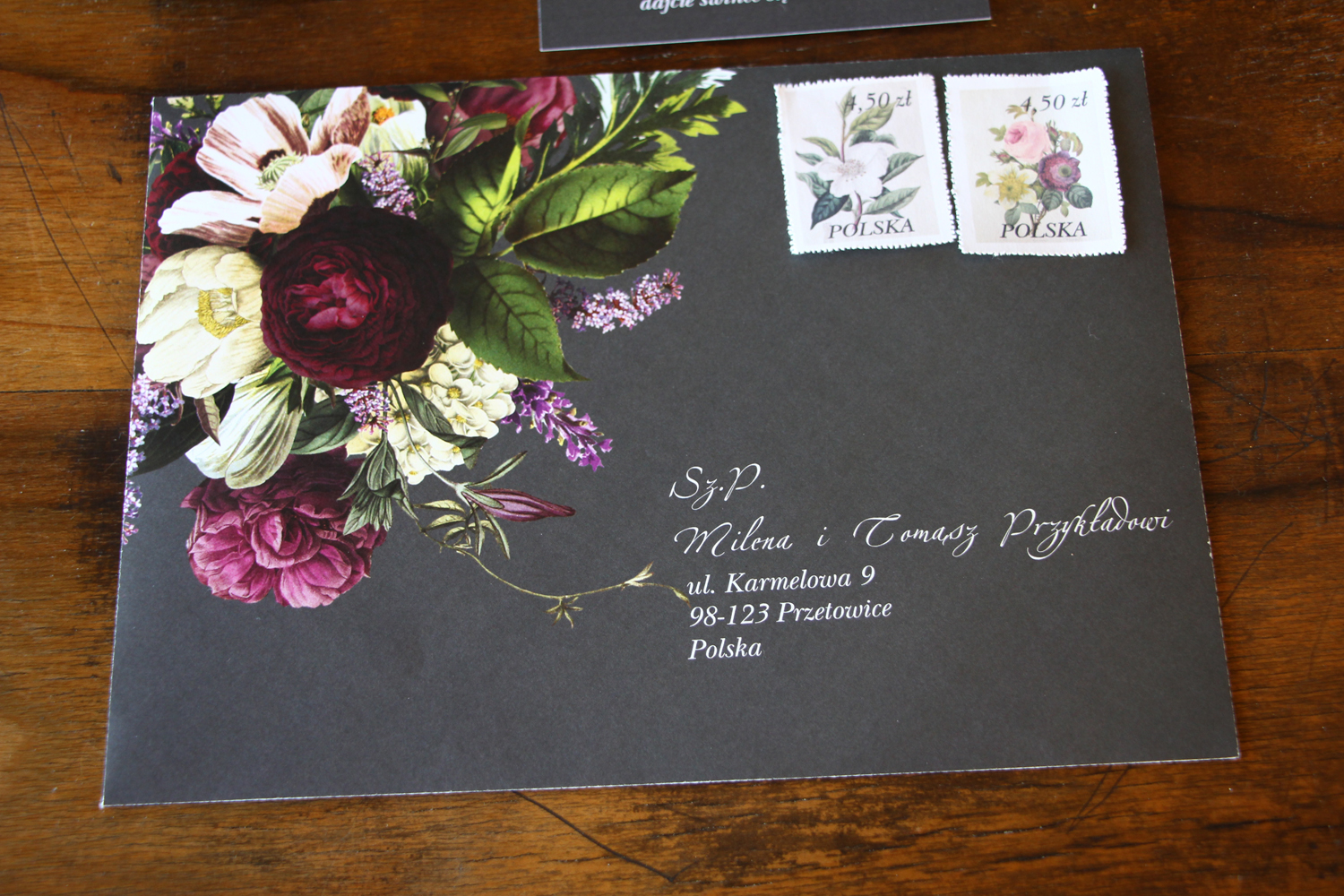
Correctly addressing a wedding invitation envelope is not just a matter of etiquette, but also a sign of respect for the invited guests. In Poland, where attention to detail and traditional forms of courtesy are valued, the way an envelope is addressed can say a lot about the couple and their attitude toward their guests. A wedding invitation is, after all, the guest's first contact with the upcoming event, which is why it is so important to show at this stage that they are important to us. Correctly addressing the envelope is not just a matter of correctness, but also a concern for the aesthetics and harmony of the entire invitation. In the world of weddings, where every detail matters, such a gesture can make a great impression on guests and emphasize the unique character of the celebration.
A brief overview of different addressing methods
In Poland, there are several traditional ways to address wedding invitation envelopes. The most classic and frequently used method is to include the full names of the invited guests, preceded by appropriate honorifics such as "Dear Ms." or "Dear Mr." This way of addressing is not only elegant but also universal and fits most invitation styles. However, modern couples are increasingly reaching for less formal forms of addressing, such as using only first names or even nicknames. It is important, however, to remember cultural and family expectations and to adapt the addressing method to the nature of the ceremony. Regardless of the chosen form, the key is consistency and attention to detail, which together create an unforgettable impression and announce the unique event that is a wedding.
Table of Contents
- Introduction:
- Honorifics - tradition and modernity:
- Addressing for different age groups:
- Handwriting vs. printing:
- Sending invitations by mail:
- Wedding etiquette and envelope addressing:
- Creative ideas for addressing envelopes:
- When is it worth asking for help?:
- Cultural differences in addressing envelopes:
- Summary:
Honorifics - tradition and modernity:
The history of honorifics in Polish culture
In Polish culture, honorifics have played a key role in interpersonal communication for centuries. Their roots go back to ancient times when appropriate forms of address were an expression of respect, social position, or the relationship between interlocutors. In the context of wedding invitations, traditional honorifics were not only an expression of etiquette but also a reflection of norms and values deeply rooted in Polish culture. In the old days, titles such as "His/Her Excellency," "Mr./Ms.," or "High-Born" were commonly used in official letters and documents. Over time, many of these forms have disappeared or been replaced by more contemporary equivalents, but their essence and meaning have remained unchanged. In the world of weddings, where tradition and etiquette are of key importance, appropriate forms of address are an important element of communication with guests.
Which honorifics are currently the most popular?
Modern wedding invitations in Poland often combine tradition with modernity, which is also reflected in the honorifics used. Currently, the most popular forms are "Dear Ms.," "Dear Mr.," or "Dear Guests." These classic forms of address are universal and fit most invitation styles. However, modern couples are increasingly reaching for less formal forms of addressing, such as using only first names or even nicknames. It is worth remembering, however, that regardless of the chosen form, the key is consistency and attention to detail. In a world where individualism and personalization play an increasingly important role, honorifics become an expression of a personal approach to guests and emphasize the unique character of the ceremony.
Why is it worth using honorifics?
Honorifics in wedding invitations are not just a matter of tradition or etiquette. They are, above all, an expression of respect for the invited guests. In Poland, where attention to detail and traditional forms of courtesy are valued, appropriate forms of address can say a lot about the couple and their attitude toward their guests. In the world of weddings, where every detail matters, appropriate honorifics can make a great impression on guests and emphasize the unique character of the ceremony. Furthermore, in times when communication is becoming increasingly automated and devoid of personal character, traditional forms of address become an expression of care and attention. Therefore, it is worth considering appropriate honorifics when creating wedding invitations to emphasize the unique character of this important event.
Addressing for different age groups:
How to address an envelope for the older generation?
In Poland, where tradition and etiquette play an important role, correctly addressing wedding invitation envelopes for the older generation is crucial. The older generation, raised in times when formalities and traditional forms of courtesy were the order of the day, will certainly appreciate appropriate forms of address. For many seniors, titles such as "Dear Ms.," "Dear Mr.," or "Dear Guests" are not only a sign of respect but also an expression of care and attention. In the context of wedding invitations, where every detail matters, appropriate forms of address for the older generation can make a great impression and emphasize the unique character of the ceremony. Therefore, it is worth paying special attention to traditional forms of courtesy that reflect norms and values deeply rooted in Polish culture.
Does the younger generation expect formality?
Modern couples, while often open to modern forms of communication, still value tradition and etiquette, especially in the context of such an important event as a wedding. However, the younger generation, raised in the digital age, often seeks more personal and less formal forms of address. For many young people, terms like "Dear ones" or using only first names are more natural and close to their hearts. In the world of wedding invitations, where individualism and personalization play an increasingly important role, less formal forms of address become an expression of a personal approach to guests. However, it is worth remembering that regardless of the chosen form, the key is consistency and attention to detail, which together create an unforgettable impression.
How to balance tradition and modernity?
Balancing tradition and modernity in the context of addressing wedding invitation envelopes is a challenge that many couples face. On one hand, there is a desire to honor tradition and show respect to the older generation, and on the other, a desire to express oneself and emphasize the individual character of the ceremony. The key is to find a golden mean that will allow for the combination of these two worlds. For example, you can decide on traditional forms of address for older family members, and for friends and peers, choose less formal forms. It is also important to remember cultural and family expectations and to adapt the addressing method to the nature of the ceremony. In the world of weddings, where every detail matters, appropriate honorifics can make a great impression on guests and emphasize the unique character of this important event.
Handwriting vs. printing:
Advantages and disadvantages of handwriting on the envelope
In a world of digitization and automation, handwriting on a wedding invitation envelope is becoming increasingly unique and valued. It is a form of communication that carries many emotions and a personal character. Handwriting on an envelope is an expression of care, attention, and an individual approach to each guest. Every movement of the hand, every letter is unique and unrepeatable, which adds a unique character to the invitation. However, handwriting also has its drawbacks. It can be time-consuming, especially with a larger number of invitations. There is also a risk of error or illegibility of the handwriting. For many couples who value tradition and individualism, however, handwriting is an invaluable addition that emphasizes the unique character of the ceremony.
When is it worth deciding on printing?
Printed wedding invitations have become the standard in the wedding industry, mainly due to their precision, aesthetics, and the possibility of mass production. Printing allows for consistency and professionalism, especially when dealing with advanced graphic designs or special fonts. Printed invitations are ideal for couples who are planning larger weddings or appreciate a modern, minimalist style. Furthermore, printing eliminates the risk of errors or illegibility that can occur with handwriting. However, it is worth remembering that printed invitations can be perceived as less personal and unique compared to handwritten ones. Therefore, it is important to think carefully about the decision and choose the option that best reflects the character of the couple and their vision of the wedding.
How to choose the right font for the invitation?
Choosing a font for a wedding invitation is a key element that can affect the overall look and atmosphere of the ceremony. In Poland, where tradition and aesthetics play an important role in the wedding industry, the right font can emphasize the unique character of the event. For traditional invitations, classic fonts such as Times New Roman, Arial, or Calibri are often chosen for their elegance and readability. However, for more modern and creative couples, there are many other options, such as handwriting fonts, vintage, or geometric fonts. It is important to remember the consistency and harmony of the entire project. The font should match the overall style of the invitation, the color scheme, and other graphic elements. Furthermore, it is worth paying attention to the readability and availability of the font, especially if you plan to print invitations in larger quantities.
Sending invitations by mail:
How to correctly address an envelope sent by mail?
Sending wedding invitations by mail is a traditional and frequently chosen way to deliver important information to guests. To ensure that the invitation reaches the recipient, it is crucial to correctly address the envelope. In Poland, where attention to detail and traditional forms of courtesy are valued, appropriate addressing is not only a matter of etiquette but also of practicality. To start, it is worth making sure that we have the recipient's current address. Next, the address should be written clearly, preferably in block letters, to avoid misunderstandings. It is also important to remember all elements of the address, such as the postal code, city, or country if we are sending the invitation abroad. In Poland, traditional forms of addressing, such as "Dear Ms." or "Dear Mr.," are often used on wedding invitation envelopes, which adds formality and elegance.
Is it worth investing in special envelopes?
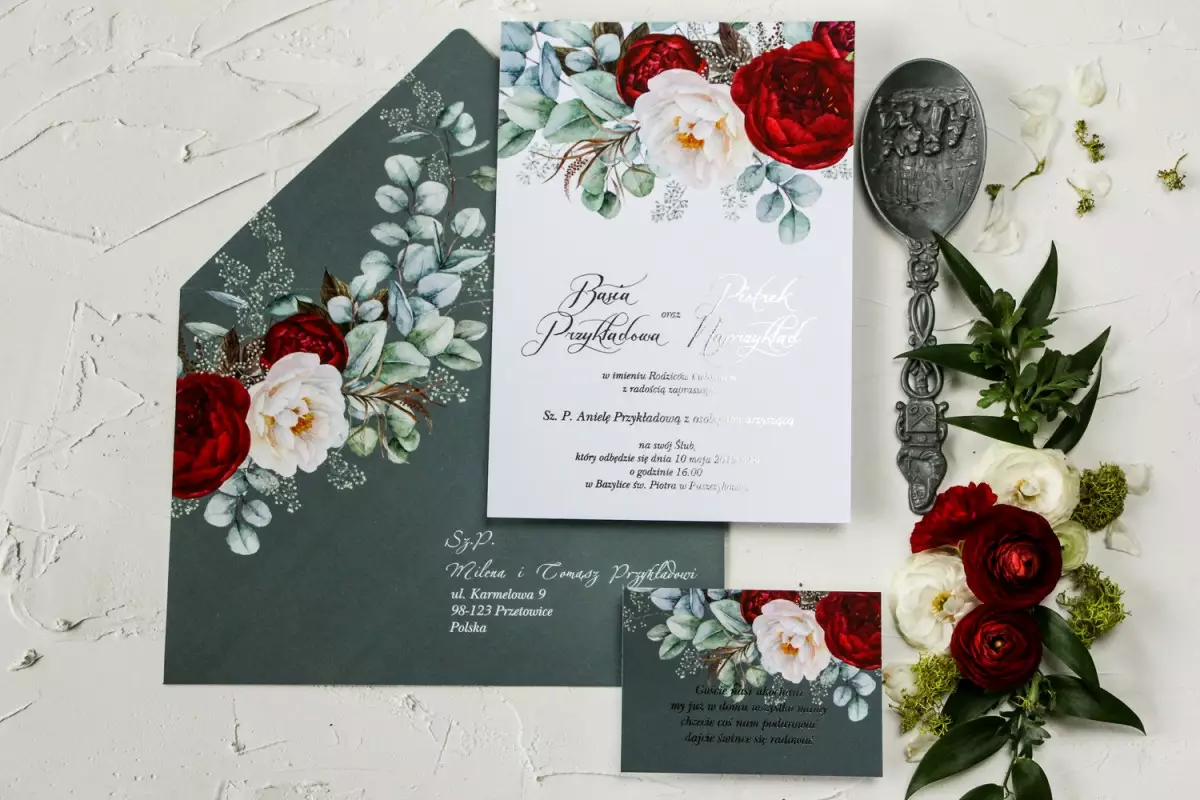
The envelope is the first thing a guest will see when receiving a wedding invitation. Therefore, it is worth considering an investment in special, elegant envelopes that will emphasize the unique character of the event. In the wedding industry in Poland, there are many options to choose from, from classic white envelopes to more luxurious versions with decorative embellishments or special closures. Special envelopes not only add elegance to the invitation but also protect it from damage during transport. It is also worth considering additional elements, such as wax seals or special stickers, which will add an individual character to the envelope. By investing in special envelopes, we show guests that we care about every detail and want our invitation to be special for them.
How to ensure the invitation reaches the recipient?
When sending wedding invitations by mail, one of the biggest concerns is whether they will reach the recipients. To minimize the risk, it is worth using several proven methods. First, it is always worth sending invitations well in advance, taking into account possible postal delays. Second, it is worth considering the choice of an appropriate postal service. In Poland, many courier companies offer special services for important shipments, such as wedding invitations, which ensure faster delivery and the ability to track the shipment. If we decide on traditional mail, it is worth considering the priority option. Additionally, it is worth informing guests about the upcoming invitation, for example, via text message or email, so that they are up to date and know what to expect. Thanks to this, we can be sure that our invitation will reach the recipient and be received with joy.
Wedding etiquette and envelope addressing:
What other elements of wedding etiquette are worth knowing?
Wedding etiquette is a set of rules and norms that help in organizing and conducting wedding ceremonies. In Poland, where tradition and culture play a key role, knowledge of wedding etiquette is essential for every couple. Of course, addressing envelopes is just one of many elements of wedding etiquette. Other important aspects include, for example, the order of entering the church, the seating arrangement of guests, or even etiquette regarding wedding gifts. It is also worth knowing the rules regarding attire - what colors are appropriate for guests, and what for witnesses or parents. Furthermore, wedding etiquette also concerns communication with guests - from the moment of sending invitations, through confirming attendance, to thank-you notes after the ceremony. Modern couples often combine traditional rules of etiquette with modern trends, creating unique and unforgettable ceremonies.
Why is etiquette important in the context of a wedding?
A wedding is one of the most important events in a person's life, which is why every detail matters. Wedding etiquette helps in organizing and conducting the ceremony, ensuring that everything goes smoothly and in accordance with tradition. In Poland, where respect for tradition and culture is deeply rooted, wedding etiquette plays a key role. Thanks to it, couples can be sure that their wedding will be unique and unforgettable. Wedding etiquette is not just a set of rules, but also an expression of respect for guests and other participants of the ceremony. Thanks to it, everyone knows what their place is and what is expected of them. In a world where individualism and personalization play an increasingly important role, wedding etiquette becomes an expression of the care and attention that couples devote to their guests.
What mistakes do we make most often?
Although wedding etiquette is important, many couples make mistakes that can affect the atmosphere of the ceremony. One of the most common mistakes is incorrectly addressing envelopes. In Poland, where traditional forms of courtesy are valued, mistakes in addressing can be perceived as a lack of respect for guests. Other common mistakes include, for example, not including all guests on the invitation, inappropriate attire, or lack of communication with guests regarding attendance confirmation. Modern couples often forget about traditional rules of etiquette, focusing on modern trends and individualism. However, it is worth remembering that wedding etiquette is not just a set of rules, but also an expression of respect and care that is worth showing to your guests.
Creative ideas for addressing envelopes:
What are modern ways of addressing?
In the era of digitization and globalization, traditional ways of addressing wedding invitation envelopes are beginning to give way to modern and creative solutions. In Poland, where wedding tradition is deeply rooted, modern ways of addressing are becoming increasingly popular among young couples who want to stand out and surprise their guests. One such way is, for example, using colored pens or markers to write addresses, which adds a unique character to the invitation. Other couples decide to address in the form of drawings or calligraphy, which is not only aesthetic but also very personal. Modern technologies, such as 3D printing or laser cutting, also allow for the creation of unique and unrepeatable envelopes that will certainly make an impression on guests. Modern ways of addressing are a combination of tradition and modernity, which allows couples to express themselves and emphasize the unique character of their wedding.
Is it worth experimenting with traditional forms?
Traditional forms of addressing wedding invitation envelopes are valued in Poland for their elegance and formality. However, in today's times, when individualism and creativity play an increasingly important role, many couples decide to experiment with tradition. Experimenting with traditional forms of addressing can be a great way to add a personal character to the invitation and surprise guests. For example, instead of the traditional "Dear Ms." or "Dear Mr.," you can use more informal and personal forms, such as first names or nicknames. Other couples decide to add small drawings or symbols that have special meaning for them. Experimenting with traditional forms of addressing is a risk, but also an opportunity to create something unique and unforgettable. It is worth remembering, however, not to overdo it and to maintain a certain level of formality, especially if there are older or more conservative people among the guests.
Examples of creative addressing.
Creative addressing of wedding invitation envelopes is a chance to stand out and surprise guests. In Poland, where wedding tradition is deeply rooted, creative solutions are becoming increasingly popular. Here are a few examples of creative addressing that will certainly inspire many couples:
- Calligraphy - handwritten addresses in calligraphic script are a true art that adds elegance and a unique character to the invitation.
- Drawings and symbols - small drawings, such as hearts, stars, or flowers, added to the address, can be an expression of the couple's personal character and their relationship with the guests.
- Colored pens and markers - using colors to write addresses is a great way to add joy and creativity to the invitation.
Creative addressing is not just about aesthetics, but also an expression of the care and attention that couples devote to their guests. It is therefore worth spending some time and energy on creating something unique, which will certainly be appreciated by the guests.
When is it worth asking for help?:
When is it worth hiring a calligrapher?
Calligraphy is the art of beautiful writing, which has been valued for centuries for its aesthetics and elegance. In the context of wedding invitations, handwritten addresses in calligraphic script add a unique character and emphasize the importance of the event. In Poland, where tradition and attention to detail play a key role, hiring a calligrapher can be an excellent solution for couples who want to stand out and surprise their guests. But when exactly is it worth asking for help from a calligrapher? First of all, if the couple wants their invitations to be not only elegant but also unique and unrepeatable. Calligraphy allows for the creation of an individual style that reflects the couple's character and their relationship with the guests. Furthermore, if wedding planning is stressful and time-consuming, hiring a calligrapher will save time and energy that can be devoted to other aspects of preparation.
What other professions can help with addressing envelopes?
Besides calligraphers, there are many other professions that can help with addressing wedding invitation envelopes. In Poland, where the wedding industry is developing dynamically, many companies offer specialized services related to the preparation and sending of invitations. For example, graphic designers can help in creating a unique envelope design that will match the rest of the wedding materials. Printing houses offer various printing technologies that allow for the creation of unique and durable invitations. Furthermore, courier and postal companies offer special services for important shipments, such as wedding invitations, which ensure fast and safe delivery. It is also worth considering hiring a wedding planner who will help in organizing the entire wedding, including the issue of addressing envelopes.
How to find the right specialist?
Finding the right specialist to address wedding invitation envelopes can be a challenge, especially in Poland, where the wedding market is very competitive. However, there are several proven methods that will help in making the right decision. First, it is worth looking for recommendations among friends or family who have recently organized a wedding. Personal experiences are often the most credible and can help in choosing the right specialist. Second, it is worth visiting wedding fairs or other industry events where you can meet different suppliers and see their offer live. Modern technologies, such as the internet or social media, also allow for easy finding and comparing of different specialists. It is worth remembering, however, to always check opinions and references to be sure that the chosen specialist is trustworthy and will meet expectations.
Cultural differences in addressing envelopes:
How to address envelopes in other countries?
In the era of globalization, when more and more couples decide to organize international weddings or invite guests from different corners of the world, the ability to correctly address envelopes becomes extremely important. Each country has its own unique customs and traditions related to addressing envelopes, which reflect the cultural and social norms of that place. In Poland, where wedding tradition is deeply rooted, addressing envelopes is relatively simple and formal. However, in other countries, such as Japan or India, these customs can be much more complicated and demanding. For example, in many Asian countries, it is important to place the family name before the first name, which reflects the cultural importance of the family and its status in society. In Arab countries, on the other hand, it is important to use appropriate titles and honorifics that reflect social and religious hierarchy. Therefore, if you are planning to invite guests from other countries to your wedding, it is worth paying attention to cultural differences in addressing envelopes and adapting to them to avoid misunderstandings and faux pas.
Is it worth knowing foreign customs if we have guests from other countries?
Certainly, yes! Knowledge of foreign customs and traditions related to addressing envelopes is not only an expression of respect for guests from other countries but also allows for avoiding misunderstandings and cultural pitfalls. In Poland, where the wedding industry is one of the most important segments of the service market, more and more couples decide to organize international weddings or invite guests from different corners of the world. Therefore, the ability to correctly address envelopes in an international context becomes extremely important. Knowledge of foreign customs also allows for a better understanding of the culture and traditions of other countries, which can be a valuable experience for the couple and their guests. Furthermore, if you are planning to invite guests from other countries to your wedding, it is worth paying attention to cultural differences in addressing envelopes and adapting to them to avoid misunderstandings and faux pas.
Examples of cultural differences.
Cultural differences in addressing envelopes are a fascinating topic that reflects the richness and diversity of traditions and customs around the world. Here are a few examples that will certainly inspire many couples:
- Japan - In Japan, it is important to place the family name before the first name, which reflects the cultural importance of the family and its status in society. Furthermore, addresses are often written vertically, not horizontally, which is the traditional way of writing in the Japanese language.
- India - In India, it is important to use appropriate titles and honorifics that reflect social and religious hierarchy. Furthermore, addresses are often very detailed and contain a lot of information, such as the name of the village or district.
- Saudi Arabia - In Arab countries, it is important to use appropriate titles and honorifics that reflect social and religious hierarchy. Addresses are often written from right to left, in accordance with the traditional way of writing in the Arabic language.
Cultural differences in addressing envelopes are a challenge, but also an opportunity to learn and understand the traditions and customs of other countries. Therefore, it is worth spending some time and energy on understanding these differences and adapting to them to avoid misunderstandings and faux pas.
Summary:
Why is it worth spending time on correctly addressing envelopes?
Addressing wedding invitation envelopes is not just a technical matter, but above all an expression of respect for the invited guests. In Poland, where tradition and attention to detail play a key role in wedding preparations, correctly addressing envelopes is not only expected but even required. But why is it really worth spending time on this activity? First, a wedding invitation is the guest's first contact with the upcoming event. How it is addressed can affect the first impression and expectations toward the wedding itself. Second, correctly addressing envelopes is an expression of respect for guests. It shows that the couple cares about details and wants every guest to feel important and appreciated. Third, in the digital era, when most communication takes place online, a handwritten invitation is a unique and personal gesture that can evoke many positive emotions.
What are the main conclusions from the article?
Preparing this article, we went through many aspects related to addressing wedding invitation envelopes. From traditional customs and etiquette, through cultural differences, to modern and creative ideas for addressing. The main conclusions that can be drawn from this article are, above all, that addressing envelopes is not just a technical activity, but above all an expression of respect for guests. It is worth spending time and energy on this activity to avoid misunderstandings and faux pas. Furthermore, in the era of globalization, when more and more couples decide to organize international weddings, knowledge of foreign customs and traditions related to addressing envelopes becomes extremely important. Therefore, it is worth paying attention to cultural differences and adapting to them to avoid misunderstandings and cultural pitfalls.
Encouragement to share your own experiences and ideas.
Although in this article we tried to present as much information and tips on addressing wedding invitation envelopes as possible, it is always worth listening to the opinions and experiences of others. If you have your own ideas, suggestions, or experiences related to this topic, we encourage you to share them in the comments below. Your experiences can be a valuable source of knowledge and inspiration for other couples who are preparing for a wedding. Furthermore, if you have questions or doubts related to addressing envelopes, feel free to ask! We are here to help and share our knowledge and experience.
If this article was helpful to you and you would like to learn more about tradition, etiquette, and other aspects related to organizing a wedding and reception, we encourage you to check out other texts on our blog. Here are a few that might interest you:
-
Should you write "Mr./Ms." on place cards? - learn about the customs and practices related to place cards at Polish weddings.
-
What questions to ask a wedding photographer before choosing? - key tips that will help you choose the best photographer for your big day.
-
What is a concordat wedding? - understanding the differences between a civil and a concordat wedding in Poland.
-
How to invite to a wedding? - practical tips on inviting guests and creating a guest list.
-
What gifts for guests? - inspiration for original and memorable thank-you gifts for your wedding guests.
-
How to engage guests in the wedding and reception? - ideas on how to make your guests feel important and engaged in your wedding.
-
In what order to invite to the wedding? - advice on the order of inviting guests and creating a guest list.
We hope that these articles will provide you with even more valuable information and help in preparations for your big day. If you have any questions or would like to share your experiences, we invite you to comment under the articles. We are waiting for your opinion!