How to Choose a Suit or Tuxedo – A Groom’s Wedding Guide
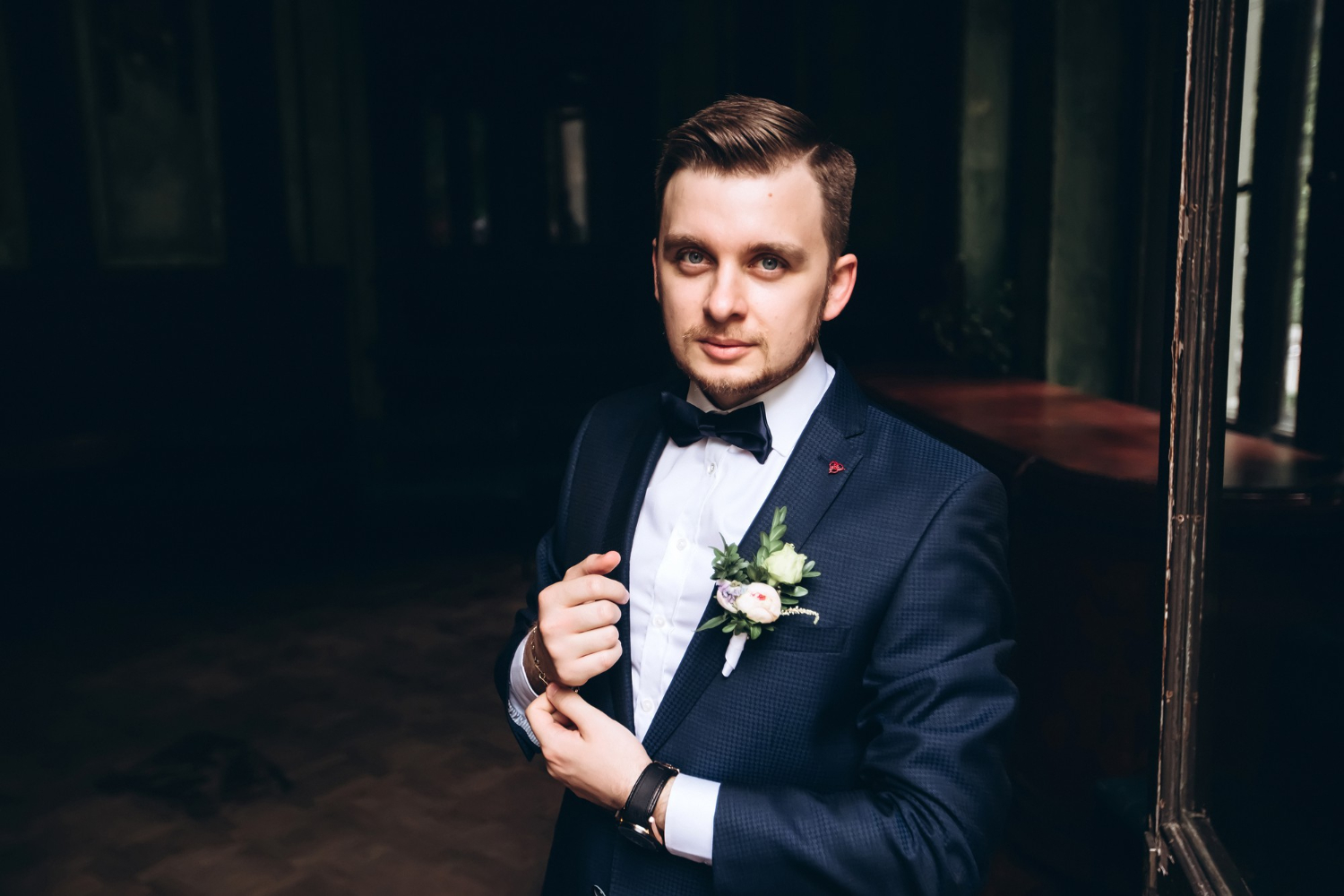
Every Groom dreams of looking elegant and feeling confident on his wedding day. Choosing the right attire – whether a suit or a tuxedo – is one of the most important tasks during wedding preparations. This comprehensive guide will help you navigate through all the steps of selecting the perfect outfit. We will discuss matching the cut to your silhouette, choosing the right color, deciding between a suit and a tuxedo, and the most important wedding accessories for a man's styling. You will also learn how to complete the look so that it creates a cohesive and stylish composition, harmonizing with your wedding theme and other elements of the setting – from decorations to wedding invitations. Below, we present a step-by-step guide on how to choose a suit or tuxedo for this special day. As an experienced specialist in men's wedding fashion, I will provide practical solutions and reveal secrets that will make the Groom's styling truly dazzling. Elegance on your wedding day is within reach – all it takes is the right knowledge and preparation. Let's begin!
Step 1: Defining the Style of the Celebration – Suit or Tuxedo?
The Character of the Celebration and Choice of Attire
The first step is to consider the character of your wedding and reception. The style of the ceremony and party should directly influence the decision of whether a wedding suit or an elegant tuxedo would be better. Are you planning a classic wedding in an elegant ballroom, or rather a relaxed outdoor ceremony? You can learn more about organizing an outdoor wedding, for example in a garden, from our article: Garden Wedding - How to Prepare for an Outdoor Ceremony? Will your wedding have a theme (e.g., rustic, boho, glamour), and will guests be asked for a specific dress code? Answering these questions will help determine the level of formality for the Groom's attire. If the celebration is formal, takes place in the evening, and requires top-tier elegance – a tuxedo is worth considering. However, if the wedding and reception are slightly less official, held during the day, or in a casual elegance style, a classic suit will work perfectly. The rule is: the more sophisticated and official the wedding style, the more formal the Groom's attire should be. It is also important that the Groom's styling harmonizes with the Bride's outfit – if she appears in a grand, princess-style gown, he should also present a matching level of elegance.
When to Choose a Wedding Suit?
A wedding suit is the most versatile choice for a Groom. It works in most scenarios – from an intimate civil ceremony to a traditional restaurant wedding or an elegant hotel reception. A suit also offers more freedom regarding style and accessories. You can choose a two-piece (jacket and trousers) or a three-piece suit with a waistcoat to add a ceremonial character to the styling. The third element, the waistcoat, emphasizes the importance of the event and ensures that even after taking off the jacket during the party, you still look chic. In a wedding suit, the Groom can express his style through the choice of color, cut, and accessories. It is a comfortable option – a well-tailored suit ensures freedom of movement, which is crucial during a long ceremony and wedding fun. A suit also has the advantage that you can easily use it again for other occasions (e.g., family celebrations or business meetings), while a tuxedo is usually reserved for weddings and balls. So, if you value versatility and comfort, and your wedding doesn't require strict adherence to black-tie etiquette – go for a wedding suit.
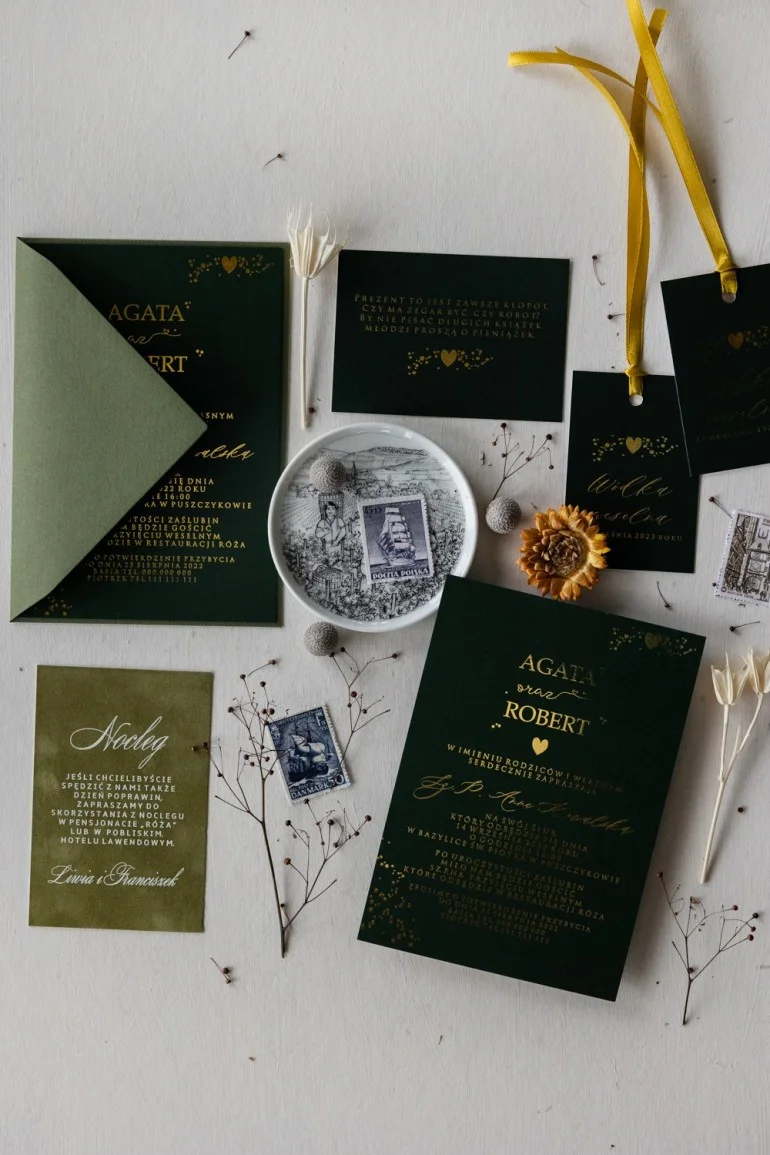
Single-card Wedding Invitations with gold foil | Simple no. 2
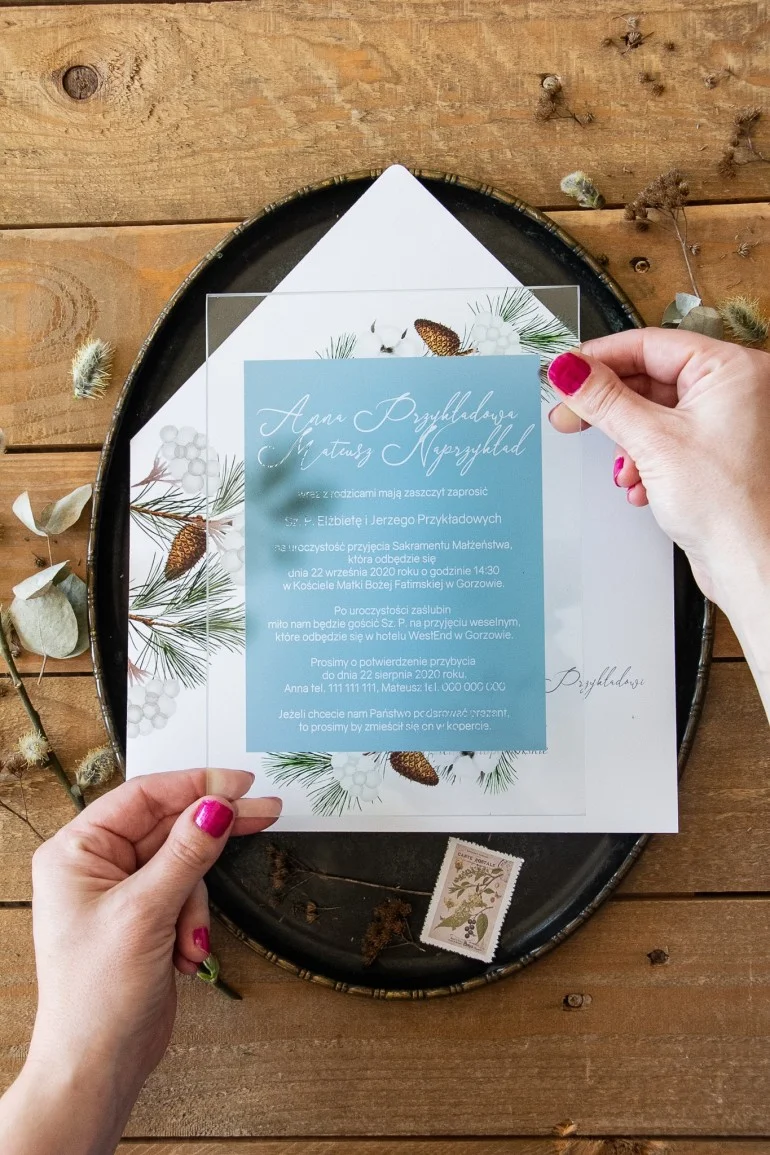
Extravagant Glass Wedding Invitations | Glass Winter Accent | Cotton & Pine | Korani no. 8
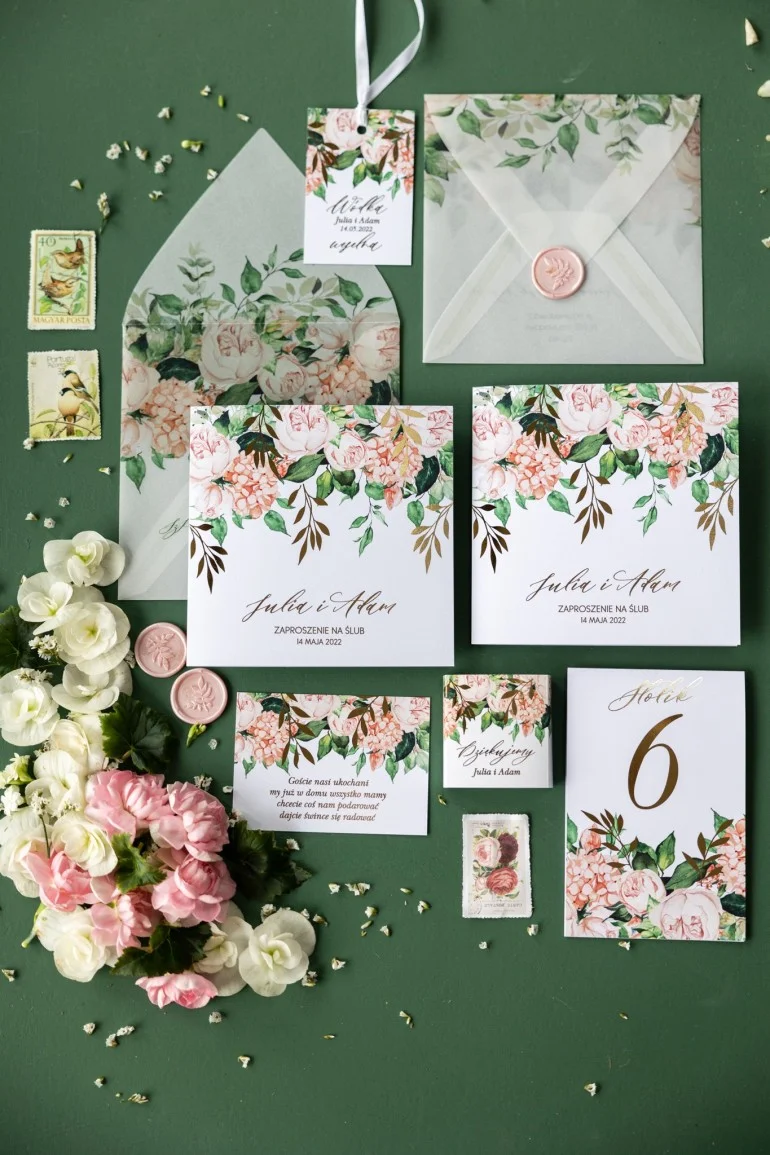
Unique Wedding Invitation with Gold Foil, Pink Peonies and Vellum Envelope | Unusual Wedding Invitations | Rubin no. 10
When is a Tuxedo Better?
A tuxedo is the synonym for the highest elegance and class in men's evening fashion. Traditionally, it is worn for events taking place after dark – balls, galas, and very lavish weddings. If you dream of a red-carpet-style wedding and the celebration is planned for the evening, a Groom's tuxedo will be a bullseye. This outfit catches the eye and stands out with details: satin jacket lapels (often peak or shawl), a single-button closure, trousers with a braid (a satin stripe along the leg), and no belt loops (braces are worn with a tuxedo). A bow tie (preferably black silk) is mandatory with a tuxedo instead of a tie, along with patent black shoes. Choose a tuxedo if your wedding has a very formal character or if you want to feel like a movie star on this special day. Remember, however, that a tuxedo also requires matching other elements at a high level of formality – a shirt with a wing collar and hidden button placket, elegant cufflinks, and optionally a cummerbund or a special low-cut waistcoat. Don't forget: we only wear a tuxedo in the evening; if the wedding ceremony takes place before 6:00 PM, a suit or a morning suit would be a better choice than a classic tuxedo.
Step 2: Matching the Suit Cut to the Silhouette
Table of Contents:
- Step 1: Defining the Style of the Celebration – Suit or Tuxedo?
- Step 2: Matching the Suit Cut to the Silhouette
- Step 3: Choosing the Color and Fabric of the Wedding Suit
- Step 4: Wedding Shirt – Which One to Choose for the Suit?
- Step 5: Tie or Bow Tie – What to Choose?
- Step 6: Groom's Wedding Footwear – Style and Comfort
- Step 7: Wedding Suit Accessories – Cufflinks, Pocket Square, Belt, and Other Details
- Step 8: Boutonniere – Completing the Groom's Styling
- Step 9: Fittings and Suit Personalization – The Key to Perfection
- Step 10: Consistency of Styling with the Wedding Theme and Accessories
The Importance of a Perfect Fit
Even the most expensive suit won't look good if it isn't properly fitted to the silhouette. The Groom's styling should emphasize the figure's strengths and mask any flaws. That's why it's so important to pay attention to the cut and size of the suit. Standard cuts include slim fit, regular fit, and intermediate options (modern fit), as well as single- or double-breasted jackets. Regardless of the chosen style, the key is for the suit to fit like a glove. What does this mean in practice? The jacket should gently hug the shoulders (the sleeve seam at the height of the shoulder end), without creating wrinkles or collapses. Jacket sleeves must be the correct length – wrists should not be completely covered; the shirt cuff (approx. 1-2 cm) should elegantly peek out from under the jacket. Trousers, on the other hand, should lightly rest on the shoe's upper and create a single break – too long will wrinkle unesthetically, and too short will reveal socks. Professional men's fashion stores offer tailoring adjustment services, which are worth using. A perfectly fitted suit will provide you not only with a great look but also comfort – nothing should pinch or restrict movement during such an important day.
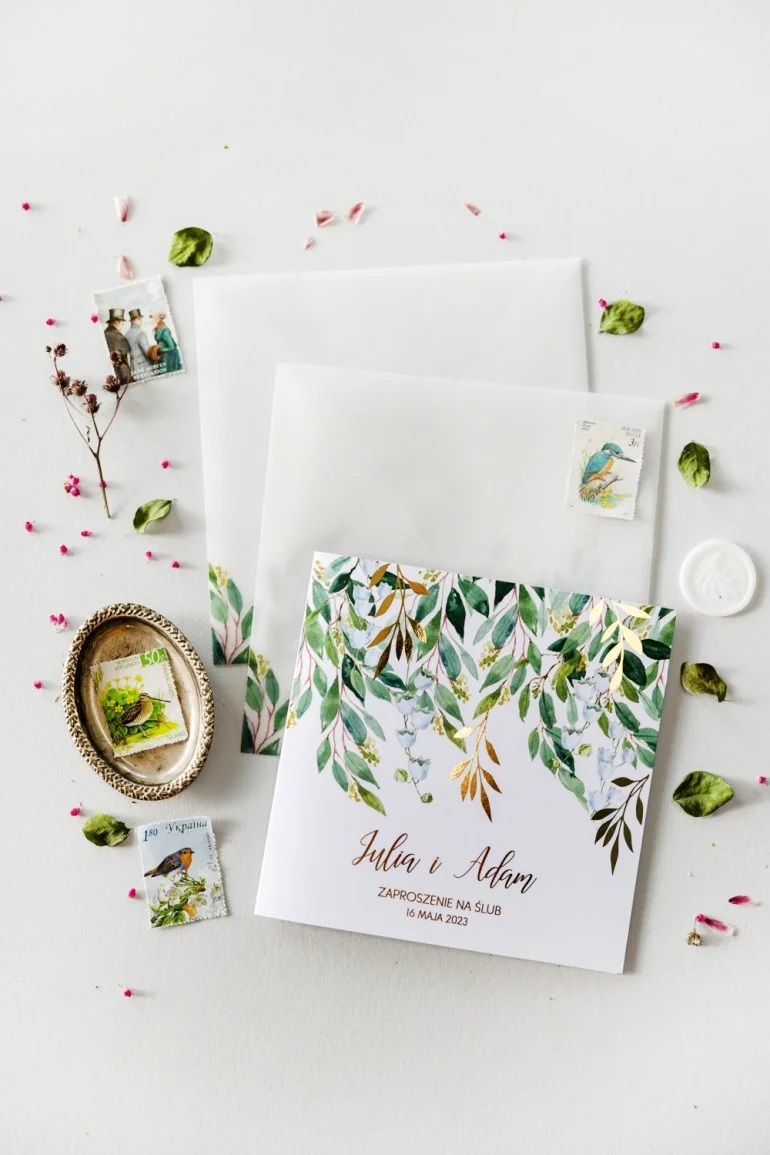
Wedding invitations with green leaves motif, gold accents, classic | Gold foil wedding invitations | Rubin no. 4
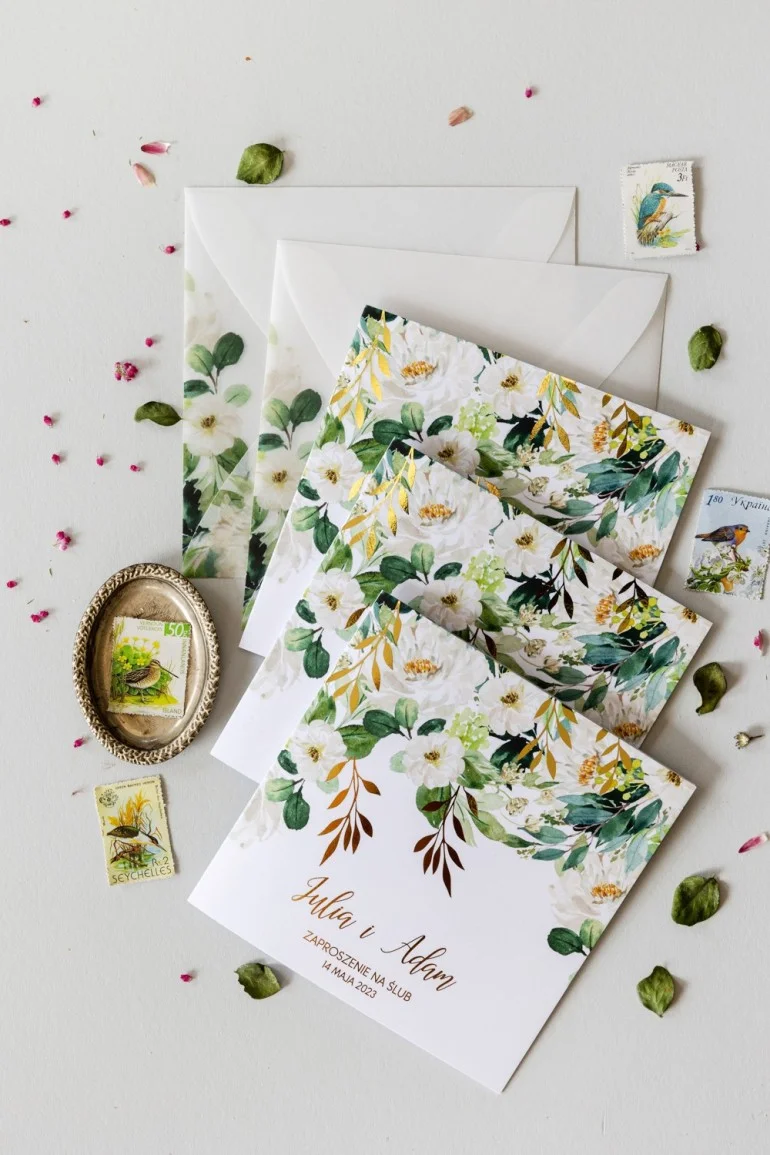
Stylish Wedding Invitations with Gold Accents, Watercolor Flowers | Exclusive Wedding Invitations | Rubin no. 1
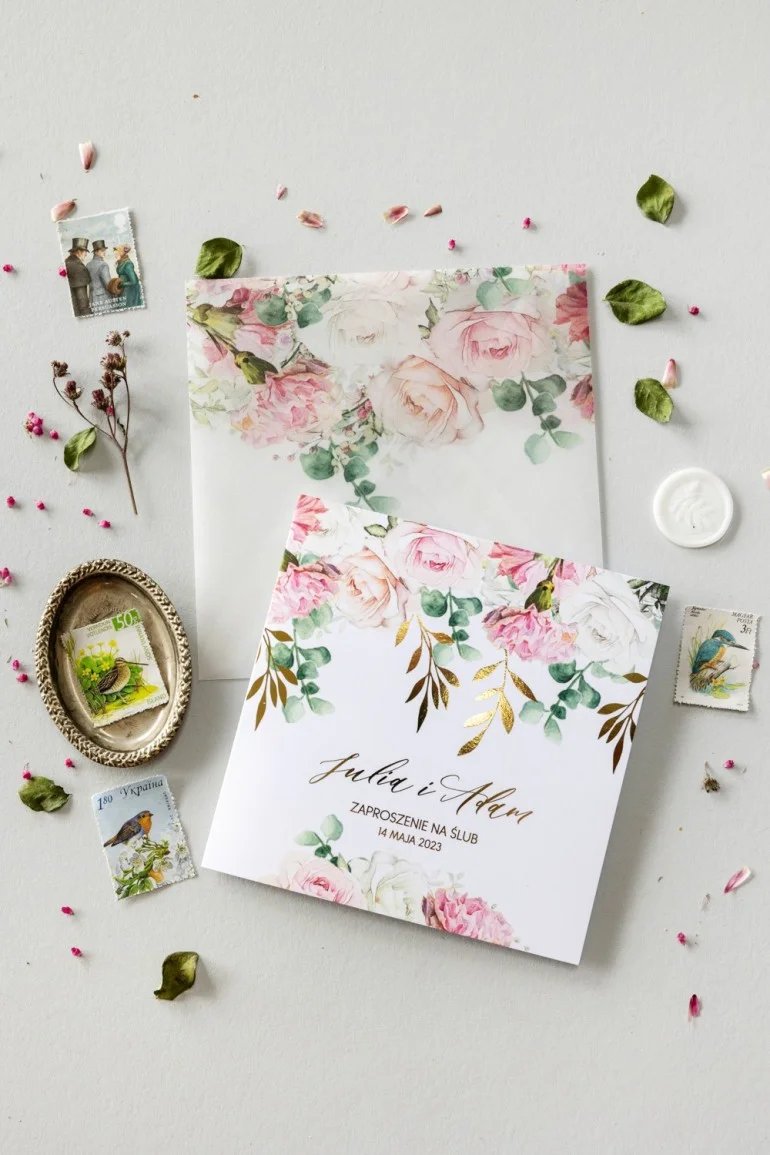
Wedding invitations with pink roses and gold foil, transparent envelope | glamour style wedding invitations | Rubin no. 9
Groom with a Slim or Athletic Silhouette
If you are tall and slim or have an athletic build (broad shoulders, narrower hips), your goal will be to maintain proportions and add a bit of volume where needed. For very slim Grooms, single-breasted slim-cut jackets are a good choice, but not too tightly tailored – avoid extremely fitted styles that will further thin the figure. You can afford a bit of structure in the jacket shoulders (light padding) to add width, but be careful not to overdo their size. With a narrow face and slender neck, shirt collars with a slightly wider spread (e.g., semi-spread) and medium-width ties or bow ties look good – too narrow ones can emphasize a small build. To optically gain some mass, bet on lighter colors or patterns. A suit in light gray, blue, or with a delicate check can favorably affect the proportions of a slim silhouette (dark colors slim down, light ones add volume). If you have an athletic build, remember that a suit that is too tight can restrict movement – choose a cut that accommodates muscular shoulders and thighs but still maintains a sleek line. Jackets with wider lapels (e.g., classic or peak lapels instead of very narrow ones) will work well – they will harmonize with broad shoulders. Also, avoid very narrow trousers; a leg tapering towards the bottom is fine, but excessively tight trousers can look disproportionate with a strong upper body. Remember: the goal is to emphasize assets (height, athletic features) and maintain a balance between the top and bottom of the outfit.
Groom with a Stocky or Massive Build
For men with a stronger body build (short and stocky or just heavier), the key is to slim the silhouette and elongate its lines. When choosing a wedding suit, go for styles with a simpler line: a single-breasted jacket, fastened with two buttons (one button can emphasize the belly, two fastened at waist height are better). Wider lapels (e.g., peak/tuxedo lapels) can help balance proportions, as small, narrow lapels on a large chest will get lost and emphasize the size of the torso. Avoid very shiny fabrics and bright patterns – smooth materials or delicate micro-patterns in subdued, darker colors (dark navy, graphite, deep black) are better. Dark colors are known for being optically slimming. A few proven styling tricks for a stocky silhouette: A jacket with light tailoring – too baggy will add volume, but gently narrowed at the waist will slim the figure. Trousers pressed with a crease – with a straight cut or slightly tapered. The crease (a sharp line along the leg) creates a vertical accent that elongates the legs. Appropriate accessories – choose a tie of standard or slightly wider width (too narrow will make the silhouette appear wider), fold the pocket square in a simple way (a straight strip of material), and if you wear a belt, let it be narrow and in a color similar to the suit, so it doesn't divide the silhouette in half. Heavier Grooms should also avoid clothing that is too tight – the suit should be fitted, not tight. A well-tailored jacket will not pull apart at the belly (the jacket fronts should meet slightly at the front without creating a "V" shape). If standard sizes don't fit perfectly, it's worth considering a made-to-measure suit or using the services of an experienced tailor to adjust the outfit. This way, even a more demanding silhouette will look proportionate and classy.
Step 3: Choosing the Color and Fabric of the Wedding Suit
Classic Colors: Black, Navy, Gray
The color of the Groom's suit should harmonize with the formality of the ceremony, but also suit his appearance and preferences. The classics of men's elegance for a wedding are primarily dark and subdued shades. The most formal color is black – especially in the case of a tuxedo or a very ceremonial evening wedding. A black suit or tuxedo creates a distinct, elegant look, but remember that in daylight, a black jacket can look a bit heavy. That's why many Grooms choose the equally elegant yet more versatile navy blue. A navy wedding suit fits almost every type of beauty and is suitable for any time of day. Additionally, navy blue pairs nicely with the white of the Bride's wedding dress and many accessory colors. Another popular color is gray – graphite or charcoal shades for a more formal effect, or lighter grays (dove, ash) for less formal ceremonies, especially in the summer season. A gray suit is a great choice for earlier hours of the day or for Grooms who want to move away from classic navy but maintain elegance. A well-chosen shade of gray harmonizes with various colors of accessories and flowers. It's also worth mentioning the blue suit – besides navy, royal or ink shades of blue are fashionable, adding character to the styling while remaining quite universal.
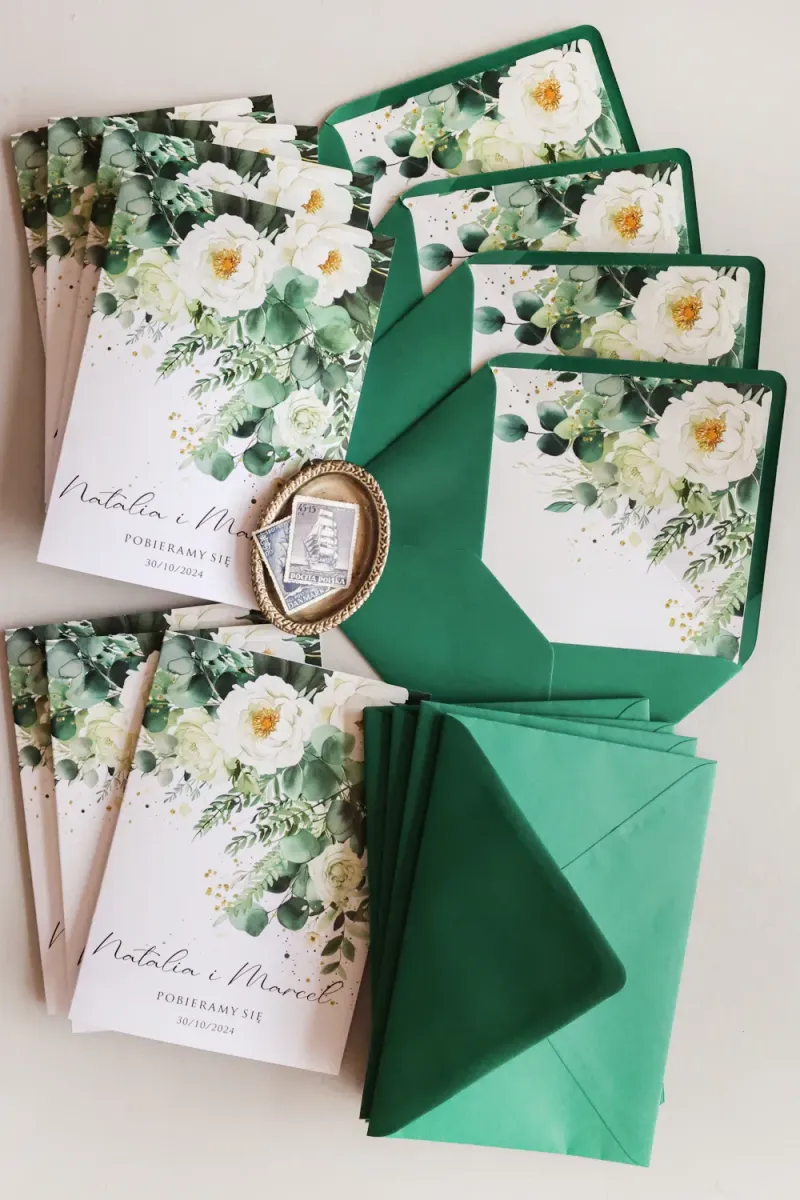
Wedding Invitations with white flowers and green accents | Impresja no. 9
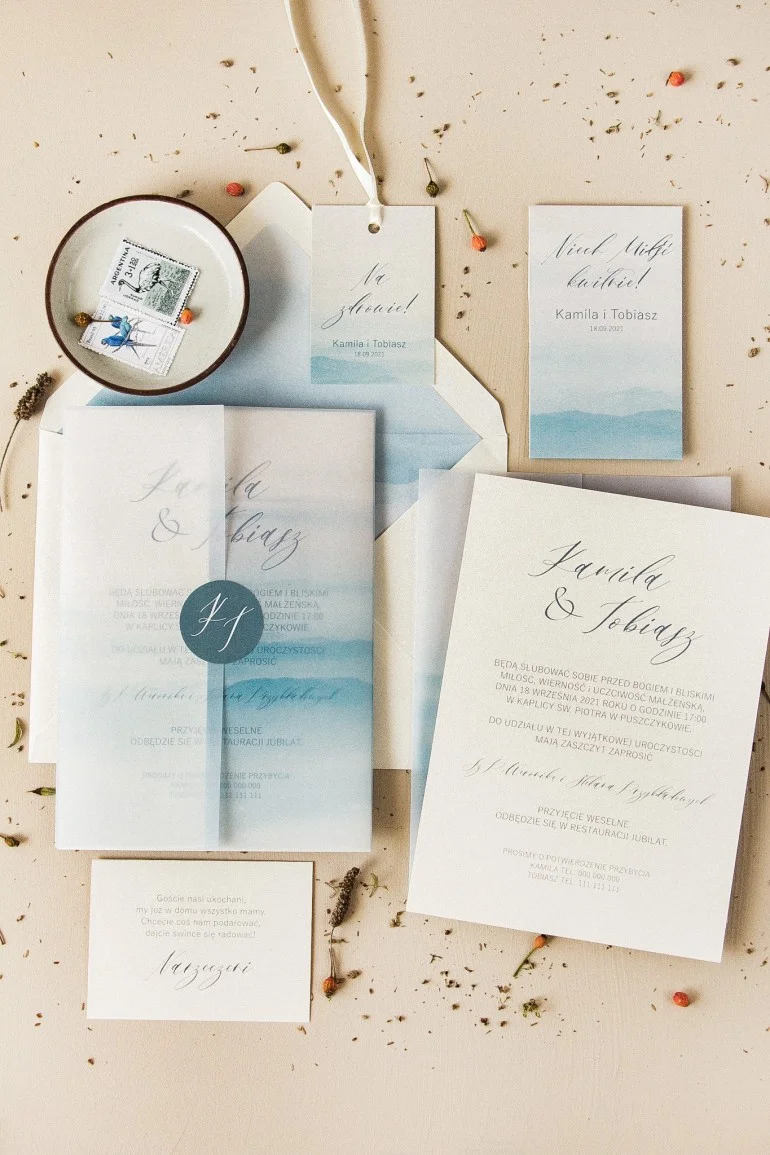
Elegant Wedding Invitations with Vellum | Watercolor and Pearl | Opal no. 4
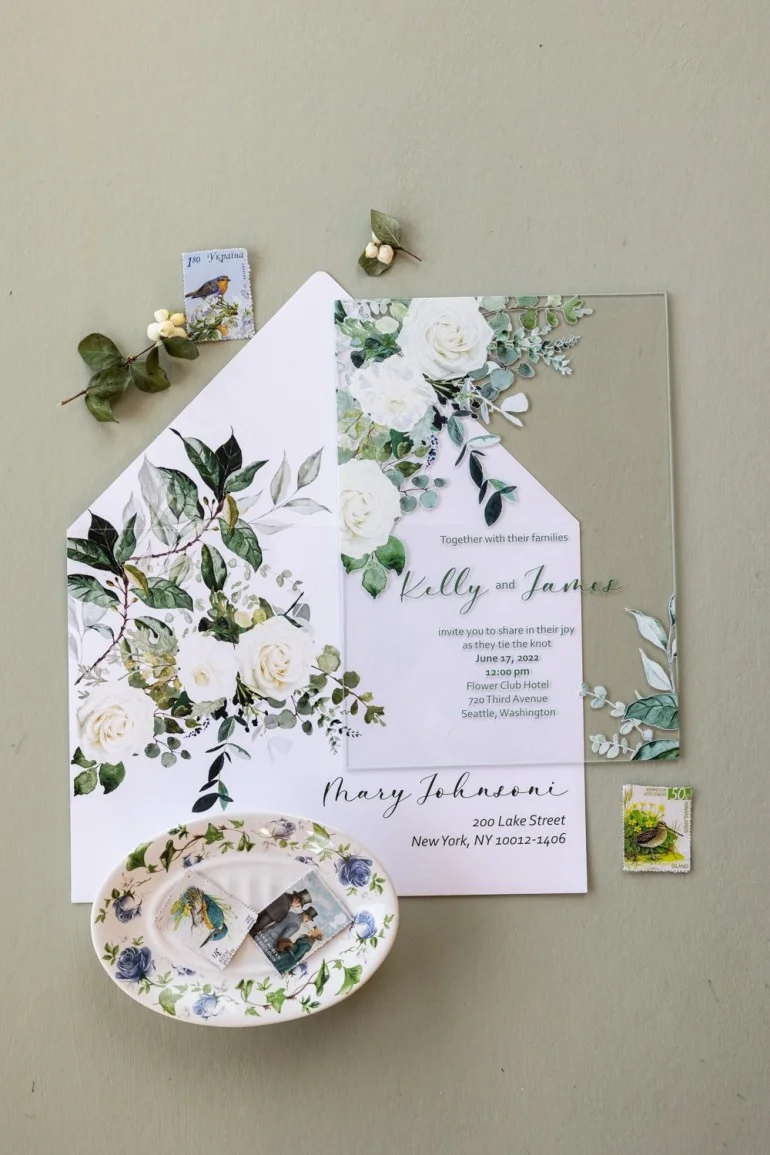
Floral Elegance Glass Wedding Invitations with White Roses and Greenery Envelope | Korani no. 12
Fashionable Shades: Bottle Green, Burgundy, and Other Trends
In recent years, men's wedding fashion has become more open to unusual colors. Increasingly, suits in shades such as bottle green, deep burgundy, and even dark shades of purple or brown are appearing at weddings. Such a choice of color is a great way to stand out and emphasize the wedding theme. For example, a bottle green suit fits perfectly into boho or rustic aesthetics – it looks beautiful surrounded by greenery, flowers, and in outdoor photography. On the other hand, a burgundy suit can add a bit of boldness and retro elegance, especially when combined with black or gold accessories. When deciding on a suit in an unusual color, remember to choose it so that it suits your appearance and the wedding theme, and choose a high-quality fabric – preferably matte and elegant. A bold color requires a great cut and material; then the effect will be dazzling, and you will show your unique style.
Fabrics and Texture – Matching the Season
The material from which a suit or tuxedo is made affects both wearing comfort and the appearance of the entire styling. When choosing a fabric, take into account the time of year and the character of the celebration. Wool is the most classic choice – a high-quality wool suit will work at any time of year because natural wool breathes and adapts to body temperature. For summer weddings, however, it's worth considering lighter fabrics or blends. A suit with a touch of silk will shimmer slightly and look very elegant in the evening. On the other hand, wool with a touch of linen or cotton can be a lifesaver during heatwaves – the fabric will be airy and provide greater comfort, though beware: linen wrinkles more, which gives a more casual character. For winter ceremonies, suits made of thicker wool cloth, flannel, or even velvet are excellent (velvet tuxedo jackets in bottle green or burgundy have recently become fashionable – they look exceptionally chic at winter weddings). It's worth reading our article about organizing a winter wedding, which discusses the challenges and magical atmosphere of this season. Also, remember the jacket lining – on a warm day, a half-lining or a viscose lining instead of polyester will be better to avoid overheating. The texture of the material is another element of styling: smooth fabrics are the most formal, but a delicate texture (micro-pattern, pinstripe, or Prince of Wales check) can add character to the suit. Just make sure the pattern doesn't clash with other elements (if the jacket has a subtle check, the accessories should rather be plain). When choosing a wedding suit, always prioritize high-quality materials – it's an investment in your appearance and comfort on this special day.
Step 4: Wedding Shirt – Which One to Choose for the Suit?
Shirt Color and Material
A white shirt is the classic and best choice for a wedding. White symbolizes the occasion and perfectly complements virtually any suit color and the Bride's wedding dress. In some cases, very light shades of ivory or off-white are acceptable – especially if the Bride's dress is not pure white but more cream. In that case, a snow-white shirt might look too bright; a slightly broken white will create a more harmonious duo with the dress. Generally, however, most Grooms opt for a classic white shirt as it is the most elegant and timeless option. The shirt material should be natural and breathable. High-quality cotton (e.g., Egyptian cotton or cotton with a twill or poplin weave) is the best choice. A cotton shirt will provide comfort throughout the day and night, absorb moisture, and let the skin breathe. Avoid shirts with a high blend of synthetic fibers – they may wrinkle less, but they are less breathable, which can be problematic during dancing and hours of wedding fun. If the wedding takes place in summer heat, consider a shirt with a lighter weave (e.g., batiste) or with added linen. Remember, however, that linen wrinkles, so it's better for less formal celebrations. Tip: Get a second, spare shirt for the wedding day. In case of heat or emotions, you will be able to change a sweaty shirt before the reception and continue looking fresh.
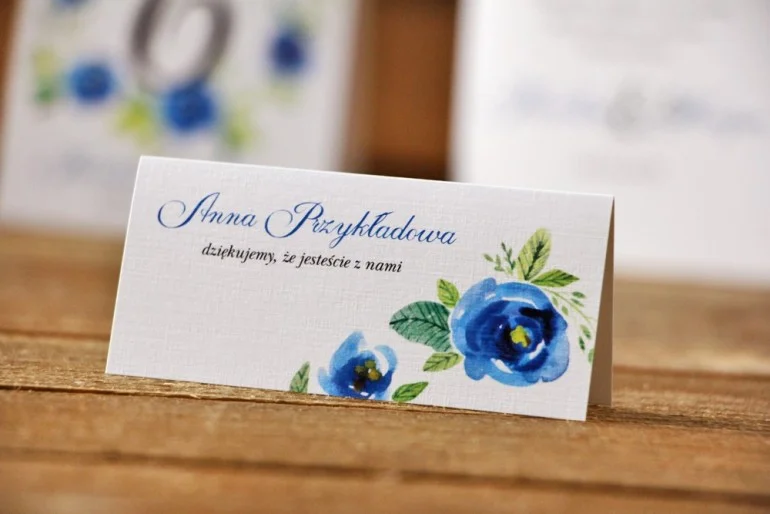
Place cards on linen-textured paper with blue roses | Akwarele no. 10
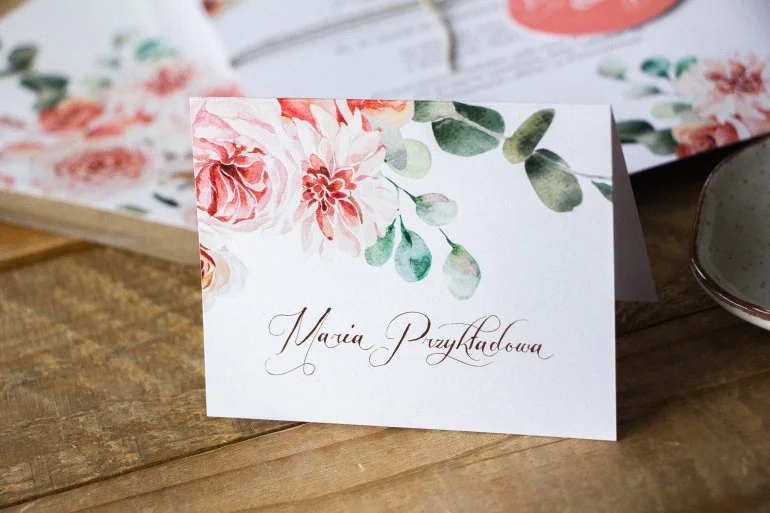
Place cards with pink bouquet composition | Indygo no. 7
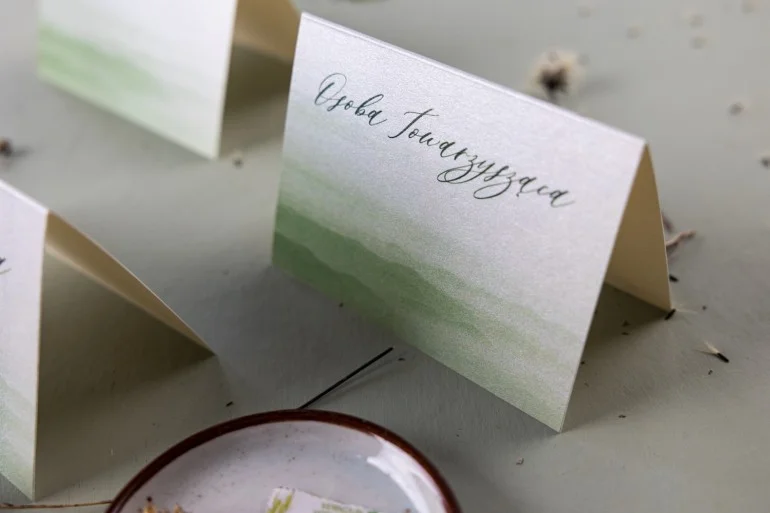
Wedding Place Cards on pearl cream paper with green decorations | Opal no. 11
Shirt Collar and Accessories
The shirt collar is a detail worth paying attention to because it affects the appearance of the entire styling, especially around the face and neck. The choice of collar should harmonize with whether you plan to wear a tie or a bow tie. For a classic tie, Kent (standard) or semi-spread collars are most often chosen – their points spread enough to nicely accommodate a tie knot. If you plan to wear a bow tie, you can opt for a shirt with a wing collar, which is very high and has small folded wings – traditionally worn with a bow tie for a tailcoat or tuxedo, it reveals the entire bow tie and looks very formal. Another option for a bow tie is an Italian-style collar (wide spread) or a classic one – the bow tie will then partially cover the points, which is also acceptable in modern fashion. Besides the collar shape, pay attention to its stiffening – for a wedding, stiffer collars with stays (inserts) that maintain their shape are better, so the tie or bow tie will sit well under the collar, and the collar itself won't curl. The collar should also fit your neck well – after fastening the last button, you should be able to slide two fingers between the collar and neck; then it's just right (it shouldn't be too tight or stand out). Remember: a wedding shirt should have long sleeves, an elegant collar, and be perfectly ironed – no short sleeves or loud patterns.
Cuffs and Other Wedding Shirt Details
An elegant wedding shirt should have long sleeves. French cuffs fastened with cufflinks look most chic – peeking out from under the jacket sleeve, they add class. If the shirt has button cuffs, you can still wear decorative cufflinks (most shirts allow for cufflinks even with a classic cuff). Another detail is the type of shirt fastening. Shirts with a hidden placket (buttons hidden under the fabric) or with decorative jewelry buttons are very elegant – especially for a tuxedo. For a wedding suit, this isn't necessary, but it will certainly add charm to the styling. Finally, remember the proper fit of the shirt: it should be chosen according to your collar size (with a little room so you can breathe and swallow freely) and have the correct sleeve length. Cuffs should not be too loose or too tight – they should gently hug the wrist. Sleeve length is ideal when the cuff reaches the base of the thumb with arms down. The shirt must remain tucked into the trousers at all times – choose a model with appropriate length (a longer shirt tail will help keep it in place). Such small details will ensure your look is impeccable, and you can focus on the joy of the ceremony without worrying about your wardrobe.
Step 5: Tie or Bow Tie – What to Choose?
The Groom's Tie – A Classic of Men's Elegance
A traditional tie is the most common choice for Grooms, especially when they opt for a suit. A tie adds class and business elegance to the styling while allowing for a bit of color or pattern. On your wedding day, it's worth choosing a high-quality tie – e.g., made of silk – which will drape beautifully and won't look cheap. You can match the tie color to your wedding's color palette. Subdued, elegant colors are a safe choice: silver, steel, navy, burgundy. Many Grooms also choose a pastel-colored tie (e.g., dusty pink, sky blue) to reference the Bride's bouquet or the decoration theme. It's important that the tie isn't loud – neon colors or loud patterns are better left for less formal occasions. When choosing a tie, pay attention to width and length. The width should be proportional to the width of the jacket lapels – for narrow lapels, choose a narrower tie (e.g., 6-7 cm), and for wide lapels, a classic tie approx. 8-9 cm. The length is adjusted by the knot – a correctly tied tie should reach the middle of the belt buckle with its tip. The knot itself is important: the most universal and elegant knot is the Windsor or half-Windsor – it creates a fairly large, triangular knot that nicely fills the space under the collar. If the shirt collar has a narrow spread (Kent), a simpler four-in-hand knot can be used (especially for a narrower tie). On your wedding day, avoid "skinny" ties and overly elaborate knots – classics will stand the test of time in photos and will still look stylish years from now.
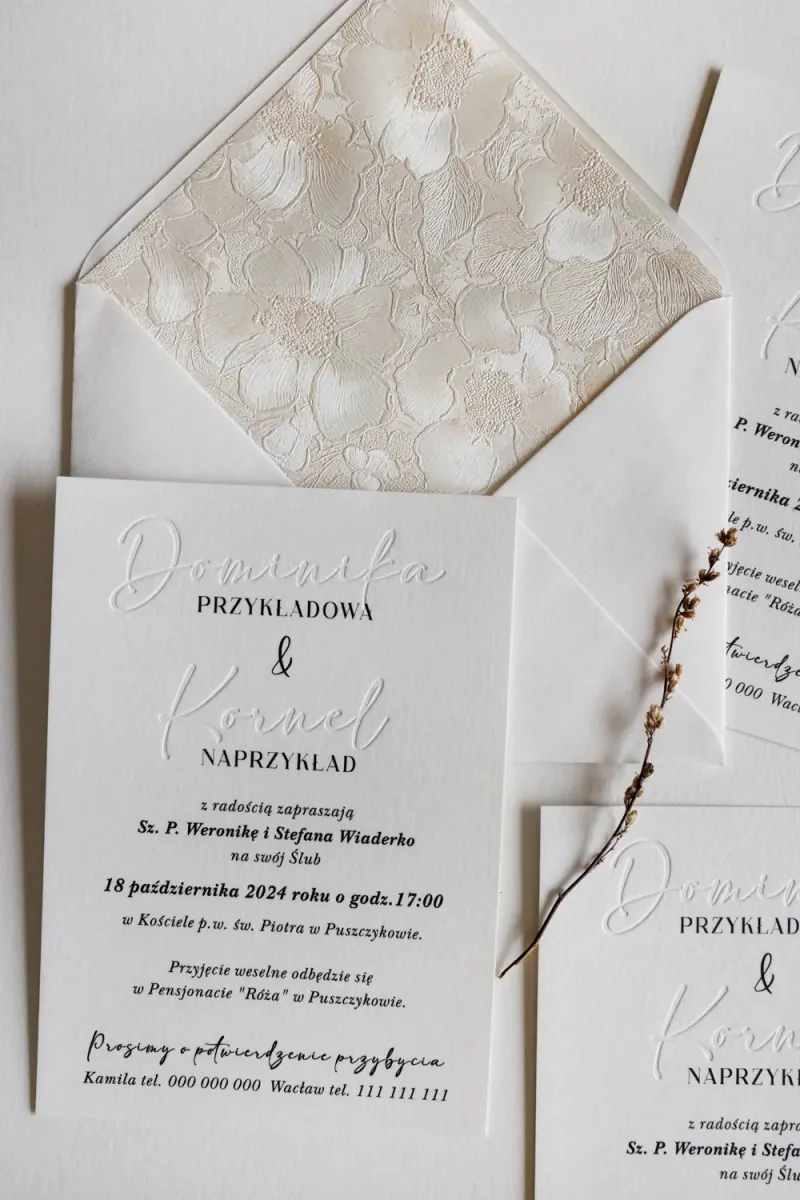
Elegant Embossed Wedding Invitations | Karmen no. 4
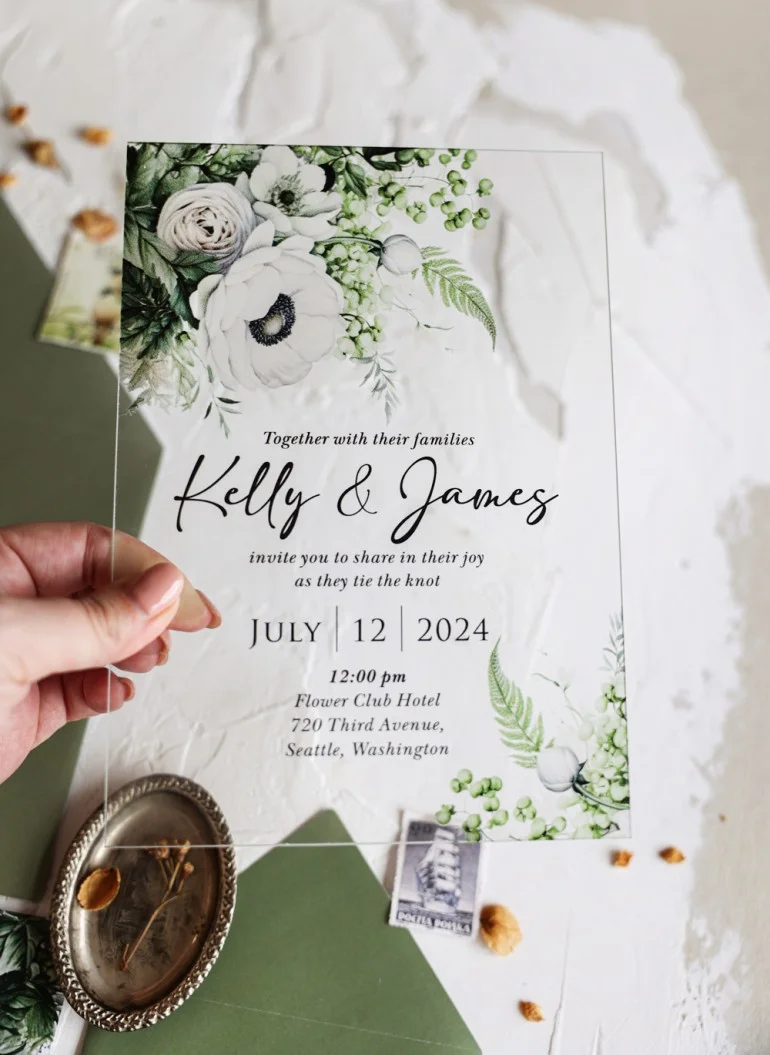
Subtle Glass Wedding Invitations with Floral Motif | Korani no. 15
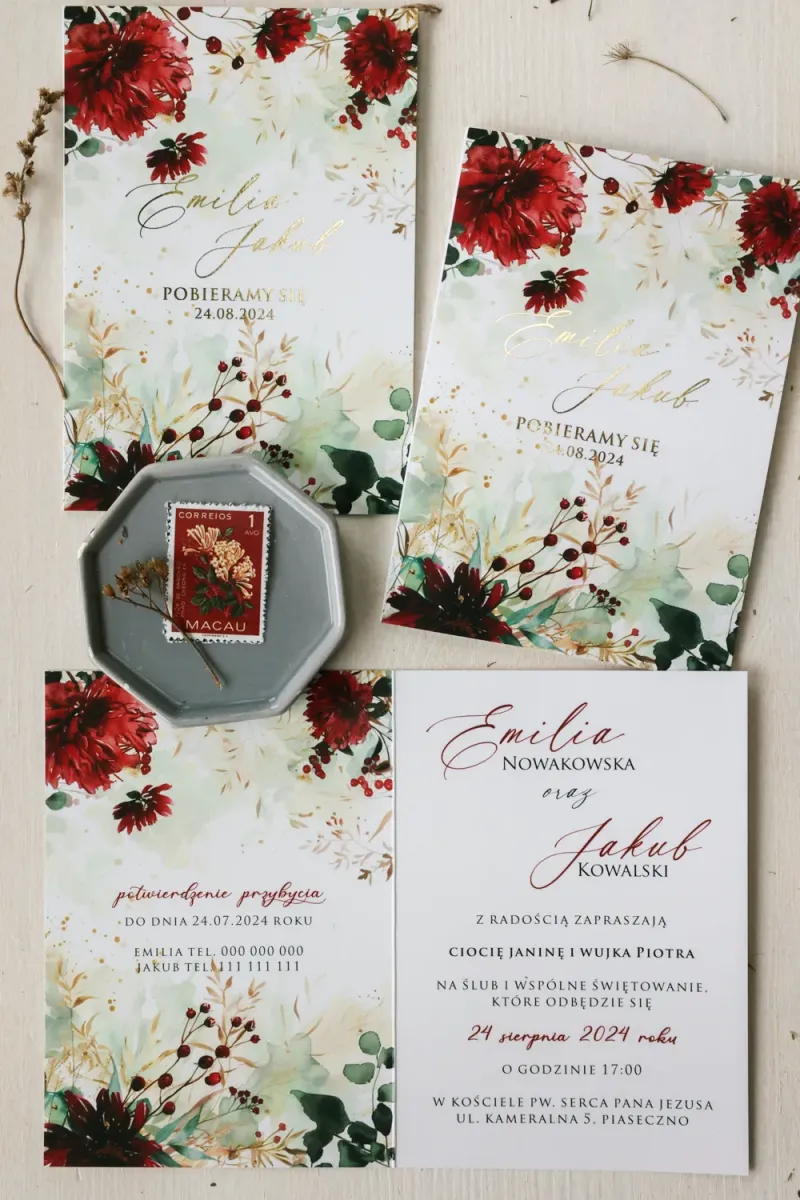
Wedding Invitation with Gold Accent and Red Flowers | Ruskus no. 1
Wedding Bow Tie – Gala-Style Chic
A bow tie is an inseparable element of a tuxedo, but it's increasingly appearing as an alternative to a tie with wedding suits. A well-chosen bow tie can give the Groom the look of a gentleman from years gone by or emphasize his individual style. A bow tie is almost mandatory if you choose a tuxedo (classically a black bow tie for a black or navy tuxedo), but with a suit, you can experiment with colors and textures. Popular choices include burgundy, navy, bottle green bow ties, and even patterned ones (e.g., paisley, small dots) – however, for a wedding, we recommend smooth and elegant bow ties, possibly with a subtle jacquard pattern. An important aspect is the type of bow tie: pre-tied (factory-tied, on a strap with a clasp) or self-tie. True connoisseurs choose self-tie bow ties – they look slightly less perfectly symmetrical than factory-tied ones, but they testify to class and knowledge of men's fashion. If you've never tied a bow tie yourself, practice before the wedding or choose a model that can be tied beforehand and unclipped if necessary (there are self-tie bow ties with a hook). It's good to match the bow tie color to other accents – e.g., flowers or the primary color. If you decide on a bow tie, ensure a shirt with an appropriate collar (wing or bow-tie-ready) and consider adding a waistcoat or cummerbund, especially with a tuxedo – then the whole look is complete. You can also combine a bow tie with braces instead of a belt, which gives the styling a retro touch. It's important to feel comfortable in a bow tie – if you've never worn one, wear it for a bit before the wedding so you don't feel like you're in a "costume" on the big day.
Other Unusual Accessories: Cravat or No Tie
While a tie and bow tie are the two main options, the Groom has other possibilities for decorating the shirt collar, depending on the wedding style. One of them is a cravat, also known as an Ascot – it's a wide silk scarf tucked under the shirt collar, tied with a decorative pin or brooch. A cravat is often chosen for English-style or retro weddings, especially in combination with a three-piece suit and waistcoat. It gives a very distinguished effect, though it is less formal than a tie. Remember that a shirt with a wing collar or a special low collar for cravats works best. Of course, you can also forgo any neckwear – but this is an option only for the most casual weddings (e.g., a beach wedding, loose garden party). In that case, the Groom can appear in an open-collar shirt and a suit without a tie. Such styling, while fashionable on magazine covers, carries the risk in real life that you will look too casual or like a guest rather than the main character. Therefore, in the vast majority of cases, we recommend a tie or bow tie, or a stylish cravat – because they give the men's wedding styling its ceremonial touch.
Step 6: Groom's Wedding Footwear – Style and Comfort
Classic Shoe Models for a Suit
Choosing wedding shoes is just as important as choosing a suit – appropriate footwear completes the entire styling and affects the Groom's comfort for many hours. Classic models worth noting include: Oxfords – the most elegant men's shoes. They are characterized by closed lacing (the part with eyelets for laces is sewn under the front part of the shoe). Black Oxfords are the perfect choice for a tuxedo or a very formal, dark suit. They are synonymous with class and formality. Derbies – shoes with open lacing (easier to fit to the foot), slightly less formal than Oxfords but still elegant. Black Derbies fit a suit, and in shades of brown or cognac – informal suits or rustic-style outfits. If the Groom's suit is navy or gray and the wedding isn't super official, brown Derbies can look stylish. Patent shoes – special, shiny shoes, most often Oxfords. This is the traditional choice for a tuxedo (patent Oxfords or so-called opera pumps – patent loafers without laces, though the latter are rare). Patent shoes shine beautifully in the evening and emphasize the formality of the tuxedo. When choosing a model, follow the rule of formality: the more ceremonial the wedding, the simpler and more classic the shoe should be (smooth, without decorations, on a leather sole). Also, remember that modern fashion allows for some deviations – e.g., for a navy day suit, you can wear elegant brown shoes and still look appropriate. However, for a Groom, black, classic oxfords or derbies usually work best as the safest option.
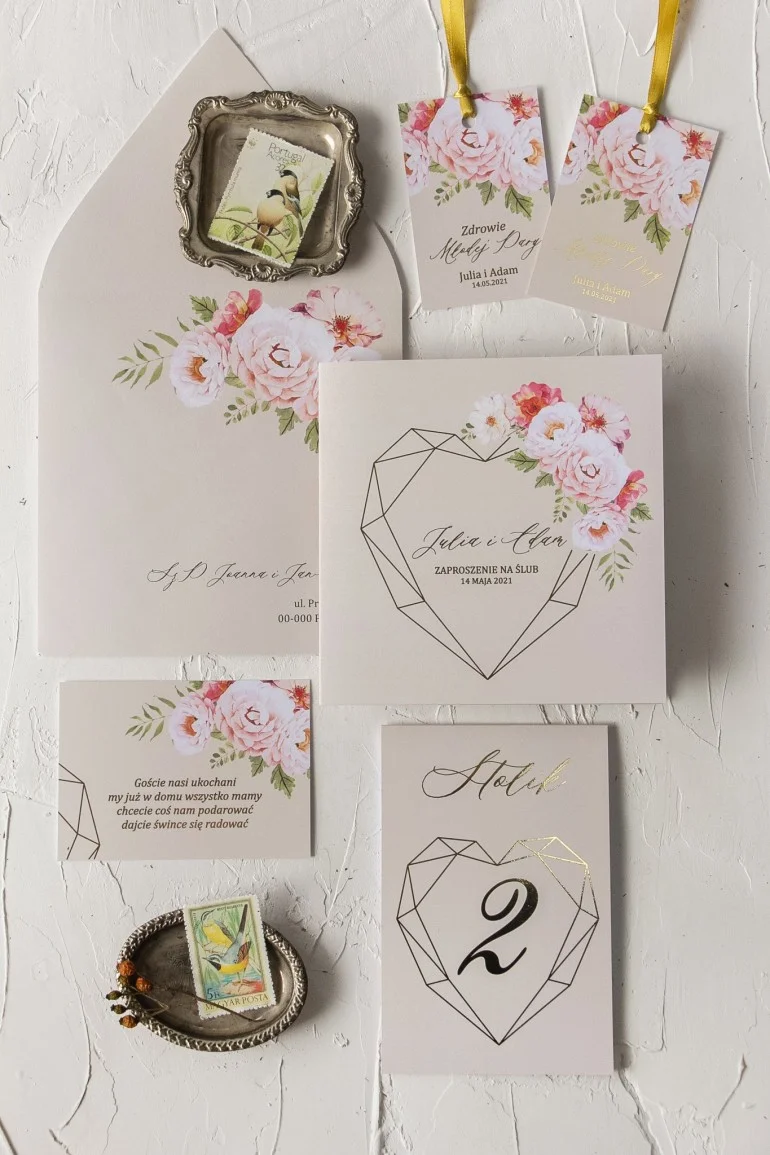
Wedding Invitations with Gold Heart and Floral Motif | Szafirowe no. 8
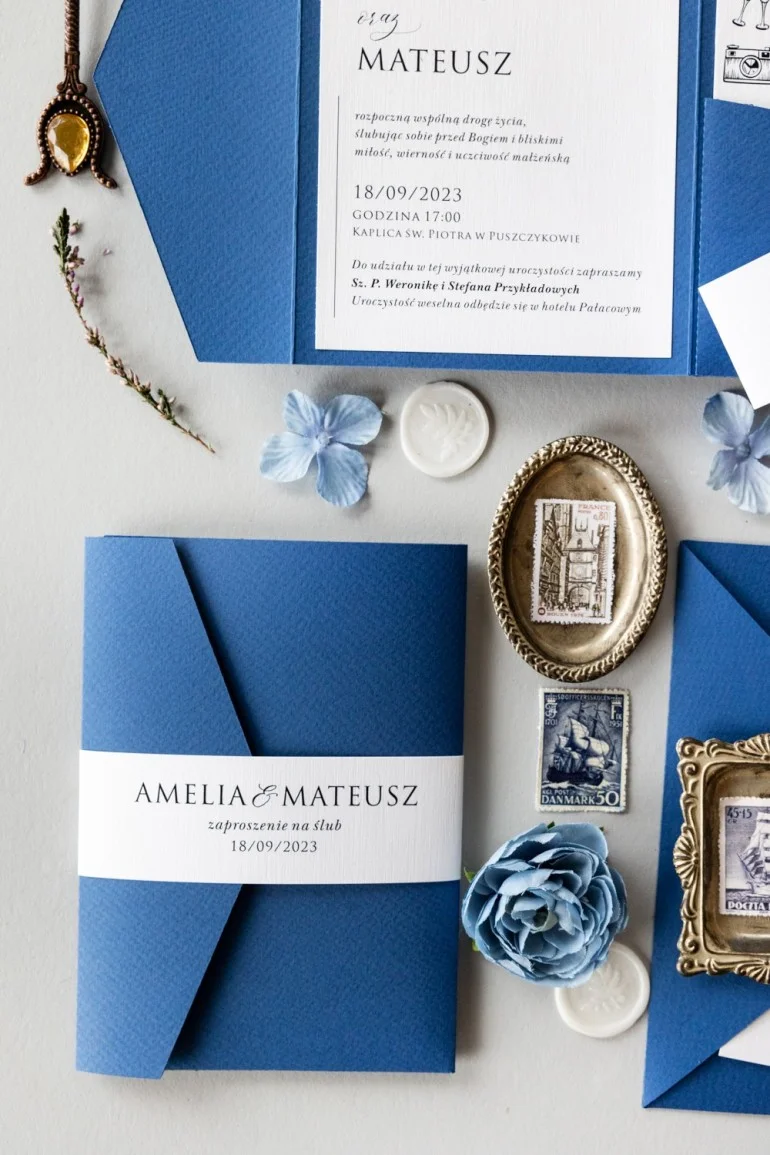
Blue, Elegant Wedding Invitation with Pocket | Kraft no. 7
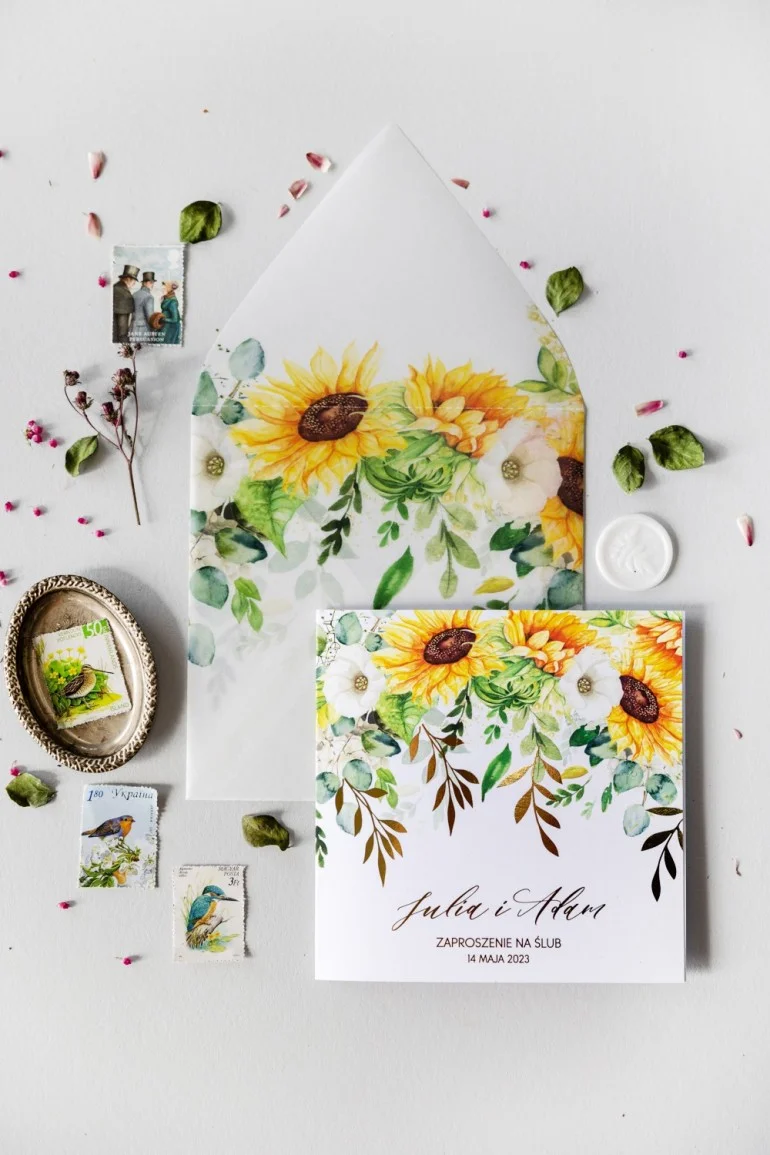
Wedding Invitations with Sunflowers and Gold Foil | Rubin no. 7
Shoe Color and Suit Color
The basic rule for matching shoe color to a suit says that a black suit or tuxedo is paired only with black shoes. In the case of a tuxedo, black shoes, preferably patent, are actually required, as we've already established. However, with suits in other colors, we have a few more possibilities. For very dark suits (graphite, charcoal), black shoes also look best. A navy suit gives two options: traditionally – black footwear for a more formal effect, or dark brown (e.g., in a dark chocolate shade) for an Italian style, slightly more relaxed yet still elegant. Navy with brown accessories is a popular combination, but it's worth making sure the shade of brown is subdued and dark (light brown with navy can look too casual on a wedding day). A gray suit also pairs well with black shoes (especially an anthracite suit with black Oxfords is a classic), as well as with brown – here the shade of brown can be slightly lighter, e.g., cognac, especially for lighter grays in summer stylings. If you chose a suit in an unusual color (e.g., green, burgundy), black or dark brown shoes will be a safe choice – they will add elegance to the styling without dominating it. Most importantly, the shoes should be in the same shade as the belt (if you're wearing one). So if you decide on brown shoes, be sure to choose a brown belt in a similar color. With braces, the problem disappears as there are no belts then. Additionally, pay attention to socks – with dark shoes, wear long socks (over-the-calf) in the color of the trousers or shoes, so no bare calf is visible when sitting. You can also opt for socks with a fun pattern or in the wedding's primary color if you want to add a bit of flair – as long as they aren't white sports socks! This small element also builds your overall image.
Comfort First – Preparing Shoes for the Wedding
The Groom's shoes must not only look great but, above all, be comfortable. Remember that you will spend many hours in them: the ceremony, photo session, greeting guests, first dance, partying until dawn. And if you're wondering how to choose a song and prepare a routine for the first dance, we have a separate guide for that. Poorly fitted or un-broken-in footwear can ruin your day with blisters or chafing. Therefore: Buy shoes at least a few weeks before the wedding. Walk in them around the house for several minutes a day to break them in. Leather shoes will adapt to your foot during this time and become softer. If you feel they pinch somewhere, use shoe trees, stretching at a cobbler, or special gels for sensitive spots in advance. On the wedding day, wear thin cotton or bamboo dress socks – your feet will sweat less than in synthetics. Have a plaster for potential chafing with you (the best man or groomsman can do this). Pro tip: The Bride usually has an emergency kit for such cases – you should take care of yourself too. Our Groom's and Bride's essential kit, a complete guide to the wedding emergency set, might be useful. If you plan to go wild on the dance floor, consider bringing a second pair of shoes for the late hours – some Grooms change into elegant moccasins or comfortable loafers for the finale of the reception when the protocol loosens up a bit. This is optional but can save your feet. One last thing: ensure impeccable cleanliness and shine of the shoes. A few days before the wedding, thoroughly clean and polish the footwear, and just before leaving for the church/registry office, wipe them again with a soft cloth. Polish smooth leather shoes to a high gloss (so-called spit shine), just wipe patent ones, and for nubuck or suede – impregnate and brush. Shiny, clean shoes for a suit are the hallmark of a gentleman who cares about details.
Step 7: Wedding Suit Accessories – Cufflinks, Pocket Square, Belt, and Other Details
Cufflinks and Watch – Elegant Men's Jewelry
On his wedding day, even a man can (and should) afford a bit of jewelry. Cufflinks are a small but very stylish accessory that sets the Groom apart. If the shirt has French cuffs, choosing cufflinks is obvious – try to match their style to the overall character of the outfit. For a classic wedding, simple silver or gold cufflinks will work (depending on whether the color of your wedding ring and other details is cool or warm). You can also choose cufflinks with a black or navy eyelet that will reference the suit color. For sentimental Grooms, personalized cufflinks are an interesting idea – e.g., with the wedding date, initials, or some symbol of love engraved. Remember, however, not to overdo it – cufflinks should add sparkle but shouldn't be too loud or humorous. The second permissible element of men's jewelry is a watch. Opinions are divided here – some experts believe that the Groom shouldn't wear a watch at all (according to old etiquette, time should stop for him that day). Many men, however, feel incomplete without a watch. If you decide to wear one, let it be a classic model, on a leather strap, rather thin and elegant than sporty. A classic, thin watch on a leather strap works best (avoid sporty, digital models or smartwatches). Avoid electronic gadgets or massive chronographs – on the wedding day, we focus on discreet chic. Make sure the watch strap is in a color similar to the color of the shoes/belt. Other "jewelry" elements include a tie clip (if you wear one, choose a very discreet, smooth one – its job is to hold the tie, not attract attention) or an elegant belt buckle. In summary, men's jewelry in wedding styling is characterized by the principle: less is more. A few refined details are quite enough for you to shine with elegance.
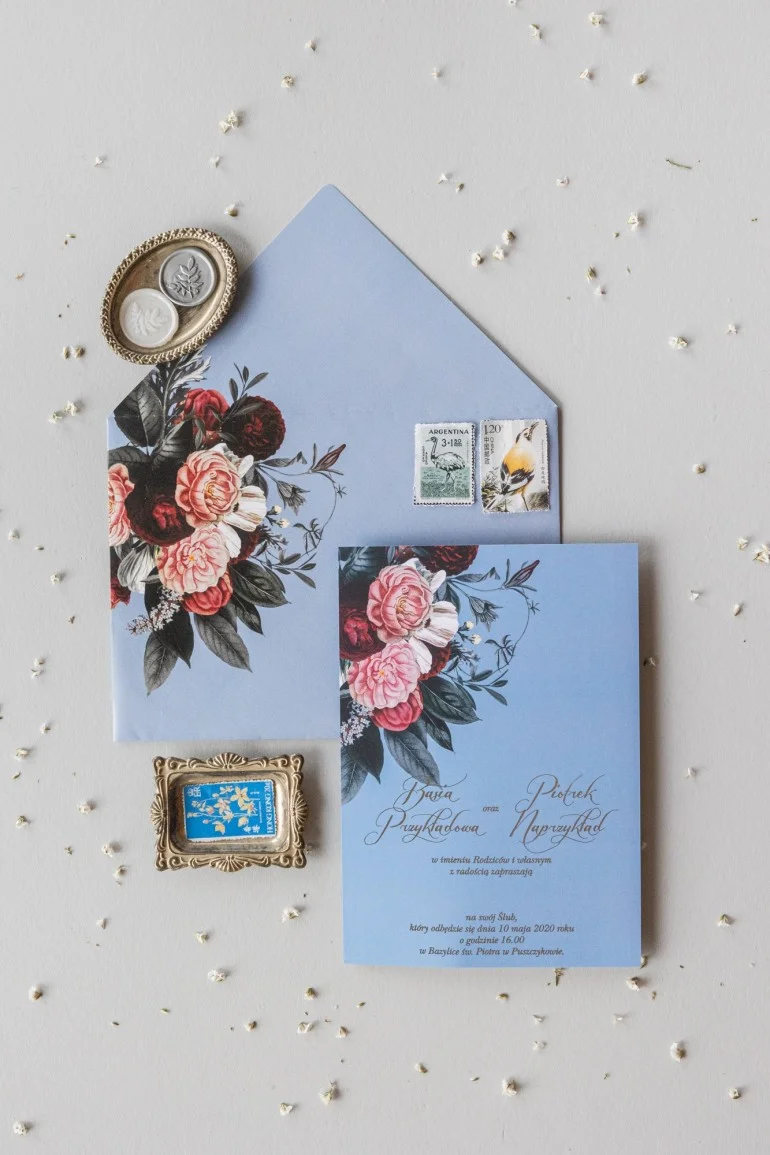
Glamour Invitations with Silver text | Pastelowe no. 1
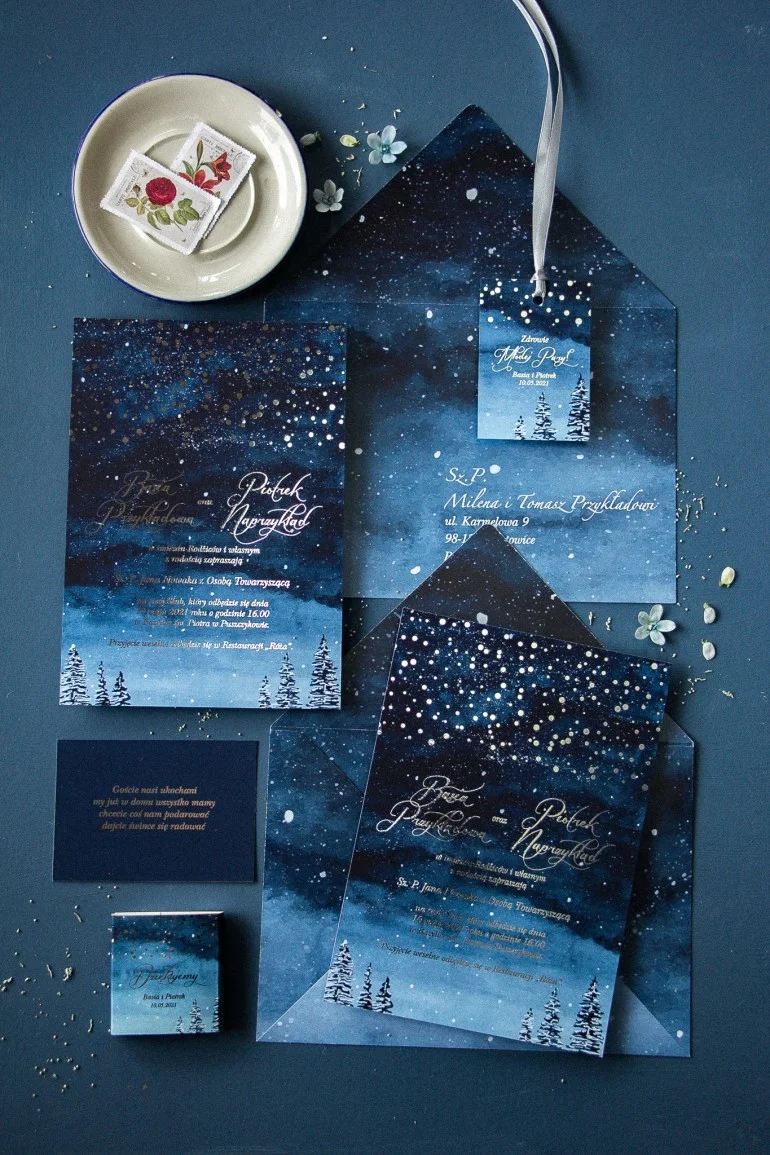
Winter Themed Wedding Invitations with Silvering | Pastelowe no. 6
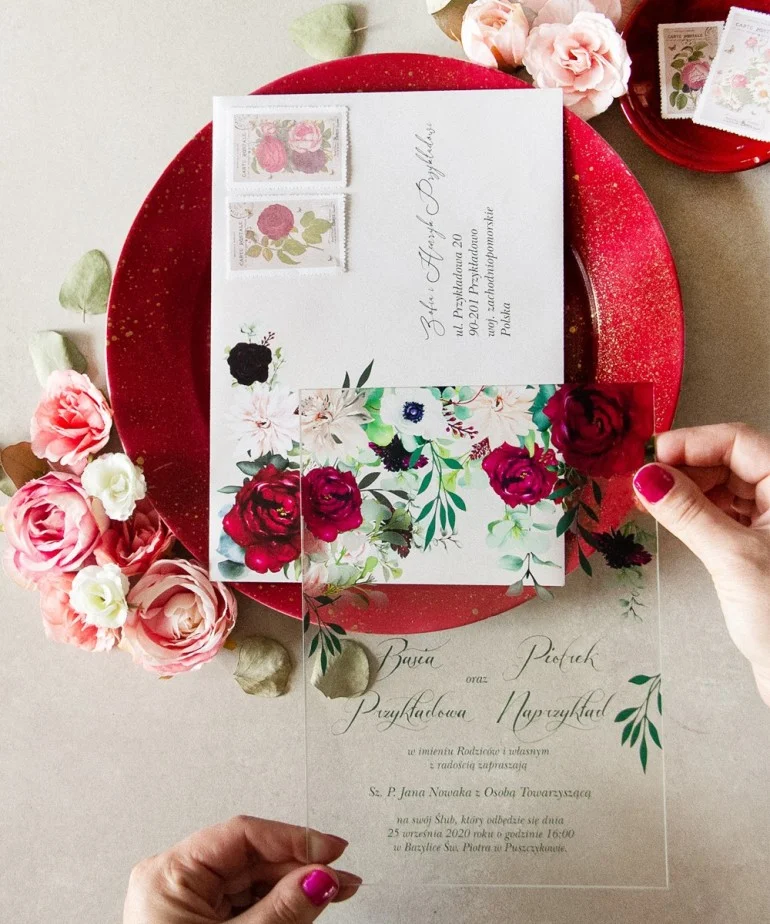
Elegant Glass Wedding Invitations with Floral Motif | Korani no. 4
Pocket Square – A Chic Accent in the Pocket
A pocket square, or decorative handkerchief in the breast pocket of the jacket, is a detail that can beautifully complete the Groom's styling. Many people forget about the pocket square or consider it unnecessary, but we encourage it – for a wedding, it's actually recommended! A white linen or cotton pocket square folded classically (TV-fold, a narrow protruding strip) will add gentlemanly charm and pair perfectly with a white shirt, even if you forgo other colors. This is the most formal version of a pocket square – white, smooth. However, if you want to introduce a bit of color or pattern, the pocket square offers that possibility in a subtle way. You can choose it to match the wedding's primary color or reference the Bride's bouquet. For example, a delicate pink accent in the pocket square can correspond with roses in the bouquet, and bottle green with the leaves of the decoration. Important rule: the pocket square should not be made of the identical material as the tie or bow tie (ready-made tie+pocket square sets from the same fabric don't look very stylish – it's better when the pocket square only references the color but is not a "set"). The pocket square material can be matte (cotton, linen) or silk – silk pocket squares often have beautiful patterns that can liven up a plain suit. In very formal stylings (black tuxedo), you can limit yourself to a white pocket square, while in less formal suits – feel free to play with color. The way it's folded also matters: for a wedding, we most often recommend the classic (straight folded) or the so-called puff (a protruding "bud" of material). Avoid only overly elaborate forms of folding the pocket square that will distract from the rest of the attire.
Belt or Braces – What to Wear with a Wedding Suit?
Most men wear trousers with a belt daily, but for a wedding suit, it's also worth considering braces. Both options have their advantages and depend both on the trouser cut and the style you prefer. If the suit trousers have belt loops, a belt seems like the natural choice. It should be leather, high quality, with a classic buckle. The color – as we mentioned – matched to the shoes (black shoes = black belt, brown shoes = brown belt in a similar shade). Belt width should be standard (3-3.5 cm), the buckle not too decorative. Remember that a belt divides the silhouette in half – if you want to avoid this, choose a belt shade close to the trousers (this trick is especially recommended for short men or those with a belly, so as not to create an additional horizontal line around the waist). Braces are an alternative that has several pros: first, they hold the trousers at the correct height very well regardless of movement (there's no risk of trousers falling or twisting). Second, the absence of a belt means a cleaner suit line – nothing bunches the jacket underneath. Third, braces are super stylish and associated with retro elegance. For a wedding suit, choose high-quality braces, preferably button-on (not with metal clips, which look less elegant – if the trousers don't have buttons for braces, a tailor can easily sew them inside the waistband). The color of the braces can be neutral (white, black) or chosen, for example, to match the color of the tie/bow tie. If you have a tuxedo, braces are actually recommended instead of a belt, because tuxedo trousers often don't have belt loops. In summary, choose what you feel more confident in and what suits your suit's style. More and more Grooms are leaning towards braces for comfort and a stylish vintage effect. Most importantly, you shouldn't have to pull up your trousers or adjust your braces constantly – everything should be well-adjusted during fittings so that it stays in place on the wedding day.
Step 8: Boutonniere – Completing the Groom's Styling
Symbolism and Tradition of the Boutonniere
A flower in the buttonhole is a beautiful tradition that distinguishes the Groom as the host of the wedding and references the Bride's bouquet. The boutonniere, understood as a fresh flower pinned to the jacket lapel, dates back to the 19th century when gentlemen, by pinning a flower, showed respect for the occasion and the lady of their heart. On the wedding day, this small accent takes on symbolic meaning – often the Groom's flower is one of the flowers in the wedding bouquet, emphasizing the couple's unity. Traditionally, a white flower (e.g., gardenia, rose, carnation) is chosen, symbolizing purity of feelings. However, this is not a strict rule – currently, the boutonniere can be a more elaborate mini-composition referencing the style of the decorations and the wedding's primary color. Is a boutonniere mandatory? Not necessarily, but it certainly adds chic. If you don't like flowers, you can forgo it or replace it, for example, with an elegant lapel pin (there are men's flower-shaped pins made of fabric or metal). However, a live flower looks most impressive and photogenic. It's worth considering a boutonniere as an integral part of the wedding attire because you will gain an interesting element that distinguishes you from the rest of the male guests, who often have a similar suit + shirt + tie combo.
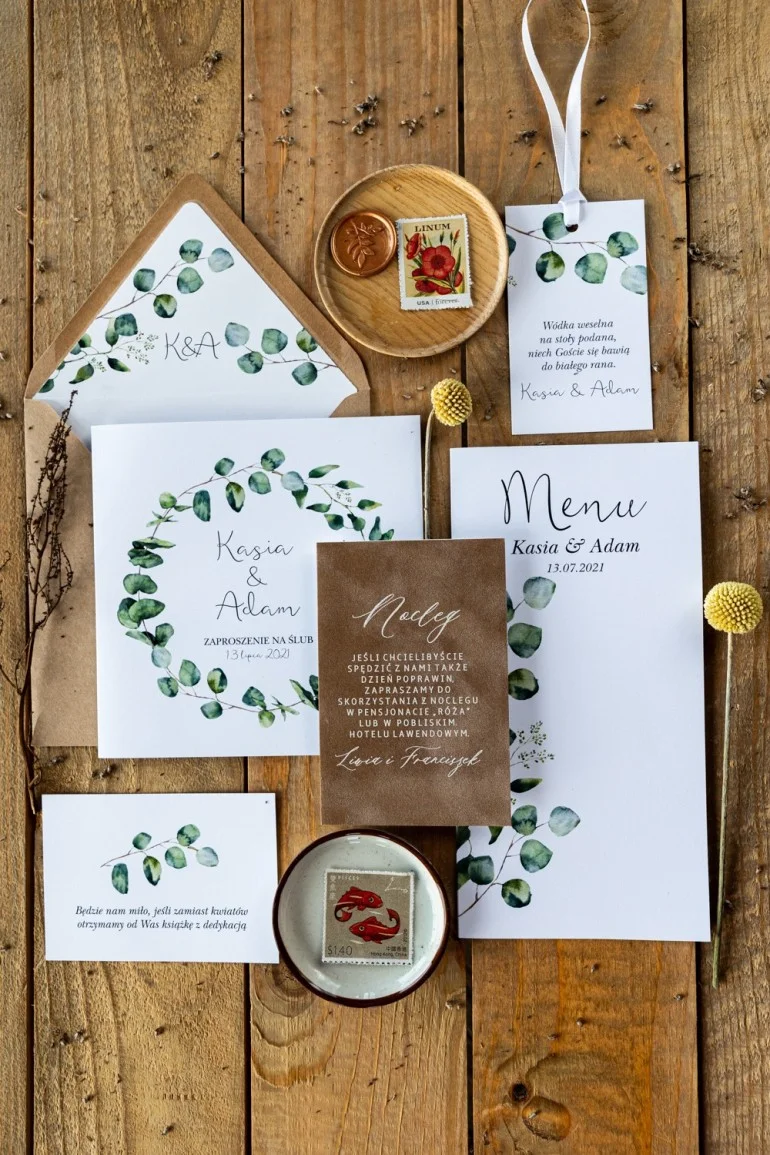
Eco-friendly Invitation with Greenery Styling | Kalia no. 2
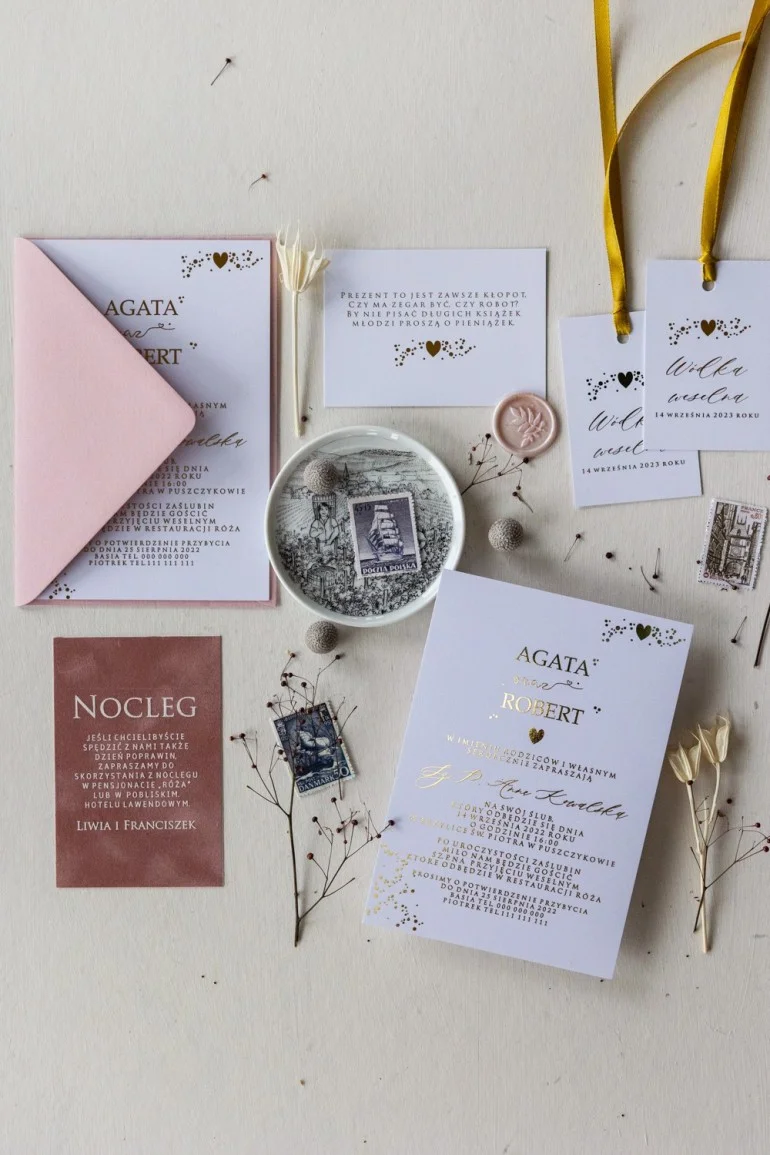
Subtle Wedding Invitations, Minimalist Design | Simple no. 3
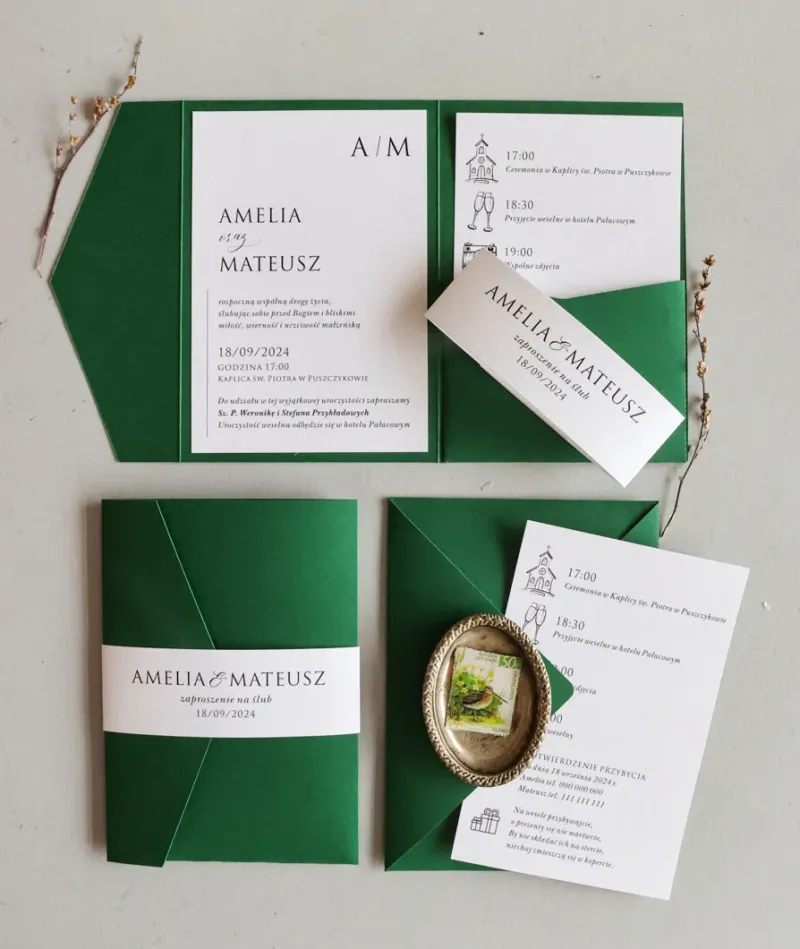
Elegant Wedding Invitations in Bottle Green | Kraft no. 10
Choosing the Flower for the Boutonniere
When choosing a flower for the boutonniere, it's best to consult with the florist preparing the wedding bouquet and decorations. The standard is that the Groom's boutonniere is made of the same flowers as the Bride's bouquet (or at least kept in the same color scheme). For example: if the bouquet contains white roses and eucalyptus, the boutonniere can be a small white rose with a sprig of eucalyptus. If the floral theme is sunflowers at a rustic wedding, the Groom can have a miniature sunflower in his boutonniere, etc. Make sure the size of the boutonniere is proportional – it should be small and subtle. A flower that is too large will look caricatured and may get in the way. Practical issues: the boutonniere flower should last several hours without water without wilting immediately. Therefore, some delicate flowers (e.g., tulips in heat, hydrangeas) may not be suitable – but the florist will certainly advise. Roses, carnations (they are very durable), ranunculus, eustomas, and miniature calla lilies are often used. A sprig of greenery or small flowers like baby's breath are common additions. The whole thing is usually wrapped with floral tape or ribbon. Make sure the flowers don't stain the suit (e.g., pollen from lilies – avoid these as they can stain the fabric). Let the boutonniere color correspond with the rest of the floral arrangements – this will make the Bride and Groom's styling and the decor a cohesive whole. Pro tip: it's worth preparing two identical boutonnieres for the Groom – one to wear for the ceremony, and a second fresh one to pin before entering the wedding hall or for the photo session. This way, the flower looks fresh in photos throughout the day (this is especially useful in summer). Just store the spare boutonniere in a cool place. Such attention to detail is further proof that the Groom is prepared for everything!
How to Correctly Pin a Boutonniere?
A classic boutonniere is a hole in the left jacket lapel (looking from the wearer's perspective) – it is often factory-sewn and serves as decoration. In old, custom-made jackets, the flower stem was passed through this hole and stabilized with thread or a special clip on the underside of the lapel. Currently, the easiest way is to pin the boutonniere using a small safety pin or lapel pin provided by the florist. The flower should be located just below the tie/bow tie knot, on the left lapel. Make sure in front of the mirror that it is straight and in the middle of the lapel width (not "escaping" to the side). If your jacket has a functional buttonhole and a loop at the back – you can try putting the flower in it, but usually, prepared wedding boutonnieres have short stems and require pinning anyway. Remember that a boutonniere is a flower, not a breast pocket – men often confuse these terms. Don't put the bouquet in the breast pocket; that's what the pocket square is for. We always pin the flower on the jacket lapel, never to the shirt or – heaven forbid – to the trouser pocket. You can ask the best man or someone from the family to pin it properly so your hands don't shake with emotion. After putting on the boutonniere, look in the mirror and... smile. Now you really look like a Groom in every sense of the word!
Step 9: Fittings and Suit Personalization – The Key to Perfection
Buying vs. Renting – What's Worth It?
Before the suit or tuxedo lands on your shoulders on your wedding day, you must decide whether to buy, tailor, or perhaps rent the outfit. Each of these options has its pros and cons. Renting a suit or tuxedo can be a cheaper option if you don't want to invest in an outfit for a single occasion. Some wedding fashion salons have elegant sets for the Groom that you can rent for a fraction of the purchase price. Remember, however, that a rented outfit will rarely fit perfectly and may show signs of use. This can be a good solution if you dream of a top-shelf tuxedo that you can't afford to buy – you'll rent it for a fraction of that amount. Always try on several options and check the condition of the suit (if there are no signs of wear). Buying a suit is an investment, but in return, you get your own outfit that will stay with you for years. Many men buy a wedding suit with the thought that it will also serve them later for other celebrations. This is a good path if you choose a classic model and color (navy, charcoal, black). You can reuse such a suit after the wedding, and even break it up – wear the jacket with chinos, the trousers with another jacket – if you like smart casual style daily. Buying also gives you the opportunity for precise fitting in the salon or at a tailor. The downside is the cost – a good suit is an expense of several thousand zlotys (though there are also cheaper ready-made models, remember quality). There is also the option of made-to-measure or bespoke tailoring. This is the most exclusive solution, but also the most expensive. A suit tailored from scratch by a tailor will be perfectly fitted and unique. If the budget allows and you value luxury and want a souvenir for years, it's worth considering having a wedding suit made to measure (just remember to start this process well in advance). In return, you will receive an outfit exactly as you want, made of the chosen fabric, with attention to every detail.
When to Order the Suit and How Many Fittings?
Time is a key factor in the context of wedding attire. Whether you're tailoring, buying, or renting – don't leave it to the last minute. Optimally, start your search about 3-4 months before the wedding. If you're tailoring to measure, that's exactly how much time is needed (first visit, choosing fabrics, taking measurements, then 1-2 test fittings and collecting the finished garment). When buying a ready-made suit, it's also worth having a time buffer for potential tailoring adjustments. Even the best off-the-rack suit often requires minor modifications (shortening trousers, narrowing the waist, adjusting sleeves). Schedule a control fitting about 3-4 weeks before the wedding, after adjustments have been made. Dress as you plan to on the wedding day (shirt, shoes, tie/bow tie) to see the full effect and make sure everything works together. Check during the fitting: Can you freely raise your arms, sit down, bend over? (nothing should burst or pull) Does the jacket collar sit nicely against the shirt collar on the nape of the neck? Is the length of the sleeves and trousers perfect after putting on shoes? Does the waistcoat (if there is one) fit well both with the jacket fastened and unfastened? Do you simply feel good in this outfit for a longer while (walk around, try a few dance steps)? If anything causes discomfort or doubt – speak up to the tailor or advisor. It's better to fix it now than to suffer on the wedding day. Remember that minor body weight fluctuations are normal before the wedding (stress, more intense training, etc.). Therefore, plan the final fitting for about a week before the ceremony. Then, if necessary, the tailor will make minimal corrections. To manage time well, find out when to start planning a wedding and what the key deadlines are.
Last Preparations Before the Big Day
Once your suit or tuxedo is ready and fitted, it's time for the final touches and preparing it for the wedding day. A few days earlier, make sure all styling elements are gathered in one place: the suit (ironed or taken to the dry cleaner for refreshing and pressing), the shirt (washed and perfectly ironed), cufflinks (packed), shoes (polished), tie/bow tie (ready). Put a cover on the jacket so nothing stains it. Remove all temporary tags and threads: unpick the sewn pockets or the vent at the back of the jacket (sometimes new suits have the vent and pocket sewn shut – don't forget to open them to avoid a gaffe). The day before the wedding, review the checklist again: jacket, trousers, shirt, spare shirt, tie/bow tie, pocket square, cufflinks, belt/braces, shoes, socks (take two pairs just in case). In the heat of final preparations, it's easy to overlook something. A final preparation checklist for the last week before the wedding might be helpful. Ask the best man or groomsman to have, for example, a spare pocket square or a second tie – in case of a stain during the day, you'll quickly swap the element. On the wedding day, get dressed with time to spare. Put the suit on last, after the hairdresser and perfume, so as not to dirty it with cosmetics. Ask the best man for help with fastening cufflinks and pinning the boutonniere – it's better in company. When you stand ready in front of the mirror, make sure you look exactly as you planned. If so – smile, take a deep breath, and go get your chosen one. You are prepared to experience the most important day of your life in great style!
Step 10: Consistency of Styling with the Wedding Theme and Accessories
The Couple's Style and the Wedding Theme
The ideal Groom's styling is not just the sum of well-chosen clothing elements, but also part of a larger whole – the visual setting of your wedding. More and more couples care about a wedding theme or at least a common color scheme and decoration style. The Bride and Groom's attire should fit into this concept. If, for example, you dream of a glamour wedding with gold elements, the Groom can accentuate this with a pocket square with a delicate gold pattern or gold-colored cufflinks. When organizing a rustic reception in a barn, the Groom's suit can be slightly less formal, e.g., in an earthy color, with a waistcoat made of a different fabric (tweed), plus brown shoes and a bow tie instead of a tie, which will create a vintage atmosphere. It's important that all elements – the Bride's dress, the suit, flowers, decorations – create a harmonious image. Discuss your aesthetic vision of the wedding day together. Often it's the Brides who have a specific idea for decorations and colors – it's worth the Groom getting involved too, matching his outfit. This doesn't mean you have to be dressed to match the napkins on the tables, let's not overdo it. It's rather about the general style: are you going in the direction of boho (looser, lighter, maybe with a colorful bow tie?), or classic elegance (tuxedo, black accessories, high formality), or maybe urban, modern style (slim suit, minimalist style). The Groom's styling on the wedding day is one of the elements of the entire event's scenography – make sure it fits the rest while reflecting your shared taste.
Wedding Stationery and Decorations – Shared Aesthetics
The consistent visual perception of your wedding is influenced not only by the outfits but also by all decorations and wedding stationery. Wedding invitations, guest boards, menus, place cards on the tables – these are all elements that create the atmosphere before the guests even see the Bride and Groom. In an ideal situation, the color of the Groom's suit or accessories can reference this setting. For example, if the primary theme of the wedding stationery is green eucalyptus leaves, a boutonniere with such a leaf will be a great accent, or even a suit in a shade of green or classic navy with green accessories. Maintaining shared aesthetics doesn't have to mean literal matching, rather a subtle dialogue between elements. Maybe the Groom's pocket square has a pattern in a shade that appears in the decorations at the wedding hall? Or the tie is burgundy like the primary theme of the stationery? Such details are noticeable on a subconscious level and make the whole wedding seem well-thought-out and refined. When guests receive beautiful invitations and then arrive at the ceremony where they see you dressed in a style consistent with that atmosphere – they will surely appreciate it, even if they don't realize it immediately. Wondering what texts to put on wedding invitations or how to ensure the consistency of the invitation style with the wedding decoration? We have guides for that! It's worth mentioning the primary color here – if you've chosen one (e.g., navy and silver, bottle green and gold, dusty pink, etc.), it's good to weave it into both the Bride's and Groom's attire (even in small things) and into the wedding accessories. Coordination with the florist and decorators will allow you to agree that, for example, the flower in the boutonniere and the bouquet match the color of the napkins and flowers on the tables. The stylistic matching of all these elements will give the final "wow" effect – your wedding will be like a beautiful story where every detail is in its place.
Guest Favors and Other Accents
Increasingly, the Bride and Groom prepare small guest favors – for example, small sweet gifts or commemorative trinkets – as an expression of gratitude for the guests' presence. It's good if these accents also match the wedding style. Interesting ideas might be sweet gifts for wedding guests or fortune cookies. Also, proper guest seating and aesthetic place cards on the tables, which you can learn more about from the article What to write on place cards?, contribute to the overall perception. All these elements together create an unforgettable impression of consistency and class for your reception. Guests will subconsciously appreciate that every detail has been thought through, and you will have the satisfaction that you've tied everything up. At the end of the day, the most important thing is, of course, your feelings and the joy of the wedding. However, a beautiful setting, including your perfectly chosen suit or tuxedo, adds brilliance to this day. When you look through photos years later, every element – from your tie and the flower in your boutonniere to the color of the invitations – will tell the story of your shared style and the decisions you made to make this day special. We hope that with this guide, choosing a wedding suit or tuxedo will be easier for you, and the final effect will dazzle you, your beloved, and all the guests. Good luck with the preparations and much joy on your wedding day!
Recommended articles:
- When to Start Planning a Wedding? A Comprehensive Guide
- How to Make a Guest List? A Guide for Engaged Couples
- Top 10 Mistakes Made by Couples During Wedding Planning
- How to Choose the Perfect Date for Your Wedding?
- Wedding Budget Planning: Tips on How to Effectively Plan Expenses