How to Plan a Breathtaking Theatrical & Opera-Themed Wedding

How to Plan a Breathtaking Theatrical & Opera-Themed Wedding
Are you dreaming of a wedding that will be remembered for a lifetime—not just by you and your partner, but by every single guest? A theatrical and opera-themed wedding is one of the boldest, yet most sophisticated concepts you can choose when planning your big day. It is a style that requires no justification; it simply works, moving and captivating everyone in attendance. But how do you ensure this idea doesn't end up looking like a cheap imitation, and instead becomes a true masterpiece? How do you plan an elegant celebration that feels cohesive from the first musical note to the final dance? In this article, you will find the answers to all these questions—step by step, packed with actionable advice gathered from over a decade of experience in the wedding industry.
What is a Theatrical and Opera Wedding? — Definition, History, and Inspiration
When Love Becomes a Masterpiece — The History of Theatrical Ceremonies
A theatrical and opera-themed wedding draws heavily from the centuries-old tradition of grand European theatres and opera houses—places where humanity's greatest stories of love, passion, tragedy, and triumph have been told. Opera, as an art form, was born in Florence at the turn of the 16th and 17th centuries. From its very inception, it has been synonymous with grandeur, drama, and an absolute devotion to scenic detail. The great operas of Verdi, Mozart, Puccini, and Wagner have set the standard for beauty and emotion for centuries—and these are precisely the standards worth bringing into your own wedding. The goal isn't to literally copy a stage production, but to be inspired by its spirit: the feeling that every gesture, every moment, and every glance is part of a larger, beautifully composed masterpiece.
In Europe, the tradition of grand ceremonies with theatrical elements has deep roots. Noble weddings of the 17th and 18th centuries were literal spectacles, featuring elaborate costumes, live music, poetry recitals, and visually stunning rituals. Today, with themed weddings dominating the trends for 2025 and 2026, the opera and theatre aesthetic is experiencing a massive renaissance. Couples looking for something beyond a standard reception are embracing the aesthetics of velvet, gold, candelabras, and dramatic classical music—and the results are breathtaking. This isn't a wedding style for everyone, but rather for those who understand that a wedding should be a true artistic experience.
A theatrical wedding goes far beyond decor. It is an event-planning philosophy which dictates that every element of the day is part of a cohesive, well-thought-out narrative. From the invitation your guests hold in their hands weeks before the event, through the ceremony that acts as the beautiful first act, all the way to the last dance that closes the story like a final duet between a tenor and a soprano—everything must be in perfect harmony. It is this consistency and dedication to the theme that leaves guests feeling they have been part of something truly extraordinary.

Glamour Wedding Invitation with Gilded Branch and Velvet Paper – Ruskus No. 14

Impresja No. 7 Wedding Invitations – Eucalyptus and Greenery Style

Gaja No. 2 Wedding Invitation – Sage Green with Letterpress Embossing
Opera, Theatre, and Old Money — Variations of the Theme
The theatrical and opera vibe is not a one-size-fits-all concept. Depending on the couple's preferences, it can be interpreted in several stunning ways. The first variation is the classic grand opera—inspired by the aesthetics of 19th-century opera houses. Think deep, rich colours (black, burgundy, bottle green), massive gold candelabras, crystal chandeliers, heavy velvet fabrics, and white or cream tablecloths with gold trimmings, all accompanied by the scent of melting wax and fresh blooms. The musical backdrop features arias or live string performances. Everything radiates opulence, history, and drama.
The second variation is the dramatic theatre vibe—slightly lighter and more contemporary, drawing inspiration from productions like "The Phantom of the Opera" or "Romeo and Juliet". Here, the contrast of black and white dominates, accented with splashes of gold or crimson. Venetian masks serve as decor, theatrical drapes frame the room, and spotlights cast a warm glow on key areas. This style perfectly blends drama with modern elegance, making it highly accessible for couples who want sophistication without going fully historical.
The third, increasingly popular variation is the fusion of theatrical aesthetics with the "old money" trend. This focuses on timeless, understated elegance that relies on the quality of materials rather than overt flashiness. An "old money" theatrical wedding features muted golds, creamy tones, silk, velvet, string quartets, and impeccable taste. This is often the preferred choice for couples who want the opera atmosphere without feeling like they have "overdone" it. As one description of this style beautifully puts it: it is not about the quantity of the decorations, but their quality and how they are showcased.
Does a Theatrical Wedding Make Sense in Today's Industry?
Asking if a theatrical wedding makes sense is really asking about courage—the courage to be different and to forge your own path instead of following a safe, predictable formula. The answer is a resounding yes, provided it is well-planned and consistently executed. Couples are increasingly stepping away from the standard "white tablecloths and cheesy party music until dawn" routine. Themed weddings have been one of the fastest-growing trends in the industry for years, and the opera-theatre aesthetic ranks highly among couples looking for a bold, distinctive motif.
It is worth noting that a theatrical and opera vibe does not automatically mean an absurd budget. Yes, it requires meticulous planning and perhaps a slightly higher investment in specific areas—namely music, florals, and the venue—but with a strategic approach, you can achieve a jaw-dropping effect even on a moderate budget. The secret lies in prioritisation: it is far better to invest heavily in three key elements (music, flowers, and lighting) that genuinely create the atmosphere, rather than spreading the budget thinly across everything. Cohesion is far more important than sheer quantity.
Modern wedding venues are increasingly catering to this demand. Palaces, castles, historic villas, and elegant ballrooms provide the perfect backdrop for this aesthetic. Highly recommended locations include palatial estates, venues with original frescoes, gilded stucco, and historical architecture that naturally serve as a ready-made "set" for an operatic spectacle. If you dream of hosting an event your guests will talk about for decades, a theatrical and opera theme is one of the surest ways to achieve that.
Choosing the Venue — Setting the Stage for Your Love Story
Palaces, Castles, and Historic Interiors — The Perfect Opera Stage
Selecting the venue is an absolutely foundational decision when planning a theatrical and opera-themed wedding. In this style, the venue isn't just a backdrop; it is a lead character in your production. Imagine walking into a palace ballroom: gilded stucco on the ceiling, 18th-century wooden parquet floors, massive crystal chandeliers casting a warm, golden glow. Suddenly, you realise that no artificial decoration can ever replace what history and architecture provide naturally. We are fortunate to have access to countless stunning palaces, manors, and historic estates that effortlessly create the perfect setting for an opera. A palace with a dedicated ballroom, music room, or fireplace lounge offers elegance built right into the walls.

Glamour Wedding Place Cards with Pearls – Pearls No. 1 White

Kraft Wedding Place Cards No. 6 – Burgundy with Hand-Gilded Edges

Impresja No. 7 Wedding Place Cards – Eucalyptus Motif Table Name Cards
When searching for a venue for a theatrical wedding, keep a few key criteria in mind. First, the architecture and character of the interior. Historical details, columns, gold-framed mirrors, old frescoes, and ornate doorways instantly "play the part" and build the required atmosphere without extra spending. Second, acoustics. If you are planning live music—an almost mandatory element of this theme—the room's acoustics are crucial. The stone walls and high ceilings of historic palaces act as natural resonators, making the sound of a violin or an opera singer feel otherworldly. Third, decorative freedom. The venue should allow you to execute your vision without imposing its own clashing decor.
It is highly recommended to visit potential venues in person, ideally in the evening or under lighting conditions similar to what you plan for your wedding. Palace interiors look entirely different by candlelight and warm spotlights than they do in broad daylight. Many couples also opt for outdoor ceremony elements—a palace garden with a fountain or a grand terrace makes a perfect setting for the vows, while the ballroom serves as the stage for the evening feast. If possible, book a venue that offers both stunning outdoor spaces and magnificent interiors. This variety will give your wedding day a truly spectacular, multi-act feel.
Alternative Venues — Theatres, Philharmonics, and Concert Halls
A bolder, yet absolutely astonishing choice is hosting your wedding literally inside a theatre or philharmonic hall. While this might sound like an idea reserved strictly for artists and cultural elites, an increasing number of these venues are opening their doors to private events. Exchanging vows on a theatre stage is an experience no guest will ever forget. Transforming a cinema hall or theatre auditorium into a banquet space—with seats removed and tables elegantly set—looks phenomenal. Weddings in actual theatres are becoming a reality, and wedding photographers agree that the visual impact is unmatched.
If booking a real theatre or opera house is too logistically or financially demanding, excellent alternatives include philharmonic halls, historic cultural centres, vintage cinemas, or heritage buildings with preserved pre-war interiors. Many of these locations are exceptionally well-equipped technically (with stage sound and lighting) and offer spaces that require minimal extra styling—just the right lighting and beautifully set tables. The key is finding a venue with a soul, and letting that soul speak for itself.
Important note: when choosing an unconventional venue, always double-check the legal and logistical aspects. Confirm permissions for private events, catering regulations, technical requirements for sound and lighting, and guest accessibility (parking, accommodation). Many theatres require you to hire their in-house technicians and adhere to strict decor guidelines. Clarify all of this well in advance to avoid unpleasant surprises. Alternatively, even a standard banquet hall can be transformed into a convincing opera set with professional stage lighting, heavy drapes, and carefully curated scenography—it all comes down to creativity and determination.
How to Tell if a Venue Works as a Theatrical Stage
When evaluating a potential location, use a simple imagination test. Close your eyes and picture yourself sitting in a theatre audience, looking at the stage. What emotions does it evoke? Is there majesty, mystery, beauty, and a sense of anticipation? Now, imagine that same space as your wedding venue. Do you feel those same emotions? If so, you have found the right place. Theatricality is primarily about proportions, scale, and atmosphere: high ceilings are better than low ones, dark walls can be more beautiful than light ones (provided they are lit correctly), and a raw, industrial space can sometimes feel more dramatic than an over-decorated 90s banquet hall.
Also, do a "lighting test". Ask the venue manager to show you the room with different lighting setups, or better yet, bring a dozen candles and light them in various spots. Light is the absolute key to this atmosphere. Under poor lighting, even the most beautiful hall looks flat, but with the right illumination, an average room can become extraordinary. Candles, wall sconces, candelabras, and strategically placed stage lights work wonders and remain one of the most cost-effective tools for building a theatrical mood.
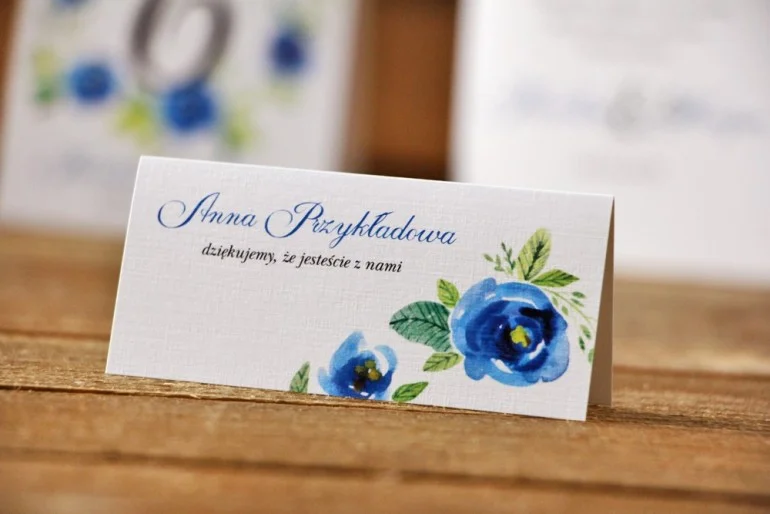
Place cards on linen-textured paper with blue roses | Watercolours No. 10
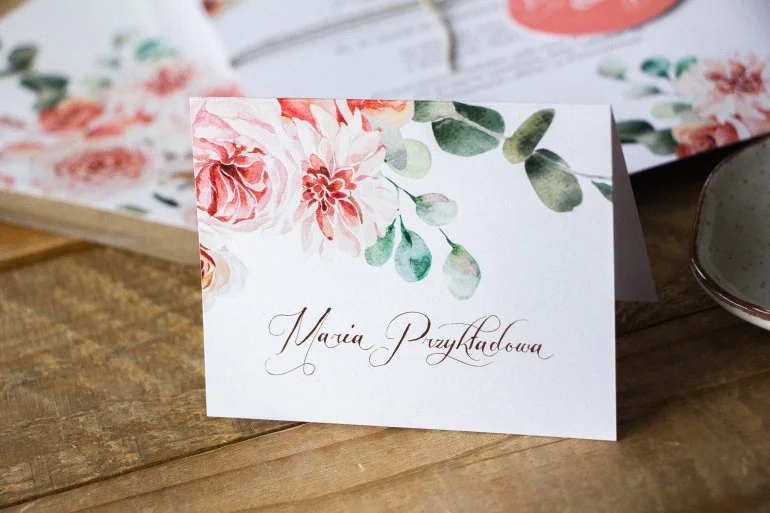
Place cards with a pink bouquet composition | Indigo No. 7
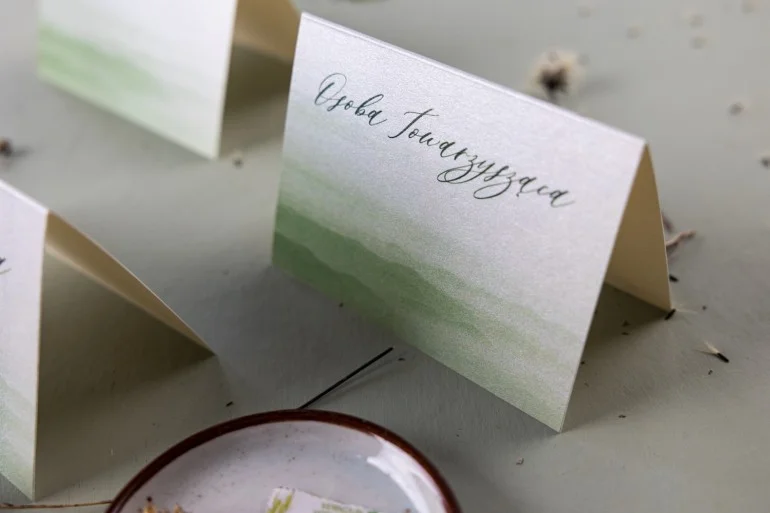
Wedding place cards on pearl cream paper with green decor | Opal No. 11
The spatial layout is also crucial. A theatrical wedding benefits greatly from separating the ceremony space from the banquet space, much like a theatre has a stage, an auditorium, and backstage areas. If your venue offers the option to host the ceremony in one room or garden, and the reception in another, take advantage of it. The transition of guests between spaces can be a theatrical gesture in itself. Entering the banquet hall should feel like the curtain rising on the second act. Direct this moment intentionally: dim the lights, have a solo musician playing, and orchestrate a dramatic reveal of the fully set tables.
Decor, Colour Palette, and Scenography — Creating the Opera Vibe
The Colour Palette — Black, Gold, Burgundy, and Velvet
The colour palette of a theatrical and opera-themed wedding is one of its most defining features, and this is an area where you should be bold and uncompromising. The foundational colours for this theme are deep black, warm gold, intense burgundy, and ruby red—shades that have been associated with theatre, opera, luxury, and drama for centuries. Black adds depth and mystery, gold brings warmth and brilliance, while burgundy or red injects passion and energy. Together, these colours create a palette that is both elegant and dramatic—perfect for a wedding designed as an artistic event.
However, it is vital not to fall into the trap of being too literal. The venue should look like a grand premiere gala, not a Halloween party or a masquerade ball. This means black should be used as an accent rather than a dominant force (unless you are consciously opting for an avant-garde "all-black" aesthetic, which, with the right lighting, can look phenomenal). Gold works best in the form of details: hardware, metallic elements, and mirror frames, rather than massive, flashy decorations. Burgundy is perfect for florals, tablecloths, and fabrics—it is deep, sensual, and provides a warmth that black and gold alone cannot achieve. Ivory, creamy white, and deep bottle green can round out the palette, adding subtlety and refinement.
Wedding trends for 2025 and 2026 clearly show that burgundy is making a massive comeback. Event designers and florists are noting a surge in demand for deep, intense colours set against neutral backgrounds. This is fantastic news for couples planning an opera-themed wedding, as their aesthetic choice aligns perfectly with current high-end trends. You can easily blend a theatrical palette with modern floral styling by choosing wine-coloured peonies, dark dahlias, velvety amaranth, and craspedia—flowers that look as though they were plucked straight from an opera set.
Key Decor Elements — From Candelabras to Velvet Drapes
Once your colour palette is set, it is time to focus on the specific decor elements that will bring the opera vibe to life. The essential checklist for a theatrical atmosphere is clear: crystal chandeliers or candelabras (if the venue lacks them, they can be rented from event styling companies), velvet fabrics used as tablecloths, runners, drapes, or chair covers, and mirrors in gilded frames strategically placed around the room to create depth and reflect light. Candles are non-negotiable—use lots of them, in varying heights and sizes, from tea lights to massive pillar candles in glass cylinders. Finally, the florals must be operatic: lush, dramatic arrangements in dark hues, rather than delicate, pastel posies.
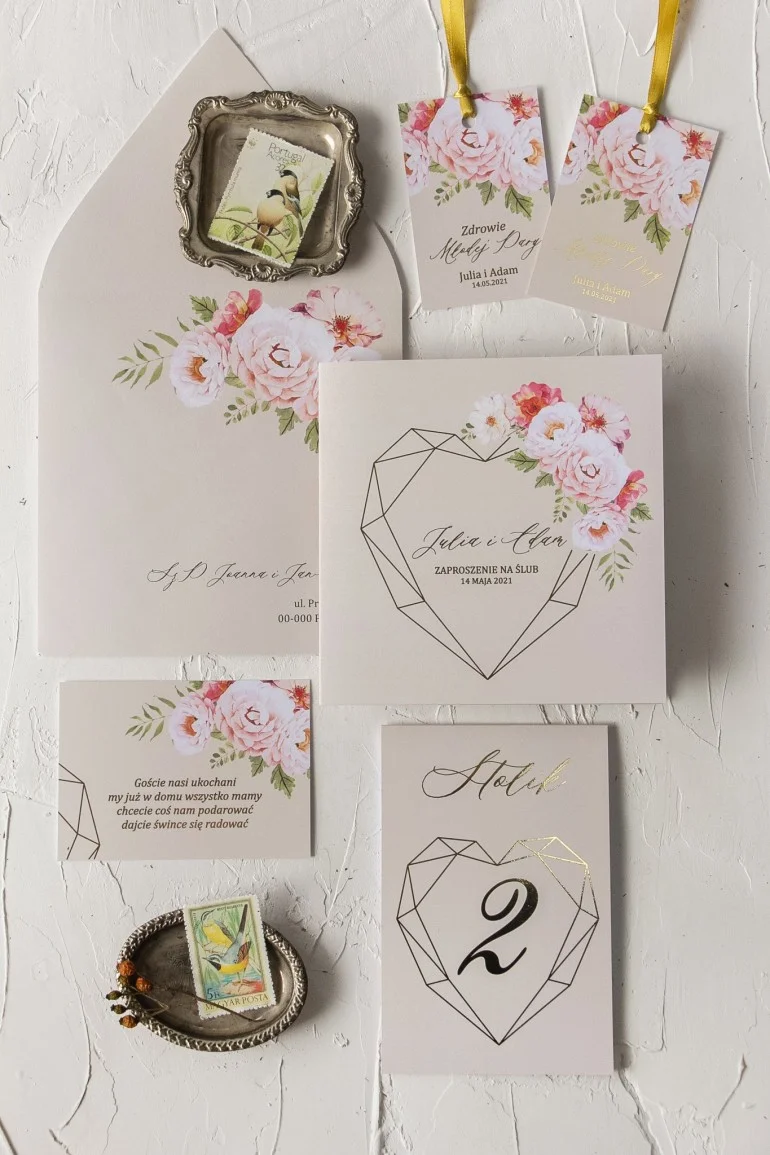
Wedding Invitations with a Gold Heart and Floral Motif | Modern and Stylish | Sapphire No. 8
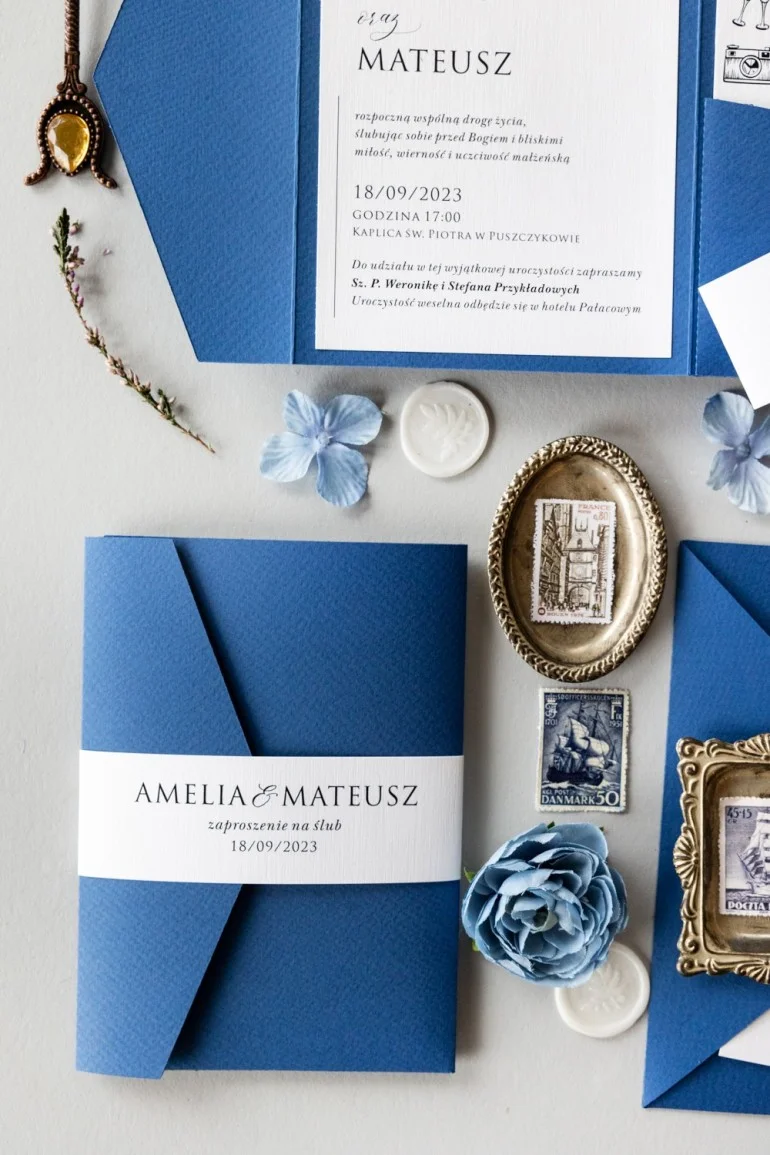
Blue, Elegant Wedding Invitation with Pocket and Personalisation | Kraft No. 7
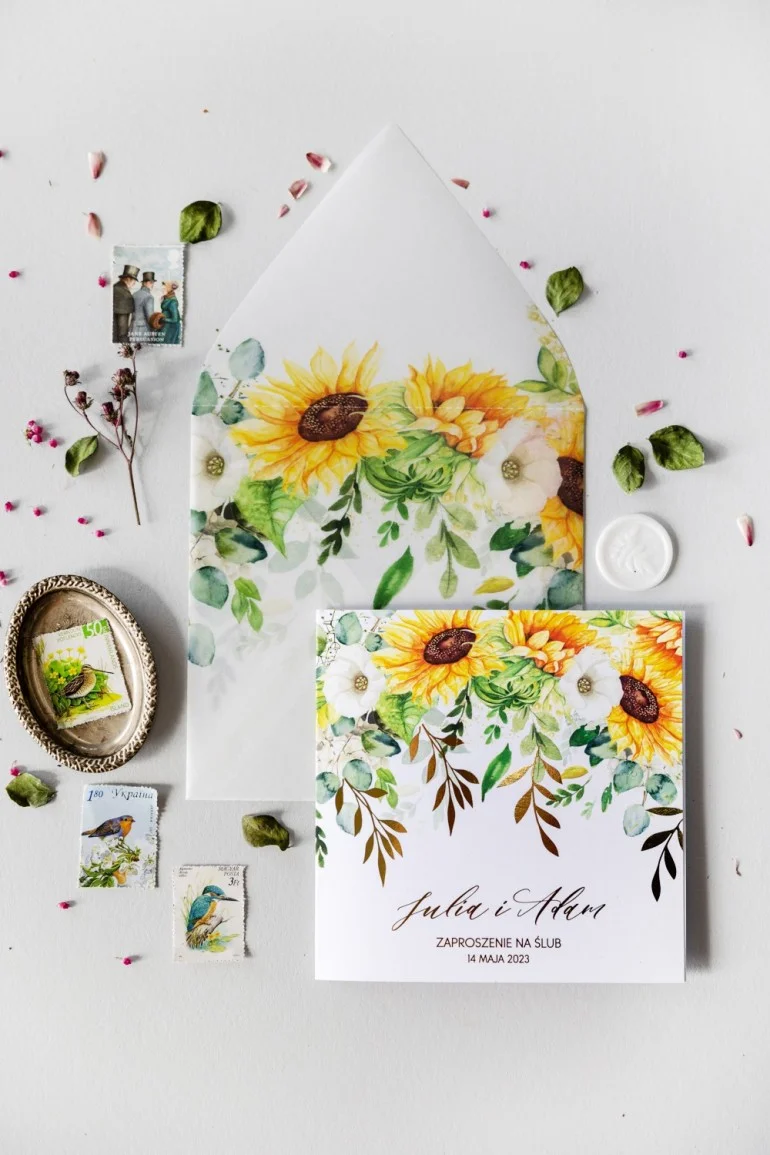
Wedding Invitations with Sunflowers and Gold Foil | Modern and Original | Rubin No. 7
The detail that makes the biggest difference is lighting. Here, hiring a professional lighting company is highly recommended. A theatrical wedding requires a deliberate lighting plot: warm, yellow, or amber lights (never cold LEDs!) focused on key points like the sweetheart table, the dance floor, and central floral arrangements. Use dramatic up-lighting to wash the walls, and ensure dimmers are installed to allow smooth transitions between moods—from an elegant dinner to heartfelt speeches, right through to a full-blown dance party. Lighting is one of the most vital components of modern wedding scenography, and for a theatrical theme, it is absolutely paramount.
Additional decor elements that enhance the theatrical feel include: elegant wedding menus printed on heavy cardstock with gold foiling, designed to look like theatre playbills; Venetian masks used as table decor or hung on walls; gold or black frames displaying quotes from famous operas or classic literature; a vintage gramophone (especially for a retro-theatrical vibe); a grand clock symbolising the countdown to the grand finale; or even stylized opera librettos nestled among the table florals. It is these meticulously curated details that create an unforgettable, immersive experience.
Theatrical Wedding Floristry — Show-Stopping Arrangements
Floristry is one of the most crucial, yet challenging, aspects of a theatrical wedding. The flowers must be beautiful, dramatic, perfectly aligned with the colour palette, and yet not overpower the rest of the decor. The operatic vibe calls for blooms with a strong visual presence: deep red, burgundy, or even black roses (yes, black roses exist and look absolutely spectacular as decor), dark purple and burgundy peonies, black and crimson dahlias, wine-coloured amaranth, velvety cockscomb, and magnolia. These flowers possess a dramatic, theatrical energy—they are large, intense, and full of character.
Floral arrangements at a theatrical wedding should be either monumental or miniature—but never average. Opt for towering, spectacular centrepieces that draw the eye upward and create an operatic set piece, or low, dense, sensual arrangements that look like bouquets tossed onto a stage after a triumphant premiere. Mixing both styles across different tables is ideal. This creates what theatre directors call "stage dynamics," making the room feel alive, breathable, and awe-inspiring. Ask your florist to design one massive, dominant focal arrangement—something guests will see the moment they enter, which will become the iconic visual of your wedding.
The bridal bouquet in this theme should be bold and striking: deep burgundy or red-black, lush, featuring dark greenery (like eucalyptus or dark foliage) for added drama. You might even include a single white rose as a contrasting accent—a symbol of innocence against a backdrop of passion, just like in the greatest opera librettos. The groom's boutonnière should consist of a single, carefully chosen bloom. A black or burgundy rose pinned with a small gold or crystal detail will perfectly complete the look.
Music and Entertainment — The Beating Heart of a Theatrical Wedding
Classical and Opera Music — From the Ceremony to the Dance Floor
Music is the absolute beating heart of a theatrical and opera-themed wedding. Without the right musical score, all your decor efforts just become a beautiful set with no soul. An operatic wedding lives and breathes through sound, and it is the music that truly transports guests into another realm. For the ceremony, a live string quartet or a violin trio is perfect. Their sound is warm, elegant, and directly evokes the tradition of musical salons and theatre foyers. The repertoire could include string arrangements of famous arias, Pachelbel's Canon, Bach's Air on the G String, pieces by Mozart (who famously composed "The Marriage of Figaro"—how fitting!), or romantic compositions by Chopin.
The cost of live string music for a ceremony usually starts around 200-400 PLN, though full coverage for the ceremony and reception by a string quartet can range from 1500 to 3000 PLN, depending on the location and ensemble. This is an investment truly worth making. The difference between recorded tracks and live musicians is what separates a wedding that is genuinely theatrical from one that is merely pretending. Live music possesses a magnetism, presence, and emotional power that no sound system can replicate.
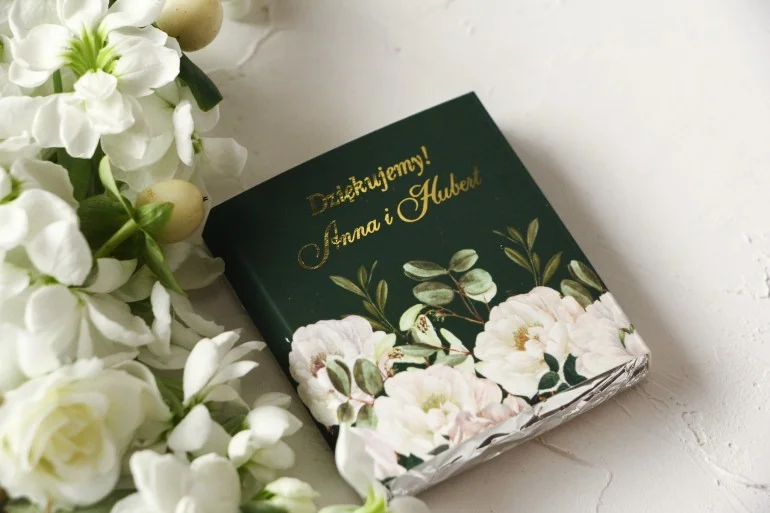
Wedding chocolates with a bouquet of white roses and eucalyptus | Sapphire No. 3
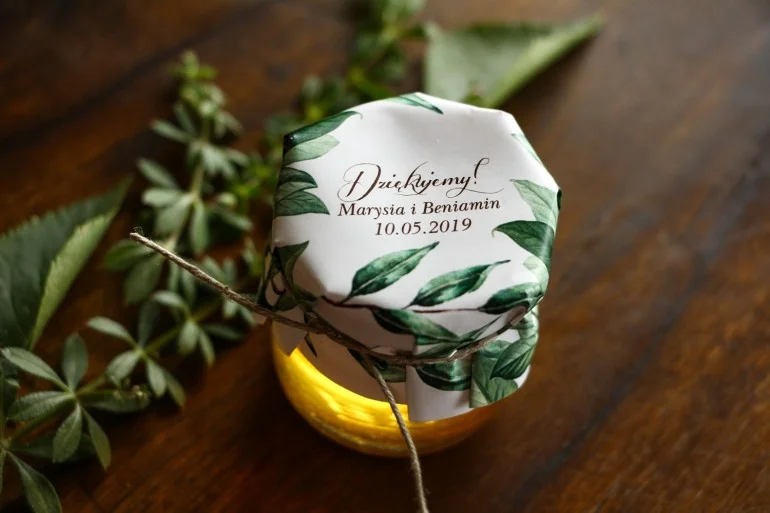
Wedding honey with olive branches | Indigo No. 2
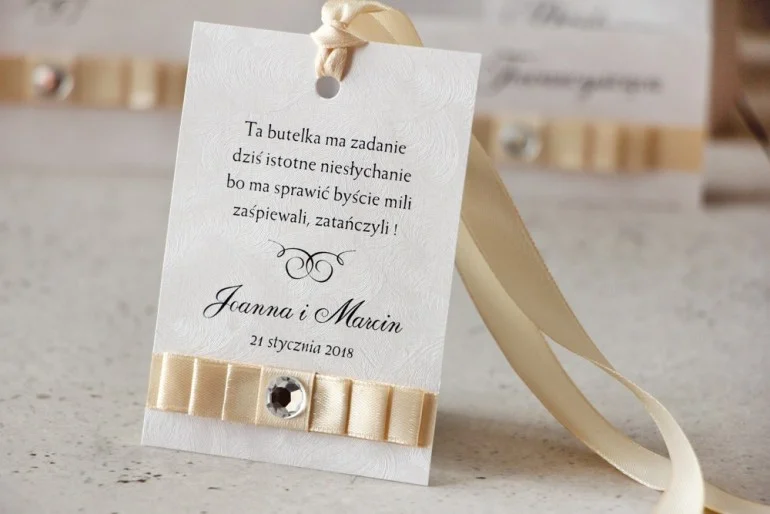
Elegant wedding alcohol tags with cubic zirconia | Amaretto No. 1
For the reception, you can structure the music in "acts"—just like an opera. Act One: The grand entrance and aperitif. A string quartet or pianist plays light, elegant compositions that allow for conversation while building the mood. Act Two: Dinner and toasts. The music fades into the background, either recorded or played very softly, allowing guests to focus on the meal and speeches. Act Three: The first dance and the party. Here, you can introduce more dynamics. Imagine a spectacular first dance accompanied by a live opera singer performing a romantic aria, followed by a gradual transition into a more modern repertoire that invites guests to the dance floor.
Live Opera Singing — How to Make It Happen
One of the most moving elements you can introduce to an opera-themed wedding is hiring a professional opera singer to perform a few arias or art songs live. This is the kind of touch that brings genuine tears of emotion to guests' eyes. It is entirely unexpected and creates an absolutely unforgettable memory. There are many fantastic young opera singers who, alongside their stage careers, gladly accept wedding bookings. Look for graduates from music academies or young soloists working in local opera houses.
There are countless ways to incorporate live opera singing into your day. You could plan for a favourite aria during the ceremony—Gershwin's "Summertime", Puccini's "O mio babbino caro", or Schubert's "Ave Maria" are classics that move even those who don't typically listen to opera. Alternatively, surprise your guests with an "opera flash mob" during dinner. Imagine a waiter suddenly bursting into a soaring aria (yes, this can be arranged!). The whole room will be caught between laughter and awe. You could also host a short recital during the pre-dinner cocktail hour, where a soprano in a stunning evening gown performs five or six songs, creating the atmosphere of an exclusive mini-concert.
A practical tip: when planning live opera singing, pay close attention to the room's acoustics. Opera singers project without microphones and require a space with good resonance. Request an acoustic test at your chosen venue before finalizing this option. Most historic palaces and ballrooms have excellent acoustics, but modern venues with sound-absorbing panels can deaden an operatic voice. In such cases, consider discreet amplification using one or two ambient microphones placed at a distance from the singer. This preserves the natural tone while giving the voice the necessary boost.
Theatrical Attractions and Surprises — Directing Unforgettable Moments
A theatrical wedding provides a unique opportunity to plan "scenes" that surprise and delight guests at unexpected moments. Surprises are the spark that turns a wedding into a living spectacle rather than just an elegant dinner. Here are a few ideas worthy of the stage: organise a "prologue" before guests enter the hall, featuring musicians or an actor reciting a poem about love outside the doors. After dinner, announce an "intermission" where guests can move to a separate room for a short performance, such as a flamenco or tango showcase. Later in the evening, "direct" the couple's first dance as a dramatic opera scene—complete with low-lying fog, theatrical spotlights, and a sweeping musical arrangement. If you are looking for more ways to entertain your guests, check out our article on wedding entertainment ideas for 2025.
Another brilliant concept is a "theatrical" approach to toasts. Instead of the standard "raise a glass to the newlyweds," ask selected guests to prepare short scenes, poems, or monologues in a dramatic style. This requires a bit of courage and creativity from your guests, but the result is unforgettable, making everyone feel like part of the cast rather than mere spectators. You can also design a "theatrical playbill" for each table—an elegant, heavy-cardstock timeline of the wedding's "acts" with playful titles (e.g., "Act I: The Vows", "Act II: The Grand Feast", "Act III: The Grand Finale").
Your photographer and videographer need a much more detailed brief than they would for a standard wedding. Theatrical lighting, dramatic scenography, and staged "moments" require a specific approach to photography. Ensure your photographer has experience in stage or low-light portrait photography. Capturing a theatrical wedding perfectly requires mastery of exposure amidst candlelight and spotlights—a skill not every wedding photographer possesses. Review portfolios carefully, paying special attention to night shots and difficult lighting conditions.
The Couple's Attire and Guest Dress Code — Uncompromising Elegance
The Opera-Inspired Wedding Dress — When Every Step is a Performance
The wedding dress for a theatrical and opera-themed wedding is undeniably one of the most critical elements of the "spectacle." The bride is the leading lady, the star of the evening, and her attire must reflect that status. Unlike many other wedding styles, the operatic theme allows—and even encourages—truly bold sartorial choices. A grand, formal ballgown with a sweeping train is an absolute classic here, and it will never look better than against the backdrop of a palace hall accompanied by classical music. A princess or mermaid silhouette with a dramatic neckline, crafted from heavy satin, dupioni, or layers of tulle, is the perfect choice for a bride wanting to look like a soprano stepping onto the stage for her opening aria.
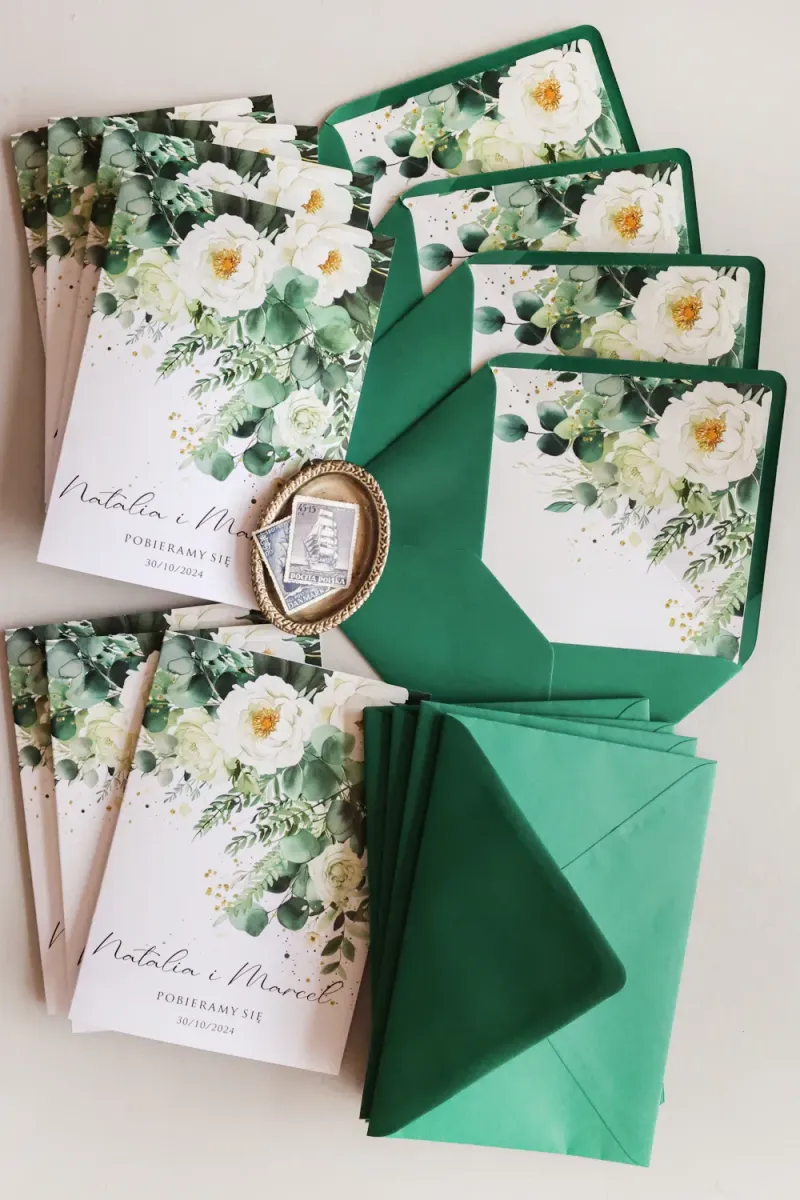
Wedding Invitations with white flowers and green accents | minimalist personalised invitations | Impresja No. 9
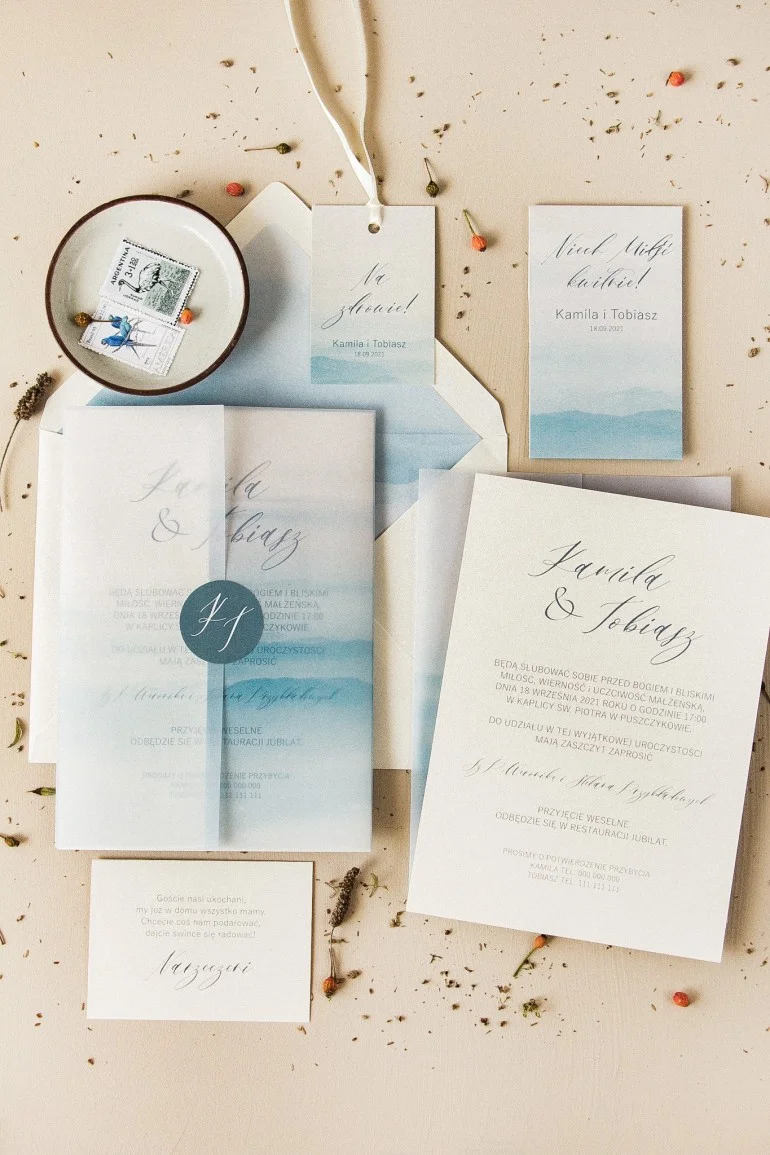
Elegant Wedding Invitations with Vellum | Watercolour and Pearl | Opal No. 4
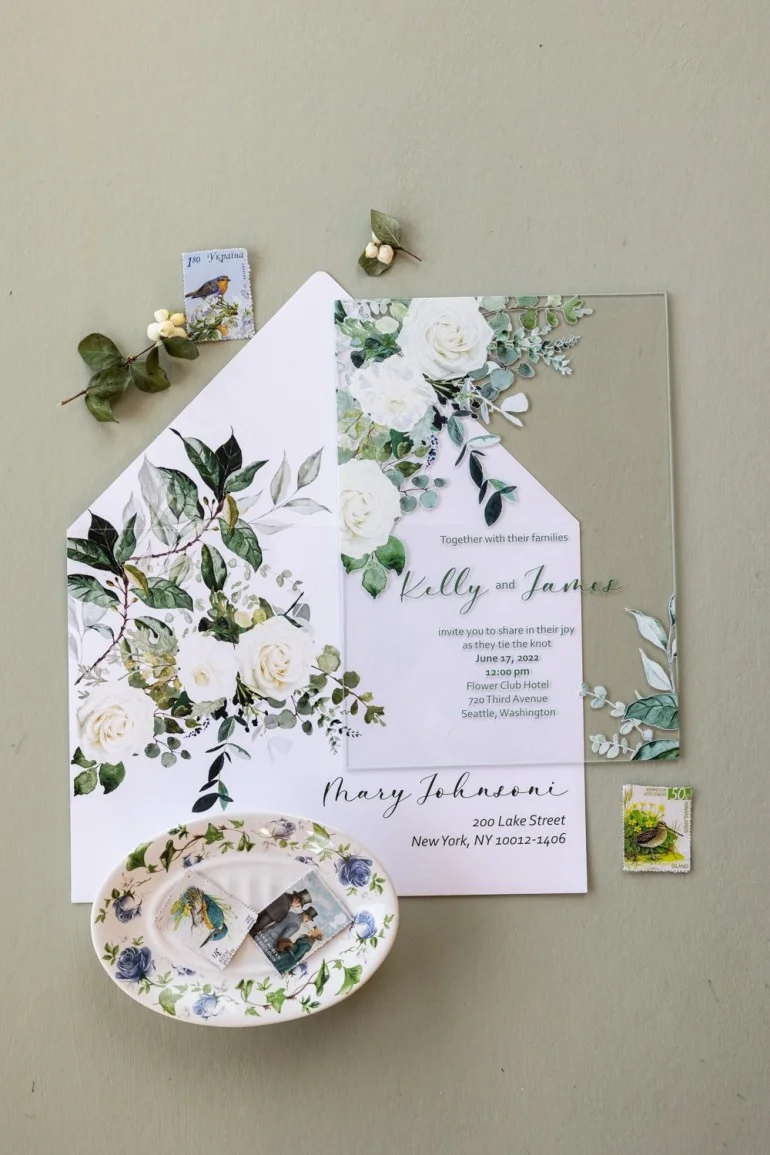
Floral Elegance Glass Wedding Invitations with White Roses and Greenery Envelope | Korani No. 12
The colour of the gown can remain a classic white or ecru—the contrast of a bright dress against a dark, operatic venue is incredibly striking and photogenic. However, the opera theme also opens the door to more daring choices. A gown in blush pink, light gold, champagne, or even a bold cream-and-black design can look absolutely phenomenal in this context. The 2025 wedding industry is seeing a growing trend towards non-traditional dress colours, and a theatrical wedding is the perfect excuse to embrace this boldness.
The details of the dress are paramount. Vintage lace, embroidered florals, crystal embellishments, pearls, gold appliqués, or a hand-crafted ombre tulle skirt—these are the elements that gain incredible expressive power in an operatic setting. Completing the look with elbow-length or opera-length gloves (which are making a massive comeback in 2025-2026 bridal fashion), a dramatically long cathedral veil, or a striking headpiece (like a diadem, tiara, or ornate clips) ensures the bride is fully "in character" for her big day.
The Groom's Attire — Tuxedo, Tailcoat, or Suit?
The groom at a theatrical wedding has a very clear, albeit demanding, mission: he must look like the conductor of a philharmonic or the hero of an opera—elegant, classic, and undeniably sophisticated. A tuxedo is the absolute minimum requirement. If the bride is wearing a ballgown, a groom in a standard business suit will create a visual dissonance evident in every photograph. A classic black tuxedo, or a white dinner jacket paired with a crisp white shirt, a bow tie, and immaculately polished shoes, silently communicates: "This is no ordinary wedding." Learn more in our guide on how to choose a suit or tuxedo.
For couples who want to take it a step further, a tailcoat or full "white tie" attire is the pinnacle of elegance and the ultimate complement to the opera theme. Naturally, this choice requires not only confidence but also an excellent tailor (a tailcoat must be bespoke or expertly altered, as off-the-rack options rarely fit perfectly). The result, however, is incomparable. If you are planning a truly grand affair with a live orchestra and an opera singer, the groom in tails and the bride in a ballgown will create a perfectly cohesive and complete visual masterpiece.
The dress code for guests at a theatrical and opera-themed wedding should be communicated clearly—ideally right on the invitation. A "Black Tie" suggestion (floor-length gowns for women, tuxedos or dark suits for men) is highly appropriate and realistic. Most guests can meet these requirements without excessive financial strain. It is also worth adding a brief note that the wedding features a theatrical and opera theme. This gives guests an extra hint and guarantees no one will show up in jeans. Guests usually appreciate this guidance, as a formal dress code makes them feel they are attending an exclusive event. It motivates them to elevate their style, resulting in a visually stunning and cohesive crowd.
Invitations, Place Cards, and Stationery — First Impressions Matter
Wedding Invitations as the Prologue — How to Choose the Perfect Ones?
The wedding invitation is your guests' very first interaction with your wedding. For a theatrical and opera theme, it is an absolutely vital element that instantly sets the tone for the entire event. Think of the invitation as a premiere poster or the cover of a theatre playbill—it must dazzle, intrigue, and exude class and elegance before the guest even reads a single word. Skimping on the invitation would be like opening an opera house with plastic chairs: it ruins the illusion before the curtain even rises.
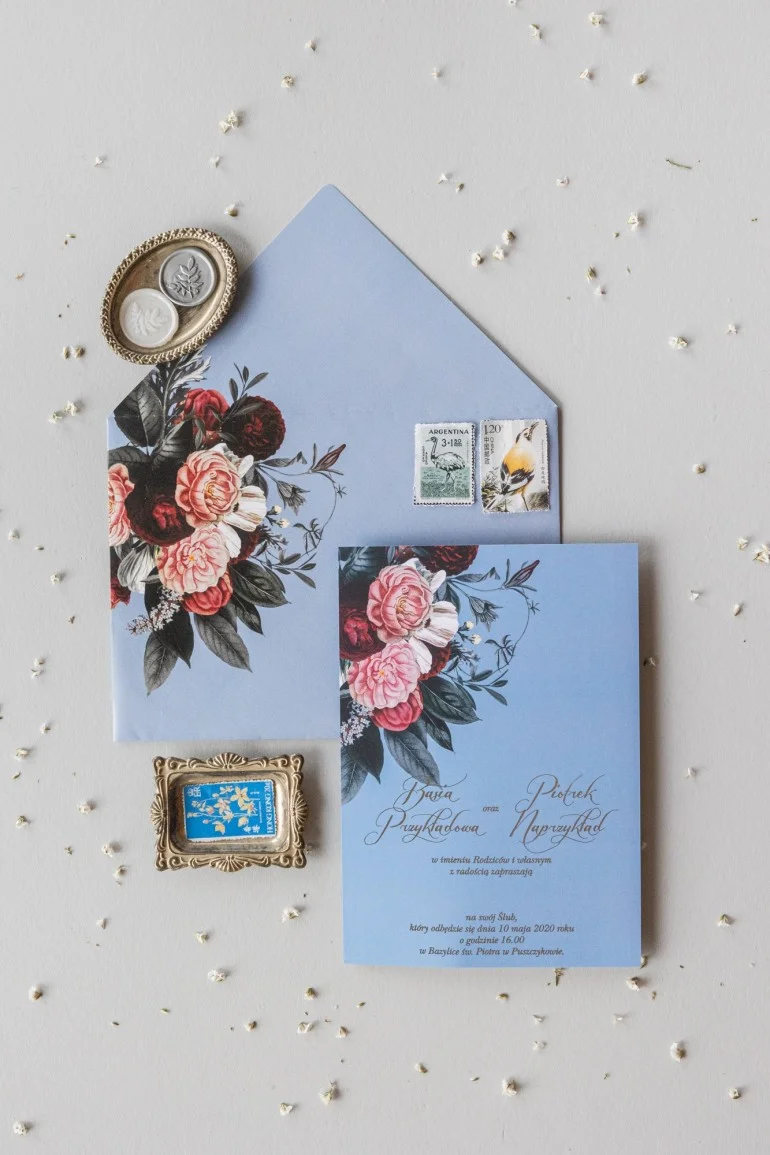
Glamour Invitations with Silver text and a burgundy-pink bouquet | Elegant wedding invitations | Pastel No. 1
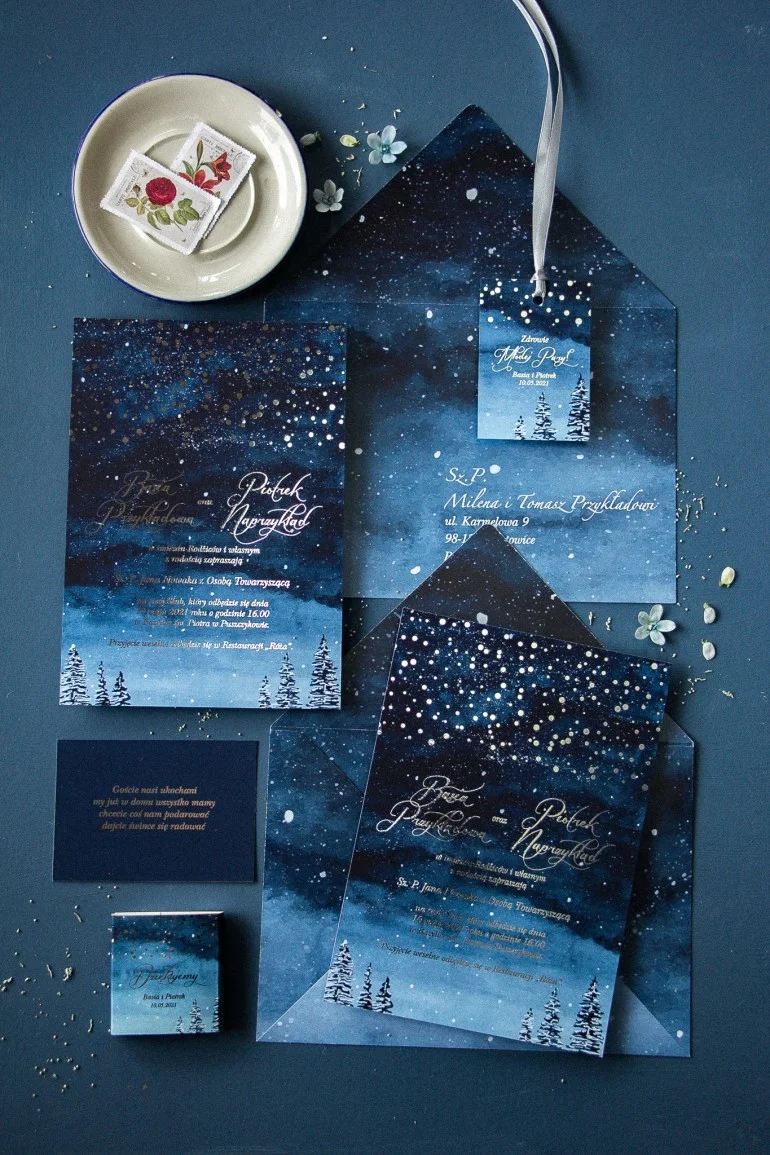
Winter-Themed Wedding Invitations with Silver Foil | Pastel No. 6
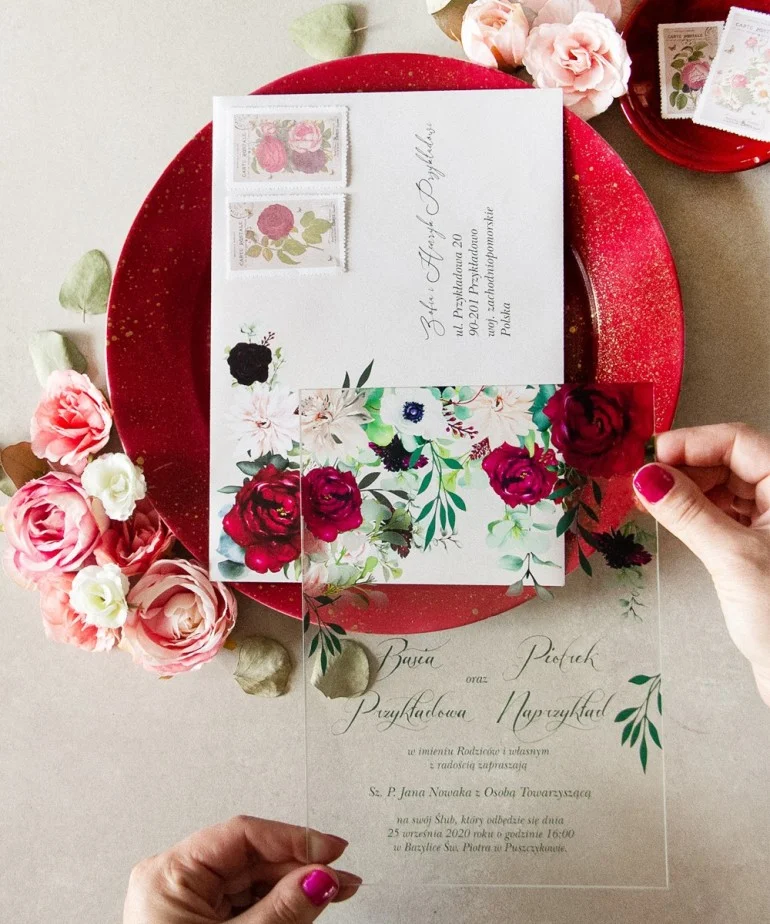
Elegant Glass Wedding Invitations with Floral Motif | Korani No. 4
The perfect invitations for a theatrical wedding should meet a few criteria. First, the weight and quality of the paper must be exceptional—thick, textured cardstock, ideally in ecru or cream, with a subtle sheen or pearlescent finish that feels luxurious to the touch. Second, the typography should be classic and refined, ideally blending a serif font (for the body text) with ornate calligraphy (for the couple's names and key details). Third, metallic elements—such as blind embossing, foil stamping, or gold print—make the invitation look like a genuine premiere programme. The amelia-wedding.pl store offers a wide selection of elegant, bespoke wedding invitations that can be perfectly tailored to an opera aesthetic.
Consider an innovative invitation format that is a theatrical gesture in itself: a tri-fold design resembling a theatre playbill. One panel can feature the "programme for the evening," another can list practical details (time, location, dress code), and the third can include a personal note from the couple. This format is not only aesthetically pleasing but highly functional, and guests are much more likely to keep it as a memento than a standard folded card. You can also add a decorative touch to the envelope: a gold wax seal, dried dark rose petals, a burgundy silk ribbon, or a miniature Venetian mask. Every detail reinforces the message: "This wedding will be extraordinary."
Place Cards, Menus, and Other Stationery — The Power of Cohesion
Wedding stationery extends far beyond invitations. It encompasses an entire suite of printed materials used throughout the day: menus, place cards, table numbers, order of service programmes, and thank-you notes. At a theatrical wedding, all these elements must form a cohesive, elegant visual system—just as a theatre's playbills, posters, and tickets all share the same aesthetic identity.
Place cards are a small but highly significant detail. It is the first physical item a guest interacts with at their seat, setting the tone for the table decor. For a theatrical wedding, place cards should be sophisticated and slightly dramatic: elegant black or ecru cardstock featuring the guest's name in gold calligraphy, resting in a dark wood or gold acrylic holder. Transparent perspex cards with gold engraving also work beautifully, offering a modern touch that perfectly complements theatrical glamour. You can find exceptional place cards at amelia-wedding.pl, offering a wide variety of elegant options suited to this theme.
Treat your wedding menu like a theatre programme. Print it on heavy cardstock with gold foil or embossed motifs, featuring a beautifully calligraphed list of courses. You can even name the courses to fit the theme: "Act I: Appetisers", "Act II: Soups and Entrées", "Act III: The Main Event", and "Finale: Dessert and Wedding Cake". This adds a touch of wit and cohesion, and guests will appreciate the clever continuation of the theatrical narrative. Table numbers can be designed as miniature "theatre posters," replacing the play's title with the table number, while seating charts can mimic the look of a grand theatre noticeboard.
Invitations as an Investment — Why Quality Matters
Many couples view wedding invitations as an area to cut costs, reasoning that "they'll just get thrown away anyway." This logic is a fundamental mistake when planning a theatrical and opera-themed wedding. The invitation sets your guests' expectations for the entire event. If it is elegant, heavy in the hand, and flawlessly designed, guests will expect a high-calibre celebration. If it is cheap and printed on flimsy paper, even the most beautifully decorated ballroom will feel somewhat disjointed. Consistency in your messaging is absolutely crucial.
Fortunately, investing in beautiful invitations doesn't have to break the bank. There are many excellent printers and stationery designers who offer truly premium products at reasonable prices. At amelia-wedding.pl, you will find a rich collection of elegant wedding invitations that you can customise to fit your opera theme—selecting the right colours, fonts, and embellishments. Personalisation is included in the price, and the results are stunning. Remember, a good invitation isn't just an expense; it is an investment in a first impression that pays off throughout the entire wedding day.
Menu, Cake, and Culinary Spectacle — A Feast Fit for the Royal Box
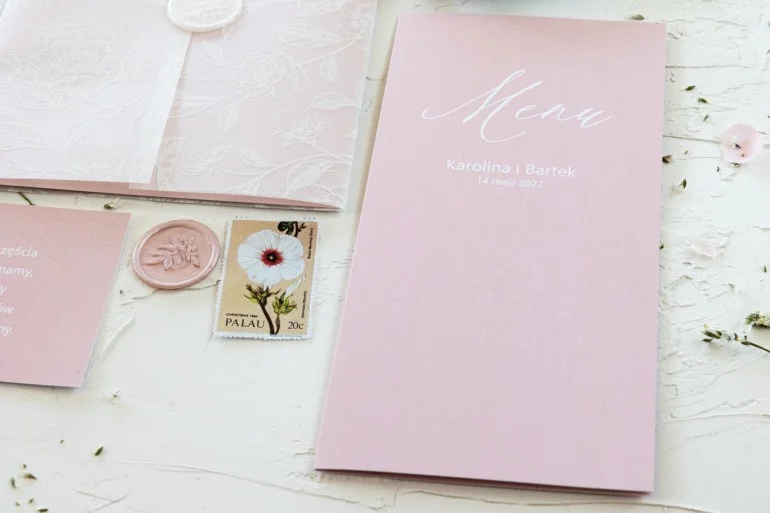
Elegant wedding menu with a delicate touch of pink | Nefryt No. 1
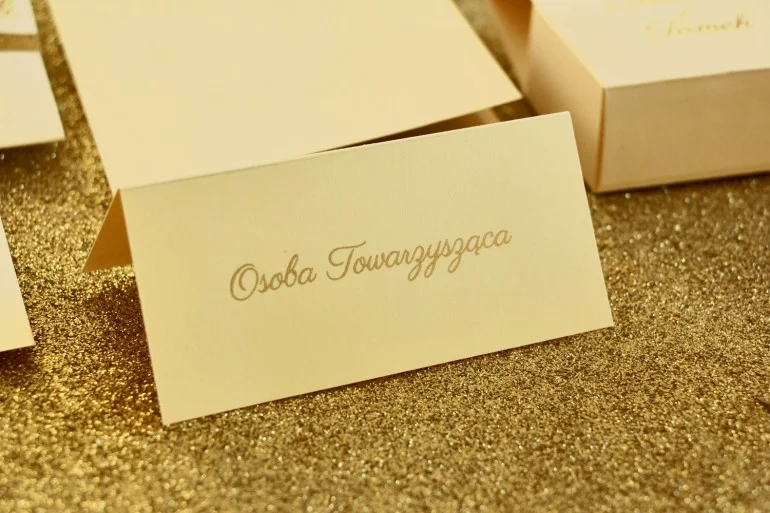
Glamour style alcohol tags with gold foil | Glamour No. 5
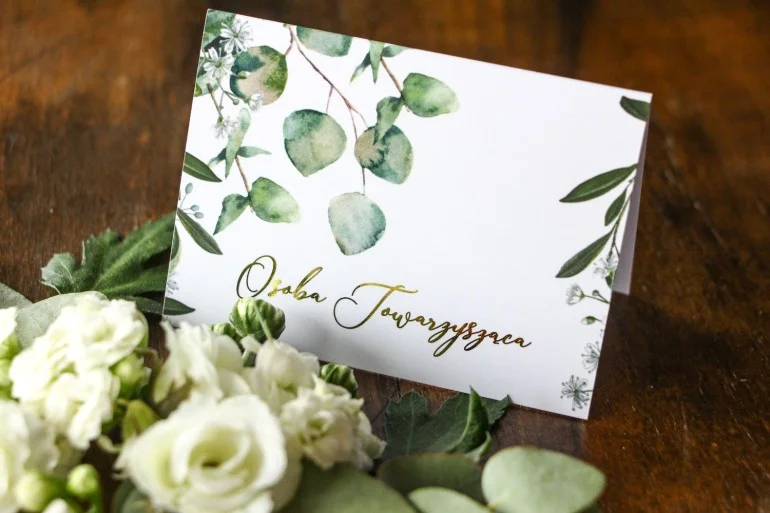
Gold foil place cards with eucalyptus and baby's breath | Soreli No. 5
Theatrical Wedding Gastronomy — Every Course is an Act
In a theatrical and opera setting, food is not merely about satisfying your guests' hunger—it is part of the spectacle, a core element of the immersive experience your wedding should offer. Grand opera has always linked music with emotion and the senses, and similarly, your wedding feast should be a sensory journey on every level: taste, aroma, appearance, and presentation. The menu should be carefully curated, slightly more refined than a standard wedding buffet, but not so avant-garde that it confuses your guests.
Starting with the aperitif and canapés: an operatic atmosphere demands champagne or prosecco to welcome guests upon arrival, served by elegantly dressed waiters holding silver trays. The canapés should be bite-sized, elegant, and visually appealing—think mini truffle quiches, salmon and caviar tartlets, ricotta and fig bruschetta, or delicate steamed vegetables with a gourmet dip. This cocktail hour is when the musician plays softly in the background, and guests take in the decor. The food must be served as finger food so as not to distract them from admiring the space. For more flavour inspiration, check out our guide on how to compose the perfect wedding menu.
A multi-course plated dinner is vastly superior to a buffet for a theatrical theme. The ceremonial serving of dishes by highly trained staff, elegant place settings featuring classic porcelain, crystal glassware, and silver-plated cutlery—all of this creates the feeling of attending a royal gala dinner rather than a standard wedding. Consider elevating traditional dishes with refined culinary techniques: serve a rich soup in a bespoke bread bowl, opt for duck à l'orange instead of standard chicken, and offer a selection of exquisite petit fours rather than a simple slice of cake.
The Wedding Cake — The Centrepiece of the Final Act
The wedding cake at a theatrical wedding acts as the central prop of the final act. The entire evening builds towards it, and its presentation should be directed like a stage performance. Simply rolling out the cake and cutting it is not enough. This moment requires choreography: dim the house lights, hit the cake with a spotlight, cue a dramatic musical entrance (Puccini's "Nessun Dorma" or another soaring aria is perfect), and hold a dramatic pause before the first cut. This is your operatic finale, and it deserves full grandeur.
The cake's design must naturally align with the overall aesthetic. Glamour and classic cakes—multi-tiered, in shades of black, gold, or deep burgundy, adorned with hand-modelled sugar flowers, gold leaf, or mirror glaze elements—are natural choices. "Painted opera" cakes are also becoming incredibly popular: white or black fondant canvases featuring hand-painted operatic scenes or motifs inspired by theatre architecture. Have a detailed consultation with your cake designer, sharing your theme and inspiration board. A skilled wedding baker can translate the room's aesthetic into a sugar masterpiece.
As for flavour, this is the time for bold, sophisticated pairings: dark chocolate with cherry liqueur, coffee infused with amaretto, a rich red velvet cake to echo the room's velvet drapes, or mascarpone with pistachios and rose water. The cake cutting should also be highly photogenic, so choose a cake that looks just as spectacular on the inside as it does on the outside (dark sponge, vibrant buttercream layers, or a surprise colour inside). Remember that in a theatrical setting, even the small dessert plates and gold cake forks matter—they are the final "props" of the evening.
Catering and Service — Vienna State Opera Standards
The quality of the catering service and waitstaff is an element frequently overlooked by couples, but at a theatrical wedding, it is of paramount importance. The waiters and waitresses are like extras in your play—their attire, demeanour, method of serving, and overall elegance will either build or break the illusion of a grand spectacle. You wouldn't expect to see someone in jeans carrying plates across the stage between a baritone and a soprano, and similarly, your wedding staff must "play the part."
The absolute minimum is an elegant, uniform dress code for the staff: crisp white shirts, black trousers or skirts, black or white cotton gloves for serving, and impeccable manners. Ideally, your catering company should have experience handling high-end galas and banquets—be sure to ask about this during your consultations. Provide the catering manager with a brief on the wedding's theme and the guest dress code. Staff who understand the vibe of the event will naturally adjust their posture and communication style to match.
An additional touch that elevates the service is "silver service"—the ceremonial plating of food from platters or tureens directly at the table by trained staff. This technique requires skill and is more labour-intensive than simply dropping plates, but the visual impact is astonishing. Guests will feel as though they are attending a state banquet at an embassy or a royal palace—which is exactly the emotion you want to evoke at your operatic wedding.
Guest Favours and Keepsakes in Theatrical Style
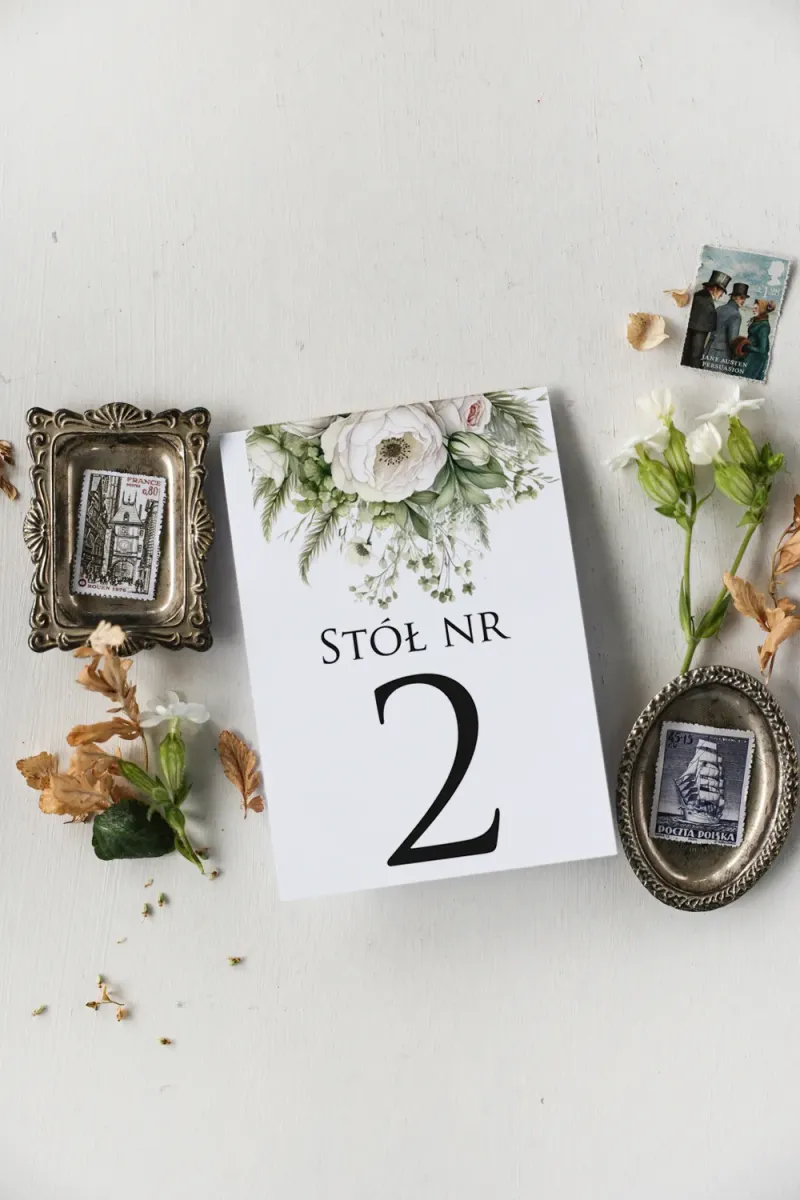
Original table numbers with a peony bouquet | Impresja No. 3
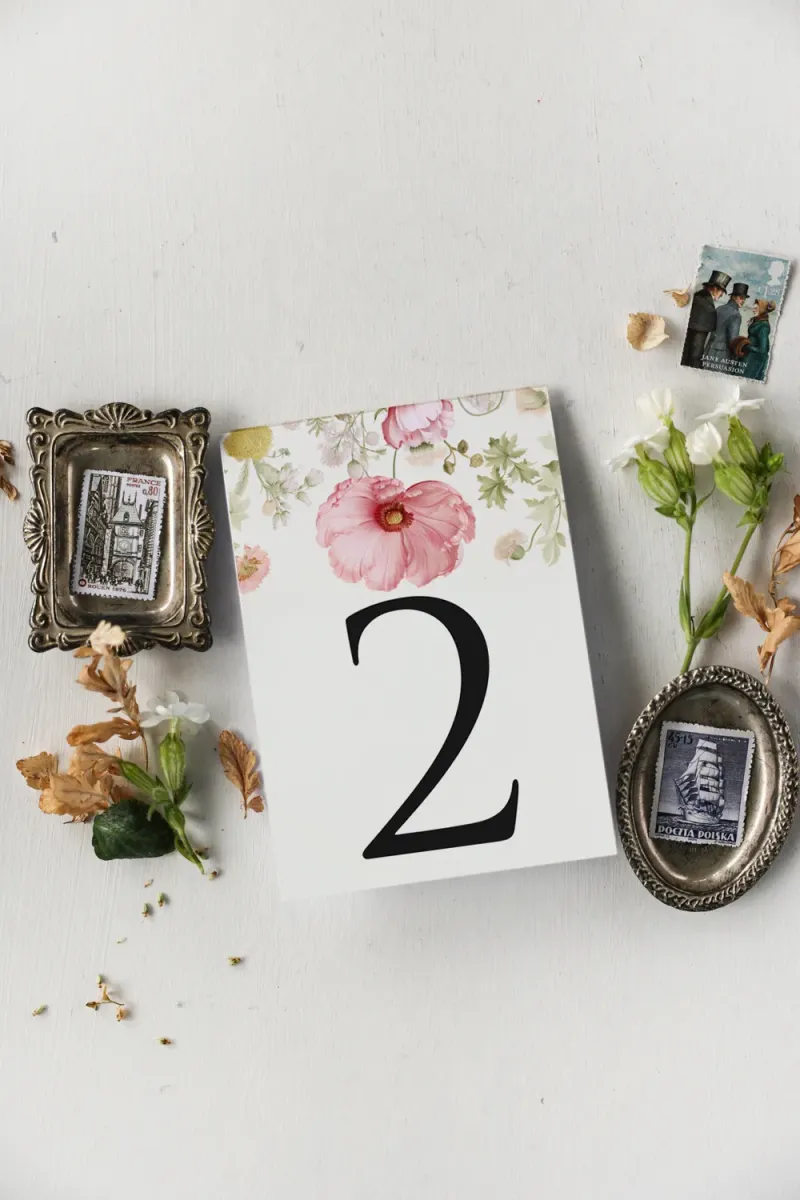
Wedding table numbers in pastel colours | Impresja No. 1
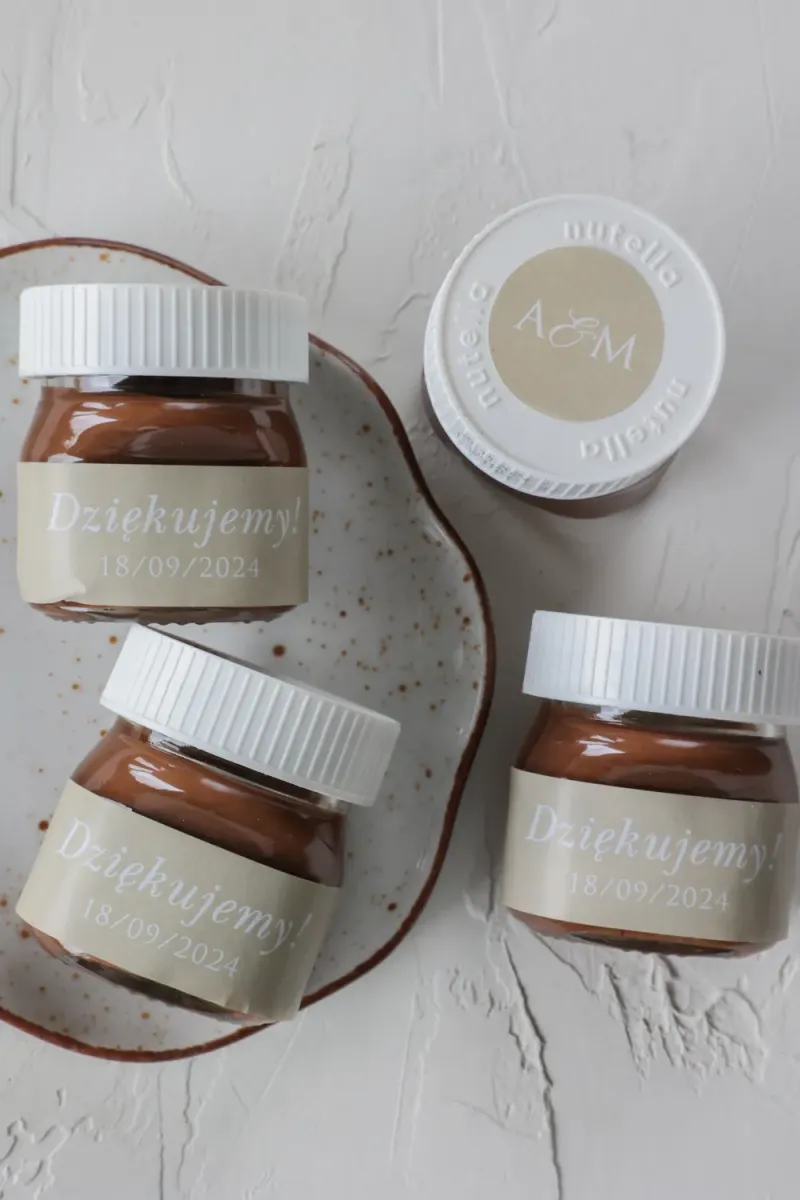
Mini Nutella jars with a floral label | Kraft No. 11
How to Thank Your Guests in Premiere-Worthy Style?
Guest favours are one of the most personal elements of a wedding—a gesture that says, "Thank you for being with us on this extraordinary day." At a theatrical and opera-themed wedding, this gesture must align with the overall aesthetic: it should be elegant, thoughtful, and far more unique than a standard chocolate wrapped in parchment. The elegant guest favours available at amelia-wedding.pl are an excellent starting point. Look for options that can be personalised and adapted to your operatic motif.
Here are a few specific ideas for theatrical wedding favours:
- A miniature bottle of liqueur or wine with an elegant label designed like a theatre poster, featuring the couple's names and the wedding date. It is classic, elegant, and practical. Opt for cherry liqueur, crème de violette, or a high-quality calvados to fit the "opera dinner" vibe.
- Personalised candles in dark, luxurious packaging (e.g., a black box with gold foil and a burgundy ribbon), scented similarly to the fragrance in your venue—lavender, rose, or vanilla with patchouli. Every time they light it, they will remember your wedding.
- A miniature "playbill"—an elegantly folded thank-you card written like a theatre programme, listing the "cast" (the couple, the bridal party) and the "settings," along with a heartfelt personal note. This is something guests can keep as a genuine memento.
- Gold or burgundy chocolates in a sleek, personalised box featuring your wedding logo. After all, "merci" isn't just a brand of chocolate; it is a French expression of gratitude that adds an extra layer of sophistication to an opera wedding.
It is crucial that the favours are packaged and presented with meticulous attention to detail: an elegant bag or box, tied with a satin ribbon, accompanied by a handwritten (or beautifully printed) thank-you tag. Presentation matters immensely—a beautifully styled table near the exit, arranged like a theatre cloakroom counter, makes a far better impression than boxes haphazardly dumped near the bar.
Keepsakes and Takeaways — Let Guests Take a Piece of the Show Home
Beyond official favours, consider elements that guests can take home as souvenirs from your theatrical production. The most natural choice is a photo booth styled like a backstage dressing room, complete with opera-inspired props: Venetian masks, feather fans, top hats, long gloves, opera glasses, and dramatic headpieces. Guests adore these attractions, and photo booth prints are often kept on fridges or in albums for years.
Another idea is a "theatrical frame" or a premium bookmark featuring the guest's name and a quote from your favourite opera or classic novel—something small, elegant, and long-lasting. If you have an intimate guest list and the budget allows, consider gifting each guest a small, elegantly crafted pair of opera glasses or a hand fan engraved with your wedding date. This is a keepsake that ties directly into the opera world and will be treasured for decades.
A musical memento is another brilliant idea for artistically inclined couples. Record a special playlist of your wedding music on a physical medium (vinyl is making a huge comeback!) or provide guests with an elegant card featuring a QR code linking to the soundtrack of your night. You could also create a beautifully bound booklet containing the evening's programme and romantic quotes, serving a dual purpose as an order of service during the wedding and a beautiful artefact to take home afterwards.
Planning and Organisation — How Not to Get Lost in the Grandeur
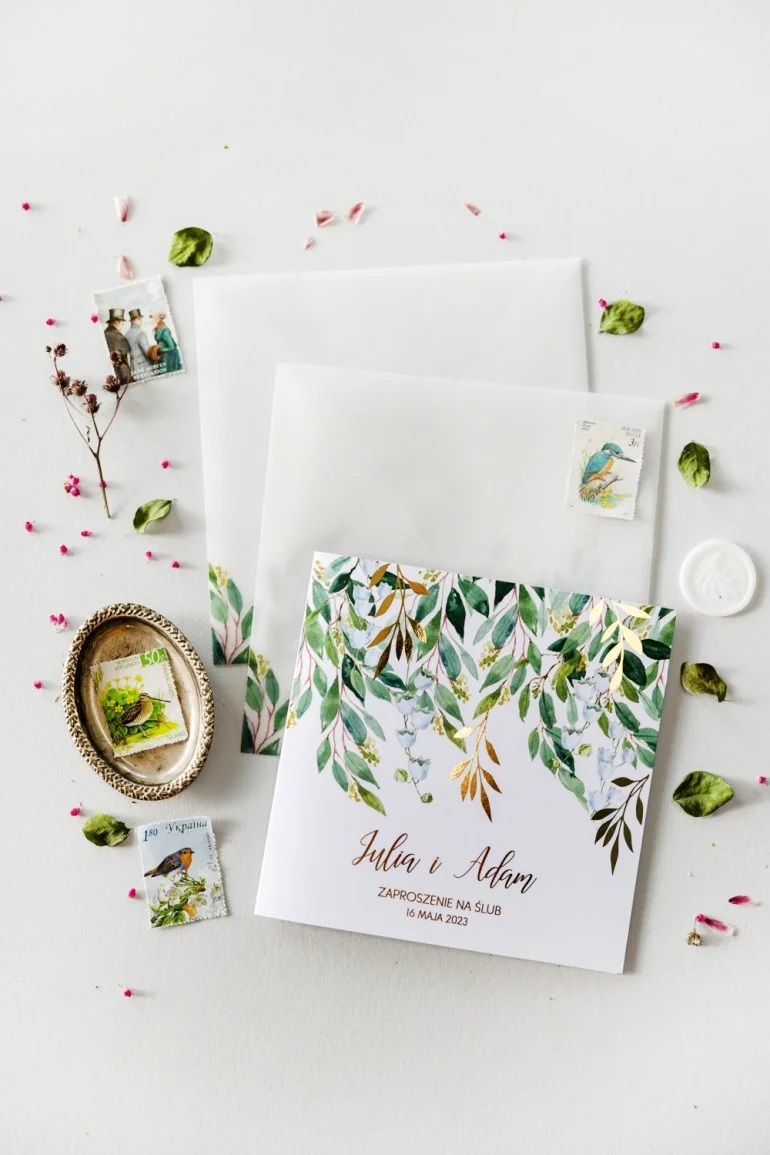
Classic wedding invitations with green leaves and gold foil | Gold foil wedding invitations | Rubin No. 4
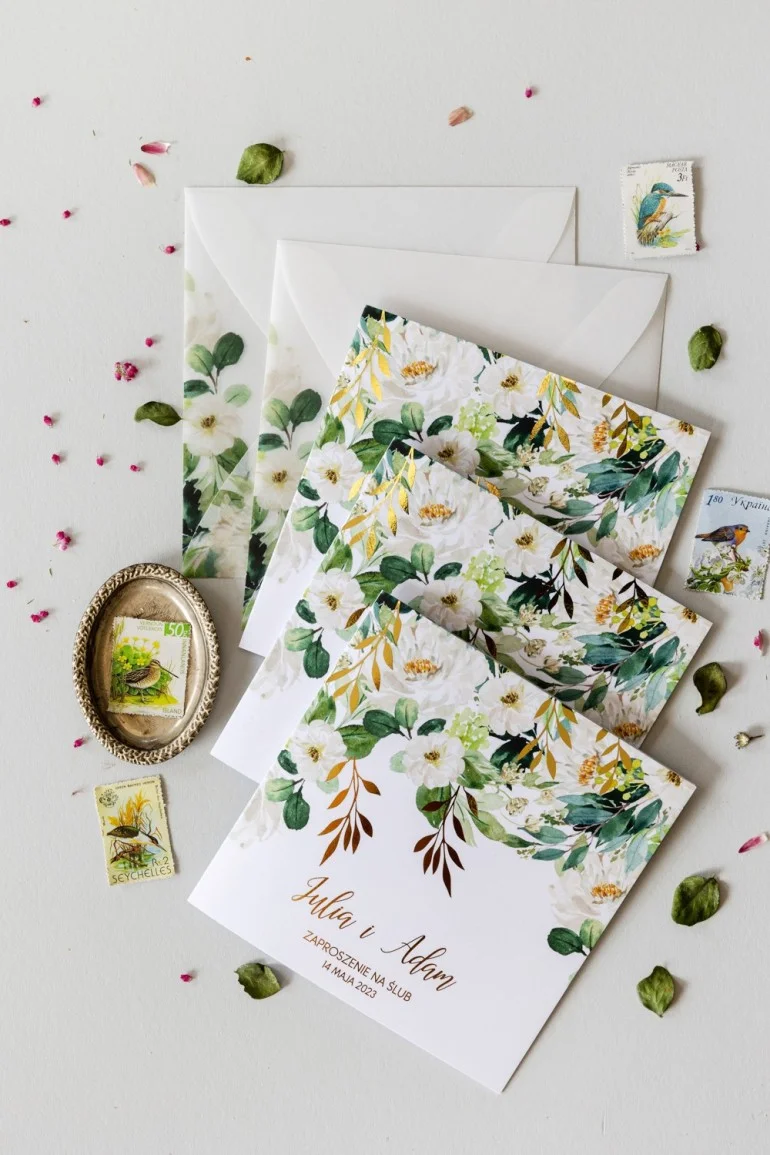
Stylish Wedding Invitations with Gold Accents and Watercolour Flowers | Exclusive Wedding Invitations | Rubin No. 1
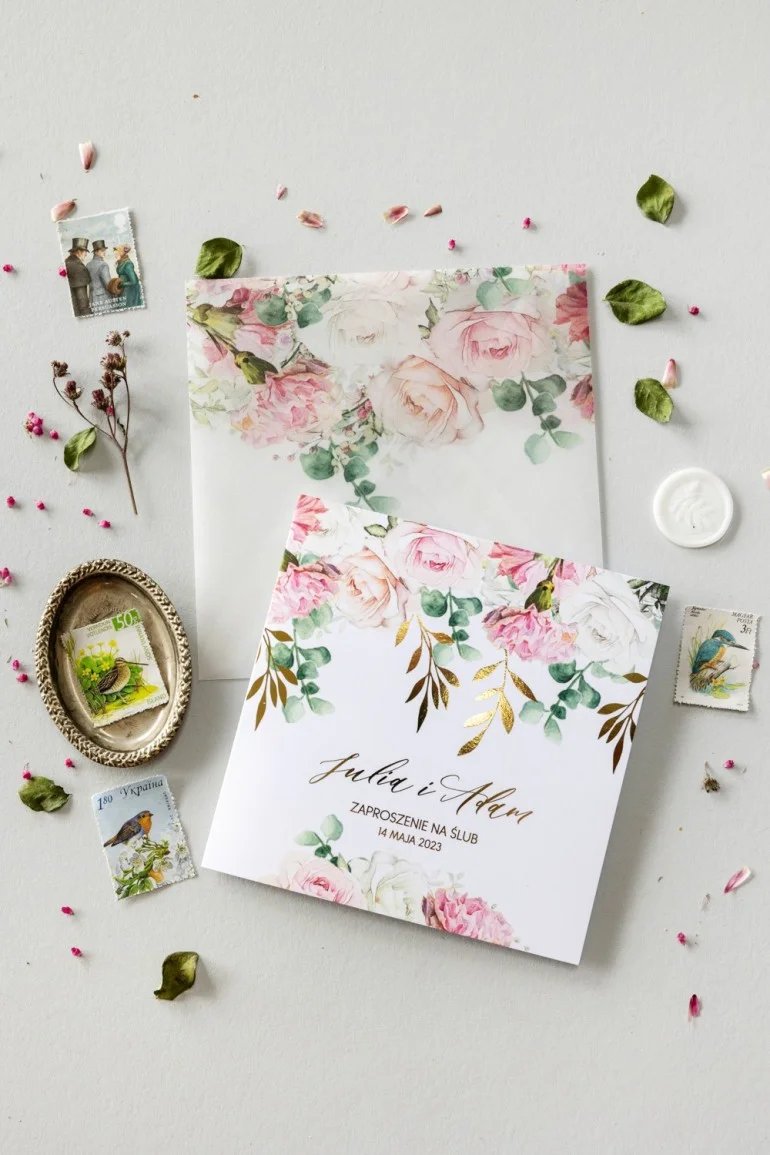
Wedding invitations with pink roses and gold foil, transparent envelope | Glamour style wedding invitations | Rubin No. 9
The Planning Timeline — From Vision to Execution
Precisely because of its unique nature and the demand for absolute cohesion, a theatrical and opera-themed wedding requires much more meticulous and lengthy planning than a standard affair. If you want a top-tier celebration, planning should begin at least 12 to 18 months before the wedding date. This is especially true if you want to secure a palace or historic venue (which are booked far in advance) and hire elite classical musicians (who are often booked a year ahead).
The planning stages for a theatrical wedding can be broken down as follows:
12-18 months before the wedding:
- Determine the core theme and colour palette
- Book the venue — this is the absolute priority
- Initial consultations with the photographer and videographer (briefing them on the theatrical vibe)
- Establish a budget with clear priorities (deciding what to fund first)
9-12 months before the wedding:
- Order wedding invitations — remember that bespoke designs require longer lead times
- Book musicians (string quartet, opera singer, pianist)
- Select and book the catering team
- Consult with a florist regarding the floral concept
- Choose the wedding dress and visit a tailor for the groom's attire
6-9 months before the wedding:
- Finalise the wedding menu
- Order the wedding cake
- Design the day-of stationery (menus, place cards, table numbers, evening programmes)
- Consult with a lighting company regarding the stage lighting plot
- Plan entertainment and "theatrical surprises"
3-6 months before the wedding:
- Send out the wedding invitations
- Finalise the guest list and seating plan
- Order place cards and menus
- Rehearse with musicians (finalise the repertoire)
- Order or prepare guest favours
The final 3 months:
- Run-through of all "spectacle" elements (music cues, entrance timings, cake cutting moment)
- Brief the catering and waitstaff
- Finalise all decor details
- Conduct a final briefing with the photographer
Theatrical Wedding Budget — Where to Splurge and Where to Save?
A theatrical and opera-themed wedding doesn't have to cost a fortune, but certain elements do require a higher investment, and this is not the place to cut corners. The three areas where you absolutely should not compromise are music (live classical musicians), floristry (lush, dramatic arrangements), and lighting (a professional stage lighting setup). These three elements create an atmosphere that simply cannot be replicated with cheaper substitutes.
However, there are areas where you can find sensible savings. Catering is one (great catering doesn't have to be the most expensive; focus on ingredient quality and service rather than a massive price per head). Table decor is another (many elegant decorations can be sourced or assembled cost-effectively—gold trays, velvet runners, and pillar candles are widely available at reasonable prices). Finally, guest favours (beautiful, elegant favours don't need to be pricey; it is the design and packaging that matter, not the monetary value of the gift itself).
| Element | Priority | Estimated Cost (PLN) |
|---|---|---|
| Venue (Palace/Castle) | ⭐⭐⭐⭐⭐ | from 5,000 PLN (hall rental) |
| Live Music (Quartet + Singer) | ⭐⭐⭐⭐⭐ | 2,000 – 5,000 PLN |
| Floristry | ⭐⭐⭐⭐ | 3,000 – 8,000 PLN |
| Stage Lighting | ⭐⭐⭐⭐ | 1,500 – 4,000 PLN |
| Stationery (Invitations + Place Cards + Menus) | ⭐⭐⭐ | 800 – 2,000 PLN |
| Wedding Cake | ⭐⭐⭐ | 1,500 – 4,000 PLN |
| Guest Favours | ⭐⭐ | 500 – 1,500 PLN |
A Wedding App as Your Backstage Manager
Planning an event as complex as a theatrical wedding is a challenge that demands flawless organisation—task lists, timelines, budgets, vendor contacts, guest lists, and seating charts. Fortunately, modern technology allows you to master this chaos elegantly. It is highly recommended to use the free wedding planning app Blissaro, designed specifically to help couples manage every aspect of their big day. Blissaro lets you handle everything in one place—from the guest list and budget to vendor communication and the seating plan.
A reliable wedding app is an absolute necessity today when planning a complex celebration. It helps you avoid communication breakdowns, missed deadlines, and blown budgets. Blissaro.com is a free tool that you can download and start using immediately, with no unnecessary hassle. Couples can use the app collaboratively, making it easier to divide tasks and maintain a cohesive vision—something that is absolutely invaluable for a demanding theme like theatre and opera. You might also want to read about whether it is worth hiring a wedding day coordinator to ensure every detail runs smoothly.
In addition to using an app, consider hiring a wedding planner experienced in themed weddings. This person won't just handle logistics; they will act as the guardian of your operatic vision. A great wedding planner instantly spots when an element clashes with the overall concept and suggests solutions to keep everything on track. It is an investment that pays for itself many times over, especially with a motif as intricate and demanding as a theatrical wedding.
Conclusion — The Curtain Falls, but the Memories Remain
A theatrical and opera-themed wedding is a choice for couples who aren't afraid to dream big, and who understand that the most beautiful day of their lives deserves a setting just as breathtaking as love itself. This isn't a wedding for everyone—it requires boldness, vision, and dedication. But the reward is a celebration that is a true work of art: cohesive, deeply moving, and utterly unforgettable. It is an event that leaves guests feeling as though they have just attended the premiere of something truly extraordinary—because they have.
The entire secret lies in cohesion and an obsession with detail. Every single element—from the bespoke wedding invitations to the meticulously packaged guest favours, from the dramatic place cards to the soaring live classical music—must tell the same story. And when all these elements play together in perfect harmony, when the musicians strike the final chord and the metaphorical curtain falls, you are left with something money cannot buy: a memory that lasts a lifetime.
Let your wedding be the opera you have always dreamed of seeing. Let it be a spectacle that moves, dazzles, and lingers in the memory for decades. And let every guest walk away with the feeling that they have just been part of something absolutely magical—because that is exactly how it should be.

Recommended articles:
- Unique Wedding Themes – Ideas for Themed Weddings Unlike Any Other
- How to Create an Atmosphere of Luxury on a Small Wedding Budget?
- Choosing Wedding Vendors: When and How to Book a Photographer, DJ, and Florist?
- The Most Common Mistakes in Wedding Invitation Design and How to Avoid Them
- How to Ensure Your Invitations Match Your Wedding Decor?
Szymon Jędrzejczak
Wedding industry expert and stationery designer at Amelia-Wedding.pl. For years, she has been helping couples create unforgettable moments by combining tradition with modern design.