Wedding Videographer – Is It Worth Having a Film of Your Big Day?
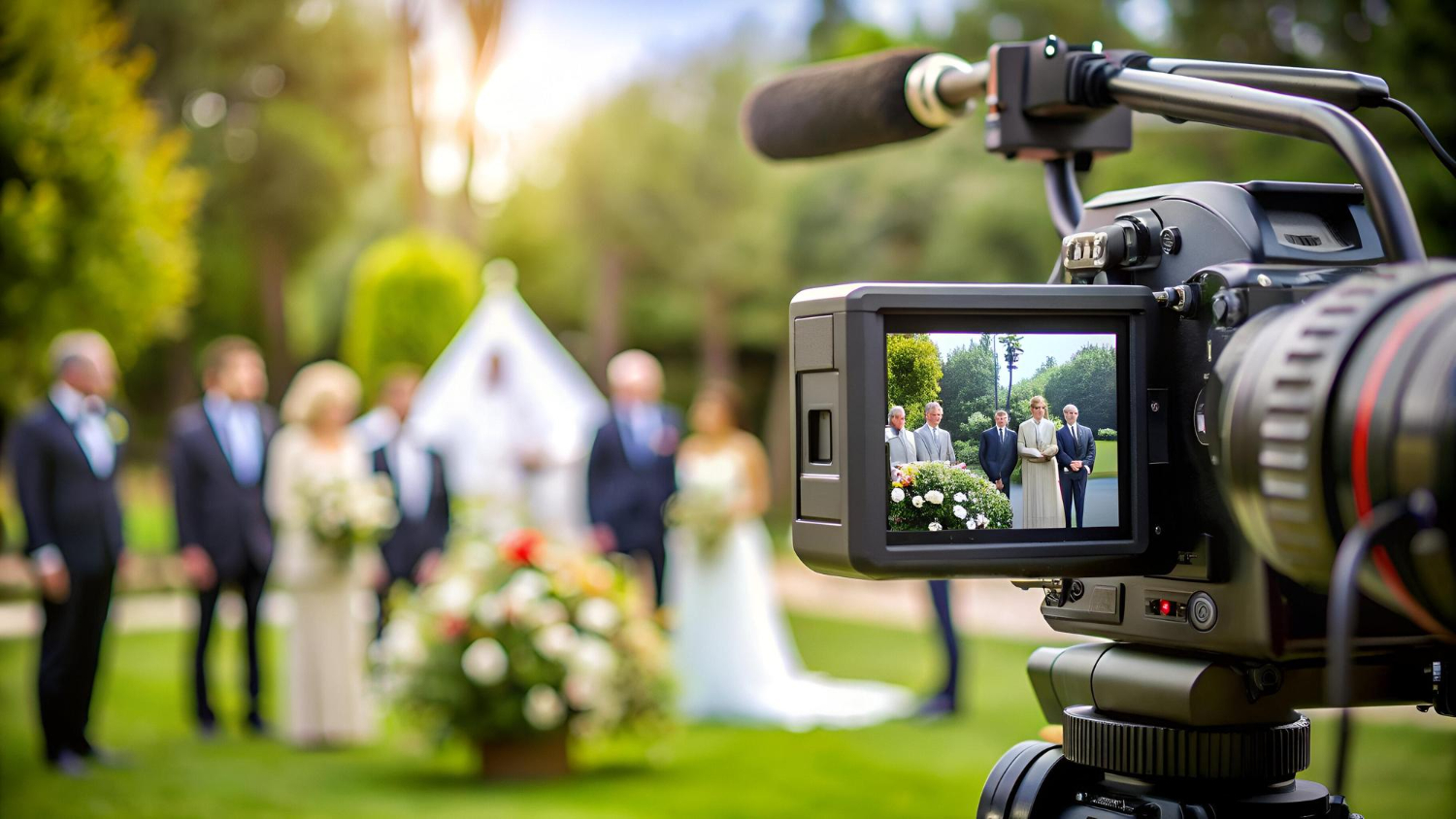
When planning your wedding and reception, you face dozens of decisions. From choosing your dream wedding invitations to finalizing the menu and entertainment – the to-do list seems endless. Among these dilemmas, a common question arises: is it worth hiring a videographer and investing in a wedding film? For many couples, a wedding video is seen as an extra cost that can easily be cut to save money. On the other hand, a wedding is a once-in-a-lifetime moment, and your heart tells you it's worth capturing in every possible way. In this article, we will analyze all the pros and cons of having a keepsake wedding film. We present 5 key aspects to help you decide: from the emotional value of the recording, through the differences between film and photography, to modern cinematography trends, costs, and practical advice.
Wedding videographer – is it worth having a film of this day? Here are 5 points that will clear your doubts and help you consciously decide if a wedding film belongs on your list of wedding must-haves.
Table of Contents
An Irreplaceable Keepsake of Your Wedding Day
Wedding Memories for Years – Priceless Film Over Fleeting Memory
Your wedding day is an event full of emotion, moving moments, and joy that unfortunately passes in the blink of an eye. A wedding film allows you to freeze these moments forever and return to them even many years later. Human memory can be fallible – over time, many details fade, guests' faces or the exact sequence of events can be forgotten. With a wedding recording, you can always refresh your memories. It's like a time capsule – after 10, 20, or even 50 years of marriage, you can sit together and relive that day all over again, remembering every smile and every tear of joy. For many couples, returning to their wedding day years later is a deeply moving experience. It's hard to overstate the value of a film that allows you to see yourselves half a century younger and relive the moment you said I do – it is simply a priceless lifelong keepsake.
A Family Heirloom for Future Generations – Watching with Children and Grandchildren
Imagine celebrating another wedding anniversary. After a romantic dinner, you reminisce about your wedding day. You play the film – and sitting beside you on the sofa are your children, perhaps even grandchildren, curious to see what their parents' or grandparents' wedding looked like. A wedding film is not just a keepsake for you, but also a family chronicle to be shown to future generations. Photos in an album are beautiful, but it is the moving image with sound that truly allows your loved ones to feel the atmosphere of those moments. For children, it's extraordinary to see their young parents dancing their first dance; for grandchildren – to see their grandmother in her wedding dress. Such a film is a gift for the whole family, something that unites generations in shared experiences of important moments from the past. Many people regret not having the chance to see their grandparents' wedding on film – you can provide your descendants with such an extraordinary heirloom that they can play and cherish for decades.

Glamour Wedding Invitation with Gilded Branch and Velvet Paper – Ruskus No. 14

Avril No. 10 Wedding Invitation – Beige, Gold & Satin Bow

Gaja No. 2 Wedding Invitation – Sage Green with Letterpress Embossing
Capturing Loved Ones Who May One Day Be Gone – Emotions Locked in the Frame
On your wedding day, you are surrounded by family and friends, often including elders – grandparents, great-grandparents, or long-lost relatives. Unfortunately, life moves on, and as years pass, some loved ones may no longer be with us. A wedding film immortalizes the presence of all these important people in one place and time. You can hear your grandfather's voice as he gives you his blessing, see your grandmother's smile moved by your vows, or watch the fun shared with friends whose paths might later diverge. Years later, such a recording gains immense sentimental value. Watching the film and seeing the faces of those no longer by our side is priceless – it saves their laughter, gestures, and words full of love from being forgotten. Many couples admit that the most beautiful part of their wedding film is the captured reactions and emotions of the guests. This cannot be recreated from memory alone or even from photographs. With a film, you can return to the presence of loved ones and feel as if they were right there with you again on that important day. This is the huge emotional capital of a wedding video – it becomes a moving tribute not just to your love, but also a testament to your bonds with family and friends.
A Decision Without Regret – Avoid Future Remorse
One of the most common arguments against filming a wedding is the belief that "we'll watch this film once or twice, and then it will end up at the bottom of a drawer." However, reality shows that having a wedding film is rarely regretted. On the contrary – many newlyweds regret the lack of a film, not having one. Professional wedding videographers often hear from couples who initially declined video services that they deeply regretted it after the fact. You cannot turn back time and record a film years later – so if you're wondering if it's worth it, think about how you'll feel about this decision one or five years after the wedding. Won't you miss the chance to turn on the video and relive that day once more? On the other hand, couples who decided on both a photographer and a videographer agree that they cannot imagine not having the film now. Photographs and film complement each other, creating a complete keepsake – giving you the sense that your special day was captured comprehensively. The decision is yours, of course, but listening to the stories of other newlyweds, a pattern is easy to spot: those who have the film are happy; those who skipped it often regret it. It's worth considering this decision so that years later there is no sense of missing out. It's better to invest in the memory than to wonder "what if..." later on.
Film vs. Photography – Emotions in Motion
Moving Frames Full of Life vs. Static Photos
A wedding photographer is almost a mandatory element of every wedding – beautiful photos in an album or photo book are a classic keepsake. But are photographs alone enough to capture the full magic of the wedding day? A wedding film offers something that even the most beautiful photo cannot – motion and the continuity of events. A photographic frame freezes one moment in time: a smile, a kiss, a dance spin. Meanwhile, a film shows the entire flow of the event: from the moment the couple steps onto the dance floor, through the entire choreography, to the finale and the guests' applause. Watching the recording, you get the feeling of stepping back in time and participating again in the events – we see scenes following one another smoothly, feeling the energy and tempo of that day. A photo will show you a single smile, while a film allows you to see what caused that smile and what happened right after. Thanks to moving frames, film captures the character of a moment much more fully – not just the end result, but the dynamics of the entire moment. For example, instead of one shot of the first dance, you have the whole dance on film – every turn, every step, every look, every small stumble and laugh. This is truly a completely different level of experiencing memories compared to static photographs.

Forest Fruits No. 3 Wedding Place Cards – Burgundy Roses on Eco Paper

Ethereal No. 6 Wedding Place Cards – Mountain Landscape Table Cards

Minimalist Wedding Place Cards – Glare No. 1 with Embossed Border
Sound and Voice – Elements a Camera Captures but a Photo Doesn't
One of the greatest advantages of film is sound – something photography can never provide. While watching your wedding film, you can hear the sounds accompanying the events: the groom's trembling voice as he says his vows, the bride's warm laughter as the ring is placed on her finger, the guests' applause echoing during the first marital kiss. The film preserves the music – from the solemn notes of Mendelssohn's Wedding March during the ceremony to your favorite song during the first dance or the wedding hits the guests danced to. You can also hear the emotions in the voices – a shaky "I do" at the altar, the parents' moved words during a toast, the best man's jokes triggering roars of laughter. All these sounds build a unique atmosphere and trigger auditory memories of that day. Photos only convey the look of the scene, whereas film allows you to immerse yourself in the full memory – both visual and auditory. You can close your eyes and, listening to the recorded sound, feel as if you were there again. The laughter of a beloved grandmother telling an anecdote at the table, or the choral "Happy Birthday!" sung by guests – these are elements that give you goosebumps when watching the film. Sound carries emotion as strongly as image, and together they create an inseparable whole. A wedding videographer records not just what is visible, but what is audible – and the combination of these sensations allows you to experience your wedding day in the most authentic way.
Spontaneity and Real Emotions Captured on Film
A professional photographer can catch many beautiful moments, but often focuses on the planned ones: posed shots of the couple, photos with parents, traditional moments like the first dance or cutting the cake. Meanwhile, a wedding videographer operates in the background, like a discreet observer ready to catch spontaneous, unique moments that happen between the planned points of the program. This could be the giggles of bridesmaids fixing the bride's veil just before the ceremony, a tear of emotion rolling down a father's cheek as he walks his daughter down the aisle, or a dynamic dance between a grandfather and granddaughter on the dance floor during the wedding night. Such moments sometimes last a fraction of a second – before a photographer can press the shutter, they are gone. Film, however, rolls continuously and has the chance to record these fleeting scenes. Spontaneity is the soul of every wedding – it's the lively fun, the guests' genuine reactions, the small unforeseen situations. When you watch the film later, it's often these unposed fragments that make you laugh or move you the most because they are authentic and full of life. A videographer moving with a camera around the room can be almost invisible, allowing guests to behave naturally and freely. As a result, the film shows real emotions, uninhibited by the presence of a lens. These types of shots – a spontaneous hug between two best friends, children running on the dance floor, the laughing faces of guests – create a precious mosaic of memories that make up the full picture of the wedding day. Photos, while beautiful, show a fraction of these situations, while film reveals much more, adding context and a continuation to every scene.

Blue Hydrangea Merci Wedding Favours - Impresja No. 4

Golden Fortune Cookies with Personalized Label | Affordable Wedding Favours | Cejla No. 3

Mini Chocolate Favours 'Pearls No. 1' – Luxury Wedding Favours with Pearl Accents
The Ceremony and Vows Captured from Start to Finish
The wedding ceremony itself is the climax – it holds immense symbolic and emotional weight. A photographer will take many photos during it: the couple entering, the moment the rings are exchanged, the first kiss, signing the documents. But only a film allows you to keep the entirety of the wedding vows and the accompanying emotions from the first to the last word. Thanks to the camera, you can accurately recreate this key segment years later – hearing your own voices saying the sacramental "I do" or the words of the civil vows again. On film, you'll see the full picture of the ceremony: the entrance into the church or registry office from a guest's perspective, the trembling hands during the ring exchange, the looks you shared before the vows were spoken, the reactions of those gathered, and even the little things you might not have noticed (like a small child carrying the rings with intense focus on their face). A wedding film provides a fuller memory of the ceremony – nothing will escape you. Even if certain details went unnoticed in the stress of the wedding day, the recording will save them for you. Besides, the wedding ceremony is often a moment so filled with emotion that the couple feels like everything happened in a dream. Watching the film later, you can calmly relive the ceremony once more, see the emotions on your partner's face, and truly fully realize the weight of the words spoken. This is a unique experience that can move you to tears even after many years of marriage.
Modern Wedding Cinema – Short, Creative, Cinematic
No More Long, Boring Wedding Tapes
If hearing "wedding video" makes you imagine a multi-hour, tedious recording of the entire party – you can breathe a sigh of relief. Modern wedding films differ drastically from those of a decade or two ago. It used to be standard to record practically everything from start to finish: long shots of all the tables, drawn-out scenes of dancing, often with no editing or minimal cuts. Such raw material was often hard to watch – newlyweds themselves would fast-forward the tape (now a video file) in search of more interesting moments. Today, the approach to wedding film is different: quality matters, not length. A professional videographer acts somewhat like a director and editor – choosing the most important and interesting fragments of the day to create a cohesive, engaging story. Instead of a multi-hour "marathon," you'll get a film lasting, for example, 30–90 minutes (depending on the agreement), which is watched in one breath like a good documentary production or a dramatized story of your day. More and more often, couples also receive a short highlight film (so-called wedding trailer) – a dynamic multi-minute clip composed of the most beautiful shots, showing the most important moments of the wedding in a nutshell. Such a summary can easily be shown to family, friends, or even posted on social media without forcing anyone to watch a long film. Modern editing styles ensure that there is no room for boredom in a wedding film – every minute is filled with content and emotion, shots change in a thoughtful rhythm, and the whole thing is set to carefully selected music. This makes your guests enjoy watching the film even in its entirety, and you yourselves will return to it eagerly. Today's wedding videographer is not "the guy with a camera circling the room for every dinner plate," as was once ironically said, but a true creator caring for the attractiveness of the material. You can forget old fears – contemporary wedding films are watched with interest, often repeatedly, because they perfectly capture the day's atmosphere in a condensed, more interesting form.
Wedding Film Like a Cinematic Hit – Modern Gear and Cinema Quality
Technological development has meant that wedding films have reached a level of quality that could only be dreamed of before. Today's videographers have equipment recording in Full HD and even 4K resolution, which translates into a crystal-clear image full of detail. Professional cameras and mirrorless cameras with video functions, image stabilizers (gimbals), sliders, and other gadgets allow for smooth, impressive shots straight from a movie set. Drones are also frequently used, allowing spectacular bird's-eye view shots to be woven into the film – a panorama of the area, a view of the church or wedding hall from above, an outdoor session of the newlyweds in beautiful natural surroundings. Such shots add scale to the film and make it even more special. A contemporary wedding film can therefore easily compete with professional television productions in terms of technical quality. In addition to the image, the quality of sound has also vastly improved – videographers use lapel microphones, sound recorders, and other audio gear to cleanly record your vows, the priest's speech, or the music from the band/DJ at the wedding. As a result, when watching the film, you hear everything clearly, without noise or static, which used to be a pain point of amateur recordings. Modern gear has another advantage – it's increasingly smaller, more portable, and discreet. A videographer no longer needs a huge shoulder camera or a harsh spotlight illuminating half the room. They often film with a small camera that looks like regular photography equipment to outsiders. Thanks to this, filming proceeds almost unnoticed, guests feel comfortable, and the couple can sometimes forget they are being recorded. The final effect, however, is stunning – you get a cinema-quality wedding film that you can proudly display on a large TV screen or projector during reunions.

Rubin No. 10 Soy Candle – Gilded Peonies Wedding Favours

Flores No. 1 Soy Candle in Gypsum – Gilded Wedding Favour

Ruskus No. 8 Soy Wax Candles – Botanical Wedding Favours in Plaster Pots
Artistic Editing Full of Emotion – The Videographer as the Director of Your Story
We've already mentioned that a modern videographer is a true artist. They don't just "press record" – they create a story. Every wedding has its unique atmosphere and story, and the filmmaker's role is to capture and tell it through images. In practice, this means that watching your wedding film, you will feel the emotions of that day arranged in a thoughtful narrative. Film editing is much more than technically gluing shots together – it's adding meaning, drama, and rhythm to them. A good wedding videographer pays attention to small details: they might start the film with close-ups of details (rings, flowers, invitations) to build a mood of anticipation, then smoothly transition to preparation scenes – showing the couple's growing emotions before the ceremony. At the climax of the ceremony, the film's pace slows down, allowing you to experience the vows fully, only to speed up again for the joyful exit from the church to the sound of the march and guests' applause. The editor (often the videographer themselves) ensures you see what's most important in a moving yet interesting way. Good wedding films entertain, move, and engage – they can trigger tears of happiness in parents and laughter at reception games, all in the right proportions. The videographer, as the director of your keepsake, also cares for a consistent style – choosing appropriate background music to emphasize the mood (a solemn piece for the ceremony, a lively one for the party), and they might weave in elements of your relationship story. More and more often, wedding films have a cinematic, narrative character – with a beginning, rising action, and a beautiful ending. Some couples decide on staged thank-yous for parents woven into the film, creating a moving compositional frame. All these techniques make your film an individual love story told through images, rather than just a dry report of the wedding schedule. It is a keepsake of high artistic and emotional value that you will return to with genuine pleasure.
Videographer Costs vs. Wedding Budget
How Much Does a Wedding Film Cost? – Prices and Packages
Let's move to the practical issue that often raises the most doubt: the cost of hiring a wedding videographer. There's no hiding it – a professional wedding film is a significant expense and can heavily impact the wedding budget. Prices in the market vary and depend on the region, the provider's reputation, and the scope of service. In Poland, the average price for a wedding film usually ranges from about 3,000 to 6,000 PLN for a standard package. Of course, you can find offers both cheaper and more expensive. A beginner or someone doing a more modest reportage might charge 1,500–2,000 PLN, while top film studios offering extensive packages with two operators, drone use, extra clips, and a long film can cost as much as 8,000-10,000 PLN. Sometimes wedding videography prices exceed 5,000 PLN, and for many couples, this amount is shocking, especially since they treat it as an "extra" expense rather than an absolute essential. Where do these sums come from? Primarily, the price includes the working time and skills of the videographer. Typically, the service includes filming preparations, the ceremony, and the reception (often until the late-night games), which means a dozen or so hours of work on the wedding day. Then comes the tedious post-production – selecting material, editing, adding effects, titles, music selection, color correction, etc., which can take another several dozen hours at the computer. When you sum up the time spent on a wedding film, it turns out the videographer works on your keepsake for 40–60 hours total. The high price reflects the vast amount of work put into creating a polished film. Additionally, extra options affect the cost: the length of the final film, the presence of a second operator (a second camera means more shots but also an extra person to pay), the use of a drone or specialized gear, and extra clips (like a trailer or thank-you video). Every element affects the package price. It's worth comparing offers carefully – sometimes a lower price means a reduced scope, while more expensive packages contain more video material. Knowing the price range of several thousand PLN, you can better plan your budget and decide which variant you can afford.

Glamour Wedding Place Cards No. 1 – Satin Name Cards with White Print

Navy Blue Ribbon Wedding Place Cards No. 1 – Satin Ribbon Table Names

Cappuccino Wedding Place Cards No. 1 – Satin Ribbon Table Name Cards
Is It Worth It? Summary and Practical Tips
After analyzing so many aspects, you might still wonder: is a wedding film for us? The final decision depends on your personal preferences, priorities, and situation. It's worth honestly answering a few questions. Are you the sentimental type who likes returning to memories, watching old photos and films? If so, you'll likely love having a professional wedding film. Or perhaps the opposite – you don't like seeing yourself on screen, or you feel that memories in your heart are enough? Some people truly don't feel the need to document important moments in video form, and that's okay too. Consider whether you will actually watch this film. You can assume that right after the wedding, you'll watch it with bated breath several times. And then? Maybe you'll make it a ritual on wedding anniversaries, return to it during major family gatherings, or show it to your children. If the thought of this brings a smile and excitement, that's a sign it's worth it. If you feel you'll just put the drive on a shelf and forget it – perhaps the motivation for a film is lower (though remember that even a rarely watched film is a precious keepsake that is appreciated more as years go by). Also take your concerns into account. If the main one is financial – go back to the previous point and analyze the budget; perhaps a solution can be found. If you fear the videographer's presence will stress you out, talk to the chosen professional. A good videographer knows how to be discreet. Your comfort is the most important – some couples feel more at ease when the videographer doesn't pose them but records everything spontaneously from a distance. You can agree on such a working style if posed scenes make you uncomfortable. In summary: make the decision to hire a videographer or not together, honestly discussing all the pros and cons. This article showed that the pros are many – from emotional value to technical quality and a legacy for descendants. The main "con" is essentially just a matter of cost or personal preference. It's important that you are both convinced it's a good (or bad) decision – then you won't look back with regret.
Check out more inspiration on our blog!
If you are planning a wedding, you will surely be interested in other articles on our blog. You will find valuable advice on organizing this special day:
- ✨ Wedding attractions for guests 2025 – ideas to spice up your reception – discover the latest trends and ideas for unique attractions that will make your wedding unforgettable!
- 📅 Friday weddings and off-season receptions – is it worth it? – find out how to save on wedding planning and the benefits of choosing less popular dates.
- 🥇 Perfect guests – how to take care of your invitees on the wedding day so they feel special and comfortable – tips on how to make your guests feel exceptional during the wedding reception.
- 💻 Modern technology at weddings – a guide for the future Bride and Groom – check how modern solutions can facilitate wedding organization and make the day even more special.
- 💃 How to create a unique first dance? – tips on choreography, music, and preparations to help you enchant your guests during the first dance.
- 🥂 Modern day-after parties – ideas for the second day of the wedding in an original style – inspiration for creative day-after parties that will delight your guests!
Visit our wedding blog and get even more inspired! 🌸