Which wedding ceremony to choose? A complete guide to civil, concordat, and humanist weddings
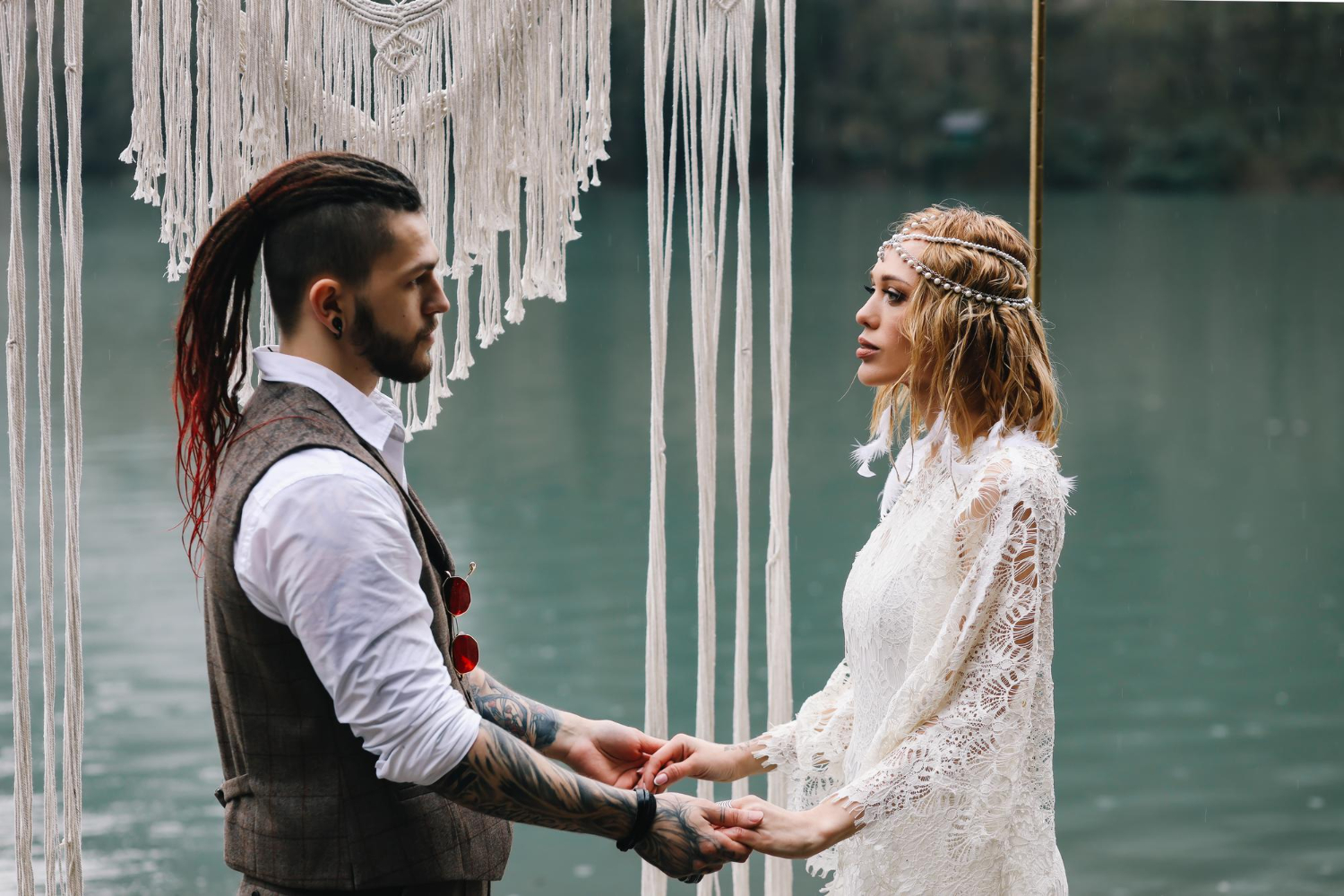
Choosing the type of wedding ceremony is one of the most important decisions a couple makes before their big day. In Poland, there are three main ways to enter into marriage, each carrying different legal, spiritual, and organizational consequences. Civil weddings, concordat weddings, and humanist weddings offer couples diverse ways to celebrate their love, tailored to individual needs, values, and beliefs. This decision affects not only the flow of the ceremony itself but also the formalities, costs, timelines, and how your marriage is perceived under Polish law and within religious communities.
In this comprehensive guide, we will provide a detailed comparison of all three types of ceremonies, discussing their pros, cons, documentation requirements, costs, and organizational procedures. This will enable you to make an informed decision that best suits your expectations and life situation. Whether you prefer the simplicity of a civil wedding, the tradition of a concordat wedding, or the creativity of a humanist wedding, each of these options can become the foundation for an unforgettable celebration that reflects your unique love story and shared values.
Civil wedding – a practical and accessible way to get married
Characteristics and basic information about a civil wedding
A civil wedding is the most direct and formal method of entering into marriage in Poland, guaranteeing full legal validity without additional religious or ideological requirements. This type of ceremony takes place at the Civil Registry Office (USC) or at an outdoor location chosen by the couple, provided that appropriate approval from the registrar is obtained. The ceremony is conducted by a civil registrar or their deputy, which gives it an official character in accordance with Polish family and guardianship law. A civil wedding is characterized by its conciseness and formality – the ceremony usually lasts from 10 to 20 minutes and focuses primarily on meeting legal requirements.
The modern civil wedding is gaining popularity, especially among couples who value organizational simplicity and speed. According to statistics, a large portion of marriages in Poland are civil weddings. Couples choose this form for various reasons – from pragmatic ones, such as short waiting times (just one month and one day from submitting documents), to economic ones (the basic fee is only 84 PLN), and ideological ones. It is also a solution for divorced individuals and international couples.

Gaja No. 2 Wedding Invitation – Sage Green with Letterpress Embossing

Glamour Wedding Invitation with Gilded Branch and Velvet Paper – Ruskus No. 14

Kraft Wedding Invitation No. 12 – Forest Style with Pine Forest Graphic
Required documents and formal procedures
The process of organizing a civil wedding is characterized by transparency. The first step is a visit to the chosen Civil Registry Office. During this visit, the couple submits a written assurance that there are no legal impediments to the marriage and sets the wedding date. The list of required documents is short: ID cards, abridged copies of birth certificates, and proof of payment of the stamp duty. In specific situations, such as a marriage with a foreign national or after a divorce, additional documents will be needed, such as a court judgment or sworn translations. The entire process, from submitting documents to receiving the marriage certificate, usually takes from one to two months, making the civil wedding the fastest option.
Advantages and limitations of a civil wedding
The biggest advantage of a civil wedding is its accessibility and organizational simplicity. Short waiting times and low basic costs make this option very economically attractive. Its ideological neutrality is ideal for couples with different beliefs. The flexibility of the ceremony location, including the possibility of an outdoor wedding, allows for full personalization. Limitations mainly stem from its formalized nature – the ceremony is short and may seem too official. The lack of a spiritual aspect may be an issue for believers. The possibilities for personalizing the vows themselves are also limited.

Glamour Wedding Place Cards with Pearls – Pearls No. 1 White

Lauren No. 3 Wedding Place Cards – Classic Calligraphy Name Cards

Minimalist Wedding Place Cards – Glare No. 1 with Embossed Border
Concordat wedding – a combination of religious tradition and legal power
Table of Contents:
- Civil wedding – a practical and accessible way to get married
- Concordat wedding – a combination of religious tradition and legal power
- Humanist wedding – a modern alternative full of personalization
- Comparison of costs, timelines, and organizational requirements
- How to choose the right type of ceremony – a practical decision-making guide
The essence and significance of a concordat wedding in Poland
A concordat wedding is a unique solution that combines a religious ceremony (in the Catholic Church) with the legal effects of a civil wedding. Introduced in 1998, it eliminates the need to organize two separate ceremonies. Thanks to it, the couple enters into a marriage that is valid both in the eyes of state law and canon law within a single church ceremony. This form is very popular, accounting for about 35% of all marriages in Poland. It is a choice not only for deeply religious people but also for those who value tradition and the solemn setting of a church ceremony.

Simple No. 3 Soy Candle – Gold Foiling & Elegant Wedding Favours

Golden Fortune Cookies with Personalized Label | Affordable Wedding Favours | Cejla No. 3

Merci Favour with White Flowers, Green Leaves | Elegant Guest Gifts | Impresja No. 10
Requirements and preparatory procedures
Preparations for a concordat wedding are more time-consuming. They should be started 6 to 12 months before the planned date. The list of documents is much longer and includes both church documents (baptism and confirmation certificates, certificate of completion of pre-marital courses) and civil documents (ID cards, certificate from the USC stating no impediments). Pre-marital courses are mandatory and are intended to prepare the couple for married life in accordance with Church teaching. The entire process requires good organization and coordination between the parish and the office, although many parishes assist with the formalities. It is worth remembering that planning is a key element, which we write about in our article on when to start planning a wedding.
Benefits and challenges of a concordat wedding
The main benefit is the combination of legal and spiritual dimensions in one solemn ceremony. For religious couples, this has invaluable worth. Socially, in Poland, this form is often perceived as "complete" and traditional. The challenges, however, are the long and complex preparatory procedures, higher costs, and ideological limitations. The ceremony must take place in a church, which excludes outdoor weddings, and its script is strictly defined by the liturgy, which limits personalization options.

Flores No. 1 Soy Candle in Gypsum – Gilded Wedding Favour

Delize No. 1 Soy Candle – Forest Motif Wedding Favours

Flores No. 2 Soy Candle in Gypsum – Burgundy Flowers Wedding Favour
Humanist wedding – a modern alternative full of personalization
Characteristics and philosophy of a humanist wedding
A humanist wedding is the most personalized form of ceremony, which focuses on humanist values, the couple's individuality, and full freedom of expression. In this form, the couple vows to each other in front of their loved ones, rather than before an official or God. The ceremony is conducted by a celebrant and can take place anywhere and at any time. It is an ideal option for couples who want to create a celebration that 100% reflects their history, values, and dreams, including same-sex couples who do not have the option of formal marriage in Poland.
Organization and flow of a humanist ceremony
The organization of a humanist wedding is based on close cooperation with a celebrant. The couple jointly creates a completely personalized script, which may include their own vows, stories about their love, favorite music, or symbolic rituals (e.g., handfasting). The celebrant can be a professional or a close person. The entire process is extremely creative and allows for the creation of a unique and deeply moving celebration.

Glamour Wedding Place Cards No. 1 – Satin Name Cards with White Print

Cappuccino Wedding Place Cards No. 1 – Satin Ribbon Table Name Cards

Rose Bow Wedding Place Cards No. 1 – Pink Satin Glass Ribbon Cards
Benefits and limitations of a humanist wedding
The most important benefit is the unlimited possibility of personalization and the creation of an authentic, deeply personal ceremony. It is an option available to everyone, regardless of orientation or beliefs. The main limitation in Poland is the lack of legal power. This means that for the marriage to be valid in the eyes of the law, the couple must additionally have a civil wedding. The cost of a professional celebrant is also higher than official fees, and social acceptance in more traditional circles may be lower.
Comparison of costs, timelines, and organizational requirements
Cost analysis of different types of wedding ceremonies
- Civil wedding: The cheapest option. The basic cost is 84 PLN for drawing up the certificate. An outdoor wedding is an additional 1000 PLN. The total formalities range from approx. 200 PLN to 1300 PLN.
- Concordat wedding: Higher and more varied costs. These include fees for pre-marital courses (50-300 PLN), parish fees (often 200-1000 PLN), organist, decorations. Total formalities range from 500 PLN to over 2000 PLN.
- Humanist wedding: Costs depend on personalization. The fee for a professional celebrant is usually 2000-3300 PLN. In addition, there are costs related to renting the venue and additional elements. If the couple wants legal effects, the cost of a civil wedding must be added.
Golden Fortune Cookies with Personalized Label | Affordable Wedding Favours | Cejla No. 3

Fortune Cookies with Gold Foliage – Ruskus No. 2

Personalized Fortune Cookies, Light Grey | Original Wedding Favours | Cejla No. 7
Comparison of implementation timelines and time requirements
- Civil wedding: The fastest option. The minimum waiting time is one month and one day.
- Concordat wedding: The longest preparation time, from 6 to 12 months, mainly due to the need to complete pre-marital courses and reserve a date at the parish.
- Humanist wedding: Moderate flexibility. Preparations usually take 1-3 months, depending on the celebrant's availability and the complexity of the script.
Organizational and logistical requirements
A civil wedding is the simplest logistically. A concordat wedding requires coordination between the USC and the parish as well as meeting numerous formal requirements. A humanist wedding, although flexible, requires the couple to put in the most creative and organizational effort to create the ceremony from scratch, including taking care of details such as place cards, which will help organize guest seating. It is crucial to create a good plan, which you can read more about in our guide on why it is worth having a wedding day schedule.

Personalized Wedding Welcome Sign with Two Photos – Photo Design No. 6

Elegant Wedding Welcome Sign with Black & White Photos – Photo Design No. 7

Rubin No. 5 Wedding Seating Plan – Purple Heather and Gold Motif
How to choose the right type of ceremony – a practical decision-making guide
Ideological and personal factors in choosing a ceremony
The choice of ceremony should primarily be a reflection of your values. For deeply religious couples, a concordat wedding will be a natural choice. For those who value pragmatism and the secular character of the state, a civil wedding will be ideal. In turn, a humanist wedding is a proposal for couples who prioritize personal expression, individualism, and want to create a ceremony that tells their unique story. It is crucial that you answer the question together: what is most important to us on this day? Is it a sacrament, a legal contract, or perhaps a public declaration of love on your own terms?
Glamour Wedding Place Cards with Pearls – Pearls No. 1 White
Lauren No. 3 Wedding Place Cards – Classic Calligraphy Name Cards
Minimalist Wedding Place Cards – Glare No. 1 with Embossed Border
Remember that regardless of your choice, the most important thing is that the ceremony reflects you and your love. Carefully selected wedding invitations, thoughtful place cards, and personal wedding favors will complete the character of each of these celebrations.
Recommended articles
- Top 10 mistakes made by couples when organizing a wedding
- Guest list and seating arrangements – how to create the perfect seating plan?
- Working with a wedding photographer: How to plan perfect photos?
- Wedding trends 2025: Colors, themes, and news worth knowing
- How to ensure consistency in invitation style with wedding decor?
- Wedding contingency plan: How to prepare for surprises?
- What texts to include on wedding invitations?