Who should hand out wedding invitations?
When to send out wedding invitations?
The perfect time to send invitations
Planning a wedding is quite a challenge, and one of the key elements is properly scheduling the distribution of invitations. The optimal time to send out wedding invitations is 3-4 months before the ceremony. This allows guests to plan their time accordingly and adjust to your wedding plans. Sending invitations this far in advance provides comfort to your guests and shows your commitment to organizing this special day.
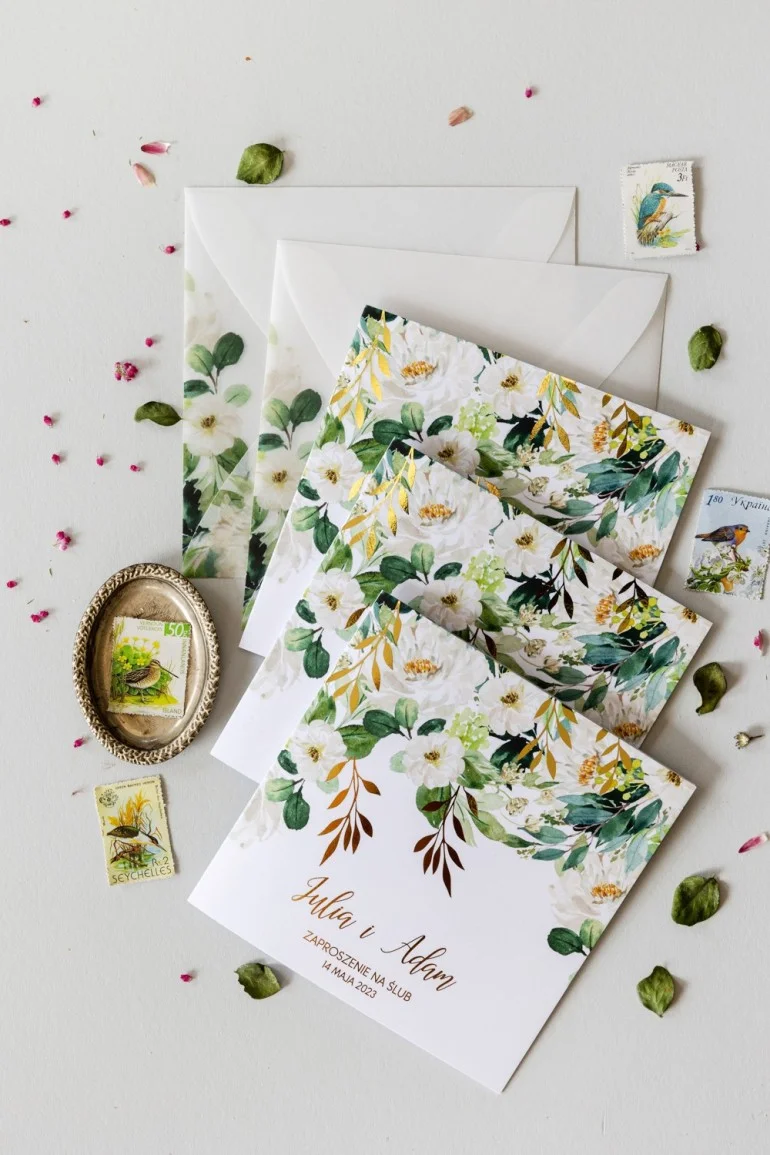
Stylish Wedding Invitations With Gold Accents, Watercolor Flowers | Exclusive Wedding Invitations | Rubin No. 1
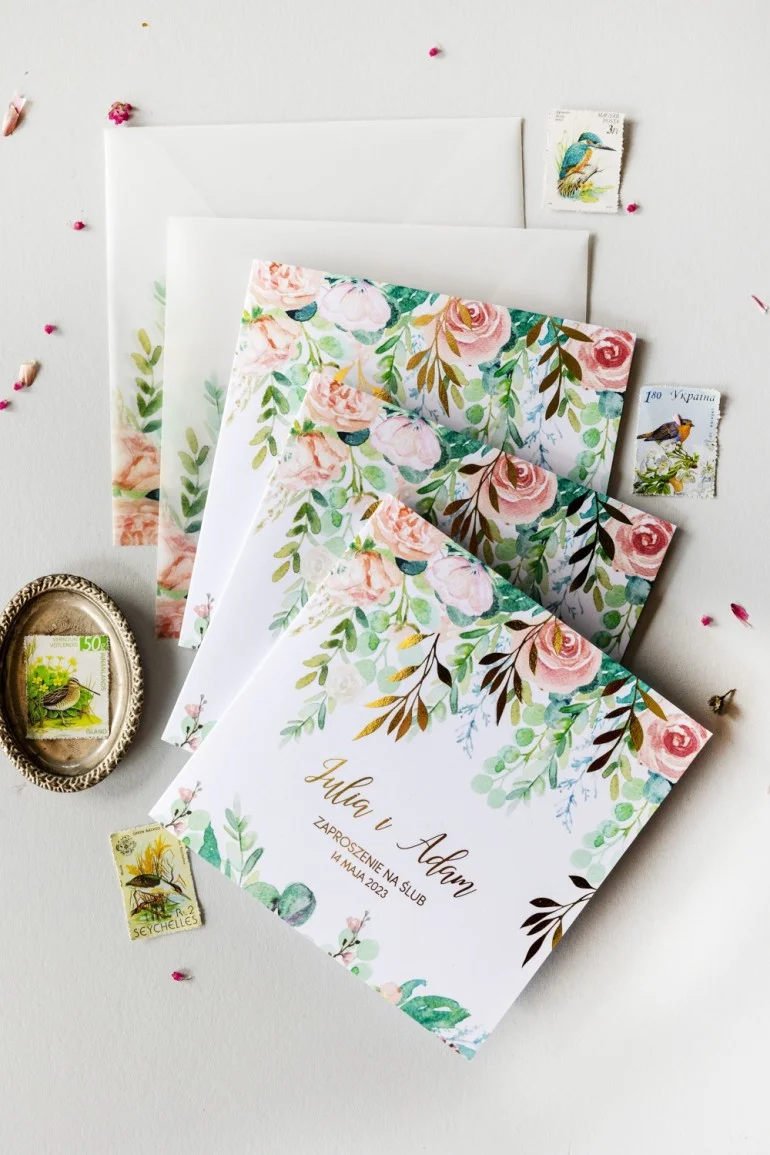
Elegant Floral Wedding Invitations With Gold Foil, Pastel Roses And Greenery | Glamour Wedding Invitations | Rubin No. 2
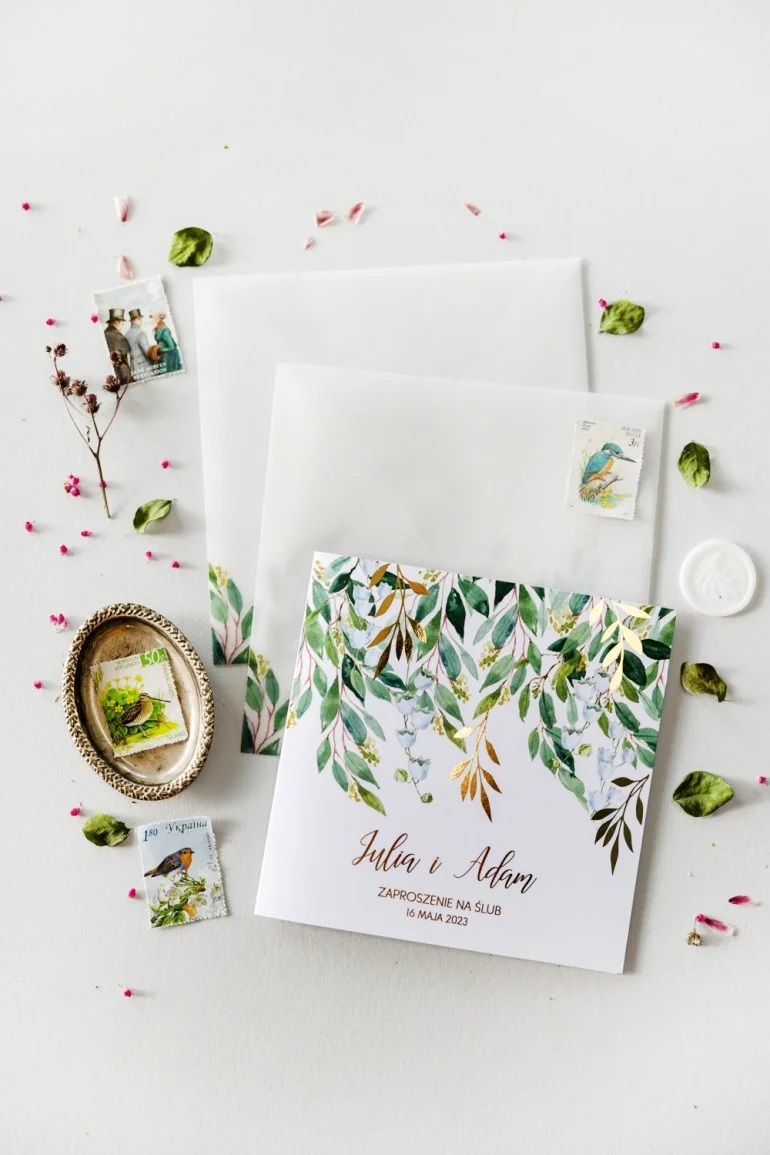
White And Green Wedding Invitations With Lily Of The Valley And Gold Foil | Modern Wedding Invitations | Rubin No. 4
It is worth remembering that wedding invitations are not just information about the date and place of the ceremony, but also a way to express respect and warmth towards the invited guests. That is why it is so important not to leave this matter to the last minute. The more time we give our guests to prepare for the wedding, the greater the chance that everyone invited will be able to attend. Sending out invitations 3-4 months before the wedding is also the perfect time to take care of any potential changes or adjustments to guests' plans.
Holiday season and sending invitations
Planning a wedding during the holiday season requires extra attention and care. Many people plan their vacations well in advance, so it is wise to hand out invitations even 5-6 months before the planned wedding date. This practice is especially important when the ceremony takes place during popular vacation periods, such as summer holidays or long weekends. High temperatures, vacation plans, and other commitments can make it difficult for guests to adjust to the wedding date if they are not informed well in advance.
Planning a wedding during the festive season, e.g., Christmas or New Year's Eve, requires sending invitations even earlier. Guests need time to reorganize their plans and consider whether they can attend the ceremony. By handing out invitations 5-6 months before the wedding, we increase the chances of high attendance and minimize the risk that our loved ones will not be able to take part in this special day.
Destination wedding - when to send invitations?
When planning a destination wedding, it is necessary to consider additional factors that may affect guest availability. Sending invitations up to a year in advance is a good practice that allows guests to carefully plan their travel, organize accommodation, and handle any other necessary formalities related to the trip. A wedding in an exotic location may require guests to obtain visas, book flights, or adapt to local customs and weather conditions.
Sending invitations early is crucial so that guests can book the best transport and accommodation options. Furthermore, by informing guests well in advance about the planned destination wedding, we show them respect and give them the opportunity to fully prepare to participate in this unique event. Thanks to this, we can count on the presence of loved ones who will have time to adjust their plans to the wedding date and organize everything well in advance.
In summary, properly planning the distribution of invitations is a key element of wedding organization. Regardless of whether we are planning a wedding at home, during the holiday season, or abroad, sending invitations earlier allows our guests to prepare better and ensures higher attendance on our special day.
Table of Contents
Who should invite guests to the wedding?
The Bride and Groom or parents - who invites?
Wedding tradition often dictates that the parents of the Bride and Groom hand out wedding invitations. This is deeply rooted in many cultures and stems from times when parents were the main organizers and sponsors of the wedding. In such cases, invitations are issued on behalf of the parents and the couple, which emphasizes the family's role in this important event. Parents inviting guests is a form that is still often practiced, especially in traditional families where great emphasis is placed on family relationships and respect for older generations.
However, modern wedding realities are changing. More and more often, the engaged couple themselves decide to hand out wedding invitations. Changing social norms, the growing independence of young couples, and their greater financial contribution to the wedding organization make the decision of who hands out invitations more flexible. A couple who finances their own wedding often wants to emphasize their autonomy and independence by choosing to hand out invitations personally.
Tradition versus modernity
Choosing between a traditional and a modern approach to handing out wedding invitations can be a difficult dilemma. The tradition of invitations being handed out by parents has its roots in a culture where the family played a central role in organizing and financing the wedding. This way of inviting guests emphasizes family ties and is an expression of respect for parents who often put a lot of work and resources into preparing the wedding.
On the other hand, the modern approach, where the couple themselves hands out the invitations, reflects changing social realities. Young couples are increasingly organizing and financing their weddings independently, which leads them to take full control over the guest list and the distribution of invitations. Modernity gives the couple more freedom and allows for the personalization of invitations, which can better reflect their personalities and style. By choosing this approach, the couple can also get closer to their guests by handing out invitations personally and expressing their invitation directly.
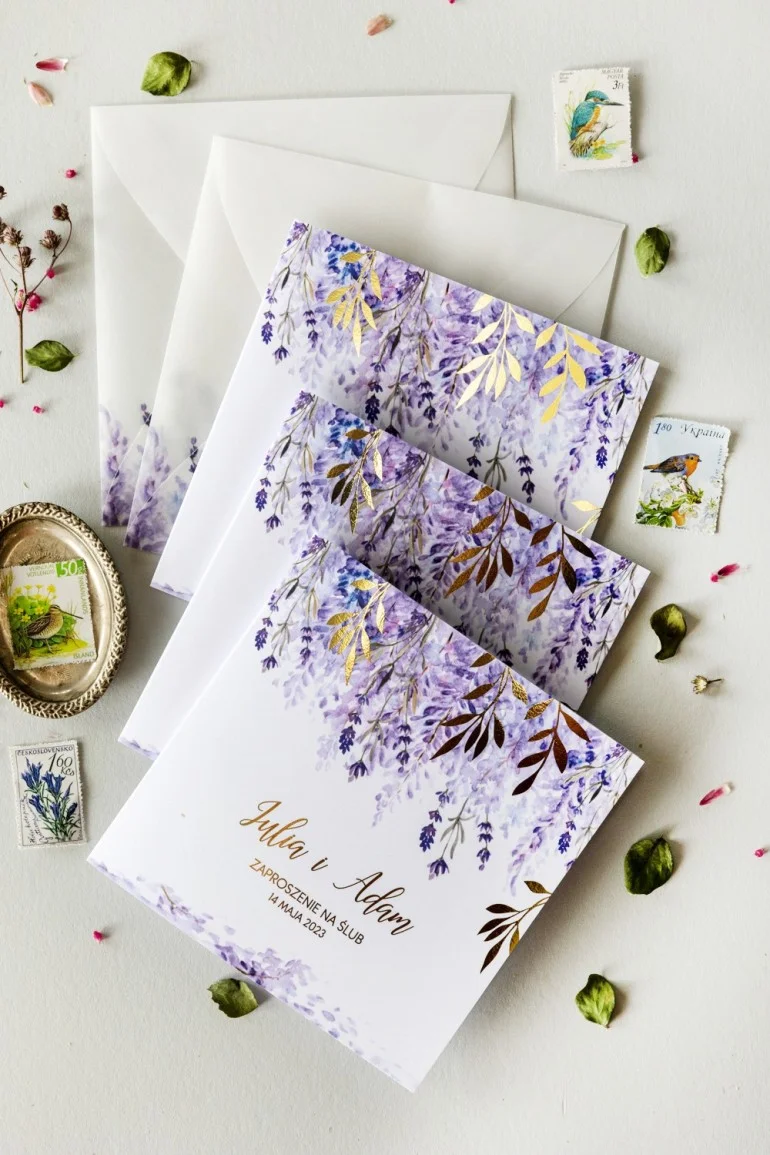
Purple Invitation With Heather And Gold Branches | Unique Wedding Invitations | Rubin No. 5
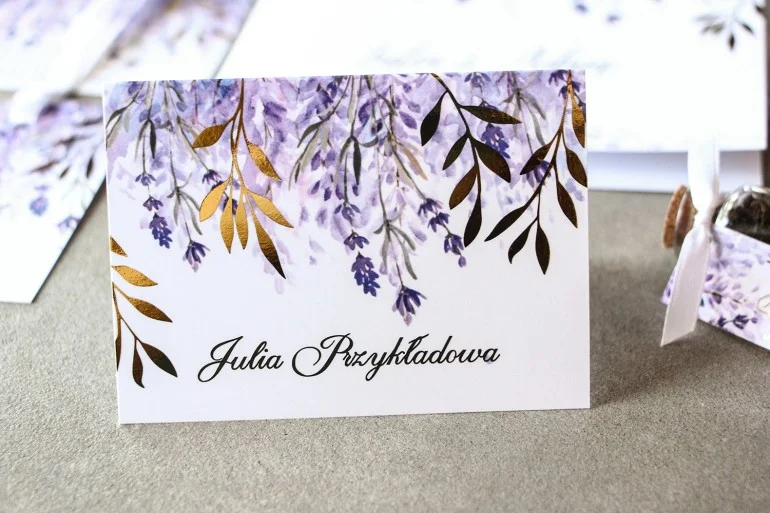
Purple Glamour Place Cards With Gold Branches | Wedding Table Place Cards | Rubin No. 5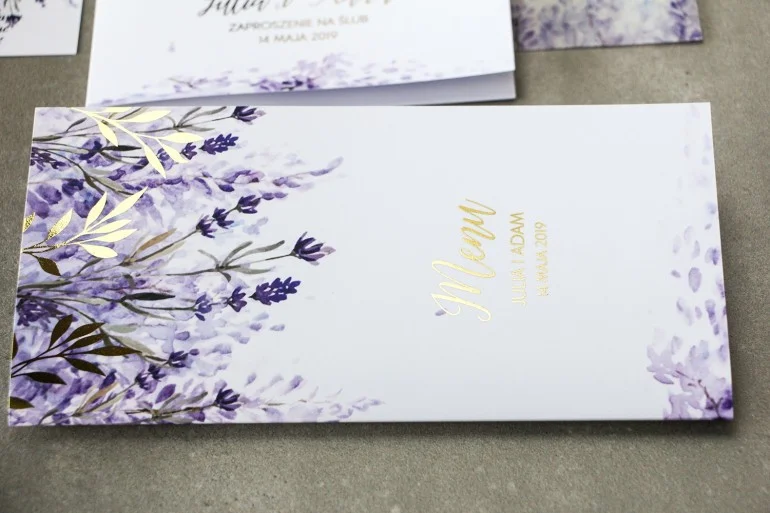
Elegant Wedding Menu With Heather And Gold Branches | Glamour Menu For A Unique Wedding | Rubin No. 5
When do parents invite guests?
The decision of who invites guests to the wedding often depends on the financial situation and the parents' involvement in organizing the wedding. In families where parents largely finance and organize the ceremony, it is natural that they issue the invitations. In such cases, invitations may contain traditional wording, emphasizing the parents' role as hosts of the event. Parents inviting guests may also feel a greater responsibility for the wedding's flow, which strengthens their involvement and sense of participation in this important day.
However, even in traditional settings, it is worth having an open conversation with parents about the form of the invitations. An honest conversation will allow you to clear up any doubts and determine what form will be most appropriate and acceptable for all parties. You can also find compromise solutions, for example, invitations on behalf of the parents, but with additional, individual notes from the Bride and Groom. It is important that the invitations are an expression of unity and cooperation between generations, which will only strengthen the significance of this special day for the whole family.
In summary, the decision of who hands out wedding invitations depends on many factors, including family traditions, wedding financing, and the personal preferences of the couple. Regardless of the choice, it is crucial that this process is thoughtful and adapted to the specifics of the given wedding, which will allow for the creation of an unforgettable and coherent ceremony.
Methods of delivering invitations
In person or by mail?
The decision on how to deliver wedding invitations depends largely on our preferences and our relationship with the guests. Handing out invitations in person is the most elegant and traditional form, which allows for direct contact with the invited people. It is also an opportunity to spend time with loved ones, share the joy of the upcoming event, and discuss the details of the wedding. Handing out invitations in person can also be more formal and solemn, which adds charm to the entire preparation process.
However, it is not always possible to meet all guests in person, especially if they live far away. In such cases, sending invitations by mail is a practical and effective solution. Sending wedding invitations by mail allows you to reach all invitees in a convenient way, while also maintaining the elegant style of the invitations. Remember to send the invitations well in advance so that guests have time to prepare for the ceremony.
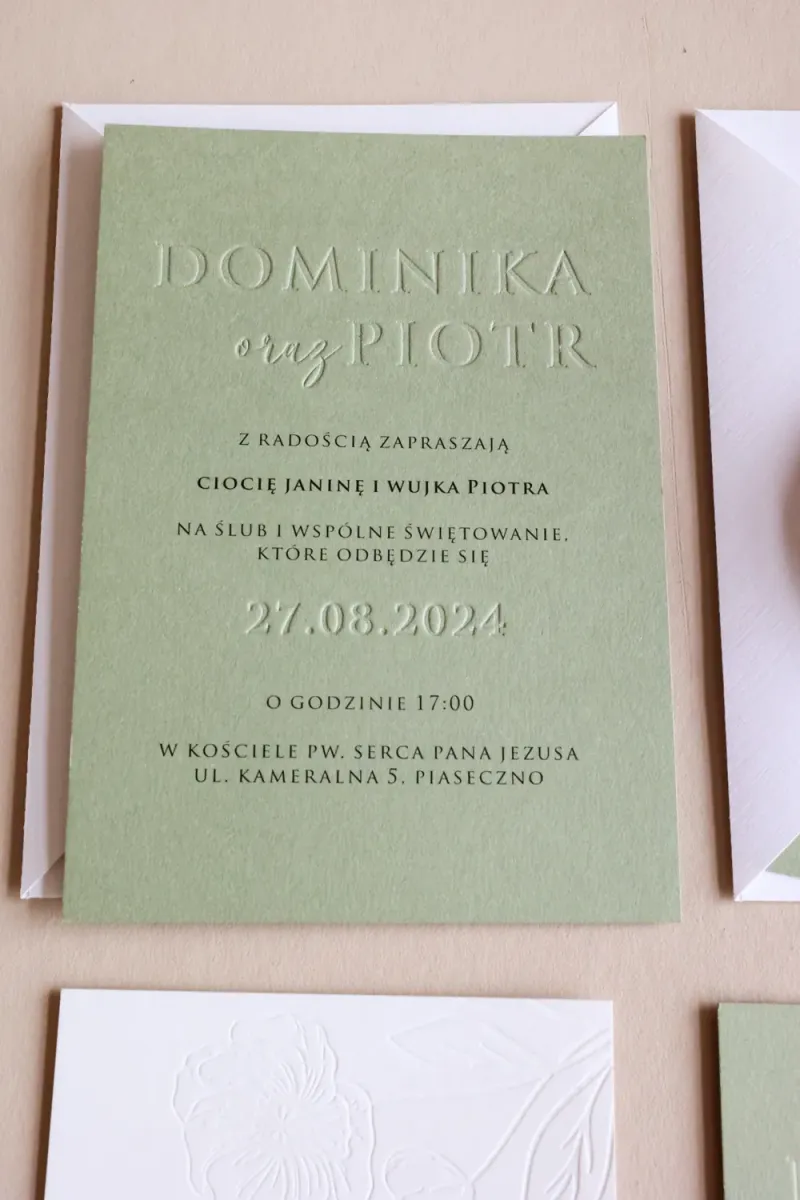
Wedding Invitations With Personalized Embossing On Eco-Paper | Letterpress Invitations | Karmen No. 1
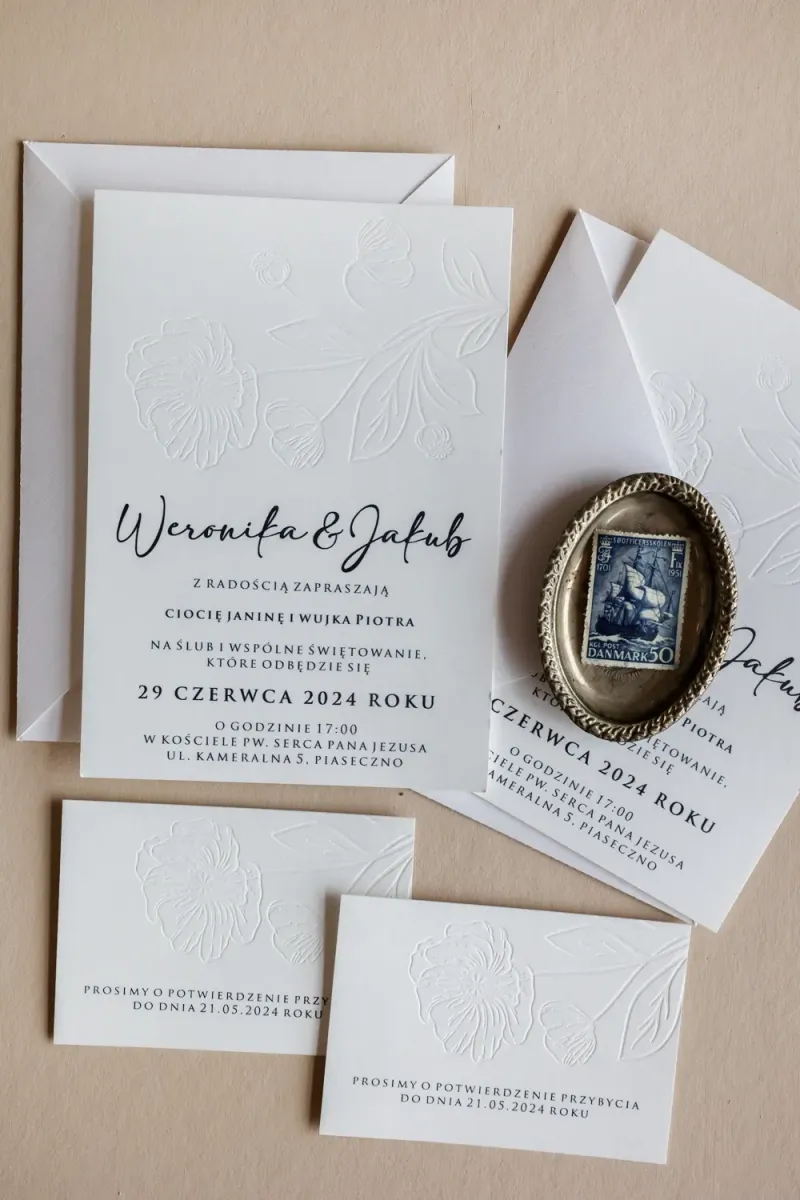
White Wedding Invitation With Embossed Floral Motif | Elegant Letterpress Invitations | Karmen No. 2
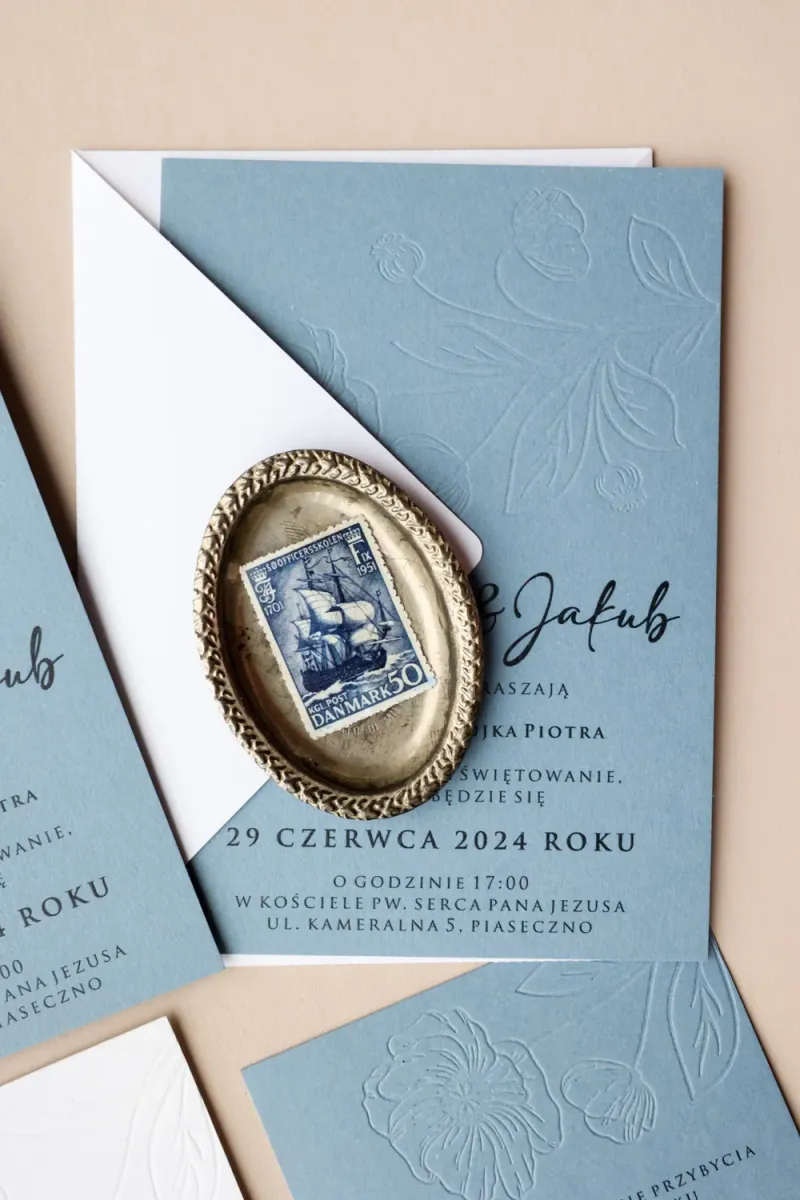
Letterpress Invitation With Blue Floral Motif | Embossed Invitations | Karmen No. 3
E-invitations - a modern solution
In the age of digitalization, more and more couples are opting for modern solutions, such as e-invitations. This form of invitation is not only eco-friendly but also fast and convenient. E-invitations can be sent via email or through special online platforms that allow for the creation of beautiful and personalized invitations. Sending e-invitations allows for quick reach to guests and easy tracking of RSVPs.
E-invitations are also an excellent solution for couples who have guests living abroad. Sending traditional invitations by mail can be expensive and time-consuming, while e-invitations can be delivered instantly. Additionally, e-invitations can include interactive elements, such as links to a wedding website, maps, or RSVP forms, which facilitates organization and communication with guests.
Traditional invitations - how to deliver them?
Regardless of whether we decide to hand out invitations in person or send them by mail, it is important that wedding invitations are elegant and carefully prepared. Traditional wedding invitations often contain personalization elements, such as monograms, decorative fonts, or handmade details. When choosing traditional invitations, it is worth paying attention to the quality of the paper and printing so that the invitations are beautiful and durable.
When handing out invitations in person, we can take care of additional elements, such as an elegant envelope or a small gift for guests, e.g., sweets or small wedding favors. These are small gestures that make the invitations even more special. If we decide to send them by mail, it is worth ensuring secure packaging for the invitations so that they reach the recipients in pristine condition.
In summary, the choice of how to deliver wedding invitations depends on many factors, including our preferences, relationships with guests, and logistical possibilities. Regardless of the chosen form, the most important thing is that the invitations are an expression of our joy and warmth, as well as an elegant introduction to this special day.
Information on the invitation
Key information on the invitation
Every wedding invitation must contain key information that will allow guests to understand all the details regarding the ceremony. First of all, the invitation should include the names of the Bride and Groom – this is the central element of the invitation, which gives it a personal touch. Next, information regarding the date, place, and time of the wedding is extremely important. These are basic data that must be provided clearly and legibly to avoid any misunderstandings.
In addition to this basic information, the invitation should include a request for RSVP. This will enable the couple to better plan the number of guests and organize the reception. The request for RSVP can include a phone number, email address, or an RSVP card that guests can return. Wedding invitations should also be aesthetically refined to reflect the style and character of the upcoming ceremony.
Personalization of wedding invitations
Personalizing wedding invitations is a great way to give them a unique character and emphasize the individuality of the couple. The possibilities for personalization are almost limitless and can include various elements, such as the choice of color scheme, fonts, as well as additional decorations and graphic motifs. One of the popular ways to personalize invitations is to add a quote about love or a piece of a poem that has special meaning for the couple.
Another element of personalization can be adding a photo of the couple. Such a detail makes the invitation more personal and emotional. Personalization can also include various accessories, such as ribbons, wax seals, or handmade details, which add elegance and a unique character to the invitations. Thanks to personalization, invitations can better reflect the atmosphere of the planned wedding and make them an unforgettable experience for guests.
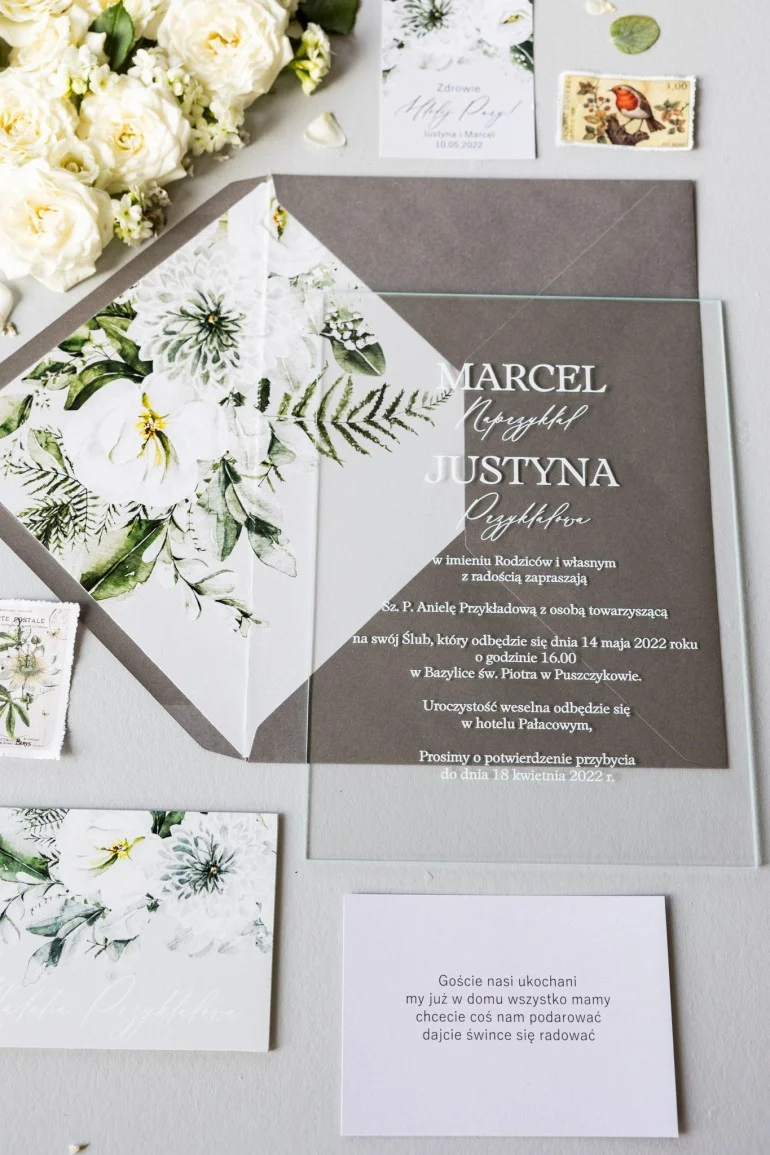
Elegant Glass Wedding Invitations With Delicate Details | Unique And Modern | Soft No. 4
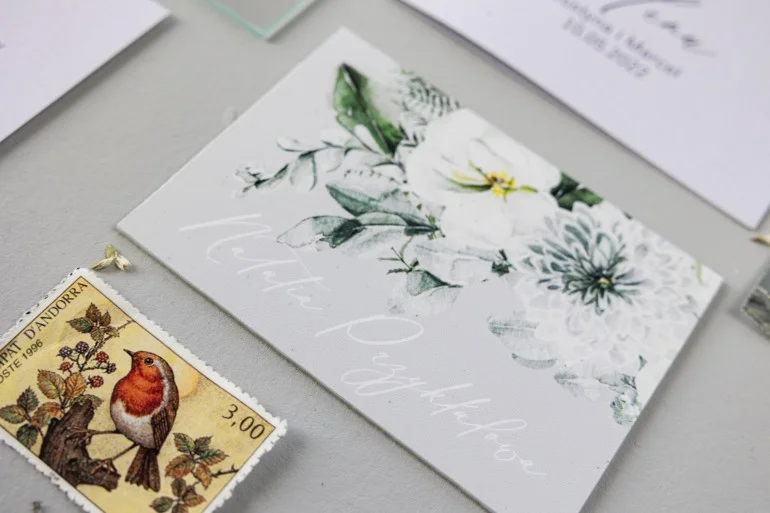
Glass Place Cards With White Print | Perfect For Wedding Table Decorations | Soft No. 4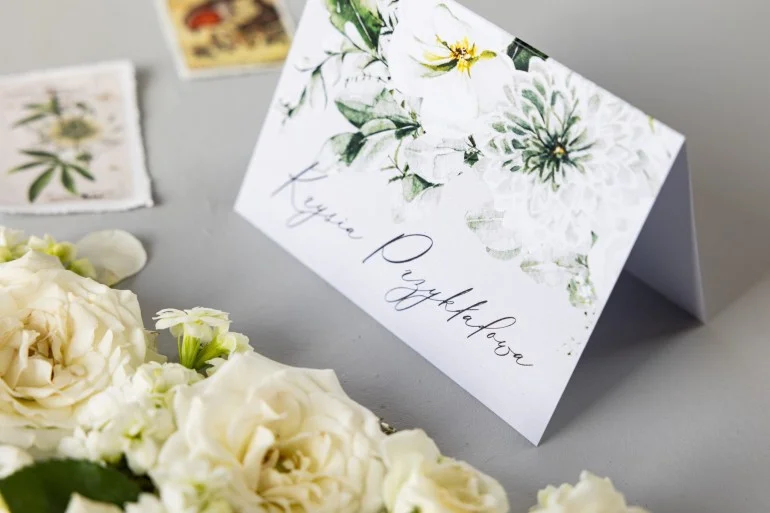
Paper Place Cards With Aster Bouquet And Eucalyptus | Unique Wedding Table Place Cards | Soft No. 4
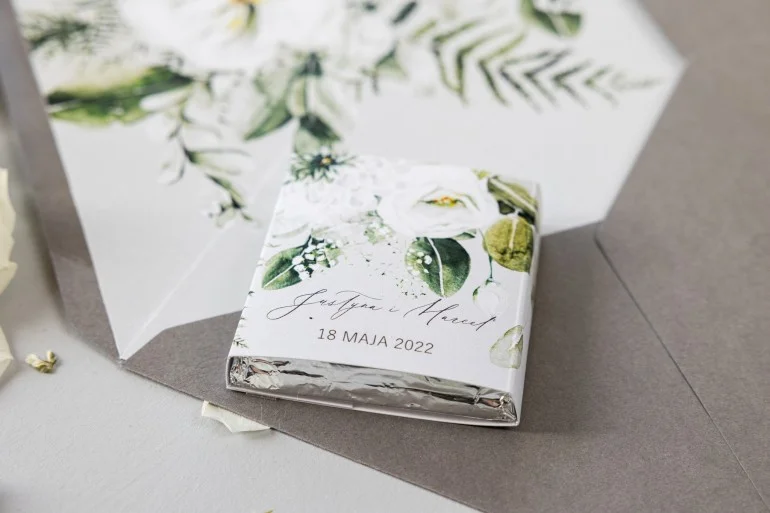
Wedding Chocolates With Asters And White Flowers On The Packaging | Wedding Favors | Soft No. 4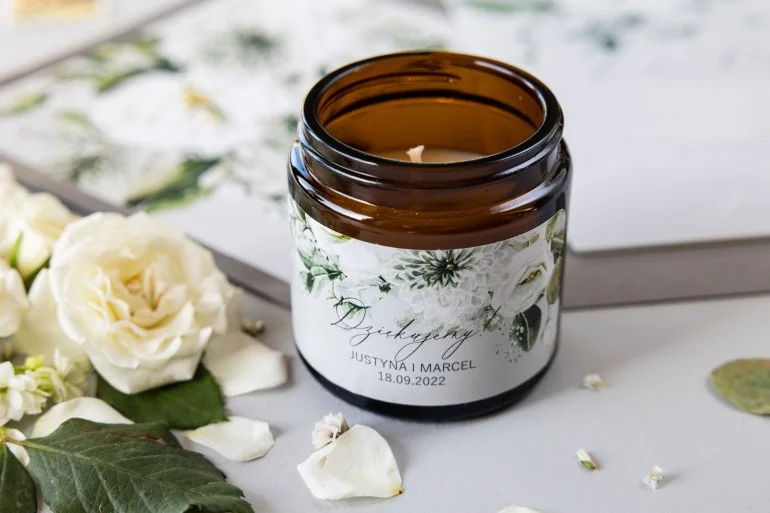
Soy Candles With A Label Featuring Asters And White Flowers | Wedding Favors | Soft No. 4
Adding a map and directions
To make it easier for guests to reach the ceremony venue, it is worth adding a map and directions to the invitation. This is especially important when the wedding takes place in a location that may be difficult to find or when the invited guests come from different parts of the country or abroad. Adding a map will make it easier for guests to plan their trip and minimize the risk of being late.
The map can be part of the invitation or a separate element attached to it. It is important that it is legible and contains key landmarks, such as main roads, parking lots, as well as the location of the ceremony and reception. Additionally, directions can include information about the nearest public transport stops, taxis, and accommodation options if guests need lodging. Such a practical addition to the invitation will make guests feel appreciated and well-informed, which will certainly positively influence their experience of attending the wedding.
In summary, properly prepared wedding invitations, containing all necessary information, personalization elements, and practical tips, are an important element of preparations for this special day. Thanks to them, guests will have a full picture of the upcoming ceremony and will feel fully involved in celebrating together with the couple.
Guest list
How to create a guest list?
Creating a wedding guest list is one of the most important tasks in the wedding planning process. The first step is to jointly determine with your partner the number of guests you are able to invite, taking into account the budget and the capacity of the venue where the reception will take place. It is worth starting by creating a preliminary list that includes close family members, friends, and people who absolutely must be present at your wedding. Then, this list can be expanded to include extended family, acquaintances, and coworkers.
When creating a guest list, it is worth remembering a few key rules. First of all, you should maintain a balance between the number of guests from each side of the family, so that no one feels left out or unappreciated. It is also good to consult the list with parents, who may have their own suggestions and expectations regarding the invited people. Communication and compromise are key in this process to avoid potential conflicts and misunderstandings.
Confirming guest attendance
After creating the guest list and sending out invitations, the next important step is RSVP. The request for RSVP should be included in the wedding invitation, and responses can be collected through various channels: phone, email, or using a special RSVP card attached to the invitation. RSVP allows for an accurate determination of the number of people who will appear at the ceremony, which is extremely important when planning seating, catering, and other logistical aspects of the wedding.
It is also worth setting a deadline by which guests should confirm their attendance. It is best if this deadline is about a month before the wedding. Thanks to this, you will have enough time to make any changes to the wedding organization. If you do not receive a response from some guests after this deadline, it is worth contacting them personally to ensure they received the invitation and will be able to attend the ceremony.
Additional guest list
Even the best-planned wedding can face unexpected changes in the number of guests. To be prepared for such situations, it is worth creating an additional guest list, who can be invited in case of cancellations from the main list. Such a list may include extended family, acquaintances you do not have regular contact with, or coworkers.
Managing the additional guest list is a way to fill any gaps in the number of participants and ensure that the venue and prepared attractions are fully utilized. However, it is worth remembering to send invitations for additional guests well in advance, giving them time to prepare for the wedding. It is best if the reserve guests are invited at least 2-3 weeks before the wedding, which will allow for avoiding unnecessary friction and awkward situations.
In summary, proper preparation of the guest list, effective management of RSVPs, and having an additional guest list are key elements that will allow for smooth wedding organization. Thanks to this, you can be sure that this special day will go according to plan, and all invited guests will be able to enjoy this special moment with you.
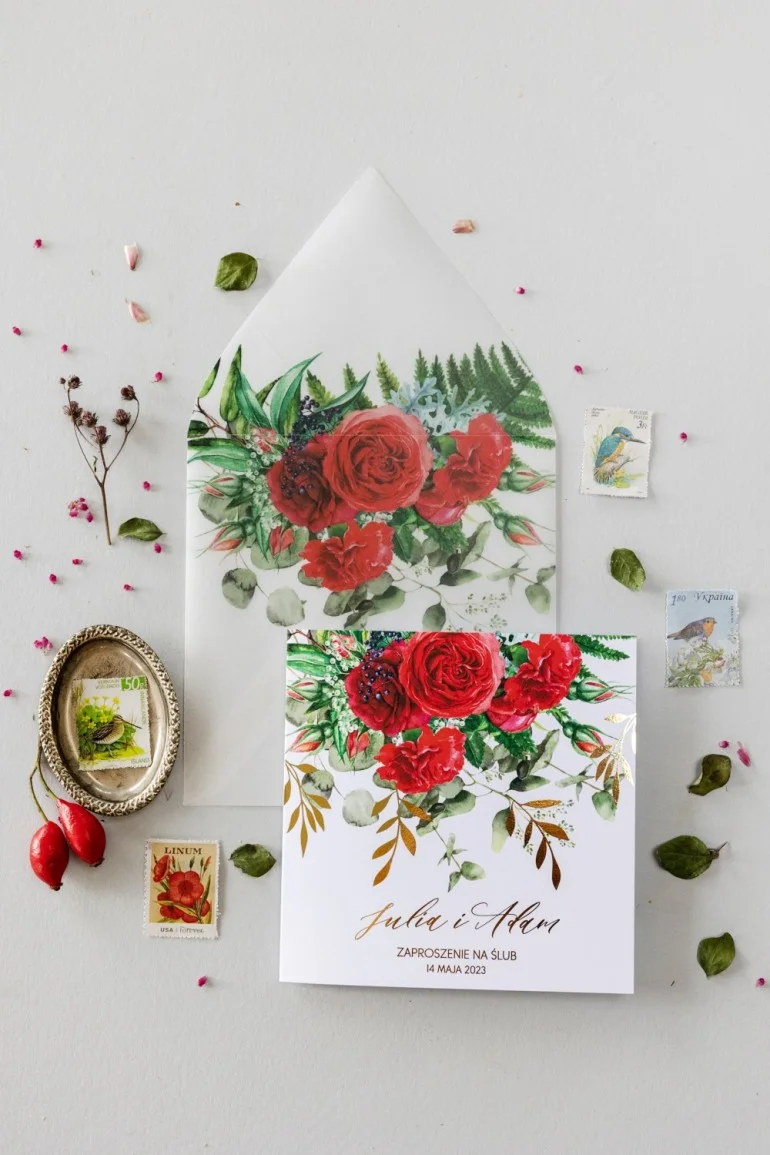
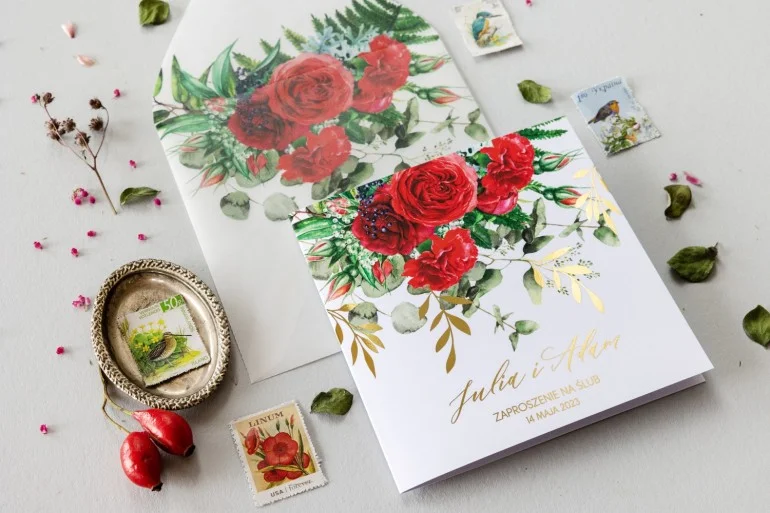
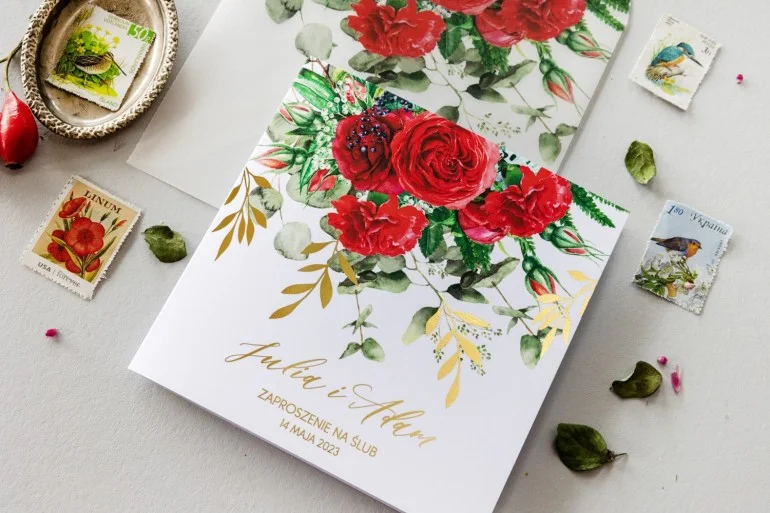
Wedding Invitation With Roses, Gold Foil And Vellum Envelope | Rubin No. 8
Themed wedding and dress code
Invitations for a themed wedding
Themed weddings are becoming increasingly popular, offering couples the opportunity to express their creativity and passions. In such cases, themed wedding invitations must reflect the chosen theme and give guests clear clues as to the expected style and atmosphere of the ceremony. For example, if the wedding has a rustic character, the invitations may contain elements of nature, such as floral motifs, wood, and subtle earth tones. On the other hand, a glamour-style wedding may require invitations with elegant gold accents, shiny details, and luxurious paper.
Personalizing wedding invitations for themed weddings is crucial. It is important that the invitations not only inform about the date and place of the event but also introduce guests to the wedding's vibe. This may include using specific colors, fonts, and graphics that will capture the character of the planned ceremony. Thanks to this, guests will feel part of this unique event as soon as they receive the invitations.
Informing about the dress code
One of the most important elements of invitations for a themed wedding is clearly defining the dress code. Informing guests about the appropriate attire is crucial so that everyone can adapt to the character of the ceremony and feel comfortable. The dress code should be clearly stated in the invitation to avoid misunderstandings and ensure the visual consistency of the event.
This can be done in several ways. Dress code tips can be included as a short note at the end of the invitation or on a separate card attached to the invitation. In the case of vintage-style weddings, you can suggest that guests dress in outfits from a specific era. If the wedding is more formal, you can use terms such as "black tie" or "formal attire." It is also good to provide a few examples or inspirations so that guests know exactly what to expect.
Special wedding requirements
Some themed weddings may have special requirements regarding not only the dress code but also other aspects of participation. For example, an outdoor wedding may require guests to bring appropriate footwear or headwear if the ceremony takes place on a beach or in a garden. A boho-style wedding may encourage wearing comfortable, loose outfits that will emphasize the casual character of the ceremony.
Special requirements may also apply to accessories, such as hats, umbrellas, or even special props that guests may have with them. It is important that all this information is clearly communicated in the invitation so that guests can prepare accordingly. Thanks to this, all participants will be able to fully enjoy the wedding atmosphere and join in its unique character.
In summary, properly preparing invitations for a themed wedding, clearly defining the dress code, and including special requirements are key elements that will help in creating a coherent and unforgettable event. Thanks to this, both the couple and the guests will be able to fully enjoy the special day, which will remain in their memory for a long time.
Gift requests
How to ask for gifts in the invitation?
When planning a wedding, many couples face the dilemma of how to subtly and politely ask guests for gifts. Wedding invitations are the perfect place to convey this information, but it is worth doing so in an elegant and unobtrusive way. One of the most popular solutions is requesting envelopes instead of traditional material gifts. This can be done by adding a short, rhymed note to the invitation that delicately suggests the couple's preference. For example: "We would be grateful for envelopes instead of gifts, which will help us fulfill our dreams."
Another way is to create a gift registry, which can be attached to the invitation or placed on a dedicated wedding website. Such a list allows guests to choose a gift that will surely bring joy to the couple. It is also worth remembering to include information about gift preferences directly in the invitation or on a separate card attached to the invitation. Conveying this information in advance allows guests to calmly prepare and purchase the appropriate gift.
Instead of flowers
More and more often, couples decide to ask for something other than flowers. Instead of flowers, which wither quickly and are difficult to transport, you can ask guests for wine, books, board games, or other small items that will have greater durability and bring more joy. Such requests can be elegantly placed in invitations by adding a short note, for example: "Instead of flowers, we ask for a bottle of wine, which will make our evenings together more pleasant."
These types of requests are not only practical but also add a personal touch to the invitations. They can also reflect the interests and passions of the couple, which makes them more authentic and unique. Choosing gifts instead of flowers can also bring organizational benefits, as it is easier to organize the collection and storage of such items.
Charity gifts
One of the most beautiful gestures that is gaining popularity is the request for support for charities instead of traditional gifts. Charity gifts at a wedding are a great way to share joy with others and support a worthy cause. In the invitations, you can include information about the preferred charity and instructions on how guests can make a donation on behalf of the couple.
Requests for charity gifts can sound, for example: "Instead of gifts, we ask for support for [organization name], which is especially close to our hearts." Adding such information to the invitation not only makes the decision easier for guests but also shows that the couple thinks about others and wants their special day to benefit the community as well. Charitable support can cover various areas, from helping children, through environmental protection, to supporting local animal shelters.
If you are interested in additional inspiration and advice on wedding organization, we invite you to read a few articles on our blog:
- What attractions for children to organize at a wedding?
- Planning a wedding menu for people with special diets
- How to choose the perfect wedding cake? Taste, decorations, and trends
- How to choose the perfect location for a wedding photo shoot
- Most common wedding guest questions and how to answer them