Zero Waste Wedding – A Step-by-Step Guide
Step 1: Planning a Zero Waste Wedding – Where to Start?
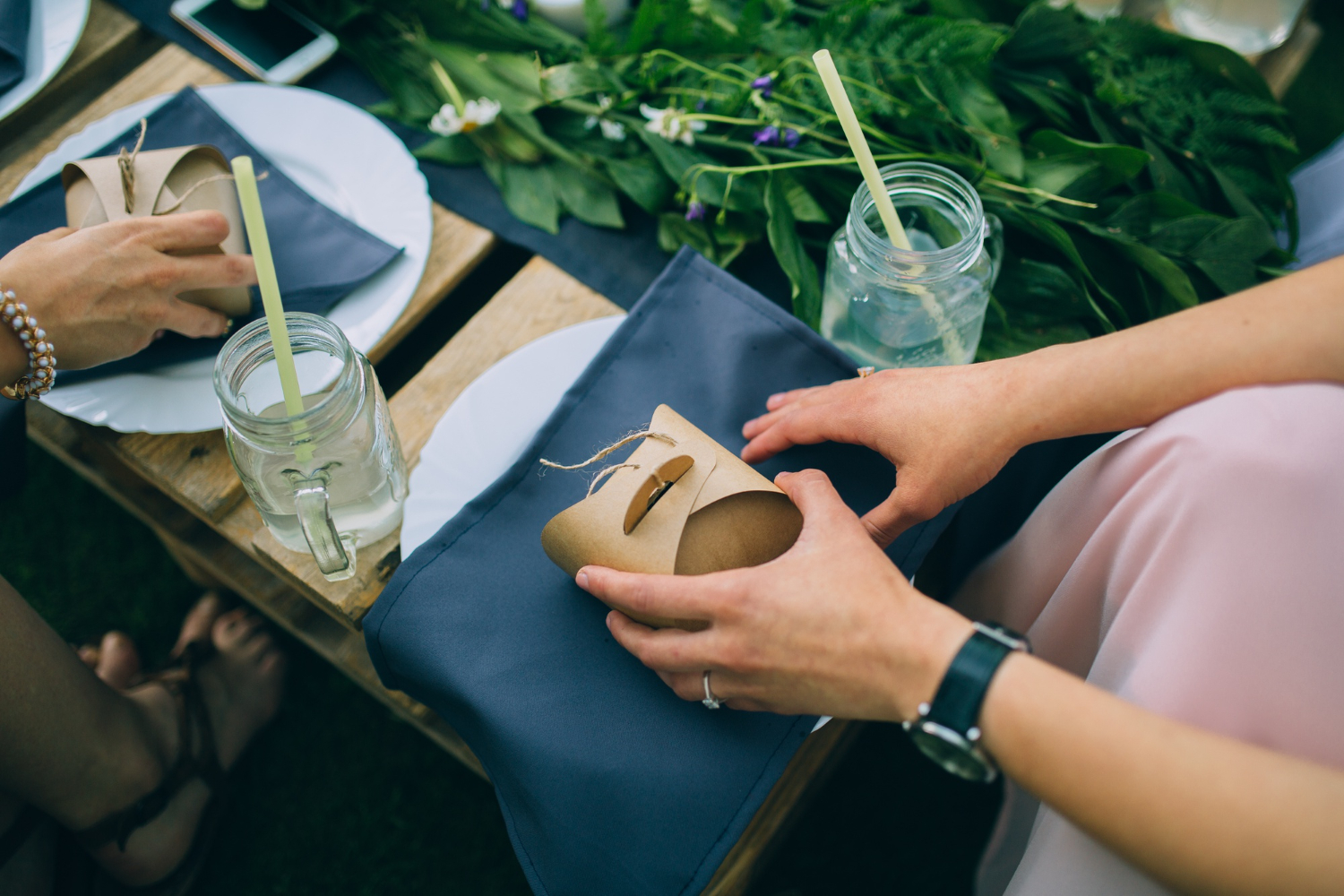
More and more couples are choosing to organize their wedding and reception in the spirit of zero waste. As a wedding consultant with 10 years of experience, I have witnessed firsthand the growing popularity of eco-friendly solutions in the wedding industry. This trend is not just a passing fashion but a response to real needs – caring for the environment, a desire to reduce waste, and seeking savings. A zero waste wedding is about planning the celebration to minimize waste and the event's negative impact on the planet. This means conscious choices: giving up single-use decorations, plastic, and excess items, and instead focusing on minimalism, reuse, and ecological materials. This style of wedding organization brings a range of benefits. Firstly, it is an expression of environmental responsibility – on your wedding day, you show your loved ones that the future of the planet is important to you. Secondly, zero waste often goes hand in hand with savings: many eco-friendly solutions help lower wedding costs by reducing unnecessary expenses. Thirdly, an eco-style wedding is often more original and full of personal character – it requires creativity, so decorations, attractions, or guest favors often turn out to be unique and memorable. Finally, combining tradition with modernity in the spirit of zero waste can make your party exceptional – you celebrate love without harming the environment. Below you will find a practical step-by-step guide on how to organize a zero waste wedding and reception. We will lead you from the planning stage, through the choice of invitations, outfits, decorations, and menu, to gifts and waste management. Each step contains many tips to help you plan the celebration of your dreams in harmony with nature and your own conscience. Remember that you don't have to implement absolutely every suggestion – every small change towards being more eco-friendly makes a difference. Ecology usually goes hand in hand with economy, so most of the solutions below will also allow you to save a significant amount. We will prove that a wedding without plastic, without wasting food, and without mountains of trash is possible, and can even be more beautiful and atmospheric than a traditional one. Enjoy the read and get inspired – let planning a zero waste style wedding be a pleasure and a shared adventure!
Set Priorities and Choose Minimalism Over Extravagance
The first step on the road to a zero waste wedding is consciously planning the entire concept of the party. Sit down together and think about which elements of the wedding are most important to you, and what you can give up for the sake of the environment (and your own budget!). List all traditional wedding attractions and customs, decorations, and accessories – then critically evaluate whether you actually need them. Minimalism is your ally – the fewer things and "knick-knacks" you buy, the less waste you generate and the lower your costs. For example, give up fireworks, balloons, and plastic confetti – these attractions are impressive for only a moment but leave behind trash and can harm animals (the noise of fireworks stresses local fauna, and rubber balloons or plastic confetti take a long time to decompose in the environment). Instead, focus on the atmosphere created by music, light, or nature. Similarly, think about any additional gadgets: do you need separate gifts on every chair, piles of printed schedules for guests, or disposable slippers for the dance floor? Every unnecessary element is potential waste and an unnecessary expense. Determine what the essence of the celebration is for you (e.g., good music and food) and focus your budget and energy there, while limiting the rest. This approach not only protects the planet from excess trash but also helps maintain a clear vision and avoid the most common organizational mistakes – your wedding will be consistent and full of authentic atmosphere, rather than overloaded with meaningless decorations or attractions.

Gaja No. 2 Wedding Invitation – Sage Green with Letterpress Embossing

Glamour Wedding Invitation with Gilded Branch and Velvet Paper – Ruskus No. 14

Kraft Wedding Invitation No. 12 – Forest Style with Pine Forest Graphic
Step 2: Zero Waste Wedding Invitations and Stationery
Table of Contents
- Step 1: Planning a Zero Waste Wedding – Where to Start?
- Step 2: Zero Waste Wedding Invitations and Stationery
- Step 3: Wedding Outfits and Accessories – Eco-Fashion
- Step 4: Decorations and Flowers – Natural Beauty Without Waste
- Step 5: Zero Waste Wedding Menu
- Step 6: Zero Waste Gifts and Guest Favors
- Step 7: Waste Management During and After the Wedding
- Step 8: Ecology and Wedding Costs – Is Zero Waste Worth It?
- Summary: Your Dream Wedding in Harmony with Nature
- Recommended Articles
Digital Invitations – Modernity, Convenience, and Zero Paper
Traditional, printed wedding invitations have their charm, and many couples still cannot imagine organizing a wedding without them. However, in the spirit of zero waste, it's worth considering an option that generates virtually no waste – electronic invitations. In the age of the ubiquitous Internet, a digital invitation can take an elegant form: you can send guests a personalized email with beautiful graphics, create a private event on Facebook, or use special wedding platforms for online invitation delivery. This form is fast, free, and ecological – you don't use paper or ink, and there's no need for envelopes or stamps. Guests confirm their attendance with one click, and you have less logistical work with addressing and shipping. Moreover, it's easy to include more information in an electronic invitation (e.g., a map, a link to a gift registry, or your wedding website) without needing to add extra cards. Of course, consider your guests – the older generation might not be tech-savvy and could feel offended by the lack of a traditional invitation. Therefore, a hybrid model is a middle-ground solution: send e-invitations to the younger, digitized part of the family and friends, and prepare a few printed invitations in a classic form for grandparents or those who value tradition, handing them over personally. If you decide to hand out invitations personally during a meeting with loved ones, that in itself is more eco-friendly – you deliver the invitation without using postal or courier services (meaning no additional carbon footprint). Electronic communication works well not only for invitations: any additional information (e.g., plan changes, RSVP reminders) can be sent via email or SMS instead of generating more paper materials. More and more couples are also setting up a wedding website where they place the entire wedding "hub" with information for guests – this is a great, modern solution that eliminates the need for printing maps, directions, or inserts with poems. It's worth emphasizing in your communication why you chose such modern invitations – guests will more readily accept the lack of a paper souvenir when they understand it's driven by your concern for the environment. For example, you can add a sentence in the email: "Out of concern for the planet, we have decided on electronic invitations – we hope you share our approach and are glad that together we can do something eco-friendly!" Such a message not only informs but also engages guests in collective pro-ecological action.

Glamour Wedding Place Cards with Pearls – Pearls No. 1 White

Lauren No. 3 Wedding Place Cards – Classic Calligraphy Name Cards

Kraft Place Cards No. 12 – Rustic with Forest Panorama
Eco-friendly Materials and Style of Printed Invitations
If you decide on some or all invitations in a traditional form, choose ecological materials. Opt for wedding invitations printed on recycled paper or ecological paper (e.g., with added straw, grass, or reclaimed cotton). Currently, there is a huge selection of beautiful, stylish eco-stationery on the market – the texture of such paper can be matte, slightly rough, in a natural cream or gray shade, which adds a rustic charm to the invitations. You can also find seed paper, which contains flower seeds – after the celebration, a guest can plant such an invitation in a pot, and wild flowers will grow from it! This is a wonderful example of the zero-waste idea, where a product doesn't become waste but gives start to new life. Also, think about minimalism in design: the fewer layers, additions, and chemical enhancements (e.g., foils, varnishes, glitters) on the invitation, the better for the environment. Avoid invitations with plastic decorations, crystals, or laminated photographs – they are difficult to process later. Instead, elegance can be achieved through a simple design inspired by nature: botanical motifs, floral watercolors, drawings of leaves or twigs. Earth colors (green, brown, beige) fit perfectly into the eco-style. Instead of synthetic polyester ribbons to tie the invitations, use jute or cotton string. Choose envelopes made from waste paper, perhaps decorated with a small stamp instead of stick-on plastic decors. Even fonts can be "eco" – legible, simple typography without excess ink is a small detail, but every detail counts. Print locally – find a print shop in your city that offers printing on recycled paper and uses water-based or vegetable inks. This way, you avoid shipping invitations by courier from the other end of the country, which again limits the carbon footprint. It's worth talking to graphic designers and wedding stationery companies, and if you're wondering whether it's cheaper to buy wedding invitations or make them yourself, remember that ready-made solutions from ecological materials often save time and nerves. Remember: one elegant card can replace three others. Instead of printing a separate invitation, information card, and gift poem – try to fit everything on one double-sided card. Fewer cards mean less paper and less waste. Don't worry that such an invitation will look worse – a good graphic designer will plan the text so that the whole remains legible and aesthetic.
Place Cards, Menus, and Other Stationery – Smart Paper Reduction
Wedding stationery is not just invitations. It also includes place cards with guest names, menu cards on tables, seating plans, ceremony programs, table numbers, alcohol labels, guest books... it's easy to get lost in this avalanche of printed trifles. In the spirit of zero waste, it's worth limiting the number of prints to a minimum and making the necessary ones from ecological materials. First, think about what you really need to print. Do you need separate menu cards for every guest? Instead, you can prepare one larger menu board in the form of a poster made of recycled cardboard placed at the entrance or a single menu per table (e.g., one menu in the center of each table for several people to look at). The same applies to the day's schedule or list of attractions – one decorative board placed in a visible spot is enough, instead of dozens of slips for everyone. Place cards (cards with names indicating seats at the table) are an element often hard to avoid with a larger number of guests, but here too you can be creative. Consider place cards made by hand from materials you already have or that will later biodegrade. These could be, for example, decorative clips with a name on a linen napkin, a leaf with a handwritten name, a pebble, or a wooden slice with an engraving. A popular idea has also become combining the place card with a guest favor: a small gift serving as a place card. For example, a small jar of honey with a personalized label – stick the guest's name on the lid. You place such a jar at that person's seat and voila – the guest has both an indicated seat and a sweet souvenir to take home. Another idea is mini-pots with succulents or herbs – a card with the guest's name attached to each plant (or the name written on the pot). A green gift decorates the table, indicates the seat, and after the wedding, pleases the recipient for a long time and doesn't end up in the trash. Such solutions are very trendy and welcome – guests will be delighted that instead of another card, they got something practical and pretty. If you still prefer classic paper place cards, again – recycled paper and minimalism. It's worth thinking if you can combine something: on the back of the place card, you can, for example, print a thank you to the guests, thus saving cards with separate thank yous. Instead of printing the table plan (guest seating) in dozens of copies for every envelope, simply display it on a large frame at the entrance to the hall or show it on a screen/TV in the foyer. More and more couples are also giving up small prints like alcohol labels, vodka tags, etc. – they don't really add much and generate piles of trash after the party. Alcohol bottles can easily stand without additional decorations or with one ribbon. Zero waste wedding stationery is the art of smart solutions: combining functions (like the mentioned gift-place card), using biodegradable materials, and limiting quantity. Thanks to this, the wedding table will still look elegant, and you will have the satisfaction of not contributing to the felling of another tree just to print a menu or a table number.

Golden Fortune Cookies with Personalized Label | Affordable Wedding Favours | Cejla No. 3

Simple No. 3 Soy Candle – Gold Foiling & Elegant Wedding Favours

Merci Favour with White Flowers, Green Leaves | Elegant Guest Gifts | Impresja No. 10
Step 3: Wedding Outfits and Accessories – Eco-Fashion
Second-hand or Rented Wedding Dress
Many brides dream of their perfect wedding dress – no wonder, it's a unique creation for a unique day. However, does the dress have to be brand new from a salon? A zero waste wedding is a great opportunity to consider second-hand dresses or renting. This solution is becoming increasingly popular and has many advantages. Firstly, it is much more environmentally friendly – the fashion industry generates huge amounts of waste and CO₂ emissions, and custom-made wedding dresses often use a lot of material that will never be used again. By buying a used dress, you give it a second life, reducing the demand for new production. Secondly, it's a financial saving – a used dress can sometimes be several times cheaper than a new one, and renting is a fraction of the purchase price. You can therefore have a high-end model for much less. Thirdly, second-hand dresses can be real gems – they are often worn only once and are in perfect condition, and you can find unique styles from previous collections. Where to look for an eco-dress? There are many possibilities: wedding consignment shops and second-hands, online sales platforms (Facebook groups, classifieds portals), and even the family closet. Maybe your mother or grandmother kept her dress hoping someone would use it again? Trying on a dress after your mom or aunt can be a moving experience, and after minor alterations, such a vintage creation will delight with its originality and the story it carries. If you prefer modern cuts, look for dresses from last year's collections in consignment shops – often young wives sell their dresses right after the wedding, so you can find current models in great condition. Just make sure you have a good seamstress who can adjust the dress to your figure if needed – minor alterations are normal even with new dresses, and with used ones, you sometimes need to shorten or narrow something. An alternative is a wedding dress rental – for a relatively small fee, you rent your dream creation for a few days. The plus is that you don't worry about what to do with it later; the minus – you must be very careful not to damage it and you can't always make alterations (the dress returns to the salon). Nevertheless, more and more salons offer this service because interest is growing. If you do buy a new dress, consider models made from ecological materials – e.g., organic cotton, linen, silk with eco-certificates. Some Polish brands create dresses from fabrics sourced in a sustainable way. An interesting option is also a two-piece dress or one that can be altered – e.g., a long skirt and a top that are easier to use separately later for other occasions, or a simple cut dress that can be dyed a different color after the wedding and worn as an evening gown. What to do with the dress after the wedding? Whether you buy new or used – try not to let it spend decades closed in a cover. Take it to the dry cleaners, and then try to sell it further or donate it to those in need (there are foundations organizing actions where wedding dresses are repurposed, e.g., into christening gowns for children from poor families). Someone else can feel beautiful in it again, and you will recover part of the funds. Also, think twice about "trash the dress" photo sessions – such a session, where the dress is intentionally soiled or destroyed for artistic effect, is somewhat contrary to the zero waste idea. Better to keep the dress in good condition and pass it on than to destroy it for a few photos.
Groom's Suit – A Classic for Years
In the case of the Groom's outfit, zero waste principles are easier to implement – mainly because a wedding suit is a garment that can serve for years on various occasions. To make this happen, it's worth choosing a classic, high-quality suit instead of a very unusual, one-off styling. Ideally, the chosen model should serve not only for the wedding but also later – e.g., for other weddings as a guest, family celebrations, or business events. We wrote about how to choose the perfect suit or tuxedo in a separate guide, but the key principles are simple: choose a timeless cut and color. Black, navy, graphite, or a dark shade of blue will work perfectly – they are elegant and universal. Avoid extravagant patterns or bright colors that are hard to "play" with on other occasions. If you dream of a currently trendy paisley pattern suit or a tuxedo made of shimmering fabric – think if there will be an occasion to wear it after the wedding. Often it's better to choose a classic with a small twist (e.g., stylish accessories like a wooden bow tie or a colorful pocket square) that can be swapped later, while keeping the base the same. Natural materials are another issue – a suit made of wool, linen, or cotton (perhaps with a small synthetic blend for durability) will be not only more comfortable to wear but also ecological. Synthetic fabrics (polyester suits) don't breathe, wear out faster, and are less environmentally friendly during production. A well-made suit of natural wool will last many years in great condition, so it's an investment in a sustainable wardrobe. If you already own a decent suit, consider if it's better to use it instead of buying a new one. Maybe it's enough to invest in a new shirt, an interesting tie, or a vest to give it a wedding character? Men have the advantage that men's fashion is more stable – a classic three-piece suit from a few years ago will still look good. Just have it adjusted at a tailor's to your current figure, refresh it, and you're ready. Renting a suit is also an option – many salons offer this service, although men use it less often because they will reuse a custom suit later. In the spirit of zero waste, it's also worth thinking about second-hand accessories: bow ties, ties, cufflinks – these things hardly wear out. You can find real treasures in second-hands or auction portals: a vintage silk tie, classic silver cufflinks, and even branded leather shoes in great condition (often men sell wedding shoes almost new because they wore them once). Choose universal wedding shoes for the Groom too – e.g., black or brown oxfords, which will successfully serve on other occasions later, instead of one-off shoes that will end up in the closet after the wedding. In summary: create the Groom's outfit with the thought "to be used again". It is definitely possible and economical at the same time.

Flores No. 1 Soy Candle in Gypsum – Gilded Wedding Favour

Kraft No. 5 Soy Candle in Plaster – Sunflowers Wedding Favour

Flores No. 2 Soy Candle in Gypsum – Burgundy Flowers Wedding Favour
Step 4: Decorations and Flowers – Natural Beauty Without Waste
Natural Materials Instead of Plastic
Wedding decorations create the atmosphere of the celebration – but unfortunately, many of them end up as trash after one day. In the spirit of zero waste, we plan decorations so they don't generate waste and can be used again or return to nature. The most important rule is: avoid plastic and disposables. Balloons, foil streamers, plastic confetti, disposable tablecloths, and dishes – all of this is unecological and we can definitely do without it. Instead, choose natural and biodegradable materials. Decorative fabric works great: jute, linen, cotton – e.g., table runners made of jute or cotton lace will give a rustic, romantic vibe, and then they can be washed and used again (or passed on to other couples). Wood is another wonderful material: welcome boards or table seating plans can be made on wooden pallets or plywood (rented or reclaimed), instead of printing large posters on PVC foam. Wooden fruit crates can serve as decor elements – flowers or alcohol can be placed in them, or they can be used to create shelves for a sweet buffet. Glass and metal are also eco-friendly because they are recyclable and can be used repeatedly. Glass jars from preserves transformed into tealight lanterns or flower vases are a hit at zero waste weddings: they look charming and atmospheric, especially with boho or rustic styles. Instead of buying dozens of glass vases, collect jars of various sizes, wrap them with jute string or lace – and you have free table decorations! Similarly, empty wine or beer bottles can become vases for single twigs or candle holders (just stick a long candle in the bottle neck). Paper is another ally – paper decorations (e.g., tissue paper pom-poms, kraft paper garlands) are better than foil ones because paper will decompose or be recycled. You can cut garlands yourself from colored paper or old newspapers – involve bridesmaids or kids at a family meeting before the wedding, it will be fun and a collaborative creation. Think about a theme for the decorations – inspiration from nature works best for zero waste. Bark, pine cones, dried grasses, shells, pebbles from the beach – such elements add charm and are free (collect them during trips). If the wedding is in winter, you can use pine cones, spruce twigs, dried oranges, and cinnamon sticks for table decorations – it will smell and look beautiful, and then most of it will go to compost instead of the bin. Candles add magic to any interior – choose those made of natural wax (e.g., beeswax or soy) instead of paraffin ones. Beeswax candles are more expensive but burn longer and emit a pleasant honey scent, and importantly – they don't emit toxins like cheap paraffin candles. After the wedding, you can take them home or give them to family; nothing will be wasted. Remember: less is more. Instead of cluttering the hall with a thousand trifles, focus on a few impressive, simple decorations made of natural materials. Guests will remember the overall atmosphere, music, and your joy anyway – not whether the ceiling was decorated with 500 balloons or none. An additional plus of natural decorations is often the lower cost – you don't spend money on disposable decorations from the store, and you can prepare many things yourself with little effort.
Local, Seasonal, and Live Flowers Instead of Imported Cut Ones
Flowers are an inherent part of a wedding – the Bride's bouquet, boutonniere, table decorations, sometimes a backdrop behind the couple or floral garlands. Unfortunately, classic floristry can be very unecological: flowers brought from afar have a large transport carbon footprint, commercial crops often use pesticides, and floral foam (so-called oasis) made of plastic is used for arranging bouquets, which is single-use and non-recyclable. So how to organize floral decorations in the spirit of zero waste? First, focus on local and seasonal flowers. By choosing species that bloom naturally at the time of your wedding and grow in your region, you support local gardeners and avoid transport, e.g., by plane from the other side of the world. Polish seasonal flowers are beautiful: in spring – tulips, daffodils, lilacs; in summer – peonies, garden roses, sunflowers, lavender, dahlias; in autumn – heathers, asters, chrysanthemums (not just the "cemetery" ones, but small, decorative varieties), fruits of plants like rowan or wild roses. Ask the florist about the possibility of using wild-growing flowers and grasses – sometimes a beautiful composition can be made from field daisies, ears of grain, twigs with leaves, or herbs. They don't need packaging or greenhouse cultivation – they are a gift of nature. Of course, gathering them must be sensible (don't pick protected plants or strip a reserve of flowers), but in season many meadows are just asking to have their beauty honored on a wedding table. Secondly, consider potted flowers in the wedding arrangement. This is an increasingly trendy idea: instead of disposable bouquets on tables, potted plants are set out – e.g., ferns, herbs, small succulents, even larger monsteras or palms in the chillout zone. Potted flowers look impressive, bring in a lot of greenery, and most importantly, they don't wilt after one day. After the wedding, you can take them home, gift them to loved ones, or – if you have no place for them – let guests know that anyone interested can take a potted flower for themselves. In this way, the decoration becomes both a gift and a living souvenir that will please for years. This applies especially to succulents, cacti, or herbs – they are inexpensive and very charming when grouped on tables. Another issue is the wedding bouquet and boutonniere – here too you can go wild with creativity. Why not go to the wedding with a bouquet of wild flowers? It will look romantic and natural, especially with a less formal style of celebration. If you have a garden or gardens in the family – you can sow a special flower meadow there a month earlier or plant your favorite flowers so they bloom for your date (this requires planning and a bit of luck with the weather, but it's practiced!). Instead of wrapping the bouquet in plastic tape, ask the florist to use paper tape or fabric ribbon to bind the stems. In the Groom's boutonniere, it doesn't have to be a live rose – it can be a tiny composition of dried grasses and lavender, a rosemary sprig, or a succulent attached to the lapel (succulents tolerate lack of water for many hours very well). Dried flowers are generally a topic worth noting: currently, dried arrangements (pampas grasses, lagurus, dry gypsophila, cotton, protea, etc.) are very trendy in decorations. You can use them for decor – dried plants don't need watering, don't wilt, and after the wedding, you can keep them. The bride can even have a bouquet of dried flowers – there's really a lot of inspiration on the Internet, such bouquets are unique and durable (and after the wedding, they can decorate the apartment as a souvenir). If you dream of fresh flowers in the decor, focus on minimalism: you don't need tons of blooms on every table. Sometimes a single sunflower in a bottle or a garland of green twigs on the table gives a beautiful effect without exaggeration. Avoid cut flowers that are very fragile, like hydrangeas in the heat – they require a lot of water and wilt quickly, which ends with throwing sad bunches into the trash. Better to choose durable species (garden roses, carnations, lisianthus) or mixes with a lot of greenery (e.g., eucalyptus leaves, ruscus – they can be dried later). Be sure to talk to the florist about giving up floral foam. There are more and more alternatives (like the technique of arranging flowers without foam in vessels with water, using tangled twigs, chicken wire, etc., as a frame) – a good florist should be able to make compositions in vessels without this toxic foam. Floral foam is foamed plastic that goes into the trash after use and decomposes over hundreds of years in the form of microplastics – it's really worth avoiding. After the wedding, give the flowers to someone's home or to the church (if you decorated the temple with live plants, arrange earlier that you will leave them for the faithful). Don't throw away cut bouquets from the hall immediately – maybe parents or aunts will happily take them home to enjoy them for a few more days. And if they are no longer useful, direct them to compost (without ribbons of course), so they return to the cycle of nature. To sum up: zero waste floral decorations are those that are local, seasonal, reusable, or live (potted), and we don't use unnecessary chemicals or plastic to prepare them. Such decorations can even be more beautiful than standard ones – because they have a soul, naturalness, and often tell a story (yours!).

Glamour Wedding Place Cards No. 1 – Satin Name Cards with White Print

Cappuccino Wedding Place Cards No. 1 – Satin Ribbon Table Name Cards

Rose Bow Wedding Place Cards No. 1 – Pink Satin Glass Ribbon Cards
Step 5: Zero Waste Wedding Menu
Local and Seasonal – Catering with Environmental Care
Food is the heart of every wedding – we want to treat our loved ones to delicious dishes, and tables are laden with food. Unfortunately, it often happens that after the party a lot of food is wasted, and the choice of menu itself can have a significant ecological impact (e.g., a large amount of meat, imported products). When organizing a zero waste wedding menu, let's focus on two aspects: ingredients and quantity. First, choose local and seasonal products. Talk to the kitchen team or catering company to see if they can prepare a menu based mostly on ingredients from local suppliers. Local food means less transport (lower CO₂ emissions), support for local farmers, and often better quality (because products are fresh and ripen naturally). Seasonality is also key – use the gifts of the period in which you are getting married. If it's summer, let Polish fruits and vegetables reign on the tables: fragrant tomatoes, cucumbers, new potatoes, strawberries, raspberries. In an autumn menu, introduce pumpkin, mushrooms, plums, apples. In winter – perhaps regional preserves, pickles, root spices. This approach is not only eco-friendly but also ensures tastier dishes – food prepared from seasonal ingredients has full flavor and is healthier. Ask the venue if they use herbs from their own garden or a local market – many good wedding houses do this, which adds charm (e.g., decorating dishes with edible flowers from their own bed). If you have an influence on the choice of suppliers, you can also order alcohol from local producers: Polish wines (increasingly better quality), meads from regional beekeepers, beer from a small brewery instead of a corporate concern – this not only reduces the carbon footprint of transport but also makes your wedding more culinarily original. Guests will surely appreciate the opportunity to try, for example, wine from a nearby vineyard or craft beer from your city. Also, pay attention to products being as minimally packaged as possible – buying in bulk and by weight from local suppliers will limit the amount of plastic from single-use packaging. When preparing a sweet table, choose a bakery that doesn't wrap every meringue in separate foil, but delivers cakes in reusable bulk containers. Every such detail counts.
Less Meat, More Vegetables – Ecological (and Cheaper) Food Choices
The second important aspect of an eco-style wedding menu is the composition of dishes, especially regarding animal products. It's no secret that meat production has a huge environmental footprint – animal husbandry generates large greenhouse gas emissions, consumes a mass of water and feed, and often leads to deforestation (for feed crops). Of course, we are not suggesting you immediately make a 100% vegan wedding (although those happen too!), but limiting the amount of meat in the menu will be a step in the right direction both ecologically and... financially. Vegetables, grains, and legumes are usually cheaper than meat or fish, so by introducing more plant-based dishes, you can lower catering costs. Talk to the chef to see if you could balance the menu, for example, 50/50 – half meat dishes, half meatless. More and more guests actually appreciate such diversity because awareness of healthy eating is growing and many people limit meat daily. Instead of five types of roasts and cutlets, focus on a varied vegetarian menu: it could be delicious vegetable tarts, pastas, pierogi with seasonal filling, baked eggplants, vegetable curry, lentil stew – there are plenty of options, and properly seasoned meatless dishes are filling and aromatic. If you're afraid that traditional uncles will grumble that "there's no pork chop," then of course provide a few meat hits, but don't overdo it with the quantity. Meat can be treated more as a side, making vegetable dishes the star. For example, instead of a separate platter of only roasted pork neck, make a mix of roasted vegetables with pieces of meat – guests will reach for what they like anyway, and the proportions will be more favorable. Or in the snack buffet, provide plenty of vegetable spreads, hummuses, grilled vegetables, local cheeses, and less cold cuts. Also consider fish dishes from an eco point of view – farmed fish (e.g., pangasius, tilapia) are not very ecological and not very healthy; it's better to serve a smaller amount of wild-caught fish with a sustainable fishing certificate, or give up fish entirely, providing more vegetable dishes. Of course, everything within reason – the goal is for every guest (meat-eater or vegetarian) to find something delicious for themselves, but without excess and multiplying entities. The good news is that many wedding venues are keeping up with the times and offer veggie/vegan options. Be sure to ask the manager what plant-based menu they can propose – it may turn out that the kitchen is eager to show off its vegetable specialties. Also, set the number of portions wisely – don't succumb to the temptation of "better too much than too little," because that leads to huge food waste. An experienced chef will advise how many portions per person to plan so everyone is full, but half a ton of food isn't left after the night. Remember that wasting food is not only an ethical issue but also a financial one – you are overpaying for something that will end up in the bin. And speaking of finances: vegetable ingredients and local seasonal products are usually cheaper, so an eco-menu can actually come out cheaper. For instance, a pumpkin cream soup with croutons will be more economical than broth based on several types of meat. Bean and lentil dishes cost pennies compared to roast beef. The simpler, less processed the ingredients, the better – for the planet and the budget. An additional plus of introducing vegetarian options is also the health of the guests: wedding parties are famous for heavy food, and this way guests will breathe easier with lighter dishes, which might give them more energy to dance on the floor.
Golden Fortune Cookies with Personalized Label | Affordable Wedding Favours | Cejla No. 3

Fortune Cookies with Bottle Green Label | Personalized Wedding Favours | Cejla No. 2

Personalized Fortune Cookies, Light Grey | Original Wedding Favours | Cejla No. 7
Step 6: Zero Waste Gifts and Guest Favors
Tips for Guests: Please Consider Thoughtful Gifts and No Cut Flowers
Traditionally, guests come to a wedding with gifts for the couple – often these are envelopes with money, but there are also many physical gifts or flowers. If you want to approach the subject ecologically, it's worth guiding your guests appropriately so their good intentions don't turn into a pile of unnecessary things to throw away. First, think about what you really want to receive. The most ecological (and practical) wedding gift is, of course, money – cash in an envelope won't go to waste for anyone, you will use it according to your needs (even paying off wedding costs or going on a course, honeymoon, etc.), and guests don't have to buy more items. So if you're counting on envelopes, you can gently communicate this in the invitations – usually done in the form of a funny poem or picture (e.g., a drawing of an envelope instead of a gift). For the environment, this is the best option because no unnecessary packaging or foils are created, and above all – you avoid mismatched gifts that would just gather dust on shelves. However, if you know some guests might prefer to give something material, you can prepare a registry of needed gifts or register for an online wedding gift list. Then guests will buy exactly what you chose – you have a guarantee it will be useful, and they have an easier task. Try to choose solid things that will last for years (this is also consistent with zero waste – better one decent thing than several cheap ones that will soon break). You will also avoid duplicates – how many coffee machines or bedding sets can one have? If, on the other hand, you already have everything and don't need anything, consider requesting a gift in a charitable form. It's becoming increasingly popular to indicate to guests that instead of flowers or gifts, you ask for a donation to a chosen foundation. This can be phrased, for example, as: "We want to share our joy, so instead of gifts, we ask for support for Children's Home X – a donation box will be available during the wedding" or "The greatest gift is your presence. However, if you wish to give us something more, we would be grateful for a donation of any amount to the account of foundation Y, instead of buying items." This is a beautiful gesture that will surely move guests and mobilize them to support a noble cause – and meanwhile, nothing is wasted and there's no trouble with what to do with an unsuccessful gift. A special issue is flowers from guests. In many traditions, the newlyweds receive a bouquet of flowers from every guest after the ceremony. Unfortunately, dozens of bouquets of cut roses or lilies are something really hard to manage – after two days the flowers wilt, you won't enjoy them in the post-wedding fervor, and their production (often greenhouse abroad) is a large environmental footprint. Therefore, many couples already gently ask in the invitations: "In exchange for flowers, we ask for..." and here they insert various ideas. Popular eco-proposals are: books, wine, lottery tickets, or toys for children from a children's home. It all depends on you – books will enrich the home library (you can add what genres you like), wine you will enjoy drinking (or create a cellar and not buy alcohol for a year), and lottery tickets – well, maybe you'll win ?. Often couples also ask for small donations for an animal shelter or school supplies for those in need instead of flowers – guests bring, for example, dog food, and the couple then takes it to the shelter. This is a beautiful idea that gives deeper meaning to this custom. If you don't want guests to buy anything extra, you can simply ask: "Instead of flowers, please give us a smile and a kind word" – many guests will probably still bring something, but at least you will limit the number of bouquets. The most important thing is to warn guests about your request – do it in the invitation or on your wedding website. Most will happily fulfill your wish because it's also easier for them (the "what to buy instead of flowers" problem solved). From my experience, when the couple asks for books, for example, they get a wonderful cross-section of literature with dedications from guests and later read them with emotion, remembering the donor – a bouquet doesn't make such an impression. Giving up cut flowers is one of the most ecological moves – you reduce waste (because wilted bouquets are a bag of bio-waste), decrease the demand for imported flowers, and save guests the expense of something fragile. If you didn't write anything and received flowers, try to use them to the maximum: set up vases with bouquets in the wedding hall – you'll decorate the tables for free! Later, give them to family or take them home, and when they start to wilt, you can dry rose petals (e.g., for scented potpourri) or make a natural dye/infusion from them. But that's as it happens – it's best to prevent those dozens of bouquets from appearing at all.
Guest Favors – Creative Gift Ideas Without Plastic
It has become customary for the Bride and Groom to prepare small guest favors – a small gift that guests take home as a souvenir. Unfortunately, these are often completely impractical things: figurines, magnets, keychains, cookies in five layers of foil... Some guests will appreciate it, some will leave it on the table or throw it away after returning home. Let's approach this differently – zero waste. If you already want to give guests something nice, let it be a consumable or durable and useful gift, absolutely not a disposable "dust collector". A great idea is any edible favors: a small jar of local honey, homemade jam, a mini-bottle of homemade liqueur, a vial with tea leaves or high-quality coffee beans. Such things will be consumed with pleasure by guests, and the packaging (glass jar or bottle) they will use again or recycle. You can personalize these gifts – e.g., stick a label with your names and the wedding date or a short "Thank you", but it's important to do it without plastic. Tie a glass jar with honey with a jute ribbon or stick a small paper label – and you're done. Honey in jars has been a hit in recent seasons: most people love honey, the jar is tiny (e.g., 40 ml) and cute, and everyone will gladly use the empty jar for spices or trifles later. Succulents in pots – which we already mentioned with place cards – are also a great gift: guests will take a living plant that will be a home decoration and a reminder of your wedding for years. Seeds to plant are another option: you can buy tiny packets with flower seeds (e.g., forget-me-nots, daisies, a flower meadow mix) and give them to guests to plant at home. More and more companies offer such personalized seeds as a thank you – it's a beautiful gesture because guests will "sow" a memory of you. Another trend is artisan soaps or soy candles in small jars – practical, they will be used up, and at the same time can look and smell fantastic. The key is that the gift is not a plastic gadget that after a second of euphoria ends up at the bottom of a drawer. Also, think if you really want to give anything. There is no obligation to give guests gifts – your wedding and hosting them with food and fun is already a form of thanking them for their presence. Some couples in the spirit of less waste completely give up small gifts "because everyone gives them" – and that's okay too! You can then symbolically thank them differently – e.g., by giving a toast with thanks or sending a personalized thank-you card after the wedding (though that's paper again, so it depends on what you want). If you do decide on favors, prepare them wisely. To avoid waste – don't make many more than the number of guests (often a dozen or so are left anyway because someone forgets to take one). Better to have fewer and perhaps keep something yourself than to throw them away in bulk. Pack them aesthetically but ecologically – e.g., in gray paper tied with string, in mini paper bags, or not at all (succulents or jars of honey look nice on their own). If you have a written thank you to pass to guests, you can print it on the back of the place card or place it on a shared board instead of adding another card for everyone. A verbal form is also a cool idea – the DJ or emcee can read your thanks at the end of the party, and you can raise a toast together with the guests. Zero paper, and more emotions.

Lauren No. 1 Wedding Table Plan – Classic Monogram Seating Chart

Elegant Wedding Welcome Sign with Black & White Photos – Photo Design No. 7

Rubin No. 5 Wedding Seating Plan – Purple Heather and Gold Motif
Step 7: Waste Management During and After the Wedding
Garbage Segregation at the Wedding – Cooperation with Staff
Even with the best intentions, a certain amount of waste will be generated during the wedding – product packaging, bottles, napkins, disposable decorations (which we try to avoid anyway). The trick is to properly manage this waste so as much as possible goes to recycling or compost, and as little as possible to the landfill. Crucial here is the conversation with the venue staff or cleaning company before the wedding. Find out how the venue handles trash – whether they have segregation bins in the back (paper, glass, plastic, bio) or if everything ends up together. If they don't segregate, try to convince them for your wedding: ask for separate bags for recycling. You can even bring your own colored bags and stickers: e.g., blue for paper (juice cartons, boxes), yellow for plastic and metal (bottles, cans), green for glass. Explain that you want your wedding to be eco-friendly and if they could separate waste in the kitchen and bar. Often the staff, seeing your commitment, will happily help – after all, it's a small effort for them and they can boast about eco-action. You can also set up marked bins in the hall for guests, as mentioned earlier: e.g., a decorative wicker basket with a "Bio" sign at the tables (for food scraps and napkins) and a second "Glass/Plastic" next to it, where guests can throw used bottles or ice cream cups if you have them. This way, after the party, there will be no problem separating individual types of waste. Also, determine who will take the waste for recycling. If the venue has a contract for segregated waste collection – great, matter settled. If not, you will have to take the bags with you and throw them into the appropriate containers in your own neighborhood (which can be a logistical challenge for a larger wedding – imagine dozens of bottles you'd have to transport). Perhaps there are companies that collect segregated waste one-off – you can ask at the local municipal plant. Optionally, agree with the staff that you segregate and they will throw it into their container anyway – but then it's a bit like tilting at windmills. Therefore, encouraging the venue to segregate is the best way. Many modern facilities already have such standards – if your venue is eco-friendly, you probably won't even have to remind them. Also check if, for example, returnable bottles are planned – if you order alcohol in returnable bottles (e.g., beer in kegs or returnable vodka bottles), make sure the staff doesn't throw them away. It's best to designate a witness or someone from the family to oversee the collection of returnable bottles at the end of the party (to recover the deposit and not waste glass). Paper – if you used paper decorations (e.g., rosettes, garlands), after the wedding you can fold them and keep them or give them to another couple. Used paper items (like menus, table plans) – remember to throw them into the paper bin, without foil or tapes. Try to reuse disposable decorations (which we hope are as few as possible): e.g., paper lanterns – folded can wait for the next party, fabric napkins (if you bought your own) – wash and use at home. Generally, after the wedding, it's worth doing a review of "what can be saved" before everything goes to the trash. Often in the rush of cleaning, the staff might throw away things you could successfully take. So, if for example you decorated the hall with your own materials (e.g., LED light garlands, vases borrowed from friends), make sure the crew knows what to leave so it doesn't end up in the trash. It's best to make a list: what is yours or rented and must return. With zero waste, cleaning is almost as important as preparation – because that's when decisions are made about what to do with the leftovers. If you don't have the strength after the party to deal with this, ask witnesses or siblings to make sure the waste is properly segregated and to take all items for reuse.
Second Life of Wedding Decorations and Accessories
When the dust (or rather confetti ?) settles and the wedding passes into history, it's good to do a small balance of things that are left. Zero waste after the wedding is about maximizing the use of what you bought or created for the party and not throwing away anything valuable. Review the decorations: what can be sold or passed on? For example: you have 50 glass jar-lanterns – you might keep a few as a souvenir or for home, but you don't need that many. Post an ad on a wedding group – another couple will gladly buy the set of lanterns for a lower price, because why should they make them from scratch. Similarly with textiles: you bought jute runners, tablecloths, fabric napkins – wash and sell/give away. DIY decorations (e.g., a handmade wall of paper flowers) – if you have space, you can keep it for future family celebrations, and if not, someone will find it useful. Often in social media, young couples exchange decorations or sell them for symbolic amounts – this is a great circular economy in practice. Think if it's worth keeping something as a souvenir – e.g., one bouquet of dried flowers, a garland with your names (if it's universal), a welcome board (can be repurposed as home decor). If you feel like it, convert decoration elements into something useful: a canvas can be cut from a large banner with your names and a fragment with the date framed as a picture; make home candle holders from lanterns, create a bedroom decoration from garland lights. The Bride's outfit – we already mentioned monetizing or gifting the dress or accessories if they won't be worn again. Bridesmaids' dresses (if they were uniform) can also be resold, unless the girls keep them. Stationery – keep a few copies of invitations and place cards for a souvenir album, but the rest (if you have surpluses) put into paper recycling. Unused alcohol – if full bottles are left, you can return them to the supplier (some take them back) or... use them at future family parties (it will be handy for the next birthday or New Year's Eve). Sweets – if a lot of candies are left from the so-called sweet table, distribute them to children in the family or take them to work, don't throw them away. Generally, the zero waste philosophy after the wedding is about ensuring that nothing useful goes to the trash. Think how much time and money you put into preparing all these things for the wedding – it would be a shame if they served for only a few hours. Often guests themselves will gladly take elements of the decor: maybe someone liked a decorative frame or a potted plant – if you don't need it, give it as a gift. Thinking "let this serve someone else" is the essence of zero waste. Thanks to this, your beautiful day will not become a source of an ecological problem, but on the contrary – it will serve as inspiration for others on how to celebrate responsibly.
Glamour Wedding Place Cards with Pearls – Pearls No. 1 White
Lauren No. 3 Wedding Place Cards – Classic Calligraphy Name Cards
Kraft Place Cards No. 12 – Rustic with Forest Panorama
Step 8: Ecology and Wedding Costs – Is Zero Waste Worth It?
Savings Through Minimalism and Reuse
Many people deciding on a zero waste wedding wonder if such an eco-approach won't turn out to be more expensive than a traditional wedding. After all, products described as "eco" in stores often have a higher price, and ecological services can be premium. The truth, however, is that in most aspects, a zero waste wedding brings financial savings – often significant! Let's look at a few areas: second-hand outfits – a used or rented wedding dress costs a fraction of the price of a new one, similarly a suit can be your own or bought as a classic instead of expensive custom tailoring, which gives substantial savings. Fewer decorations and attractions – giving up fireworks (which can cost several thousand zlotys for a few-minute show), a photo booth, a million helium balloons, and other budget fireworks automatically leaves considerable amounts in your pocket. Minimalism on tables – instead of an expensive floral composition for 300 PLN on every table, you can have a few candles in jars and green twigs – the effect is beautiful, and the cost might be a dozen or so zlotys per table (or even nothing if it's recycling). DIY and family involvement – when you make wedding invitations or decorations yourself, you often spend only on raw materials (paper, paints) and some of your own time, instead of paying a contractor for labor. Of course, you have to do it wisely – time is also a value, so if something is very labor-intensive, do a balance if it's worth it. But generally, DIY projects come out cheaper, and thanks to the help of friends, you additionally have fun. Renting instead of buying – here the saving is obvious: renting decorations or equipment usually costs 10-20% of the item's value, so the wallet is better off. Vegetarian menu – vegetables, grains, and seasonal fruits cost less than meat, fish, or exotic delicacies, so even partially replacing meat dishes with cheaper plant ones should lower the catering cost. Avoiding excess food – if you approach portions reasonably and use catering suggestions, you won't spend a fortune on food that you would later throw away (it's like you threw away money). Here you can really save a lot – couples often overpay for an excess of dishes "just in case". Number of guests – although zero waste doesn't force limiting the guest list, many eco-couples decide on more intimate weddings, arguing that it's also less waste (fewer people = less of everything to organize). If you decide to invite only truly close ones instead of all distant cousins, the budget will naturally decrease, and the ecological footprint of the party will be smaller. No unnecessary gadgets – when you don't buy dozens of small ornaments, gifts, special gift bags for guests, labels, gift boxes for groomsmen, etc., you will save a quite substantial sum because these trifles can add up to thousands of zlotys (and additionally generate a lot of waste). In summary, the zero waste philosophy is fundamentally economic – it tells us to reuse things, use what we have, and limit consumption. And that means we spend less money on new products. Of course, it's worth making sure that while saving, you don't fall into the extreme of "I'll do everything myself because it's cheaper" at the expense of your own health and time – here too, common sense is needed. However, in most cases, couples applying these principles notice that their wedding fit into a lower budget than they assumed, or that for the same money they achieved much more (e.g., instead of paying for decorations, they spent those funds on a better DJ or a solar photo booth – meaning they shifted the budget to attractions). And most importantly, less money spent is less wasted resources – so the wallet and the planet win together.
Find Balance – A Green Wedding Tailored to Your Possibilities
The most important thing in planning zero waste wedding finances is maintaining common sense and balance. It's not about giving up all wedding dreams for the idea of ecology or getting into debt. Your wedding is still supposed to be your dream day, just organized wisely and responsibly. Therefore, set a budget and think about where you can cut costs thanks to a less waste approach, and where you prefer to allocate more funds because it's a priority for you. Maybe you care about a great band – that's ok, there's no ban on spending money on great fun in an ecological wedding ?. You'll save elsewhere, e.g., by not buying new decorations. Negotiate with suppliers and service providers – often you can get a better price, e.g., when you tell the florist that you only want local flowers without foam, maybe she'll lower the cost of compositions because, for example, she'll use more greenery from the garden. Catering that knows you don't have to have 5 meats might offer a cheaper menu. Sometimes transparent communication "We want it ecologically, but also fitting into budget X" can result in cool tips from professionals on what to do. Optimizing the guest list – this is generally the biggest financial and ecological lever. Fewer people = fewer tables, food, transport, decorations, invitations... Think if you really have to invite distant acquaintances of parents or all colleagues from work. Intimate weddings are becoming more and more trendy, and by the way, they favor zero waste. Finally, remember your own limitations. If you feel that some ecological idea overwhelms you financially or organizationally – let it go. Your well-being and joy from the preparations are equally important. You can be proud of every small change you make. Even if your wedding isn't a perfect zero waste model in every respect, you'll still be doing more than 90% of couples. Intention and effort count. It's not about adding stress to yourself now "do we really have everything eco, because otherwise hypocrisy". Do as much as you can and as much as gives you fun. When you find this balance between ecology and your own desires and possibilities, your wedding will be truly happy and satisfying – because it's organized your way, and meanwhile consistent with your values. And that's priceless, even if here or there you spent a few zlotys more or less.
Summary: Your Dream Wedding in Harmony with Nature
Organizing a zero waste wedding step by step is an extraordinary adventure, thanks to which you can fulfill dreams of a beautiful wedding while not leaving behind a pile of trash and debts. We discussed all the key aspects – from planning, through stationery, outfits, decorations, menu, to gifts and waste management. As you can see, in each of these areas, eco-friendly solutions can be found: whether by giving up unnecessary elements or choosing reusable, natural, and local options. Your wedding can be both elegant and ecological – one does not exclude the other! On the contrary, these ecological choices often add charm and authenticity to the celebration. Remember that perfection is not required – even if you manage to implement only part of these ideas, it will already be a success worthy of praise. Perhaps you will inspire your guests or friends – seeing your beautiful wedding without plastic, they will think twice about their own habits. A zero waste wedding is more than a fashion. It is an expression of a conscious approach to one of the most important days in life. You show by it that the love you celebrate also includes respect for the planet and future generations. Such a wedding has depth – every element tells your story and the values you follow. Guests will surely notice and appreciate it. Many of them will probably encounter certain solutions for the first time (e.g., edible place cards or no balloons), and who knows – maybe they will later tell others that they were at a fantastic wedding where ecology went hand in hand with good fun. Because the most important thing is that a zero waste wedding absolutely does not mean compromising on the joy or atmosphere of the party. You won't lack anything – there will be delicious food (only without a ton of wasted leftovers), there will be decorations (only thoughtful, not mass-produced), there will be champagne fun (and the dance floor won't suffer from plastic confetti ?). Finally, is a zero waste wedding for everyone? Perhaps not every couple is ready for such an organizational effort – because it requires more planning and creativity. But even if someone doesn't want to go "all the way", individual eco-tips can be applied. Every step counts. You, by deciding on a comprehensive approach, are already pioneers of a certain change. Just a few years ago, hardly anyone thought about it, and today more and more couples take the principles of a sustainable party to heart. You are joining a growing group of conscious newlyweds who want to celebrate love responsibly. That's a reason to be proud! We wish you that your zero waste style wedding turns out exactly as you dreamed – beautiful, full of emotions, joy, and great fun. May the organization go smoothly, and the satisfaction be double: because you will gain wonderful memories and do something good for the world. Your example shows that you can celebrate grandly without creating mountains of waste – and may more couples take inspiration from you! Remember that the most important thing is love and the people around you; everything else is the setting that you shape according to your own values. And since your value is concern for the planet, this day will be its beautiful reflection. Good luck on your new path of life – may it be as happy and full of harmony with nature as the day of your zero waste wedding!
Flores No. 1 Soy Candle in Gypsum – Gilded Wedding Favour
Kraft No. 5 Soy Candle in Plaster – Sunflowers Wedding Favour
Flores No. 2 Soy Candle in Gypsum – Burgundy Flowers Wedding Favour
Recommended Articles
- When to Start Planning Your Wedding?
- How to Make a Guest List? A Guide for the Engaged
- Guest List and Seating – How to Create the Perfect Table Plan?
- How to Choose the Perfect Venue for an Outdoor Wedding?
- Wedding Guest Favors – Ideas, Trends, and Inspiration for Unforgettable guest favors
- How to Organize a Wedding on a Budget?