Bridal Hair and Makeup – How to Plan Trials and Choose the Perfect Look for the Big Day
Introduction: The Perfect Look for Your Big Day
Your wedding day is a unique event that stays in your memory for a lifetime, which is why every bride dreams of looking dazzling from the first moment of the ceremony until the very end of the reception. A wedding hairstyle and makeup are not just elements of styling – they are a way to highlight natural beauty, express personal style, and feel confident on the most important day of your life. However, the path to a perfect look requires careful planning, thoughtful decisions, and professional preparation. In this extensive guide, you will find all the necessary information, expert advice, and practical tips to help you create your dream bridal image.
Organizing a wedding is a true logistical challenge where every detail matters. From choosing the right specialists and planning trials to the final preparations on the wedding day – everything must be polished to perfection. Modern brides have not only traditional planning methods at their disposal but also modern tools like the free wedding app Blissaro, which allows you to organize all tasks, deadlines, and vendor contacts in one place. Such organization significantly facilitates the coordination of many preparation elements and helps maintain peace of mind during the most intense period before the wedding.

Lauren No. 3 Wedding Invitation – Minimalism with Dusty Blue Envelope

Glamour Wedding Invitation with Gilded Branch and Velvet Paper – Ruskus No. 14

Botanical Wedding Invitation Impresja No. 4 – Blue Hydrangeas
How to Choose the Perfect Hair Stylist and Makeup Artist – What to Look for?
Choosing the right hair stylist and makeup artist is one of the most important tasks in wedding preparations, directly affecting how you will look and feel on your big day. This is a decision that cannot be made hastily, as the competence and experience of the chosen specialists determine not only the final visual effect but also your mental comfort and the certainty that everything will go according to plan. The process of searching for the ideal professionals should begin much earlier than a few weeks before the wedding – ideally 6 to 12 months before the planned date, especially if your ceremony falls during the peak wedding season, between May and September.
The first step in your search should be a thorough study of the local market and reviewing the offers of available specialists. The most valuable source of information is recommendations from friends, family, or colleagues who have recently married – such referrals are honest and based on real experiences. It is also worth actively using social media, especially Facebook groups dedicated to wedding themes, where brides share their experiences, recommend proven vendors, and warn against unreliable service providers. Instagram is another valuable source – by searching for relevant hashtags like #weddingmakeup, #weddinghairstyle, or #weddingmakeupartist along with your city's name, you can discover the portfolios of many local specialists and see their latest work.
Table of Contents:
- How to choose the perfect hair stylist and makeup artist?
- Portfolio and specialist experience
- Beauty trends 2026 – naturalness, elegance, and individual character
- Makeup and hair trials – why are they necessary?
- Pre-wedding care – how to prepare your skin and hair?
- Wedding day schedule – how to plan beauty preparations?
- Common mistakes in wedding makeup and hairstyles
- Longevity of makeup and hair – how to make the styling last?
A portfolio is the absolute foundation when choosing a stylist or makeup artist, so dedicate enough time to carefully browse their work presented on websites, Instagram, or Facebook. Pay special attention not only to the photos of the final results but also to the person's style of work – whether it aligns with your vision and expectations. If you prefer a natural, delicate "no-makeup makeup" look, a makeup artist specializing in heavy, evening glamour might not be the best choice. When viewing a portfolio, notice the variety of work – a good specialist should be able to adapt their style to the client's individual needs, considering beauty type, face shape, complexion, and the character of the entire wedding styling. Videos showing the work process are also very valuable, as photos often undergo graphic editing that may slightly distort the actual appearance of the makeup or hair.
Reviews and testimonials from previous clients are another invaluable element in verifying a specialist's competence. Look for reviews on websites, social media, and industry portals dedicated to weddings. Pay attention not just to star ratings but primarily to the content of the comments – what exactly did clients praise, and what were the subjects of any reservations. Information about punctuality, professionalism, and personal culture is important, as is the durability of the styling and how the makeup and hair looked after several hours of intense wedding fun. If you encounter negative reviews, analyze them critically – sometimes the problem may stem from unrealistic client expectations or communication misunderstandings, but if certain reservations repeat across many reviews, it's a serious warning sign.
A specialist's experience in working with brides is an aspect that cannot be downplayed. Wedding makeup and hairstyles are specific areas that require not only technical skills but also knowledge of special techniques ensuring longevity for many hours, the ability to work under time pressure, and awareness of how a given styling will look in photographs under various lighting conditions. An experienced wedding hair stylist knows how to create an updo that will stay intact despite dancing, wind, or humidity, and a makeup artist specializing in bridal looks understands how to choose products and techniques so the skin remains fresh and radiant until dawn. Ask potential candidates about their experience – how many years they have worked with brides, how many weddings they have under their belt, and if they regularly participate in industry training and follow the latest trends.
The location of the salon or the place from which the specialist offers travel services is a practical aspect of great importance on the wedding day. Ideally, the hair stylist or makeup artist should be within a few to a dozen minutes' drive from where you will be preparing. On the day of the ceremony, every minute is worth its weight in gold, so long commutes can generate unnecessary stress and the risk of delays, especially in the case of traffic jams or navigation problems. Many specialists also offer mobile services with travel to the bride's home or hotel, which is an extremely convenient solution, saving time and allowing you to feel more comfortable in your own surroundings. However, remember that mobile services often come with a higher price or a minimum number of people required for preparation.
The personality and communication style of the specialist is something often underestimated but fundamental to your mental comfort. Remember that on your wedding day, your makeup artist or hair stylist will spend several hours with you in a very intimate situation, at a moment when you may be particularly sensitive and nervous. Therefore, it is vital to feel at ease with them, to be able to openly express your concerns and expectations, and to feel that they are heard and taken into account. During the first meeting or phone call, pay attention to how the specialist communicates – do they ask questions, do they listen carefully, do they show interest in your vision, or do they impose their ideas without considering your preferences? A good professional should combine technical competence with empathy, patience, and the ability to handle stressful situations.
Service price is obviously an important factor, but it should not be the only criterion for your choice. In Poland, wedding makeup prices range from 150 to 500 PLN depending on the location and experience of the specialist – in larger cities like Warsaw, Krakow, or Wroclaw, expect amounts from 300 to 500 PLN for wedding makeup and a similar amount for a trial. A wedding hairstyle usually costs from 150 to 400 PLN, and a trial from 100 to 300 PLN. It is worth remembering that the highest price does not always mean the highest quality, just as a very low price may be a signal of lack of experience. When setting your budget, include not only the service itself but also travel costs (if mobile services are offered), potential touch-ups during the wedding, and additional people to be prepared, such as the mother, maid of honor, or bridesmaids.
After an initial selection of several candidates, it's worth arranging a face-to-face meeting or a video call where you can ask all your burning questions. Prepare a list of questions, which should include: whether the specialist is available on your wedding date, how long it takes to perform the makeup and hair, what products they use (especially important for those with allergies or sensitive skin), whether they offer travel services, what the cancellation or rescheduling policy is, whether they will provide a backup lipstick or powder for touch-ups, and if there is a possibility of buying a package for a larger number of people. This is also the perfect moment to present your inspirations – prepare photos on your phone or printouts of hairstyles and makeup looks you like, and show a photo of your wedding dress so the specialist can better understand your vision and propose solutions that will harmonize with the entire styling.
Organizing all these meetings, dates, contacts, and details related to preparations can be overwhelming, so it's worth using modern wedding planning tools. The Blissaro app is a comprehensive solution created specifically for couples, allowing you to clearly manage all aspects of wedding organization – from a task list with a schedule and budget to the guest list and contacts with all vendors. With such an app, you can be sure that no detail escapes your attention, and all information will always be at hand in one place, accessible to both you and your partner.

Lauren No. 3 Wedding Place Cards – Classic Calligraphy Name Cards

Lauren No. 4 Wedding Place Cards – Elegant Table Stationery with Date

Minimalist Wedding Place Cards – Glare No. 1 with Embossed Border
Specialist Portfolio and Experience
When analyzing a portfolio, pay special attention to the variety of work presented – a good specialist should show makeup and hairstyles adapted to different beauty types, wedding styles, and bridal personalities. If all the works look very similar, it may mean that the specialist has one fixed pattern and may have difficulty adapting to your individual needs. Also, notice the quality of the photos – professional photographs taken in good lighting will show the actual level of the styling execution. If there are videos in the portfolio, it's even better, as it's harder to hide any imperfections in them.
Experience in the wedding industry is much more than just the number of years worked. Ask potential candidates if they regularly improve their skills by participating in training, workshops, or industry conferences. The beauty industry develops dynamically, with new techniques, products, and trends appearing, so a specialist who does not invest in development may fall behind market standards. It's also worth asking if the hair stylist or makeup artist collaborates with wedding photographers – such collaboration is an excellent school, as it teaches how to create makeup and hair that will look fantastic not only in person but also in photos under various lighting conditions.
Communication and Relationship Building
The first contact with a specialist often takes place via email or phone, and even at this stage, you can infer a lot about their professionalism. Pay attention to the response time – of course, everyone is entitled to time off, but a response within 24-48 hours on business days is a standard you can expect. The content of the response should be substantive, addressing your doubts, and written in an understandable way. If you receive only a short "yes, I have the date available, come by" in the first email, without any additional information or questions from their side, it may be a signal that communication in further cooperation will also not be satisfactory.
During a face-to-face meeting or video call, observe how the specialist reacts to your suggestions and inspirations. Do they show enthusiasm? Do they ask clarifying questions? Do they propose alternative solutions while respecting your preferences? Remember that a professional has the right and duty to advise you if your vision might not work due to the specifics of your hair, skin type, or the character of the dress, but the way they do it should be respectful and empathetic. A good specialist will never simply say "that won't work," but will propose an alternative solution or modification that allows for a similar effect better suited to your possibilities.
Beauty Trends 2026 – Naturalness, Elegance, and Individual Character
The year 2026 brings fascinating changes to wedding aesthetics, which are increasingly moving away from rigid patterns and artificiality in favor of authenticity, natural beauty, and expressing the bride's individual personality. Contemporary trends in wedding makeup and hairstyles are a response to the needs of women who want to look like the best version of themselves, not like a living illustration from a magazine where it's hard to recognize the real person under layers of makeup and hairspray. This turn towards naturalness does not mean giving up professional preparation or elegance – on the contrary, achieving the "you look naturally beautiful" effect requires much greater skill and subtlety in work than creating heavy, theatrical makeup.
In the area of wedding makeup, the "clean bridal beauty" philosophy absolutely dominates – a clean, fresh bridal image with an emphasis on luminous, healthy-looking skin. Instead of heavy, full-coverage foundations that create a mask effect, light, satin formulas are chosen that even out skin tone while allowing it to breathe and maintaining natural texture. Contouring, which a few years ago was performed very intensely following Instagram techniques, is now much more subtle – its goal is not to radically change the face shape but to gently highlight natural features and add three-dimensionality that looks beautiful in photographs. A key element of 2026 makeup is highlighting – we're not talking about a heavy, metallic highlighter applied all over the face, but a subtle, natural glow that makes the skin appear to radiate health from within.
Eye makeup in 2026 trends is characterized by elegant restraint combined with delicate sensuality. "Soft glam" techniques dominate, featuring soft smoking in shades of beige, brown, pink, and warm gold that add depth to the gaze without creating a dramatic effect. Heavy black eyeliners on the waterline, which visually shrink the eye and add harshness, are completely fading away – instead, delicate brown lines are used, or the waterline is left untouched. Classic black eyeliner still has its place but is applied in a very thin, precise line right at the lash line, emphasizing the eye without dominating the whole look. Brows, which were recently perfectly graphic and heavily filled, are now returning to more natural shapes – they are lightly brushed up, set with a fixing gel, but maintain their natural texture and do not look painted on with a marker.
Lips in 2026 wedding makeup can be handled in two ways, depending on the bride's personal preference. For lovers of classics and elegance, there is the option of an intense red lipstick in a shade matched to the complexion – it could be a warm, brick red, a cool raspberry, or a classic carmine pink. However, such a lipstick requires a bold character and the awareness that it will be the dominant element of the entire makeup, so the rest of the styling should be toned down. The second option, much more frequently chosen by brides, is natural nude shades – rosy beiges, peachy pinks, or milky chocolates that enhance the natural lip color, adding freshness and subtle color. Glossy lips are also gaining popularity, adding a youthful, fresh character and reflecting light beautifully in photos. However, remember that gloss requires more frequent touch-ups than matte lipstick.
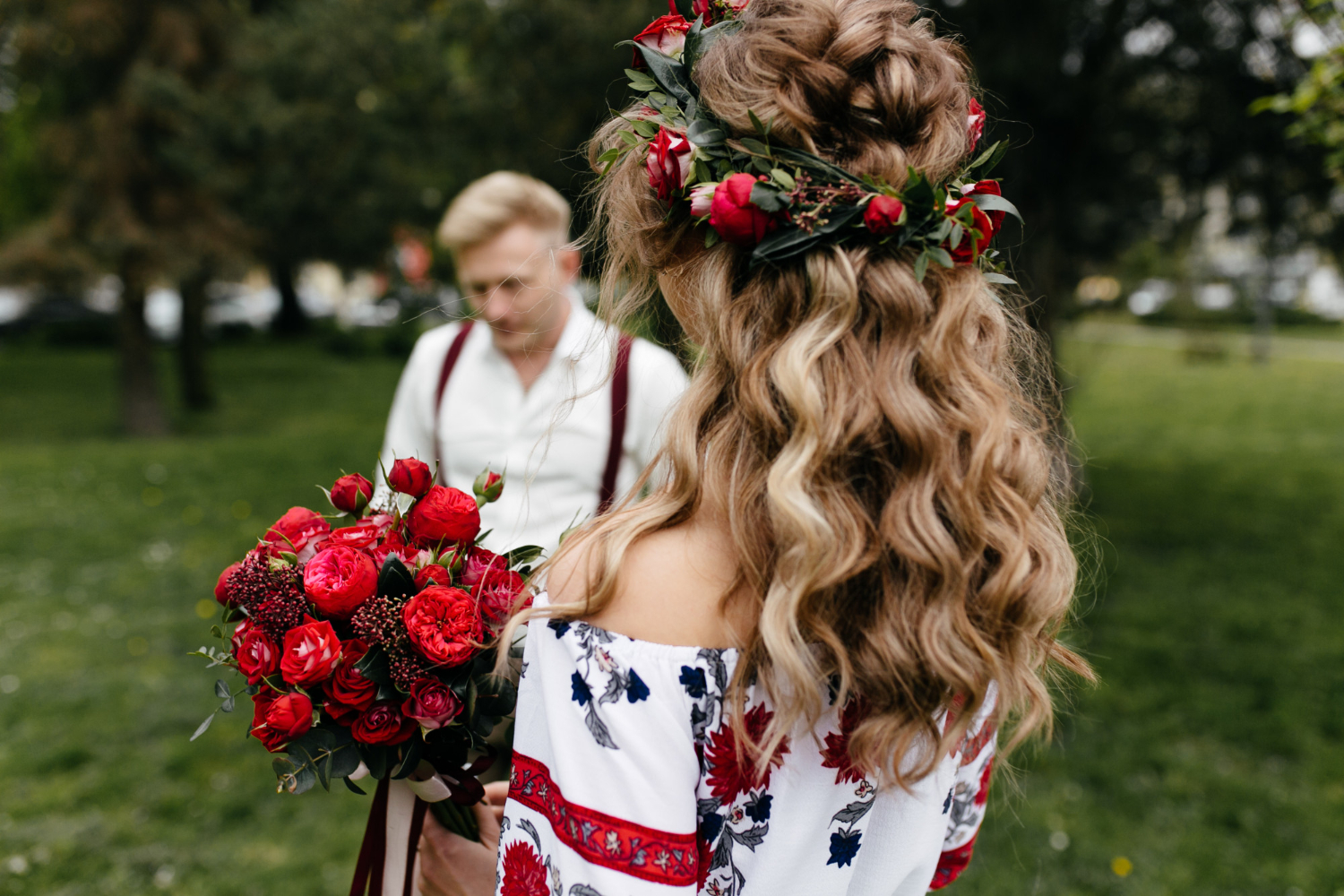
In the field of wedding hairstyles, 2026 brings a true celebration of diversity and individuality, where there is no single dominant trend but rather a wide palette of styles suited to different beauty types, characters, and wedding styles. Loose, romantic waves remain an absolute hit, blending beautifully with boho, rustic, or garden-style dresses. These delicate, soft waves are something much more refined than simple curled hair – they are perfectly polished, have natural movement and lightness, and are often adorned with delicate floral accents, pearl clips, or gold sprigs that add a fairytale character to the whole. These types of hairstyles require appropriate hair structure – they work best on medium-thickness hair with a natural wave or light curl, while on very thin or very thick, stiff hair, they may not hold all day.
Elegant updos, especially low buns and braided buns, are classics that never go out of style and work perfectly for formal, classic, or elegant wedding stylings. Modern buns, however, are no longer stiff, hairsprayed constructions that look like a helmet, but loose, romantic updos with falling strands that add softness and femininity. They are often enriched with delicately woven braids, twists, or sprigs that give them a non-obvious character. An updo is also an ideal solution for brides planning a wedding in the hot summer months, as it ensures comfort and order, whereas loose hair on the neck in the heat can be truly bothersome. Additionally, an updo serves as an excellent base for attaching a veil, which stays stable throughout the ceremony.
More and more bold brides are opting for loose hair, which was a somewhat controversial solution in the context of a wedding just a few years ago. Currently, loose, smoothly straightened, or gently waved hair is a symbol of modernity, self-confidence, and independence from traditional conventions. This type of hairstyle works particularly well with minimalist, modern, or urban-style dresses where an updo might be too formal. However, it requires proper care and hair preparation – it should be perfectly maintained, shiny, and without split ends, as every imperfection will be very visible in such a hairstyle. It's also worth remembering that loose hair may be more susceptible to moisture, wind, or static electricity, so a good hair stylist will use appropriate fixing and protective products.
A separate category of trends includes vintage and retro-style hairstyles, drawing inspiration from different decades – from Hollywood waves of the 20s and 30s to elegant 50s updos and free, romantic 70s styles. These stylings work perfectly for themed weddings, receptions in historic locations, or stylings inspired by specific eras. However, they require appropriate technical knowledge and experience from the hair stylist, as recreating authentic hairstyles from a given decade is much more than just styling hair – it's understanding the aesthetics, proportions, and character of that period.
Hair colors also align with the general trend of naturalness – instead of heavy, contrasting balayage or ombre, color techniques that mimic naturally sun-kissed hair are becoming more popular. The "born blonde" trend is a move away from cool, ashy blondes in favor of warm, honey, and sunny shades that add freshness and a youthful glow to the face. Brunettes, on the other hand, are eagerly reaching for "gothic brunette" techniques – deep, intense browns with subtly lightened ends that add depth and movement. Regardless of the chosen color, hair condition is key – healthy, shiny, and properly nourished strands are the foundation of a beautiful wedding hairstyle.
Beauty trends 2026 also mean greater acceptance of individuality and a move away from the assumption that wedding makeup and hair must be heavy and theatrical to look beautiful in photos. Contemporary wedding photographers work with techniques and equipment that perfectly capture natural beauty, so there is no longer a need for extremely heavy "photographic" makeup. A bride can be herself, maintain her personal style, and feel comfortable, which translates into naturalness and authenticity of emotions captured in photos – and it is precisely such frames that are the most precious and touching years later.

Golden Fortune Cookies with Personalized Label | Affordable Wedding Favours | Cejla No. 3

Simple No. 3 Soy Candle – Gold Foiling & Elegant Wedding Favours

Mini Chocolate Favours 'Pearls No. 1' – Luxury Wedding Favours with Pearl Accents
Naturalness as a Key Trend
The philosophy of naturalness in wedding makeup and hairstyles does not mean a lack of makeup or an unpolished hairstyle – on the contrary, achieving the "you look natural, but better" effect requires much greater precision and skill than performing heavy evening makeup. It is the art of subtly highlighting assets, hiding imperfections in a way that isn't obvious, and selecting colors and techniques that harmonize with the natural tones of the skin, hair, and eyes. This is exactly why a makeup trial is so important, during which you can work with the makeup artist to develop the perfect intensity for every element – from the amount of foundation to the saturation of shadows and the lip color.
Natural makeup also involves choosing the right product textures. Instead of a large amount of mattifying powder, which can create a dry, flat skin effect, delicate translucent powders are used only in areas prone to oiliness. Instead of high-coverage concealers, light formulas that brighten and correct without creating a mask effect are chosen. Instead of heavy matte shadows, satin and gently shimmering finishes are preferred, adding freshness and not highlighting fine lines on the eyelid. The whole philosophy is about building makeup in layers, maintaining lightness and transparency, which allows the skin to look natural and doesn't give a heavy feeling.
Personalization Over Trends
The most important trend of 2026 is, paradoxically... not strictly following trends. Contemporary brides are increasingly choosing stylings that are a true reflection of their personality, lifestyle, and character, even if they don't fit into any specific movement. If you don't usually wear makeup or wear very subtle makeup daily, there's no reason to look like someone else on your wedding day – it's better to opt for a delicate enhancement of natural beauty that makes you look like you, just in an ultra-groomed version. On the other hand, if you love heavy makeup daily and feel confident in it, there's no reason to give it up on your wedding day just because someone said "naturalness is trendy." Your wedding, your decision, your style.
When planning your preparations, remember that all styling elements should create a cohesive whole – from the wedding invitations, which set the aesthetic tone for the entire wedding, through decorations and dresses, to makeup and hair. If you choose elegant, classic invitations in white and gold, an elegant, classic styling will be a natural complement. If, however, you opt for place cards and decorations in a rustic or boho style, your hairstyle and makeup should also refer to this aesthetic of freedom and naturalness.
Makeup and Hair Trials – Why Are They Necessary and How to Prepare for Them?
Makeup and hair trials are absolutely crucial elements of wedding preparations, which unfortunately are too often skipped by brides under the false belief that they are an unnecessary expense. In reality, these trials are one of the best investments in the wedding budget, as they provide the opportunity to check, test, and polish the final styling without the risk and stress of doing it for the first time on the wedding day. Trials are not just about the visual effect but primarily about getting to know the specialist, building a relationship based on trust, checking how your skin and hair react to the products and techniques used, and developing communication so that everything runs smoothly and without surprises on the wedding day.
The makeup trial should take place 1 to 3 months before the wedding, ideally around 4-6 weeks, once you have all the key styling elements settled – you know your dress, you've chosen accessories, you know what the wedding favors will be and the overall vibe of the wedding. This is important because makeup and hair cannot be considered separate elements but must harmonize with the whole. If you perform the trial too early, before you have a clear vision, you may conclude that the chosen look doesn't fit the dress you buy later. On the other hand, a trial too late, for example, a week before the wedding, doesn't leave time for any corrections or a change of concept if it turns out something absolutely doesn't work.
The duration of a makeup trial is usually from 90 to 150 minutes, depending on the complexity of the styling and the amount of time dedicated to consultation and conversation. This is much more than just applying cosmetics – the first 30-40 minutes are usually a conversation where the makeup artist asks about your expectations, color preferences, previous makeup experiences, analyzes your skin type, face shape, eye and hair color, and looks at photos of the dress and inspirations you brought. This conversation is extremely valuable as it allows the specialist to understand your expectations while giving her the opportunity to advise and suggest solutions you might not have thought of. After this consultation comes the actual makeup, performed in stages with the possibility of making corrections on the fly – if during the process you find that something doesn't suit you, you can report it and change it immediately.
Preparing for a makeup trial is an element of key importance for the final effect. First and foremost, take care of your skin – in the week preceding the trial, regularly exfoliate with a gentle scrub (ideally 2-3 times), intensely moisturize with creams suited to your skin type, and use a hydrating or regenerating serum. The skin should be smooth, properly hydrated, and free of dry patches, as makeup will not hold well on dry skin, may settle into wrinkles, and look uneven. The day before the trial, perform a face and lip scrub (this is very important!), and in the evening, apply an intensely hydrating face mask and a lip balm or butter. On the day of the trial, clean your skin in the morning with a gentle gel or milk, apply toner and a light moisturizer, but do not use heavy creams, oils, or products with silicones, as they may hinder makeup adhesion.
A very important issue is the proper preparation of the area around the lips and eyebrows. If you regularly depilate your brows, do it at least 2-3 days before the trial so that any redness or irritation has time to subside. Never wax your brows the day before the trial or on the day itself, as the skin may be irritated, swollen, and makeup will not hold on such a surface. The same applies to removing upper lip hair – if you plan on depilating the upper lip, do it at least 2-3 days earlier, ideally a week, so the skin has time to regenerate. If you use any aesthetic medicine treatments like mesotherapy, acids, or fillers, plan them well in advance (at least 2-3 weeks before the trial) so that any side effects like redness, bruising, or swelling have completely subsided.
Come to the makeup trial in appropriate attire – ideally a light-colored blouse or shirt that won't distort the perception of the makeup colors. Dark clothes can cast shadows on the face and change how we perceive the colors and intensity of the makeup. Do not apply any makeup before arriving at the makeup artist's – the skin should be clean, freshly washed, and only lightly moisturized. Be sure to bring inspiration photos saved on your phone or printed, a photo or photos of your wedding dress (if you already have it), information about the wedding color scheme, and possibly photos of makeup looks you absolutely dislike – this last piece of information is just as valuable as it helps the makeup artist avoid elements that don't satisfy you.
During the trial itself, be active and communicative – don't be afraid to express your concerns, ask questions, or request changes on the fly. This is exactly the time for experiments and polishing details, not the wedding day when there's no more time for changes. Pay attention not only to the effect immediately after finishing the makeup but also to how you feel in this look – is it still you, or do you feel like a stranger? Is the makeup too heavy, does it irritate the skin? A professional makeup artist will ask for your opinion and want to hear an honest answer, even if it means needing to make changes. After finishing the makeup, take many photos in different lighting – natural, artificial, with flash, in different rooms. Makeup can look completely different depending on the light, so it's important to check how it presents in various conditions.
A key element of the makeup trial is the longevity test. If possible, go for a walk after the makeup, go shopping, eat a meal, drink coffee – perform all the activities you will do on your wedding day. After a few hours, check how the makeup is holding up – did the foundation run, did the shadows crease, did the lipstick wear off completely, did oily patches appear? A well-prepared wedding makeup should stay in very good condition for at least 8-10 hours without major touch-ups. If you notice any problems, be sure to report them to the makeup artist at the next meeting or by phone so she can make modifications to the techniques or products.
A hair trial works on very similar principles to makeup but has its specific requirements. As with makeup, it's best to plan the trial 4-8 weeks before the wedding, ideally on the same day as the makeup trial or at least in the same week to assess the overall styling effect. The duration of a hair trial is usually 1.5-2 hours, depending on the complexity of the updo and hair length. Like with makeup, the first part is a consultation where the hair stylist analyzes the condition, density, length, and structure of your hair, asks questions about how the hair reacts to styling, whether it holds a curl easily, whether it straightens quickly, or if it tends to get static. This information is key as it allows for the selection of the right technique and products.
Preparing for a hair trial requires some planning. Hair for the trial should be in the same state as on the wedding day – if you plan on coloring, do it before the trial so the stylist can assess the actual condition and color of the hair. If you plan on a cut, do that earlier as well. Hair should be washed the day before or on the day of the trial but without using heavy conditioners, masks, or oils, as they can make the hair too slippery and the hairstyle won't hold. Be sure to bring all the accessories you plan to have in your hair to the trial – veil, headband, combs, clips, flowers. The stylist must check if these accessories can be safely and stably fixed in the updo and how they harmonize with the entire hairstyle.
During the trial, the stylist may propose several different versions before you reach the final one. This is the perfect time for experiments – you can try both an updo and loose waves, see how you look with a side part, middle part, or no part. It is very important to check the longevity of the hairstyle – as with makeup, it's best if you can leave the salon in the finished hairstyle and wear it for several hours, ideally the whole afternoon and evening. Move around, dance, tilt your head, check if the hairstyle loosens, if the pins hold securely, if the veil doesn't fall. If you notice any problems, you will be able to report them to the stylist so that on the wedding day, they can use additional fixing measures or modify the technique.
After the trials, be sure to arrange a short coordination meeting or at least a phone call with the makeup artist and hair stylist a few days before the wedding to remind them of all the agreed details and ensure everyone is on the same page. This is also a good time to discuss the wedding day schedule – what time the specialists should be at your place, how much time to reserve for preparations, whether they will also prepare other people (mother, maid of honor, bridesmaids), and what the payment rules and any additional costs are.

Flores No. 1 Soy Candle in Gypsum – Gilded Wedding Favour

Kraft No. 5 Soy Candle in Plaster – Sunflowers Wedding Favour

Rubin No. 7 Soy Candle – Foiled Sunflowers Wedding Favours
How Much Do Trials Cost and How to Plan Them?
The issue of makeup and hair trial costs often causes controversy, as many brides believe that since they are paying for the service on the wedding day, the trial should be free. However, the reality is different – most professional makeup artists and hair stylists treat the trial as a separate, paid service that requires the same time, commitment, and use of products as the wedding makeup or hairstyle. Makeup trial prices usually range from 150 to 500 PLN and are similar or identical to the wedding makeup price. A hair trial usually costs from 100 to 300 PLN. Some specialists offer packages where the trial is included in the wedding service price or costs less if you book both services with the same person – it's worth asking about this when negotiating terms.
It is very important to sign a contract with the specialist that clearly defines the scope of services, dates, costs, and cancellation or rescheduling rules. The contract should include: the date and place of the wedding, the trial date, the exact scope of services (what is included in the price and what costs extra), the amount of remuneration and payment deadline, the amount of the deposit (usually 20-30% of the price as confirmation of booking), and the rules for terminating the contract. The deposit is usually non-refundable because by booking your date, the specialist gives up accepting other orders for that day, which represents real losses for them in case of your cancellation.
Documentation and Inspirations
Preparing for trials also requires gathering appropriate inspirations and visual references. Instead of bringing a huge number of random photos, it's better to choose 3-5 carefully considered inspirations that truly reflect your taste and vision. Make sure the chosen photos show people with a similar beauty type to yours – if you have a warm complexion and brown hair, a makeup look that is beautiful on a blonde with a cool complexion may look completely different on you. It's also good to show the makeup artist photos of makeup looks you absolutely dislike – this is equally valuable information that helps avoid misunderstandings.
Pre-Wedding Care – How to Prepare Your Skin and Hair for the Big Day?
Perfect wedding makeup and a beautiful hairstyle are not just a matter of the specialists' skills on the day of the ceremony but primarily the result of weeks or even months of preparing the skin and hair. Even the most talented makeup artist cannot create a long-lasting, beautiful-looking makeup on skin that is dry, dehydrated, full of dead skin cells, or active acne lesions. Similarly, the best hair stylist cannot perform miracles with hair that is damaged, split, dried out by dyeing, or falling out. That is why it is so crucial to start appropriate care well in advance – ideally 3 to 6 months before the wedding, which gives time to introduce positive changes and regeneration.
Facial skin care is the foundation on which wedding makeup will be built, so it should be thoughtful, systematic, and adapted to your skin type and its current needs. The basic steps of daily care are cleansing, toning, using serum, and moisturizing, with additional exfoliation and masks 1-2 times a week. Cleansing is the first and most important step, which should be performed twice a day – morning and evening, regardless of whether you wore makeup or not. In the evening, start with thorough makeup removal with micellar water, oil, or milk to remove residues of cosmetics, sebum, and impurities accumulated during the day. Then wash your face with a gentle gel or foam suited to your skin type – for dry skin, choose cream formulas without soap; for oily skin, gels with salicylic acid or activated charcoal will work well.
Toning is an often overlooked but extremely important stage of care that restores the skin's natural pH, additionally cleanses, moisturizes, and prepares it to receive subsequent cosmetics. Apply toner directly after washing your face, gently patting with fingertips or using a cotton pad. For dry and sensitive skin, choose hydrating toners with hyaluronic acid, glycerin, or aloe; for oily and problematic skin, toners with salicylic acid, niacinamide, or green tea extract will work well to regulate sebum secretion and prevent blackheads.
Serum is an intensely acting preparation that delivers high concentrations of active ingredients tailored to specific problems. If you struggle with discoloration, post-acne spots, or uneven skin tone, choose a serum with vitamin C, kojic acid, or niacinamide, which brighten and even out the tone. For dehydrated skin, a serum with hyaluronic acid in various molecular weights will be ideal, binding water in different layers of the skin and providing intense hydration. If you have mature skin or skin showing the first signs of aging, opt for a serum with retinol, peptides, or vitamin A, which stimulate collagen production and improve skin elasticity. Apply serum to cleansed and toned skin, gently patting with fingertips, and wait a moment for it to absorb before applying cream.
Moisturizing is an absolute foundation for every skin type, even oily skin, which is often paradoxically dehydrated – excessive sebum secretion is often the skin's defensive reaction to a lack of hydration. For dry skin, choose thick, nourishing creams with shea butter, plant oils, or ceramides that create an occlusive layer on the skin preventing water loss. For oily and combination skin, light, gel textures with hyaluronic acid, niacinamide, or panthenol that hydrate without weighing down the skin will work better. It is very important to use a separate eye cream because the skin in this area is thinner, more delicate, and more prone to wrinkles and dark circles – choose a product with caffeine (reduces puffiness), vitamin K (reduces dark circles), and peptides (improves elasticity).
Exfoliation is a treatment that should be performed regularly but cautiously – once or twice a week, never more often, as excessive exfoliation can lead to irritation and weakening of the skin's protective barrier. For sensitive skin, enzymatic peels in gel or powder form work best, gently dissolving dead skin without mechanical friction. For oily, combination, or blackhead-prone skin, acid peels with salicylic, glycolic, or mandelic acid can be used, which not only exfoliate but also cleanse pores and regulate sebum. Mechanical scrubs with granules are a solution for normal and resistant skin, but they should be used carefully, gently massaging the skin in circular motions without pressing hard to avoid damaging the epidermis.
Masks are an addition to care that should be used 1-2 times a week, matching the type of mask to the skin's current needs. Hydrating masks with hyaluronic acid, glycerin, or allantoin are ideal for every skin type, especially in winter when the skin is more exposed to dryness. Cleansing masks with clay, activated charcoal, or acids are dedicated to oily and problematic skin, helping to clean pores and reduce sebum secretion. Brightening masks with vitamin C, ferulic acid, or niacinamide improve skin tone, reduce discoloration, and add radiance. A week or a few days before the wedding, it's worth using a professional "banquet" mask that intensely hydrates, tightens, and brightens the complexion, preparing it perfectly for makeup.
In addition to home care, consider visiting a cosmetologist who can suggest professional treatments tailored to your skin's needs. Cleansing treatments like cavitation peeling, microdermabrasion, or hydrogen cleansing great prepare the skin by removing dead skin, blackheads, and imperfections. Chemical peels (mandelic, glycolic, pyruvic) act in deeper layers of the skin, stimulate its renewal, even out the tone, and improve texture – it's worth performing them in the autumn-winter period, several months before the wedding, as they require time for regeneration and may cause peeling or redness. Needle or needle-free mesotherapy delivers intense doses of active ingredients such as hyaluronic acid, vitamins, or amino acids, which hydrate, nourish, and improve firmness. All invasive treatments should be completed at least 2-3 weeks before the wedding so the skin has time to regenerate and to avoid risking unforeseen reactions right before the ceremony.
Lip care is an often neglected area that is of great importance for the final look of the makeup. Dry, chapped lips with dead skin make even the most expensive lipstick look bad and wear off quickly. Regular use of a lip scrub (you can use a ready-made product or make a home scrub from sugar and honey) once or twice a week will remove dead skin and make the lips perfectly smooth. Every day, morning and evening, apply a nourishing lip balm or butter with shea butter, vitamin E, or coconut oil. The day before the wedding, perform a lip scrub, and in the evening, apply a thick layer of nourishing balm to leave overnight – in the morning, your lips will be soft as silk, ready for lipstick application.
Hair care is an equally important element of preparations that should start several months before the wedding, especially if your hair is damaged, dry, or requires reconstruction. The foundation is regular trimming of ends every 6-8 weeks, which prevents splitting and breaking, making the hair look healthier and style better. If you plan on changing your hair color, plan it well in advance – coloring should be finished about 1-2 weeks before the wedding so the color has time to "stabilize" and any damage has time to regenerate. Avoid radical color changes right before the wedding – it's risky because the effect may not meet your expectations, and any correction will be difficult to perform.
Regular use of regenerating and nourishing masks is the basis of hair care – apply them at least once a week, leaving them on the hair for 20-30 minutes, and if the hair is very damaged, you can use a mask even twice a week. Choose products rich in keratin, silk proteins, natural oils, or panthenol, which rebuild the hair structure, smooth, and add shine. If your hair is particularly damaged, consider professional salon treatments like keratin straightening, hair botox, or laminating, which intensely regenerate and smooth the hair, making it more manageable for styling.
Protection against external factors is also very important – if you use a hair dryer, straightener, or curling iron, always use heat protection sprays or creams that create a protective layer on the hair preventing damage. Limit the temperature of devices to a minimum – set the dryer to medium heat and the straightener or curling iron to a maximum of 180 degrees. In the summer, protect your hair from UV radiation with special filter sprays and wear a hat on the beach, as sun, salt water, and chlorine can significantly damage hair structure.
Diet and hydration are factors that directly affect the condition of skin and hair, yet they are often completely ignored in wedding preparations. Remember that no cosmetics can replace proper nourishment from within – the skin needs vitamins A, C, E, and omega-3 acids to be radiant and healthy, and hair requires protein, biotin, zinc, and iron to be strong and shiny. Maintain a balanced diet rich in vegetables, fruits, lean protein, healthy fats, and whole-grain cereal products. Supplementation can be helpful, but before introducing any supplements, consult a doctor or nutritionist to ensure they are appropriate for your needs.
Hydration is an absolute foundation – the skin consists of 70% water, so a lack of it immediately affects appearance, making the complexion gray, dull, and fine lines more visible. Try to drink at least 1.5-2 liters of water daily, and if possible, increase this amount to 2.5-3 liters, especially in the summer or if you exercise intensely. Water is not just drinks – a large part of hydration also comes from food, so eat plenty of vegetables and fruits with high water content, such as cucumber, watermelon, tomato, or lettuce.
Sleep is another often underestimated factor that has a huge impact on skin appearance and the general condition of the body. During sleep, the skin regenerates, rebuilds damaged cells, and produces collagen, so a lack of sufficient sleep immediately reflects on appearance – dark circles under the eyes appear, puffiness occurs, and the complexion is gray and tired. Try to sleep at least 7-8 hours every night, especially in the period directly before the wedding when stress and emotions may make falling asleep difficult. If you have trouble sleeping, introduce evening rituals – turn off electronics an hour before bed, drink herbal tea, take a warm shower, and ensure the bedroom is dark, quiet, and cool.
In the period directly before the wedding – the last 2 weeks – take particularly intense care. Do not introduce any new products or treatments, as you risk an allergy or an unforeseen skin reaction. Use proven cosmetics, hydrate regularly, avoid stress (as much as possible), sleep enough, and drink plenty of water. The day before the wedding, perform a face and lip scrub, apply a hydrating mask, apply a hair mask or conditioner, get a manicure and pedicure. In the evening, take a long, relaxing shower or bath, apply your favorite cream to the entire body, and go to bed early – rested, relaxed, and ready for the most beautiful day of your life.

Glamour Wedding Place Cards No. 1 – Satin Name Cards with White Print

Cappuccino Wedding Place Cards No. 1 – Satin Ribbon Table Name Cards

Orange Ribbon Wedding Place Cards No. 1 – Satin Ribbon Table Names
Treatments to Avoid Right Before the Wedding
There are a number of treatments that absolutely should not be performed in the period directly before the wedding, as they carry the risk of unforeseen reactions, irritations, or other side effects. This category includes all invasive aesthetic medicine treatments such as needle mesotherapy, fillers, botulinum toxin, or chemical acids – they should be completed at least 3-4 weeks before the wedding. Anything new in care, such as a new cream, serum, or mask, should not be introduced within 2 weeks before the ceremony – if you want to try a new product, do it well enough in advance to observe the skin's reaction. Facial depilatory (upper lip, brows) should be performed at least 2-3 days before the wedding so any redness has time to subside. Tanning, both natural and in a solarium, is an absolute taboo for 2 weeks before the wedding – tanned skin can cause problems with matching foundation shades, and the risk of burns or allergies is far too high.
Wedding Day Schedule – How to Plan Beauty Preparations Smoothly?
Your wedding day is a unique event requiring precise coordination of many elements, and beauty preparations – hair and makeup – are a key point of this schedule, directly affecting what time you will be ready to leave for the ceremony. Proper time planning is not just a matter of logistics but primarily ensuring mental comfort, space for any unforeseen situations, and the possibility of experiencing these preparations in a calm, joyful atmosphere rather than in a rush and stress from lack of time. Therefore, it is so important to create a realistic schedule with appropriate time buffers that considers all preparation stages and the needs of all people involved in your day.
Standardly, it is assumed that the bride should be fully ready (makeup, hair, dressed) about an hour before the planned time of leaving for the church or registry office. This time buffer is absolutely necessary as it allows for last touch-ups, preparation photos, a moment to express emotions, any last details, or unforeseen situations like a forgotten accessory, a problem with the dress, or the need to use the restroom. If you don't leave yourself enough time, you will create unnecessary tension, hurry, and stress that will take away the joy of these last moments before the ceremony and may negatively affect your well-being for the rest of the day.
The classic order of preparations is hair first, then makeup – this sequence has a logical justification and is preferred by most specialists. Performing hair first allows the makeup artist to work freely on the face later without worrying about damaging the already finished hairstyle. Additionally, during hair styling, it is inevitable to touch the face, adjust strands near the face, or gently move the head, which could damage already applied makeup. Exceptions to this rule can be situations where the hair stylist and makeup artist are two different people working simultaneously at the same time, which shortens the total preparation time – then the stylist works on the hair while the makeup artist simultaneously performs makeup on another person, for example, the mother or maid of honor.
The time needed to perform a wedding hairstyle is usually from 60 to 90 minutes, depending on the complexity of the updo, hair length and density, and whether a veil or other decorations are additionally applied. Simple, loose waves on medium hair can be ready within an hour, while a complicated updo with braids, twists, and many accessories may require up to 2 hours. This is why it is so important to discuss this during the hair trial and get realistic information from the stylist about how much time they need for the agreed styling. To this time, it's worth adding a 15-30 minute buffer for any touch-ups or unforeseen situations.
Wedding makeup usually takes from 60 to 90 minutes, sometimes up to 120 minutes if it is very complex or if the makeup artist also applies false eyelashes. As with the hairstyle, ask the makeup artist during the trial how much time they will need on the wedding day to realistically plan the schedule. To the time of the makeup itself, also add a time buffer for last touch-ups or conversation.
An example schedule for a wedding planned for 3:00 PM could look as follows: 8:00 AM – wake up, quiet breakfast, morning care (washing face, toning, light moisturizer, but NO heavy creams or oils that could interfere with makeup application), 9:00-10:00 AM – hair stylist arrival and start of hair work, 10:30-11:00 AM – hair finished, short break, tea or coffee, 11:00 AM - 12:30 PM – wedding makeup, 12:30-1:00 PM – dressing, last touch-ups, perfume application, putting on jewelry, 1:00-2:00 PM – preparation photos, photos with mother, sister, maid of honor, moment to express emotions, family blessing, 2:00 PM – departure for the ceremony venue (assuming the journey takes about 15-30 minutes), 3:00 PM – ceremony start.
Of course, this schedule is just an example and must be adapted to your individual circumstances – distance to the church, the number of people preparing with you, the complexity of preparations, and your personal preferences. If you plan for your mother, maid of honor, bridesmaids, or other people to also have makeup and hair done, the preparation time will extend proportionally – one person is usually 1.5-2 hours for the stylist plus the same for the makeup artist, so preparing three people can take a total of 4-6 hours. In such situations, it's worth considering hiring two makeup artists or two hair stylists to work simultaneously, which will significantly shorten the total time.
It is very important that all people involved in your preparations – hair stylist, makeup artist, photographer – know the detailed schedule and what time they are supposed to be on site. Ideally, a few days before the wedding, send everyone a message or call to remind them of the arrangements, confirm the hours, and ensure they have the correct address of the place where preparations will take place. It's also worth designating a person responsible for coordinating preparations – it could be the maid of honor, sister, mother, or another close person who will watch the schedule, remind about subsequent stages, and help with any problems, so you can focus on experiencing this special time.
The preparation area should be properly prepared so specialists can work comfortably and effectively. The hair stylist needs access to an electrical outlet for the dryer, straightener, or curling iron, an appropriate height-adjustable chair (if they don't have their own portable one), and good lighting. The makeup artist also needs access to an outlet (for their lamps), a stable chair, and ideally a place by a window or other natural light source that allows for the most accurate assessment of makeup shades and intensity. Ensure the room isn't too crowded – the presence of too many people can distract both the specialists and you, so if possible, ask that only you, the specialists, and possibly one or two closest people be in the room during preparations.
Also, plan time for a quiet breakfast before starting preparations. Do not skip this meal, even if you are nervous and have no appetite – an empty stomach can lead to feeling unwell, dizziness, or even fainting, especially combined with stress and emotions. Eat something light but nutritious – for example, scrambled eggs with vegetables, yogurt with fruit and granola, oatmeal, or sandwiches with lean protein. Avoid greasy, heavy dishes that can cause discomfort or bloating. Also, drink water regularly throughout the morning to stay properly hydrated.
Don't forget to prepare a beauty emergency kit for the whole day, which will stay with you or be handed over to the person responsible for touch-ups. This kit should include: translucent loose or pressed powder, blotting papers (to remove excess sebum without disturbing makeup), lipstick or lip gloss in the shade used by the makeup artist, a mirror, a comb or hairbrush, spare bobby pins or clips, makeup setting spray (to refresh during the day), tissues, blister plasters (in case shoes start to pinch), and any personal medications or items you might need. The makeup artist will usually prepare a backup lipstick and powder for you, but it's worth having your own backup copies too.
Organizing all these elements – from wedding invitations that set the vibe for the whole wedding to coordination with all vendors and a detailed daily schedule – can be overwhelming. That is why more and more couples use professional planning tools like the Blissaro app, which allows you to have all information, dates, contacts, and details in one place, accessible on your smartphone at any time. With such an app, you can be sure that no detail escapes your attention, and wedding planning will be a pleasure, not a source of stress.
Preparations for a Larger Group
If you plan for other people to be prepared alongside you – mother, maid of honor, bridesmaids, sometimes also the groom's mother or grandmother – the schedule must be much more extensive and precisely planned. Usually, the bride is prepared last so that her makeup and hair are least exposed to the passage of time and remain perfect for the longest possible period. First, therefore, people who are not in the center of attention – mothers, grandmothers, bridesmaids – are prepared, and the bride is at the end, just before leaving.
In the case of preparing a larger group, hiring an appropriate number of specialists or booking enough time is key. Some specialists offer wedding packages for a larger number of people, which can be more cost-effective than paying for each person separately. It's worth asking about this when negotiating terms. Also, remember that all people to be prepared should know the schedule and be ready punctually – if one person is late, it can cause a domino effect and delay the entire schedule.
Golden Fortune Cookies with Personalized Label | Affordable Wedding Favours | Cejla No. 3

Autumn Flowers Fortune Cookie | Personalized Wedding Favours | Impresja No. 2

Fortune Cookies with Gold Foliage – Ruskus No. 2
Common Mistakes in Wedding Makeup and Hairstyles – What to Avoid to Look Perfect?
Even with the best intentions and careful preparation, there are a number of traps and mistakes that can significantly affect the final look of wedding makeup and hair, and which can be easily avoided with the right knowledge and awareness. These mistakes concern preparation, choice of products and techniques, as well as decisions made on the wedding day itself. Knowing what to avoid is just as valuable as knowing what to do, so it's worth taking the time to familiarize yourself with the most common pitfalls to consciously avoid them.
One of the most common and critical mistakes in wedding makeup is choosing a foundation that is too heavy, full-coverage, and applied in too large a quantity, creating a mask effect and making the skin look artificial, unnatural, and potentially aging. Many brides mistakenly assume that since makeup must be long-lasting and look good in photos, it must be heavy and thick, which is absolutely untrue. Modern photographic techniques and professional equipment excel at capturing natural beauty, so there is no need for extremely high-coverage formulas. Instead of heavy full-coverage foundation, it's better to choose a light or medium coverage formula with a satin or natural finish that evens out tone while allowing the skin to breathe and maintaining its natural texture. Imperfections requiring more coverage can be spot-corrected with concealer instead of applying a thick layer of foundation all over the face.
A poorly chosen foundation shade is another classic mistake that can completely ruin makeup, even if all other elements are executed perfectly. A foundation that is too dark creates a mask effect where the face looks like a separate element unrelated to the rest of the body, especially visible with an exposed neckline or neck. A foundation that is too light makes the face look pale, unhealthy, and can create a "ghost effect" in photos where the face is much lighter than the rest of the body. Incorrect undertones – too yellow, too pink, or too gray – can also look unnatural and change the perception of eye color, hair, or the dress. This is why professional shade matching during the makeup trial is so crucial, ideally in natural daylight, and checking how that shade looks in photos.
Over-powdering the entire face is a mistake that leads to a dry, chalky effect and makes the skin look flat, without any depth or three-dimensionality. Powder is necessary to set makeup and control excess sebum, but it should be used with caution – only in the T-zone (forehead, nose, chin) where skin tends to get oily. The rest of the face can remain slightly satin or gently luminous, giving the effect of healthy, radiant skin. A completely matte face without any glow looks old, artificial, and does not reflect the natural look of young, healthy skin.
Black pencil on the waterline is a technique that was popular years ago but is now considered one of the most aging elements of makeup, especially in a wedding context. A dark line on the waterline optically shrinks the eye, emphasizes dark circles and puffiness, makes the gaze look heavy, and adds harshness. Additionally, there is a high risk that during the day, especially with emotions and tears, the pencil will smudge, creating a panda effect. A thin, precise line right at the upper lash line works much better, emphasizing the eye without closing it.
Too dark, graphic brows that look like they were drawn with a marker are another common mistake that can look artificial and dominate the entire face. Brows should be naturally brushed up, lightly filled in areas where they are thinner, and set with a clear gel, but they should maintain their natural shape and texture. The brow product color should be close to the natural hair color or a maximum of one tone darker – it should never be black unless you naturally have very dark, black hair and brows.
In the field of hairstyles, the most common mistake is choosing a styling that doesn't fit the type, structure, and condition of the hair. If you have very thin, delicate hair that doesn't hold a curl, trying to create lush, voluminous curls will end in disappointment – the curls will fall within an hour or two, and you will feel discomfort and insecurity all day. Similarly, if you have very thick, heavy hair, choosing a very complicated, heavy updo can cause headaches and discomfort. This is why a hair trial is so crucial, where the stylist can realistically assess your hair's possibilities and propose a styling that will be not only beautiful but primarily durable and comfortable.
Excessive use of hairspray is a mistake that creates a "helmet" effect, where hair is stiff, unnatural, and looks like a plastic wig. Contemporary trends move away from stiff, sprayed hairstyles in favor of naturalness, lightness, and movement, so the stylist should use hairspray with caution – mainly to fix key points like pins or places where hair might loosen, rather than spraying the entire hairstyle with a thick layer. If you care about a natural look, inform the stylist during the trial and ensure they understand your expectations.
Experimenting with a completely new style or hair color right before the wedding is a very risky move that can end in disaster. If you wear long, dark hair daily and suddenly decide on a short, blonde hairstyle a week before the wedding, you risk not recognizing yourself in the mirror and feeling discomfort all day. Any changes should be introduced gradually, well in advance, to have time to get used to the new look and make any corrections if something doesn't go according to plan.
Inadequate hair preparation before styling is a mistake that can prevent even the best stylist from achieving the expected effect. Hair for a wedding hairstyle should be washed the day before or on the day itself but without using heavy conditioners, masks, or oils that make it too slippery for the hairstyle to hold. On the other hand, hair that is too dry, damaged, and full of split ends won't look good either, which is why appropriate care several months before the wedding is key.
Longevity of Styling – How to Make the Look Last All Day and Night?
The wedding day and reception are a marathon that often lasts 12-16 hours, sometimes even longer, filled with emotions, dancing, eating, crying with joy, and intense experiences. In such conditions, makeup and hair are put to a true test of endurance, so it is crucial to use appropriate techniques, products, and tricks that ensure your styling looks fresh and beautiful from the first moment of the ceremony until the last dance. Longevity is not a matter of chance or luck – it's the result of conscious cosmetic choices, professional application techniques, and proper skin and hair preparation.
The foundation of long-lasting makeup is proper skin preparation, as mentioned in previous chapters, but it's worth emphasizing again – no makeup, even the best, will last long on skin that is dry, dehydrated, oily, or full of dead skin cells. Therefore, proper care in the weeks preceding the wedding is the foundation of longevity. On the wedding day itself, just before the makeup artist arrives, clean the skin with a gentle gel or milk, apply toner and a light moisturizer, but do not use anything heavy, greasy, or containing silicones, as this can create a barrier hindering makeup adhesion.
A makeup primer is an absolute must-have for long-lasting wedding makeup – it's a product applied to clean, moisturized skin before foundation, serving several key functions. First, it smooths the skin surface, filling in fine lines and pores, which makes foundation apply evenly and smoothly. Second, it creates a light layer that increases foundation adhesion and extends its wear. Third, it controls sebum secretion, preventing an oily skin effect. The choice of primer should be adapted to the skin type – for oily skin, mattifying, sebum-controlling primers work well; for dry skin, hydrating primers are better; and for mature skin, smoothing and illuminating primers.
Choosing the right cosmetic formulas is another key element. Foundation should be labeled as "long-lasting," "long-wear," or "transfer-resistant," meaning it is specifically designed for long-term wear and doesn't rub off easily. Waterproof formulas are particularly recommended for weddings as they resist moisture, tears, and sweat. Concealer should also be long-lasting and waterproof, especially the one applied under the eyes, as this area is particularly prone to smudging with tears. Eyeshadows should be applied over a special eyeshadow primer, which increases adhesion, intensifies color, and prevents creasing.
The baking technique is a professional trick used by makeup artists that involves applying a large amount of loose powder over wet makeup products (foundation, concealer, bronzer, blush) and leaving it on the skin for several minutes to "bake" with the cream products, creating an incredibly durable coating. After a few minutes, excess powder is swept away with a large, fluffy brush, and the result is makeup that literally holds like concrete for many hours. This technique is particularly effective under the eyes, on the sides of the nose, and on the forehead – places where makeup has the greatest tendency to wear off.
Setting sprays are the last but extremely important step in creating long-lasting makeup. After finishing the entire makeup, the face is sprayed with a special mist that melds all product layers, creates a delicate protective coating, and significantly extends makeup longevity. Good setting sprays contain polymers that, once dry, create an invisible mesh holding makeup in place. There are different types of fixers – mattifying (for oily skin), illuminating (for dry skin), and universal. Application involves a few spritzes from a distance of about 20-30 cm from the face, from top to bottom, with eyes closed, then leaving it to dry completely.
For lips, longevity is a particularly big challenge as eating, drinking, and kissing inevitably wear down lipstick. To maximize color longevity on the lips, use a layering technique: first, gently pat a bit of foundation or concealer onto the lips to create a neutral base, then outline the lips with a liner in a shade close to the lipstick and fill them in completely. After applying the first layer of lipstick, blot the excess with a tissue, then lightly dust the lips with powder through a thin tissue, and then apply a second layer of lipstick. This technique creates a very durable coating that stays on the lips much longer.
An additional trick is using liquid matte lipsticks, which once dry create a smudge-proof matte coating, but remember that such formulas can be more drying and require well-moisturized lips. If you prefer classic creamy lipsticks, choose those labeled as "long-lasting" or "budge-proof," which contain ingredients increasing adhesion and longevity.
Hairstyle longevity relies on slightly different principles than makeup, but proper preparation, products, and techniques are equally important. A wedding hairstyle should be performed using professional styling products such as mousses, gels, hairsprays, and waxes that provide appropriate hold. It is key for the stylist to apply these products in layers, in strategic places – at the roots (for volume), at the ends (for curl definition), and in places where the hairstyle is pinned or secured (for stability).
Bobby pins, hairpins, and clips used to create the updo must be of appropriate quality and properly secured. A professional stylist usually uses significantly more pins than it might seem – even 20-30 pieces in one updo, as each serves its stabilizing function. Pins should be placed in a hidden but secure way so the updo doesn't fall apart even during the most energetic dances.

Lauren No. 1 Wedding Table Plan – Classic Monogram Seating Chart

Elegant Wedding Welcome Sign with Black & White Photos – Photo Design No. 7

Autumn Vintage Wedding Seating Plan Poster | Guest Table Plan | Ethereal No. 1
Place cards on linen-textured paper with roses in blue colors | Akwarele No. 10
Place cards with pink bouquet composition | Indygo No. 7
Wedding Place Cards on pearl cream paper with green decorations | Opal No. 11