The Complete Wedding Guest Etiquette Guide
Wedding guide – rules you should know
Anyone who has ever been involved in planning a wedding will agree that it is a complex task. From choosing the venue and invitations to the menu - everything requires precise planning. In this entire process, it is easy to forget one of the most important aspects - the rules that should apply during the wedding. These rules are an essential part of every wedding and help ensure that the entire event runs smoothly.
During wedding preparations, the bride and groom are usually showered with various tips, but they are not always complete or accurate. That is why we decided to prepare this wedding guide to help both the bride and groom and the wedding guests understand what rules are necessary to follow at a wedding.
A wedding world full of rules
Wedding rules are not just about organizational issues, but also about etiquette, proper behavior, and even the dress code. They may seem overwhelming, but knowing and following them can definitely contribute to the success of the entire event. A proper understanding of these rules enables efficient wedding organization and also helps to avoid misunderstandings and potential conflicts.
Why are wedding rules so important?
Weddings are events that bring together different groups of people: family, friends, colleagues. Each of these guests has their own expectations and styles, which is why wedding rules are essential to create common ground for everyone. They facilitate communication and interaction, which contributes to creating a harmonious atmosphere full of joy and celebration.
Guidelines for the bride and groom and guests
Preparing a wedding is not just the responsibility of the bride and groom. Guests also play a key role in this process. Understanding the rules that should apply at a wedding allows for creating a positive atmosphere and promotes having a good time. That is why our wedding guide will include sections aimed at both the newlyweds and the wedding guests.
How to use this guide?
Whether you are a future spouse looking for tips on wedding organization, or a guest who wants to learn more about the rules applicable at a wedding, this guide is for you. We have prepared it with the intention of providing the most up-to-date and comprehensive information on the rules that should apply during a wedding. Read it, use our advice, and see for yourself the benefits that understanding and following these rules will bring you.
Regardless of how long you have been planning your wedding, whether it is a civil or religious ceremony, a small party, or a large wedding, remember that the key to success is a well-organized and planned event that takes into account not only your dreams but also the rules applicable at the wedding. Are you ready to start your wedding planning adventure? Read on and learn more about the rules that will help you create an unforgettable wedding that everyone will speak of with appreciation.
Rules for the Newlyweds
Planning a Wedding
Planning a wedding is a task that can prove to be a huge challenge for many couples. Is this surprising? Absolutely not. A wedding is an extremely important event in everyone's life, and planning this day properly requires not only time and effort but also an understanding of a number of rules and guidelines. These organization rules are not set in stone, however - they are flexible and can always be adjusted to your needs and requirements. Remember, however, that no matter how individual your approach is, there are some universal rules that are worth keeping in mind. So, what are the most important rules for planning a wedding?
1. Setting a budget
There is no denying that wedding planning starts with setting a budget. No matter how big our imagination is, at the very beginning, we must know what funds we have at our disposal. This will help us determine what is realistic to achieve and what will remain only in the realm of dreams. Setting a budget is not just a matter of calculating available funds, but also considering what we want to spend them on and what our priorities are. Do we want to spend more on the venue and less on decorations? Or maybe the other way around? It is definitely worth thinking about this at the very beginning to avoid later disappointments.
2. Choosing the date and venue
The next stage in wedding planning is choosing the date and venue. This is definitely one of the most important decisions we have to make. The wedding date should be chosen well in advance so that we have time to prepare everything. Remember, however, that the choice of date depends on many factors - from the availability of the venue to weather issues and guest schedules. Regardless of the chosen date, remember to inform your guests about it in advance.
As for the venue - that is a completely separate issue. Do you dream of a wedding in a garden, a ballroom, or maybe on the beach? Each of these places has its pros and cons, so it is worth thinking about what is most important to us. Remember that the wedding venue should reflect our personality and style - it is our day, after all!
3. Guest list
The next stage in wedding planning is preparing the guest list. This task can be extremely difficult because we would usually like to invite everyone we know. Unfortunately, our budget and chosen venue may not allow for this. Therefore, it is worth determining at the very beginning who we definitely want to see at our wedding and who we can possibly omit. Remember that this is our day and we decide who will accompany us.
4. Choosing service providers
During wedding planning, we cannot forget about choosing the right service providers. Whether it is a photographer or a music band, each of these people or companies is crucial to the success of our wedding. That is why it is worth spending some time researching the market, comparing offers, and choosing those who will best meet our expectations. Remember that the most expensive is not always the best, and a good reputation and recommendations from other couples can be extremely valuable.
5. Choosing the menu and drinks
Wedding planning is not just an organizational matter, but also a culinary one. Choosing the menu and drinks is a task that is definitely worth thinking through. Remember that our guests' tastes may vary, so it is worth opting for variety. Also, do not forget about people who have special dietary requirements - their satisfaction is also important to us!
6. Preparing the day's schedule
The last, but no less important stage in wedding planning is preparing the day's schedule. This will help us organize everything in the right order and make sure we haven't forgotten anything. Remember that the day's schedule is not just a timetable for us, but also for our guests, so it is worth refining it and informing all wedding participants about it.
In summary, wedding planning is a task that requires a lot of effort and commitment. However, thanks to the right organization rules, we can ensure that our day will be unforgettable and will run without any problems. Remember that this is our day and we decide how we want to spend it. Do not be afraid of challenges and enjoy this wonderful adventure!
Communication with guests
The role that communication with guests plays in the context of wedding organization cannot be overestimated. Guests are a key element of this celebration - without them, there is no wedding. That is why understanding their needs, expectations, and above all, providing them with all the necessary information about the wedding is so important. Although it seems simple, in practice, it can be a bit complicated. So how to communicate correctly with guests before, during, and after the wedding? Here are a few tips that might help.
1. Clear and transparent invitations
The first point of contact with guests is usually the wedding invitation. It is in it that all basic information about the wedding should be included: date, venue, time, as well as any other details that may be important to guests. This may include information about the dress code, the planned menu (especially if there are guests with specific dietary requirements), or accommodation options. The invitation should be clear, understandable, and contain everything guests need to know to properly prepare for the wedding.
2. Setting expectations
Do you expect guests to bring gifts? Or do you prefer money, which you will later allocate to something specific yourselves? Are you planning special attractions where guest participation is required? If so, it is good to communicate this clearly. Although the topic of wedding gifts can be difficult, it is better to convey your expectations in advance to avoid misunderstandings and awkwardness. Remember, however, that tact and delicacy are key in this context.
3. Communication during the wedding
Communication with guests does not end with sending invitations. Communication during the wedding itself is equally important. It is good to have at least one person (e.g., a best man, a wedding coordinator) who will be a contact point for guests in case of questions or problems. This person should know the day's schedule by heart and be able to react quickly to any complications.
4. Information about changes
If something changes - the date, venue, or time, you should inform the guests about it as soon as possible. Nowadays, when most people have smartphones, the fastest and easiest way may be to send a group message or an email. Remember, however, that not everyone may use these forms of communication, so it is always worth keeping alternative methods in mind.
5. Thank you notes after the wedding
Also, remember about thank you notes after the wedding. It is a beautiful gesture that shows how much you value the guests' presence and their contribution to your celebration. It can be a traditional thank you card, an email, or even a personalized gift. It is important that every guest feels appreciated.
In summary, communication with guests is one of the most important aspects of wedding organization. Providing clear information about the wedding, setting expectations, ensuring communication during the wedding, informing about any changes, and thanking guests after the wedding are key steps that will help you organize a successful and trouble-free wedding. Remember that communication is not just about conveying information, but also about listening and responding to your guests' needs.
Dress code and etiquette rules
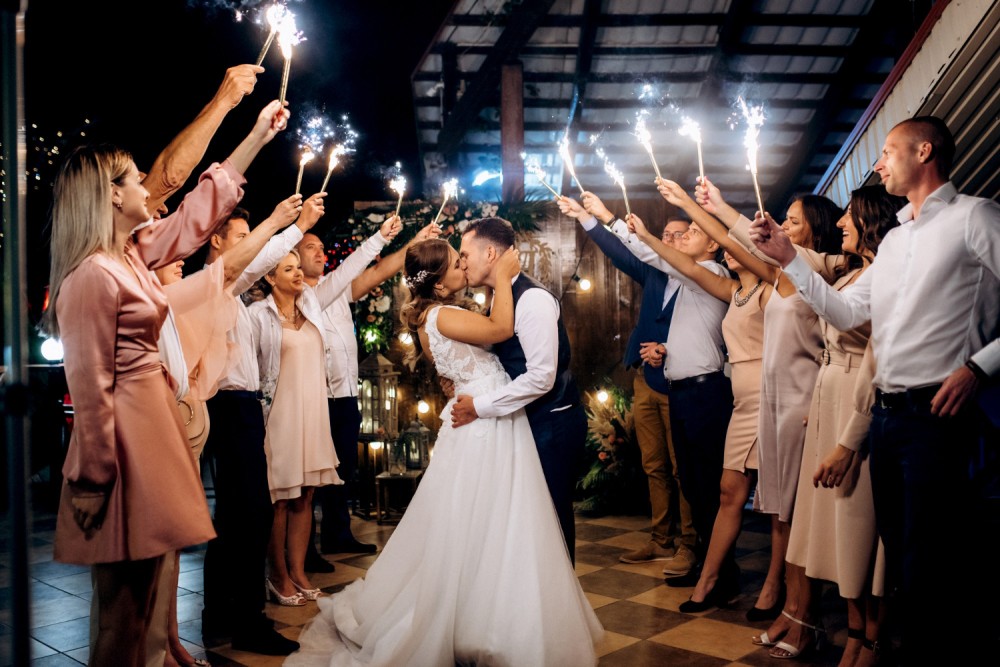
When we talk about wedding etiquette and wedding attire, the rules can seem a bit complicated. Much depends on tradition, culture, and even the personal preferences of the Bride and Groom. Nevertheless, there are a few universal rules that are worth keeping in mind during wedding preparations. Thanks to them, both the Bride and Groom and the guests will be able to enjoy this special celebration without unnecessary stress and awkwardness.
1. Choosing the wedding dress and suit
The first and most important thing the Bride and Groom must think about is, of course, choosing their attire. The wedding dress and suit are not only an element of wedding etiquette but also an expression of the Bride and Groom's personality and style. It is important that the attire is comfortable and matches the style of the celebration. Will it be a traditional white dress, or perhaps an original colored creation? A suit in muted colors, or maybe something more extravagant? It all depends on you!
2. Dress code for guests
Do you want your guests to follow a specific dress code? If so, remember to convey this information clearly and explicitly. It can be an elegant dress code (e.g., black tie, cocktail attire), but also something less formal, e.g., casual chic. It is important that all guests feel comfortable and appropriately dressed for the occasion.
3. Table etiquette
During the wedding, not only is the dress code etiquette important, but also the one related to behavior at the table. The Bride and Groom should know the basic rules of etiquette, such as which cutlery to use for which dish, how to properly serve food, what the rules for toasting are, etc. Good manners are the foundation!
4. Opening the ball
Traditionally, the Bride and Groom open the ball by dancing the first dance. It is a special moment that usually ends the official part of the wedding and begins the party. It is worth remembering that regardless of the chosen dance style, the most important thing is to feel comfortable and enjoy the moment.
5. Thanking the guests
At the end of the wedding, according to etiquette, the Bride and Groom should thank the guests for their presence and give them small gifts, e.g., in the form of wedding candies. It is a nice gesture that shows the guests how much we appreciate their presence at our wedding.
In summary, remember that wedding etiquette and wedding attire are important elements of every wedding celebration. Thanks to them, the entire ceremony runs smoothly and elegantly, and guests feel relaxed and comfortable. However, the most important thing is that you feel happy and relaxed on this special day. It is your day, after all, and you decide what rules will apply!
Guest care
Wedding guests are a key element of every celebration. Without them, there would be no celebration, no joy, no dancing, and no shared moments. That is why it is so important to take care of their comfort and a good atmosphere throughout the party. Guest care, however, starts much earlier, even before the wedding itself. Here are a few rules that are worth considering when planning guest service during the wedding.
1. Communication
The first step in guest care is ensuring proper communication. This means not only sending invitations and waiting for confirmations but also informing guests about all important details – the venue, date, and time of the ceremony, dress code, accommodation options, transport, and even dietary preferences. The more information you provide to your guests, the easier it will be for them to plan their time and prepare for the wedding.
2. Accommodation and transport
If your wedding takes place far from where most guests live, it is good to provide them with transport or at least information about travel options. Similarly, if you are planning a multi-day wedding, it is worth thinking about accommodation for guests. It can be a hotel, a guesthouse, or even a rented house. Remember that guest comfort is one of the most important things during a wedding.
3. Welcoming guests
When guests arrive at the wedding, it is worth ensuring they receive a warm welcome. This can be done by the bride and groom, parents, the best man, or any other person you designate. It is important that every guest feels welcome and knows where they can take off their coat, leave a gift, etc.
4. Providing entertainment
During the wedding, it is worth thinking about entertainment for guests. It can be live music, a DJ, games and competitions, or even hiring an entertainer for children. Remember, however, that not everything has to be planned. Sometimes spontaneous dancing and conversations are the best way to have a good time.
5. Clear thank yous
Last but not least, remember to thank your guests. It can be a short speech, individual thank yous, or a small souvenir gift. It is a small gesture that shows guests how much you value their presence at your wedding.
In summary, guest care at a wedding is a key aspect of wedding organization that requires proper planning and consideration of many details. Remember, however, that the most important thing is the comfort and well-being of your guests. By taking care of their needs, you will provide them with unforgettable impressions and create a warm, joyful atmosphere that will accompany you throughout the entire wedding.
Rules for Guests
A. What to wear to a wedding
Attending a wedding is as exciting as it is binding. After all, it is an event that requires a certain degree of formality, elegance, but also comfort - we will be dancing, eating, having fun, and being part of this joyful occasion for many hours. A key issue that every wedding guest must consider is definitely what to wear to a wedding. Regardless of whether you are a guest, a family member, or a bridesmaid, understanding the wedding dress code is absolutely crucial.
1. Understanding the dress code
The first step in deciding what to wear to a wedding is understanding the dress code. At most weddings, the dress code is determined by the bride and groom and is usually indicated on the invitation. It can be formal, semi-formal, casual, or even themed. If the dress code is not clearly defined, it is good to contact the bride and groom or the wedding planner to understand what they expect.
2. Formal wedding
At a formal wedding, men should usually wear a suit or a tuxedo, while women should choose elegant cocktail dresses, evening gowns, or even long dresses. It is important to remember about accessories - elegant shoes, jewelry, a handbag, and appropriate makeup can really complete the look.
3. Semi-formal wedding
At a semi-formal wedding, the dress code is slightly less rigorous. Men can wear suits in a less formal style, and women can choose less formal dresses. Remember, however, that it is still a wedding - jeans, short skirts, or overly extravagant clothes may not be appropriate.
4. Casual wedding
A casual wedding gives guests the most freedom. Men can wear shirts and khaki pants, and women can choose breezy dresses or elegant sets. But remember, "casual" does not mean sloppy. You should still look neat and elegant.
5. Themed wedding
If the wedding has a specific theme, guests should dress according to that theme. It can be a beach wedding, a retro wedding, a boho-style wedding - the possibilities are endless. In such a case, the key is creativity, but always with respect for the bride and groom and the occasion.
6. Time of day and venue
Another factor that can influence what to wear to a wedding is the time of day and venue. For example, an evening wedding requires more formal attire than a daytime wedding. Similarly, a beach wedding will require different attire than a wedding in a luxury hotel.
Remember that the most important thing is to feel comfortable and confident in what you are wearing. When choosing an outfit for a wedding, remember that it is an occasion to celebrate, have fun, and enjoy the company of others. Your outfit should reflect joy and respect for this special occasion.
How to behave at a wedding
Once you have decided what to wear to a wedding and are ready for the big night, it is important to remember the rules regarding behavior at a wedding. Being a wedding guest is not only an opportunity to celebrate but also an opportunity to show respect and gratitude to the bride and groom. Understanding and following wedding guest etiquette is key to ensuring your presence is welcome and remembered.
1. Be punctual
The first rule of behavior at a wedding is punctuality. Try to arrive on time to avoid disturbing the ceremony or blocking the view for other guests. If you are late, however, sit discreetly in the back or wait until the ceremony is over before taking your seat.
2. Turn off your mobile phone
No matter how important your work may seem or how much you love documenting moments on social media, the wedding ceremony is not the place to use your mobile phone. Remember to turn off sounds and notifications, and it is best to turn off your phone completely during the ceremony.
3. Respect seating arrangements
As a rule, brides and grooms carefully plan seating arrangements to ensure the comfort of all guests. Respect their choice and do not change seats unless absolutely necessary.
4. Rules regarding alcohol
Of course, a wedding is an occasion to celebrate, but remember to be moderate in your alcohol consumption. Make sure you maintain full control over your behavior and do not negatively affect the experience of other guests.
5. Respect traditions and ceremonies
Weddings may include various traditions and ceremonies that may be new or unknown to some guests. Regardless of whether you understand their meaning or not, show respect and participate when required.
6. Be an active participant
Weddings are occasions for joy and fun, so do not be a passive observer. Dance, sing, participate in games and activities. The bride and groom will certainly appreciate your involvement.
7. Give a gift
It is customary for wedding guests to give the bride and groom a gift as a symbol of their good wishes. Make sure it is something the couple really wants or needs, and deliver it at the appropriate time.
8. Maintain a positive attitude
Finally, remember that you are there to celebrate the love and happiness of the bride and groom. Maintain a positive attitude, have fun, and help others do the same.
Remember that being a wedding guest is not only a privilege but also a responsibility. Your behavior at a wedding can affect the experience of other guests, and even the bride and groom themselves. By following wedding guest etiquette, you have a chance to help make this day even more unforgettable.
What gifts are appropriate
Appropriate wedding gifts are a key element to remember when you are invited to a wedding. Many guests, however, wonder what to buy for a wedding to ensure their choice will be appropriate and appreciated by the bride and groom. Here are a few rules that can help in making this decision.
1. Check if the bride and groom have a gift registry
Often, brides and grooms create gift registries that make it easier for guests to choose the right gift. If such a list exists, it is the safest way to buy a gift that will certainly suit the tastes and needs of the bride and groom.
2. Remember that the gift should reflect your relationship with the couple
The value of a wedding gift should reflect the closeness of your relationship with the bride and groom. For example, if you are a close relative or friend, you may consider a more personal and expensive gift. If you are less closely related to the bride and groom, a more universal and less expensive gift may be appropriate.
3. Think about the couple's needs
Gifts that are practical and useful are usually very well received. If you know that the bride and groom are planning to move to a new home or if you know their interests and hobbies, you can choose a gift that will fit their lifestyle and needs.
4. Money is always a good idea
In many cultures and traditions, giving the bride and groom money is standard and always a well-received gift. Money gives the bride and groom the freedom to choose what they want to spend it on - it could be a honeymoon, a contribution to a new home, or simply savings for the future.
5. If you are stuck, choose something universal
If you really don't know what to buy for a wedding, you can always reach for more universal gifts, such as tableware, wine sets, elegant photo frames, or a voucher for a romantic dinner. Many such gifts can be customized by adding a personalized engraving or message.
6. Remember the card
Regardless of the gift, don't forget a card with personal wishes. It is a small gesture that adds a personal touch to your gift and allows you to express your sincere wishes for the bride and groom.
Choosing wedding gifts can be difficult, but remember that the most important thing is that the gift is an expression of your respect and love for the bride and groom. Regardless of what to buy for a wedding, the intention with which the gift is given is what matters most.
Communication with the bride and groom
When you are invited to a wedding, communication with the newlyweds becomes a key aspect of the entire experience. Well-thought-out and effective communication can not only make you feel more comfortable but also help the bride and groom in organizing their celebration. Below are a few tips that will help you in an effective conversation with the bride and groom.
1. Respect their time
Planning a wedding is a time-consuming task. Understanding this and respecting the time of the bride and groom is crucial. Try to limit numerous and unnecessary questions that may further burden the bride and groom. If you have questions, try to gather them and ask them all at once, instead of writing or calling every time something intrigues you.
2. Be clear and specific
Clarity and specificity are traits of effective communication. When talking to the bride and groom, make sure you clearly express your thoughts and questions. Avoid vague or imprecise expressions that can lead to misunderstandings.
3. Adopt an open attitude
Not everyone has the same expectations for a wedding. What is obvious to you may be completely foreign to the bride and groom, and vice versa. Be open to their ideas and try to understand their point of view.
4. Remember about empathy
Remember that the bride and groom may be stressed or tired from planning the wedding. Try to be empathetic and understanding. If you notice that they are tense, give them some space and avoid pressuring them for quick answers.
5. Pay attention to non-verbal communication
If you meet the bride and groom in person, pay attention to their non-verbal communication. Sometimes what we say is less important than how we say it. If you notice that the bride and groom are uneasy or tense, it may be a sign that they need a moment to breathe.
6. Be helpful
If you notice that the bride and groom need help - don't be afraid to offer it. It could be something simple, like helping to choose colors for decorations, or something more complex, like coordinating suppliers on the wedding day. Any help will certainly be appreciated.
Communication with the newlyweds is crucial for all wedding participants. By remembering the tips above, you will be able to establish an effective conversation with the bride and groom, which will contribute to creating unforgettable memories for everyone.
Often overlooked rules
Planning and attending a wedding is quite a challenge. There are some rules that are often overlooked by both guests and the bride and groom. Let's take a look at these often overlooked norms and issues related to the wedding industry in Poland, so that weddings can be even more enjoyable for everyone.
1. Choosing the date
Choosing the wedding date is crucial, but it is not the only date we need to remember. In the wedding industry in Poland, there is a rule that a wedding notification should be sent at least 3-6 months before the wedding date. This gives guests time to plan their time, and the bride and groom - to confirm the number of guests.
2. RSVP
RSVP, which stands for "Répondez s'il vous plaît", is a phrase from French that means "please respond". Unfortunately, it is often overlooked by both guests and organizers. Remember that confirming attendance is extremely important for the bride and groom, who have to plan many aspects of the wedding, such as catering or seating arrangements.
3. Rules regarding invitations
Wedding invitations are more than just elegant cards. They are an expression of respect for the invited guests and should be treated as such. Always respond to invitations and remember to do so in a timely manner.
4. Considering dietary needs
Nowadays, more and more people have specific dietary needs, such as allergies, intolerances, or choices related to diet, for example, vegetarianism. Therefore, the bride and groom should remember to ask their guests about these issues and include them when planning the menu.
5. Social media and privacy
In the digital age, when almost everyone has access to social media, the issue of privacy at weddings is becoming increasingly important. Always remember to respect the privacy of the bride and groom and do not post photos or information about the wedding without their consent.
6. The "plus one" rule
An often overlooked rule is the "plus one" rule. If there is no special note on the invitation that allows bringing an additional guest, by default it should be assumed that the invitation applies only to one person.
7. Delays and punctuality
Punctuality is crucial, both for the bride and groom and for the guests. Delays can lead to stress and complications in the wedding schedule. Remember to always be on time.
Often overlooked rules may seem insignificant, but they have a large impact on the course of the entire day. By remembering them, both the bride and groom and the guests can make this special day run smoothly and become an unforgettable experience.
In summary, understanding and following wedding rules is key to wedding success. Both the bride and groom and the guests have their roles to play so that this special day is trouble-free and unforgettable. Following wedding etiquette will help ensure that everyone feels respected and appreciated, and will allow for a smooth flow of events. Thanks to this, every wedding can become a perfect wedding.
Preparing for and attending a wedding is quite a challenge, but with good knowledge and the right approach, we can transform this task into a real pleasure. Let's remember that a wedding is a special time of joy and love, which should be celebrated in an atmosphere of respect and mutual care.
I hope these tips and advice will help you prepare for the upcoming wedding, regardless of whether you are a guest or the bride and groom. Remember that the most important thing is that this day is full of joy, love, and happiness.
On our blog, you will find more interesting articles that will help you better understand and prepare for the wedding. I invite you to read:
- What is a Roman wedding? Understanding tradition and meaning
- Addressing wedding invitations - the key to success
- Which wines for the wedding? A complete guide to choosing wine for your wedding reception
- Humanist wedding - a modern alternative to a traditional wedding
- How much does a civil wedding cost? A complete guide to costs and budget planning tips
- Wedding invitations - how to choose words that will move guests' hearts
- 7 ideas for a unique engagement
By reading these articles, you will gain valuable tips that will help you prepare for the wedding even better. Regardless of whether you are the bride and groom or a guest, remember that a wedding is a time of joy, love, and shared celebration.
A wedding is a special moment in each of our lives. Preparing for them is both a challenge and an unforgettable adventure. On our wedding blog, we strive to provide you with the latest information and practical advice that will facilitate this process for you and make this special day even more magical.
We encourage you to actively participate in our community. Do you have your own experiences that you would like to share? Or maybe you have questions or doubts that you would like to discuss with us? Comments under our posts are the perfect place to exchange experiences and get answers to your burning questions.
Thanks to your activity, we can create content that is even more useful and interesting. Your suggestions and comments are extremely important to us because thanks to them we know what we can improve and what we should focus on. That is why we care about your comments.
Don't forget to share our articles as well. Each share is a huge joy for us because we know then that our advice reaches an even wider audience. Thanks to this, we can help more people prepare for one of the most important days of their lives.
If our blog is a valuable source of information and inspiration for you, we encourage you to subscribe to it. Thanks to this, you won't miss any of our new posts. Regularly reading our blog is not only a way to gain practical knowledge but also an excellent opportunity to get inspired and discover new ideas.
In summary, our wedding blog is a place where we want to share our knowledge and experience with you. We value your activity and appreciate every gesture of support. Therefore, we wholeheartedly invite you to comment, share our articles, and subscribe to the blog.
It is your commitment that helps us create better and better content and grow our community. Thank you for every comment, share, and subscription. Together, we can make wedding preparations even easier and more pleasant!