'Plus One' – Who to Invite with a Partner and How to Phrase Invitations Clearly

Introduction: The delicate matter of plus-ones
Planning a wedding is a process filled with subtle decisions, and one of the most delicate issues is inviting guests with a plus-one. In wedding traditions where family and social relationships hold great importance, the right approach to the "plus-one" topic can define the atmosphere of the entire celebration. Wedding invitations with a plus-one require not only knowledge of etiquette but also empathy and an understanding of your guests' needs. Modern couples face the challenge of balancing their own expectations with traditional social norms, while also keeping budget and organizational constraints in mind.
The issue of plus-ones goes far beyond a simple phrase on an invitation – it is a complex element of wedding savoir-vivre that affects guest comfort, the wedding atmosphere, and interpersonal relationships. Nowadays, as relationships take on various forms and family structures become increasingly complex, couples must be particularly thoughtful when deciding whether to invite partners. Properly wording invitations with a plus-one is an art that combines traditional etiquette with a modern approach to human relationships.
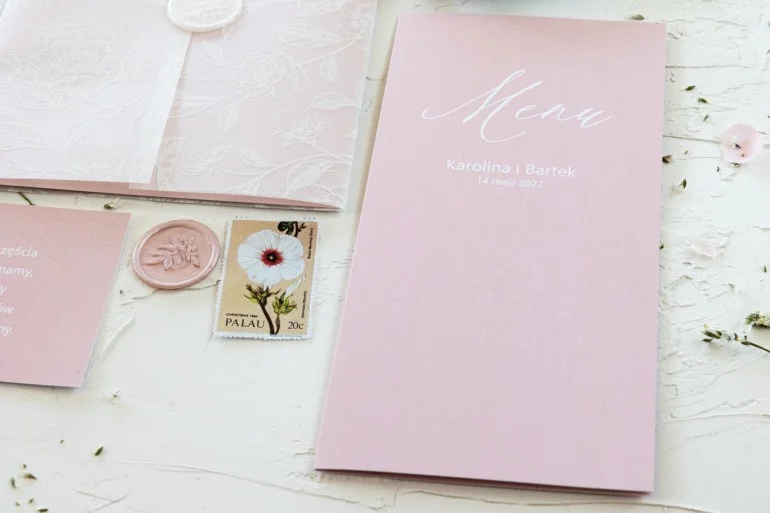
Elegant wedding menu with a delicate pink accent | Nefryt No. 1
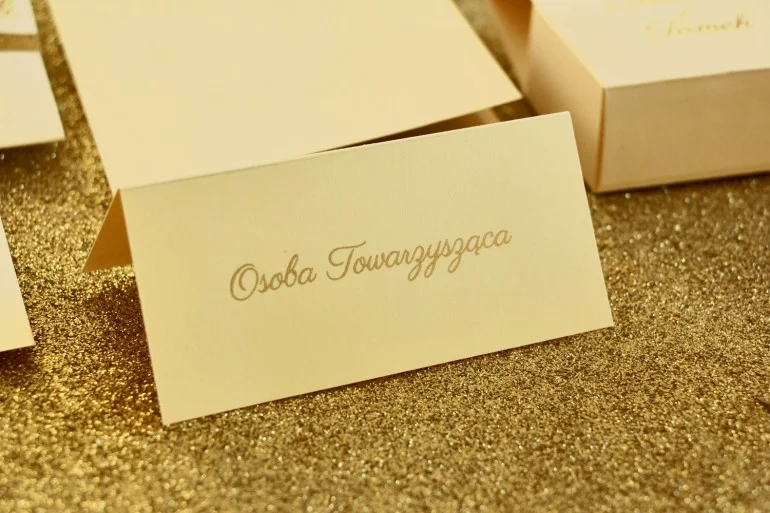
Glamour-style alcohol tags with gold foil | Glamour No. 5
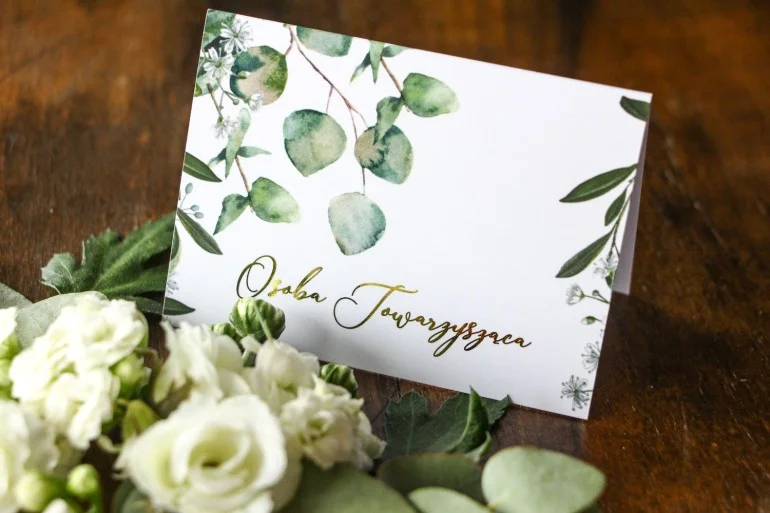
Gold-foiled place cards with eucalyptus and baby's breath | Soreli No. 5
Basic rules for inviting with a plus-one
Who should you invite with a partner?
Table of Contents
According to wedding tradition, you primarily invite adults with a plus-one, meaning guests over the age of 18. However, this is a flexible rule that can be adapted to individual circumstances and your relationship with the guest. In practice, many couples decide to invite even younger guests with a partner if they know they are in a committed relationship or if the budget allows for it.
Special attention should be paid to guests in long-term relationships, regardless of their formal status. Modern wedding etiquette is increasingly moving away from rigid rules that only apply to married couples, recognizing the diversity of relationship forms. In this context, a plus-one invitation becomes a gesture of respect for the guest's life choices, rather than just formal courtesy. It is also worth remembering close family and friends who might feel excluded if they cannot share such an important moment with their partners.
Decision criteria when inviting with a plus-one should consider several key aspects. First, the stability and duration of the guest's relationship – if you know someone is in a long-term relationship, inviting them without their partner might be seen as a faux pas. Second, the age and maturity of the guest – young people often need the support of their partners in formal social situations. Third, practical organizational considerations, such as the size of the venue, the wedding budget, or the number of available seats. We wrote about who not to invite to a wedding in another one of our guides.
Differences between invitations for different guest groups
Invitations for family often differ from those for friends or acquaintances due to the degree of closeness and family obligations. For family members, especially those who are middle-aged or older, an invitation without a partner might be perceived as a serious breach of etiquette. The older generation often places greater importance on formalities and may expect their spouse or long-term partner to be included on the invitation.
Friends and acquaintances can be treated with a bit more flexibility, but still require a thoughtful approach. In this group, it is particularly important to recognize who is in a committed relationship and who is currently single. Inviting some friends with partners and others without can lead to misunderstandings and feelings of unfair treatment. Therefore, it is worth establishing clear criteria and applying them consistently.
Colleagues and distant acquaintances are a category where decisions about plus-ones can be the most flexible. Here, practical considerations often prevail – if someone lives far away and would have to travel to the wedding, an invitation with a partner can be a kind gesture. On the other hand, if the guest list is already very long, you can limit plus-ones for this group, informing them discreetly at the stage of the verbal invitation.
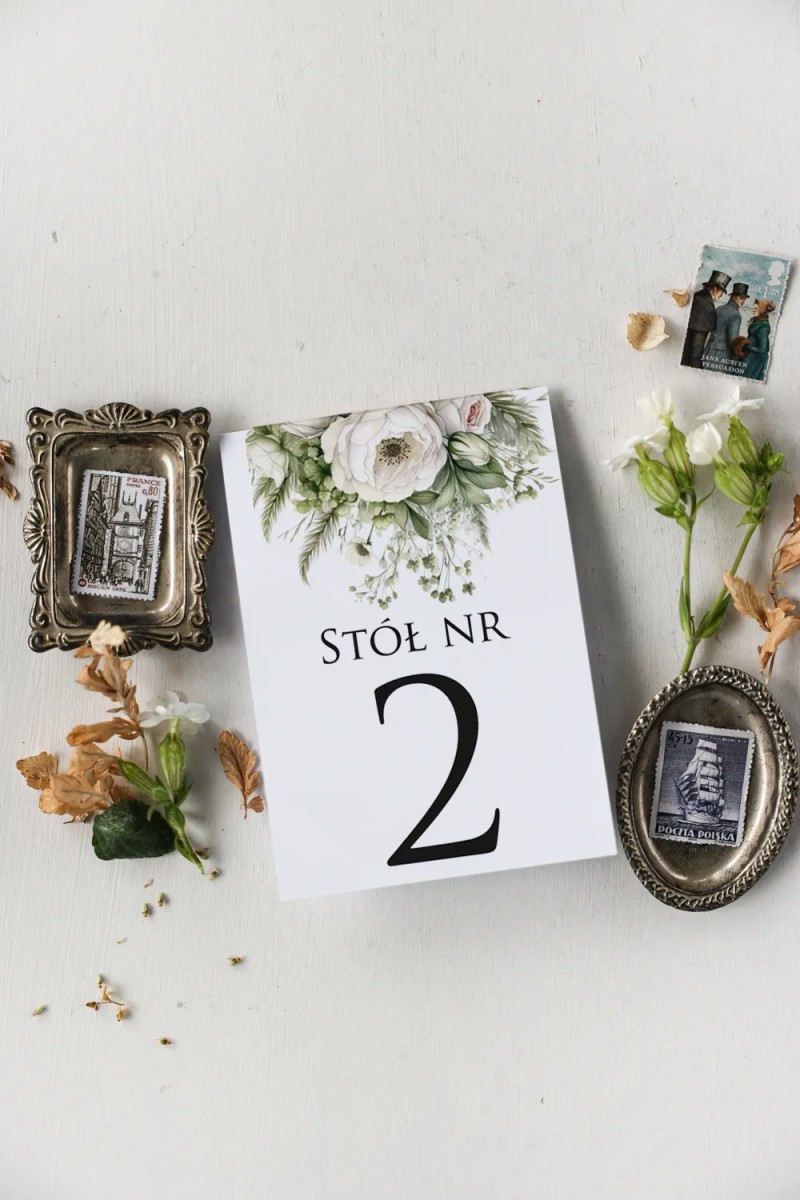
Original table numbers with a peony bouquet | Impresja No. 3
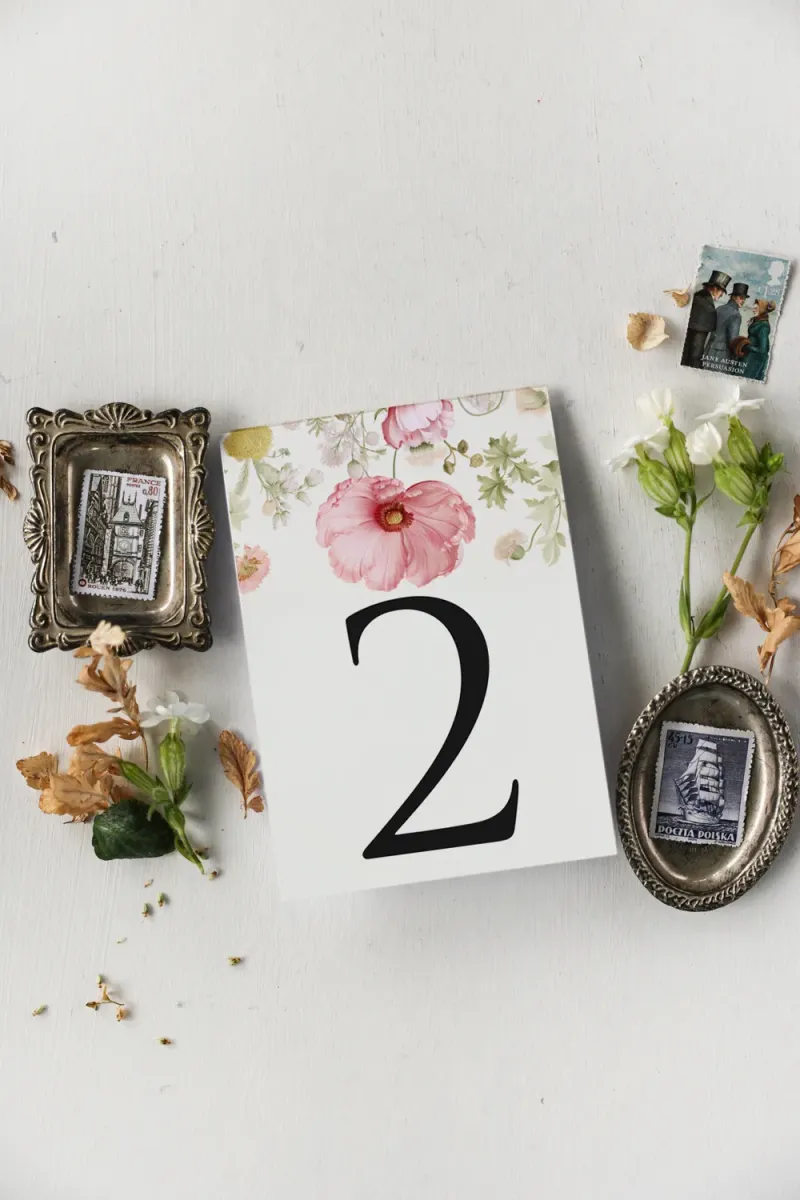
Pastel-colored wedding table numbers | Impresja No. 1
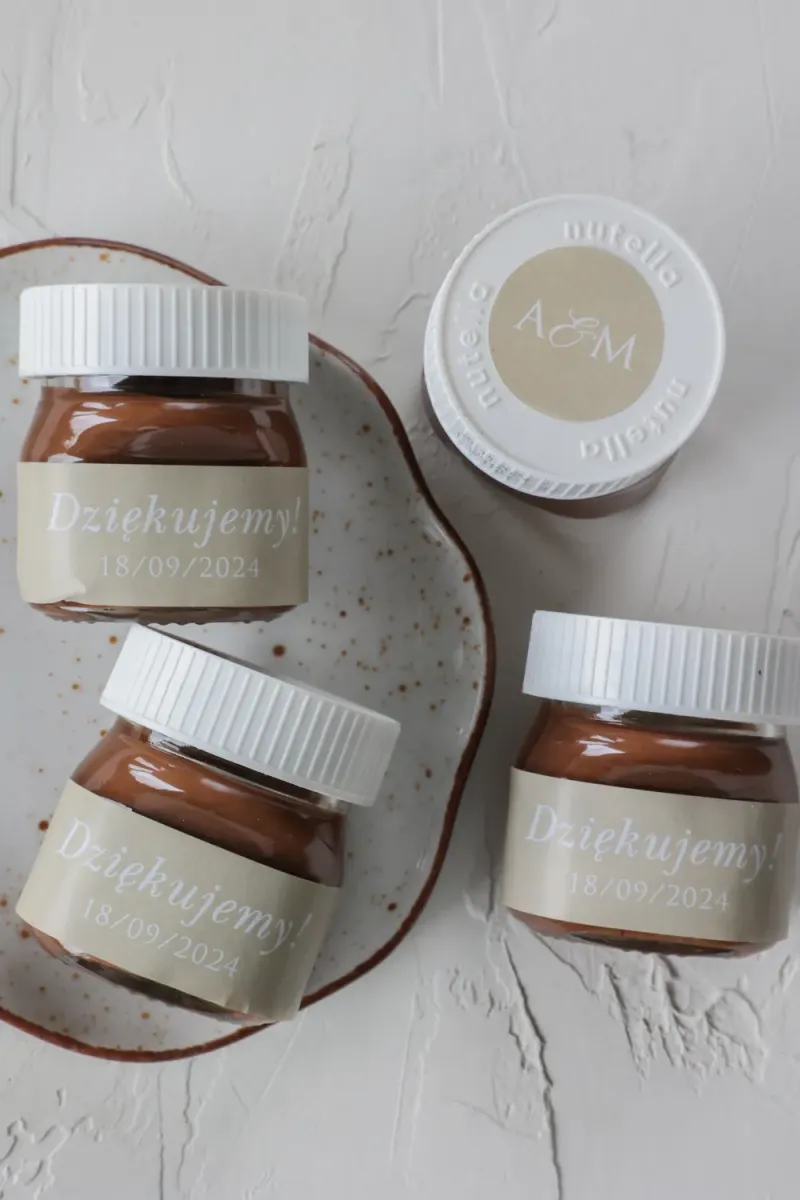
Mini Nutella jars with floral labels | Kraft No. 11
Budget and logistical aspects
Planning a wedding budget while including plus-ones requires special attention and precise calculations. Each additional person means extra costs – from the meal and seat at the table to small wedding favors. Couples must realistically assess their financial capabilities and decide how many guests they can afford to invite with a partner without exceeding their planned budget. You can read more about planning expenses in our article: "How to effectively plan wedding-related expenses".
Managing the wedding space is another key aspect that influences decisions regarding plus-ones. Every venue has a maximum capacity, and guest comfort should be a priority. Predicting the number of plus-ones can be a challenge, especially when guests are unsure if they can bring a partner. Therefore, it is important to set clear rules and communicate them in a timely manner.
Organizational logistics also include practical issues such as preparing extra place cards, planning seating arrangements, or coordinating with catering. Plus-ones may have special dietary needs or other preferences that organizers might not know about in advance. All these aspects should be considered at the planning stage to avoid organizational problems on the wedding day.
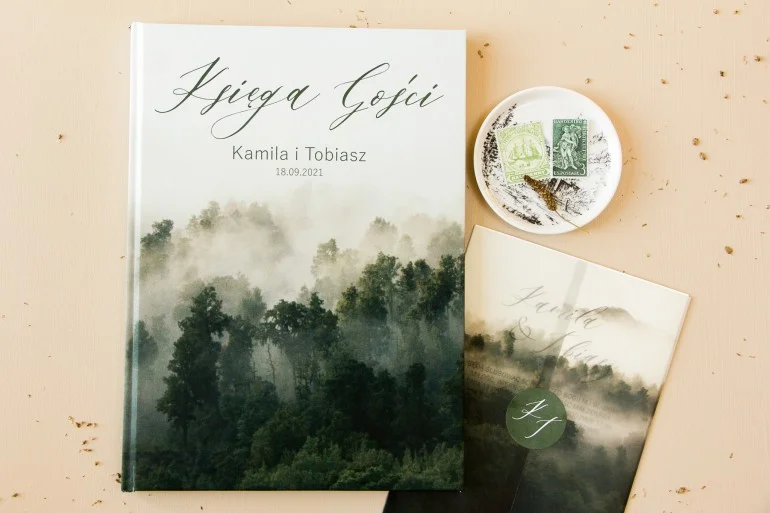
Wedding Guest Book with a forest motif | Opal No. 2
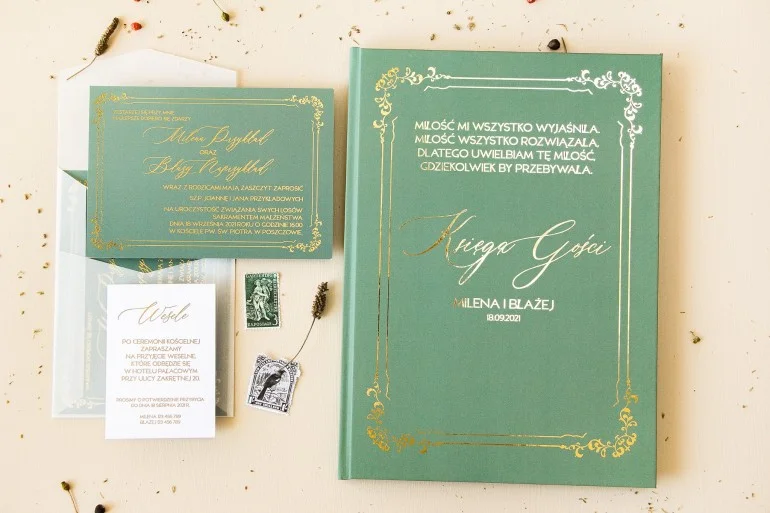
Personalized Guest Book with calligraphic gold lettering | Sand No. 3
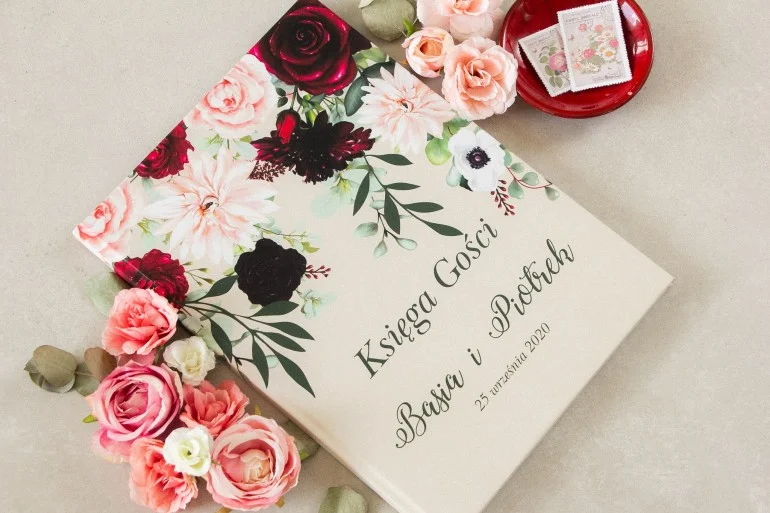
Burgundy Guest Book with anemones and dahlias | Korani No. 4
Correct wording on invitations
Linguistic and spelling rules
Correctly writing the phrase "with a Plus-One" is a matter that often causes doubt among couples. According to Polish language rules and linguists, this phrase should be capitalized. The capital letters in "Plus-One" (Osoba Towarzysząca) express respect for an unknown person and act as a placeholder where a specific name should appear. It is an element of linguistic etiquette that emphasizes the formal nature of the invitation and attention to good manners.
Alternative phrases that can be found on invitations include "along with a Plus-One," "with a guest," or the English "plus one." Each of these terms has its place in different contexts, but in the Polish context, the most elegant form remains the classic "with a Plus-One." It is also important that the chosen phrase is used consistently across all invitations, which demonstrates attention to detail and a professional approach to wedding organization.
Abbreviations on wedding invitations are a topic that requires a cautious approach. Although in everyday communication we might see forms like "plus-one" (os. tow.), in official wedding invitations, it is recommended to use full forms. Abbreviations can seem less elegant and do not convey the gravity of the moment. However, if aesthetic considerations or space limitations on the invitation require shortening, it is best to use the form "with a P.O." (z Ot.), maintaining the capital letter at the beginning.
Examples of elegant wording
Classic phrases on wedding invitations with a plus-one can take various forms, depending on the invitation style and the couple's preferences. An example might be: "Anna Kowalska and Piotr Nowak, together with their Parents, have the honor of inviting Ms. Maria Wiśniewska with a Plus-One to their wedding ceremony." Such wording combines traditional elegance with a clear message about the possibility of bringing a partner. If you are wondering what texts to include on wedding invitations, we have prepared a separate guide for you.
A modern approach to wording invitations allows for slightly less formal but equally elegant phrases. For example: "We are happy to invite you to our wedding and reception. Ms. Anna Kowalska with a Plus-One will be most welcome on this special day." This style is closer to contemporary communication while maintaining the respect and elegance appropriate for such an important occasion.
Personalized invitations provide an opportunity to add a personal touch that can make a guest feel particularly appreciated. Example: "Dear Anna, your presence and the presence of your partner will be a great joy for us during our wedding." This approach works especially well for close friends or family members with whom the couple has a closer relationship.
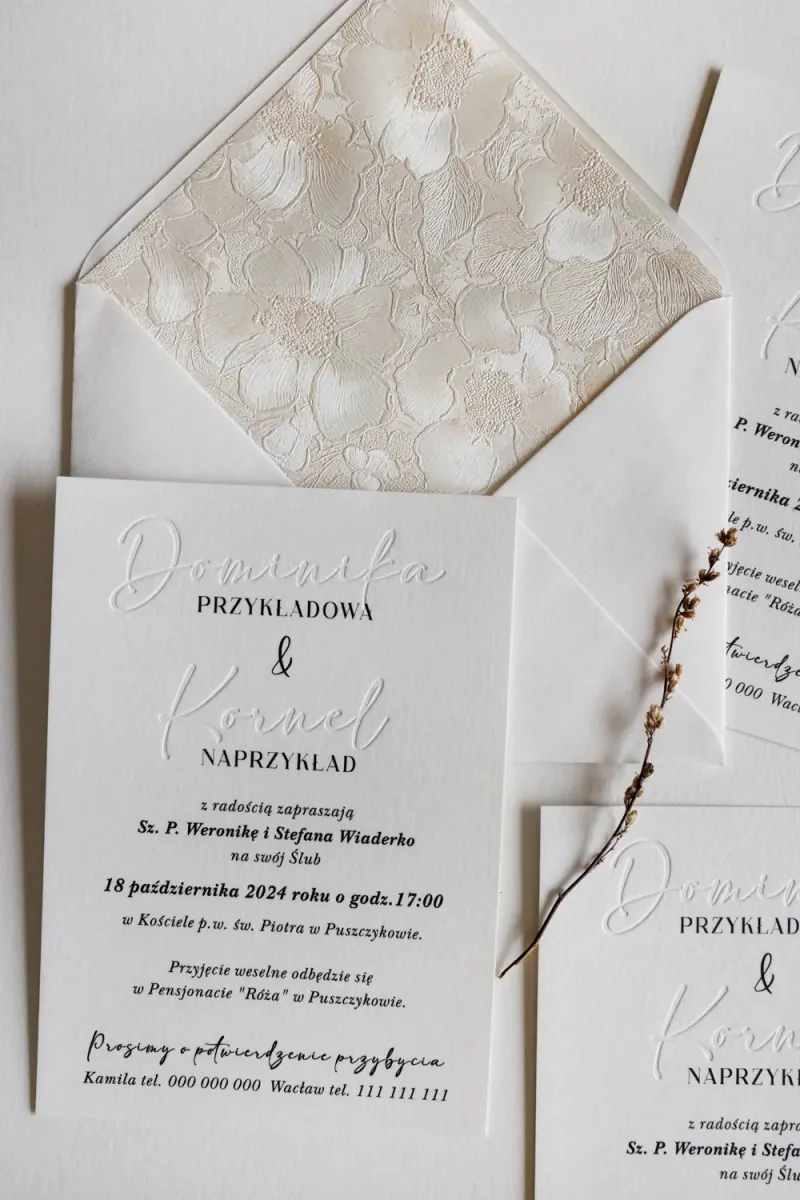
Elegant Wedding Invitations with Embossing | Wedding Invitations | Karmen No. 4
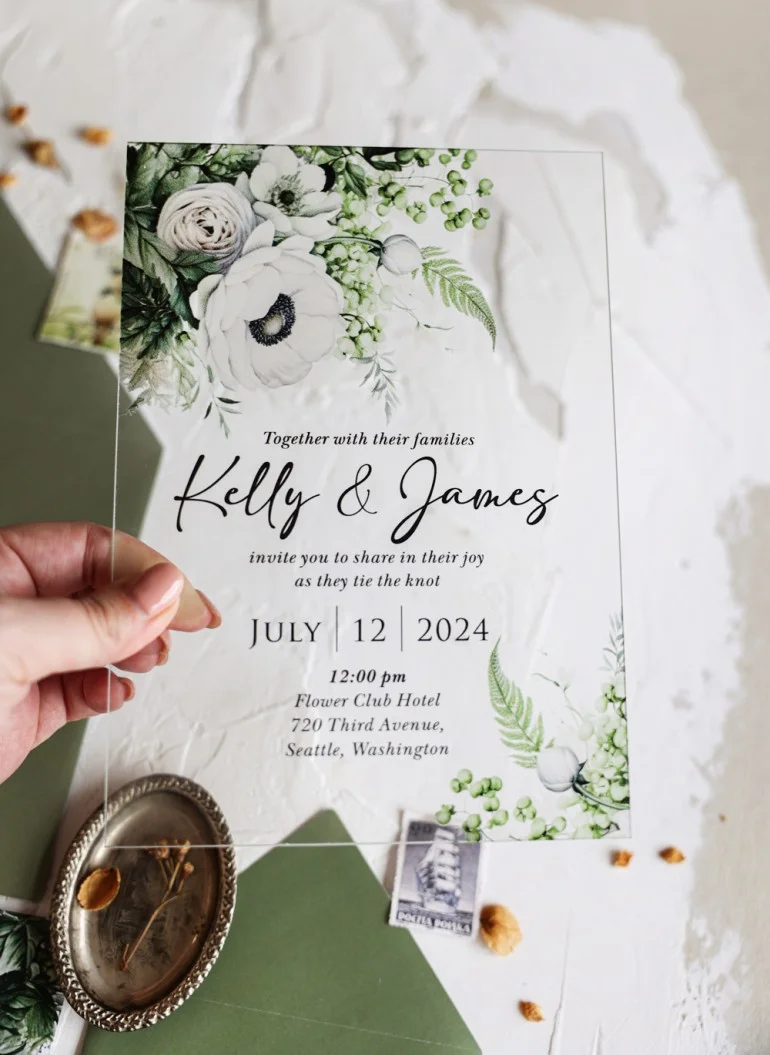
Subtle Glass Wedding Invitations with Floral Motif in Shades of White and Green | Korani No. 15
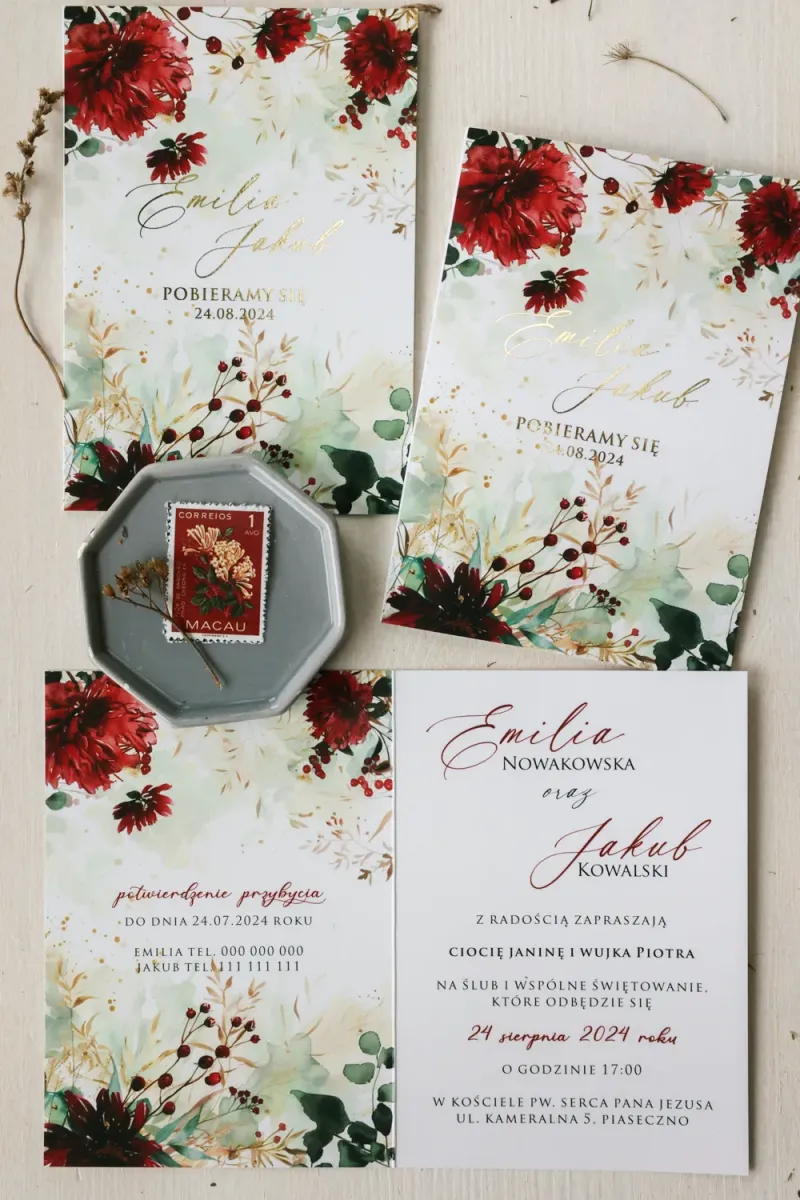
Wedding Invitation with Gold Accent and Red Flowers | Glamour and Boho Wedding Invitations | Ruskus No. 1
Differences between wedding ceremony and reception invitations
Invitations exclusively for the wedding ceremony often do not include plus-ones due to limited space in the church or registry office. In such cases, the wording might be: "We have the honor of inviting Ms. Anna Kowalska to our wedding ceremony." This is a common practice, especially when the ceremony is held in an intimate setting while the reception is planned for a wider circle of guests.
Wedding reception invitations much more frequently include plus-ones because the reception is inherently more social and integrative. Here, the phrase: "We invite Ms. Anna Kowalska with a Plus-One to our wedding reception" is not only appropriate but often expected by guests. A wedding is an occasion to celebrate with loved ones, so the presence of guests' partners is a natural part of that joy.
Invitations for the entire celebration (ceremony and reception) require special attention in wording to clearly define which part of the celebration applies to the plus-one. Example: "We invite Ms. Anna Kowalska to the wedding ceremony and, with a Plus-One, to the wedding reception." Such precise wording eliminates any misunderstandings and allows guests to properly plan their participation in the celebration.
Special situations and exceptions
Invitations for singles
The strategy for inviting single people requires special sensitivity and thought so that no one feels excluded or inferior. For guests who are currently not in a relationship, the decision to offer a plus-one depends on many factors. Some people may have someone they would like to bring to the wedding – it could be a friend, a family member, or someone they are just starting to date. A flexible approach to this issue demonstrates empathy and an understanding of the diversity of guests' life situations.
The psychological aspect of inviting singles cannot be ignored, especially at Polish weddings, where tradition places great importance on relationships and family. A single person might feel uncomfortable at a wedding where most guests arrive in pairs. Offering the option to bring a plus-one, even if they don't currently have a partner, can be a gesture of kindness and concern for the guest's comfort. On the other hand, some singles might prefer to come alone and meet new people during the wedding.
Practical solutions for single guests include various approaches depending on the nature of the wedding and the couple's preferences. One strategy is to invite all singles without a plus-one, which can encourage integration and making new acquaintances. A second option is to offer a "plus-one" to all adult guests, regardless of their relationship status, which eliminates feelings of discrimination. A third possibility is an individual approach for each guest, considering their life situation and preferences.
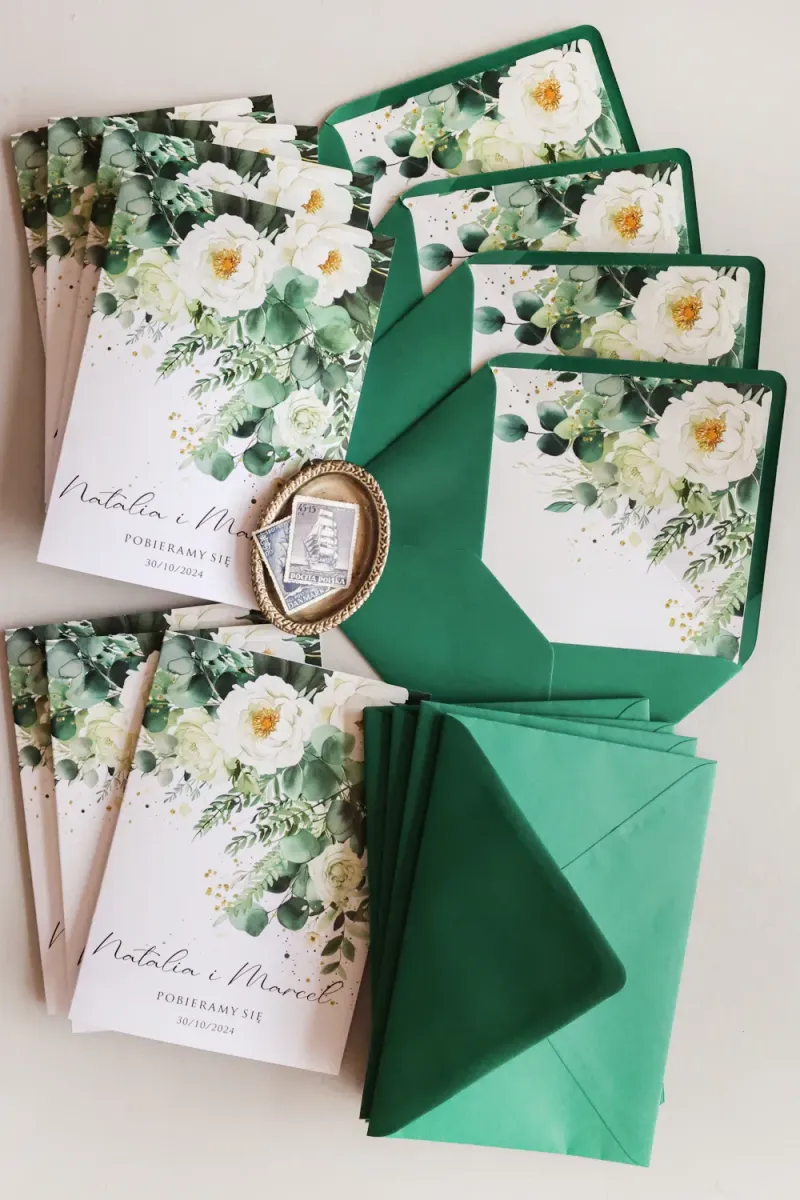
Wedding Invitations with white flowers and green accents | minimalist invitations with personalization | Impresja No. 9
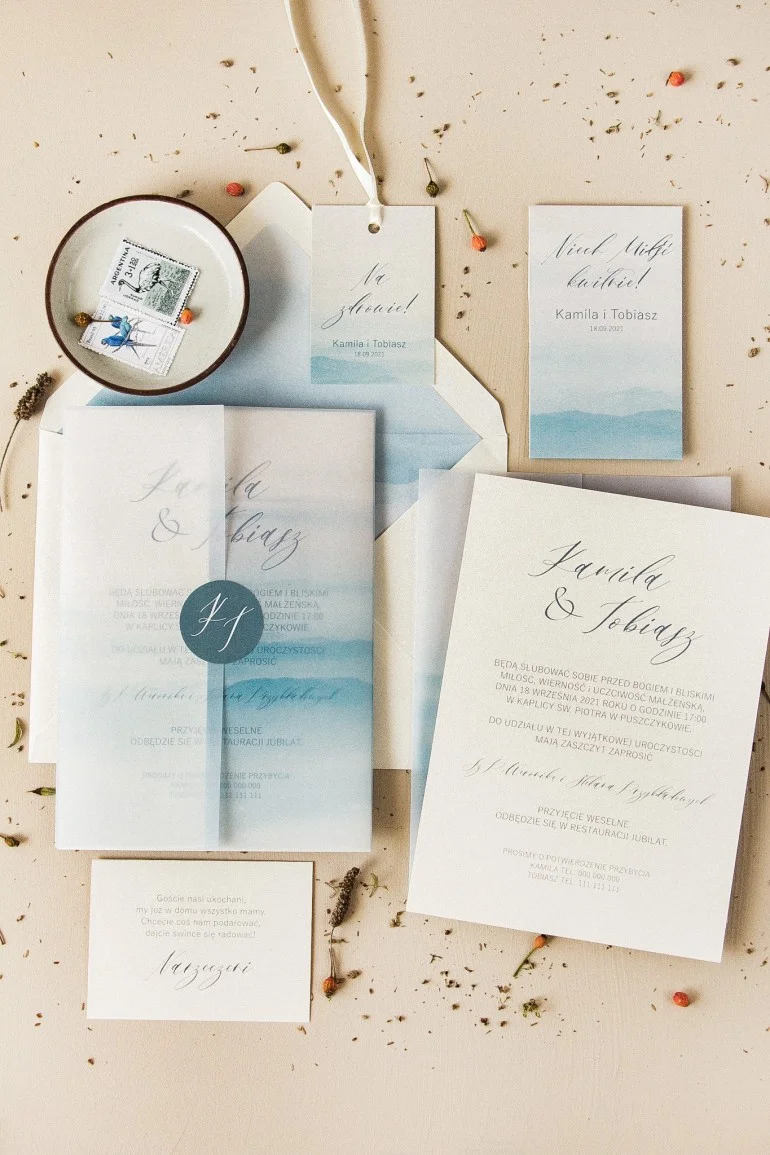
Elegant Wedding Invitations with Vellum | Watercolor and Pearlescent | Opal No. 4
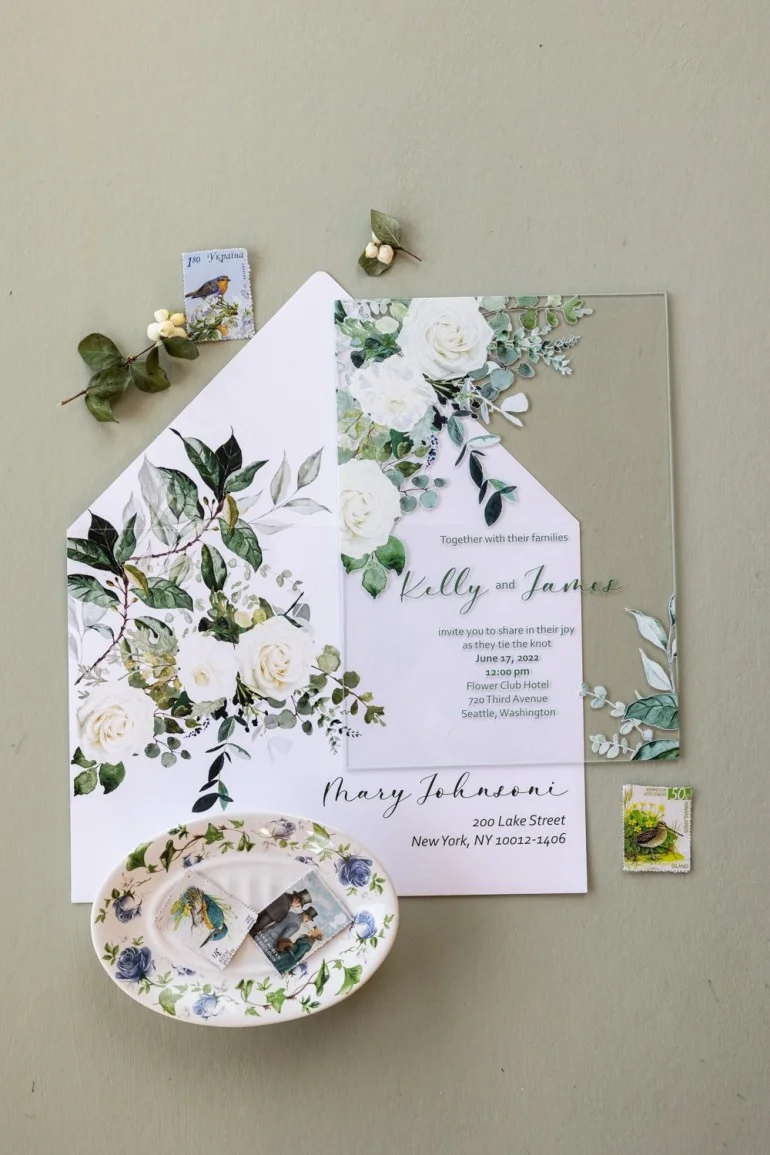
Floral Elegance Glass Wedding Invitations with White Roses and Greenery Envelope | Korani No. 12
Guests with long-term partners
Long-term informal relationships constitute a special category that requires a delicate approach in the context of wedding invitations. Couples who have been together for years but have not entered into a formal marriage should be treated with the same respect as married couples. Ignoring the partner of someone who has been in a relationship for years can be perceived as a serious faux pas and can negatively affect your relationship with that person.
Recognizing the relationship status of guests can be a challenge, especially with distant acquaintances or colleagues. It is worth actively finding out who among the invited guests is in a committed relationship, even if they are not officially married. You can do this discreetly during casual conversations or ask directly when handing out the invitation. Such an approach demonstrates attention and care for the comfort of all guests.
The protocol for inviting informal couples in Polish tradition is evolving along with social changes. Nowadays, it is increasingly accepted to treat long-term partnerships on par with marriages in the context of wedding invitations. This means that the names of both partners should appear on the invitation if they are known, or at least a clear indication that the partner is welcome at the celebration.
Families with children
Inviting families with children is an issue that requires clear communication both on the invitation and in direct contact with guests. Parents need to know if their children are welcome at the wedding so they can plan childcare accordingly or prepare to attend the celebration with their little ones. Unclear communication on this issue can lead to misunderstandings and awkward situations. You can read about whether to choose a wedding with children or an adults-only reception in our article: "Children at the wedding – a play corner or an adults-only reception?".
Age limits for children at weddings vary depending on the couple's preferences and the nature of the celebration. Some weddings are child-friendly at any age, others may limit participation to children over a certain age, e.g., 12 years. Still others may be planned exclusively for adults. The key is to clearly communicate these preferences at the invitation stage so that parents can make an informed decision about attending.
Logistics related to children at a wedding require additional planning and consideration of special needs. Children may require special menus, play areas, appropriate music volume levels, or earlier end times for the official part. All these aspects should be thought through at the planning stage if the couple decides to invite families with children to their wedding.
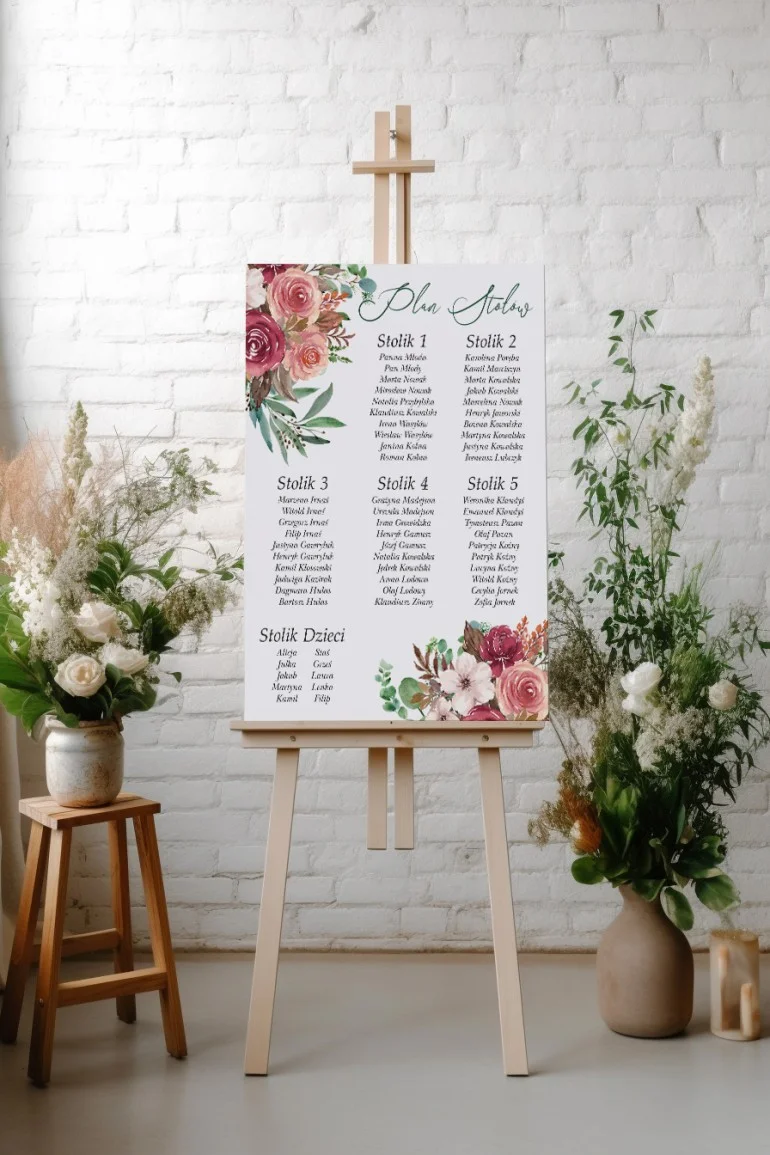
Seating Plan Delize No. 3
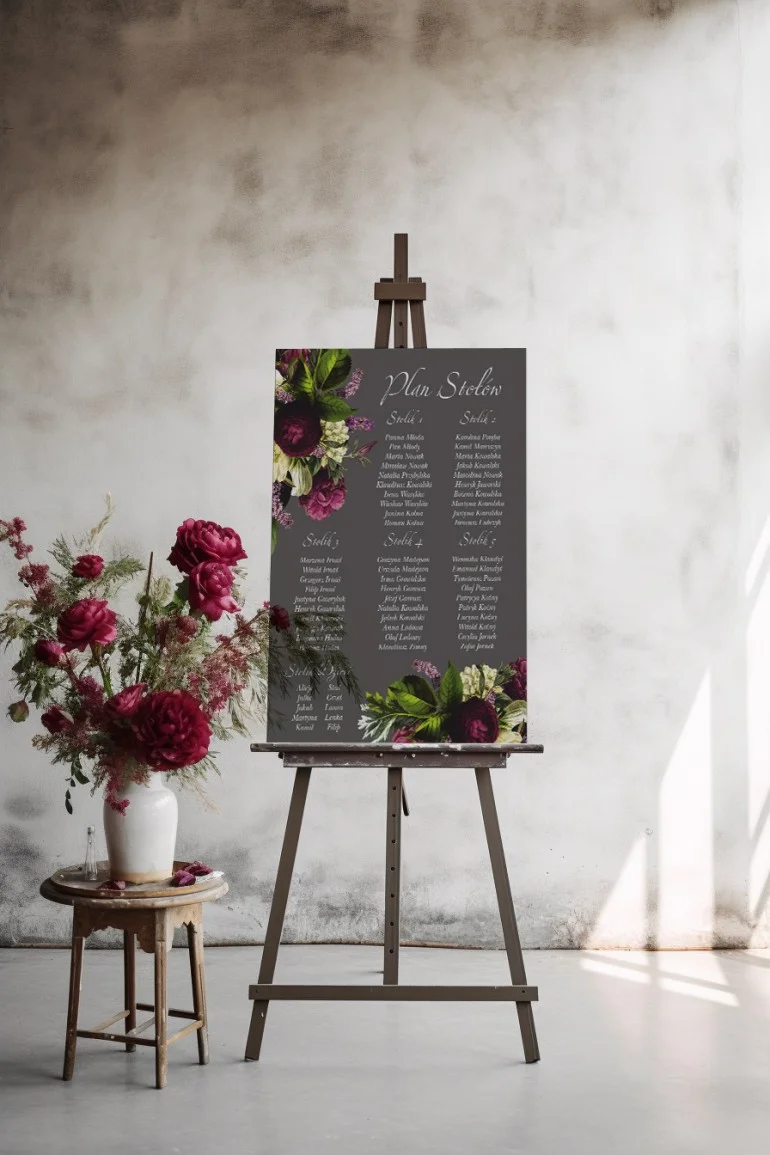
Seating Plan Eteryczne No. 2
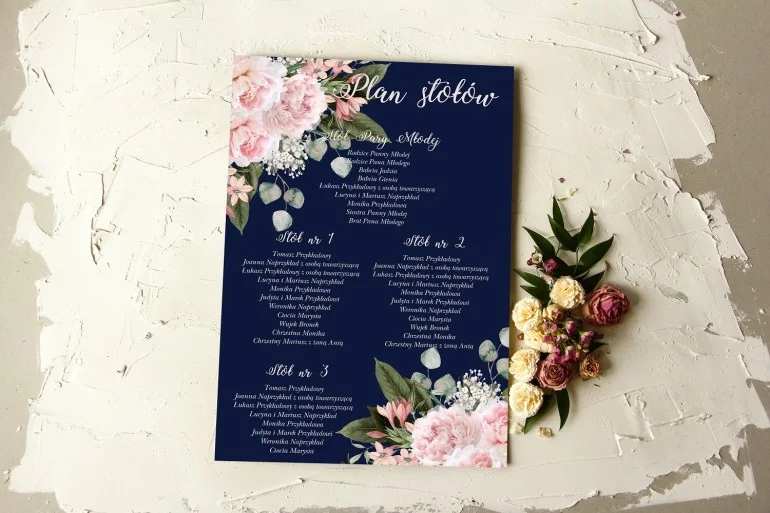
Seating Plan Pastelowe No. 3
Practical tips for place cards
How to describe plus-ones on place cards
Preparing place cards for plus-ones can be a challenge, especially when we don't know the names of all the guests' partners. The ideal situation is when you manage to find out the names of all plus-ones in advance and write the place cards with full names. This personalized approach makes every person feel important and appreciated, regardless of whether they were originally invited or came as a plus-one.
Standard labels on place cards for unknown plus-ones should be elegant and respectful. The most popular solution is the inscription "Plus-One" in capital letters. You can also use more personalized forms, such as "Plus-One of Ms. Anna Kowalska" or "Partner of Mr. Jan Nowak." Such phrases are more personal but still maintain an appropriate level of formality. Learn more about what to write on place cards in our guide.
Creative alternatives to standard labels can add charm and a personal character to the wedding. Some couples decide on more informal phrases, such as "Anna's Friend," "Jan's Partner," or even humorous nicknames if they fit the wedding vibe. It is important, however, that such solutions are consulted with the main guest so as not to create an awkward situation for the plus-one.
Seating etiquette
The rules for seating couples at wedding tables require consideration of various relational and social aspects. The basic rule is to seat couples next to each other, regardless of whether they are married, long-term partners, or people who came together as friends. Separating couples can be perceived as a faux pas and negatively affect the wedding atmosphere. Exceptions may be very formal receptions where married couples are traditionally separated, but such a practice is becoming increasingly rare at modern Polish weddings.
Integrating guests with plus-ones requires a thoughtful approach to table composition. Plus-ones who may not know other guests should be seated in the company of open and communicative people who will help them feel comfortable. A good solution is to place people of similar age or with similar interests at the same table, which can encourage conversation and integration. You will find practical tips in the article: "How to create the perfect seating plan?".
Special cases in seating may include situations where the plus-one does not speak Polish, has special dietary or health needs, or for other reasons requires special attention. In such cases, it is worth considering seating them near the hosts or other guests who can help with communication or provide appropriate care. These types of details show care for all wedding participants and contribute to the comfort of every guest.
Communication with guests before the wedding
The process of collecting information about plus-ones should begin well in advance, preferably at the moment of handing out invitations. It is worth asking guests directly if they will be coming with a partner and if you can find out their name for the place cards. Such an approach is practical and at the same time shows attention to detail and the comfort of all participants in the celebration.
Timely arrangements regarding the final number of guests, including plus-ones, are key to the smooth organization of the wedding. It is worth setting a specific deadline by which guests should confirm their attendance along with information about any partner. This deadline should be early enough to allow for final arrangements with the restaurant, preparation of place cards, and planning the seating chart.
Managing last-minute changes in the composition of plus-ones requires flexibility and good organization. You should be prepared for situations where someone cancels bringing a partner or, conversely, wants to bring someone at the last minute. It is worth having a backup plan for such situations, including extra place cards, flexible seating at tables, and communication with restaurant staff about possible changes in the number of guests.
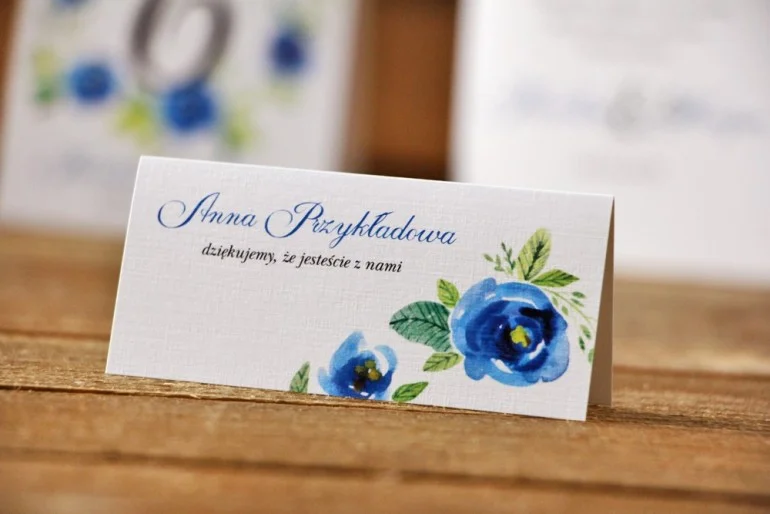
Place cards on linen-textured paper with roses in blue tones | Akwarele No. 10
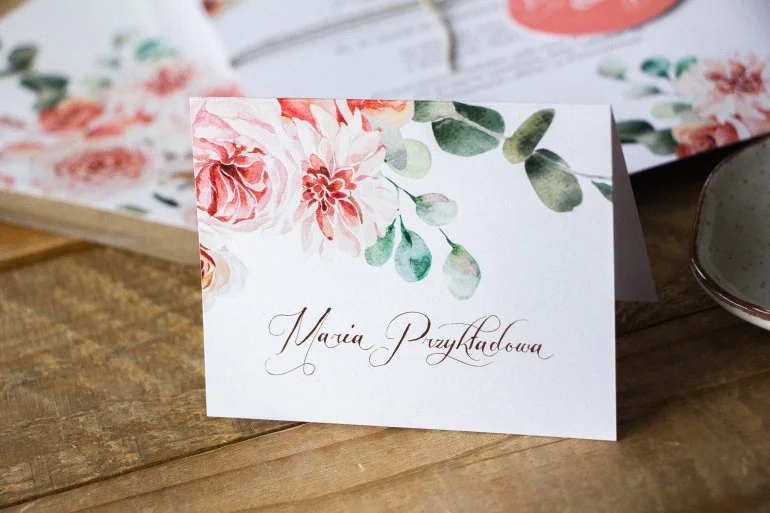
Place cards with a pink bouquet composition | Indygo No. 7
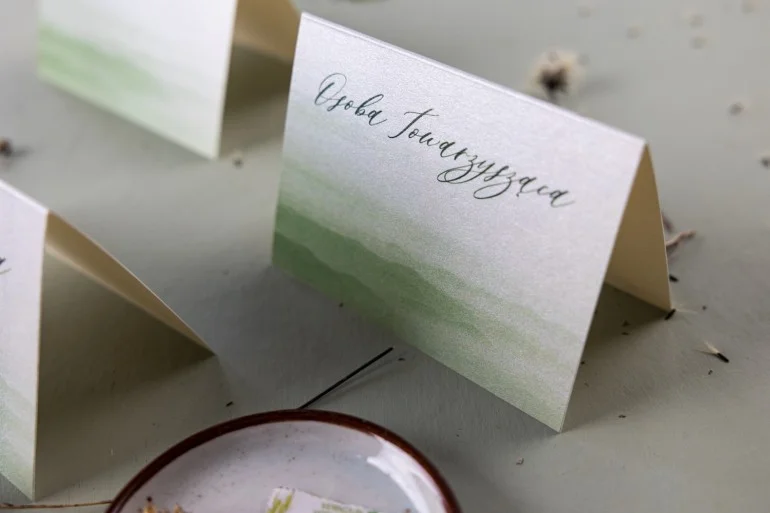
Wedding Place Cards on pearlescent cream paper with green decorations | Opal No. 11
Responding to requests for extra invitations
How to respond to requests to bring someone not on the list
Diplomatic responses to guest requests to bring additional people require tact and clear communication. The first step is to understand the guest's situation – it could be a new partner we didn't know about, a family member who can unexpectedly attend, or simply a desire to use the option of bringing a plus-one if it wasn't originally an option on the invitation. The key is to remain calm and kind in your communication, even if the request cannot be fulfilled.
Setting boundaries is essential for maintaining control over wedding organization and the budget. The couple has every right to define the guest list and should not feel obligated to accept all requests for additional invitations. You can politely explain the limitations related to venue capacity, the budget, or arrangements already finalized with the restaurant. It is important that such refusals are phrased in a way that does not offend the guest.
Examples of responses to various situations can help couples deal with difficult conversations. For example: "Thank you very much for understanding, but unfortunately, we have already finalized the guest list and cannot add more people due to venue capacity limitations" or "We understand your situation, but due to the intimate nature of the wedding, we could only invite a limited number of people." Such responses are honest but also respect the guest's feelings.
Flexibility vs. consistency
Balancing flexibility with consistency is one of the most difficult parts of managing a wedding guest list. On one hand, the couple wants to be fair to all guests and not favor some at the expense of others. On the other hand, life is unpredictable, and sometimes situations arise that were not previously foreseen. The key is to establish clear rules and apply them consistently, but with the possibility of exceptions in particularly justified cases.
Criteria for making exceptions should be thought through and consistent with the couple's values. It could be the degree of closeness with the guest, special personal circumstances (e.g., a death in the family, illness), or practical considerations (e.g., a guest from far away who has no other way to travel). It is important that such exceptions are made discreetly and do not cause feelings of unfairness among other guests.
Communicating decisions requires special caution so as not to offend guests and cause conflict. If the couple decides to refuse, they should be prepared for various reactions – from understanding to disappointment or even anger. Sometimes such a refusal can affect relationships with the guest, but that is a risk the couple must be willing to take to maintain control over their wedding.
International and cultural aspects
Differences in invitation traditions
Polish traditions versus international customs in the context of plus-one invitations show interesting cultural differences. In Polish tradition, great emphasis is placed on family and intergenerational relationships, which means that invitations often include a wide circle of relatives along with their partners. Polish weddings tend to be large family events where the presence of guests' partners is often treated as obvious, especially in the case of married couples and long-term relationships.
Western European and American traditions often place greater emphasis on budget control and limiting the number of guests, which can mean a more selective approach to plus-ones. In these cultures, it is common to invite a "plus one" only for specific categories of guests, such as married couples or those in long-term relationships, while singles may be invited without a partner. Such an approach is more practical but may be perceived as less hospitable by Polish guests.
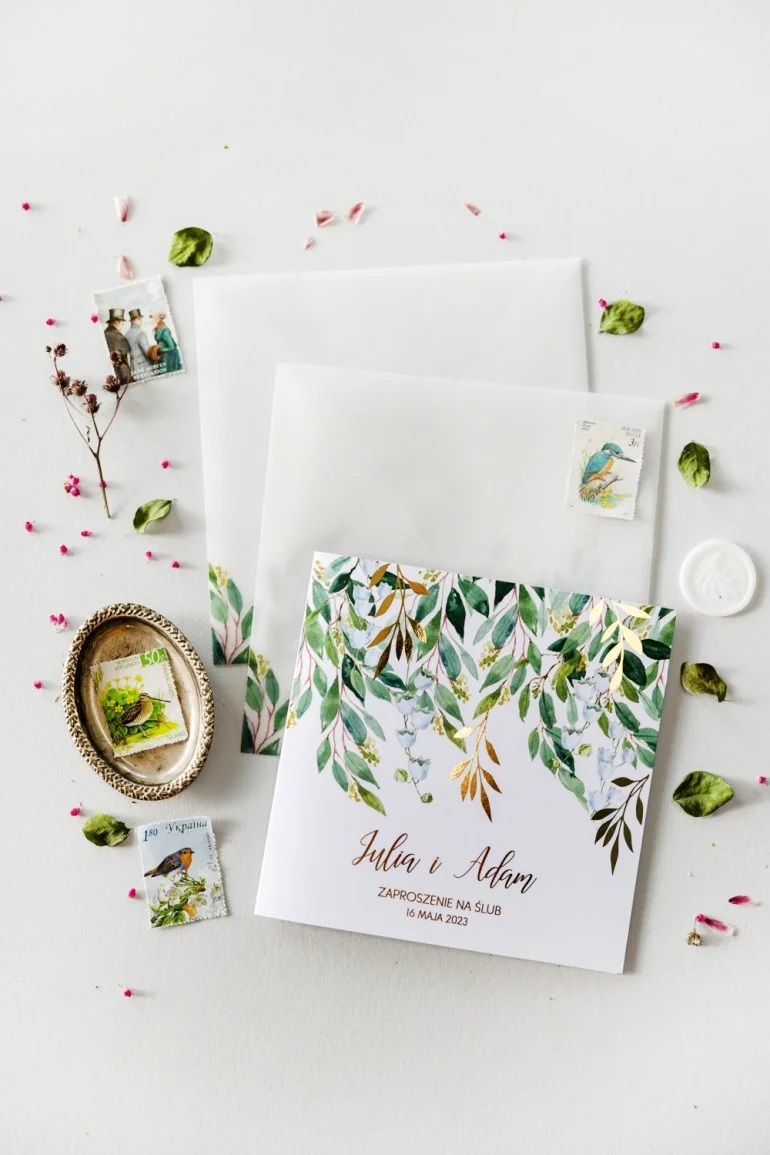
Wedding invitations with green leaves motif, gold accents, classic | Gold-foiled wedding invitations | Rubin No. 4
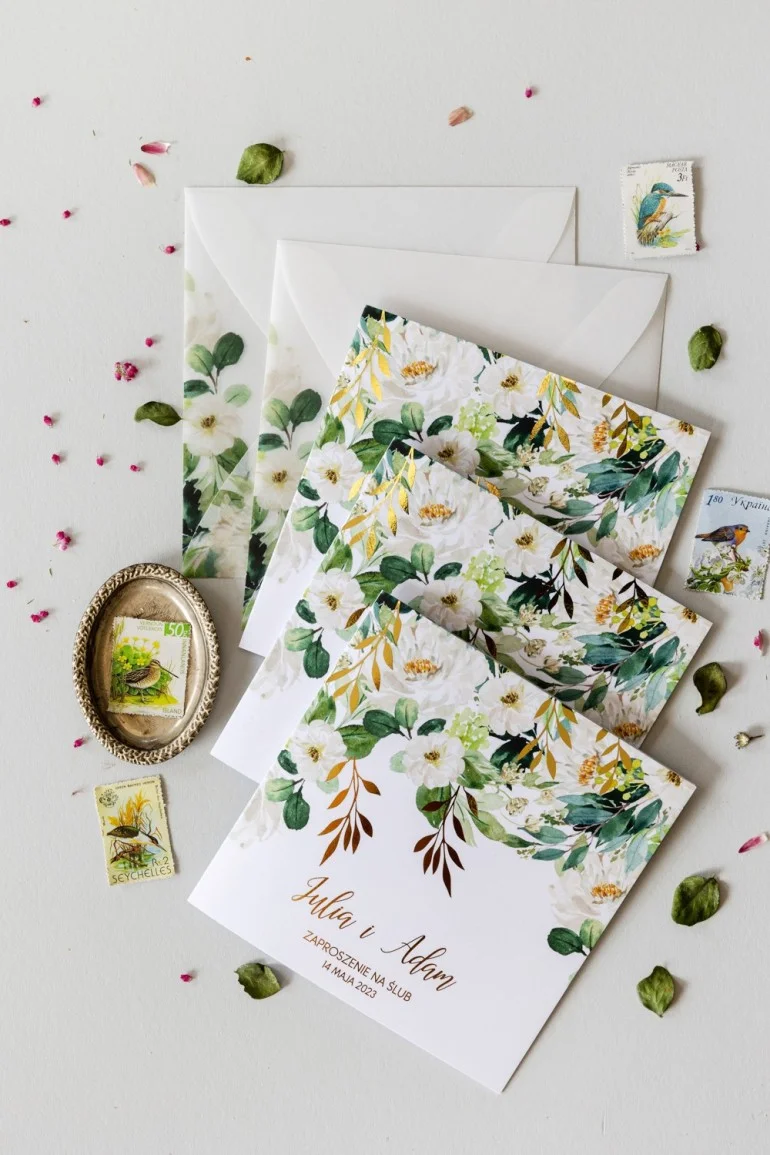
Stylish Wedding Invitations with Gold Accents, Watercolor Flowers | Exclusive Wedding Invitations | Rubin No. 1
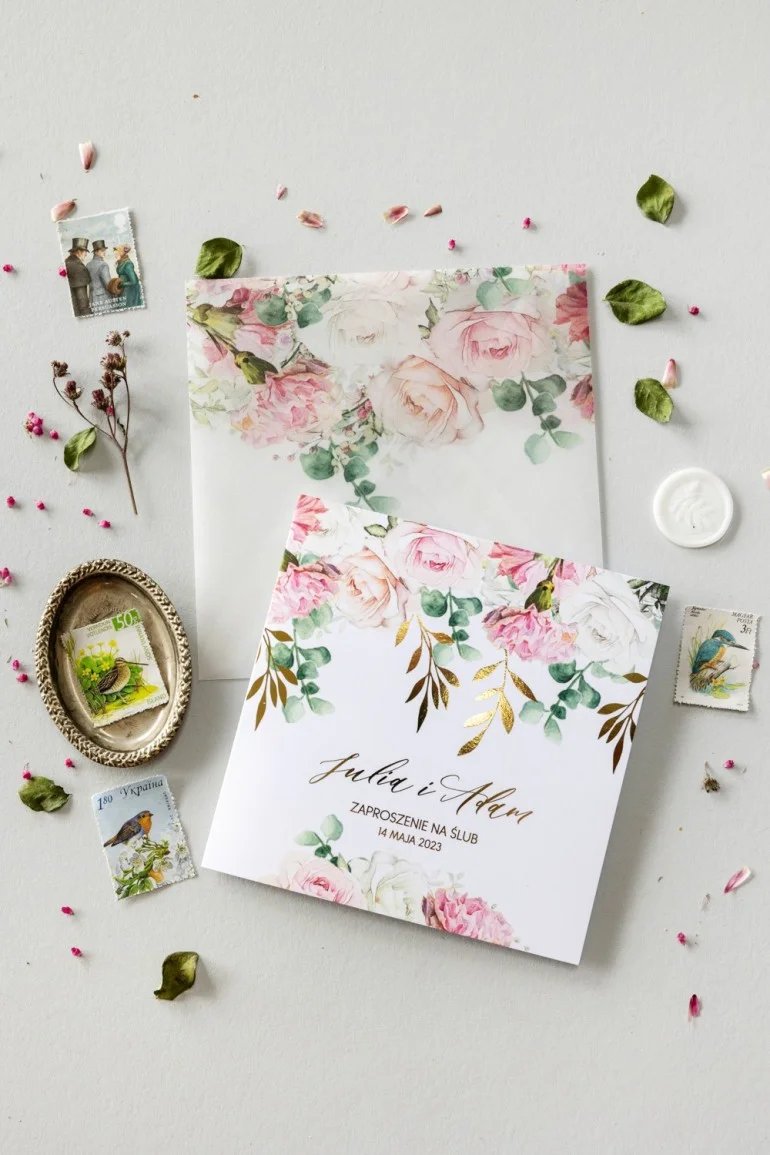
Wedding invitations with pink roses and gold foil, transparent envelope | glamour style wedding invitations | Rubin No. 9
Adaptation to modern realities
The evolution of wedding etiquette rules in Poland reflects broader social and cultural changes taking place in the country. Modern Polish couples are increasingly adapting international trends while trying to preserve traditional family values. This means a more flexible approach to various forms of relationships, greater acceptance of partnerships, and less emphasis on formal marriage as the only form of relationship worthy of recognition.
The influence of social media on wedding organization is also changing the approach to plus-ones. Instagram-worthy weddings often require carefully planned aesthetics, which can influence decisions regarding the number of guests and their seating. On the other hand, social media allows couples to more easily gather information about the relationship status of their guests and better plan invitations with plus-ones.
Urban versus rural approaches to wedding organization in Poland still show significant differences. In rural areas, the traditional approach to family and hospitality often means more inclusive invitations, where all adult family members are welcome. In urban environments, where the costs of organizing a wedding are higher, couples may be more selective in their invitations, which requires a more thoughtful approach to communication with guests.
Summary
Organizing a wedding with plus-ones is a complex process that requires knowledge of etiquette, empathy, and communication skills. Wedding invitations with a plus-one should be thoughtful and clearly worded so that all guests feel welcome and know what to expect. The key to success is early planning, open communication with guests, and a willingness to be flexible in different situations, always while maintaining respect for all participants of this unique celebration.
Remembering that every wedding is unique, couples should adapt the rules regarding plus-ones to their style, budget, and vision for their ideal day. Regardless of the solutions chosen, the most important thing is that decisions are made with respect for the guests and consideration of the long-term consequences for interpersonal relationships. A good way to show gratitude to everyone who contributed to a successful celebration will be appropriately chosen wedding favors, regardless of whether they came alone or with a partner.
Recommended articles
- How to make a guest list? A guide for engaged couples
- When to send wedding invitations? A guide for engaged couples
- What are place cards and why should you have them at your wedding?
- What does RSVP mean on invitations?
- Is it appropriate to invite guests only to the ceremony?
- Addressing wedding invitations: The key to success