Wedding Guest Transport & Accommodation 2026: What to Book & What to Skip

Planning a wedding is one of the biggest logistical challenges a couple will ever face. Amidst dozens of decisions—from choosing the venue and menu to selecting the music, flowers, and wedding invitations—the topic of guest transport and accommodation always raises a lot of questions. Should you hire a coach? Who pays for the hotel? What if your guests are travelling from all over the country? Or is it enough to just print a local taxi number on the details card and hope for the best?
Over the last decade of working in the wedding industry, I’ve witnessed hundreds of weddings—from those executed flawlessly to those where the logistics fell apart halfway through the day. Let me be completely honest with you: transport and accommodation are the elements that can truly make or break the atmosphere of your entire celebration. A well-cared-for guest feels relaxed, doesn't worry about how they'll get home, and remembers your day as truly spectacular. A neglected guest will mostly remember the stress of trying to find a ride at 2 AM.
In this article, I won't bore you with vague advice. I’m going to share actionable, experience-based tips on what is actually worth organizing in 2026, and what you can confidently skip. Let’s start with the basics.

Classic Gold Foil Wedding Invitations with Greenery Motif | Gold Foiled Wedding Invitations | Rubin No. 4

Stylish Wedding Invitations with Gold Accents and Watercolour Flowers | Exclusive Wedding Invitations | Rubin No. 1

Wedding Invitations with Pink Roses, Gold Foil, and Vellum Envelope | Glamour Style Wedding Invitations | Rubin No. 9
1. Why Are Transport and Accommodation Crucial for a Successful Wedding?
A Well-Cared-For Guest is a Guest Who Celebrates
Every couple dreams of their guests partying until dawn, dancing the night away, and remembering the wedding as one of the best events they've ever attended. However, behind the scenes of this dream lies a very simple, yet fundamental issue: a guest who is worried about how they will get home simply cannot fully let loose. This isn't just a guess—it's a fact. Someone who knows they have an 80-kilometre drive ahead of them, or who has to carefully monitor their wine intake, is mentally checked out. They might be sitting at the table, laughing at jokes, and clapping during the first dance, but a portion of their attention is tied up in the logistics of their return journey. That is why providing wedding transport—even just a basic shuttle—is not a luxury for the rich, but a genuine display of care for your loved ones.
Road safety is a value that cannot be overstated. Weddings usually run late into the night and often finish in the early hours of the morning. Asking your guests to safely navigate their way home after hours of celebrating is, at best, unwise. Statistics speak for themselves—road accidents following family celebrations do happen, and no couple wants their big day to be associated with a tragedy. Organized transport completely eliminates this risk. Your guests can celebrate guilt-free, and you can focus on soaking in the joy of your wedding instead of stressing over whether everyone made it back to their beds safely.
It’s also worth looking at transport and accommodation through the lens of what the wedding industry calls the guest experience. Wedding trends for 2026 clearly show that couples are moving away from treating their wedding as a checklist of traditional obligations, and are instead focusing on creating a holistic, immersive experience for their attendees. Guests who don't have to stress over directions, booking a room, or finding a late-night ride are guests who fully immerse themselves in the magic of your day. And that kind of wedding is remembered for decades. It’s an investment that pays off in the form of warm memories and glowing reviews from the people closest to you.
What Does Wedding Etiquette Say About Accommodation?
The question of who pays for guest accommodation can be a source of tension and misunderstanding at almost any wedding. Traditional etiquette is fairly straightforward on this matter: it is the couple's (or their families') responsibility to ensure guests have a place to sleep—especially those travelling from afar or those facing a multi-hour drive in the middle of the night. In the past, this financial burden fell mostly on the bride's parents, but today, couples are increasingly taking on this responsibility themselves. And rightly so—they know exactly who they are inviting and understand the logistical realities of their chosen venue.

Single-Card Gold Foil Wedding Invitations | Simple No. 2

Extravagant Glass Wedding Invitations | Winter Glass Accents | Cotton & Pine | Korani No. 8
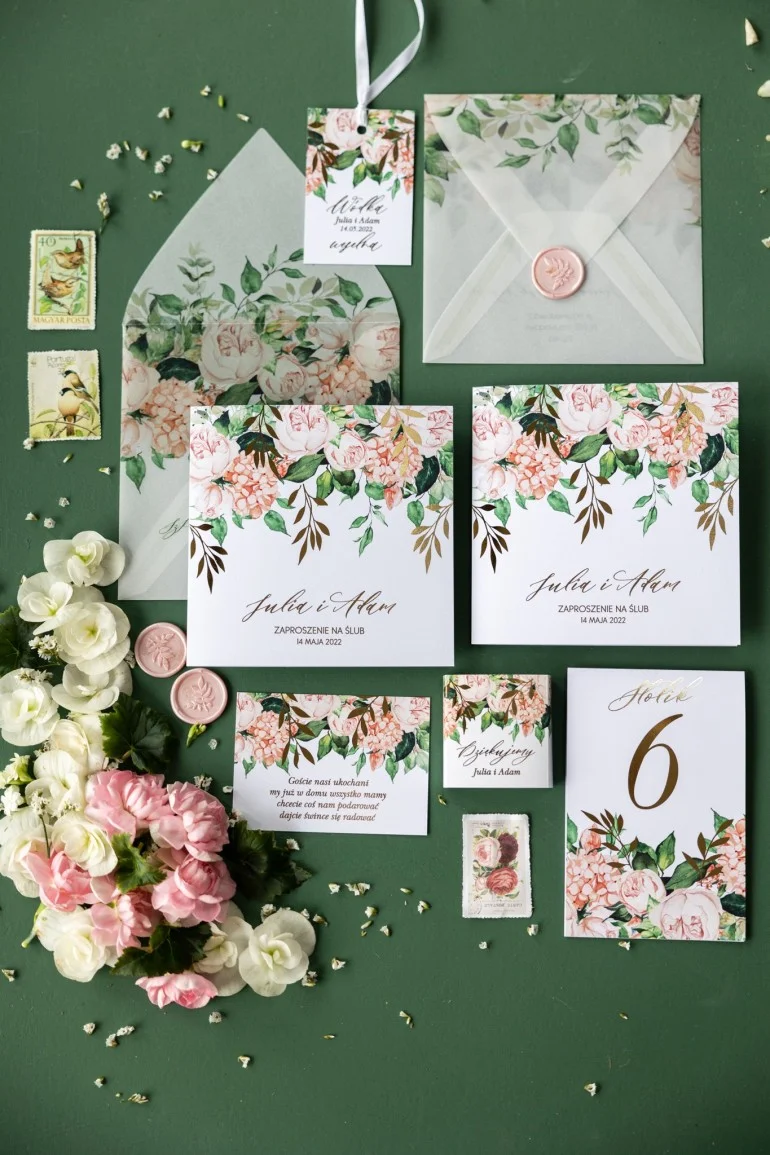
Unique Gold Foil Wedding Invitations with Pink Peonies and Vellum Envelope | Non-Traditional Wedding Invites | Rubin No. 10
At the same time, life is life, and wedding budgets have their limits. According to industry reports, an average wedding in Poland costs upwards of 80,000 to 120,000 PLN, so adding the cost of fully covering hotel rooms for dozens of people might simply be impossible. This is where a clever compromise comes in, one that modern couples are increasingly adopting: hotel room blocks. This involves the couple negotiating a set number of rooms with a nearby hotel under a specific booking code (e.g., "Anna and Tom's Wedding"). Guests then book and pay for their own stay, but they benefit from a discounted group rate. This guarantees guests a place to stay near the venue, shows that the couple has been thoughtful and proactive, and keeps the wedding budget intact.
It’s also worth noting that traditional etiquette rules aren't rigid and should be adapted to the realities of your specific wedding. If your celebration is in the heart of a major city with endless hotel options and great public transport, simply providing a list of recommended hotels across different price points is perfectly fine. But if your venue is a barn in the middle of nowhere, 40 kilometres from the nearest town, it is your moral and organizational duty to provide at least some accommodation options—ideally on-site or in the immediate vicinity.
When Do Transport and Accommodation Make or Break a Wedding?
There are situations where organizing transport and accommodation is absolutely essential, and neglecting them can literally ruin the vibe of your big day. The first scenario is an outdoor wedding or a venue located far from the city centre—like a manor house, an old castle, a rustic farm, or a restaurant deep in the woods. These locations are breathtaking and provide an unforgettable backdrop for photos, but they come with a serious logistical hurdle: how do you get 150 guests from various locations to a place with zero public transport links? Without organized shuttles, you risk late arrivals, lost drivers, and a stressful atmosphere right from the start of the ceremony.
The second situation where organization is non-negotiable is when your guest list includes elderly relatives or families with young children. A grandparent with limited mobility, or who simply isn't comfortable driving long distances, deserves special care. Similarly, parents with infants need absolute certainty that they, their baby, and their car seat can safely get from the venue back to their room. This is the kind of detail that makes your wedding feel thoughtfully planned down to the last minute.
Finally, transport becomes critical when a significant portion of your guests are travelling from afar—from other cities, regions, or even abroad. With a large diaspora, many couples have loved ones flying in from the UK, Germany, Ireland, or the US specifically for the wedding. For these guests, a lack of information regarding nearby accommodation is incredibly stressful. They might end up booking a hotel miles away, which then creates a whole new transport nightmare. Properly planning and communicating these details well in advance, ideally right when you send out your wedding invitations, nips these problems in the bud.
2. Hiring a Coach or Minibus – When Is It Worth It?
The Wedding Coach: Dreams vs. Reality
Hiring a coach or a minibus is a solution almost every couple considers when planning a wedding outside the city. And rightly so—a wedding coach is one of the most practical transport solutions available, especially when your guest list exceeds 60 people and a large chunk of them are heading back to the same location. There is nothing quite as satisfying in wedding planning as knowing your guests arrived together, partied together, and safely returned to their hotel or home together. It’s not just about convenience; it’s about the atmosphere. The shared bus ride back is often when guests bond over the day's highlights and share a few final laughs.
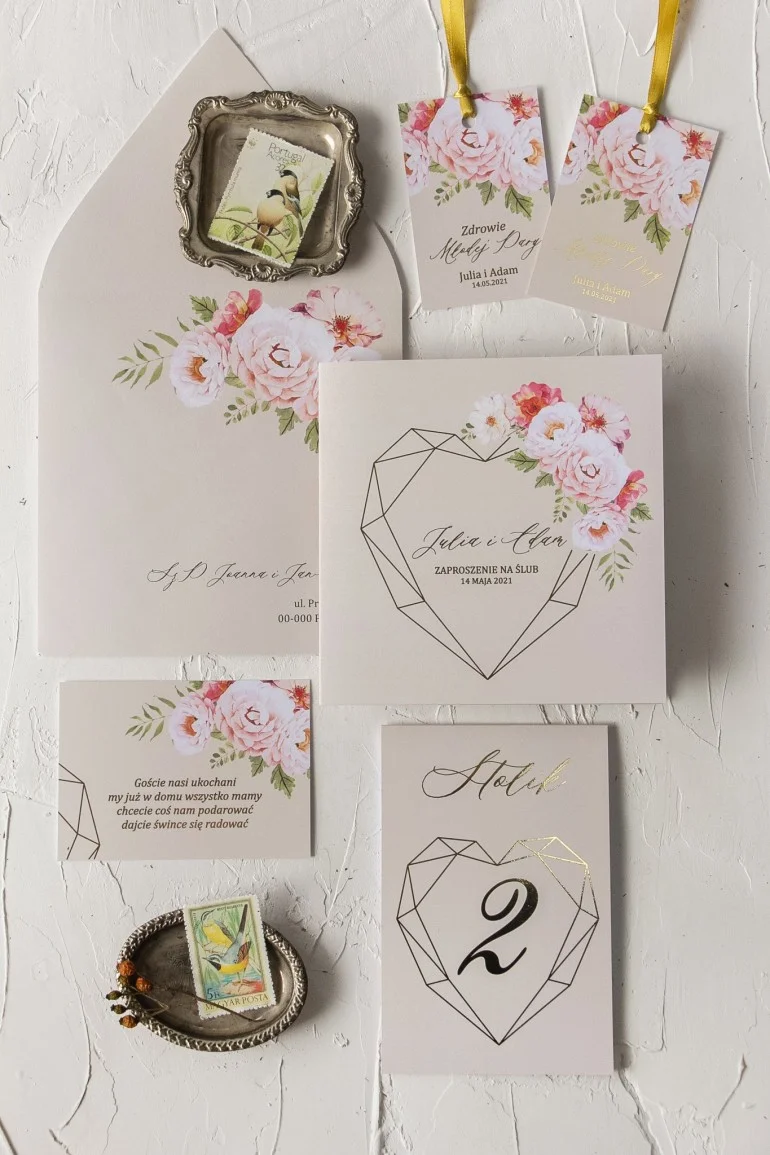
Wedding Invitations with Gold Heart and Floral Motif | Modern and Stylish | Szafirowe No. 8

Elegant Blue Wedding Invitations with Pocket Fold and Personalisation | Kraft No. 7

Sunflower Wedding Invitations with Gold Foil | Modern and Original | Rubin No. 7
However, before you lock a coach into your wedding budget, you need to understand the real costs of hiring one. In 2026, the cost of hiring a standard 40–50 seater coach for a day ranges from 1,500 to 3,000 PLN, while premium vehicles or longer routes can push the price up to 5,000 PLN. If you only need a smaller vehicle, like an 8–20 seater minibus, prices start at around 650–900 PLN for the day, increasing by 90–140 PLN for every additional hour. Keep in mind that pricing is highly seasonal. June through September is peak wedding season, and transport companies will charge premium rates. Booking your wedding transport 6 to 8 months in advance is the absolute minimum—the earlier, the better.
The real trick isn't just hiring a bus—it’s smartly scheduling the routes. Having one massive coach that only makes a single round trip is highly inefficient. A much better approach is a "shuttle service"—using one or two smaller minibuses to make several trips at staggered times, for example at 1:00 AM, 3:00 AM, and at the very end of the night. This gives guests the flexibility to leave when they want without having to wait until dawn, and prevents you from spending a fortune on a massive coach that sits empty in the car park for most of the night. Just remember to agree on exact departure times with the transport company and clearly communicate these to your guests (e.g., via an details card or a wedding app, which I'll cover later).
Minibus vs. Coach – Comparing Your Transport Options
Choosing the right vehicle depends on a few key factors. Below is a practical breakdown to help you decide:
| Vehicle Type | Capacity | Estimated Cost (Per Day) | When to Choose It? |
|---|---|---|---|
| 8-Seater Minivan | 7-8 people | 600–900 PLN | Intimate weddings, short routes, airport transfers |
| Minibus/Sprinter | 15-20 people | 800–1,500 PLN | Staggered shuttle runs, seniors, families with children |
| Midi Coach | 25-35 people | 1,500–2,500 PLN | Weddings of 50-80 guests, medium distances |
| Full-Size Coach | 40-55 people | 2,000–3,500 PLN | Large weddings, single drop-off location, longer routes |
| Limousine/VIP Van | 6-8 people | 800–1,800 PLN | Transport for the couple, VIP transfers for the bridal party |
What to Skip When It Comes to Transport
Since we’re on the topic of coaches, it’s worth pointing out what you should not do, as these are common mistakes that waste money and generate unnecessary stress. First—do not hire a bus "just in case" without checking how many guests actually intend to use it. Imagine booking a 50-seater coach, only to realize that everyone is driving because they booked a hotel right next door, or they are "just passing through anyway." An empty coach in the car park is thousands of zlotys down the drain.
Second—do not solely organize transport from the ceremony to the venue, because that only solves half the problem. The return journey is vastly more important, and that is when your guests will need it the most. Getting to the wedding is easy—it’s the middle of the day, everyone is sober, and they know where they are going. The real issue arises late at night when tired, tipsy guests realize they can't rely on finding a taxi in the middle of nowhere. Always plan round-trip transport—or at the very least, focus your transport budget on the journey home. That is money incredibly well spent.
Third—don't try to make the transport a "surprise." Guests need to know in advance that a ride is provided, what time it leaves, from where, and what their options are if they want to leave earlier than the scheduled shuttle. Transport details should be clearly stated on an insert card with your invitations or on your wedding website. Many couples now use platforms like the free wedding app Blissaro to keep all guest information organized in one accessible place.
3. Organizing Accommodation – Room Blocks and Smart Solutions
Hotel Room Blocks – The Gold Standard for 2026
If I had to point to one logistical solution that has revolutionized how accommodation is handled at modern weddings, it would be hotel room blocks (group reservations). This involves the couple contacting one or more hotels near the venue well in advance to "set aside" a specific number of rooms exclusively for their wedding guests. Guests are informed of this option in their invitations or on the wedding website and can book the rooms themselves using a specific code (e.g., "Smith Wedding 12.07.2026"). This guarantees availability, often secures a discounted rate negotiated by the couple, and ensures you won't have loved ones sleeping 30 kilometres away from the party.

Wedding Invitations with White Flowers and Green Accents | Minimalist Personalised Invitations | Impresja No. 9
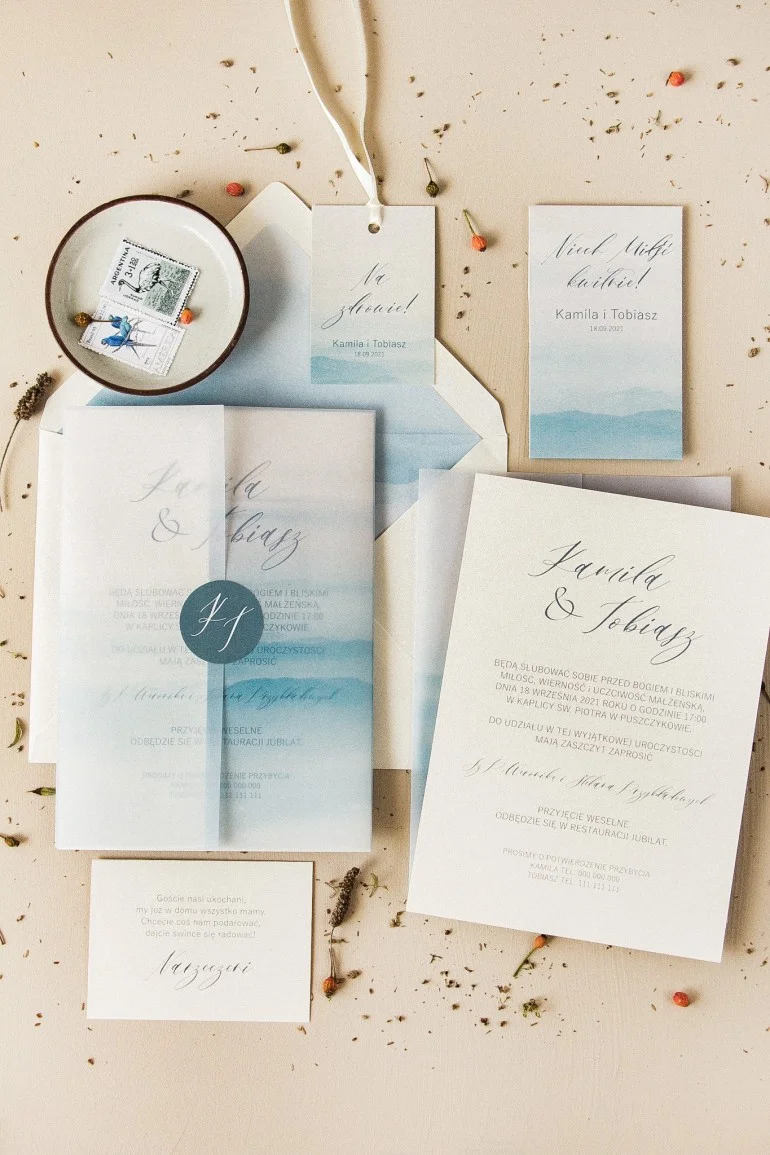
Elegant Vellum Wedding Invitations | Watercolour and Pearlescent | Opal No. 4
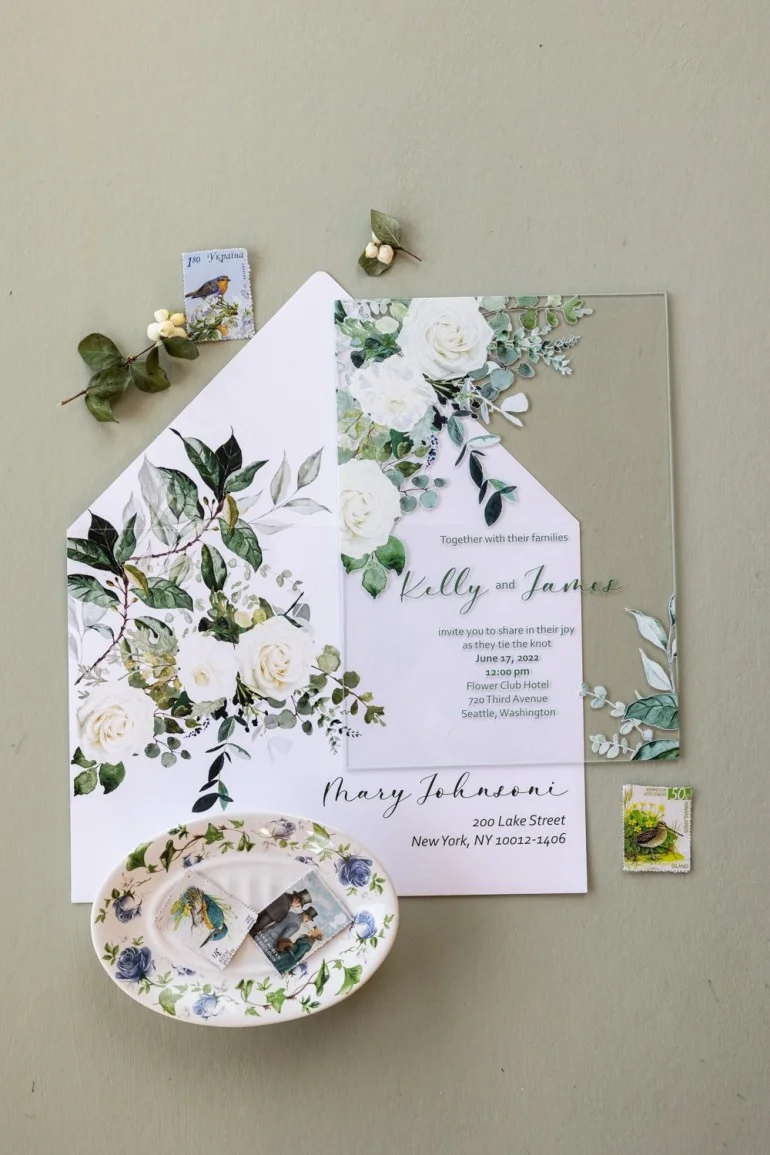
Floral Elegance Glass Wedding Invitations with White Roses and Greenery Envelope | Korani No. 12
Importantly, hotels love group bookings and are often willing to offer perks. Depending on the group size and the date, discounts for room blocks can reach up to 30% off the standard rate. Some properties even throw in a complimentary room for the group organizers (often the parents of the couple, who usually handle accommodation logistics) or include free breakfast. The key to success is timing—reach out to hotels no earlier than a year before the wedding, but no later than 6 months prior. During the summer season, popular hotels near wedding venues book up incredibly fast, and waiting until the last minute could mean no rooms are left.
It’s worth knowing that room blocks can be set up in a few ways. The first is a courtesy block (no financial obligation on your part), where the hotel holds the rooms until a specific cut-off date (e.g., 60 days before the wedding). If your guests don't book them by then, the rooms are released to the general public. Your financial risk is zero. The second model is a guaranteed block, which requires the couple to put down a deposit for a set number of rooms. This gives guests an absolute guarantee, but puts you on the hook financially. The choice depends on your budget and how confident you are that your guests will actually book the rooms. Always read the hotel contract carefully—pay close attention to cancellation policies and the deadline for confirming final numbers.
Venues with On-Site Accommodation – Ideal for Large Weddings
In recent years, more and more couples are opting for venues that feature their own on-site accommodation—such as estates, conference hotels, guesthouses, or resort complexes. This setup has one massive advantage: guests don't have to travel anywhere once the party ends. After the final dance, they simply walk a few steps to their room. There are no return transport headaches, no anxious waiting for taxis, and no safety concerns. For the couple, it means the celebration can last longer and feel more relaxed—late-night chats by the fire pit, a shared breakfast the next morning, and an intimate post-wedding brunch all become a natural extension of your beautiful day.
Of course, venues with on-site lodging have their limitations. The number of rooms is finite and rarely enough to house everyone—especially for a large wedding. A typical manor or boutique hotel might sleep 30–60 people, which means if your guest list is 120, half of them will need to find beds elsewhere. The solution is a hybrid approach: part of your guest list stays on-site, while for the rest, you provide a list of recommended nearby hotels and B&Bs, ideally with a room block set up. You can then arrange a shuttle bus or partner with a local taxi firm to transport guests between the venue and these partner hotels.
You should also consider where to accommodate guests travelling from abroad. We’ve prepared a separate guide on this: International Guests – How to Ensure Their Comfort: From Translation to Accommodation.
When planning guest accommodation, remember the details that make a difference. A room for a couple with a baby should have a cot—ask the hotel in advance. Elderly guests might need ground-floor rooms or easy lift access. Guests with pets or severe allergies will have specific requirements. You can elegantly gather this information by including a question on the RSVP card tucked inside your wedding invitations, asking about accommodation preferences right from the start.
When Can You Skip Organizing Accommodation?
Not every wedding requires you to organize accommodation, and skipping it isn't always a faux pas. There are weddings where organizing hotels is simply unnecessary—and it’s important to recognize when that is, so you don't waste time and money on something nobody needs. If your celebration is taking place in the centre of a major city with a wealth of hotel infrastructure, reliable taxis, and ride-sharing apps, your guests will easily sort themselves out. The same applies if the vast majority of your guests live near the venue and don't need to travel far.
Wondering how to map out guest logistics and seating arrangements so that accommodation and transport run smoothly? Check out our article: Guest List and Seating Chart – How to Create the Perfect Wedding Floor Plan.
Another scenario where you can safely skip room blocks is an intimate micro-wedding of 30–40 people, where everyone invited is immediate family or very close friends who know the area and have their own plans. In these cases, simply informing guests (via a details card or wedding website) that they should arrange their own accommodation is enough. You can optionally list a few nearby recommendations with prices and contact numbers. This gesture shows you’ve thought of them, without taking on the burden of managing everyone's bookings. Wedding trends for 2026 lean heavily towards intimate, intentional celebrations rather than massive logistical projects—and if your wedding fits this vibe, you don't need to run a hotel command centre.
4. Communicating with Guests – How to Share Transport and Accommodation Details
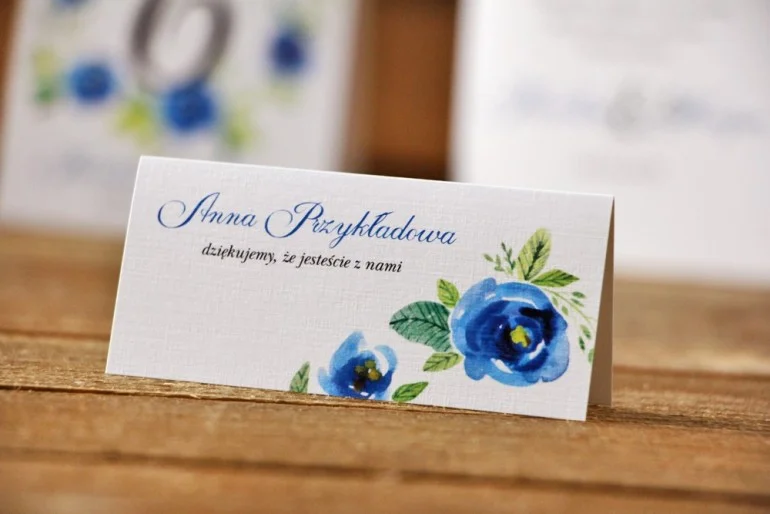
Linen Texture Place Cards with Blue Watercolour Roses | Akwarele No. 10
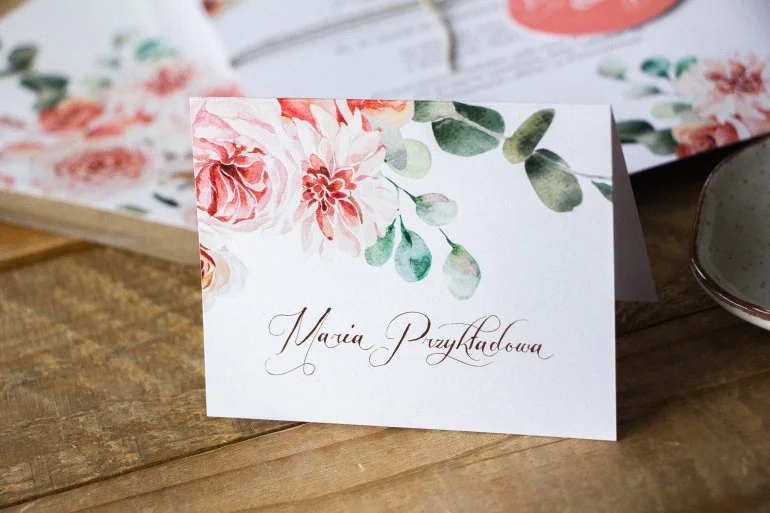
Place Cards with Pink Floral Bouquet Motif | Indygo No. 7

Pearlescent Cream Wedding Place Cards with Greenery | Opal No. 11
The Details Card – An Absolute Must
Your wedding invitation is the first and most important piece of information your guests will receive regarding your big day. It acts as their "guidebook" and sets the tone for how organized your event will be. That’s why it’s vital to present transport and accommodation info in the right format. The most elegant and practical way to do this is by including a separate details card (insert) in your invitation suite—a small card matching your stationery that holds all the key logistical info.
What should the perfect transport and accommodation insert include? First—clear details on whether transport is provided: yes/no, and if yes, where it departs from, at what time, and whether it’s a round trip or just a return shuttle. Second—contact details or booking codes for hotels where you’ve secured a room block: hotel name, address, reception phone number, the booking code, and the cut-off date to claim the group rate. Third—if guests are sorting out their own beds, list 2-3 vetted hotels at different price points so everyone can find something suitable. The insert should be clean, elegant, and cohesive with the rest of your invitation suite.
Remember one golden rule: details cards must be sent out with plenty of notice. Standard wedding invitations go out 2–3 months before the day, but for weddings where accommodation is essential and room blocks have strict cut-off dates, you should aim for 4 months in advance. This gives guests ample time to plan their travel, book their rooms, and request time off work. Nothing frustrates guests more than receiving hotel details three weeks before the wedding, only to find that all the good places nearby are fully booked.
Wedding Websites and Apps – Modern Communication in 2026
The year 2026 is fully immersed in the digital era of wedding planning. Wedding websites and apps have become the standard—a tool that allows couples to communicate with guests elegantly and conveniently, without having to call everyone individually. On a wedding website, you can host all your logistical details: an interactive map with venue and hotel locations, a timeline of the day, an FAQ section (covering transport, accommodation, dress codes, and parking), and a digital RSVP form where guests can confirm attendance and tick whether they need a seat on the shuttle or a room in the block.
If you're looking for a reliable tool to manage your wedding info, the free wedding app Blissaro is a fantastic way to keep all your logistics in one place. Apps like this are indispensable in 2026 because they allow you to instantly update guests on changes (e.g., the bus departure time has shifted), collect vital data (who is actually taking the bus?), and manage your entire guest list alongside their RSVPs. This is a lifesaver for large weddings, where manually tracking transport and hotel needs for over a hundred people is an absolute nightmare.
It is also crucial that transport and accommodation details are easy to find and written so clearly that guests don't have to guess. Make sure your website or details card features step-by-step instructions: "If you'd like a seat on the return shuttle, please let our Best Man, Mark, know by June 1st"; "To book a room at the Forest Lodge Hotel, call 123 456 789 and quote 'Smith Wedding'. Rooms are held for our guests until May 15th." This level of precision eliminates chaos, saves you time, and makes your guests feel truly looked after.
Place Cards and Accommodation Logistics
Accommodation logistics don't stop at the invitation stage—they can also be seamlessly integrated into the reception itself. One of the cleverest tricks used by couples who prioritize guest comfort is adding logistical info to table decor, specifically place cards. On the back of a guest's place card, you can discreetly write their assigned hotel room number, the shuttle departure times, or the phone number of your designated wedding coordinator. Older guests, who might not be constantly checking a wedding app, particularly appreciate this—they have all the info they need for the night, elegantly printed on a beautiful piece of card right in front of them.
5. What You Really Shouldn't Organize – Stop Overpaying for Logistics

Wedding Guest Book with Forest Motif | Opal No. 2

Personalised Guest Book with Gold Calligraphy | Sand No. 3

Burgundy Guest Book with Anemones and Dahlias | Korani No. 4
A Limousine for Every Guest? Definitely Not.
One of the most expensive and least practical mistakes couples make regarding transport is booking a fleet of limousines or VIP cars for every guest or large groups. A limo for the couple? Absolutely, it’s a classic, and no one questions that investment. But a limo for all the parents, the entire bridal party, and a few select guests? That is an expense that quickly spirals out of control, while offering very little practical benefit. Wedding guests value safety and convenience over luxury vehicles—they will appreciate a reliable, punctual shuttle bus far more than a one-off limo ride.
The same goes for hiring electric golf carts or other quirky transport methods for guests. It’s a fun novelty that works great as a photo prop at an outdoor wedding, but it shouldn't replace practical transport. A guest who has been partying for 10 hours and then has to navigate a golf cart through the woods in the pitch black to get to their hotel will not remember it as a comfortable end to the night. Invest your transport budget in practicality, not just the "wow" factor.
Another trap is relying on on-demand taxis as the sole transport solution for a remote venue. It sounds easy enough (everyone can just order an Uber, right?), but in practice, it’s a disaster. In the middle of the countryside, at 3 AM, during peak summer season, wait times for a taxi can exceed an hour—and surge pricing will be brutal. Couples who assume "it'll be fine" suddenly find themselves fielding calls from stressed guests stranded in the car park. Taxis are a great supplementary option—perfect for those who want to leave early or have specific needs—but they cannot be your only plan.
Paying for Everyone’s Accommodation – When Is It Too Much?
Covering the full cost of hotel rooms for every single guest sounds like a beautiful gesture, but in reality, it can stretch your budget to breaking point for no good reason. As mentioned earlier, old-school etiquette suggests the couple or their families pay for rooms, especially for out-of-towners. But modern etiquette is much more flexible, and most guests completely understand that a wedding is a massive financial undertaking. Guests from major cities, where hotel prices are steep, often prefer to book their own rooms so they have control over the standard and the price. Not everyone wants to stay in a 4-star hotel (even if they aren't paying for it) when a cozy, affordable B&B across the street suits them just fine.
The smartest approach in 2026 is a hybrid funding model: the couple organizes the room block and secures a group discount (10–30%), and the guests book and pay for their own stays using that rate. For guests travelling from exceptionally far away (from abroad or the other side of the country), or for VIPs like parents who play a major role in the day, it is absolutely worth covering their rooms from your wedding budget. That is an investment in family relations you will never regret. For everyone else—as long as they are well-informed and have access to comfortable, reasonably priced options nearby—paying their own way is completely standard and accepted.
Also, beware of another pitfall: booking rooms too early without checking—meaning, paying upfront for rooms for every potential guest without confirming who actually plans to stay over. It happens all the time: a couple pays for 30 rooms in advance, but only 15 people end up using them because the rest decided at the last minute they’d rather drive home. Always collect accommodation RSVPs from your guests—ideally via your invitation suite—before finalizing any bookings or payments.
What Else Should You Avoid Complicating?
There are a few other logistical areas where couples overcomplicate things, wasting time, energy, and money. The first is organizing transport to get guests to the ceremony when the reception is at a different location. Getting to the ceremony—especially if it’s at a standard time like 2:00 PM—is something guests can easily manage themselves. You just need to provide clear directions and parking info; you do not need to charter a bus from the hotel to the church. The critical transport is always the RETURN journey from the reception, when it’s late and alcohol has been consumed.
The second issue is booking group transport for guests who are driving anyway. It sounds absurd, but couples often book a coach "just to be safe," even though 80% of their guests stated on their RSVP that they are bringing their own cars. You only discover this if you actually ask your guests—which is why an RSVP form with transport questions is absolutely vital if you plan on spending any significant money on shuttles.
6. Transport for the Couple and Guests with Special Needs
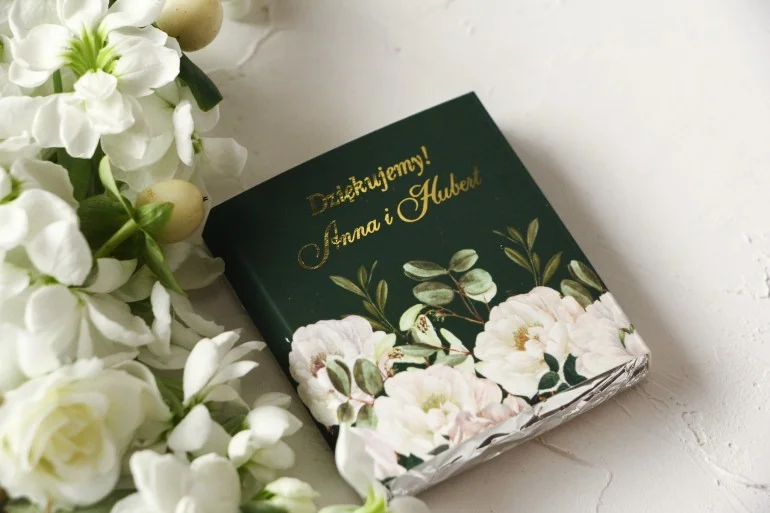
Wedding Chocolates with White Roses and Eucalyptus | Szafirowe No. 3

Wedding Honey Favors with Olive Branches | Indygo No. 2

Elegant Vodka Bottle Tags with Rhinestones | Amaretto No. 1
The Couple’s Transport – More Than Just a Decoration
Transport for the newlyweds is fundamentally different from guest transport—it serves a practical purpose, holds symbolic meaning, and is often a major feature in the wedding photos. A classic vintage car, a limousine, a retro VW camper, a motorcycle, or even a horse-drawn carriage—each choice says something about the couple's personality and sets the tone for the day. In 2026, we are seeing a brilliant trend: couples are increasingly choosing unconventional transport that ties into their personal story or passions—the car they drove on their first date, a tandem bicycle for the brave, or even a boat if the venue is on the water. These touches are highly memorable and add a deeply personal layer to the celebration.
From a practical standpoint, planning the couple's transport requires meticulous timeline coordination. The wedding car must be booked at least 6 months in advance—the closer you get to the date, the higher the risk that your dream car is already taken. The transport company needs a precise itinerary: departure time from the getting-ready location, arrival at the ceremony, time allocated for photos between the ceremony and reception, and the grand arrival at the venue. Good transport companies will suggest a "driving schedule," but you should draft one yourself and discuss it with the driver to ensure no one is rushing.
Remember that the wedding car isn't just about aesthetics—it’s also about providing safety and privacy during one of the most emotional parts of the day. Right after the ceremony, before entering the reception, the couple gets a few quiet moments together in the back of the car—moments that many couples describe as the best part of their entire wedding. A professional driver knows when to be discreet and give the couple space to process their vows. It’s a small detail, but it makes a world of difference.
Transport for Seniors and Guests with Limited Mobility
Older guests and those with limited mobility deserve special logistical attention. Organizing tailored transport for seniors is a profound sign of respect and care, appreciated not only by the individuals themselves but by the whole family. For a grandmother who hasn't driven in a decade, or an uncle using crutches, driving to the venue isn't an option. If you don't provide transport, they either won't be able to attend, or other guests will have to sacrifice their own fun to act as chauffeurs.
In practice, the best solution for seniors is a small minivan with an experienced driver who runs a shuttle service from a few central pick-up points (e.g., the city centre, or the neighbourhood where the grandparents live) directly to the venue and back. It is vital that older guests know exactly what time and from where the bus leaves, and that if they want to retire early, they have a guaranteed ride back without waiting until the end of the party. Ensure the vehicle is accessible—look for low steps, grab handles, and avoid anything that requires climbing steep stairs.
Don't forget about parking for guests who do decide to drive. Even if you provide a shuttle, some guests will always prefer their own cars. Make sure your logistical info includes parking details: is it paid, how far is it from the venue, is it well-lit, is it secure? Guests with young children and seniors particularly appreciate knowing they can park right next to the entrance—this is something to check when you're first touring venues.
7. Timelines and Coordination – The Secret to Flawless Wedding Logistics
How to Synchronize Transport with Your Wedding Timeline
One of the biggest challenges in planning wedding transport is syncing the shuttle schedule with the flow of the reception. A wedding has its own rhythm—the ceremony, the couple slipping away for photos, the grand entrance, the first course, the cake cutting, fireworks, the last dance—and every element has a specific time slot. Transport must be woven into this timeline precisely, so guests aren't left waiting around, and buses aren't scheduled to leave right in the middle of a key event.
Start by identifying two or three key moments that require group transport. Usually, this is around 2:00 PM–3:00 PM (getting to the ceremony or reception), perhaps a transfer between the church and the venue, and—most importantly—the late-night return shuttles. When planning the journey home, schedule at least two runs: an "early" bus (e.g., at 1:00 AM, for families with kids, seniors, or those working the next day) and a "late" bus (around 4:00 AM–5:00 AM, for the hardcore partiers). This caters to different crowds and ensures no one is forced to leave before they are ready.
It’s also crucial that shuttle times are clearly communicated during the reception itself—not just beforehand. Ask your DJ or bandleader to make a few announcements throughout the night reminding guests of the departure times. Place a beautifully framed sign near the exit or at the bar. Ask your bridal party to help corral people when the time comes—this is a natural duty for the Best Man or Maid of Honour, and they are usually happy to help. For an extra touch of care, you can attach a tiny tag with shuttle times to your place cards—it’s a simple gesture, but it keeps the info right at their fingertips.
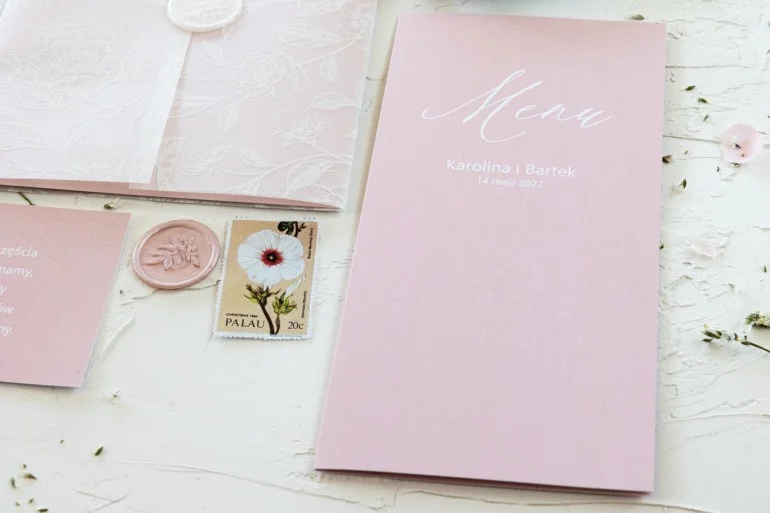
Elegant Wedding Menu with Delicate Pink Accents | Nefryt No. 1

Glamour Style Bottle Tags with Gold Foil | Glamour No. 5
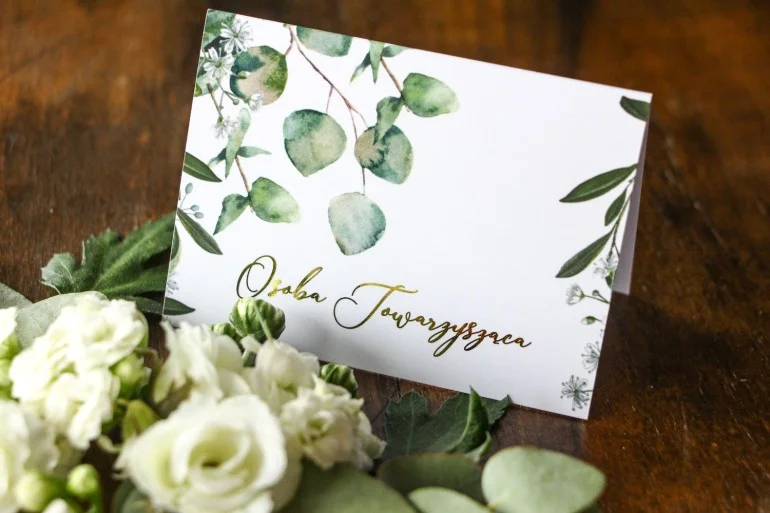
Gold Foiled Place Cards with Eucalyptus and Baby's Breath | Soreli No. 5
The Backup Plan – What If Something Goes Wrong?
Even the most meticulously planned logistics can fail. A coach breaks down. A driver gets lost. More guests want to take the bus than originally planned. For every one of these scenarios, you need a backup plan prepared in advance. Before you sign a contract with a transport company, ask them what their protocol is for vehicle breakdowns and whether they have backup buses on standby. Always check reviews and references, because your guests' safety relies entirely on their professionalism.
It is also best practice to save the contact numbers of local taxi firms and ride-sharing services operating near the venue—just in case the shuttle isn't enough, or someone desperately needs to leave outside the scheduled times. Give this list to your wedding coordinator or a trusted member of the bridal party so they can react quickly if needed. It’s a tiny detail that could save the night.
Finally, remember that good wedding logistics means delegating effectively. On your wedding day, you will have a hundred things on your mind, and you absolutely should not be standing in a car park with a clipboard checking who is getting on which bus. Assign one person—a best man, a wedding coordinator, or a highly organized friend—to oversee transport and accommodation logistics for the evening. It is an investment in your own peace of mind, allowing you to fully enjoy your celebration.
8. Wedding Favors and Small Gestures That Make a Big Difference
Care for Your Guests – From Arrival to Departure
Flawless transport and accommodation logistics are only half the battle. The other half is how your guests feel looked after throughout the entire event and right up until they leave. A couple who has thought of every detail—from clear parking signs to a clean, cozy bed, and breakfast the next morning—creates a comprehensive experience that guests will rave about for years. In the wedding industry, we call this the "guest journey."
One of the most elegant ways to show your gratitude for their presence is by gifting beautifully designed wedding favors. It’s a small but incredibly meaningful gesture that rounds off the celebration beautifully, giving guests a tangible keepsake of your day. Favors can be placed at their table settings (they pair perfectly with place cards), handed out as they leave, or even left in their hotel rooms for those staying overnight. The hotel room surprise—where a guest opens their door to find a personalized thank-you note alongside a miniature bottle of wine and some sweet treats—is a touch that people will talk about forever.
Caring for your guests doesn't end when the DJ stops playing. If you have guests staying overnight, organizing a shared breakfast the next morning is one of the warmest moments of the entire wedding weekend. The intense energy of the night before has faded, and everyone gathers over coffee and scrambled eggs to recount their favourite moments. It doesn't need to be a lavish banquet—a simple buffet in a private room for a couple of hours is perfect for relaxed goodbyes. Guests deeply appreciate this, as it shows your hospitality extends across the whole weekend, not just the main event.
Small Gestures That Will Make Your Wedding Stand Out
Wedding logistics can actually be beautiful. It sounds like a paradox, but a few thoughtful details can turn the organizational side of your wedding into a core part of its charm. Here are a few actionable ideas that, from experience, leave a massive impression on guests:
- Custom Maps – A beautifully illustrated map included in your invitation suite, showing the church, reception venue, and recommended hotels. Simple, elegant, and incredibly practical for out-of-towners.
- Welcome Bags – A small gift bag left in their hotel room containing local treats, a bottle of water, a mini hangover kit (aspirin is always appreciated!), and a welcome note. Guests arriving back at 4 AM will bless you for this.
- SMS Reminders – The day before the wedding, send a quick group text reminding guests of the bus departure times, the venue address, and the phone number of your logistics coordinator. One text eliminates dozens of confused phone calls on the morning of your wedding.
- FAQ Section – Have an FAQ page on your wedding website or app (Is there parking? How do I get there by train? What time should I arrive? Are there hotels nearby?) available 24/7, so guests don't have to bother you with questions.
- Info Tags – Discreetly writing their hotel room number or the shuttle schedule on the back of their place card is a tiny, brilliant detail that makes guests feel completely taken care of.
Summary: Approaching Wedding Logistics in 2026
The most important takeaway from this article is simple: smart wedding logistics isn't about organizing absolutely everything; it’s about organizing what is actually necessary. Don't hire coaches that no one will use. Don't pay for hotel rooms for guests who would rather sort themselves out. Don't overcomplicate things that can be elegantly simple.
Instead—gather data from your guests (use RSVP forms to ask about transport and hotels), plan well in advance (minimum 6 months for buses, 4 months for room blocks), communicate clearly (details cards, wedding websites, apps), delegate (assign a logistics point-person for the day), and focus on the small details that will make your wedding truly unforgettable.
Szymon Jędrzejczak
Wedding industry expert and stationery designer at Amelia-Wedding.pl. For years, she has been helping couples create unforgettable moments by combining tradition with modern design.